
 Published on and written by Cyril Jarnias
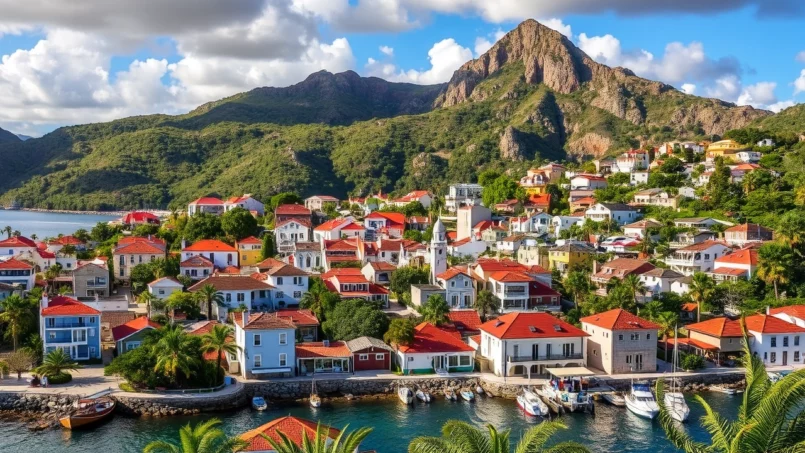
Saint-Barthélemy, a French micro-territory of 25 km² set on the turquoise waters of the Caribbean, has in just a few years become one of the most sought-after destinations for wealthy expats. Behind the postcard image—moored yachts, infinity-pool villas, luxury boutiques—lies a true patchwork of neighborhoods, each with its own vibe, codes, advantages… and price level.
Choosing where to live in Saint-Barthélemy is critical due to the island’s small size. Each area (bay, hill, beach) offers a distinct atmosphere: some are lively with nightlife and shops, others emphasize discretion and privacy, attracting especially wealthy clientele. The options also vary for expat families. The lifestyle therefore differs radically from one neighborhood to the next.
This article takes a neighborhood-by-neighborhood dive into the areas most coveted by expats in Saint-Barthélemy, cross-referencing living environment, real estate market, and daily atmosphere, to help understand why one area attracts international entrepreneurs, another families, and yet another celebrities.
Understanding the Context: A Tiny Island, an Overheated Market
Before diving into the neighborhood details, it’s important to keep the big picture in mind. Saint-Barthélemy is a French overseas collectivity, home to about 10,000 residents but visited by nearly 300,000 people per year. The economy relies almost exclusively on ultra-high-end tourism and duty-free commerce.
The island is often compared to Monaco or Manhattan due to a similar logic of land scarcity, wealth concentration, and intense real estate pressure. A large portion of its territory is non-buildable, classified as natural or protected areas. In an attempt to manage growth, local authorities have temporarily suspended the issuance of new building permits.
Result: one of the most expensive markets in the world, where even the entry-level properties are already at staggering prices.
A Snapshot of Prices and Land Pressure
The figures observed in the market confirm this reality: truly “in the game” luxury villas start around 3 to 7 million euros, while large waterfront properties or those on private estates easily exceed 20 or 30 million, with some crossing the 50 million mark. In sought-after residences in Gustavia or Saint-Jean, a simple apartment can fetch over 3 million.
Price per square meter indicators sum up the real estate market situation well.
| Real Estate Price Indicator | Observed Value in Saint-Barthélemy |
|---|---|
| Minimum price per sqm | 6,500 – 20,000 € |
| Average price per sqm | 26,000 – 36,000 € |
| Maximum price per sqm | 60,000 – 74,000 € |
Transactions number only in the dozens per year (about 70 to 110 annual sales in recent years), with a financial volume sometimes exceeding 500 million euros. Sale times are lengthening at the very top end—up to two years for properties over 10 million euros—but good mid-range products, between 2.5 and 5 million euros, typically find a buyer in about four months.
In this ultra-tight context, the notion of a “neighborhood popular with expats” refers not only to an idyllic setting but also reflects a very fine trade-off between visibility, privacy, accessibility, rental potential, and social status.
Gustavia: The Urban Heart, Vibrant and Very International
For many expats, especially those seeking an intense social life, Gustavia is the natural gateway. As the administrative and economic capital, it’s the only real “city” on the island, centered around a marina lined with yachts and sailboats.
The cobblestone streets, colorful colonial houses, and remnants from the Swedish era—forts, bell tower, grid pattern—give Gustavia a unique charm. But the main draw of the neighborhood for expats lies in its function as a hub: here you’ll find the shops, major luxury brands, iconic restaurants, bars, and many apartments.
Why Gustavia Appeals to Expats
Living in Gustavia means adopting a very urban lifestyle for such a small island. You walk a lot, easily pop out for coffee, run errands, or dine out without getting back in the car on winding roads. Evenings unfold on terraces, rooftops, and cocktail bars; the high season sometimes transforms the town into a small social theater where residents, yacht owners, and visitors cross paths.
English-speaking expats benefit from a familiar living environment where English is commonly spoken. The clientele is largely international, and a full range of services (concierge, private security, personal shoppers, etc.) is easily accessible.
On the real estate side, Gustavia is above all the realm of apartments and duplexes, often with harbor views. In sought-after residences like “Les Suites du Roi Oscar II” or “Beaulieu,” prices easily exceed 2 to 3 million euros for relatively modest square footage by international standards.
Pros and Cons of the Center
For expats working in retail, restaurants, property management, or high-end services, living in Gustavia reduces transportation constraints and keeps you at the heart of the economic flow. On the other hand, those seeking absolute calm, large gardens, or intimate discretion will often prefer the surrounding hills rather than the center itself, which stays lively late into the evening during high season.
In Gustavia, the cost of living exceeds 250% of that in mainland France (including rents and general prices), making it the most expensive locality in Saint-Barthélemy.
Saint-Jean: The Iconic Address for Epicureans
A few minutes’ drive from Gustavia and immediately next to Gustaf III Airport, the Saint-Jean neighborhood embodies the most media-friendly image of the island: that of a glamorous bay where iconic hotels, beach clubs, villas, and sophisticated boutiques mingle.
The Saint-Jean coastline, flanked by Eden Rock and Nikki Beach, condenses what many expats are looking for: lively beach, dining with your feet in the sand, high-end shopping, a festive but not excessive atmosphere, and simplified logistics thanks to its proximity to the airport and numerous amenities.
A Highly Sought-After Postcard Neighborhood
For an expat, living in Saint-Jean means choosing everyday convenience. You’ll find residences and apartments with sea views, villas perched on the heights, as well as properties geared more toward “rental investment”: the area rents extremely well to an international clientele looking to do everything on foot or almost.
Real estate prices in Saint-Barthélemy reflect the strong desirability of the area. For instance, a 56 m² apartment sold off-plan for 3.15 million euros. Similarly, some villas reach amounts comparable to prestigious properties in Lurin or Gouverneur, especially when they combine an exceptional view, a renowned architect, and easy access.
On the seasonal rental side, villas in Saint-Jean readily command very high rates in high season, even stratospheric for waterfront properties: some 5-bedroom villas reach several tens of thousands of euros per week around New Year’s.
Advantages for Expats
Beyond its “chic seaside resort” feel, Saint-Jean offers an interesting compromise for expat families: shops nearby, quick access to the island’s schools, proximity to medical offices and the pharmacy, while still being beach-oriented. Social life is very dense, punctuated by private beaches, restaurants, and events.
Traffic can be very heavy during high season, especially on the airport – Saint-Jean – Gustavia corridor. For a quieter, more discreet stay, it is advisable to choose accommodations in the hills, such as Lurin, Pointe Milou, or Vitet.
Flamands: The Large Residential and Family Beach
On the northwest coast, Flamands increasingly attracts expats looking for serenity, space, and proximity to a dream beach. The cove of Flamands, the longest and one of the widest on the island, unfurls its white sand in front of villas and five-star hotels like Cheval Blanc.
The neighborhood has a different atmosphere from Gustavia or Saint-Jean. Here, no raucous nightlife: the vibe is softer, more family-oriented, almost intimate, with residences nestled in the vegetation and houses overlooking the bay from the hills.
Profile and Appeal of Flamands for Expats
Expats who choose Flamands generally prioritize quality of life over pure social exposure. The neighborhood is about ten to fifteen minutes from Gustavia by car, which remains reasonable for reaching shops and restaurants, but offers distance from the hustle and bustle.
Discover the activities and natural assets offered by proximity to the beach and its surroundings.
Enjoy daily walks, swimming, kids’ games, and bodyboarding sessions when the swell picks up.
Take the coastal path to Colombier for a nature experience, leading to a classified cove accessible only on foot or by boat.
Real estate and prices reflect the highly sought-after coastline of the neighborhood. Waterfront villas are rare and command colossal sums, in the upper range of the island (up to 20–30 million euros for the most exceptional properties). On the heights, properties combining sea views, peace, and large land areas also trade among the top levels of the market.
A Discreet Neighborhood Life
Flamands does not have the abundant commercial offerings of Saint-Jean, but relies on a few prestigious hotels with restaurants and spas, as well as a network of villas with very active concierge services (private chefs, yoga classes, in-home spa treatments). Expats find a slower pace here, organized around the beach, walks, and a few fine dining restaurants.
For families with children, quiet residences near large beaches, offering a garden and pool, are ideal. Conversely, for a livelier atmosphere, it is better to be closer to the centers of Gustavia or Saint-Jean.
Lurin: The Panoramic Balcony Over Gustavia and Saint-Jean Bay
Perched on the heights east of Gustavia, Lurin is one of the favorite neighborhoods of expats and celebrities. Along its ridge and slopes, the area boasts a large number of spectacular villas designed by renowned architects, with a single obsession: offering breathtaking panoramas over Gustavia harbor, the Caribbean Sea, and the sunsets.
The Choice of Discretion Two Minutes from the Center
One of Lurin’s great advantages is this paradoxical mix of proximity and isolation. By car, a few minutes suffice to head down to Gustavia or reach Shell Beach, Gouverneur, Saline, or Saint-Jean. Yet once back in your villa, you enjoy remarkable tranquility, away from the main flow.
The access roads to the neighborhood are narrow, steep, and winding, typical of the island. This rugged topography limits construction density, favoring spacious properties, often featuring infinity pools, landscaped gardens, and large terraces with sea views.
Seasonal rental listings give an idea of the positioning: 3, 4, 5, or 9-bedroom villas rent for five-figure weekly amounts, some far exceeding 40,000 to 90,000 dollars per week in high season. For purchases, many properties are priced above 10 million euros.
A Pilot Neighborhood for Ultra-High-End Expats
Lurin attracts expats with high purchasing power, often entrepreneurs, investors, or personalities from the business and entertainment worlds, seeking a discreet yet extremely comfortable primary or secondary residence. The houses combine sleek contemporary architecture, noble materials, spectacular pools, and state-of-the-art amenities (home automation, home theaters, gyms).
The neighborhood is also set in a practical environment: services like a high-end gym, proximity to renowned restaurants around Saline and Gustavia, and quick access to several major beaches. For those willing to navigate steep roads, Lurin offers a top-tier compromise between views, privacy, and accessibility.
Lorient: The Up-and-Coming “Local” Village
Lorient holds a special place in the landscape of Saint-Barthélemy. Located on the north coast, this village retains a very local identity, with a beach shared by surfers and families, an iconic church, a few neighborhood shops, and a more relaxed atmosphere than the island’s ultra-chic neighborhoods.
For a long time, this “village” tone made it a place more popular with locals than expats. But things are changing: the ongoing real estate boom, the beauty of the site, and growing demand for a less ostentatious Saint-Barthélemy are attracting a new generation of expats.
A Still Authentic Neighborhood
Lorient Beach illustrates this duality well. To the west, the waves make it a recognized surf spot, sometimes frequented by experienced surfers; to the east, calmer waters are better suited for family swimming and snorkeling. On the waterfront, a few large villas, highly sought after at Christmas and New Year’s, occasionally host celebrities, but most of the surrounding homes are occupied by permanent residents.
The Saint-Cloud area illustrates its local roots through neighborhood shops like bakeries and convenience stores, iconic spots like Jojo Burger, the presence of the cemetery where Johnny Hallyday is buried, and occasional events like a music festival.
For expats, Lorient thus offers a more authentic immersion in island life, while remaining close to Saint-Jean and Gustavia. The real estate market is on the rise, with new contemporary villas with sea views and strong rental demand.
What Profile of Expats in Lorient?
Newcomers who choose Lorient are often families or couples who want to avoid the most “bling-bling” neighborhoods without giving up a pleasant and well-served environment. They accept a slightly less social life in favor of a more local grounding.
This is the number of towns, Lorient, whose luxury real estate market is scaling up, with villas reaching the prices of historic luxury neighborhoods.
Grand Cul-de-Sac and Petit Cul-de-Sac: Paradise for Families and Water Sports
On the northeast side of the island, the coves of Grand Cul-de-Sac and Petit Cul-de-Sac offer a radically different atmosphere from the more open bays. Here, a large shallow lagoon, protected and classified as a regulated zone, serves as an ideal playground for gentle water sports: paddleboarding, kayaking, windsurfing, kitesurfing.
A Lifestyle Centered on the Lagoon
For expats moving with families, Grand Cul-de-Sac ticks many boxes: safe swimming in calm waters, activities for all, presence of high-end hotels like Le Sereno, Le Barthélemy, or Rosewood Le Guanahani, and a series of beach restaurants. Traffic is more moderate than in Saint-Jean, and the atmosphere is more “resort” than “village.”
The protected lagoon does not accommodate large yachts, reinforcing the feeling of tranquility and the almost lagoon-like dimension of the landscape. Around it, vacation villas and residences terraced on the slopes overlook the blue shades of the water.
Landscape description
Petit Cul-de-Sac, slightly more intimate, notably houses the Domaine du Levant, a collection of very high-end villas frequented by an international clientele. Properties there benefit from an especially quiet environment, with a less frequented beach and direct sea access.
Real Estate Profile and Type of Expats
Prices, again, match the site’s appeal: several villas far exceed ten million euros when they combine large plots, open horizons, and privileged lagoon access. Buildable land has recently sold for eight-figure amounts, sometimes to develop two villas on the same parcel.
The area mainly attracts wealthy expats, prioritizing water sports and family life over a social scene. Its practical advantage lies in its proximity to Lorient and Saint-Jean by car, while offering a protected and tranquil natural environment.
Pointe Milou: The Sunset Balcony for Insiders
On the east coast, the Pointe Milou peninsula enjoys a special reputation among expats: it’s one of the best places on the island to watch the sunset, with a 180° panorama over the ocean. Villas here are often built atop cliffs, with infinity pools seeming to plunge into the void.
A Highly Sought-After Area for the View and Privacy
Real estate listings set the tone: 4 to 7-bedroom villas, floor areas over 250 m², unobstructed views, infinity pools, contemporary architecture, prices commonly exceeding 6 to 10 million euros. Some building plots already include permits for large villas over 400 m², clearly positioned in the ultra-luxury segment.
The neighborhood is known for the Hotel Christopher, a prestigious establishment that makes it a destination in itself. Despite that, density remains moderate and many properties prioritize discretion, often hidden behind tropical gardens or integrated into the hillside.
Expats drawn to Pointe Milou are often island regulars who already know the ropes and seek an area that is both spectacular and relatively untouched by through traffic. The rental potential is very high, as travelers are willing to pay a premium for those famous sunsets.
Gouverneur and Saline: The Choice of Absolute Seclusion
If there are places in Saint-Barthélemy where luxury is measured more by silence and the absence of buildings than by an abundance of services, it is surely the sectors of Gouverneur and Saline. Each is home to one of the most spectacular beaches on the island, with no shops or massive facilities—just a parking lot, a path, and at the end, an almost untouched setting.
Gouverneur: Legendary Villas and a Mythic Beach
Gouverneur attracts a very specific clientele: ultra-wealthy owners and expats looking for a jewel box to blend into the landscape. Properties are built on the heights, often invisible from the road, and ride on an imagination mixing pirate treasure myths, pristine nature, and striking views.
Villas in this luxury real estate sector consistently sell for over 10 million euros.
The beach itself, devoid of bars and shops, attracts those who want to “disappear” for a few hours in a turquoise cove without crowds.
Saline: Raw Nature and Chic Retreat
The Saline area, dominated by the famous nudist beach of Anse de Grande Saline, offers a similar experience. No heavy development on the sand, just a path from the parking lot, dunes, a strip of vegetation, then a vast expanse of blonde sand.
Plots of more than one hectare sometimes trade for seven or eight-figure amounts.
For expats who choose Gouverneur or Saline, the priority is clear: privacy and a fusion with the landscape outweigh proximity to shops. You must accept driving a few kilometers to reach supermarkets, schools, or restaurants, but in return, you find almost absolute silence at home.
Colombier: The Grand Estate and the Rockefeller Myth
Another stronghold of expat discretion, Colombier occupies the northwestern tip of the island. This area is associated with the history of large private estates on Saint-Barthélemy, long marked by the imprint of the Rockefeller family. The topography—a raised peninsula framed by cliffs and vegetation—naturally limits construction density.
An Area of Large Estates
The market here is dominated by properties of several hectares, sometimes walled-in or hidden at the end of private roads. The record transaction of a 52-hectare estate for approximately 135 million euros illustrates the potential scale of prices in this neighborhood when an exceptional property comes to market.
Colombier is home to a splendid beach, preserved due to its exclusively pedestrian access (via trails from Flamands) or by sea. This relative inaccessibility makes it a wild and privileged setting, ideal for escaping the island’s more crowded beaches.
Expats, Tranquility, and Investment
For an expat, living in Colombier means embracing a form of chosen isolation: trips to the airport, shops, and restaurants are a bit longer, roads sometimes rougher, but in return you have a unique refuge, often with gardens, different views depending on orientation, and natural security.
Properties lend themselves well to a dual logic: personal residence first, and seasonal rental targeting an ultra-selective clientele second. The island’s high-end agencies prominently feature Colombier villas in their portfolios, emphasizing their “absolute retreat” character.
Marigot: The Quiet Sanctuary, Almost Timeless
On the edge of the marine reserve, Marigot Bay offers a softer, more intimate postcard landscape. The beach, modest in size, is lined with vegetation and overlooked by villas surrounded by tropical gardens. The whole gives an impression of retreat, as if the neighborhood were slightly “off” from the rest of the island.
A Refuge for Expats Seeking Peace
Expats who settle in Marigot are primarily looking for quiet. The neighborhood suits those who work remotely, young retirees, or families who prioritize a serene environment. The nearby lagoon of Grand Cul-de-Sac and the marine reserve create a natural setting conducive to contemplation, snorkeling, and paddleboarding.
The area features several high-end villas, often equipped with pools, independent studios, professional kitchens, or gyms. Some descriptions highlight the “refuge” character of the place, emphasizing the feeling of being away from the main thoroughfares.
Prices remain high, but can sometimes offer a slightly less flashy alternative to the big names of Lurin or Gouverneur, while maintaining strong rental potential thanks to the sea views and proximity to the reserve.
Corossol, Anse des Cayes, Vitet, Toiny: More “Connoisseur” Addresses
Beyond the flagship neighborhoods already mentioned, several other areas attract a portion of expats, often those who already know the island well and seek a subtle balance between authenticity, relative prices, and natural specifics.
Corossol: Fishermen’s Village with a View of Gustavia
A few minutes from Gustavia, Corossol retains a very traditional face, with fishermen’s houses, dugout canoes, and a beach frequented by local families. Above the village, the hills host contemporary villas with sea and harbor views, forming a real estate market highly sought after by expats who want a pied-à-terre near Gustavia without being in the very center.
The authenticity of the neighborhood—notably the craftswomen who still weave objects from latanier leaves—gives it a special flavor, far from jet-set codes, while remaining embedded in the luxury ecosystem.
Anse des Cayes: Surf and Residential Life
Tucked between Flamands and Saint-Jean, Anse des Cayes offers a beach swept by trade winds, frequented by surfers and lined with denser housing. The area attracts expats looking for a more affordable compromise (by local standards) while remaining very well located.
The bay, exposed to the swell, offers less calm swimming than Saint-Jean or Grand Cul-de-Sac. However, villas on the heights or waterfront benefit from proximity to Gustavia and the airport. For rentals, the combination of ‘surf + view + easy access’ is a major asset, especially appreciated by a sporty clientele.
Vitet: The Quiet Heights
As the highest point on the island, the Vitet area is appreciated by expats for its pastoral and less developed side. From its slopes, you take in wide views over the Cul-de-Sac bays or the offshore islets. A few plots of land are still available, a rare occurrence in Saint-Barthélemy.
Vitet villas offer a green, cool setting away from the coastal activity, ideal for peace. However, this advantage implies longer car trips to reach the main activity areas.
Toiny and Grand Fond: The Wild End of the World
On the southeast coast, Toiny and Grand Fond play the card of steep relief, a wave-beaten coast, and limited visitors. Toiny Beach, in particular, is appreciated by surfers and lovers of raw landscapes, while the Hotel Toiny and a few iconic villas add a note of discreet luxury.
Expats who settle there love the feeling of being “at the end of the island”, while remaining within manageable distance of Gustavia. The real estate offers some opportunities for those who want to position themselves in an area still relatively preserved from the densification affecting other neighborhoods.
Which Neighborhoods for Which Expat Profiles?
Over the years, a fairly clear pattern has emerged in the distribution of neighborhoods popular with expats. Each area attracts a dominant profile type, although individual situations naturally vary.
The main orientations can be summarized as follows:
| Expat profile looking for… | Most suitable neighborhoods |
|---|---|
| Social life, restaurants, shopping | Gustavia, Saint-Jean |
| Panoramic views, iconic villas | Lurin, Pointe Milou, Gouverneur, Colombier |
| Family atmosphere and accessible beach | Flamands, Grand Cul-de-Sac, Lorient |
| Absolute calm and retreat | Marigot, Petit Cul-de-Sac, Saline, Grand Fond |
| Local “village” atmosphere | Lorient, Corossol |
| Surf and board sports | Lorient (surf), Anse des Cayes (surf), Toiny (surf), Grand Cul-de-Sac (kite) |
| Ultra-high-end rental potential | Saint-Jean, Lurin, Pointe Milou, Gouverneur, Flamands, Colombier |
These broad lines combine with budget reality. Generally speaking, the most accessible neighborhoods—always relatively, given the island’s overall prices—are set back from the most iconic beaches or in denser areas. Conversely, the most spectacular panoramas and the most spectacularly discreet retreats come at a premium.
Investing as an Expat: Stakes, Returns, and Constraints
For many expats, settling in Saint-Barthélemy involves buying a property, both as a lifestyle choice and as a wealth strategy. The seasonal rental market, extremely dynamic, plays a key role in this decision.
Well-located villas easily rent for around twenty weeks per year, with rates ranging from 500 to 1,000 dollars per night for a small one-bedroom house, 2,000 to 5,000 dollars per night for large 4 to 6-bedroom villas, and up to 100,000 to 350,000 dollars per week for ultra-prime properties at Christmas and New Year’s.
Market studies suggest an annual property value increase of around 8% to 10% over the long term.
Tax and Legal Framework
Another argument in favor of investment for expats concerns local taxation. For residents who have had their tax domicile on the island for more than five years, the territorial regime offers no local income tax, no wealth tax, no inheritance or gift taxes on assets located in Saint-Barthélemy, and a property tax rate of 0%.
Capital gains on quick resales of properties may be taxed up to 35% within the first eight years. Additionally, the Collectivity has a right of preemption, granting it 60 days after a sale promise to substitute itself for the buyer, which complicates transactions.
All transactions must go through a notary, with acquisition costs for the buyer between 6% and 8% of the price, while agency fees, around 5% to 6%, are generally paid by the seller. For non-residents, access to bank financing can be complex, which explains why many transactions are done in cash.
Integrating into the Desirable Neighborhoods: Beyond the Villas, Island Life
Settling in Saint-Barthélemy, even in an ultra-desirable neighborhood, is not just about buying a villa with a view. Successful integration also requires understanding a small island community that, despite its international exposure, remains attached to its traditions and balances.
The local population consists mainly of descendants of families from Brittany, Normandy, and Poitou. They live alongside communities of Portuguese workers and a multitude of expats, temporary or permanent. This diversity is reflected in the island’s territorial organization, which has 40 administrative neighborhoods grouped into two parishes.
Forums and expat feedback often emphasize two points: respect for local customs and participation in community life. This can involve engaging in events (village festivals, festivals, sports events), simply frequenting the same local shops, or getting involved in environmental protection, a major issue on such a constrained island.
Conclusion: Choosing Your Neighborhood Is Choosing Your Saint-Barthélemy
In Saint-Barthélemy, the question “where to live?” takes on a special dimension. On barely 25 km², the island offers a surprisingly rich palette of micro-worlds: lively urban center, family bays, panoramic ridges, wild peninsulas, fishermen’s villages, protected lagoons.
Expats who settle here must balance visibility and retreat, proximity to services and immersion in nature, social life and serenity, rental profitability and acquisition budget. Gustavia and Saint-Jean offer urban and seaside intensity; Lurin, Pointe Milou, or Colombier deliver spectacular panoramas; Flamands, Lorient, or Grand Cul-de-Sac appeal to families; Gouverneur, Saline, Marigot, or Petit Cul-de-Sac speak to those who dream of being forgotten.
In every case, the equation remains the same: a rare land, an exceptional market, and a unique art of living, where each neighborhood tells in its own way a facet of the Saint-Barthélemy myth.
Disclaimer: The information provided on this website is for informational purposes only and does not constitute financial, legal, or professional advice. We encourage you to consult qualified experts before making any investment, real estate, or expatriation decisions. Although we strive to maintain up-to-date and accurate information, we do not guarantee the completeness, accuracy, or timeliness of the proposed content. As investment and expatriation involve risks, we disclaim any liability for potential losses or damages arising from the use of this site. Your use of this site confirms your acceptance of these terms and your understanding of the associated risks.

Cyril Jarnias is an independent expert in international wealth management with over 20 years of experience. As an expatriate himself, he is dedicated to helping individuals and business leaders build, protect, and pass on their wealth with complete peace of mind.
On his website, cyriljarnias.com, he shares his expertise on international real estate, offshore company formation, and expatriation.
Thanks to his expertise, he offers sound advice to optimize his clients' wealth management. Cyril Jarnias is also recognized for his appearances in many prestigious media outlets such as BFM Business, les Français de l’étranger, Le Figaro, Les Echos, and Mieux vivre votre argent, where he shares his knowledge and know-how in wealth management.





