
 Published on and written by Cyril Jarnias
Between secret coves, fishing villages frozen in time, and giant yachts moored in the harbor, Saint-Barthélemy packs everything you associate with a chic Caribbean paradise into just a few square miles. Beneath the picture-postcard image, however, the island reveals true heritage wealth, a unique history marked by Sweden, and surprisingly preserved nature for such a sought-after destination. An overview of the must-see sites during a stay in Saint-Barthélemy.
Gustavia, Historic Heart and Showcase of the Island
Capital and main port of the island, Gustavia is often the first contact visitors have with Saint-Barthélemy. It is also the place where the layers of history that shaped this small territory—passing from French to Swedish hands before returning to French rule—are most visible.
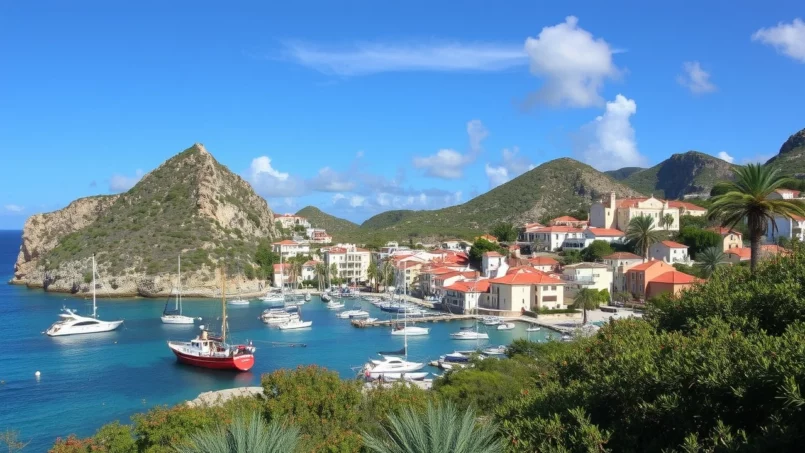
The town, nestled around a natural horseshoe-shaped harbor, was once called Le Carénage. It was renamed Gustavia when the island came under Swedish rule, in homage to King Gustav III. Today, the red roofs, colorful facades, and yachts reflected in the turquoise water create a setting that is both typically Caribbean and surprisingly Nordic in touches.
The streets are easily explored on foot. It is even the best way to soak up the atmosphere of this bustling hub: you move from a church to an art gallery, from a bastion remnant to a luxury boutique, before emerging onto the quays where regattas and nautical events take place.
To locate the main points of interest, a few numbered references help organize the discovery.
| Place / Monument | Type of Site | Main Feature | Approximate Distance from Shell Beach |
|---|---|---|---|
| Port of Gustavia | Port / Promenade | Luxury yachts, boutiques, restaurants, sea tour departures | 5–10 min walk |
| St. Bartholomew’s Anglican Church | Anglican Church | 1855 building, volcanic stone and French bricks | ~0.27 km |
| Église Notre-Dame-de-l’Assomption | Catholic Church | Sober architecture, ornate interior, spiritual landmark of the island | < 1 km |
| Municipal Museum / Wall House | History Museum | Island history, Swedish era, maritime artifacts | ~0.5–0.7 km |
| Old Swedish Prison | Historic Building | Prison from 1799, remnant of Swedish administration | ~0.2 km |
| Swedish Clock Tower | Monument | Symbol of the Swedish period | ~0.2 km |
Fort Gustave and the Gustavia Lighthouse, Balcony Over the Caribbean Sea
Overlooking the roadstead, the site of Fort Gustave alone concentrates an entire chapter of Saint-Barthélemy’s military history. As early as the 17th century, French fortifications occupied this strategic promontory. The Swedes later reorganized the system at the end of the 18th century, erecting three strong positions around the port: Fort Gustave, Fort Karl, and Fort Oscar.
Today, Fort Gustave is nothing more than a set of ruins, but the remains of walls, an old guardhouse, a powder magazine, and cannons evoke the defensive purpose of the place. The ensemble has been listed as a French historical monument, and interpretation panels help understand the original layout.
The lantern of the Gustavia Lighthouse rises to nearly 64 meters above sea level.
The climb up to the site from the city center takes about fifteen minutes on foot via a small sloping road. The effort is largely rewarded by the view: Gustavia Bay, the red roofs of the town, the chain of neighboring islands—St. Martin, Saba, St. Eustatius—and, on regatta days, a forest of colorful sails on the horizon. The historic Gustav III Garden, laid out around the lighthouse, offers a soothing green setting to catch your breath between photos.
Access is free, parking is free nearby, and no entry fee is charged, making it one of the rare free viewpoints in a destination often associated with luxury.
Fort Karl, the Belvedere Overlooking Shell Beach
On the other side of the roadstead, Fort Karl occupies a vegetation-covered knoll. A short but steep trail leads to it from Gustavia or from Shell Beach, located just below. Of the original structure, built during the Swedish era to lock access to the port, only a few built elements remain; many visitors describe it more as a hill with a view than an actual fort.
This site offers spectacular views of the bay, the town, Shell Beach, and, on clear days, the rocky islets of the Petits Saints. In the late afternoon, it becomes one of the best spots on the island to watch the sunset, with the pinkish sand of Shell Beach in the foreground.
The site has no toilets, no shops, and no lighting, so it’s best to go during the day, properly shod and with water. The path can be slippery in wet weather, and the steep slope makes it unsuitable for people with reduced mobility.
Shell Beach, the Urban Beach with Millions of Shells
Just a short walk from the streets of Gustavia leads to the cove of Shell Beach, sometimes called Anse de Grand Galet. This beach has a singularity that sets it apart from other shores of Saint-Barthélemy: its shoreline is covered with a myriad of small seashells and shell fragments that replace the usual sand.
At the base of rocky cliffs, the shore takes on slightly pinkish hues in places, enhancing the photogenic appeal of the location. The sea is generally calm and clear, with depth increasing quite quickly. Conditions are well-suited for swimming, but also for snorkeling: tropical fish, coral masses, and, with a bit of luck, green sea turtles enliven the seabed.
Shell Beach, located immediately near the center of Gustavia, is ideal for a swim break between shopping or sightseeing sessions. Its westward orientation and the presence of a rock barrier protecting it from the wind also make it a renowned spot for watching the sunset.
To enjoy the site peacefully, a few recommendations come up in visitor reviews: wear water shoes or sandals to walk on the shells, opt for reef-safe sunscreen, and avoid times when cruise ships disembark their passengers, when the beach can quickly become crowded.
The restaurant Shellona is set right on the sand and offers lounge chairs and umbrellas for rent, with rates that can reach nearly two hundred euros per day. This lively spot, especially on weekends, serves cuisine inspired by Mediterranean and Caribbean flavors.
Around, Gustavia boasts an impressive number of dining options for such a small town: ceviche and fish restaurants like Fish Corner, Italian institutions like L’Isola, Thai addresses like Black Ginger, or iconic bars such as Le Select or the bistro Bar de l’Oubli. Enough to turn a swim at Shell Beach into a full day or evening in town.
Colombier Beach, the Hidden Gem Accessible on Foot or by Boat
At the exact opposite end of the urban vibe of Shell Beach, Colombier Beach, tucked away at the northwestern tip of the island, cultivates an image of a hidden paradise. It is sometimes nicknamed “Rockefeller Beach” in reference to David Rockefeller, who once owned the bay and had a villa built on the promontory. A hurricane rendered the house uninhabitable, and the area was subsequently preserved in a very pristine state.
Colombier appears as a crescent-shaped cove facing west, sheltered from prevailing winds by a steep peninsula. The turquoise water, white sand, and near absence of visible buildings give the impression of a site frozen in time. This feeling is reinforced by the fact that no road leads to the beach: access is only on foot via trails or by sea.
The bay, located within the Nature Reserve, features preserved seabeds populated with corals, sponges, parrotfish, sergeant majors, colorful wrasses, sea urchins, and sea turtles visible at the surface, especially in the morning. For snorkeling, the best spots are the rocky ends of the beach, particularly the base of the cliffs to the east.
On the shore, no facilities: no showers, no toilets, no bar, no trash bins. This “wild” dimension appeals to many visitors, who see Colombier as a must-do during their stay. It also requires a certain self-sufficiency: you need to bring water, food, snorkeling gear, a hat, sunscreen, and a bag to take your trash back.
The Trails to Colombier: Two Approaches, Two Vibes
To reach Colombier by land, two main routes are available to hikers, each with its own character.
Distance in kilometers of the accessible coastal trail from the Auberge de la Petite Anse to the top of Colombier Beach.
The other option, more sporty, starts from the Colombier viewpoint, at the end of the road that climbs into this residential area. You leave the car by the roadside or on a small clearing, then take a rocky path that plunges decidedly toward the sea. The route, about 1.6 km, features irregular steps, stony sections, and steep parts. Natural viewpoints, especially a rocky promontory halfway, allow you to take in the bay, the sailboats at anchor, and, in the distance, Île Chevreau or the island of St. Martin on clear days. The descent time varies between 30 and 45 minutes, and the difficulty is often rated moderate to strenuous.
Beach access often ends with stairs leading directly to the sand. The climb back up, especially after swimming, can be tough: bring appropriate footwear (sneakers or hiking sandals, not flip-flops) and a good supply of water. Cell service is very unreliable, so always let someone know your route and check the weather and tide times before leaving.
Reaching Colombier by Sea
For those who prefer to avoid the effort, or want to experience Colombier from the water, boat is the way to go. Water taxis and charter boats depart from Gustavia port or Corossol to reach the cove in about ten to twenty minutes. Some services, like Bosco Water Taxi, operate fairly discreetly, without flashy advertising, in the pure tradition of small islands.
The cost of a round-trip water taxi ride hovers around 200 euros, depending on the number of passengers and the chosen package. Private yachts, much more expensive, can also moor in the bay, offering their occupants direct water access for swimming, paddleboarding, or free diving. Whatever the solution, nature reserve regulations require respecting certain rules: do not drop anchor on corals, do not collect shells or coral fragments, and keep your distance from wildlife.
Iconic Beaches: Saline, Gouverneur, Flamands, Saint-Jean
Beyond Shell Beach and Colombier, a few beaches clearly stand out as must-sees of Saint-Barthélemy, each with a distinct character.
Saline, the Photogenic Wild Stretch
Anchored on the southern Atlantic coast, Saline Beach is often cited as one of the most beautiful on the island, even in the Caribbean according to some guides. Access starts with a small parking lot, then a short trail that crosses dunes and sandy hills. Once past this threshold, the landscape suddenly opens onto a long curve of golden sand, bordered by rocky hills devoid of construction.
No beach bar, no chair rentals, no electronic music: the atmosphere is mainly the sound of the surf, sometimes powerful, and the play of light on the sea. The beach is large enough for everyone to find their own space, and one section is known to accommodate naturist bathers, in line with the island’s generally tolerant culture on this matter.
This beach is completely un-equipped, so it is essential to bring your own water, sunscreen, possibly an umbrella, and plan to take your trash back. Additionally, the sea can be rough depending on the swell, making swimming more strenuous than on other beaches like Shell Beach or Grand Cul-de-Sac.
Gouverneur, the Horseshoe Cove Nestled Between Cliffs
A bit further east, Gouverneur Beach offers a U-shaped bay setting, enclosed between high cliffs. The light-colored sand, translucent water, and the relief framing the beach give it a character that is both grand and intimate. Access by road, from the heights of Lurin, follows a fairly narrow ribbon that descends to the small parking lot.
The beach has retained its natural state, with no commerce or shower. It is ideal for lounging, swimming in clear water, and snorkeling near the rocks when sea conditions allow. Its low urbanization offers an isolated atmosphere, even though it is just a few minutes’ drive from the restaurants of Gustavia.
Flamands, the Great Northern Sand Ribbon
On the opposite side, on the northern coast, Flamands stands out as the widest beach on the island. A vast ribbon of blond sand stretches between two green hills, with a sea that shifts from deep blue to turquoise near the shore. The central part, lined set back by villas and a few luxury hotels, sees a more family-oriented crowd, while on certain days with swell, it attracts surfers to specific sections.
For travelers staying nearby, Flamands often serves as a comfortable base: large play area for children, beautiful walks at sunrise or sunset, restaurants like La Cabane not far away to extend the day at the table. Public restrooms are about a quarter-hour walk from Colombier, which also makes it a practical fallback spot for those combining hiking and beach.
Saint-Jean, the Theater of Planes and Beach Clubs
Also on the north side, Saint-Jean Bay alone concentrates a good part of the “postcard” imagery of Saint-Barthélemy. The beach, split into two sections by the hotel Eden Rock perched on a rocky promontory, displays white sand bordered by very calm turquoise waters, perfect for swimming and light water sports.
A famous beach in Saint-Barthélemy, offering a unique aerial spectacle thanks to its proximity to the airport.
The very short runway of Gustaf III Airport ends practically at the edge of the sand on the west side, creating an impressive scene.
From the sand, watch the takeoff and landing of small planes connecting with St. Martin and neighboring islands.
This unique aerial ballet is a spectacle that many visitors come to capture during their stay.
The surroundings of the bay have seen iconic addresses flourish: Eden Rock, but also the Nikki Beach beach club, known for its very festive days, large tables, music, and sophisticated loungers. Saint-Jean also gathers trendy boutiques, restaurants, and charming hotels, making it one of the liveliest areas on the island, especially in high season.
Natural Pools and Wild Coast: Grand Fond and Petit Cul-de-Sac
Alongside the major beaches, Saint-Barthélemy harbors another type of natural site highly prized by connoisseurs: natural pools. These basins form where volcanic rock creates hollows protected from the surf, letting in seawater that renews with each wave.
The pools at Grand Fond, on the eastern/southeastern side of the island, are among the most famous. To get there, start by reaching Grand Fond Beach, then walk along the coast to the right toward the cliffs. The trail, sometimes maintained unintentionally by goats passing through, follows a rugged coastline on a ledge. It takes between 20 and 40 minutes of walking, depending on pace, to reach an area where the rock has collapsed, forming several basins.
The scenery is particularly spectacular: large expanses of rock tinged with orange in places, fallen boulders, intensely green-blue water in the cavities. Before reaching the pools themselves, you pass through an area nicknamed the “Washing Machine,” where the sea swirls in a crevice. A bit further, a small rocky cavity, shaded and equipped with a wooden bench, offers a welcome rest stop.
Description of the scenery
In the basins, the water is calm when the swell is moderate, but the almost constant presence of sea urchins strongly recommends wearing water shoes for swimming or moving around. Many return experiences also emphasize the importance of closed-toe shoes for walking, bringing water, and preferably going in the morning when the sun is not yet baking the coast. The site is known to be very crowded on Sundays, a day out for locals.
The natural pools to the east, near Petit Cul-de-Sac, are now considered dangerous or even prohibited due to tricky access involving jumps, reported accidents, and a dark atmosphere. Caution recommends favoring Grand Fond and always checking sea conditions before any visit.
Other coastal areas, like Toiny or the tip of certain coves (Gouverneur, Marigot, Lorient), are also said to harbor rocky hollows where more or less accessible basins form. All share the same imperative: do not underestimate the power of the Atlantic, proceed with appropriate footwear, and never go alone in these isolated areas.
History and Culture: Forts, Museums, and Fishing Villages
While beaches occupy a good part of the days, Saint-Barthélemy also has much to tell on the heritage side.
Museums and Traces of the Swedish Era
In Gustavia, the municipal museum—often called the Wall House Museum—occupies a imposing stone building dating from the Swedish period. Inside, exhibitions trace the island’s evolution: colonization, trade, the port’s role during wars, but also daily life through furniture, agricultural tools, nautical instruments, ship models, or even unexpected items like the first island telephone lines or 18th-century British smoking pipes.
The town also has a separate municipal museum of Saint-Barthélemy, focused on the more general history of the island, as well as a small specialized museum, the Inter Oceans Museum, located in Corossol, which gathers an eclectic collection related to the sea: oil lamps, ropes, models, navigation instruments.
Swedish vestiges are not limited to museums: besides the clock tower and the old prison already mentioned, you come across old buildings in Gustavia like the Governor’s House, or a historic Swedish house built in 1841 by a merchant, now converted—depending on sources—into offices for tourism service companies.
Churches and Places of Worship
Two churches stand out in Gustavia: the Anglican St. Bartholomew’s, all white with large side openings, built in the mid-19th century from volcanic stone imported from Sint Eustatius and local materials; and the Catholic church Notre-Dame-de-l’Assomption, slightly set back, with more classic lines.
Located in Lorient on the northeast coast, this church, sometimes simply named thus, was built in the early 18th century. After being burned down during a pirate raid, it was rebuilt in the 19th century. Its simple architecture, surrounded by a planted cemetery, makes it a place of contemplation in contrast to the liveliness of the nearby beaches.
The island also houses a Jewish presence via the Chabad of S. Barth, evidence of religious diversity for such a small population.
Corossol, Timeless Fishing Village
Beyond the capital, the village of Corossol is well worth a detour. Wedged between sea and hill, it lines up Creole wooden houses, painted in pastel tones, often adorned with openwork wooden lace balconies. The corrugated iron roofs recall the working-class character of the place, long inhabited mainly by fishing families.
Corossol Beach itself, very peaceful, serves as a mooring base for fishing boats, while the small Inter Oceans museum documents the local maritime culture. Each year, a festival dedicated to Saint-Louis enlivens the village, mixing regattas, competitions, music, and dance.
Nature Reserve and Snorkeling: A Preserved Underwater Heritage
A large part of Saint-Barthélemy’s coast is part of a nature reserve or environmental protection zones. It is estimated that about 65% of the island’s territory enjoys a status preventing any construction, which contributes to preserving its arid landscapes, coves, and reefs.
Several beaches serve as privileged gateways to discover this underwater wealth through snorkeling or scuba diving.
| Beach / Site | Type of Experience | Most Commonly Observed Flora and Fauna | Required Level |
|---|---|---|---|
| Colombier | Snorkeling in the reserve | Turtles, parrotfish, sergeant majors, corals, sponges | Beginner to intermediate |
| Grand Cul-de-Sac | Shallow lagoon | Turtles, rays, schools of small fish, seagrass beds | Ideal beginners / families |
| Shell Beach | Snorkeling near rocks | Tropical fish, corals, sometimes turtles | Beginner |
| Gouverneur | Snorkeling along the edge | Reef fish, sea urchins, small corals | Beginner to intermediate |
| Marigot | Bay in marine reserve | Fish, turtles, corals, gorgonians | Beginner to intermediate |
Offshore dive sites—wrecks, drop-offs, pinnacles—are numerous and often supervised by dive centers based in Gustavia or Grand Cul-de-Sac. Some vessels sunk voluntarily or accidentally, like the Kayali wreck at about thirty meters depth, serve as havens for dense populations of fish and invertebrates.
This richness implies a minimum of discipline. The classic “Leave No Trace” guidelines apply underwater: do not touch corals, do not pick anything up, avoid feeding fish, and choose “reef-safe” sunscreens whenever possible to limit chemical impacts on the reefs.
Art of Living and Hotspots of the Gastronomic and Festive Scene
Visiting the must-see sites of Saint-Barthélemy also means stepping into a certain art of living where gastronomy and celebration play an essential role.
In Gustavia, the waterfront and adjacent streets gather an astonishing density of restaurants and bars: trendy addresses like Bonito with its sweeping view of the port, high-level Italian institutions like L’Isola, revisited Thai cuisine at Black Ginger, or more casual tables like Le Repaire, open every day and known for its consistency.
In Saint-Barthélemy, some places change atmosphere between day and night, like the establishment Arawak, which serves fresh juices during the day before transforming into a musical tapas bar in the evening. This plasticity illustrates how the town alternates between intimate bars, cabarets like Le Ti St. Barth, and beach clubs to create a lively night scene after sunset.
On the beach, Gyp Sea Beach at Saint-Jean embodies the model of the chic bohemian beach club: loungers, tropical decor, barbecue cuisine, tartars, and ceviches served facing the sea, all set to DJ sets. The place also includes a charming hotel perched on the heights of Colombier, beach houses with private pools on Saint-Jean, and even a bar specializing in rums, cigars, and wines, all under a brand committed to a sustainable tourism approach (Green Globe certified).
For a more family-oriented or quiet stay, hotels in Saint-Barthélemy, ranging from boutique hotels nestled in the vegetation of Saint-Jean to large seaside resorts with spas in Grand Cul-de-Sac, offer more subdued experiences. Some offer day passes giving access to their pools, private beaches, and wellness areas.
Practical Tips for Enjoying the Must-See Sites
The major sites of Saint-Barthélemy—whether Colombier, the natural pools, Fort Gustave, or the great beaches—are relatively close to each other. On an island where no point is more than a good half-hour drive away, the challenge is not so much distance as organization.
For clarity, a summary table allows comparing a few must-sees according to the type of experience sought.
| Site | Main Advantage | Access | Level of Comfort On-Site |
|---|---|---|---|
| Gustavia (town + port) | History, shopping, restaurants, museums | On foot from the port | Shops, restaurants, full services |
| Fort Gustave + lighthouse | Panorama, Swedish ruins | Short climb from Gustavia | No services, free visit |
| Fort Karl | View of Shell Beach and the bay | Steep but short trail | No services |
| Shell Beach | Urban beach with shells, sunset | Easy walk from Gustavia | Restaurant, paid loungers |
| Colombier Beach | Isolated beach in nature reserve | Hike or boat | No facilities, full nature |
| Saline | Large wild beach | Short trail from parking | No services, no shade |
| Gouverneur | Enclosed bay, crystal-clear water | Narrow road to parking | No services |
| Grand Fond (pools) | Spectacular rocky basins | Coastal hike | No services, sporty access |
| Saint-Jean | Lively beach, planes, beach clubs | Road, limited parking | Clubs, restaurants, shops |
Two constants emerge: the near absence of public transportation—rental cars remain the norm for getting around—and the frequency of places without infrastructure (toilets, water points, trash bins). This means systematically bringing at least water, sunscreen, head cover, and a bag to take your trash back. Light hiking shoes or supportive sandals are strongly recommended for the trails at Colombier, Grand Fond, Toiny, and the climbs to the forts.
For outdoor sites, visiting early morning or late afternoon offers several advantages: softer light for photos, more bearable temperatures, and generally fewer people. Especially between March and August, midday can make the climb to a viewpoint surprisingly strenuous due to the heat.
Finally, the island’s own tourist calendar should be taken into account. Certain periods, marked by major events—giant sailing regattas in spring, a gastronomic festival in autumn, carnival early in the year, the grand New Year’s Eve celebration—literally transform the atmosphere of Gustavia and the nearby beaches, with a buzz that appeals to some but may deter those seeking solitude.
A Compact Island, but a Rare Diversity of Sites to Explore
In the end, what makes the tourist sites of Saint-Barthélemy truly unmissable is not only their spectacular beauty or glamorous aura, but the combination, on a tiny territory, of very different experiences.
In just a few hours, the island allows you to go from the ruins of a Swedish fort overlooking a superyacht port to a fishing village with colorful boats; to leave a lively beach club at Saint-Jean for a deserted cove at Saline; to swap the cocktails of Shell Beach for the cool water of a natural pool accessible by trail; or to exchange Gustavia’s shop windows for the grassy paths and goats of the Colombier trail.
This diversity requires stepping away from ready-made postcards, accepting some physical effort—a walk, a climb, a descent—and respecting a fragile environment, both on land and underwater. In return, Saint-Barthélemy reveals itself far beyond its image as a billionaire’s playground, as a small island with character, proud of its history and careful to preserve what makes its sites truly unique.
Disclaimer: The information provided on this website is for informational purposes only and does not constitute financial, legal, or professional advice. We encourage you to consult qualified experts before making any investment, real estate, or expatriation decisions. Although we strive to maintain up-to-date and accurate information, we do not guarantee the completeness, accuracy, or timeliness of the proposed content. As investment and expatriation involve risks, we disclaim any liability for potential losses or damages arising from the use of this site. Your use of this site confirms your acceptance of these terms and your understanding of the associated risks.

Cyril Jarnias is an independent expert in international wealth management with over 20 years of experience. As an expatriate himself, he is dedicated to helping individuals and business leaders build, protect, and pass on their wealth with complete peace of mind.
On his website, cyriljarnias.com, he shares his expertise on international real estate, offshore company formation, and expatriation.
Thanks to his expertise, he offers sound advice to optimize his clients' wealth management. Cyril Jarnias is also recognized for his appearances in many prestigious media outlets such as BFM Business, les Français de l’étranger, Le Figaro, Les Echos, and Mieux vivre votre argent, where he shares his knowledge and know-how in wealth management.





