
 Published on and written by Cyril Jarnias
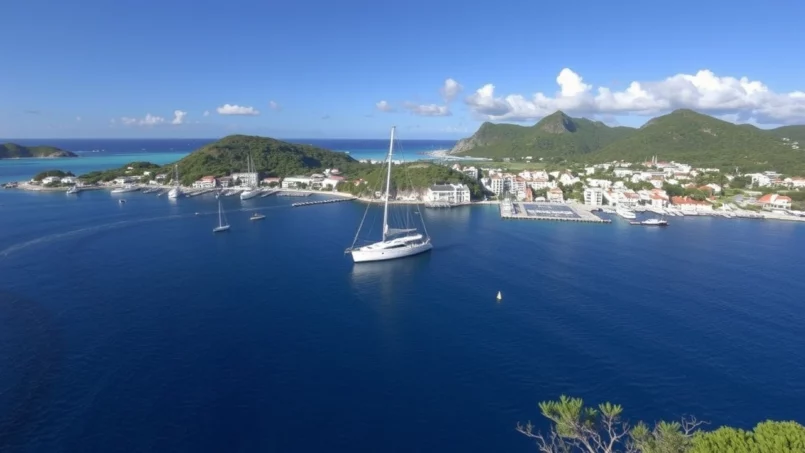
The idea of buying a villa with an infinity pool overlooking the Atlantic or an apartment dominating a marina is attracting more and more expatriates. Among the most coveted destinations, Saint-Barthélemy holds a special place. A tiny French territory in the tropics, a real estate market comparable to Monaco, a unique tax system, a chronic shortage of properties: everything conspires to make it a textbook case for wealthy investors.
For an expatriate, investing in Saint-Barthélemy for housing, securing assets, and generating rental income requires a solid understanding of the island’s specific codes. This comprehensive guide, based on the latest data and trends, provides the knowledge needed to undertake this process with full awareness.
Understanding the DNA of the Saint-Barthélemy Real Estate Market
It is difficult to grasp real estate investment in Saint-Barthélemy without starting from the geography and political status of the island. The territory spans between 21 and 25 km², with about 10,000 inhabitants. It is a self-governing French overseas collectivity that applies French civil law but controls its own local taxation, urban planning, and a large part of its tourism policy.
This combination of small size, partial sovereignty, and ultra-high-end positioning explains the essence of the real estate market: rare opportunities, record prices, and a strict regulatory framework.
Number of visitors who stayed on the island in 2023, roughly 30 tourists for every resident.
Observers often compare the Saint-Barthélemy market to those of Manhattan or Monaco. The same ingredients are found: a microscopic territory, extreme land pressure, solvent international demand, strict regulations. The result is a very expensive market, but also a remarkably resilient one, even in the face of shocks.
Over the past ten years, the price per square meter has increased by approximately 70%.
Since late 2022, however, the market has entered a phase of rebalancing. The steepest increases have subsided, selling times are lengthening, and very large properties now show negotiation margins of 12 to 20%. We are far from a downturn, but the period is more favorable for savvy buyers than for hurried speculators.
Prices Among the Highest in the World
For an expatriate, the first reality to grasp is the price level. Investing in Saint-Barthélemy bears no resemblance to buying a second home in a classic seaside resort: from the entry level, you are playing in the “international luxury” category.
Recent data provides a precise order of magnitude:
| Indicator | Observed Level in Saint-Barthélemy |
|---|---|
| Floor price per m² (all properties) | €6,500 – €20,000 |
| Average price per m² | €26,000 – €36,000 |
| Ceiling price per m² | €60,000 – €74,000 |
| Well-located villa segment | €15,000 – €30,000 / m² |
| Entry price for a “true” luxury villa | €3 to €7 million |
| Large waterfront properties | €20 to €50+ million |
On certain international databases, 171 luxury homes listed in Saint-Barthélemy show an average price of around $9 million, with extremes ranging from just over $1.1 million to nearly $60 million for the most exceptional pieces. The average size of these homes is around 187 m².
In terms of square footage, statistics also reveal the gap between apartments and villas:
| Property Type | Period | Median Price (€/sq ft) |
|---|---|---|
| Apartment | May 2025 | 339 |
| House | May 2025 | 3,659 |
| Apartment | July 2025 | 298 |
| House | July 2025 | 6,071 |
These figures should be handled with caution, but they illustrate the overvaluation of villas with sea views or access. For example, a 56 m² apartment in Saint-Jean sold off-plan for €3.15 million, while a duplex in a residence like “Les Suites du Roi Oscar II” or “Beaulieu” in Gustavia easily exceeds €2 to €3 million.
An emblematic case is the 2023 sale of a 52-hectare estate in Colombier, historically linked to the Rockefeller family, for approximately €135 million. At this price level, the transaction is no longer reasoned in price per square meter but concerns “trophy assets,” properties held primarily for their heritage and image value.
For more “modest” budgets (relatively speaking), a project like Lorient Estate — permitted for four two-bedroom villas on a 2,237 m² plot, listed at €5.426 million — illustrates the entry ticket for a structured development operation.
Where to Invest in Saint-Barthélemy as an Expatriate?
On such a small territory, every valley and every bay has its own personality, price level, and occupancy profile. For an expatriate wanting to invest with both quality of life and rental profitability in mind, choosing the right area is crucial.
Gustavia: The Urban Heart, Between Marina and Luxury Boutiques
The capital of the island, Gustavia concentrates the marina, restaurants, bars, and luxury brands of the “Golden Square.” Properties here are mostly apartments or small townhouses, highly sought after for the harbor view and proximity to all amenities.
Land is extremely scarce: a simple plot of 0.029 acre was put up for sale, symptomatic of the cost of every square meter. Duplexes with harbor views in upscale residences regularly exceed €2 or €3 million.
For an expatriate wanting to live “at the center of everything”, without being constantly dependent on a car, Gustavia offers a unique urban lifestyle in the Caribbean, and a solid rental potential, especially in the high-end short-stay segment.
Saint-Jean: The Postcard Icon
Saint-Jean combines legendary beach, the Eden Rock hotel, Nikki Beach, shops, restaurants, and immediate proximity to the airport. You’ll find villas overlooking the bay and prestigious apartments.
The sale of a 56 m² apartment for €3.15 million illustrates the extreme tension in this area, which is also one of the most in demand for high-end seasonal rentals. Prestigious villas can achieve weekly rents exceeding €75,000 in high season.
For an expatriate wanting a highly liquid pied-à-terre that is easy to rent and lively all year round, Saint-Jean is an almost essential choice… as long as you accept stratospheric prices per square meter.
Pointe Milou, Gouverneur, Lurin: The Panoramic Balconies
Pointe Milou is renowned for its villas perched on the cliff, with 180° ocean views and spectacular sunsets. The villa Casa Nostra, 7 bedrooms on 270 m², is offered at €6.5 million, illustrating the price for a large sea-view property.
Gouverneur and Lurin feature spectacular estates designed by renowned architects (Architectonik, Johannes Zingerle, Bruneau Ghezzi). Prices far exceed €10 million for iconic villas, often hidden behind grand gates and surrounded by tropical gardens.
These areas are particularly suitable for expatriates seeking the highest level of prestige. They are often more interested in holding assets than in intensive rental use, although rental demand remains strong.
Flamands, Lorient, Colombier: Beaches, Authenticity, and Large Estates
Flamands is home to the largest beach on the island and several five-star hotels. Waterfront villas easily reach €20 to €30 million, or more. The atmosphere is more residential than festive, with beautiful volumes for families.
Lorient offers a balance between authentic charm, a beach popular with surfers, and strong rental demand. It is an interesting area for an expatriate who wants a somewhat quieter environment, without being far from the main living areas.
Colombier, finally, is synonymous with large, secluded properties, sometimes accessible only by trail or boat. The famous Rockefeller estate marked the history of the place. Those who invest here seek above all privacy and large acreage, with a very long-term perspective.
Grand Cul-de-Sac, Petit Cul-de-Sac, Marigot, Anse des Cayes: The Kingdom of Family Villas
These less central bays are particularly popular with families and watersports enthusiasts (kiteboarding, paddleboarding, windsurfing). There are many villas dedicated to rentals, some incorporating “green” features: solar panels, rainwater harvesting, sustainable materials.
Prices remain very high, but slightly more affordable than in the ultra-prime spots. For an expatriate wanting to combine personal family use with good rental demand, this is often a relevant compromise.
Villas or Apartments: What Type of Property to Target?
For an expatriate, the choice between villa and apartment is not just a matter of budget; it also structures the investment strategy.
A well-located villa with a pool, sea view, and 3 to 5 bedrooms is the heart of the high-end rental market. During high season (December-April), a small one-bedroom can rent for $500 to $1,000 per night. Large villas with 4 to 6 bedrooms typically go for $2,000 to $5,000 per night, or $10,000 to $50,000 per week. Ultra-exclusive properties reach $100,000 to $350,000 per week for New Year’s.
Acquiring a property for seasonal rental represents a significant initial investment. Its management is demanding, similar to that of a small hotel, and its regular maintenance (garden, pool, air conditioning, protection against salt and sun) requires a substantial budget.
Apartments, rarer and almost exclusively concentrated in Gustavia and Saint-Jean, offer a slightly lower entry ticket in total value (but often as expensive per square meter) and simpler management, with shared condominium fees. They attract a different audience: couples, business travelers, short-stay visitors.
From a purely financial standpoint, well-managed villas generally generate better absolute rents, but gross yields remain modest relative to purchase prices.
Renting Your Property: Potential, Figures, and Operational Realities
Seasonal rentals are the name of the game for many expatriate owners. They help offset part of the holding cost while allowing the owner to enjoy the property for a few weeks a year.
Aggregated data from approximately 560 active listings provides a fairly detailed picture of the market:
| Indicator (all properties combined) | Approximate Average / Median Level |
|---|---|
| Average monthly revenue (annual) | ~ $6,950 |
| Average occupancy rate | 39% |
| Average daily rate (ADR) | ~ $787 |
| Average monthly revenue Top 25% | ≥ $13,205 |
| Average monthly revenue Top 10% | ≥ $23,236 |
| ADR Top 10% | ≥ $2,251 |
| Occupancy rate Top 10% | ≥ 80% |
Seasonality is pronounced: January to March constitutes high season with about 56% average occupancy and an ADR around $1,129. June, September, and October are the weakest months, with about 31% occupancy.
Well-managed villas rent out for about 20 weeks a year, with an annual gross yield of 2% to 4% of the purchase price. After deducting management fees (20-30% of rents), tourist tax (5% on overnight stays), maintenance, insurance, and utilities, the net yield is significantly lower.
The traveler profile is predominantly international (86%), dominated by Americans (over 60% of visitors via platforms). Half of the clientele belongs to generations born after 2000 (Gen Z and Alpha), which influences expectations regarding connectivity, contemporary design, and on-demand services.
A key characteristic of the market is the overwhelming share of entire home listings (nearly 95%), the majority being houses/villas. The most common rental configuration is a 1- to 3-bedroom villa, but larger 4+ bedroom units, though fewer in number, generate very high rental income.
Rental Management and Regulations
On the regulatory front, seasonal rentals are regulated but not limited in number of days as in some major French cities. Any furnished accommodation intended for tourists must be declared via the online platform “Déclaloc” to obtain a registration number. Over 90% of Airbnb listings on the island are thus declared, a sign of fairly comprehensive regulation.
Key services and costs associated with the professional management of a prestigious rental property.
Daily housekeeping, concierge, reactive maintenance, personalized welcome, arranging transfers and private chefs.
The vast majority of owners use specialized agencies or property management companies.
Costs for rental management typically range between 20% and 30% of collected rents.
The owner does not have to manage the tourist tax themselves if the property is entrusted to an agency, which collects and remits the 5% to the collectivity. In case of direct rental (e.g., via a platform), the owner bears the responsibility.
For an expatriate, especially a non-French speaker, it is highly recommended to have a local French-speaking contact capable of handling administrative procedures, organizing maintenance, and managing relationships with the notary, the collectivity, craftsmen, and insurers.
A French Legal Framework, but Adapted to the Island
One of the major advantages of Saint-Barthélemy for an expatriate is the application of French civil law. The legal security of transactions is high, the purchase process is well-established, and the mandatory presence of a notary, a public officer, greatly reduces the risk of unpleasant surprises regarding the title deed.
The acquisition process is essentially similar to that of mainland France, with a few local specificities.
The Key Steps of an Acquisition
Once the property is found and the offer accepted, the transaction follows a multi-step process:
Buying real estate in France follows a regulated procedure. It begins with signing a preliminary sales agreement (compromis de vente), drafted by the notary within 30 to 45 days, accompanied by the buyer’s payment of a deposit of about 10% of the price, which is held in escrow. The non-professional buyer then has a seven-day withdrawal period (except for vacant land) to cancel without penalty. Next comes the instruction period, during which the notary verifies the legal and urban planning status of the property and notifies the sale to the collectivity, which can exercise its right of preemption for a minimum period of 60 days. Finally, generally 4 to 6 months after the initial agreement, the final deed of sale is signed at the notary’s office, marking the transfer of ownership and handover of keys.
The buyer does not need to be physically on the island: a notarized power of attorney suffices to appoint a representative who will sign on their behalf. The notary acts as both guarantor of the deed’s authenticity, insurer of the title’s validity, and “gatekeeper” in anti-money laundering matters, with an obligation to verify the source of funds.
Right of Preemption of the Collectivity
An important particularity: the collectivity of Saint-Barthélemy has a right of preemption over sales, especially when both seller and buyer are non-residents. Upon signing the preliminary agreement, the file is sent to the administration, which has 60 days to decide. If it exercises its right, it substitutes itself for the buyer under the agreed conditions.
The right of preemption is used in a targeted manner for strategic operations (natural heritage, housing for residents, public facilities). Its exercise systematically extends deadlines, making it impossible to sign the final deed before the end of the relevant period.
Transaction Costs and Diagnostics
For the buyer, the total acquisition cost (excluding the property price) is generally between 6% and 8% of the price. This includes registration fees of around 5%, plus the notary’s fees and costs (1 to 2%). The real estate agency, when mandated by the seller, has its fees (often 5 to 6% of the price) included in the listed price.
The seller, for their part, bears the cost of mandatory diagnostics: electricity, gas, termites, sanitation, asbestos for permits prior to July 1, 1997. Unlike mainland France, the energy performance diagnostic is not required, nor is a global structural check, although it is prudent to consider one for certain buildings.
Taxation: A High-Potential Framework for Expatriates
Beyond prestige and scarcity, the taxation of Saint-Barthélemy plays a key role in the island’s appeal to wealthy expatriates. But it is often misunderstood. It is not an “offshore” tax haven, but a French territory with a specific territorial regime, with banking transparency and compliance with international standards.
Property, Income, Wealth: What Is Not Taxed Locally
The most spectacular point is the absence of property tax in practice. The territorial council set the tax rate on built and unbuilt properties at 0%, effectively exempting owners from a tax that weighs heavily in other jurisdictions.
For individuals who become tax residents of Saint-Barthélemy (after at least five years of legal residence), the regime is even more advantageous: there is no local income tax, no wealth tax, no inheritance or gift taxes on assets located on the island.
Rate of the tourist tax applicable on overnight stays in seasonal rentals.
Finally, there is no VAT on real estate purchases nor a classic corporate tax for companies; instead, they pay an annual flat-rate contribution (€400 + €50 per employee) and customs duties on imports.
Capital Gains Tax: A Tax to Handle with Caution
It is on real estate capital gains that the collectivity has chosen to tighten the screws to limit speculation. Since May 2017, the rate can reach 35% on a resale occurring within the first eight years. Beyond that, the base rate drops to 20%, with a 10% reduction per additional year. In practice, full exemption occurs after about 15 years of ownership.
This scale applies to residents subject to local taxation. For non-residents, different rates apply depending on nationality and situation: around 16% for residents of the European Union, 19 to 27% for certain French nationals, up to about 33% for residents of third countries. Social contributions may be added, and recourse to a tax representative is often required.
Unlike mainland France, the sale of the primary residence is not automatically exempt from tax. This potentially heavy taxation leads many owners to favor renting out their property rather than selling it.
Structuring via a Company and Inheritance Issues
For an expatriate, especially a non-French one, the question of ownership structure is central. Buying in one’s own name exposes the buyer to French inheritance law, which imposes a compulsory share for children. For those wishing to freely modulate transmission (spouse, family trusts, etc.), this constraint can be problematic.
This is one reason why many investors prefer acquisition via a locally established company (SCI, SAS, or other suitable structure). In this case, it is the company shares that are transferred, and the law applicable to the inheritance can be that of the deceased’s country of residence, subject to proper structuring.
However, beware: companies holding a building in Saint-Barthélemy must file annually, by March 31 at the latest, a declaration detailing their beneficial owners. Failing this, they are liable for an annual tax of 3% of the market value of the property, a dissuasive penalty that encourages transparency.
Financing Your Purchase: A Very “Cash” Market
One striking characteristic of the Saint-Barthélemy market is the high proportion of cash transactions. The amounts involved, the scarcity of supply, and the complexity of files for local banks largely explain this phenomenon.
Obtaining a real estate loan from an institution based on the island is difficult, especially for non-residents. Local banks are cautious, require solid guarantees, and do not always readily extend credit lines to foreign investors.
The most common alternatives for an expatriate are:
To finance a real estate purchase abroad, several options are available. You can opt for financing through a mainland French bank, which knows the applicable law and may be more flexible if you already hold assets in France. Another possibility is a loan from an international private bank, often secured against a portfolio of securities (lombard loan) or contingent on opening a wealth management relationship. Finally, you can take out financing in your country of residence, contributing part of the price in equity and refinancing against other assets.
Loan structures can be traditional (amortizing) or interest-only (in fine), especially for highly liquid investors. Whatever the chosen scheme, the notary will require complete traceability of funds, particularly if they come from the sale of cryptocurrencies or other atypical assets, due to anti-money laundering rules.
Risks and Limits of an Ultra-Exclusive Market
For an expatriate seduced by postcard images and the promise of a light tax regime, it is essential not to idealize Saint-Barthélemy. The investment comes with real specificities and risks.
The first is obviously the entry ticket level. Below €1 to €2 million, supply is virtually non-existent. Truly attractive villas with sea views and solid rental potential start between €3 and €5 million, or more depending on location.
Duration in years needed to resell a luxury property over €10 million, with price reductions of 12 to 20%.
Third issue: regulatory risk. The collectivity has already shown its ability to temporarily freeze the issuance of new building permits to preserve quality of life, and a $170 million hotel project in Saint-Jean was canceled by the courts for environmental reasons. The political debate on housing for local workers, priced out by soaring prices, could eventually lead to additional restrictions.
The island is located in a cyclone zone, with peak risk from August to October. Buildings must meet anti-cyclone standards, but the risk of major damage persists, as demonstrated by Hurricane Irma. This exposure leads to high insurance premiums and requires constant maintenance to combat corrosion, infiltration, and vegetation.
Finally, one must factor in the operational complexity of managing a high-end property remotely. Without a reliable local team capable of overseeing work, household staff, tenant reception, and relations with the administration, the quality of the investment can quickly deteriorate.
Investment Strategies for Expatriates: Which Approach to Take?
Faced with this landscape, how can an expatriate structure their project? Several major strategies emerge.
1. Prestige Villa for Occasional Rental: The Patrimonial-Rentier Logic
This is the most common scenario among wealthy individuals: acquisition of a 3- to 5-bedroom villa with a view, pool, high-end finishes, in a sought-after area (Saint-Jean, Pointe Milou, Gouverneur, Flamands, Lorient).
The property is used by the family for several weeks a year and rented out the rest of the time, via a specialized agency. Based on about twenty weeks rented, the income covers a significant portion of expenses, without turning the owner into a full-time hotelier.
This approach requires accepting a long holding period, often exceeding ten years, to smooth market cycles and optimize capital gains taxation. The primary objective is protection and transmission of a rare asset, rather than maximizing short-term returns.
2. Development or Renovation Project: The Entrepreneurial Logic
For experienced expatriates in high-end development or renovation, some deals in Saint-Barthélemy can offer interesting margins, provided you master the local context thoroughly.
This could involve buying a plot with an existing building permit, such as lots similar to Lorient Estate, or an older villa with strong reconfiguration potential. The strategy then involves collaborating with renowned local architects, such as François Pécard, Architectonik, Johannes Zingerle, Nicolas Gessat, or Bruneau Ghezzi, to reposition the property in the ultra-high-end segment.
This strategy is riskier — regulatory exposure, construction hazards, financing — but can generate significant capital gains over a few years. It is reserved for very well-informed profiles, with a solid local team and the ability to absorb potential delays.
3. Apartments in Gustavia or Saint-Jean: The More Compact Entry Point
For an expatriate wanting a slightly more “contained” entry ticket or a mixed-use pied-à-terre (personal/professional), buying an apartment in downtown Gustavia or Saint-Jean is a serious option.
The price per square meter is similar to that of villas, but the total value of the apartment is lower. Condominium fees help control certain costs better. Seasonal rental, particularly dynamic for well-located small spaces (with harbor views or near the beach), represents a significant rental advantage.
This type of investment can serve as a “first step” to test life in Saint-Barthélemy, before potentially moving to a villa as needs or means evolve.
4. Personal Residence Without Rental: The Pure “Trophy Asset”
Finally, some very wealthy expatriates consider their purchase in Saint-Barthélemy purely from the perspective of comfort and image, without seeking to rent. They acquire a large waterfront property or a unique estate (Colombier, Gouverneur, Mont-Jean), renovate it to their taste, and use it as an ultra-private second home.
In this case, the financial dimension boils down to long-term value preservation and intergenerational transfer. The annual carrying cost is secondary; the priority is privacy and quality of life.
Practical Tips for an Expatriate Getting Started
To conclude, a few key points emerge from investor experiences and market data.
First, it is crucial to clarify your objectives before even looking at listings: is it a pied-à-terre for a few months a year, a primary residence, a predominantly rental investment, a development project? The answer determines the choice of neighborhood, property type, legal structure, and financing method.
In Saint-Barthélemy, it is crucial to assemble a team of local experts. This includes a well-established real estate agency, a notary familiar with the collectivity’s specificities, a business lawyer versed in local law, and a tax expert to manage implications between the country of origin and the island. For rental management and maintenance, choosing an experienced management company that provides regular reporting and a network of reliable craftsmen is essential to avoid unpleasant surprises.
Before signing, it is essential to go beyond standard diagnostics and check: urban planning compliance, easements, natural risks, structural quality, property history, and real rental potential (not just marketing promises of profitability). Better to aim for a realistic gross yield of around 2 to 4% than to be seduced by unrealistic projections.
It is crucial to address inheritance and asset structuring questions very early on. This involves choosing between direct ownership or through a company, considering the articulation with any trusts, and defining the family’s tax residence. This foresight helps avoid many pitfalls, especially in case of international succession.
Finally, one must accept the unique pace of Saint-Barthélemy. Cycles are slow, projects take time, and illiquidity is part of the game. The expatriate investor who approaches the island with a long-term horizon, a clear vision of what they are looking for, sufficient financial ease, and a trusted team can, however, find a rare asset: a corner of paradise solidly anchored in the French rule of law, at the crossroads of Caribbean sweetness of life and the sophistication of a global luxury hub.
Disclaimer: The information provided on this website is for informational purposes only and does not constitute financial, legal, or professional advice. We encourage you to consult qualified experts before making any investment, real estate, or expatriation decisions. Although we strive to maintain up-to-date and accurate information, we do not guarantee the completeness, accuracy, or timeliness of the proposed content. As investment and expatriation involve risks, we disclaim any liability for potential losses or damages arising from the use of this site. Your use of this site confirms your acceptance of these terms and your understanding of the associated risks.

Cyril Jarnias is an independent expert in international wealth management with over 20 years of experience. As an expatriate himself, he is dedicated to helping individuals and business leaders build, protect, and pass on their wealth with complete peace of mind.
On his website, cyriljarnias.com, he shares his expertise on international real estate, offshore company formation, and expatriation.
Thanks to his expertise, he offers sound advice to optimize his clients' wealth management. Cyril Jarnias is also recognized for his appearances in many prestigious media outlets such as BFM Business, les Français de l’étranger, Le Figaro, Les Echos, and Mieux vivre votre argent, where he shares his knowledge and know-how in wealth management.





