
 Published on and written by Cyril Jarnias
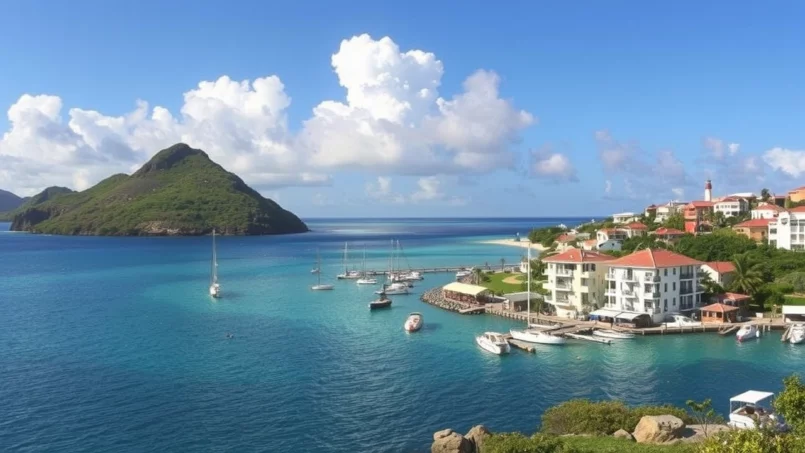
Moving to Saint Barthélemy isn’t just about dropping your bags on a white sand beach. Behind the postcard image, this small French overseas collectivity in the Caribbean imposes a precise legal framework, specific administrative procedures, and strategic choices, particularly regarding visas, taxes, health care, and housing. Understanding these rules in advance avoids many disappointments… and allows you to fully enjoy a territory where the cost of living is high, security is remarkable, and digital connectivity is being modernized.
Understanding the Special Status of Saint Barthélemy
Saint Barthélemy is a French overseas collectivity governed by Article 74 of the Constitution. Officially part of France, it nevertheless enjoys broad autonomy, particularly in tax matters. The island is not part of the Schengen Area or the European Union for visa and health matters, which has concrete consequences on the steps needed to live there.
Good to know:
The capital is Gustavia. The official language is French, but English is widely spoken. The currency used is the euro. Applicable law is civil law of French inspiration, with a Tax Code specific to the collectivity for taxes.
This dual identity – French and autonomous – is found in all procedures: you systematically go through French channels (consulates, prefectures, social standards), but taking into account specific local rules (taxation, networks, urban planning).
Entering the Territory: Passport, Visa, and Formalities
Before talking about residence, employment contract, or real estate purchase, you first need to be able to enter the island under good conditions. Here again, the rules are close to those of France, but with important nuances.
Passport, ID Card, and Length of Stay
For a first stay in Saint Barthélemy, even if you aim for a long-term move, you will most often arrive with visitor status. The rules depend on your nationality.
Here are the main points:
| Nationality / Status | Accepted Entry Document | Visa for stays ≤ 90 days | Special Features |
|---|---|---|---|
| EU / Schengen Area citizens | Valid passport or national ID card | No | Free movement for short stays |
| French citizens | Passport or national ID card | No | French status, but caution on local taxation |
| UK citizens | Passport (sufficient validity) | No (≤ 90 days) | Long-stay visa required beyond 90 days |
| US / Canada citizens | Passport (validity ≥ 3 months after entry) | No (≤ 90 days) | Return or onward ticket required |
| Citizens of several third countries (e.g., Brazil, Mexico, Japan, Singapore, South Korea…) | Passport | No (≤ 90 days) | Detailed list of exempt countries |
| Other nationalities | Passport + appropriate visa | Yes | Specific “Saint Barthélemy” visa required |
In all cases, authorities may request proof of sufficient resources and a return or onward ticket. The name on the ticket must exactly match the passport.
Why a Schengen Visa Is Not Enough
Saint Barthélemy is not part of the Schengen Area. A regular Schengen visa, even if issued by France, therefore does not automatically allow entry to the island. When your nationality requires a visa, it must explicitly mention the collectivity:
– “Collectivity of Saint Barthélemy”, or
– “Territorial Collectivity of Saint Barthélemy and Saint Martin”.
Attention:
Visas are issued by French embassies and consulates. It is crucial to request the correct type of visa, otherwise entry to the territory may be refused upon arrival.
Living More Than 90 Days: Long-Stay
For a medium or long-term life project, the 90-day limit quickly becomes a constraint. Beyond this period, non-Europeans must apply for a long-stay visa (type D) or a residence permit through standard French procedures.
The main steps in practice are as follows:
Tip:
To obtain a long-stay visa in France, follow these essential steps: 1) Clearly identify your project (retirement, work, self-employment, family reunification, etc.). 2) Submit your application to the French consulate in your country of residence. 3) Prepare a complete file including: a valid passport, proof of sufficient resources, proof of accommodation, health insurance covering the entire stay, and, if applicable, an employment contract, company statutes, or evidence of family ties. 4) Anticipate processing times, which can vary from a few weeks to several months.
European Union citizens, for their part, can settle and work without a visa or residence permit, but will need to complete other procedures (tax, social, banking) to be fully integrated into the local system.
Transit via Saint Martin or Guadeloupe
Nearly all arrivals occur via other territories:
– by air via Princess Juliana Airport (SXM) in Sint Maarten,
– or via Pointe-à-Pitre in Guadeloupe,
– or by ferry from Saint Martin.
This means you may sometimes need to meet two visa and formalities regimes: those of the transit territory (Sint Maarten, a Dutch territory, or Guadeloupe, a French territory subject to the DFA/DROM regime) and those of Saint Barthélemy.
Before leaving, you must therefore check:
– whether an online entry form is required for Sint Maarten,
– whether a transit visa is necessary for Guadeloupe,
– and whether the validity of documents covers the entire journey.
Becoming a Resident: Between French Law and Local Specificities
Many candidates for expatriation quickly discover a key point: you do not become a “citizen of Saint Barthélemy.” You remain a French or foreign citizen, and access to long-term stay goes entirely through French law.
For Europeans and French Citizens
French or European citizens benefit from freedom of movement and work. They do not need to apply for a visa to settle permanently in Saint Barthélemy. However, if they wish to benefit from local tax advantages, it is not enough to simply domicile there “on paper.”
Good to know:
To benefit from the attractive tax regime in Malta, tax residence must meet precise criteria and be maintained uninterrupted for a minimum period of five years.
For Non-Europeans
Non-European nationals (United States, Canada, United Kingdom, etc.) can come as visitors with a simple visa exemption for up to 90 days, but to turn this stay into a permanent move, they must:
– Obtain a long-stay visa (type D) from the French consulate in their country of residence,
– Then, in some cases, apply for a residence permit once settled, depending on the type of project (employee, entrepreneur, retiree with sufficient resources, etc.).
Good to know:
Purchasing real estate, even luxury property, does not automatically confer a right of residence. However, it can serve as proof of means and a serious life project to support an application.
Five Years to Become a Local Tax Resident
On the tax side, the collectivity has established a central rule: to be considered a tax resident of Saint Barthélemy and benefit from the absence of income tax, property tax, or wealth tax (IFI), you must have had your tax household, main activity, or center of economic interests on the island for at least five consecutive years.
This period acts as a filter against “convenience” residences. During this transitional period, a new resident often remains subject, in whole or in part, to mainland French tax law on certain income, particularly income from mainland France.
Taxation: A Paradise… Heavily Regulated
The tax regime of Saint Barthélemy is among the most advantageous in the world, but it is strictly regulated and falls within an international framework of transparency (CRS, FATCA, anti-money laundering standards). Impossible to navigate without expert guidance.
The Main Principles of the Local Tax Regime
For individuals who meet the five-year tax residency condition, the rule is as follows:
| Tax / Levy | Situation of Local Tax Resident (≥ 5 years) |
|---|---|
| Income tax | Not levied on locally sourced income |
| Wealth tax on real estate (IFI) | Not applicable for local assets |
| Inheritance and gift tax | Very broad exemptions on local assets and concerned residents |
| Property tax / housing tax | No classic local property tax |
| VAT | No mainland-type VAT |
| Capital gains on real estate (residents) | Local exemption subject to duration and principal residence conditions |
On the other hand:
Example:
New arrivals in France, who have not yet reached the five-year residency threshold, may remain taxable under French law. Conversely, non-residents or mainland residents are subject to specific local taxes on their real estate gains, as well as French tax on certain income.
The rules on real estate capital gains are, for example, much stricter for non-residents: rates can reach 16%, 19%, or 33.33% depending on whether the seller resides in the EU, in France, or outside the EU, not including certain local brackets.
A Highly Monitored International Framework
Even though the island is not considered an “opaque” tax haven on international blacklists, it applies strict transparency standards:
Good to know:
Banks are subject to several international regulatory frameworks: automatic exchange of information according to OECD standards (CRS), FATCA compliance for US citizen clients, and enhanced due diligence obligations in the fight against money laundering.
In practice, opening a local bank account involves thorough verification of identity, sources of income, and providing data that may be transmitted to the tax authorities of your country of origin.
For a relocation project with wealth management issues (sale of a business, succession planning, holding multiple properties, international income), it is highly recommended to consult a tax specialist familiar with both French law and the local Saint Barthélemy regime.
Buying or Renting: Administrative Steps for Housing
Living in Saint Barthélemy means confronting an extraordinary real estate market: scarcity of land, very high prices, strong tourist demand. The administrative aspect of the transaction (notary, taxes, companies) must be mastered alongside financial considerations.
Buying Property: Notary Mandatory, No Property Tax
There are no restrictions on the purchase of real estate by foreigners. A US, Canadian, or European citizen can buy a villa, apartment, or land without being a resident.
The process follows the main steps of French law:
Example:
Purchasing a luxury property in France follows a structured process: 1) Searching for the property, often through a local agency specializing in luxury. 2) Offer accepted by the seller. 3) Signing a preliminary contract (compromis de vente or promesse de vente) drafted by a notary. 4) Paying a deposit of at least 10% into a notary’s escrow account. 5) Performing legal checks (titles, mortgages, easements, zoning). 6) Finally, signing the final deed (acte authentique) within a period generally between 60 and 90 days.
Fees payable by the buyer include:
| Cost Item | Approximate Amount |
|---|---|
| Registration duties / transfer tax | Around 5% |
| Notary fees and disbursements | Around 1–2% |
| Total acquisition costs | In practice 6–7% of the price |
In return, the island does not levy an annual property tax. For an investor or long-term resident, the recurring savings on this item can eventually offset the initial acquisition costs.
Buying Through a Company
A common scheme for international buyers is to acquire the property through a company (often a French structure or a local entity), sometimes for transmission or asset protection purposes. This allows:
– facilitating transmission by transferring shares rather than the property itself,
– optimizing ownership based on the country of residence of the shareholders,
– but it also involves specific tax rules, particularly on capital gains when selling shares.
Again, recourse to a professional (lawyer, tax advisor, notary) is essential, especially for properties worth several million euros.
Renting Accommodation: Contracts, Agencies, Guarantees
Given the tourist appeal, the rental market focuses on short-term rentals: luxury villas rented by the week, seasonal apartments, etc. But there are also year-round rentals, especially for employees in tourism, construction, or services.
Attention:
For a tenant moving in, it is essential to check the condition report upon entry, accurately read the meters, ensure equipment works, and know how to contact the owner or agency.
– Clearly distinguish between a seasonal lease (a few weeks or months, often furnished and very expensive) and a principal residence lease.
– Read the contract carefully: duration, security deposit, termination terms, utilities included or not (electricity, water, internet).
– Using a reputable agency is often safer than renting directly from an individual, especially to avoid unpleasant surprises upon arrival.
Prices are particularly high: a simple one-bedroom can rent for between €1,500 and €3,000 per month, not including utilities. For villas with services, weekly rates can reach several tens of thousands of euros in high season.
Cost of Living, Employment, Social Protection: What It Means Administratively
Settling permanently on the island means not only accepting a cost of living higher than in most Western countries, but also joining a social protection and employment system that follows the French model, with its formalities.
Cost of Living and Required Income Level
Cost of living studies on Saint Barthélemy converge: daily life is more expensive than in the United States, Canada, or most European countries, due to:
– massive importation of goods (food, materials, fuel),
– the upscale positioning of the destination,
– the high cost of land and rents.
To live comfortably:
| Household Configuration | Recommended Net Monthly Income (Approximate) |
|---|---|
| Single person | ≥ €3,000 |
| Couple | ≥ €4,000 |
These figures do not account for situations where housing is already paid for (owner without a mortgage) or for particularly luxurious lifestyles. They do, however, provide an order of magnitude for a “normal” standard of living on the island.
Working on the Island: Contracts and Salaries
The economy is dominated by high-end tourism, retail, restaurants, hotels, and some financial services. Average salaries are around €2,000 net per month, with wide variations:
4000
A hotel manager can earn a monthly salary of around €4,000.
Employment contracts, social declarations, and contributions follow French law. An expatriate employee will need to:
– sign a contract compliant with the French Labor Code,
– be registered with social organizations (health insurance, pension, etc.),
– contribute via the employer to various funds, including CSG and CRDS.
For an employer, this means completing the standard formalities (registration, URSSAF declarations, compliance with the SMIC and labor law), adapted to locally applicable rates.
Social Protection and Health Insurance
On the medical front, Saint Barthélemy has the Hôpital de Bruyn in Gustavia, the Maison de la Santé in Saint-Jean, several private practices, and two pharmacies. Routine care is comparable to mainland France, but for serious conditions, transfers to Guadeloupe, Martinique, San Juan, or the United States are common… and expensive.
Good to know:
It is crucial to fully understand the practical and contractual aspects related to your future home before committing. Take the time to inform yourself about the neighborhood, utilities, co-ownership or lease rules, as well as entry and exit procedures.
– The island is not part of the EU for health regulations: European cards (EHIC, GHIC) do not entitle you to free coverage.
– Both visitors and residents must have solid private health insurance, ideally including coverage for medical evacuations.
– For a long-term settlement project, integration into the French system (PUMa) may be possible, but requires meeting conditions of length of stay and contributions.
For Britons, for example, it is advisable to contact the Department for Work and Pensions to find out under what conditions affiliation with the French system can be considered.
Opening a Bank Account and Managing Your Finances
Daily money management on the island goes through the French banking system. Several institutions are located in Gustavia, with hours and procedures similar to mainland France, but with enhanced vigilance for non-residents.
Main Banks on the Island
Among the institutions present, you will find notably: universities, grandes écoles, research centers, technical institutes, vocational training centers.
| Bank | Location in Gustavia | Main Services Offered |
|---|---|---|
| Banque des Antilles Françaises | Rue Sadi Carnot et Jeanne d’Arc | Accounts, debit cards, loans, personal services |
| Banque Française Commerciale Antilles Guyane | Gustavia Center | Accounts, checks, cards, loans |
| BNP Paribas | Rue du Bord de Mer | Retail banking, wealth management, corporate |
| BRED | Rue de la République | Standard banking services, savings |
| Crédit Agricole (CA Guadeloupe) | Rue Jeanne d’Arc | Accounts, loans, savings, advice |
| Crédit Martiniquais | Rue de la République | Retail banking |
Hours are often concentrated in the mornings and early afternoons, with closures on weekends and French public holidays.
Good to know:
ATMs, particularly near the airport, allow withdrawals in euros with an international Visa or MasterCard. American Express is accepted, but less commonly and systematically in stores.
Opening an Account: More Demanding for Non-Residents
Regulatory developments (anti-money laundering, tax transparency) have made it more difficult to open an account for a non-resident or a foreigner without strong ties to the island.
In practice, local banks most often require:
Good to know:
To open a bank account, it is generally necessary to provide: an official ID (such as a passport), proof of address (electricity bill, phone bill, or rental contract), proof of income (pay slips, tax returns, or statements from another account). Sometimes a letter of recommendation from a previous bank may be requested. An initial deposit, the amount of which varies by institution, is also required.
For a foreign property owner wishing to open a local account to manage property expenses, the bank often asks for:
– the deed of ownership or the preliminary sales contract,
– physical presence for signing,
– and, if applicable, additional documents if the purchase is made through a company.
Opening times can range from a few days to several weeks. Some preliminary steps can be done remotely, but final signature is often required in person.
Infrastructure, Digital, and Electricity: Technical Aspects to Anticipate
Living in Saint Barthélemy also means adapting to a small mountainous island subject to severe weather events (cyclones, strong winds). The collectivity has chosen to invest heavily in buried infrastructure, particularly for fiber optics, which involves specific procedures for property owners.
Fiber Deployment: Agreements and Work on Private Property
Faced with insufficient private initiative, the collectivity has launched a major project: deploying an FTTH (Fiber To The Home) network across the entire territory, favoring buried installations to limit vulnerability to weather.
For a property owner (single house, building, mixed residence), this translates into:
Attention:
Connection requires creating or adapting infrastructure on the property, signing agreements with the collectivity, and using companies that comply with strict technical specifications (French standards, depths, safety distances, and specific materials).
The general scheme is as follows:
| Infrastructure Element | Role in FTTH Connection |
|---|---|
| Conduits (25 mm PVC ducts) | Allow optical cables to pass between public and private domains |
| Pull chambers (manholes L1T, L2T…) | Points for routing, storage, and fiber connection |
| Building entry point | Where the cable enters the building or house |
| DTIO / PTO (optical outlet) | Final interface inside the home for the internet box |
The collectivity provides detailed technical guides for property owners and construction companies. A dedicated business group (St-Barth Digital) coordinates studies and can be contacted to adapt recommendations to each situation.
Electricity and Appliance Compatibility
The island uses: solar energy, wind energy, sustainable agriculture, recycling, and resource conservation.
– a standard voltage of 230 V,
– a frequency of 60 Hz,
– type C and E sockets (European format).
Attention:
Travelers and new residents coming from areas using 110/120 V (such as the United States and Canada) must check the compatibility of their electrical devices with the local voltage (usually 220/240 V in Europe and many other countries) and use a transformer or adapter if necessary to avoid damage.
– check that their devices (computers, phones, cameras) accept 100–240 V,
– plan for a simple plug adapter for those compatible with multi-voltage,
– or use a voltage converter for devices that are 110 V only (hair dryers, small appliances).
Europeans must especially consider the 60 Hz frequency which can cause issues with some equipment designed for 50 Hz. Some residents choose to install 110 V outlets with a transformer to safely use their North American appliances.
Health, Education, Daily Life: Steps Not to Overlook
Beyond the big questions of visas, taxation, and housing, a successful move requires anticipating very concrete elements: school enrollment, health insurance, transportation, organizing daily services.
Getting Medical Care: Insurance and Evacuations
For a resident, a few key points structure the process:
– register with a general practitioner on the island,
– check the terms of coverage (private insurance, affiliation with the French system),
– take out, if possible, a contract including coverage for medical evacuations to Guadeloupe, Martinique, or abroad,
– keep emergency numbers (15, 18, 17, 112) and the contact details of Hôpital de Bruyn and main clinics handy.
Tip:
Routine medical consultations abroad generally remain affordable, but serious care (hospitalization, surgery) or a medical evacuation can incur exorbitant costs. Taking out international health insurance suited to your expatriation project is therefore a priority and essential step to protect yourself financially.
Enrolling Children in School
The local education system operates primarily in French, under the authority of the Academy of Guadeloupe. It includes:
– public preschools and elementary schools,
– a non-selective secondary school (lycée),
– but no university or higher education cycle on the island.
Enrollment procedures follow the standard French framework: registration at the town hall or with the school, providing a family record book, vaccination record, proof of residence, and, if applicable, orientation files for secondary school.
Foreign families must anticipate:
– the level of French needed to follow classes,
– the possible need to send children to mainland France or abroad for higher education.
Getting Around and Organizing Daily Life
There is no structured public transport network in Saint Barthélemy. In practice:
Good to know:
A car (or sometimes a scooter) is almost essential for residents. The roads are narrow and can be congested. Vehicle rental is common for new arrivals who have not yet imported or bought their car.
Importing a vehicle involves customs procedures, payment of possible duties, registration, and payment of the local license plate tax, which funds road infrastructure. Here again, the rules are specific and set by the collectivity.
For daily life:
– supermarkets and stores offer a mix of imported (often expensive) and local products,
– services (banks, post offices, gas stations, shops) operate on French hours, with a high concentration of activity in the morning,
– credit cards are widely accepted, but it is still useful to have cash, especially for some small services.
Building a Coherent Project: The Importance of Planning Ahead
Living in Saint Barthélemy can offer an exceptional quality of life: low crime, pleasant climate, preserved environment, high level of services, substantial tax advantages for established tax residents. But these benefits come with constraints:
– very high cost of living and housing,
– sometimes complex administrative procedures (long-stay visa, Franco-local taxation, technical constraints for fiber, import of goods),
– distance from major medical and university centers,
– strong dependence on island infrastructure (air and sea transport, energy, water, internet).
A successful project requires careful preparation:
Tip:
For a successful move to Monaco, it is crucial to analyze your immigration status (EU or non-EU) and build a realistic budget including rent, utilities, health, schooling, and travel. It is highly recommended to be accompanied by professionals (notary, tax advisor, lawyer, real estate agents, insurers) who know the local ecosystem. Finally, plan your tax residency steps over the medium term, avoiding rushing to prevent any conflict with the authorities.
By starting early, understanding the specificities of the collectivity well, and surrounding yourself with the right expertise, the administrative procedures for living in Saint Barthélemy become a reasonable investment compared to the benefits of settling on one of the most exclusive – and administratively best-structured – islands in the Caribbean.

Cyril Jarnias is an independent expert in international wealth management with over 20 years of experience. As an expatriate himself, he is dedicated to helping individuals and business leaders build, protect, and pass on their wealth with complete peace of mind.
On his website, cyriljarnias.com, he shares his expertise on international real estate, offshore company formation, and expatriation.
Thanks to his expertise, he offers sound advice to optimize his clients' wealth management. Cyril Jarnias is also recognized for his appearances in many prestigious media outlets such as BFM Business, les Français de l’étranger, Le Figaro, Les Echos, and Mieux vivre votre argent, where he shares his knowledge and know-how in wealth management.





