
 Published on and written by Cyril Jarnias
Indonesia and Its Artist Villages: Between Culture and Commerce
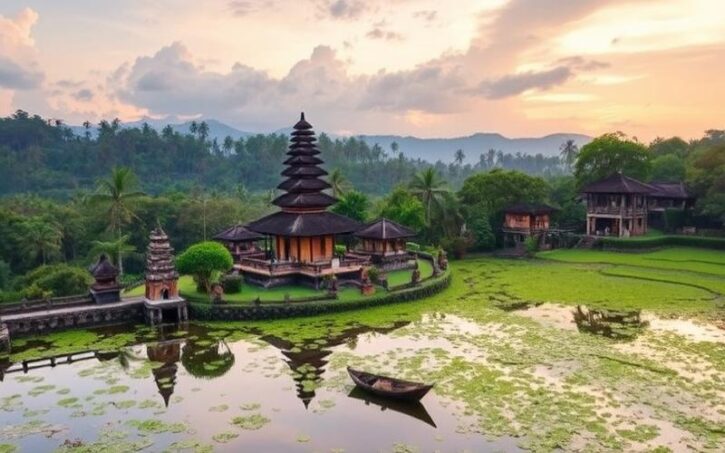
Indonesia, an archipelago rich in cultural diversity and artistic heritage, is seeing the emergence of artist villages where tradition and innovation intertwine. These places, both havens for creators and tourist attractions, raise questions about their purpose: are they primarily a cultural investment, preserving and elevating local craftsmanship, or are they transforming into lucrative enterprises, drawing visitors and investors in search of profit?
Through an exploration of the economic and artistic dynamics of this phenomenon, this article examines the role and impact of these villages within the Indonesian social and economic fabric.
Good to know:
Artist villages in Indonesia often represent community initiatives aimed at preserving traditional arts while generating income for local populations.
Artistic Communities in Indonesia: A Sustainable Cultural Investment?
Indonesian artistic communities play an essential role in preserving and promoting local culture, acting as guardians of traditions sometimes inscribed on UNESCO’s Intangible Cultural Heritage list, such as wayang (shadow puppetry) or the Javanese kris. Their work goes far beyond conservation: they foster innovation, adaptation, and intergenerational dialogue, thereby contributing to a sustainable cultural investment.
Key Contributions of Artistic Communities to Sustainable Cultural Investment:
- Living Transmission of Skills: Workshops, artist residencies, and educational programs enable the passing down of traditional techniques and narratives to new generations, while integrating contemporary approaches.
- Innovation and Hybridization: Artists and collectives combine ancestral practices with modern expression, creating new art forms that reach a broader audience and facilitate the adaptation of local culture to current issues.
- Strengthening the Social Fabric: Art serves as a vector for cohesion, intercultural dialogue, and the development of a sense of community belonging.
State and Private Support:
Communities can benefit from state subsidies, UNESCO programs, partnerships with NGOs, and private patronage. This support translates into:
- Funding for workshops, festivals, and traditional art schools.
- Support for inscribing practices on the World Heritage list, providing access to increased visibility and resources.
- Private initiatives, such as creative eco-villages in Bali, which combine the valorization of crafts, sustainable development, and responsible tourism.
Examples of Influential Artist Villages:
| Village | Island | Specialties | Cultural Impact |
|---|---|---|---|
| Ubud | Bali | Painting, sculpture, dance | Major artistic center, driver of cultural tourism |
| Mas | Bali | Wood carving | Transmission of Balinese sculpture, hub of artisanal innovation |
| Tenganan | Bali | Ikat geringsing (double ikat weaving) | Preservation of a unique textile technique, controlled public access |
| Kota Gede | Java | Silversmithing and silver crafts | International renown, preservation of centuries-old expertise |
Challenges to Sustainability:
- Unstable Funding: Dependence on tourism, difficulties in obtaining regular subsidies, risk of art commodification.
- Intergenerational Transmission: Possible disinterest from younger generations facing pressure from urban and globalized models.
- Land Pressure and Urbanization: Threats to creative spaces and traditional habitats.
Cultural Tourism: Asset or Challenge?
Assets:
- Generates income for artists and the community.
- Increases the visibility of local traditions.
- Stimulates identity pride and the creation of new projects.
Challenges:
- Risk of folklorization or distortion of practices.
- Tourist overload potentially destabilizing community balance.
- Sometimes excessive adaptation to visitor expectations, at the expense of authenticity.
Authenticity and Cultural Appropriation
Artistic communities must constantly find a balance between preserving their heritage and adapting to the demands of the global market. Questions of authenticity arise particularly when it comes to:
- Producing for an international audience without betraying the original spirit of the works.
- Resisting standardization and unauthorized appropriation by external actors.
- Promoting co-creation, exchange, and recognition of local artists’ rights.
The central challenge remains the ability of communities to self-organize, to innovate without losing their roots, and to benefit equitably from the economic returns of their artistic heritage.
Summary of Issues in List Form:
- Transmission and adaptation of traditions
- Access to public and private funding
- Management of cultural tourism
- Preservation of authenticity in the face of globalization
- Training and involvement of younger generations
- Protection against cultural appropriation and commodification
These dynamics make Indonesian artistic communities key players in sustainable cultural development, while placing them at the heart of contemporary debates on preservation, innovation, and cultural justice.
Good to know:
Artistic communities in Indonesia play a crucial role in preserving and promoting local culture, constituting a sustainable cultural investment that often receives support from the state or private organizations. Villages like Ubud in Bali or Jatiwangi in Java have become influential cultural hubs, demonstrating how these initiatives can revitalize artistic traditions while innovating. These communities face financial and intergenerational transmission challenges, but they strengthen cultural tourism, which, while advantageous for the local economy, can also threaten the authenticity of artistic practices. By balancing heritage preservation with adaptation to global market demands, they must carefully navigate between authentication and the risk of cultural appropriation.
Creative Eco-Villages: A New Dynamic for Indonesia
Creative eco-villages in Indonesia were born from an awareness of environmental urgency and the need to preserve threatened cultural traditions. Faced with rapid tourism development and pressure on resources, these communities emerged to propose a model where ecology, art, and community life converge.
Examples of Integrated Artistic and Ecological Eco-Villages:
- Desa Potato Head (Bali): This creative village combines ecological design, contemporary Balinese art, and a zero-waste commitment. The architecture uses recycled or natural materials; visitors exchange their disposable plastics for reusable tokens providing access to drinking water. Art installations like the bamboo tunnel “The Womb” testify to a constant dialogue between contemporary creation and environmental respect.
- Eco Villages of Ubud & Sibang: Founded around the Green School Bali, these eco-villages integrate natural construction (earth, stone, bamboo), traditional Indonesian artisanal techniques (natural textile dyeing), and strong community mutual aid. Families find a sustainable lifestyle there that promotes the transmission of local knowledge to children.
- Bloo Lagoon Eco Village (Padangbai): A residential complex that prioritizes contact with nature within an ecotourism framework. The habitat attracts local wildlife, values ecological interactions with the immediate environment, while offering travelers an authentic cultural experience.
Comparative Table: Key Characteristics
| Criterion | Creative Eco-Village | Traditional Village |
| Materials | Natural/recycled | Mixed |
| Artistic Practices | Sustainable/collaborative art | Classic/local art |
| Environmental Approach | Priority/zero waste | Sometimes secondary |
| Community Role | Central/education | Variable |
Economic and Social Impacts
- Creation of local jobs in craft, hospitality, or educational sectors
- Development of responsible tourism attracting a conscious clientele
- Strengthening of the social fabric through collaborative workshops open to residents
- Preservation/renewal of cultural practices through their integration into daily life
Challenges Encountered
Non-exhaustive list:
- Land pressure related to intensive tourism development
- Difficulty accessing national funding or subsidies
- Vulnerability to global economic volatility
- Possible tensions between contemporary artistic innovation and local traditions
Public Policies: Support & Obstacles
Some regional policies actively encourage this type of project through:
- The “ecological tourist village” label
- Logistical support for zero-waste initiatives
But national regulations are sometimes restrictive regarding land use or still favor mass tourism, which is poorly compatible with these alternative models.
Critical Analysis: Viability as a Cultural Investment
Strengths
> These initiatives demonstrate that economic profitability can go hand in hand with heritage preservation if they rely on strong local involvement – fairly compensated artisans, intergenerational co-construction – while cultivating international attractiveness based on cultural authenticity.
Limitations
> Their sustainability, however, depends on the rigorous maintenance of founding values in the face of risks of commercial co-optation or excessive folklorization under tourist pressure.
In Summary:
- Indonesian creative eco-villages embody a hybrid model combining moderate but real economic viability,
- active preservation of living heritage,
- strong territorial anchoring,
- demonstrated ability to attract private investors concerned with positive socio-cultural impact rather than mere short-term financial returns.
This model today represents a credible path for combining profitable cultural investment with the sustainable safeguarding of Indonesia’s island heritage.
Good to know:
In Indonesia, creative eco-villages are emerging as innovative responses to environmental and cultural sustainability challenges, placing central importance on artistic and ecological practices. For example, the village of Kandangan integrates art and sustainable agriculture, which stimulates not only creativity but also local economic development through responsible tourism. These communities energize the local economy while preserving heritage but face challenges such as a lack of infrastructural support and sometimes ill-suited local policies. Some initiatives face pressures related to rapid urbanization and land constraints, while others benefit from national incentives encouraging sustainable tourism. These villages, however, demonstrate a potential model of economic profitability while honoring culture, offering investors a unique combination of ecological commitment and cultural preservation.
Renovating a Farm into an Art Hub: A Profitable Real Estate Bet?
Transforming an old farm into an art hub in Indonesia offers a dual advantage: it is both a powerful cultural lever for preserving and enhancing local heritage, and an economic opportunity whose profitability depends on several factors.
Financial Aspects
| Expense Item | Detail |
| Renovation Costs | Restoration of traditional buildings, adaptation to standards, specific fittings |
| Possible Subsidies | Local or international public support (cultural funds, patronage), heritage preservation aid |
| Potential Revenue | Space rentals for exhibitions/workshops/artist residencies, event ticketing, sales of artworks/local crafts |
List of Potential Additional Revenue Sources:
- Organization of paid workshops (batik, weaving…)
- Rental for creative seminars or cultural retreats
- Café/gallery with sale of local products
- Partnerships with specialized tourism agencies
Profitability Potential
Profitability varies according to the quality of the project and its tourist positioning. A well-managed hub attracts an audience seeking cultural authenticity and immersive experience. This model is economically viable if activities are diversified and the site benefits from good visibility among both domestic and international tourists.
Cultural Impact on Local Communities
List of Positive Effects:
- Active preservation of architectural/artisanal heritage
- Intergenerational transmission of traditional skills
- Consolidation of the social fabric around shared activities (local/international contemporary creation)
- Direct/indirect creation of sustainable jobs
Integrating local artisans into the hub’s operations strengthens their professional identity while increasing their income. Similar initiatives have notably allowed female artisans to revalue their work through better monetary and social estimation of their skills.
Tourism and Commercial Revitalization
Art hubs often become drivers for the local economy:
- Significant increase in targeted tourist flow (experiential/cultural tourism)
- Correlated development of peripheral tourism infrastructure (alternative accommodation, typical restaurants…)
- New commercial outlets via art markets or associated shops
Inspiring Indonesian Examples
| Project/Village | Notable Achievements | Challenges Encountered | Solutions Provided |
| Bali Artist Villages | Studios & galleries in old farms; new jobs; territorial economic dynamism | Initial funding; strict heritage regulations | High-end positioning; institutional partnerships |
| SukkhaCitta | Batik workshops/rural women’s training; increase in artisan income | Limited access to international market | Marketing training & direct management by the artisans |
The main challenges often concern initial financial mobilization as well as adaptation to regulatory constraints related to heritage. Effective solutions include gradual development through pilot stages testing different economic/cultural uses before scaling up.
Transforming a traditional farm into an art hub is not only a strong cultural act: it is also an entrepreneurial endeavor that can become profitable if it relies on a solid local anchor, on the intelligent diversification of the activities offered, as well as on the active integration of surrounding village communities.
Good to know:
Transforming an old farm into an art hub in Indonesia can prove to be a profitable real estate project, combining financial and cultural benefits. Renovation costs can be offset by government subsidies and private partnerships, while artistic events organized on site can generate substantial revenue through paid admissions, art sales, and space rentals. These art hubs also stimulate commerce and boost local tourism by attracting domestic and international visitors, thus creating economic opportunities for surrounding artisans and businesses. For example, the artist village of Ubud in Bali, although initially facing financial challenges, overcame these obstacles with crowdfunding strategies and collaborations with renowned artists, strengthening its position as a must-visit cultural destination. These projects contribute not only to preserving built heritage but also to infusing new social and economic dynamism, strengthening bonds within local communities.
Disclaimer: The information provided on this website is for informational purposes only and does not constitute financial, legal, or professional advice. We encourage you to consult qualified experts before making any investment, real estate, or expatriation decisions. Although we strive to maintain up-to-date and accurate information, we do not guarantee the completeness, accuracy, or timeliness of the proposed content. As investment and expatriation involve risks, we disclaim any liability for potential losses or damages arising from the use of this site. Your use of this site confirms your acceptance of these terms and your understanding of the associated risks.

Cyril Jarnias is an independent expert in international wealth management with over 20 years of experience. As an expatriate himself, he is dedicated to helping individuals and business leaders build, protect, and pass on their wealth with complete peace of mind.
On his website, cyriljarnias.com, he shares his expertise on international real estate, offshore company formation, and expatriation.
Thanks to his expertise, he offers sound advice to optimize his clients' wealth management. Cyril Jarnias is also recognized for his appearances in many prestigious media outlets such as BFM Business, les Français de l’étranger, Le Figaro, Les Echos, and Mieux vivre votre argent, where he shares his knowledge and know-how in wealth management.





