
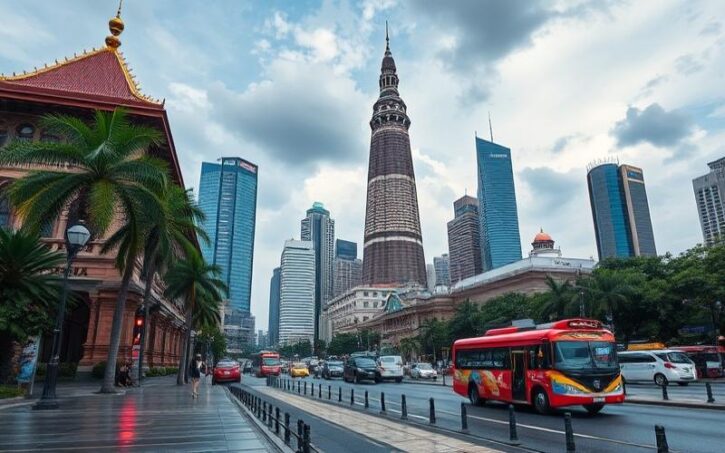
 Published on and written by Cyril Jarnias
Indonesia, an Archipelago of Countless Wonders
Indonesia is on the verge of undergoing profound economic transformations, particularly in its urban centers. As population growth and foreign investments continue to skyrocket, certain cities are becoming true development hubs to watch closely.
Real Estate Prices Set to Soar by 2030
Discover how these metropolises are preparing for their real estate prices to explode by 2030, making purchasing and investing even more strategic and complex.
Good to Know:
With diverse sectors booming, such as tourism, trade, and technology, these cities are at a crossroads between flourishing opportunities and imminent economic challenges.
Growth Prospects: Which Promising Cities in Indonesia?
Economic and demographic factors play a decisive role in urban growth in Indonesia, where urbanization is accelerating due to a young population, a dynamic economy, and proactive public policies.
| Indicator | Value |
| Total Population | 274.9 million |
| Urbanization Rate | 59.6% (170.4 million) |
| Urban Forecast 2045 | 80% |
| GDP per Capita | USD 4,798 |
| GDP Growth (2025 Forecast) | 5.2% |
| Number of Cities > 1M Inhabitants | 14 |
| Median Age | 30.4 years |
Economic and Demographic Factors Contributing to Urban Growth:
- Strong population growth, with a young and active workforce, fuels demand for housing, services, and urban jobs.
- Rapid urbanization, driven by internal migration from rural areas to urban centers, supported by economic opportunities and infrastructure modernization.
- Robust economic growth, with GDP expected to grow by 5.2% in 2025, supported by private consumption, industrialization, and rising exports.
- Improved business climate and increasing digitalization, attracting domestic and international investments, particularly in real estate, trade, infrastructure, and industry.
- Ambitious public policies, such as building 3 million homes per year and developing the new capital Nusantara, which stimulate investment and urban job creation.
Emerging Cities with High Potential:
Bandung
- Creative and technological capital, Bandung benefits from a large student population and proximity to Jakarta.
- Its textile industry and tech clusters attract investors and startups.
- Accelerated development of transport infrastructure (high-speed trains, roads, housing) increases the city’s attractiveness.
Medan
- Economic center of North Sumatra, Medan is a major industrial and logistics hub, with privileged access to ASEAN markets.
- Population growth and rapid industrialization boost the real estate sector and urban services.
- Investments in the port, airport, and road infrastructure strengthen its role as a regional hub.
Surabaya
- Indonesia’s second-largest city and Java’s main port, Surabaya is experiencing rapid expansion of its industrial and logistics zones.
- Attractive to investors due to infrastructure modernization, availability of skilled labor, and proximity to export markets.
- Sustainable urban development projects and renovation of old neighborhoods to meet growing demand for housing and services.
List of Advantages for Investors:
- Continuously growing urban markets
- Young and abundant workforce
- Government support for major urban projects
- Opportunities in real estate, industry, services, and infrastructure
Challenges of Rapid Growth:
- Pressure on natural resources and urban infrastructure
- Waste, water, and transport management
- Need for sustainability policies and integrated urban management to avoid congestion, pollution, and social inequalities
Key Takeaway: Emerging cities like Bandung, Medan, and Surabaya are positioning themselves as dynamic hubs offering attractive prospects for investors, driven by rapid urbanization, sustained industrialization, and ambitious public policies. However, sustainable management of this growth remains a major challenge to ensure inclusive and resilient urbanization.
Good to Know:
Among promising Indonesian cities, Bandung, Medan, and Surabaya stand out with impressive growth potential by 2030. Bandung, known for its industrial and educational dynamism, benefits from a strong textile industry and a growing population, attracting many investors. Medan, with its strategic seaport and agricultural exports, is expected to see its economy grow by 6% per year, according to recent forecasts. Surabaya, meanwhile, is a key industrial hub diversifying its economy towards technology and services, supported by major infrastructure projects such as a new public transport network. Government policies, including the “Making Indonesia 4.0” plan, reinforce this dynamic by encouraging industrialization and urban innovation. However, this rapid expansion presents significant challenges in terms of sustainability and urban resource management, requiring sustainable development strategies to avoid congestion and pollution.
Real Estate in Indonesia: Analyzing Trends Through 2030
Analysis of Real Estate Trends in Indonesia Through 2030
Urbanization in Indonesia is accelerating with an estimated annual growth rate of 15% for the real estate market. The urban population is growing rapidly, driven by an emerging middle class and increasing attractiveness to foreign investors. Between 2023 and 2028, the value of the Indonesian real estate market is expected to rise from USD 61 billion to over USD 81 billion.
| Year | Urban Population (in millions) | Real Estate Market Value (USD) |
| 2023 | 158 | 61 billion |
| 2028 | 175 (forecast) | 81 billion (forecast) |
Key Factors Driving Real Estate Price Increases
- Population Growth: Young population and rapid urbanization support housing demand.
- Foreign Investment: Steady influx of international investors, particularly in destinations like Bali.
- Infrastructure Development: Major road, airport, and hotel projects (e.g., 40 new Accor hotels in Bali) stimulate demand and drive up prices.
- Tourism: Over 7 million international visitors in 2024, with a forecast of 10 million by 2027 in Bali.
Impact of Government Policies
The Indonesian government is implementing tax incentives to attract foreign investors and modernizing land legislation to facilitate property access for expatriates and investors. These reforms include:
- Reduction of property taxes for foreigners.
- Simplification of administrative procedures.
- Acceleration of building permit issuance.
High-Growth Cities and Emerging Urban Centers
| City | Real Estate Growth Potential | Main Reasons |
| Seminyak | Very High | Premium tourism, high-end shops, renowned beaches |
| Canggu | High | Attractiveness for young professionals, surfing, coworking, rapid urbanization |
| Ubud | Stable to High | Cultural capital, wellness tourism, unique accommodations |
| Jakarta | High | Financial center, massive infrastructure projects |
| Surabaya | Growing | Industrial and logistics hub, sustained urbanization |
Market Forecasts Through 2030
- Annual real estate price increase of 10 to 15% in Bali and emerging urban centers.
- The luxury residential and commercial infrastructure sectors will particularly benefit from tourism expansion and middle-class development.
- Announcements of major infrastructure projects (new roadways, airport expansions, international hotels) should continue to support price growth.
Opportunities for Investors
- Attractive rental yields: up to 12% per year, especially in Bali (Canggu, Seminyak).
- Highly sought-after villas and luxury residences, particularly for short-term rentals.
- Growing commercial sector (offices, retail, hotels) in major cities and tourist hubs.
Regional Comparison with Southeast Asia
| Country | Estimated Annual Real Estate Market Growth | Average Rental Yield | Key Factors |
| Indonesia | 10-15% | 10-12% | Urbanization, tourism |
| Vietnam | 7-10% | 8-10% | Industry, middle class |
| Thailand | 5-8% | 6-8% | Tourism, expatriation |
| Malaysia | 3-6% | 5-7% | Industry, stability |
Expert Testimonials
“Bali and Indonesia’s major cities offer rental yields that surpass those of most Western capitals. The influx of foreign investors and the rise of the national middle class should maintain the upward trend at least until 2030.”
— Real Estate Analyst, 2025
Key Takeaway:
Indonesia, driven by Bali and its major cities, is establishing itself as a major hub for real estate investment in Southeast Asia, with growth prospects exceeding its neighbors due to the combination of rapid urbanization, favorable reforms, and sustainable tourism growth.
Good to Know:
Increasing urbanization in Indonesia, particularly in cities like Surabaya and Makassar, is fueling strong real estate demand that is expected to persist until 2030, with particular attention on Jakarta for its developing infrastructure and influx of foreign investments. Population growth, coupled with incentivizing land reforms and fiscal initiatives implemented by the government, is boosting the appeal of residential and commercial projects, especially in emerging centers. Compared to other Southeast Asian countries, Indonesia stands out for its real estate profitability potential thanks to ambitious projects, such as the relocation of the capital to Nusantara, expected to significantly transform local market prices. Forecasts indicate a continued rise in prices in the luxury residential and commercial sectors, promising tangible opportunities for investors.
Long-Term Investment in High-Potential Areas in Indonesia
The Indonesian economy presents robust growth prospects through 2030, driven by dynamic domestic consumption, significant public and private investments in infrastructure, and a favorable demographic context. According to forecasts, GDP is expected to grow by an average of 5 to 5.2% per year through 2030. Private consumption (55% of GDP) will remain the main driver, supported by rising wages, declining unemployment (4.9% in 2024), and various government social programs.
Current and Forecast Economic Trends Through 2030:
- Average annual GDP growth around +5%
- Very dynamic construction sector: +8.2% in 2024
- Targeted export growth of +7% in value over the coming years
- Gradual increase in public salaries and social transfers to support purchasing power
Impact of Government Policies on Urban and Real Estate Development:
The Indonesian government is focusing on:
- Major infrastructure projects (new international airports, notably in Bali)
- Accelerated development of the new capital Nusantara in Kalimantan
- Special economic zones offering tax incentives/facilitated investments (e.g., Kura Kura Bali)
- Maintenance or expansion of targeted subsidies to support access to essential services
These measures promote rapid urbanization around major economic hubs as well as a marked increase in residential, commercial, and logistics real estate demand.
Indonesian Cities with Expected High Growth:
| City | Main Reasons | Key Forecasts |
|---|---|---|
| Jakarta | National economic center | High demand for offices/housing |
| Surabaya | Major industrial/port hub | Logistics/industry growth |
| Bandung | Young demographics/universities | Residential expansion |
| Denpasar/Bali | International tourism | High-yield rental real estate |
| Makassar | Eastern maritime gateway | Port development/housing |
| Balikpapan/Nusantara* | New capital | Infrastructure/services boom |
Typical Advice on Preferred Properties/Infrastructure to Maximize Long-Term Returns:
- High-Yield Residential Rentals
Furnished apartments/villas for expatriates/tourists in major tourist or commercial areas. - Retail & Offices
Shopping centers/modern offices adapted for telecommuting/coworking hubs. - Logistics & Warehouses
Proximity to roadways/airports/free trade zones. - Green/Agroforestry Properties
Investments aligned with sustainable agriculture/ecotourism. - Hotel Infrastructure
Eco-friendly hotels or resorts integrating leisure/health/wellness.
Key Sectors Where Demand Will Increase by 2030:
- International tourism (Bali/Lombok/Labuan Bajo)
- Digital technology/urban startups (Jakarta/Bandung)
- Sustainable agriculture/local food production
- Logistics/multimodal transport
- Renewable energy infrastructure
Chart – Estimated Annual Real Estate Growth Rate (%) by Region:
| Region | Estimated Annual Growth (%) |
|---|---|
| Bali | ~15 |
| Jakarta | ~10 |
| Surabaya | ~8 |
Important Points:
Priority should be given to assets located in cities directly benefiting from structural public investments or showing increasing international tourist appeal. Projects integrating environmental sustainability/green construction are particularly sought after by both institutional and private investors.
Good to Know:
In Indonesia, long-term investment in high-potential areas requires a deep understanding of economic trends and municipal policies influencing the real estate landscape by 2030. Key cities, such as Jakarta, Surabaya, and Bandung, are expected to experience substantial demographic and economic growth. Government reforms, focused on improving infrastructure and sustainable development, are stimulating these regions. Prioritize investment in modern residential properties and transport infrastructure, sectors predicted for a boom, while monitoring advances in tourism and technology. Indonesia’s emergence as a tech hub and its agricultural revolution, particularly the rise of sustainable agriculture, represent lucrative niches. Use current data tools to assess projected demand increases and strategically target investments aligned with forecast economic and demographic shifts.
Disclaimer: The information provided on this website is for informational purposes only and does not constitute financial, legal, or professional advice. We encourage you to consult qualified experts before making any investment, real estate, or expatriation decisions. Although we strive to maintain up-to-date and accurate information, we do not guarantee the completeness, accuracy, or timeliness of the proposed content. As investment and expatriation involve risks, we disclaim any liability for potential losses or damages arising from the use of this site. Your use of this site confirms your acceptance of these terms and your understanding of the associated risks.

Cyril Jarnias is an independent expert in international wealth management with over 20 years of experience. As an expatriate himself, he is dedicated to helping individuals and business leaders build, protect, and pass on their wealth with complete peace of mind.
On his website, cyriljarnias.com, he shares his expertise on international real estate, offshore company formation, and expatriation.
Thanks to his expertise, he offers sound advice to optimize his clients' wealth management. Cyril Jarnias is also recognized for his appearances in many prestigious media outlets such as BFM Business, les Français de l’étranger, Le Figaro, Les Echos, and Mieux vivre votre argent, where he shares his knowledge and know-how in wealth management.





