
 Published on and written by Cyril Jarnias
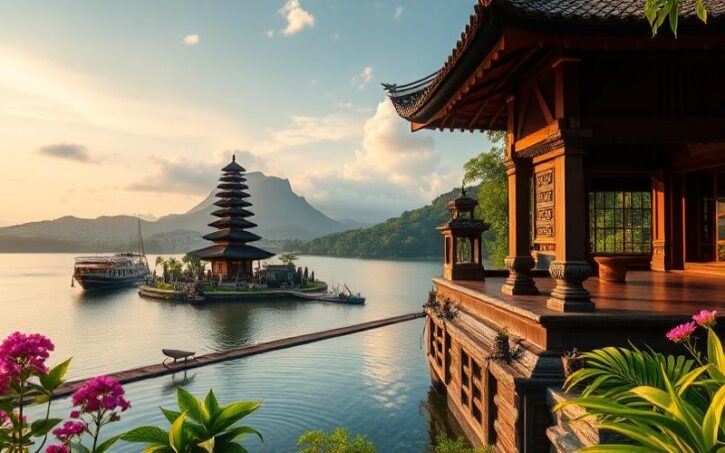
Situated at the crossroads of cultural heritage and natural beauty, Indonesia is emerging as a sought-after destination for second homes, attracting an international clientele eager to discover exotic havens of peace.
Thanks to breathtaking landscapes ranging from Bali’s pristine beaches to Java’s verdant rice terraces, the country is experiencing significant growth in real estate development aimed at temporary residents and foreign investors.
This trend is accompanied by a set of facilitating factors such as more flexible property acquisition options and increasingly modern infrastructure, thus offering a range of opportunities for those seeking to combine escape and investment.
Reasons to Invest in Second Homes in Indonesia
The Indonesian real estate market is experiencing sustained growth, with an estimated valuation of USD 64.78 billion in 2024 and a compound annual growth rate (CAGR) of 5.82% expected through 2029. This momentum is increasingly attracting expatriates and international investors looking to acquire second homes, particularly in major tourist destinations.
Economic Factors and Profitability
- The country’s economic growth is around 5% per year, ensuring stability and positive prospects for the real estate sector.
- Housing prices continue to rise overall (+1.07% year-on-year in Q1 2025), even though the increase has recently moderated in some regions.
- The cost of living remains relatively low compared to Western markets: affordable domestic services, low-cost food, and reduced daily expenses favor long-term stays or rental investment.
- Foreign investors sometimes benefit from specific tax advantages depending on the type of property acquired or through certain local incentive schemes.
Attractive Tourist Destinations
| Destination | Key Strengths | Rental Yield |
| Bali | Renowned beaches, rich cultural life, developed infrastructure | High seasonal demand + potential for high income via short-term rentals |
| Lombok | Less saturated than Bali but rapidly developing; preserved natural landscapes | Emerging market with significant appreciation potential |
Favorable Government Policies
- The Indonesian state has implemented measures to facilitate foreign investment: simplification of administrative procedures for certain types of properties (leasehold), expanded rights on certain real estate segments for non-residents.
- Massive public projects are underway to improve infrastructure (modernized airports in Bali/Lombok; new expressways), which increases accessibility and therefore the potential value of properties located in these areas.
Key Points Motivating the Purchase:
- Stable real estate market growth
- Increased demand from expatriates/international tourists
- Overall lower cost compared to competing markets
- Tax advantages under certain conditions
- Strong tourist appeal (Bali/Lombok)
- Pro-foreign investor public policies
- Accelerated development of local infrastructure
Indonesia thus combines growing economic appeal and exceptional tourism potential, making the country a prime destination for the profitable purchase of second homes.
Good to Know:
Investing in second homes in Indonesia offers several economic and tourism advantages. The real estate market is experiencing notable growth, driven by increased demand from expatriates and international investors. Relatively low living costs, combined with possible tax benefits for foreign investors, enhance the appeal of this type of investment. Popular destinations like Bali and Lombok, known for their tourist appeal, also offer high rental yield potential. Furthermore, favorable government policies encourage foreign investment, while ongoing infrastructure development improves the accessibility and popularity of these regions, thereby increasing their return on investment potential.
The Best Places to Acquire a Second Home in Indonesia
Bali, Lombok, and Java are among the most popular Indonesian regions for acquiring a second home. Each offers specific attractions that explain their success with foreign buyers and expatriates.
Bali
Attractions:
- World-renowned beaches (Seminyak, Canggu)
- Rich cultural life in Ubud (temples, arts, yoga)
- Dynamic dining and nightlife scene
- Preserved nature: terraced rice paddies, volcanoes
Real Estate Market:
Average price per square meter in the city: €1,603 (IDR 27,188,117), ranging between €955 and €2,867
Popular neighborhoods: Denpasar (urban life), Badung (beaches & expats), Ubud (tranquility & culture)
Trends:
Average annual price growth exceeding 10% over five years
Demand supported by international remote work and the rise of digital nomadism
Outlook:
Estimated compound annual growth rate of +5.8% through 2029
| Neighborhood | Price/m² Apartments | Price/m² Houses |
|---|---|---|
| Denpasar | ~€3,750 | ~€1,630 |
| Dalung | ~€3,025 | ~€1,920 |
| Tabanan | ~€2,570 | ~€1,610 |
| Gianyar | ~€2,380 | ~€1,820 |
Lombok
Attractions:
- Wild beaches less crowded than Bali
- Renowned surf spots around Kuta Lombok
- Proximity to Mount Rinjani for hiking
Real Estate Market:
Prices lower than Bali for a similar natural environment
Trends & Outlook:
Strong appeal since the launch of the Mandalika project: a government-backed tourism zone with new infrastructure and international events
Java – Primarily Jakarta
Attractions:
- Central Jakarta: vibrant city life, proximity to Sudirman/Thamrin/Menteng business districts.
- South Jakarta: upscale residential neighborhoods like Kemang or Pondok Indah popular with expatriate families.
- Very lively local culture with easy access to international schools, modern shopping centers.
Real Estate Market:
High demand for luxury apartments in the city center; new mixed-use projects integrating offices/residences/retail.
Rapid expansion of the MRT subway boosting property values in certain districts.
Practical Checklist of Essential Aspects When Buying in Indonesia:
- Direct acquisition impossible for foreigners; necessary recourse to the “Hak Pakai” system (right to use) or establishment of a local company (“PT PMA”) depending on the desired duration.
- Frequent legal obligation: renewable leasehold over several decades rather than a classic freehold title.
- Indispensable verification with a licensed local notary regarding the legal validity of the desired land or property.
Services/infrastructure available by region:
- Bali/Jakarta generally benefit from easy access to international private clinics, multilingual schools, and high-performance internet networks suitable for remote work;
- Infrastructure is still limited outside major tourist areas on Lombok.
Authentic Reviews/Testimonials:
“I chose a villa near Ubud. The process was long because I had to understand all the rules related to Indonesian land law, but today I fully enjoy my natural surroundings while staying connected thanks to good fiber optics.”
“We preferred to invest in Kuta Mandalika rather than Bali because there are still few people but a lot of potential thanks to the new roads built by the government. The prices are attractive even if it sometimes involves more administrative effort…”
“In South Jakarta you can find everything a European family could dream of – French/English schools nearby, but watch out for the daily traffic jams!”
Key Takeaways
Indonesia offers a varied range between urban dynamism in Java/Jakarta, trendy beach life in Bali, or authentic tranquility on Lombok. Growth remains strong despite a complex legal framework requiring localized professional support.
Good to Know:
Bali, Lombok, and Java are prime destinations for buying a second home in Indonesia, each offering its unique attractions. Bali seduces with its dream beaches and rich Balinese culture, while Lombok with its natural calm attracts those seeking a peaceful escape; Java, with its varied landscapes and cultural vibrancy, offers a more authentic experience. Currently, Bali remains the most active market, but prices are rising, a phenomenon also observed in Lombok with its growing popularity. Java, though generally more affordable, is seeing a rise in demand, particularly in cities like Yogyakarta. Purchases by foreigners require taking into account ownership restrictions, often circumvented by a leasehold. It is also crucial to evaluate infrastructure, such as access to transportation and healthcare, essential in less developed regions. Expatriates report that a good relationship with local real estate agents facilitates these complex procedures and offers faster immersion into local life.
Practical Guide to Investing in Indonesian Real Estate
Real estate investment in Indonesia is experiencing growing popularity, driven by the country’s economic stability, sustained tourism demand, and high rental yields, especially in Bali and Jakarta. The relative affordability of prices compared to other Asian markets also attracts many foreign investors.
Legal Aspects and Types of Properties Accessible to Foreigners
In Indonesia, direct freehold ownership (Hak Milik) remains reserved for Indonesian citizens. However, foreigners have several options for investing legally:
| Type of Access | Description |
|---|---|
| Leasehold | Long-term lease (often 25-30 years renewable), temporary right of use |
| Hak Pakai | Right to use a plot of land or property for a specified period |
| PT PMA | Establishment of a foreign-owned company allowing acquisition in its own name |
The typical procedure includes:
- Selection of the property with prior legal verification
- Drafting and signing of the contract before a local notary
- Staged payment according to the steps defined in the contract
- Registration with local authorities
Attractive Regions for Second Homes
The most sought-after areas currently are:
- Bali: Ubud, Canggu, Seminyak, and Uluwatu – strong rental potential thanks to tourism
- Jakarta: central districts like Mega Kuningan or BSD City – dynamic urban market
- Lombok: rapid emergence as an alternative to Bali
- Medan: recent development of new residential projects
Practical Tips for Financing and Precautions
To finance a real estate purchase in Indonesia:
- Local banks rarely grant real estate loans to non-residents; therefore, prioritize financing through equity or via foreign companies.
- Budget for all ancillary costs (notary, acquisition taxes).
- Engage an independent local lawyer/legal advisor to verify the validity of the land title (“due diligence”), secure your transaction, and avoid any future disputes.
List of essential precautions:
- Verify that the seller is the legal owner of the property
- Carefully examine the zoning regulations
- Avoid any “informal” transaction without an official notarial deed
- Confirm the absence of mortgages or debts attached to the property
Current Trends & Future Outlook
The Indonesian real estate market shows an estimated annual growth of around 5–6%, driven by urban demographic expansion, the digital rise in the real estate sector (“proptech”), as well as the proliferation of hotel/tourism projects on certain islands.
Key highlights:
- Major cities are investing heavily in new upscale residential complexes.
- The sector is moving towards greater regulatory transparency to attract even more international investors.
- Sustainable development is gradually becoming central in new real estate projects.
To succeed in your investment in Indonesia, it is essential:
- To master the local legal aspects perfectly,
- To carefully select your region,
- To imperatively surround yourself with French-speaking experts established locally,
- And finally… to remain attentive to the regular evolution of the Indonesian regulatory framework!
Good to Know:
Investing in Indonesian real estate is increasingly attracting people due to its economic growth potential and attractive cost of living. Foreigners can acquire properties through various titles, including the Right to Build (Hak Guna Bangunan) and the Right to Use (Hak Pakai), but it is essential to engage a local legal advisor to navigate the complex legal processes. Jakarta, Bali, and Lombok are currently the most sought-after regions for buying second homes, offering a mix of dynamic urban life and paradisiacal landscapes. To finance an investment, it is recommended to compare local financing offers, although personal financing is often preferred. On the precautionary side, verifying the developer’s reputation and obtaining the required permits is indispensable. The market shows positive signs with infrastructure development projects, fostering long-term investment opportunities.
Rental Yield Potential of Second Homes in Indonesia
The rental yield of second homes in Indonesia depends on several key factors:
- Geographic Location: Major tourist areas (Bali, Lombok, Jakarta, Yogyakarta) offer better rental demand and higher yields.
- Tourist Demand: The constant influx of international and domestic tourists supports short-term rentals, especially in Bali where tourism increased by 15% in 2024.
- Seasonal Fluctuations: The high season (July-September; December-January) allows for optimizing nightly rates and occupancy rates.
- Government Policies: Regulations on foreign ownership and short-term rentals vary by region. In Bali, for example, the introduction of the Digital Nomad Visa stimulates the market but also imposes certain administrative requirements.
Main Indonesian Regions for Rental Investment
| Region | Key Strengths | Gross Rental Yield (%) | Average Occupancy Rate (%) | Average Nightly Rate (USD) |
|---|---|---|---|---|
| Bali (Canggu/Seminyak/Batu Bolong/Ubud) | High international tourist demand Developed infrastructure Digital nomad visa |
8–15 | 65–85 | 100–300 |
| Lombok | Emerging alternative to Bali Less saturated |
~7–10 | ~60 | ~70–150 |
| Jakarta | Urban & business tourism | ~5–8 | ~50–70 | ~80–200 |
Good to Know:
Rental yields can vary depending on the quality of management and the precise location within the same region.
Disclaimer: The information provided on this website is for informational purposes only and does not constitute financial, legal, or professional advice. We encourage you to consult qualified experts before making any investment, real estate, or expatriation decisions. Although we strive to maintain up-to-date and accurate information, we do not guarantee the completeness, accuracy, or timeliness of the proposed content. As investment and expatriation involve risks, we disclaim any liability for potential losses or damages arising from the use of this site. Your use of this site confirms your acceptance of these terms and your understanding of the associated risks.

Cyril Jarnias is an independent expert in international wealth management with over 20 years of experience. As an expatriate himself, he is dedicated to helping individuals and business leaders build, protect, and pass on their wealth with complete peace of mind.
On his website, cyriljarnias.com, he shares his expertise on international real estate, offshore company formation, and expatriation.
Thanks to his expertise, he offers sound advice to optimize his clients' wealth management. Cyril Jarnias is also recognized for his appearances in many prestigious media outlets such as BFM Business, les Français de l’étranger, Le Figaro, Les Echos, and Mieux vivre votre argent, where he shares his knowledge and know-how in wealth management.





