
 Published on and written by Cyril Jarnias
Montenegro, the small gem of the Balkans, is increasingly attracting the attention of international real estate investors. With its breathtaking landscapes, enchanting Adriatic coastline, and attractive cost of living, this country offers considerable real estate potential. Let’s dive into a detailed analysis of real estate prices in Montenegro’s main cities, revealing the opportunities and trends shaping this rapidly expanding market.
Montenegro’s Coastline: A Developing Real Estate Gold Rush
Montenegro’s Adriatic coast, with its crystal-clear waters and historic towns, constitutes the beating heart of the country’s real estate market. Prices here are generally higher than in the inland areas, reflecting the tourist appeal and growing demand for secondary residences.
Budva, the Pearl of the Adriatic, positions itself as one of the most sought-after and, consequently, most expensive destinations in the country. Average prices for an apartment in the city center range between €2,500 and €3,500 per square meter. Luxury properties with sea views can easily reach €5,000 per square meter, or even more for exceptional properties[1].
Kotor, a Medieval Jewel and UNESCO World Heritage Site, displays prices slightly lower than Budva, but still high for the country. The average price per square meter varies between €2,000 and €3,000, with peaks exceeding €4,000 for properties located in the old town or offering a stunning view of the bay[1].
Tivat, a City in Full Transformation thanks to the development of the luxurious Porto Montenegro complex, is seeing its real estate prices climb rapidly. Standard apartments trade between €2,000 and €3,000 per square meter, while high-end properties in Porto Montenegro can easily exceed €7,000 per square meter[1].
Good to Know:
The coastal cities of Montenegro offer the highest real estate prices in the country, reflecting their tourist appeal and investment potential. Budva, Kotor, and Tivat stand out as the most dynamic and expensive markets.
The Inland: Opportunities to Seize
Away from the crowded beaches, inland Montenegro offers a more authentic living environment and significantly more affordable real estate prices. These regions are increasingly attracting the attention of investors looking for good deals and long-term growth potential.
Podgorica, the Capital, presents a rapidly expanding real estate market, driven by the country’s economic development. Average prices in the city center vary between €1,200 and €1,800 per square meter. The outlying neighborhoods offer even more affordable opportunities, with prices ranging between €800 and €1,200 per square meter[1].
Nikšić, the Country’s Second City, displays prices significantly lower than the capital. The average price per square meter is between €600 and €1,000, making this city an interesting option for investors seeking attractive rental yields[1].
Cetinje, the Former Royal Capital, offers unique historical charm at very competitive prices. Properties in this picturesque city trade on average between €700 and €1,200 per square meter, with renovation opportunities that can offer excellent capital gains potential[1].
Good to Know:
The inland cities of Montenegro, such as Podgorica, Nikšić, and Cetinje, offer significantly more affordable real estate prices than the coastal destinations. These markets present interesting growth potential for long-term investors.
Mountain Resorts: A Developing Niche Market
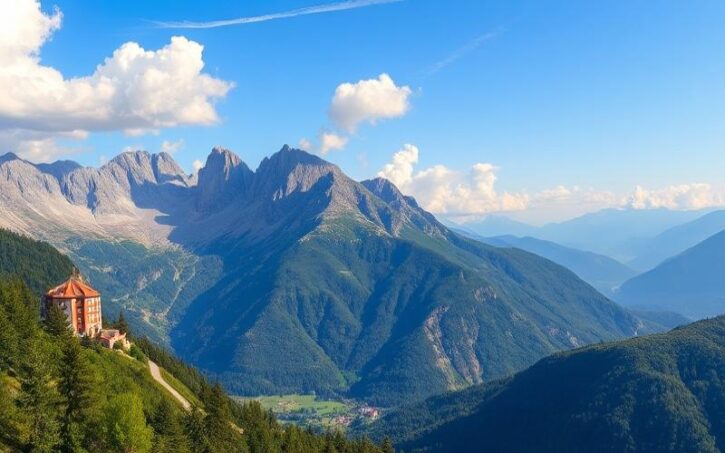
Montenegro is not only known for its beaches but also for its magnificent mountains, which are attracting more and more tourists seeking outdoor activities, both summer and winter. This segment of the real estate market, although less developed than the coast, offers interesting opportunities for visionary investors.
Kolašin, the Country’s Main Ski Resort, is seeing its real estate market develop rapidly thanks to investments in tourist infrastructure. Apartment prices in new residential complexes range between €1,200 and €2,000 per square meter, with an upward trend[1].
Žabljak, the Gateway to Durmitor National Park, is attracting increasing investor attention. Real estate prices there are still relatively affordable, ranging between €800 and €1,500 per square meter for well-located properties[1].
These mountain resorts offer interesting rental yield potential, particularly thanks to the dual seasonality (winter for skiing, summer for hiking and outdoor activities) which allows for optimizing property occupancy rates.
Good to Know:
Mountain resorts like Kolašin and Žabljak represent a developing market segment in Montenegro. Although prices there are still relatively affordable, the trend is upward, driven by the development of four-season tourism.
Price Evolution: What Prospects for the Future?
The Montenegrin real estate market has experienced sustained growth in recent years, and the prospects for the future remain generally positive, despite some uncertainties related to the global economic context.
Continued Growth, but at a More Moderate Pace
Experts agree that the upward trend in real estate prices in Montenegro should continue in the coming years, but at a more moderate pace than that observed in recent years. An average annual price increase between 3% and 5% can be expected for the next few years, with significant variations depending on regions and property types[1].
Growth Factors
Several factors contribute to supporting this growth:
- The continuous development of tourist infrastructure, particularly on the coast and in mountain resorts
- Montenegro’s progress in its European Union accession process, which strengthens the confidence of international investors
- The improvement of air connections, facilitating access to the country for tourists and investors
- The relative political and economic stability of the country compared to some of its Balkan neighbors
Regional Disparities
It is important to note that price evolution will not be uniform across the entire territory. The coastal areas, already the most expensive, should continue to experience the most significant increases, particularly in cities like Budva, Tivat, and Kotor.
Mountain resorts like Kolašin and Žabljak could also see their prices increase faster than the national average, driven by the development of four-season tourism.
In the inland areas, price evolution should be more moderate, though with interesting long-term growth potential, particularly in the capital Podgorica and developing secondary cities.
Good to Know:
The prospects for real estate price evolution in Montenegro remain positive, with an expected annual growth between 3% and 5%. Coastal areas and mountain resorts should experience the most significant increases, while the inland offers longer-term growth potential.
Investment Strategies: How to Leverage the Montenegrin Market?
Faced with this diverse panorama of the Montenegrin real estate market, several investment strategies are emerging for international investors.
Seasonal Rental Investment on the Coast
Coastal cities like Budva, Kotor, and Tivat offer excellent potential for seasonal rental investment. Although purchase prices are higher here, rental yields during the high season can be very attractive, with high occupancy rates and competitive rates compared to other Mediterranean destinations.
Renovation in Historic Towns
Historic towns like Kotor or Cetinje offer interesting opportunities for purchasing and renovating old properties. This strategy not only allows benefiting from more affordable purchase prices but also creating significant added value through quality renovations, while preserving the authentic charm of the locations.
Long-Term Investment in Developing Areas
The inland regions and developing mountain resorts offer interesting long-term investment opportunities. Although immediate rental yields may be more modest, the potential for capital gains in the medium and long term is significant, particularly with the development of infrastructure and the increasing tourist appeal of these regions.
Portfolio Diversification
For investors with a more substantial budget, a diversification strategy can be wise. By combining investments in different regions of Montenegro (coast, mountains, inland cities), it is possible to benefit from both attractive short-term rental yields and long-term capital gains potential, while spreading risks.
Good to Know:
The Montenegrin real estate market offers various investment opportunities, from seasonal rental investment on the coast to purchase-renovation in historic towns, and long-term investment in developing areas. A diversification strategy can help maximize returns while minimizing risks.
Conclusion: A Promising Market to Watch Closely
The Montenegrin real estate market offers a range of opportunities for international investors, with prices still attractive compared to other European destinations and significant growth potential. The diversity of regions and property types allows each investor to find a strategy suited to their objectives and budget.
However, as with any investment abroad, it is crucial to thoroughly research the specifics of the local market, current regulations, and long-term development prospects. Thorough due diligence and the use of trusted local professionals are essential for a successful real estate investment in Montenegro.
With its exceptional natural setting, booming tourist development, and European integration prospects, Montenegro is establishing itself as a high-potential real estate destination for the coming years. Savvy investors who manage to seize the opportunities offered by this rapidly evolving market could well come out ahead in the coming years.
Disclaimer: The information provided on this website is for informational purposes only and does not constitute financial, legal, or professional advice. We encourage you to consult qualified experts before making any investment, real estate, or expatriation decisions. Although we strive to maintain up-to-date and accurate information, we do not guarantee the completeness, accuracy, or timeliness of the proposed content. As investment and expatriation involve risks, we disclaim any liability for potential losses or damages arising from the use of this site. Your use of this site confirms your acceptance of these terms and your understanding of the associated risks.

Cyril Jarnias is an independent expert in international wealth management with over 20 years of experience. As an expatriate himself, he is dedicated to helping individuals and business leaders build, protect, and pass on their wealth with complete peace of mind.
On his website, cyriljarnias.com, he shares his expertise on international real estate, offshore company formation, and expatriation.
Thanks to his expertise, he offers sound advice to optimize his clients' wealth management. Cyril Jarnias is also recognized for his appearances in many prestigious media outlets such as BFM Business, les Français de l’étranger, Le Figaro, Les Echos, and Mieux vivre votre argent, where he shares his knowledge and know-how in wealth management.





