
 Published on and written by Cyril Jarnias
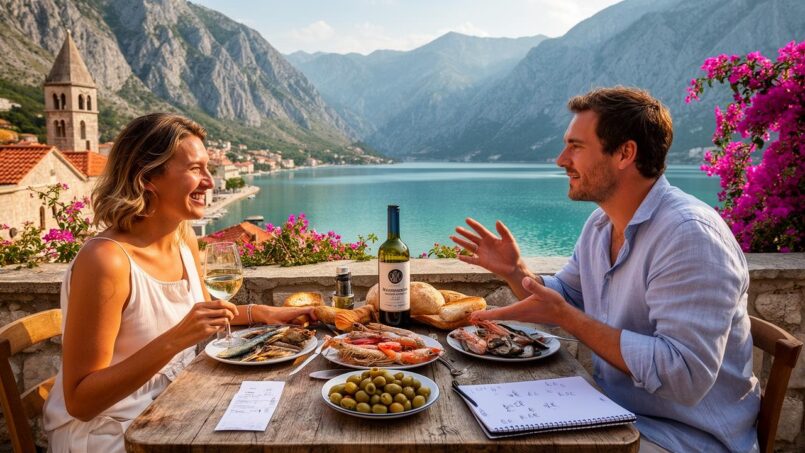
Montenegro is increasingly attracting French people seeking spectacular landscapes, favorable taxation, and a more relaxed daily life than in major Western metropolises. Among the top destinations, the Bay of Kotor alone concentrates a good portion of newcomers, drawn by its Adriatic fjord-like scenery, its UNESCO-listed medieval town, and a cost of living still significantly lower than France’s.
Real estate is rising rapidly, infrastructure is developing, and administrative procedures can be confusing. This article details monthly budgets, housing, healthcare, safety, visas, and daily life, with a focus on Kotor and the French community, based on early 2026 data and expat feedback.
Cost of Living: A Country Still Affordable, but More Homogeneous Than Before
Overall, Montenegro remains one of the most affordable countries in Europe. Cost of living indicators place it around 40% cheaper than Western Europe, with price levels about 29% lower than France when housing is included. Food is on average 7 to 8% cheaper than in France, transportation roughly twice as cheap, and rents can be nearly 50% lower.
However, this average hides significant disparities between the interior, the capital Podgorica, and the Adriatic coast, especially the Bay of Kotor, Budva, or Tivat, where prices are soaring due to tourism and real estate pressure.
Typical Budgets for a French Person in Montenegro
Estimates converge on a few benchmarks, which depend mainly on lifestyle, chosen city, and desired comfort level.
This year is the reference date for a single person’s taxes.
| Lifestyle Profile | Main Location | Estimated Monthly Budget* | Comment |
|---|---|---|---|
| Very modest / local living | Podgorica or interior | 800 – 1,000 € | Shared apartment or small studio outside center, home cooking, few outings |
| “Decent” level | Podgorica / interior towns | 1,000 – 1,300 € | Simple one-bedroom, occasional outings, public transport |
| Comfortable | Podgorica | 1,400 – 1,700 € | Better located apartment, regular restaurants, possibly a car |
| Modest but decent | Kotor / coast | 1,200 – 1,500 € | Less central apartment, fairly frugal living |
| Comfortable | Kotor (bay) | 1,600 – 2,100 € | Pleasant standard of living, without excess |
| “Comfortable / premium” style | Kotor / Budva / Tivat | 2,500 – 3,500 € | Nice housing, frequent restaurants, weekend getaways |
excluding exceptional expenses and long-distance travel
For a couple or family, amounts increase but remain lower than on the French Mediterranean coast. A couple can live comfortably between 1,700 and 2,200 € per month in “local” mode, and more like 2,500 to 3,000 € for an expat lifestyle on the coast. A family of four with international school and car easily approaches 2,500 to 3,200 € depending on location.
Specific Focus: Living in Kotor, at the Heart of the Bay
Kotor, with its fortified old town and UNESCO World Heritage site status, is considered the country’s jewel… but also one of its tightest markets. The cost of living is higher than in the interior, especially due to rents, yet the city is still considered “affordable” compared to Croatian or Italian marinas.
Recent estimates indicate that a single person needs, in early 2026:
– around 1,200 to 1,500 € per month for a modest but decent life in Kotor (slightly off-center housing, home cooking, few extras);
– about 1,600 to 2,100 € to live comfortably (nice apartment, regular outings);
– between 2,500 and 3,500 € for a truly high-end lifestyle (waterfront apartment, frequent restaurants, weekend escapes).
Detailed budgets for a single expat in Kotor typically fall in the 1,000–1,600 € range, including:
| Expense Category | Indicative Monthly Budget in Kotor |
|---|---|
| Rent (studio or 1-bedroom) | 500 – 850 € |
| Groceries (market + supermarket) | 180 – 280 € |
| Outings / restaurants (3–4 times/week) | 100 – 180 € |
| Electricity / heating / AC | 110 – 160 € |
| Internet / mobile data | 10 – 15 € (generous data plan) |
| Transportation (car or taxi) | 80 – 150 € |
| Private health insurance | 30 – 80 € |
| Sports (gym) | 25 – 50 € |
This expense structure clearly shows that the key item remains housing, which can eat up 40 to 50% of an expat’s monthly budget.
Housing: From Cheap Studio to “Premium” Bay
Housing is the parameter that makes the biggest difference in the bill, whether renting or buying. It is also the item that has increased the most in recent years, especially on the coast.
Rent: Kotor and the Coast vs. Podgorica
On the coastline, and particularly in the Bay of Kotor, tourist demand and foreign investments have driven prices up.
Some benchmarks for Kotor and surroundings:
| Type of housing / location | Typical monthly rent (early 2026) |
|---|---|
| Studio within the walls (old town of Kotor) | 500 – 700 € |
| 1-bedroom in the very center or Dobrota | 500 – 850 € |
| Studio or 1-bedroom outside the ramparts | 450 – 550 € |
| 1-bedroom in a popular neighborhood (non-top) | 270 – 450 € (occasional cases) |
| Small 1–2 bedroom apartment in old town (long-term) | ~800 € |
A few kilometers away, towards Tivat or the most “premium” edge of the bay, prices can climb even higher, especially in marinas like Porto Montenegro where some apartments sell for several thousand euros per square meter.
In comparison, in the rest of the country:
The monthly rent for a 1-bedroom in Podgorica can reach 750 € depending on the neighborhood.
French expats who choose Kotor therefore accept a rental surcharge compared to Podgorica, but in exchange they benefit from an exceptional setting and very lucrative seasonal rental opportunities if they invest.
Buying Property: A Rapidly Rising Market
On the buying side, the country has seen a surge in prices since 2024–2025, with double-digit annual increases, especially on the coast. National statistics indicate that a new apartment costs on average around 2,200–2,250 € per square meter nationally, but the coastal region exceeds 2,450 €/m² on average, with records much higher in the most sought-after areas.
In and around the Bay of Kotor:
Price range per square meter by sector and standard
Dobrota, Kotor waterfront, and certain marinas: 3,500 to 6,000 €/m² for high-end properties
Porto Montenegro, Portonovi: 6,000 to over 10,000 €/m² for very luxurious properties
In setback areas or bay villages: 2,000 to 3,000 €/m² for more modest properties
A key point for the French: property ownership is open to foreigners, who can buy on the same terms as nationals (excluding large agricultural plots or highly protected areas). To obtain a residence permit through real estate purchase, the fiscal value of the property must exceed 150,000 € according to recent rules. Many French people position themselves exactly in this segment, taking advantage of reduced real estate taxation (3% transfer tax on purchase, annual property tax of 0.1 to 1% depending on the municipality, no wealth tax).
Specialized investors now also accompany French speakers in their procedures, especially around Budva, Kotor, Tivat, and Herceg Novi.
Healthcare: A Functional System but Needs Private Supplement
Quality of life also involves healthcare. Montenegro has a universal public health system, funded by taxes, covering over 95% of the population. Legal residents with a residence permit who contribute are entitled to free access at the point of care for most public services.
Organization of the Healthcare System
The country relies on a three-tier network:
– Primary care: health centers (Dom zdravlja) with general practitioners and family doctors, who provide the first point of contact, manage prevention, and refer to specialists;
– General hospitals: seven regional hospitals, including those in Kotor, Bar, Cetinje, and Nikšić, for cases requiring more intensive care;
– Tertiary care: the Clinical Center of Montenegro (KCCG) in Podgorica, the reference facility for complex pathologies and specialized interventions.
Expats in the Bay of Kotor typically use: a mix of local culture and European influences, expat support networks, and learning the local language to integrate into their new environment.
Three main structures for care, by level of complexity
Community medicine and routine follow-up
Opšta bolnica Kotor – hospitalizations and usual emergencies
Complex cases: oncology, interventional cardiology, major surgery
Strengths and Limits as Seen by Expats
International indicators rate Montenegro’s healthcare system as “functional but improvable”: the health quality index is around 65/100, and the universal coverage index is around 70.
In practice, several limitations recur in expat testimonials, including French ones:
– chronic underfunding of the public sector, leading to sometimes outdated equipment and long waiting times for certain tests or surgeries;
– shortage of specialists in smaller towns and rural areas;
– variable English proficiency in public hospitals, though it is improving.
A French woman living in the country recounts, for example, having to turn to a private clinic after finding that an X-ray machine was not working in a provincial hospital when her son broke his arm. Conversely, another expat, with a medical background, testifies to the attentive follow-up offered to her husband with cancer during the pandemic, proof that humanity and dedication are often present.
Why Most Expats Combine Public and Private
For residents, public healthcare is free upon presentation of the “zdravstvena knjižica” (health card). Some expats report a simple process: registration, free choice of GP, then free referral to specialists (psychologist, speech therapist, ophthalmologist, allergy tests, etc.).
To reduce delays, bypass some bureaucracy, and guarantee English-language service, almost all foreigners—including the French—supplement with private providers.
– local or international private insurance, often required for visas (especially the digital nomad permit);
– use of private clinics in Podgorica, Tivat, Kotor, or Budva, where a specialist consultation generally costs between 25 and 80 € depending on the specialty and season (more expensive on the coast in summer).
Local insurers like Generali or UNIQA offer coverage from 40 to 80 € per month. More comprehensive international insurance plans run around 60–120 € per month for an adult, and about 300 € per year for basic offers. Many expats prefer to pay out-of-pocket for consultations (about 25 € for a GP, medications often under 10 €) while keeping insurance for more serious events.
For very complex situations (cancer, ultra-specialized surgery…), some foreigners choose to seek treatment abroad, especially in Belgrade, Istanbul, or other European countries better equipped with cutting-edge facilities.
Safety: A Calm Country, Kotor Particularly Safe
From a safety perspective, Montenegro regularly ranks among the safest countries in the Balkans. Figures from international organizations are very reassuring: a homicide rate per 100,000 inhabitants well below many Western countries, a modest rate of violent theft, and a general feeling of tranquility.
Safety indices give the country a high score, exceeding 80/100 in some rankings, with a particular emphasis on low violent crime.
Kotor: A Very Safe Small Mediterranean Town
In Kotor, violent crime is considered rare, and daily life takes place in a largely relaxed atmosphere. The main concerns raised by expats are rather “minor”:
Beware of pickpockets in the old town and port during high season, taxi scams with inflated prices, and dangerous traffic on narrow, winding roads in summer.
Neighborhoods popular with foreigners for their tranquility and safety include:
– Dobrota, a long residential waterfront strip, calm, family-friendly, and well-served;
– Muo and Prčanj, villages opposite Kotor, more peaceful, with a strong village feel and spectacular views;
– parts of Škaljari, a sloping area overlooking the town, appreciated for its good value and “local” feel.
Women can travel alone without issue by taking common-sense precautions: avoid poorly lit alleys late at night in high season, stay vigilant in crowded areas, and stick to known taxis.
Safety at the Country Level
The country as a whole is classified as low risk by most Western chanceries. A few important points for a French person:
– opportunistic crime increases on the coast between May and September (pickpocketing, bags left unattended, credit cards);
– organized crime networks exist, as in many countries in the region, but their activities remain largely on the margins of expats’ daily lives;
– roads often pose the most concrete risk: sometimes aggressive driving, dangerous overtaking, narrow mountain roads; defensive driving is strongly recommended.
Geopolitically, the country has no major risks: no open territorial conflict, terrorist threat deemed low, political demonstrations sporadic but generally contained.
Work, Income, and Remote Work: Paradise or Mirage for Digital Nomads?
On paper, Montenegro makes remote workers dream: a low cost of living, moderate personal taxation, the euro as currency, the possibility for many nationalities to stay 90 days without a visa without eating into Schengen days, and now a digital nomad visa.
The reality is more complex: the country has not yet developed the infrastructure and digital ecosystem found in Bali, Chiang Mai, or Lisbon, and the online work culture is still nascent.
Local Job Market: Low Salaries, Tourism Dominant
The economy of Kotor and the coast more broadly is largely dominated by tourism: cruises, seasonal hotels, restaurants, boat rentals, vacation real estate. “Classic” jobs outside tourism are rare. Expats looking for work on the ground quickly run into this reality:
In hospitality, restaurants, sales, or administration, local contracts range from 600 to 900 € net per month. For more skilled positions (hotel manager, yacht captain, senior real estate agent), income can reach 1,800 to 3,000 € net in the best cases. Many expats work remotely for foreign employers, run an online business, or commute to Podgorica for higher salaries.
For the French, the country’s appeal is therefore less about “building a career” locally than about spending an income earned elsewhere.
Remote Work and Coworking Spaces in Kotor and Around
Even if the country is not tailored for digital nomads, Kotor and Tivat now have several coworking spaces, which changes the game for those who need a good connection and a structured work environment.
In the Bay of Kotor, you can find: the majestic mountains, the charming medieval villages, and the crystal-clear waters that attract visitors from around the world.
| Coworking Space | Location | Approx. Monthly Price | Atmosphere and Profile |
|---|---|---|---|
| Kotor Nest | Old town of Kotor | ~$165 | Lively community, fast internet, “nomad” vibe |
| Work Hub Kotor | Near Kotor center | ~$130 | Relaxed atmosphere, essential services, good budget option |
| Regus Tivat – Porto Montenegro | Tivat (Porto Montenegro) | ~$250 | Very high-end setting, more “corporate” network |
These facilities partially compensate for the lack of a strong local digital culture. Experienced remote workers, however, recommend planning ahead:
To settle in well in Montenegro, buy a local SIM card with plenty of data (e.g., about 15 € for a 30-day prepaid SIM from T-Mobile Montenegro with a large data volume). Before signing a lease, check the internet connection quality in the apartment, as some old buildings in the old town may have limitations. Also ensure you have a comfortable workspace at home, as not all cafés are suitable for working long hours.
Typical Expat Incomes
Recent figures show a certain gap between local salaries and remote worker incomes:
– expats employed locally generally earn between 800 and 2,500 € net depending on their position, with a strong concentration at the bottom of this range;
– those working remotely for abroad can reach 2,000 to 5,000 € or more, depending on their employer’s country and sector.
For a French person paid according to Western European standards, these incomes place Montenegro in the category of countries where purchasing power is significantly multiplied, provided one accepts a less “polished” environment than in France in terms of services.
Visas, Residence, and Permits for Long-Term Settlement
For a reconnaissance trip, the framework is simple: most nationalities, including the French, benefit from 90 days without a visa within a six-month period. These 90 days are separate from the 90 Schengen days, a crucial point for those juggling multiple countries.
To stay longer, however, you need to fall into one of the temporary residence categories.
Main Residence Statuses
Three pathways are particularly used by expats, including the French:
– temporary residence for employment: the most classic case – requires a job offer from a Montenegrin employer, proof of housing, health insurance, and a clean criminal record. This is the most common status among locally employed expats;
– temporary residence through property ownership: possible if the fiscal value of the property exceeds 150,000 €. This is a popular route for French people investing in an apartment or house by the sea;
– residence for digital nomad / remote worker: recent and has become a real “game changer” for those working exclusively for clients or employers abroad.
The digital nomad permit offers an initial validity of two years, renewable for an additional two years, unlike most temporary permits valid for one year.
The Montenegrin Digital Nomad Permit
This permit is actually a category of temporary residence permit. It targets non-residents who work remotely for an entity registered outside the country. The main lines of this status:
– duration: up to 2 years, renewable once for an additional two years (i.e., 4 years total). Under current rules, you must then wait six months before reapplying;
– target: remote employees of a foreign company, entrepreneurs running a company registered abroad, freelancers with clients exclusively outside Montenegro (local income is not eligible);
– financial requirements: minimum income set at about three times the minimum wage, which corresponds, according to sources, to 1,800–2,400 € per month, sometimes presented around 1,350–1,600 € depending on the base used;
– main documents: valid passport, proof of remote work (employment contract, business registration, service contracts), proof of income (bank statements, pay slips), private health insurance covering the stay, clean criminal record, proof of local accommodation.
Income from abroad is not taxed locally for French remote workers in Montenegro, allowing avoidance of double taxation on salaries generated outside the country. However, it is essential to check French tax rules, especially tax residency and double taxation treaties.
Procedures, Timelines, and Outlook
Applications can be submitted either:
– at a Montenegrin embassy or consulate abroad, before arrival;
– or on the spot, after entering the country legally (which is fairly flexible and appreciated by remote workers).
Processing times are generally 4 to 10 weeks for a temporary residence permit, provided the file is complete and the necessary translations and apostilles are provided. In case of missing documents or additional checks, the timeline may extend.
After five consecutive years under a temporary permit, a resident can apply for permanent residence. Access to citizenship generally requires an additional five years of permanent residence, i.e., a total of ten years.
Taxation: Moderate Tax and Attractive Framework
For French people considering working or investing in Montenegro, personal taxation is a significant argument. Since 2022, the country has introduced a progressive income tax system, but with generally low rates.
The main points:
– income up to about 700 € per month is taxed at 9% (or even exempt in some cases, through allowances);
– the portion of income above that is taxed at 15%;
– a municipal surtax (generally 13%, 15% in Podgorica and Cetinje) applies to the tax amount, not to gross income.
The average net salary is about 1,000 € and the minimum net salary is 450 €. For a French expat paid locally, the tax burden is significantly lower than in France.
For digital nomads and certain profiles with entirely foreign income, current rules provide for exemption from local tax on this income, subject to meeting the status conditions. Hence the growing appeal of this country for freelancers and remote executives, especially since EU membership is being considered in the medium term, which could offer a form of “anticipation” residential framework in a pre-EU country.
French Community: Small, Concentrated on the Coast, but Well Organized
While the French community in Montenegro remains modest compared to Spain or Portugal, it is steadily growing. According to various sources, officially a few hundred French are registered with the consulate, but the actual number, including those who do not register, is significantly higher.
Where Do the French Live in Montenegro?
The French clearly favor the coastline:
| Zone / City | Estimated Number of French* | Main Reasons for Settlement |
|---|---|---|
| Podgorica (capital) | ~100 to 300 depending on source | Work, services, schools, administration |
| Bay of Kotor (Kotor & surroundings) | ~80 | Quality of life, scenery, tourism, real estate |
| Budva | ~50 | Tourism and real estate dynamism |
| Tivat | ~40 to 150 | Proximity to airport, Porto Montenegro marina |
| Herceg Novi & Perast | high concentration | Beaches, active Franco-Montenegrin network |
*figures approximate from various estimates
More than 70% of the French are thus spread along the coastal arc between Budva, Kotor, and Tivat. In the interior, Podgorica attracts mainly professional profiles or families looking for services, especially schools.
In Kotor, and more broadly around the bay, the French are attracted by the rare combination of preserved historical heritage, extraordinary maritime landscapes, and real estate prices still lower than on the Côte d’Azur, even if the rise is rapid.
Francophone Networks and Integration
Several structures and networks play an important role for welcome and mutual aid:
InterNations is very active in Podgorica and on the coast with regular events (tours, dinners, nature outings) and a dedicated French group. Associations like Français du Monténégro, UFE, and Facebook groups (French in Montenegro, Passeport Monténégro) offer practical information and mutual aid. In Herceg Novi, a Franco-Montenegrin network provides language courses and integration activities.
Many testimonials emphasize that it is through word of mouth that the country becomes known in France. Early settlers readily tell their friends that they live “comfortably on a French pension” where they “counted every euro” in Provence, fueling a small ongoing wave of settlement.
Education: Francophone and International Options
For French families, the school question is central. In Podgorica, the École Française Européenne (EFEP) offers a curriculum accredited by the French Ministry, from kindergarten to high school, with the possibility of following certain levels via CNED. Tuition fees are generally more affordable than at other international schools, as the goal is more cultural than for-profit, with support from the French embassy.
Also available:
– English-speaking international schools in Podgorica (QSI International School, United Kids International, etc.);
– a network of international schools on the coast, notably Arcadia Academy (British school in Kotor) and Knightsbridge Schools International in Tivat (IB school);
– a school linked to the Belgian consulate near Budva, following the French curriculum via CNED.
These options are concentrated in the capital and around the Bay of Kotor. The choice of residence city therefore has a direct impact on access to French or international schooling. For some French people, this argues for living in Podgorica or between Kotor and Tivat, where the offer is densest.
Quality of Life: Between Adriatic Postcard and Ground Realities
Beyond the numbers, French expats describe Montenegro—and especially Kotor—as an appealing compromise: a pleasant standard of living for a contained cost, overall high safety, nature at your doorstep, and a slower pace of life than in France.
Perceived Strengths by Expats
Several dimensions recur in testimonials:
The Bay of Kotor, considered the most beautiful in Europe, offers an exceptional natural setting combining sea, mountains, and historic villages. The pleasant climate allows mild winters on the coast and enjoyable spring/autumn, despite hot summers tempered by the sea breeze. The country enjoys a strong sense of safety, allowing families and solo women to walk late at night in a relaxed atmosphere. Finally, the flexible pace of life is characterized by bustling cafés during the day, important family meals, and a less obsessive relationship with time than in Northern Europe.
A French person settled in the bay explains, for example, that they have “the feeling of finally living on the Mediterranean Sea without feeling like they’re leaving a kidney there every month”, even if certain items, like housing, are becoming heavier.
Points of Vigilance Not to Underestimate
The picture is not idyllic, however, and expats warn newcomers about several issues:
Coastal housing is expensive and scarce for long-term stays, insulation and heating are often insufficient, the language barrier complicates procedures, the healthcare system requires private supplements, and the small expat community in Kotor can lead to a feeling of isolation.
Finally, a specific point for Kotor: the old town, very photogenic, is prone to flooding in autumn and winter during strong storms (bora). Living within the walls therefore requires accepting a number of seasonal inconveniences, from humidity to water sometimes invading the streets.
Testimonials and Typical Profiles of French People in Kotor and Montenegro
While each journey is unique, several recurring profiles can be identified among the French who choose to settle in Kotor or elsewhere in the country:
There are retirees living as a couple on 1,700–2,200 $ per month, tech or marketing remote workers using the digital nomad visa to save their Schengen days, worldschooling families testing international schools through programs like Boundless Life, and real estate investors targeting coastal appreciation and high-end tourism.
Their common point: all insist on the importance of coming first for a few weeks or months on a reconnaissance trip, at different seasons, to gauge the real constraints (summer heat, winter humidity, price variations by season, off-season atmosphere).
In Conclusion: For Whom Are Montenegro – and Kotor – a Good Choice?
Living in Montenegro, and more specifically in Kotor, can be an excellent option for a French person if several conditions are met:
– having a stable external income (pension, remote work, foreign company) sufficient to absorb a rising coastal rent;
– accepting the idea of a country where public services (healthcare, administration) are still under construction and operate with a certain degree of improvisation;
– wanting a calmer daily life, closer to nature, and willing to invest in learning the language or local integration.
For a single person earning 2,000 to 3,000 € per month, Kotor combines a UNESCO-listed bay, high safety, moderate taxation, a Francophone community, and digital nomad visa or real estate purchase options.
For a French retiree, the country allows, by living like the locals (market shopping, housing slightly set back from the sea, using the public healthcare system supplemented by private), maintaining a superior level of comfort than the same budget would provide in France.
Those seeking a hyper-connected city, healthcare infrastructure on par with the best French hospitals, smooth administrative procedures, and an immediately accessible Francophone community may find Montenegro, especially Kotor, still a bit “rough around the edges.”
It is precisely this “not yet fully on the radar” character that attracts many French people: a European country, outside Schengen, where the cost of living still allows you to dream big, provided you know what you are giving up in exchange for the view of the bay.
A wealth planning project or a question? Contact us now to speak with a wealth management expert.
Disclaimer: The information provided on this website is for informational purposes only and does not constitute financial, legal, or professional advice. We encourage you to consult qualified experts before making any investment, real estate, or expatriation decisions. Although we strive to maintain up-to-date and accurate information, we do not guarantee the completeness, accuracy, or timeliness of the proposed content. As investment and expatriation involve risks, we disclaim any liability for potential losses or damages arising from the use of this site. Your use of this site confirms your acceptance of these terms and your understanding of the associated risks.

Cyril Jarnias is an independent expert in international wealth management with over 20 years of experience. As an expatriate himself, he is dedicated to helping individuals and business leaders build, protect, and pass on their wealth with complete peace of mind.
On his website, cyriljarnias.com, he shares his expertise on international real estate, offshore company formation, and expatriation.
Thanks to his expertise, he offers sound advice to optimize his clients' wealth management. Cyril Jarnias is also recognized for his appearances in many prestigious media outlets such as BFM Business, les Français de l’étranger, Le Figaro, Les Echos, and Mieux vivre votre argent, where he shares his knowledge and know-how in wealth management.





