
 Published on and written by Cyril Jarnias
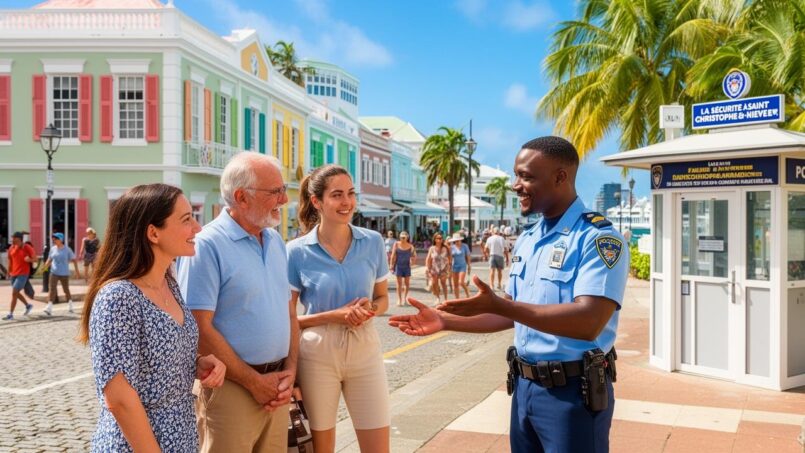
Moving to St. Kitts and Nevis means choosing a picture-postcard archipelago: volcanoes covered in rainforests, golden beaches, turquoise lagoons, a small population of around 50,000, and a decidedly laid-back pace of life. But behind the paradise image, one question arises for all future expatriates: Is it truly safe to live there day-to-day, to invest, to raise children, or to retire there?
St. Kitts and Nevis is generally considered one of the safest countries in the Caribbean, with visible police and close-knit communities. However, for a smooth expatriation, it is crucial to understand its real limitations regarding healthcare, natural hazard management, and crime, in order to identify and manage concrete risks in daily life.
A small Caribbean state known as safe but not without risks
The Federation of Saint Kitts and Nevis consists of two volcanic islands in the Lesser Antilles: St. Kitts and Nevis. The country benefits from notable political stability, a legal system based on English law, and an economy driven by tourism, financial services, agriculture, and a highly publicized Citizenship by Investment program.
The United States classifies the archipelago at the most favorable alert level, indicating a positive overall security situation.
Quantitative indicators confirm this perception. The Numbeo platform assigns the country a Safety Index close to 60, with a Crime Index around 40, placing the federation among the safest jurisdictions in the Caribbean, behind Cuba in some comparative rankings. Surveyed residents generally feel safe during the day, with a high sense of safety when walking alone, and a more mixed feeling at night.
Number of homicides recorded in 2011 in St. Kitts and Nevis, an alarming peak that has since significantly decreased.
For an expatriate, the key is to understand that the risk of violence exists, but it rarely directly affects foreigners. Most serious incidents are related to local rivalries, sometimes gangs and the circulation of illegal weapons, rather than assaults targeting foreign residents. The main day-to-day danger remains opportunistic petty crime.
Crime, delinquency, and on-the-ground reality for expatriates
On the ground, crime mainly takes the form of simple theft and opportunistic offenses. Pickpocketing, purse-snatching, car break-ins, or burglaries of poorly secured homes constitute the most concrete risks for newcomers. These incidents are concentrated in busy areas and in some neighborhoods of Basseterre, especially after dark or during lively events like major festivals or holidays.
Serious assaults (armed robberies, sexual violence) exist but are less frequent and rarely affect expatriates following basic safety rules. Statistics show a slight increase in sexual offenses (2023-2024), while homicides and some violent crimes are decreasing, thanks to police work and preventive approaches.
To better grasp the environment, it is useful to compare the perceptions of residents and available data.
| Indicator (Numbeo / aggregated data) | Approximate level or value | Interpretation for an expatriate |
|---|---|---|
| Overall Safety Index | ~59.9 | Reasonable perceived level of safety |
| Overall Crime Index | ~40–46 | Moderate crime, far from regional extremes |
| Feeling of safety walking alone during the day | ~75 | Strong feeling of safety during the day |
| Feeling of safety walking alone at night | ~53 | Average perceived safety, caution recommended |
| Concern about home break-ins | ~46 | Moderate concern, importance of securing one’s home well |
| Concern about physical assaults | ~36 | Relatively low concern |
| Concern about drugs and associated trafficking | ~43 | Problem present but less critical than elsewhere in the region |
To this, add the observations of foreign security services: drug trafficking-related crimes considered relatively rare, no recent history of terrorist attacks, and a police force that maintains a visible presence in major tourist areas.
For an expatriate, this means that with a minimum of vigilance, the risk of experiencing a serious incident remains limited. But this requires adapting one’s behavior, especially in the evening, in certain neighborhoods, and in managing one’s belongings.
Neighborhoods for living with confidence and those requiring caution
One of the assets of St. Kitts and Nevis for an expatriate is the possibility to choose a very different living environment depending on one’s priorities: festive seaside atmosphere, lively small town, peaceful village, or almost deserted beach. Not all these settings offer the same level of perceived security.
The most popular areas considered safe by expatriates are concentrated around a few hubs.
Frigate Bay, Christophe Harbour, and southeastern St. Kitts
Frigate Bay, on St. Kitts, is considered a safe bet for newcomers. This area brings together beaches, bars and restaurants, expatriate residences, small condos, and villas. The presence of an international community, tourist infrastructure, and visible police in the busiest areas contributes to a fairly high feeling of security. Many expatriates there highlight the quality of neighborhood relations and the effectiveness of informal resident watch networks.
Southeastern St. Kitts, notably the Christophe Harbour area, illustrates an upscale residential sector. It concentrates luxury properties, amenities like golf courses, and offers a very secure environment with guards, limited access, and private security services. This example shows how this type of development combines, for wealthy investors or retirees, tranquility, exceptional views, and enhanced security.
Nevis: peaceful villages and quiet beaches
Nevis projects a more preserved and calmer image than its larger sibling. Charlestown, the small capital, is described as welcoming, human-sized, with a real sense of community. Locations like Oualie Beach, Pinney’s Beach, or the village of Bath attract expatriates seeking tranquility, particularly for retirement. The feeling of insecurity is generally low there, residents know each other, and incidents remain rare, especially during the day.
Basseterre and areas to watch
Basseterre, the administrative and port capital, concentrates the main services, banks, shops, and medical facilities. Most of the city is trouble-free during the day, with visible police presence notably around the Port Zante cruise terminal and shopping streets. Occasional incidents of theft and pickpocketing occur there, as in any small tourist capital.
Vigilance should increase at night in certain sectors of Basseterre and in poorly lit rural areas. American universities on the island have instituted curfews for their students following isolated incidents downtown. For expatriates, it is recommended to favor licensed taxis after dark, to avoid venturing on foot into unfamiliar neighborhoods, and to follow the advice of residents and neighbors regarding streets to avoid.
Police, emergency services, and numbers to save before even arriving
On the institutional level, security is ensured by the Royal St. Christopher & Nevis Police Force. Under the leadership of Commissioner James Sutton, authorities highlight a measurable decrease in homicides and serious crimes, as well as a better case clearance rate, notably for murders. Law enforcement cooperates with the tourism sector, private security agents, and local communities through neighborhood watch programs and awareness campaigns.
It is recommended to memorize or save in your phone the various emergency service numbers as soon as you settle in a new location.
| Service | Main Number | Useful Remarks |
|---|---|---|
| Police/Ambulance/Fire Emergency | 911 | Federal number for any emergency |
| Ambulance (dedicated line) | 434 and 869-465-2801 | Includes a referenced air ambulance service |
| Fire – general number | (869) 465-2515 | Fire & Rescue Service, St. Kitts |
| Fire – Nevis (emergency) | (869) 469-3444 | Nevis Division of the Fire & Rescue Services |
| Police – general contact St. Kitts | +1 869 465 2241 | Non-emergency |
| Police – general contact Nevis | +1 869 469 5391 | Non-emergency |
| Coast Guard | 465-8484 / 466-9280 | For incidents at sea |
| NEMA (disaster management) | (869) 466-5100 | National Emergency Management Agency |
Even though 911 works everywhere, authorities recommend that residents also know the direct numbers for the police, fire department, and emergency services in their town, especially in rural areas where police stations and fire stations often share the same buildings.
For American citizens, the nearest diplomatic representation is in Bridgetown (Barbados), contactable for any serious incident, including domestic violence or crimes involving foreign nationals. A U.S. Department of State call center is also accessible 24/7.
Local laws: points of vigilance that can be costly
One of the classic mistakes of newcomers and tourists is underestimating the strictness of certain laws. In St. Kitts and Nevis, several specific rules may be surprising but must be integrated into your habits.
The most well-known is the absolute prohibition on wearing clothing or accessories of a camouflage style, regardless of your nationality, including for children. Only law enforcement and military personnel may wear them. Violation can lead to a fine and up to three months in prison, with confiscation of the clothing. This is a rule widely shared in other Caribbean islands and strictly enforced.
Drug trafficking is punishable by fines of up to EC$400,000 or several times the value of the products, and prison sentences of up to life imprisonment. Marijuana for personal use is partially decriminalized but remains subject to a licensing system, with fines for public consumption without authorization.
The law also very strictly regulates the importation of firearms and ammunition, which cannot be done without explicit prior government authorization. Bringing a weapon without this authorization exposes one to criminal prosecution.
Driving under the influence is strictly regulated, with a permitted blood alcohol limit of 80 mg/100 ml. Offenses are severely sanctioned, potentially with heavy fines and up to two years in prison for repeat offenders. Seat belt use is mandatory for all occupants. Child seats are available from car rental agencies.
Regarding individual rights, consensual same-sex relations between men were decriminalized in 2022, but social attitudes remain generally conservative. Public displays of affection – whether involving a heterosexual or homosexual couple – are uncommon and may attract stares, especially outside tourist areas.
Finally, nudity is prohibited on public beaches, and foul language or obscene gestures in public may be subject to sanctions. In places of worship, modest attire is expected, and it is advisable to remain discreet during services or religious holidays, which strongly structure local social life.
Getting around safely: roads, taxis, ferries, and boats
Adapting to local traffic is an essential aspect of day-to-day security. In St. Kitts and Nevis, driving is on the left, a legacy of the British past. For expatriates unfamiliar with this pattern, caution must be maximum, especially as some roads combine narrowness, sharp turns, faded road markings, and limited public lighting.
Authorities regularly highlight several characteristics of the road network to keep in mind: local drivers who do not always use turn signals, pedestrians sometimes walking directly on the roadway, vehicles stopping abruptly to chat roadside, unmarked speed bumps, and potholes on some secondary roads. In case of an accident, the procedure is clear: call the police at 911 and do not move the vehicle before they arrive.
Essential information for visitors and new residents wishing to drive in Mauritius.
Mandatory to drive, issued upon presentation of a valid national or international driver’s license. Validity duration varies from a few months to one year.
Car rental agencies often handle the administrative procedures for obtaining the temporary permit.
Issuance cost is moderate. Most rental companies require the driver to be at least 25 years old and have a minimum driving experience.
Public transportation remains limited. The network of minibuses (green license plates) constitutes the most economical local option, but these vehicles do not serve certain neighborhoods popular with expatriates like Frigate Bay or the southeastern peninsula, where taxis are necessary. The behavior of minibus drivers may seem abrupt to European eyes, with sometimes sudden maneuvers.
For your travels, especially at night, always use official taxis. In St. Kitts, they are identifiable by their yellow license plates with a “T” or “TA.” In Nevis, plates begin with “N” or “NT.” As these vehicles are not equipped with meters, it is imperative to negotiate and agree on the fare before departure. Standard rates are generally known by establishments like hotels, the airport, and main departure points, which can serve as a reference.
Maritime connections between St. Kitts and Nevis are provided by regular ferries, taking about 45 minutes, as well as faster but more expensive water taxis. Here again, safety depends partly on choosing reputable operators and respecting the captain’s instructions, especially during rough seas. The coast guard, reachable by phone, can be contacted in case of a problem at sea, and the U.S. Coast Guard has previously expressed reservations about certain aspects of port security, urging boaters to be vigilant.
For owners of sailboats or yachts, caution is advised regarding unknown vessels approaching, especially at night. It is recommended to systematically lock all access points, not to leave valuables in sight, and to avoid completely isolated anchorages without prior local information.
Health and access to care: a strategic point for a smooth expatriation
On paper, the archipelago boasts honorable health indicators, and its ranking at the top of CARICOM countries in the latest UN Human Development Report is often highlighted. In practice, the public healthcare system, highly centralized, offers satisfactory services for basic care but remains limited for complex situations or highly specialized treatments.
The healthcare system relies on two main public hospitals: the Joseph N. France General Hospital in Basseterre (156 beds, offering trauma care, maternity, laboratory, surgery, and internal medicine) and the Alexandra Hospital in Nevis. They are complemented by around twenty public health centers, smaller hospitals, and private clinics in Basseterre, Frigate Bay, and Nevis. The state heavily subsidizes care for its citizens and permanent residents, with free public healthcare for those under 18 and over 62.
For an expatriate, the situation is different: even in the public system, care is fee-based. The recommendation, almost unanimous, is to take out international health insurance covering both on-site care and, crucially, medical evacuation to a better-equipped facility in case of a serious problem. The bill for an evacuation can reach several tens of thousands of US dollars, notably to Puerto Rico or Miami, frequent destinations for serious cases.
The table below allows for a quick visualization of the system’s strengths and weaknesses for an expatriate.
| Aspect of the healthcare system | Situation in St. Kitts and Nevis | Implication for an expatriate |
|---|---|---|
| Basic care (general medicine, pediatrics…) | Available in public hospitals and numerous health centers | Sufficient for common consultations and minor ailments |
| Emergency and trauma care | Mainly handled by JNF Hospital and Alexandra Hospital | Initial care possible, evacuation for complex cases |
| Advanced imaging (CT scan, MRI) | Lack of some key equipment | Need for transfer abroad for many diagnoses |
| Advanced specialties (cardiology, neurology, oncology) | Very limited or non-existent local capacity | Essential to have an evacuation plan and specialist referrals abroad |
| Mental health | Very limited service offering, improvement project underway | Plan for remote follow-up or occasional trips outside the country |
| Cost of care for expatriates | Full payment, even in public structures | International health insurance recommended, with sufficient coverage limit |
To these structural limitations are added more classic health risks in a tropical environment: high prevalence of non-communicable diseases among the local population (diabetes, hypertension, cardiovascular diseases, cancers), vector-borne diseases like dengue or Zika, and a rabies risk in certain animal populations, notably dogs and bats.
Before departure, it is recommended to update vaccines for hepatitis A and B, typhoid, tetanus, diphtheria, pertussis, measles, mumps, rubella, varicella, meningitis, and possibly rabies depending on exposure. Although tap water is chlorinated, people with sensitive digestive systems are advised to favor boiled or bottled water.
For a smooth expatriation, a few simple reflexes should be integrated: get a complete check-up before leaving, arrive with a supply of personal medications in their original packaging, quickly find a trusted general practitioner on-site (often through word-of-mouth or recommendations from embassies and expatriate communities), and identify in advance the reference hospital in case of an emergency based on your place of residence.
Sea, beaches, and outdoor activities: paradise, but not without precautions
The sea is central to life in St. Kitts and Nevis, but it should not make one forget some safety realities. Most beaches have neither lifeguard stations nor swimming flag systems. Currents can be treacherous, and some sites present clearly dangerous conditions for swimming, like Cayon Beach (strong winds, high waves) or North Friars Bay (powerful currents, absence of lifeguards and infrastructure).
To minimize risks, several principles apply: never swim alone, avoid going too far from shore, and ask locals or hoteliers about the safest beaches. Increased caution is required after consuming alcohol. Regarding nautical activities (diving, boat trips, water sports), it is crucial to choose well-established, reputable providers recommended by residents or reputable hotels, as the sector is unevenly regulated.
The presence of sharks in Caribbean waters is a reality, but attacks remain extremely rare. To further reduce this already low risk, simply avoid solitary swims far from shore and remove shiny jewelry before entering the water.
Hiking in the rainforest or on volcanic slopes, like on Mount Liamuiga, requires caution. Dense vegetation, rapid weather changes, and steep trails make using a reputable local guide absolutely essential, especially for inexperienced individuals.
Hurricanes, earthquakes, droughts: living with natural hazards
Moving to St. Kitts and Nevis also means accepting a real exposure to climatic and geological hazards. The country is located in the Atlantic hurricane belt, with an official season between June and November. Climate models predict an intensification of storms, an increase in the frequency of category 4 and 5 hurricanes, and heavier rainfall within these phenomena, which increases the risk of floods and landslides.
The federation is exposed to several natural hazards: powerful cyclones (like Georges), heavy rainfall causing mudflows and flash floods, flooding and storm surges in low-lying areas (notably Basseterre), and concerning drought episodes on the island of Nevis.
Faced with these risks, the archipelago has established a dedicated institutional apparatus, with the National Emergency Management Agency (NEMA) and its counterpart on Nevis. These agencies coordinate preparedness and response to natural disasters, develop evacuation plans, organize drills, maintain strategic reserves of equipment, and use local media to broadcast prevention messages at the start of each hurricane season.
For an expatriate, it is crucial to integrate natural hazard management into your relocation plan. This involves choosing, if possible, a home avoiding areas highly exposed to flooding or too close to the shoreline. You should also check the solidity of the construction, take out home insurance covering natural disasters, prepare an emergency kit (containing water, food, medications, important documents, lights, and batteries), and regularly follow weather forecasts, particularly those from the U.S. National Hurricane Center.
It’s not about living in fear, but rather with an appropriate level of preparedness, much like the residents who have learned to deal with hurricane season as a normal component of their annual calendar.
Daily life, integration, and informal security
Beyond laws, statistics, and institutions, security in St. Kitts and Nevis also relies on an element difficult to quantify but fundamental: the quality of human relations. The population is frequently described as warm, proud of its Creole culture, attached to family and community. This tight-knit social fabric contributes to a form of “informal security” that expatriates who integrate even minimally benefit from very quickly.
In neighborhoods popular with foreigners, it is common for residents to know each other, share information about suspicious individuals, help each other when needed, and spontaneously watch over each other’s homes. This social cohesion is an important asset, especially as the country’s small size and low population density allow for quick identification of everyone.
To best benefit from this community protection, the expatriate should play by the local rules: greet neighbors, participate in neighborhood events, frequent the markets, support local businesses, and show respect for social codes – whether regarding attire, language, or attitude in religious places.
Integration also involves a certain patience in the face of the famous “island time,” that more relaxed way of approaching schedules and administrative procedures. By accepting this rhythm rather than fighting it, one reduces tension and misunderstandings, which indirectly contributes to a more peaceful – and thus safer – daily life.
Practical tips for a smooth relocation
If we gather the key elements, a successful expatriation to St. Kitts and Nevis relies on a mix of preparation, common sense, and progressive integration.
When choosing where to live, opting for areas known for their perceived safety – Frigate Bay, the southeastern peninsula, certain sectors of Basseterre, the surroundings of Charlestown, Pinney’s or Oualie on Nevis – constitutes a very effective first filter. Checking the security features of the home (solid doors, lockable windows, possible grilles or alarm system) and inquiring with other expatriates in the neighborhood completes this first level.
On the financial and asset side, it is wise to be assisted by reputable professionals during a real estate investment, particularly within a Citizenship by Investment program. Although the country offers a very favorable tax environment, administrative procedures (residence permits, licenses for land acquisition by foreigners outside CBI, etc.) are complex and benefit from being handled by specialists to ensure proper execution.
Regarding daily life, a few habits have a disproportionate impact on security: avoid walking alone at night on deserted or poorly lit streets, never leave valuables visible in a car or on a beach towel, use only licensed taxis, keep a low profile regarding jewelry and electronic devices, and be particularly vigilant during major festivals (Carnival in St. Kitts, Culturama in Nevis).
For a smooth expatriation, take out international health insurance with repatriation coverage. Locate nearby hospitals and doctors, follow vaccination recommendations, and prepare a family plan for natural hazards (hurricanes, earthquakes). Stay informed of NEMA guidelines during hurricane season.
St. Kitts and Nevis does not promise a world without dangers, but offers an overall safe, politically stable, human-scale framework where a prudent, well-informed expatriate respectful of local realities can lead a peaceful life, whether as an investor, retiree, family, or remote worker. Security here is neither a mirage nor an absolute given; it is a balance, built daily, between the institutional, the communal, and individual behaviors.
Disclaimer: The information provided on this website is for informational purposes only and does not constitute financial, legal, or professional advice. We encourage you to consult qualified experts before making any investment, real estate, or expatriation decisions. Although we strive to maintain up-to-date and accurate information, we do not guarantee the completeness, accuracy, or timeliness of the proposed content. As investment and expatriation involve risks, we disclaim any liability for potential losses or damages arising from the use of this site. Your use of this site confirms your acceptance of these terms and your understanding of the associated risks.

Cyril Jarnias is an independent expert in international wealth management with over 20 years of experience. As an expatriate himself, he is dedicated to helping individuals and business leaders build, protect, and pass on their wealth with complete peace of mind.
On his website, cyriljarnias.com, he shares his expertise on international real estate, offshore company formation, and expatriation.
Thanks to his expertise, he offers sound advice to optimize his clients' wealth management. Cyril Jarnias is also recognized for his appearances in many prestigious media outlets such as BFM Business, les Français de l’étranger, Le Figaro, Les Echos, and Mieux vivre votre argent, where he shares his knowledge and know-how in wealth management.





