
 Published on and written by Cyril Jarnias
Moving to Botswana is not just about changing countries; it’s also about embracing a different way of eating, sharing, cooking, and hosting. For an expatriate, the local cuisine is one of the quickest shortcuts to understanding society: what’s on the plate tells the story of agriculture, history, beliefs, celebrations, and social hierarchies. In Botswana, all of this is expressed through meat, grains like sorghum and maize, traditional drinks… but also, increasingly, through fusion cuisines, vegetarian options, and high-end dining experiences at safari lodges.
This guide covers daily eating habits, table etiquette, places to try typical dishes, as well as advice for vegetarian and vegan diets. It also suggests practical activities like cooking classes or starting a vegetable garden.
Understanding the Spirit of Botswana Cuisine
Botswana cuisine is often described as simple, hearty, and not heavily spiced, but deeply connected to the land. It rests on a few obvious pillars: beef, local grains (sorghum, maize, millet), hardy vegetables, and slow-cooking techniques that get the most out of these ingredients.
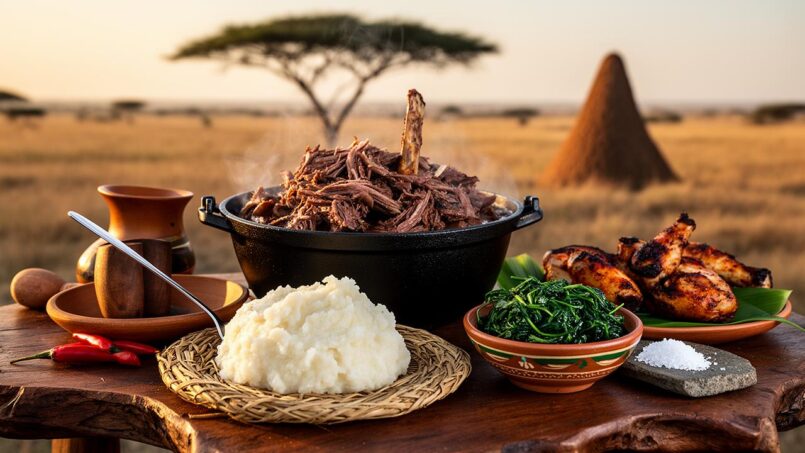
The daily food rhythm follows a tradition with a main meal at midday and a light supper consisting of leftovers, bread, and tea. The potjie, a large three-legged pot placed over the fire, is the iconic utensil for slow-cooking meat stews, bean dishes, or squash soups.
Overall, seasoning is minimal: salt, sometimes onion, tomato, a few simple spices. The balance comes more from textures (thick porridge, tender meat, leafy greens), and between filling starches and protein-rich sides.
Beef accounts for about 80% of Botswana’s agricultural GDP.
The Basics: Must-Try Dishes to Connect with the Culture
Getting into the local cuisine starts with a handful of dishes you’ll see again and again, in homes as well as restaurants, from ceremonies to meat festivals in Lobatse or Ghanzi.
Seswaa, the Beating Heart of the Botswana Table
Seswaa is unanimously considered the national dish. It is a meat stew (often beef, sometimes mutton or goat) cooked slowly in water with salt, sometimes a little onion, in a potjie. After several hours (usually 2 to 5 hours), the meat is so tender that it is pounded or shredded until it reaches a fibrous, almost cottony texture. The term “sisa” is sometimes used to refer to pounded meat.
Traditionally, it is men who cook Seswaa for big occasions – weddings, funerals, national holidays – outdoors, around the fire. Cattle carcasses are cut into standardized pieces, with certain cuts (like mokoto) having a precise symbolic meaning in how they are distributed among guests.
For an expatriate, tasting Seswaa prepared during a family ceremony helps to understand the importance of cattle in the local culture: every slaughtered animal is valued from head to tail, and meat is not just a product, but a marker of status, generosity, and community.
Seswaa Cultural Explanation
Porridges and Grains: Pap, Bogobe, Dikgobe
The caloric base is not meat but grains, which are almost omnipresent.
Pap (also called Phaletshe, Mieliepap, Sadza) is a thick porridge made from maize meal. It can be more or less firm, but in its most common version, you can cut it with a spoon. It is eaten with the fingers, by pinching off a small piece, rolling it into a ball, and dipping it into meat or vegetable sauce.
The term Bogobe refers more broadly to porridges, often made from sorghum or millet, sometimes fermented (Ting). A fascinating variant is Bogobe jwa lerotse, which mixes sorghum meal, lerotse melon (a local melon), and milk or curdled milk, for a slightly sweet and orange result.
Dikgobe is a traditional dish made of sorghum, beans, and samp (crushed maize). It is cooked for a long time and can be enriched with fat, onions, and tomatoes. Typically served at large celebrations, it is often accompanied by milk or meat.
Morogo and Vegetables: The Plant-Based Side of Local Cuisine
Even though the cuisine is described as very meat-heavy, Morogo shows just how important leafy vegetables are, especially in rural households. The word refers to a collection of wild or cultivated greens (amaranth, cowpea leaves, pumpkin leaves, etc.), cooked with tomato, onion, sometimes ground peanuts.
Served with Pap or Bogobe, Morogo makes a complete meal, rich in vitamins and minerals. For a vegetarian or vegan expatriate, it’s often the most authentic gateway into the country’s daily cuisine.
Offal, Meats, and Local Delicacies
The Botswana culinary logic follows a principle: nothing is wasted. Therefore, offal is common, even sought after.
You will notably encounter:
– Mogodu, a slow-cooked tripe stew with chili, ginger, garlic, onion, bell pepper, served with Pap or potatoes.
– Serobe, which combines intestines, tripe, and sometimes lungs and kidneys, cooked for a long time.
– Mogatla, a beef oxtail stew with onions, bay leaf, tomatoes.
– Leleme, grilled or boiled beef tongue, traditionally consumed by women.
– Menoto, chicken feet grilled or in sauce, very common in street food.
Mopane worms, dried and fried, have been consumed for at least 6,000 years, as evidenced by archaeological traces. Their high protein and calcium content made them a survival food, now transformed into an identity dish, often served with a peanut or tomato sauce.
Biltong (Segwapa), spicy dried meat, is another preservation treasure: meat strips are dipped in vinegar then coated with salt, coriander, pepper, cloves before drying. Very practical for travel and safaris.
Breads, Doughnuts, Dumplings
Colonial and regional influences are visible in local baking. You’ll find:
– Vetkoek, sort of fried dough “balls”, served sweet (honey, jam) or savory (meat curry, liver, spinach).
– Diphaphatha and Phaphatha, flatbreads pan-fried, filled with meat or jam.
– Mapikiwa, between a scone and a brioche, a British legacy, enjoyed with tea, butter, jam.
– Madombi, steamed dough balls cooked above a stew.
These preparations are omnipresent in markets, neighborhood stalls, lodge buffets.
Summary of Iconic Dishes
For an overview, here is a summary table of some key dishes and their main composition.
| Dish / Preparation | Main Ingredient | Type of Dish | Typical Occasion |
|---|---|---|---|
| Seswaa | Beef / Goat / Mutton | Pounded Stew | Weddings, Funerals, National Holidays |
| Pap / Bogobe | Maize, Sorghum, Millet | Porridge / Side | Daily Meals |
| Morogo | Leafy Greens (Amaranth, Cowpea) | Cooked Vegetables | Daily, Side Dish |
| Dikgobe | Sorghum, Beans, Samp | One-Pot Dish / Side | Celebrations, Family Meals |
| Vetkoek | Fried Bread Dough | Snack / Street Food | Breakfasts, Markets, Festivals |
| Mopane worms | Mopane Caterpillars | Snack / Stew | Seasonal, Rural Areas |
| Biltong (Segwapa) | Dried Beef | Snack | Travel, Appetizer |
| Mogodu / Serobe / Mogatla | Various Offal | Stews | Family Meals, Occasions |
| Koko ya Setswana | Local Chicken | Stew | Weekend Meals, Ceremonies |
Drinks: From Sorghum Beer to Modern Lagers
In Botswana, offering a drink is a gesture of respect and conviviality. Systematically refusing can be perceived as distance, although one can politely decline.
Commercial Beers: St. Louis and Others
Beer culture has modernized with the rise of breweries like Kgalagadi Breweries Limited (KBL), a subsidiary of SABMiller. Their flagship brand, St. Louis Lager, is considered the national beer, light and easy to drink. The range also includes St. Louis Export (stronger), St. Louis Premium Export (4.5% vol.), St. Louis Special Light (3.5%) and even a non-alcoholic version, St. Louis 24.
Other clear lagers, of European style, are also brewed locally (Castle Lite, Lion). They are found everywhere, from neighborhood bars to hotels.
Opaque Beers and Traditional Drinks
Alongside clear lagers, another family: opaque beers, made from sorghum and maize. Chibuku, sold in a carton that must be shaken well (hence the nickname “Shake-Shake”), is the industrial version of these traditional beers. Slightly sour, with a texture close to liquid porridge, they are consumed mainly in popular neighborhoods and villages.
Discover the main local alcoholic beverages, deeply rooted in Setswana ceremonies and culture.
Traditional sorghum beer, essential at weddings, funerals, and initiation rites.
Local alcoholic beverage prepared from fermented honey.
Palm wine, another traditional Botswana drink.
Note: The state has imposed a heavy tax on alcohol (a levy of 30%, then 45%), which has reduced brewery sales volumes and pushed them to develop more non-alcoholic drinks.
Non-Alcoholic Drinks: From Maheu to Morula Juice
For those who don’t drink alcohol, the range is surprisingly wide.
You’ll notably come across:
– Gemere, a homemade “ginger beer”, fizzy, sweet, slightly spicy, a star at weddings.
– Maheu / Mageu, a fermented drink made from maize meal or sorghum, thick, refreshing, very widespread, from street vendors to supermarkets.
– Madila and Phafana, fermented milks similar to plain yogurt, consumed alone, sweetened, or poured over porridge.
– Mabuku, a drink made from baobab fruit powder, water, and sugar.
– Morula (local fruit) juice, watermelon juice, ginger juice.
– Local bottled waters (Source Water, Bonaqua), very common, the first being accredited by the Botswana Bureau of Standards.
For an expatriate, a good compromise is often to try Maheu and Gemere, which allow participation in drinking rituals without consuming alcohol.
Table Etiquette: Codes, Hierarchy, and Respect
In Botswana, food is not just a matter of taste; it is also a highly codified social scene. Tswana society strongly values respect, especially towards elders, and this is seen in the way people greet each other, sit, and serve dishes.
First and foremost, people greet each other – Dumela (singular) or Dumelang (plural) – taking their time. Not greeting or rushing the exchange is perceived as anti-social.
At the table, especially in rural or traditional settings:
Washing hands before and after the meal is mandatory, often in a basin brought by the host. Eating with the right hand is common, especially for Pap and stews. It is important to wait for elders to start eating before serving oneself. Elders and high-status individuals are served first, sometimes on two separate plates (porridge on one side, meat on the other). Children only start afterwards and must remain calm, without playing during the meal.
Refusing a dish during a ceremony is frowned upon. If you are truly not hungry anymore, it is better to accept a small portion and politely explain in Setswana: “Ke kopa tshwarelo, ke jele” (sorry, I have already eaten).
It is appreciated to accept a dish or drink with both hands, a sign of respect. Conversely, pointing at someone, speaking loudly, showing anger, or opening a gift in front of the giver are considered inappropriate behaviors.
Where to Eat: Cities, Markets, Lodges, and Villages
The culinary experience for an expatriate will oscillate between several worlds: home, city restaurants, markets, street food, and, for many, safari lodges.
Gaborone: Supermarkets, Markets, and Street Food
The capital concentrates lively markets where raw products, prepared dishes, and snacks mix. The Main Mall, built in the 1960s, is a good observation point: you can find vendors of indigenous foods, like Lesego Tshidi Motshegaletau, a farmer who sells fruits and vegetables from her farm and other regions of the country.
Nearby, other markets like Village Market or Farmers’ Market highlight more “organic” and artisanal products: homemade jams, local honey, chili peppers, vegetables grown without pesticides.
Large supermarkets (Choppies, Spar, Pick n Pay, Food Lovers Market) fill the baskets of urban families and expatriates. You can find everything: Pap, sorghum, dried Mopane worms, Maheu, but also plant-based milk, imported tofu, cereals, Asian sauces.
Around train stations and busy areas, small stalls offer typical local dishes like kota, vetkoek, or boerewors rolls. This is the most affordable way to discover South African cuisine, but it’s wise to be cautious about hygiene conditions.
Francistown and Maun: Between Tradition and International
Francistown, the country’s oldest city, offers a good variety of restaurants: barbecue-style steakhouses, Indian and Asian cuisines, fast food, but also some establishments betting on Botswana identity (The Tswana Cuisine Plug, for example). It’s a good place to try seswaa, biltong, boerewors, but also Mediterranean food or burgers.
Maun, the gateway to the Okavango, is particularly geared towards travelers. The restaurants there are mostly “international” – pizzas, wraps, curries, modern cafes – but several places incorporate local ingredients: seasonal vegetables, Botswana beef, morogo, pap as a side. Places like Marc’s Eatery, The Tshilli Farmstall, Motsana Arts Café, or some cafes on Mophane Road play this card of blending world cuisine with local products.
Several establishments in Maun are known for their flexibility with vegetarian and vegan diets, making them valuable spots for expatriates with these eating habits.
Lodges and Safaris: High-End Bush Cuisine
In safari areas (Okavango, Chobe, Savute, Central Kalahari, Moremi & Khwai), high-end lodges and camps have become true showcases of gastronomy. Many operators now offer explicitly vegan stays, with entirely plant‑based menus, bush picnics, sunrise breakfasts, boma dinners under the stars.
Camps like Duba Explorers or Selinda Explorers, designed by renowned conservationists, pride themselves on interactive kitchens where you can talk with chefs, observe, or participate. Deception Valley Lodge shows how far this creativity can go: radish salads, crunchy peas and granadilla vinaigrette, eggplant steaks with basil pesto, butternut risotto, Hawaiian crumpets, port-poached apples…
The lodges, often very remote (the nearest shop can be 150 km away), compensate for this isolation with great responsiveness to dietary requests: vegetarian, vegan, gluten-free. Most do not charge extra for a vegan menu, except perhaps for specific wines ordered in advance.
Summary of Main Dining Contexts
| Context | Dominant Cuisine Type | What an Expatriate Can Look For |
|---|---|---|
| Homes / Homestays | Traditional Family Cuisine | Seswaa, Pap, Morogo, Dikgobe, Madila |
| Urban Markets | Simple Dishes, Raw Products | Vetkoek, kota, samosas, Mopane worms, seasonal fruits |
| City Restaurants | Mix of Local / International | Seswaa + Pap combos, grilled meats, curries, pasta |
| Safari Lodges & Camps | High-End Fusion Cuisine | Tasting menus, vegan options, boma dinners |
| Bars / Shebeens | Grills, Snacks, Opaque Beers | Boerewors, Menoto, Chibuku, Bojalwa |
Being Vegetarian or Vegan in Botswana
Despite the weight of meat in the culture, several accounts confirm that it is entirely possible – and even enjoyable – to be vegetarian or vegan in Botswana, provided one remains flexible and proactive.
In Daily Life
For expatriates in the city, things are relatively simple: supermarkets in Gaborone, Maun, or Francistown offer dried beans, lentils, chickpeas, imported tofu or equivalents, plant-based milks (soy, almond), whole grains, seasonal fruits and vegetables. Cafes and restaurants listed on platforms like Happy Cow multiply meat-free or animal-free options.
In an academic or professional setting, canteens (like “Executive” spaces on some campuses) often offer vegetarian dishes, such as soy protein in sauce served with Pap and vegetables. To complement these meals in accommodation without a kitchen, it’s useful to rent a small fridge and a stove (or at least a kettle). This allows for preparing instant soups, oatmeal, or steamed vegetables, making the diet more varied and economical.
While Traveling or on Safari
Here again, the offering has exploded with the popularity of plant‑based diets. A large portion of safari lodges now offer vegetarian or vegan meal plans, from the small mobile camp to the luxury private reserve. Specialized agencies have even launched 100% vegan safaris, combining the Kalahari and Okavango Delta, with chefs trained in plant-based techniques.
Meals often include vegetable soups, lentil curries, mixed salads, grain dishes (bulgur, quinoa, brown rice) and desserts made without dairy. Some camps, less accustomed, may prepare simpler menus but generally hearty and nutritious.
Strategies and Tips
For a vegetarian or vegan expatriate, a few reflexes simplify life:
To travel as a vegetarian in Botswana, it’s advisable to notify accommodations and restaurants in advance, especially in remote areas. Prioritize naturally vegetarian local dishes like Morogo, Pap, or Dikgobe. Indian restaurants, plentiful in major cities, offer good options. Don’t hesitate to request adaptations, like removing cheese or replacing meat with vegetables. An experience in Kasane showed that a simple dish of avocado on gluten-free bread, garnished with fruit, can do the trick. Finally, bring backup snacks for long days.
Exploring Gastronomy Through Practice: Cooking Classes and Gardens
Discovering the local cuisine also happens through hands-on experience. Several services and studios offer Setswana cooking workshops, open to expatriates and locals alike.
Cooking Classes: Learning Seswaa, Pap, Morogo and Company
Structures like The Culinary Studio MFK (My Farmhouse Kitchens), near Gaborone, organize intensive courses, half‑day workshops, five-week programs, and even sessions for businesses, couples, families, or children. The focus is on basic techniques (roasting, braising, sautéing, frying, stewing, steaming), hygiene, table setting, but also on traditional recipes: Seswaa, Pap, Morogo, Vetkoek, Matemekwane, Dikgobe, Bogobe jwa lerotse.
For expatriates, this experience offers a double immersion: the practical learning of local cooking techniques (like rolling Pap by hand or preparing Mopane worms) and the discovery of traditional stories associated with these dishes. The experience is often complemented by harvesting ingredients from the center’s vegetable garden, thus integrating a gardening dimension.
The classes welcome all levels, from the person who has never held a knife to the aspiring private chef. Most of the time, you leave with a small recipe booklet, a certificate of participation, and the dishes prepared during the session.
Gardening in a Semi-Arid Climate
Botswana is dry, sometimes semi-desert, but “kitchen garden” cultivation is encouraged by the authorities and many communities. The idea is to reduce food dependency (the country imports more than 85% of its foodstuffs, notably grains) and diversify diets.
The agricultural calendar in tropical zones must be aligned with the rainy season, concentrated and irregular from October to February. To optimize water use, it’s crucial to implement collection techniques, mulch the soil, and water deeply in the evening to reduce evaporation. Prioritize crops suited to these conditions: grains like maize, sorghum, and millet; vegetables such as beans, squashes (butternut, pumpkin), okra, eggplants, and chili peppers; hardy plants like moringa; as well as fruit trees (mango, guava, pomegranate, citrus, papaya, avocado).
For an expatriate with a passion for gardening, learning about local varieties and their seasonality is an excellent way to understand gastronomy from the ground up. For example, sorghum planted in summer will end up as Bogobe in autumn; butternut harvested at the end of the rainy season will provide comforting soups and stews in winter.
A seasonality chart can help plan purchases or a vegetable garden.
| Season (approx.) | Dominant Fruits | Dominant Vegetables |
|---|---|---|
| Summer (Dec–Feb) | Mangoes, Watermelons, Melons, Peaches, Pineapples, Lychees | Squash, Corn, Tomatoes, Green Beans, Eggplants |
| Autumn (Mar–May) | Apples, Citrus Fruits, Pomegranates, Figs | Squash, Carrots, Beets, Sweet Potatoes |
| Winter (Jun–Aug) | Citrus Fruits, Kiwis, Dates, Strawberries | Cabbage, Broccoli, Peas, Carrots, Potatoes |
| Spring (Sep–Nov) | Early Mangoes, Papayas, Plums, Avocados | Asparagus, Potatoes, New Corn, Spinach |
Markets, Agriculture, and Food Identity
Beyond domestic cuisine, Botswana gastronomy reflects the tension between a country that is a major beef exporter and yet very dependent on food imports (particularly for white maize, 95% imported).
Urban markets like those in Gaborone stage this duality: vegetables from local producers, fruits from the country but also an abundance of South African, European, Asian products. Some vendors specialize in “indigenous” foods – wild fruits, Morogo, Mopane worms, traditional beans – responding to a growing demand for more local and “authentic” eating.
This is the amount, in pulas, allocated by the state to the Ministry of Agriculture in 2023 to diversify production and develop agricultural sectors.
For a curious expatriate, paying attention to labels (Botswana beef, local agri-food products), chatting with vendors about product origins, and discovering events like the meat festivals in Lobatse or Ghanzi helps anchor culinary discoveries in an economic and social reality.
Practical Tips for Embracing the Local Gastronomy
Moving to Botswana involves finding your own balance between discovering local flavors and personal culinary comfort.
A few ways to achieve this:
To properly appreciate the local food, learn a few Setswana words like ‘nama’ (meat) or ‘bogobe’ (porridge). Identify popular restaurants at lunchtime. Gradually try adventurous specialties (Mopane worms, offal). Participate in toasts with traditional non-alcoholic drinks (Maheu, Gemere). Enjoy the abundant fruits and vegetables of the southern hemisphere summer. If in doubt about hygiene, opt for packaged products (bottled water, sealed sodas).
For expatriates who enjoy hosting, incorporating Botswana dishes into a home dinner is an excellent way to build a cultural bridge: a slightly adapted Seswaa, Pap served with Morogo, a few stuffed Vetkoek, and a dessert based on watermelon or pumpkin are enough to spark conversation about agriculture, rites, and the childhood memories of your Tswana guests.
Conclusion: Eating to Understand
In Botswana, eating, drinking, sharing a dish of Seswaa or a bowl of Bogobe, toasting with a Maheu or a St. Louis, is never a trivial act. It’s entering a system where meat tells the story of livestock and export, where sorghum and maize speak of climatic fragility, where serving rules and seating arrangements reflect the importance of elders and the collective.
For an expatriate, the local gastronomy is a fantastic learning ground, of trials and sometimes negotiations (especially when you’re vegan in a beef country). But it is also a place of hospitality: you’ll be invited to taste, shown how to eat with your fingers, your restrictions may be met with surprise but, very often, a place will be made for you at the table – as long as you come with respect, curiosity, and the desire to say at least once: “Ke a leboga” – thank you for this meal.
Disclaimer: The information provided on this website is for informational purposes only and does not constitute financial, legal, or professional advice. We encourage you to consult qualified experts before making any investment, real estate, or expatriation decisions. Although we strive to maintain up-to-date and accurate information, we do not guarantee the completeness, accuracy, or timeliness of the proposed content. As investment and expatriation involve risks, we disclaim any liability for potential losses or damages arising from the use of this site. Your use of this site confirms your acceptance of these terms and your understanding of the associated risks.

Cyril Jarnias is an independent expert in international wealth management with over 20 years of experience. As an expatriate himself, he is dedicated to helping individuals and business leaders build, protect, and pass on their wealth with complete peace of mind.
On his website, cyriljarnias.com, he shares his expertise on international real estate, offshore company formation, and expatriation.
Thanks to his expertise, he offers sound advice to optimize his clients' wealth management. Cyril Jarnias is also recognized for his appearances in many prestigious media outlets such as BFM Business, les Français de l’étranger, Le Figaro, Les Echos, and Mieux vivre votre argent, where he shares his knowledge and know-how in wealth management.





