
 Published on and written by Cyril Jarnias
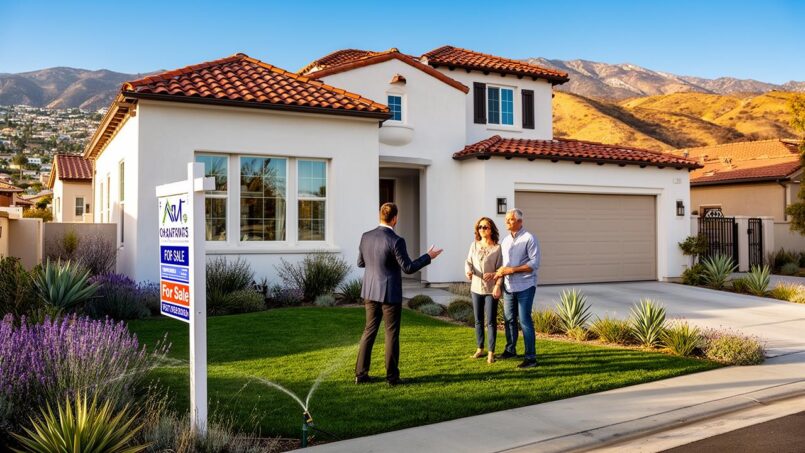
San Fernando and the San Fernando Valley are today one of the most interesting playgrounds for real estate investors in California. Between the compact small town of San Fernando, with its historic downtown and revitalization plans, and the immense residential and rental market of the Valley, the ecosystem offers a rare blend of stability, strong rental yields, and long-term appreciation potential.
For an investor, the key is to determine the strategic positioning. Opportunities can be found in the redeveloping downtown of San Fernando, family residential neighborhoods, multifamily zones close to transportation corridors, or even more prestigious submarkets like Sherman Oaks, Studio City, or Calabasas.
This guide offers a comprehensive, data-driven, and geographically nuanced view of the market, staying focused on one goal: understanding why and how investing in real estate in San Fernando can constitute a highly relevant long-term strategy.
1. A Supportive Economic and Real Estate Context
The San Fernando Valley, within Los Angeles, is often simply nicknamed “the Valley.” Behind this nickname lies a reality very favorable for investment: a diversified economy, dynamic demographics, a structural housing shortage, and a strategic geographic location.
Unemployment rate in Los Angeles County, reflecting a solid and diversified economic base.
Within this larger area, San Fernando stands out for its small size, its distinct residential character, and its historic downtown. It is a town of homeowners and families, more affordable than many neighboring areas, while benefiting from proximity to Los Angeles’s major job centers.
A Globally Stable Market, Far from Excesses
Recent data shows a market that is neither in a bubble nor in a crisis. Across the Valley, the median price hovers around $900,000 to $935,000, with moderate annual growth, around 3 to 5% expected by 2026, in line with the California Association of REALTORS® forecasts for the entire state.
In the city of San Fernando, the median home price reaches about $790,000, with an annual increase of around 10%.
A table allows us to place San Fernando within its immediate environment.
Comparison of Key Indicators
| Market | Median Home Price (approx.) | Median Price / sq ft | Recent Price Trend |
|---|---|---|---|
| San Fernando (city) | $780,000 – $790,000 | ~$506 – $562 | Moderate to strong annual increase |
| San Fernando Valley (overall) | ~$900,000 – $935,000 | ~$527 | +3 to 5% expected (2026) |
| Los Angeles County | ~$950,000 | n/a | Moderate growth |
This price differential places San Fernando in an area of relative affordability on the county scale, while remaining fully integrated into the Los Angeles job market.
2. The San Fernando Residential Market: Scarce Supply and Strong Demand
The first characteristic to understand when studying San Fernando is the structural scarcity of supply. The city is small, highly developed, with few vacant lots and little new construction. The vast majority of transactions therefore involve resales of existing homes.
The numbers show:
– A relatively limited number of apartment units (about 1,100 units for the city).
– Very low new construction: only 53 new apartments since 2012.
– Even at the peak of the 2008-2010 crisis, rental vacancy rates only rose to 4-5%.
– Today, the average vacancy in the North Valley area (of which San Fernando is a part) hovers around 2.5 to 4.5% depending on the segment.
In other words, even in a downturn, housing finds takers.
A Highly Reactive “Micro” Market
The city functions as a market of “micro-neighborhoods”:
The San Fernando real estate market presents distinct dynamics by sector. The Downtown, with its older single-family homes and low turnover, attracts first-time buyers due to its affordability and renovation potential. The North, with larger lots and higher prices, targets households in the wealth-building stage, with rare inventory. Finally, pockets near transit and commercial corridors concentrate condos and small apartment buildings, generating strong interest from investors and cash buyers.
The market dynamic translates into a high level of competition. Redfin analyses categorize the city as “very competitive”, with many properties that:
– sell with multiple offers,
– sometimes go for 2 to 5% above asking price,
– and go pending in about twelve days for the most attractive ones.
Varied but Overall Upward Price Evolution
In the long term, the trend remains upward, with finer variations depending on the period.
| Indicator (City of San Fernando) | Recent Value (order of magnitude) |
|---|---|
| Median Sale Price | ~$780,000 – $790,000 |
| Median Price per sq ft | ~$506 – $562 |
| Median Days on Market | 45 to 89 days depending on the period analyzed |
| Annual Median Price Growth (recent) | ~4.5% to over 10% depending on the period |
| 3-Year Median Price Growth | +~11.5% |
| Change in Listing Count over 3 Years | +~20% |
If the price per square foot has slightly declined in some periods (-3 to -5%), it is more a sign of a rational market adjustment after the very rapid post-pandemic increases, rather than a trend reversal.
3. The Valley: A Range of Submarkets to Diversify Investments
Investing in real estate in San Fernando also means thinking broader and integrating the different submarkets of the San Fernando Valley. Prices, tenant profiles, yields, and liquidity vary strongly from one neighborhood to another.
High-End Neighborhoods and Long-Term Stability
Areas like Sherman Oaks, Encino, Studio City, Toluca Lake, Woodland Hills, Calabasas, Tarzana, or Hidden Hills act as value leaders. You’ll find:
– luxury homes, often in the hills or in gated communities,
– an affluent clientele (professionals, executives, celebrities, entrepreneurs),
– strong appeal for families due to schools, green spaces, and amenities.
Some price orders of magnitude:
| Neighborhood / City | Average Home Price (approx.) | Market Positioning |
|---|---|---|
| Toluca Lake | $1.5 – $2.0M (avg. ~$2M) | Ultra-desirable, “entertainment” profile |
| Studio City | ~$1.6M | Luxury/family mix, highly sought-after |
| Sherman Oaks | ~$1.2 – $1.5M | High-end, very desirable |
| Encino | ~$1.2 – $1.6M | Affluent market, large lots and estates |
| Calabasas | ≥$1.5 – $2.0M and up | Synonymous with prestige and security |
| Hidden Hills | ≥$5M | Ultra-luxury, equestrian properties, celebrities |
For an investor, these areas don’t always offer the highest gross yield, but they often constitute a long-term bet on value: low vacancy, solid demand, high probability of sustained appreciation, and excellent liquidity upon resale.
Intermediate and Affordable Neighborhoods: The Investor’s Playground
The Valley also has more affordable areas, ideal for rental or “value-add” strategies:
Overview of San Fernando Valley neighborhoods offering a good accessibility/appreciation potential balance, thanks to revitalization projects and growing demand.
Very accessible neighborhood with homes around $620,000 to $650,000. Mixed residential/commercial fabric, strong rental demand, and many revitalization projects. Values are rising, especially near Van Nuys Boulevard.
Creative and cultural hub with the NoHo Arts District. Benefits from subway extension and mixed-use projects. Prices remain lower than Hollywood or Studio City, attracting the ‘creative class’.
Historically affordable areas in transformation. New retail and residential projects are stimulating demand from young households and investors.
Still very affordable pockets, sometimes with an industrial base. Attract investors seeking a low entry point and potential linked to gentrification and new infrastructure.
An excerpt of price data shows the variety of these submarkets:
| Valley Sector | Average Home Price (approx.) |
|---|---|
| North Hollywood | ~$650,000 – $900,000 |
| Van Nuys | ~$620,000 – $650,000 |
| Sun Valley | ~$550,000 |
| Pacoima | ~$570,000 – $580,000 |
| Sylmar | ~$600,000 – $655,000 |
| Reseda | ~$590,000 – $670,000 |
| Granada Hills | ~$900,000 |
For a “cash-flow” investor, these areas offer gross yields higher than prestige neighborhoods, especially on B/C multifamily or homes with added ADU (Accessory Dwelling Unit).
4. San Fernando Downtown: A Laboratory for the Mixed-Use City
At the heart of the city’s investment strategy lies the San Fernando Corridors Specific Plan and the future Downtown Master Plan, true roadmaps to transform downtown into a mixed-use, vibrant, transit-oriented neighborhood, with more housing and destination retail.
Very Favorable Zoning Rules for Mixed-Use Projects
The Specific Plan defines a Downtown District around the San Fernando Mall and major corridors (Maclay Avenue, Truman Street, San Fernando Road, First Street) with clear objectives:
– create a pedestrian and multimodal environment,
– encourage mixed-use projects,
– densify around Metrolink stations and future light rail lines.
The base parameters are particularly attractive for developers:
| Standard (Downtown District – Residential Overlay) | Maximum Allowed Value |
|---|---|
| Non-residential FAR (Floor Area Ratio) | 3.0 |
| Mixed-use FAR with residential | 3.5 |
| Residential Density | 50 units / acre |
| Maximum Height | 4 stories or 50 feet |
| Setback | 0 feet (build-to lot line) |
| Permitted Use Types | Parking, Residential (with CUP), Retail, Services, Entertainment, Lodging, Offices |
Strictly auto-oriented buildings (drive-thru, drive-in, etc.) are prohibited, in favor of active façades, storefronts, and pedestrian circulation.
A Portfolio of Public Assets to Transform
The city of San Fernando owns 13 public parking lots representing 784 spaces, concentrated around downtown. A study by Kosmont Companies assessed their development potential, with a clear finding: some lots, due to their small size, are not viable for mixed-use projects, but others offer a major opportunity.
Among the sites deemed strategic, a specific list has been established, requiring particular attention and security measures.
– Lots 3, 6, 8, and 10 (with Lots 8 and 10 forming a 60,000 sq ft ensemble): suitable for housing + retail projects, with structured parking.
– Lot 4: 1.2 acres with frontage on Truman Street, ideal for a significant-scale project.
– Lot 5: 0.5 acre with dual access from San Fernando Mission Blvd and Truman Street.
– 1320 San Fernando Road: 0.9-acre parcel, in the interior of a block, with frontage on San Fernando Road, perfectly suited for a primarily residential project with active ground floor.
A detailed SWOT analysis conducted on these lots highlighted:
– major strengths (very healthy retail market, vibrant downtown, proximity to Metrolink, quick access to I-5),
– but also weaknesses (high land value, between $75 and $95/sq ft, costs of replacing parking, current residential rents still insufficient to justify certain construction costs).
For the investor or developer, this means that the critical size of the project and density optimization are essential for feasibility.
5. Residential and Multifamily Rentals: Where Does the Yield Lie?
Rental is one of the great strengths of the San Fernando and Valley market. The numbers are telling.
A Very High Occupancy Rate
In multifamily, occupancy rates often exceed 95% in the Valley. For the East Valley area, commercial space occupancy is already at 95%, and that of the city of San Fernando, for retail, is around 98% across 1.8 million sq ft of space.
On the residential side:
– the North Valley shows a vacancy rate around 2.5%,
– the city of San Fernando has historically maintained its vacancy around 4-5% even during the depths of the crisis.
This low vacancy level guarantees short turnover periods and great cash-flow stability for rental investors.
Rent Levels and Evolution
In the city of San Fernando:
The recent median rent is around $2,600 per month.
The Valley as a whole has seen its rents increase by about 15% over five years, with a recent slowdown but a new increase of 4 to 6% expected in 2026, in a context of decreasing deliveries of multifamily housing nationwide.
A table summarizes the recent multifamily situation in the Valley.
| Multifamily Indicator (Valley, recent data) | Approximate Value |
|---|---|
| Overall Vacancy (Q2–Q3 2025) | ~3.8 – 4.8% |
| Average Rent / Unit | ~$1,991 – $2,126 / month |
| Annual Rent Growth | close to 0 to +1.3% (plateau) |
| Average Cap Rate | ~5.0% |
| Average Price per Unit (transactions) | ~$286,000 – $327,000 |
| Annual Sales Volume | ~$586 – $818M (over recent quarters) |
For the investor, this profile – cap rate around 5%, moderate rent increases, very low vacancy – corresponds to a resilient market, where the risk of prolonged vacancy is limited and capital appreciation is supported by the scarcity of supply.
Existing Buildings: A Value-Add Lever
In San Fernando itself, most of the multifamily rental stock is older (mostly Class B/C). Recent listings illustrate the type of deals available:
– a 5-unit building, 10,888 sq ft, offered at $1.525M,
– a 7-unit building, 5,708 sq ft, listed around $800,000.
In a context where average rents remain relatively low (about $1,000 in some areas like San Fernando, but higher in the North Valley), the most relevant investment strategy is often “value-add”. This approach can include targeted renovations, energy efficiency upgrades, repositioning the property to attract a new tenant demographic, or even reconfiguring units to increase value and rental income.
6. Retail, Office, Industrial: Diversifying Your Portfolio in San Fernando
Investing in real estate in San Fernando is not limited to residential. The commercial market presents several opportunities.
Retail: A Solid Downtown, Little Vacancy
Retail in the city of San Fernando is distinguished by:
– an occupancy rate of about 98% for 1.8 million sq ft of retail space,
– rising rents that have rebounded from recession lows (from ~$16/sq ft to ~$25/sq ft per year on average),
– rents above $30/sq ft in the San Fernando Mall area, a sign of strong drawing power.
In the East Valley, the retail market shows occupancy of about 95%, with rents near $25/sq ft and steady absorption driven by neighborhood centers, grocery-anchored retail, and auto corridors.
Well-located commercial spaces benefit from robust demand. However, new retail development is limited, as current rents generally do not justify heavy construction, except on the most premium downtown locations.
Office: A Niche Segment but Extremely Occupied
The office market in San Fernando is of modest size:
– about 450,000 sq ft of inventory in the city,
– a vacancy rate of about 3%,
– rents around $25/sq ft (full service gross), up 40% from recession lows,
– sale values near $250/sq ft, still insufficient to justify new construction.
At the scale of the East Valley, the office segment remains mostly composed of Class B/C buildings, with vacancy around 6% and rents at $28/sq ft. Flexible spaces and coworking are gaining ground in hubs like Woodland Hills or Calabasas, but San Fernando remains a market for neighborhood offices, highly occupied, where the investor focuses mainly on managing existing assets.
Industrial and Logistics: An Expanding Pillar
Demand for warehouses and industrial space is growing strongly throughout the Valley, particularly in Pacoima and Sun Valley, where proximity to freeways (I-5, 210, 405, 101, 118) makes these areas very attractive for logistics, manufacturing, and e-commerce related activities.
The Valley hosts the ‘The Mix’ project, a 40-acre campus with 15 acres dedicated to a ‘build-to-suit’ industrial project. It offers available electric power of 10 to 20 MW, is directly connected to major corridors and close to Burbank Airport. This campus specifically targets life sciences, R&D, studio, or high-energy-consumption logistics companies.
For an investor, industrial assets in this corridor benefit from:
– extremely low vacancy rates,
– rising rents,
– a context of stabilizing commercial markets in Southern California (vacancy at peak but declining, rents at the bottom of the cycle in some segments, attracting capital again).
7. Public Policies, Zoning, and Regulation: What an Investor Needs to Know
Investing in real estate in San Fernando involves navigating a dense Californian regulatory environment. The good news is that the city is actively working to simplify and encourage housing production.
Housing Element and Comprehensive Housing Planning Program
San Fernando’s Housing Element, approved by the state for the period 2021-2029, sets clear goals for housing production, affordability, and preserving neighborhood character. It is accompanied by a Comprehensive Housing Planning Program, funded by a regional grant, which aims to:
– adapt zoning to allow more residences in certain areas,
– implement a Density Bonus Ordinance to encourage the inclusion of affordable housing,
– simplify permitting procedures for residential projects consistent with the Housing Element goals.
Concretely, this paves the way for: innovation, collaboration, and continuous improvement in various fields.
Key policies and directions for the city’s growth and densification
Development of mixed-use building projects in the corridors specified by the urban plan.
Encouragement of Accessory Dwelling Units (ADUs) and small multifamily operations, notably via state laws like SB 9.
Increase of allowed densities in strategic areas, particularly around downtown and along major transportation corridors.
SB 9, ADUs, and Micro-Development
The SB 9 law now allows:
– splitting certain single-family lots (“urban lot splits”),
– building up to two homes on each lot resulting from this split.
Financial simulations on SB 9 projects in California show returns on investment around 37% for certain configurations (duplex + ADU or lot split with two duplexes), indicating that small-scale residential development can become a very profitable niche in cities with expensive land but strong rental demand, like San Fernando.
The AB 1033 law now allows, in some cases, the creation and separate sale of accessory dwelling units (ADUs). This creates a new type of real estate product specifically aimed at first-time homebuyers.
Local Programs Supporting Businesses and Revitalization
The city also has targeted tools to boost the economic fabric, such as the Small Business Assistance Program, which offers up to a $10,000 grant for façade improvements (painting, signage, anti-graffiti devices, security cameras, green walls…). In the long run, these investments improve:
– the perception of downtown,
– commercial foot traffic,
– and thus, indirectly, the value of surrounding real estate assets.
The combination of these measures (zoning, density, targeted assistance, financing tools like EIFD/CRIA or infrastructure districts) makes San Fernando fertile ground for public-private partnerships for large-scale projects (parking lots to be redeveloped, mixed-use blocks, TOD pockets around the station).
8. Taxation and Optimization: Why Real Estate Remains a King Asset
Even though California taxation is known to be heavy, real estate remains one of the few assets capable of combining:
– cash flow (rental income),
– capital appreciation,
– and massive tax advantages.
The main levers include:
Several advantageous tax mechanisms apply to rental real estate properties. Mortgage interest is deductible from rental income. Property taxes are also deductible, subject to SALT (State and Local Taxes) caps. Ongoing operating expenses (insurance, management fees, maintenance, professional fees) are fully deductible. Finally, depreciation is a major advantage: it allows for amortizing the value of the building (excluding land) over 27.5 years for residential property, thus generating deductible tax losses while maintaining positive cash flow.
To this are added tools like the 1031 exchange, which allows deferring capital gains tax by reinvesting in a similar property of equal or greater value, facilitating the upgrading of a portfolio without an immediate tax shock.
Recent tax reforms at the federal level have furthermore:
The law reinstated 100% bonus depreciation for assets with a useful life ≤ 20 years, made the 20% deduction on Qualified Business Income (QBI) for pass-through entities permanent, and strengthened the Opportunity Zones program and tax credits for affordable housing (LIHTC). Although San Fernando is not at the center of all zones, the Valley remains eligible for some programs.
For an investor positioned on buildings to renovate, multifamily projects, or repositioning operations downtown, these parameters can transform an “average” gross yield into a very competitive net yield, once deductions and optimizations are integrated.
9. Risks, Caution, and Factors to Monitor
A solid market does not mean absence of risks. Investing in real estate in San Fernando requires considering several elements.
Financing Costs and Sensitivity to Rates
Forecasts for 2026 anticipate mortgage rates around 6.0 to 6.4% for a 30-year fixed, after a peak near 7% in 2025. A slight decrease should restore some purchasing power, but households in the $650,000 – $850,000 range remain very sensitive to the slightest rate variation.
For the investor:
– controlled financing (fixed rate, buffer on DTI, possibility to refinance later) is essential,
– the ability to negotiate price and concessions becomes more strategic, especially in a context where about 45% of sales in the Valley close below asking price.
Insurance and Environmental Risks
As in the rest of California, the challenges of: water resources, environmental protection, urbanization, and socio-economic inequalities are crucial to address.
– wildfires,
– earthquakes,
– flooding,
The availability and cost of insurance in the San Fernando Valley are affected by natural and regulatory risks. Hillside areas (Woodland Hills, Calabasas, Tarzana, Studio City) are particularly exposed to wildfires. San Fernando, although less vulnerable to wildfires, remains subject to seismic risk and new regulations on energy efficiency and water consumption.
Rising premiums, or even non-renewals of policies, can impact the net profitability of an asset. It is therefore crucial, before purchase, to:
Before acquiring a property, it is crucial to verify its actual insurability with carriers, accurately estimate the future cost of insurance premiums, and budget for the cost of any adaptation work (such as seismic retrofitting, roofing, or ventilation) that may be required by regulations or by the insurer itself.
Rental Regulation and Tenant Rights
California and Los Angeles County strongly regulate landlord-tenant relations:
– rent increase caps for many housing units (5% + inflation, capped at 10%),
– tenant protection laws (just-cause eviction, extended notice periods, relocation or compensation obligations in some cases),
– new security deposit regulations (AB 12, limiting it to one month’s rent).
For an investor, the key is not to avoid this framework, but to master it: rigorous tenant screening, solid contracts, anticipation of regulatory costs (mandatory inspections of balconies, staircases, etc. for multifamily buildings), and fine-tuning rent increases within legal limits.
10. How to Build a Coherent Investment Strategy in San Fernando
The richness of available submarkets and products can be dizzying. The right approach is to align your strategy with your risk profile, time horizon, and operational skills.
Some possible strategy archetypes:
Discover five targeted approaches to invest in the dynamic real estate market of the San Fernando Valley, California.
Aim for a single-family home or duplex in San Fernando, in a central or northern sector, for long-term rental to a family. Strategy focused on stability and gradual price appreciation.
Target Class B/C apartment buildings in San Fernando, Van Nuys, North Hollywood, or Reseda. Plan for renovation and rent optimization to leverage cap rates around 5% and low vacancy rates.
Respond to opportunities from the San Fernando Corridors Specific Plan via public-private partnerships (P3). Example: redevelop a public parking lot into a mixed-use housing and retail project.
Use the SB 9 law to split lots and create duplexes, or multiply ADUs (Accessory Dwelling Units) on existing parcels to maximize rental income.
Combine different asset types: a residential property in San Fernando, a small retail space downtown, and a multifamily asset in a revitalizing neighborhood like Panorama City or Reseda.
In all cases, several habits should remain constant:
To invest in the San Fernando Valley, finely analyze each micro-market (prices, vacancy rates, tenant profile) and its future dynamics (schools, transportation, retail, public projects). Integrate zoning rules (Downtown Master Plan, corridors, density). Collaborate with experienced local players (agents, property managers, attorneys). Adopt a long-term vision, as value is based on rental cash flows and land scarcity in a metropolis with a deficit of over 3 million housing units.
—
Investing in real estate in San Fernando means betting on a rare combination: a stable small town, highly residential, surrounded by one of the most powerful economic hubs in the United States, at the heart of a tight rental market, in a region that has made the deliberate choice to densify, develop transit, and support private investment with a sustainable vision.
For the investor who takes the time to understand the rules of the game – zoning, taxation, market cycle, micro-location – San Fernando and the San Fernando Valley are not just a “good deal”, but a veritable full-fledged portfolio strategy.
Disclaimer: The information provided on this website is for informational purposes only and does not constitute financial, legal, or professional advice. We encourage you to consult qualified experts before making any investment, real estate, or expatriation decisions. Although we strive to maintain up-to-date and accurate information, we do not guarantee the completeness, accuracy, or timeliness of the proposed content. As investment and expatriation involve risks, we disclaim any liability for potential losses or damages arising from the use of this site. Your use of this site confirms your acceptance of these terms and your understanding of the associated risks.

Cyril Jarnias is an independent expert in international wealth management with over 20 years of experience. As an expatriate himself, he is dedicated to helping individuals and business leaders build, protect, and pass on their wealth with complete peace of mind.
On his website, cyriljarnias.com, he shares his expertise on international real estate, offshore company formation, and expatriation.
Thanks to his expertise, he offers sound advice to optimize his clients' wealth management. Cyril Jarnias is also recognized for his appearances in many prestigious media outlets such as BFM Business, les Français de l’étranger, Le Figaro, Les Echos, and Mieux vivre votre argent, where he shares his knowledge and know-how in wealth management.





