
 Published on and written by Cyril Jarnias
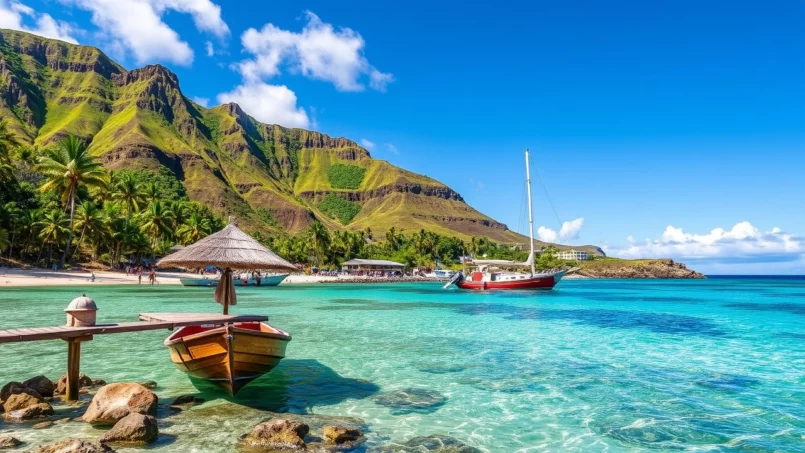
Lost in the middle of the Pacific, Niue is both one of the world’s largest raised coral atolls and one of the planet’s smallest nations. Nicknamed the “Rock of Polynesia,” this 261 km² island, a three-and-a-half-hour flight from Auckland, is now attracting a new category of residents: expatriates seeking safety, untouched nature, a close-knit community, and an English-speaking environment with a strong Polynesian identity.
Moving to Niue presents major challenges: a tiny island (around 1,600-1,700 inhabitants), an economy dependent on New Zealand aid, a narrow job market, limited access to specialized healthcare (requiring evacuation to New Zealand), and a high cost of living. In return, the island offers exceptional safety (almost non-existent crime), no traffic, immediate access to crystal-clear seas and rainforests, and a society that is generally very welcoming to foreigners who respect local customs.
This guide compiles the key information to prepare for an expatriation project in Niue: understanding the country and its society, deciphering visas, estimating your budget, finding housing, working legally, organizing your health, finances, and move, and, most importantly, successfully integrating into a community where everyone knows each other.
Understanding Niue: A Pacific Micro‑State, Great in Culture
Niue is a self-governing state in free association with New Zealand. In practice, the territory manages its own domestic affairs (immigration, residence, local taxation, public services), while Wellington handles defense and diplomacy at its request. All Niueans are New Zealand citizens and travel with a New Zealand passport, but immigration to the island is governed exclusively by local law, notably the Entry, Residence and Departure Act 1985 and the Immigration Act 2011.
The island of Niue is structured around 14 villages, each with its own council and a representative in the Legislative Assembly.
Demographically, Niue has a significant problem… of under‑population. From 5,400 inhabitants in 1965, the island has dropped to around 1,600–1,700 residents today, while a diaspora of over 20,000 people of Niuean origin lives in New Zealand and, to a lesser extent, Australia. This demographic contraction weighs on the viability of some services and the available labor force, which partly explains the openness to foreign skills in several sectors.
Niuean culture centers on Christianity, village solidarity, and Taoga Niue (heritage). Sunday is sacred, dedicated to worship and rest: loud activities or conspicuous movement near churches should be avoided. Modest attire is expected in public: going shirtless or wearing swimwear is inappropriate in villages. For church, men should opt for a collared shirt and trousers, women for a knee-length skirt.
The official language, alongside English, is vagahau Niue, a Polynesian language close to Tongan and related to Samoan, Maori, or Hawaiian. However, it is classified as “endangered” by UNESCO. Media and schools operate bilingually, but English dominates in administration and business. For an expatriate, this is a definite advantage: one can work and educate children in English while gradually learning the basics of vagahau Niue, which is seen as a mark of respect.
Visas, Permits, and Stays: How to Stay Legally in Niue
One of the crucial points of an expatriation project to Niue is understanding the visa regime, which is separate from New Zealand’s. The fact that one almost always transits through Auckland should not obscure that the rules for staying in Niue are set by the island’s authorities, independently of New Zealand visas or the NZeTA authorizations needed to transit through New Zealand.
Short Stays: The 30-Day Visitor’s Permit
For most Western nationalities and many Pacific or Asian states, it is not necessary to apply for a visa before entering Niue for a short tourist, business, or transit stay. Upon arrival, travelers receive a Visitor’s Permit (often likened to a visitor visa) valid for up to 30 days, subject to meeting the following conditions:
– passport valid for at least 3 to 6 months after arrival, with at least two blank pages;
– return ticket or proof of confirmed onward travel out of Niue;
– proof of sufficient financial means;
– accommodation booking covering the entire stay;
– completed arrival card, which serves as the application form.
Entry to the territory is conditional on having a return ticket. Working, conducting business, or undertaking studies under a simple visitor status is prohibited. The entry permit is free for many nationalities, but may be payable for others via an Entry Permit, obtainable from Niuean authorities or a New Zealand consulate.
Extending Your Stay: Beyond 30 Days and the 60-Day Barrier
An expatriation project rarely starts with a one-way ticket and immediate settlement. In practice, many candidates first make one or several exploratory stays lasting from a few weeks to a few months. The 30-day Visitor’s Permit can be extended, by applying directly to the immigration service in Alofi, housed within the Niue Police. Their postal address, phone numbers, and an official email allow contact before or during the stay to clarify the procedure.
For any stay exceeding 60 days, the level of requirement increases significantly. Authorities then require a Niue Immigration Medical Certificate. This medical certificate must:
– be completed by a physician in the applicant’s country of residence;
– include a medical history, a complete clinical examination, and mandatory tests (blood count, kidney function, urinalysis, HIV serology, VDRL, hepatitis B screening);
– include a chest X-ray (except for children aged 12 or under and most pregnant women, unless expressly requested);
– verify, for children, vaccination status (diphtheria, tetanus, polio, measles, hepatitis B, HPV, Covid, etc.);
– be sent to Niue Health, the public health service, for evaluation at least two months before arrival, and be dated less than three months at the time of the examination.
This procedure, though it may seem burdensome, is essential to protect a small population and a healthcare system with limited capacity from potential health pressures from outside.
Working in Niue: Work Permits and Temporary Residence
To engage in paid activity in Niue, a simple Visitor’s Permit is obviously insufficient. You need a specific permit, usually linked to a job offer or a local sponsor. The legislation distinguishes several categories:
– Visitor: short-term stay with no right to work;
– Permit holder: holder of a permit linked to an activity (work, assignment, etc.);
– Permanent resident: permanent resident, a status difficult to attain.
A residence permit with work authorization may be granted for a maximum period of three years, renewable. Its granting remains discretionary: it is the minister in charge of immigration, or designated officials, who judge the request’s benefit to the country.
In most cases, an expatriate needs a sponsor, which can be:
– a permanent resident of Niuean origin;
– a business established on the island;
– an administration or public body.
The sponsor must demonstrate:
– their ability to provide or guarantee satisfactory housing;
– their financial solidity to cover, if necessary, the candidate’s needs;
– that no acceptable local candidate is available for the position in question (for a work permit).
In practice, the application file generally includes:
List of supporting documents needed to compile a complete work permit application file.
Official work permit application form duly completed and signed.
Clear copy of the identity page of the current valid passport.
Signed employment contract or detailed offer letter from the employer.
Two letters attesting to the candidate’s good character, provided by references.
Police clearance certificate from the country of origin, dated and translated if necessary.
Medical certificate attesting to the applicant’s good physical and mental health.
Proof of deposit of a bond covering repatriation costs and potential debts.
Anyone who remains on the island beyond the validity of their permit becomes a “prohibited immigrant” and faces deportation. The idea of “testing” Niue by working illegally is therefore absolutely to be avoided.
Towards Permanent Residence: A Long-Term Goal
The permanent resident status is accessible, but subject to strict conditions. Notably, one must:
– have legally resided in Niue for at least three consecutive years as a permit holder;
– convince the Cabinet (the government) of a genuine intention to settle permanently on the island;
– present an impeccable record of conduct and understand the rights and duties attached to this status.
Some periods spent in the service of the Niuean administration or international organizations may not be counted towards the three-year calculation. Finally, an absence from the territory of more than three consecutive years results in the loss of permanent resident status.
Niue offers no investment-based residence or citizenship program: citizenship remains reserved for the Niuean population, and the dominant logic remains that of community attachment, more than capital contribution.
Cost of Living and Budget: Living on an Expensive, Heavily Importing Island
The first surprise for many potential expatriates is the cost of living in Niue. Despite its small size and isolation, or rather because of them, Alofi shows a price level higher than many major world cities. Available comparisons indicate, for example, that life there would be:
– about 19% more expensive than Tokyo;
– 26% more expensive than Manila;
– 22% more expensive than Santiago, Chile;
– 10% more expensive than Baltimore, USA.
Prices in Niue are comparable to those in Auckland or Port Vila and higher than in New Zealand cities like Hamilton. This is explained by a heavy reliance on imports for food, goods, and fuel, whose logistical costs are passed on to prices, plus a 12.5% consumption tax.
Indicative Monthly Budgets
Estimates of monthly budget, expressed in a dollar-like currency (most sources mention amounts close to realities in NZD or USD), give a good idea of the order of magnitude.
| Household Profile | Monthly Budget with Rent | Monthly Budget without Rent |
|---|---|---|
| Single person (average) | 2,526 | 1,576 |
| Couple (average) | 3,665 | 2,715 |
| Family of 4 (average) | 5,210.50 | 3,975.50 |
For a single person, a “frugal” lifestyle can start around 1,377 per month, while a very comfortable standard of living can rise to over 5,000. The observed average monthly net salary is around 1,700, with a range from about 730 to 3,000 depending on positions and sectors.
Breakdown of Major Expenses
To refine your budget, it is useful to examine typical monthly expense ranges:
| Expense Item | Monthly Range (approx.) |
|---|---|
| Main residence rent | 600 – 1,500 |
| Electricity | 48 – 180 |
| Water | 15 – 40 |
| Gas / Heating | 15 – 45 |
| High-speed Internet + TV | 75 – 150 |
| Mobile subscription | 55 – 130 |
| Food / Groceries | 380 – 1,100 |
| Hygiene / Cleaning | 40 – 100 |
| Transportation | 20 – 280 |
| Outings / Leisure | 24 – 288 |
| Clothing / Shoes | 20 – 110 |
| Health Insurance | 60 – 400 |
| Prescription Medications | 15 – 225 |
| Medical / Dental Consultations | 10 – 500 |
| Gym Membership | 25 – 65 |
| Laundry / Cleaning | 55 – 230 |
| Pet Food / Care | 50 – 180 |
| Daycare / Local School | 0 (free public system) |
Some retail prices in New Zealand dollars allow for better projection:
| Product / Service | Indicative Price (NZD) |
|---|---|
| Simple lunch + drink | 37 |
| Meal at an inexpensive restaurant | 30 |
| Fast‑food meal | 11 – 25 |
| 3-course dinner for 2 at a mid‑range restaurant | 62 |
| Local draught beer (pint) | 8 |
| Imported beer (small bottle) | 6 |
| Cappuccino | 5 |
| Bottle of water or soda (small bottle) | 5 |
| Mid‑range wine (bottle) | 25 |
| Daily bread for 2 people | 4 |
| White bread (≈ 450 g) | 3.63 |
| Milk (1 L) | 4 |
| Tomatoes (1 kg) | 10 |
| Chicken breast (0.5 kg) | 12 |
| Dozen “standard” eggs | 5 |
| Pack of 20 Marlboro cigarettes | 30 |
| Gasoline (1 L) | 3 |
| Unlimited Internet 60 Mbps (per month) | 100 |
| 3‑bedroom apartment central Alofi (month) | 450 |
| Basic utilities for ≈ 85 m² (month) | 100 |
Data may sometimes vary by source and evolve over time, but the general trend is clear: life in Niue is not cheap, especially if one consumes many imported products and paid leisure activities.
Finding Housing: A Tiny Market, Lots of Improvisation
The residential rental market in Niue is particularly limited. There are less than thirty tourist accommodations recorded across the entire territory, and for long‑term housing, the supply is rarely found online. Many houses are renovated former family homes or villas built from local limestone.
Available housing types include:
– single‑family houses, sometimes from renovated former family homes;
– typical limestone villas;
– bungalows, cottages, studios, small units in residences;
– fales (traditional houses) more or less modernized;
– motels, small lodges, and guesthouses run by Niuean families.
In Niue, accommodations are spread across the capital Alofi (North, South, Paliati, Halamahaga) and several villages like Hakupu, Tamakautoga, Avatele, Namukulu, Lakepa, Makefu, and Tapeu. Their varied locations offer unique experiences: some are on the edge of the rainforest, others on cliffs with panoramic ocean views. During the season, it’s even possible to watch whales directly from the terrace of some establishments.
Most units intended for residential or mid/high‑end tourist use are fully equipped: kitchen, bathroom, laundry area, sometimes air conditioning, garden, parking, and, quite often, a rental car included or offered at a preferential rate. Basic utilities (water, electricity, waste collection) cost around 100 NZD per month for an apartment of about 85 m².
Rental Levels and Negotiation
Available figures indicate that a three‑bedroom apartment in central Alofi can rent for about 450 NZD per month, and slightly less on the outskirts (around 400 NZD). Compared to the budget ranges in dollars (600–1,500 for monthly rent), these amounts seem modest: this mainly reflects the fact that truly low rents concern a limited stock of “local” housing, often occupied long‑term.
For long-term stays, avoid the nightly rates offered on tourist platforms (often between 100 and 500 dollars), which would significantly increase your annual budget. The solution is to negotiate directly with the owners of villas, guesthouses, or bungalows. Many expatriates thus secure significantly reduced monthly rates.
Three channels are particularly useful for finding housing:
– tourist platforms (Airbnb, Tripadvisor, booking sites) for an initial base;
– the local site niuerentals.nu, which lists rentals more oriented towards long stays;
– the local network once on the ground: conversations with shopkeepers, the tourist information center, neighbors, village families.
A frequent recommendation is to plan an exploratory stay of one to two months, in negotiated tourist accommodation, to take the time to spot opportunities for more permanent rentals. Note: camping and couchsurfing are prohibited in Niue, and presenting an accommodation booking covering the entire stay is an entry condition.
Working and Entrepreneurship: Targeted Opportunities, Narrow Market
Niue’s economy rests on a fragile mix: New Zealand financial aid (around 14 million NZD per year), agriculture and fishing, tourism, and some service activities. The small population size creates labor shortages in several sectors, opening prospects for foreign skills, but within a very specific framework.
Sectors with Shortages and Indicative Salaries
Areas regularly cited as lacking personnel include:
– construction: carpenters, electricians, plumbers, welders;
– tourism and hospitality: resort staff, guesthouse management, guides, activity leaders (diving, excursions, etc.);
– healthcare: nurses, doctors, technicians, sometimes pharmacists or physiotherapists;
– education: teachers, particularly in English and certain subjects;
– agriculture and fishing, including aquaculture;
– digital services: web developers, digital marketing specialists, other professions that can be done remotely.
Organizations like UNICEF and the Asian Development Bank have deployed temporary missions in Alofi. Their interventions have focused, for example, on nutritional assessment of populations and on reforming the island’s public financial management.
The observed monthly salary ranges (in dollars) by sector give an idea of compensation levels:
| Sector | Approximate Monthly Salary (USD) |
|---|---|
| Tourism / Hospitality | 800 – 1,200 |
| Construction | 1,000 – 1,500 |
| Healthcare | 1,500 – 2,500 |
| IT / Digital Services | 1,200 – 2,000 |
| Agriculture | 700 – 1,000 |
| Teaching / Education | 1,200 – 1,800 |
| Administration | 900 – 1,300 |
It’s immediately clear that these salaries, while decent locally, need to be weighed against the cost of living. This is one reason why Niue is particularly interesting for:
– remote workers whose clients are based abroad;
– professionals on assignment (health, education, development projects) supported by external organizations;
– entrepreneurs able to launch projects aligned with national priorities (sustainable tourism, renewable energy, climate resilience).
Employment Ethics: Not Competing with Niueans
Authorities insist on a principle: expatriates should not directly compete with trained Niueans for certain positions. Ideally, they should occupy roles for which there is no available local candidate, or contribute to upskilling residents (training, knowledge transfer).
In practice, this means that the best professional projects in Niue are:
Work authorizations for foreigners are mainly granted for three types of situations: to fill specialized positions impossible to fill locally (medical expert, renewable energy engineer, teacher of a rare subject); for support or capacity‑building missions within local administrations; and for remote work activities for a foreign employer, provided they do not compete with local employment and generate local consumption (housing, services, food).
Tax System and Professional Obligations
Even though Niue does not have a tax system as developed as that of major economies, any local activity involves procedures with the tax administration. The essential points are as follows:
Every individual or legal entity (company, NGO, trust, etc.) must obtain a Taxpayer Identification Number (TIN) from the Niue Tax Administration Office. This number is essential for opening a bank account and meeting tax obligations. Employers must withhold income tax from salaries paid and remit it to the Treasury via the Tax Office. Each individual must annually file an income tax return (form TF1 – Individual Income Tax) before August 31, under penalty of fines. Payment of assessed taxes must be made by January 31 of the following year at the latest.
For any commercial activity, a business license is mandatory. There are three types, depending on the legal form (sole trader, partnership, company). These licenses expire each year on May 31 and must be renewed in a timely manner. Forms and payments are submitted at the Niue Public Service Building in Fonuakula or by email to [email protected]. Failure to meet these obligations can result in a written warning and removal from the business register.
Beyond this internal tax layer, Niue has developed specific legislation for International Business Companies (IBCs) allowing, under conditions, exemption from tax on income earned abroad, rapid registration, and high confidentiality. This aspect is more relevant for entrepreneurs seeking a legal base than for the daily life of most expatriates, but it shows the island’s openness to foreign investments that respect its rules.
Healthcare: A Single Hospital, Limited Resources, Essential Insurance
Niue has only one hospital facility, Niue Foou Hospital, located in Alofi. The hospital provides a relatively broad spectrum of services given the population size: general medicine, maternity, minor surgeries, emergencies, basic radiology, laboratory tests, pharmacy, physiotherapy, dental care, maternal and child health, environmental health.
However, the medical team is small, technical equipment is limited, and complex cases quickly exceed local capabilities. For cancers, major surgery, serious accidents, intensive care, or care for very premature newborns, the only solution is medical evacuation to New Zealand. New Zealand specialists visit annually for specialist consultations, but this does not replace state‑of‑the‑art infrastructure on site.
Decompression chambers to treat diving accidents can be very distant and not always fully operational, reinforcing the need for great caution during risky activities.
Cost of Care and Expatriate Status
Niueans benefit from free healthcare. Visitors and expatriates without local status, however, must pay for their care, sometimes even before treatment. Evacuation costs to New Zealand are very high, and specialist consultations can quickly weigh on an uninsured budget. Estimates of potential monthly costs for an expatriate (excluding evacuation) mention insurance between 60 and 400, medications potentially reaching 225, and consultations sometimes going up to 500 depending on frequency and nature of care.
Furthermore, the territory faces public health challenges: high prevalence of non‑communicable diseases (diabetes, stroke, cancers), obesity rates exceeding 60%, frequent hypertension in about one‑third of adults. Services are still mostly curative, and healthcare professionals are aging.
As drinking water is a limited resource and potentially contaminated in some areas, it is recommended to consume boiled or bottled water. It is also advisable to follow basic hygiene rules, such as regular handwashing and monitoring food freshness. Finally, it is essential to have a well‑stocked first‑aid kit to deal with any eventuality.
Health Insurance: A Pillar of Expatriation to Niue
In this context, it is highly advisable for expatriates to take out international or expatriate health insurance that covers:
– on‑site care, including outpatient medicine, hospitalizations, available laboratory or imaging procedures;
– prescription medications;
– above all, medical evacuation and repatriation to a country with advanced facilities (New Zealand, Australia, or even the home country).
Specialized companies offer renewable annual policies, adaptable to the duration and nature of the stay. When applying for a permit for a stay of more than 60 days, the medical certificate required by immigration also plays a filtering role to prevent the local system from having to support unforeseen serious pathologies.
For short‑term visitors, at minimum, travel insurance including healthcare costs and evacuation coverage is strongly recommended. For an expatriation project, a robust, long‑term coverage is almost non‑negotiable.
Education: A System Inspired by New Zealand, Bilingual and Free
For expatriate families, the school aspect is essential. In Niue, public education is free and compulsory until age 16. The system closely follows the New Zealand framework, for both primary and secondary levels, with bilingual English – vagahau Niue teaching.
You mainly find:
Education in Niue is structured across several levels, from early childhood to higher education, with options on‑site and remotely.
Accepts children from age 4 up to the end of primary cycle.
The island’s only secondary institution, covering Years 7 to 13 (approx. ages 11 to 17).
Offers distance learning, continuing education, and adult skills development.
Offers via private institutions, like St Clements University Higher Education School.
In 1995, net and gross primary school enrollment rates reached 100%, a sign of good coverage. The curriculum is aligned with New Zealand standards, facilitating, when the time comes, potential further studies in New Zealand or other Pacific countries. The Niuean language is the main language of instruction until Year 4, then becomes a distinct subject, with English taking on more space.
For expatriate children, the environment is overwhelmingly English‑speaking in the playground and classroom, with the presence of vagahau Niue in some subjects and cultural activities (songs, dances, ceremonies). This constitutes an environment that is both reassuring for English‑speaking families and enriching interculturally.
Transportation, Telecoms, and Daily Logistics
Living on a small, isolated island imposes a number of logistical constraints on daily life. In Niue, these are very concrete.
In terms of air travel, Air New Zealand operates two weekly flights between Auckland and Niue, via Hanan International Airport, a few minutes’ drive from Alofi. This is the territory’s only regular air link. A departure tax of 80 NZD per passenger is included in the ticket price. Anyone coming from outside must therefore comply with both New Zealand’s and Niue’s entry rules.
There is no public bus network. Getting around is done by:
On the island, several transport options are available to visitors: renting a car or scooter remains the most practical choice for free exploration. For short trips, walking or cycling are possible, but it’s advisable to consider weather conditions, as heat and humidity can make long walks strenuous. Finally, a sometimes‑used alternative is buying a vehicle on site, particularly from residents leaving the island.
To drive legally, you need to obtain a Niuean driver’s license from the police in Alofi, usually on Mondays. You can present your foreign license on site or send documents in advance to speed up the procedure. Fuel costs about 3 NZD per liter.
The sole operator, Telecom Niue, provides landline, mobile, and Internet services. The mobile network covers inhabited areas well, but can be weak in some villages or forests. The Internet connection, including the pioneering free Wi‑Fi for residents, relies on satellite links, resulting in variable speeds, outages, and latency. Most mid‑range and up tourist accommodations offer included Wi‑Fi. An unlimited Internet subscription at 60 Mbps costs about 100 NZD per month.
For a remote worker, it is essential to test the quality of the connection on site, plan backup solutions (SIM cards, redundancy of places to connect), and accept that the Internet will not be as reliable as in Europe or North America.
Banking, Cash, and Taxation: A Minimalist Financial System
The currency used in Niue is the New Zealand dollar (NZD). Coins of 10, 20, 50 cents, 1 and 2 dollars, and banknotes of 5, 10, 20, 50, 100 dollars circulate as in New Zealand.
The banking landscape is extremely limited. In Alofi, you’ll find a Kiwibank branch operated via the Niue Development Bank (NDB), as well as Western Union services for international transfers. Most merchants use an EFTPOS network (electronic payment terminals), and many accept New Zealand and Australian cards, as well as some international Visa and Mastercard cards.
There are no ATMs on the island. Withdrawals are made at Kiwibank or via cashback at some stores, often with fees (2‑5 NZD, or even +5% with a credit card). Many small businesses, markets, and local events only accept cash.
Foreign currency is almost non‑exchangeable on site: the only structure cited as performing conversions is Niue Rentals in Alofi North, and only for US and Australian dollars. Kiwibank does not offer currency exchange, and traveler’s checks are not accepted anywhere.
In this context, it is prudent to arrive with a reserve of New Zealand dollars in cash, or failing that, with international cards that work in the EFTPOS system. For expatriates, opening a local account requires first obtaining a TIN (Taxpayer Identification Number) and proof of identity and address.
Niue’s tax system is territorial and relatively simple. It relies mainly on import duties, an income tax (with a progressive scale for individuals), and a consumption tax (Niue Consumer Tax). Only income from Niuean sources is taxable locally. There are no taxes on capital gains, inheritance, or gifts. For companies, whether resident or not, the tax rate on profits from Niuean sources is 30%.
For an expatriate, this means that:
– income generated outside Niue (e.g., via remote work for a foreign company) is generally not taxed on the island, but remains subject to the tax laws of the home country;
– any activity carried out locally (salaried employment, tourist rental, commerce) falls under Niuean taxation and involves a TIN, filings, and, possibly, a business license.
Importing Goods: Container, Formalities, and Strict Bio‑Security
Moving to Niue with your furniture, personal effects, or a vehicle is possible, but requires precise logistics. The port of Alofi can only accommodate 20‑foot containers, 40‑foot containers being excluded due to infrastructure constraints. For most households, a 20‑foot container (33 m³) is enough to transport the contents of a 2 or 3‑bedroom house.
Typical timeframes are 2 to 7 days for air freight, 6 to 10 weeks for sea freight, to which must be added 1 to 3 days for arrival formalities. Several international companies specializing in overseas moving offer door‑to‑door services to Niue, with packing, customs formalities, delivery, and possibly storage.
For customs clearance, authorities generally require:
For an overseas move, prepare the following documents: a copy of the expatriate’s passport, a detailed and valued inventory of the contents, and the Bill of Lading (sea waybill) or Air Waybill. Also ensure each package has clear labels, ideally in English, or in another language with translation.
To benefit from customs duty exemptions on personal effects, you must be able to demonstrate:
– residence abroad for at least 12 months before arrival;
– a work or residence permit;
– that the goods are used, owned for more than six months, and intended for personal use, not for resale.
Even then, port or airport taxes remain payable. New goods or commercial merchandise are subject to duties and taxes (customs duty, Niue Consumer Tax), with duty rates mentioned between 7 and 20% depending on categories.
Importing a vehicle to Niue requires providing an invoice, certificate of title, and the previous registration certificate. The vehicle must be precisely detailed (make, model, year, serial number) on transport and customs documents. It is essential to contact a shipping agent or local freight forwarder in advance to verify feasibility, specific conditions, and all involved costs.
Bio‑security rules are particularly strict. Prohibited from entry are:
– most fresh fruits and vegetables;
– honey;
– poultry eggs;
– many plants, seeds, and live animals or animal products;
– various chemicals, toxins, explosives, weapons, ammunition, drugs, certain types of batteries, solvents, etc.
All food items must be declared. Alcohol and tobacco are subject to specific regimes, with allowances for travelers and, beyond that, import licenses. Strict controls aim to protect the island ecosystem and local agriculture from the introduction of pests or diseases.
Culture, Language, and Integration: Entering the Community
Settling in Niue means integrating into a micro‑cosm where the community takes precedence over the individual. Society is extremely safe – crime is almost non‑existent – but also very transparent: anonymity does not exist. Everyone knows everyone, or nearly, and a newcomer is immediately noticed.
Niuean culture, faka Niue, permeates daily life: rites of passage (teenagers’ haircuts, ear piercing), village demonstration days (show days) where harvests, fish, crafts, and games are displayed, the great procession of decorated vehicles for New Year (Takai), seasonal fishing of certain fish (kaloama), not to mention major religious gatherings. Traditional arts – basket weaving, hats, mats, wood carving, hiapo (bark cloth), shell necklaces, war dances, or polyphonic songs – remain alive.
The Taoga Niue agency works to document, teach, and transmit this heritage. The vagahau Niue language, even if its use is declining, retains a strong place in liturgy, family, and increasingly in language revitalization efforts.
For an expatriate, successful integration comes through a few simple but decisive gestures:
To live well in Niue, it is recommended to learn a few basic Niuean phrases like ‘Fakaalofa Atu’ (hello) and ‘Fakaaue lahi’ (thank you very much). Respect for dress codes is essential, especially on Sundays and near places of worship; reserve swimwear for the beach and cover up when leaving the shoreline. Participate in community activities (religious services, festivals, workshops) and prioritize interactions with the local population over a closed circle of expatriates.
Many people experiencing expatriation in Niue go through a cultural shock curve in a “U” shape: initial euphoria (tropical paradise, safety, nature), then confrontation with realities (isolation, rare and costly flights, limited job market, administrative slowness, modest infrastructure), before a phase of gradual adaptation, then maturity where one feels anchored, understood, and supported by the community.
Signs of successful integration are concrete: finding your way without GPS, understanding local jokes, spontaneously greeting people by their first name, being invited to family celebrations, knowing what is – or isn’t – done on Sunday, being able to count on neighbors in case of trouble.
Niue, for Whom and Under What Conditions?
At the end of this overview, Niue appears as a very particular expatriation destination, not suitable for everyone, but capable of offering an exceptional living environment to certain profiles.
Among the positive factors are:
– a remarkable level of safety, where one moves around peacefully at any hour;
– immediate proximity to exceptional nature: diving, snorkeling, caves, cliffs, forests, whales in season;
– a society generally open, respectful, and hospitable, provided one respects its implicit rules;
– an English‑speaking environment with a strong Polynesian identity, interesting for bilingual or English‑speaking families;
– an education system aligned with the New Zealand model, free until age 16.
The challenges, however, are just as clear:
Living on this territory involves dealing with a very isolated geography (a single costly air link to Auckland), a narrow job market requiring prior research, a limited healthcare system demanding robust insurance and acceptance of potentially distant medical evacuations, a high cost of living due to dependence on imports (with risks of delays and stock shortages), and a life in a small community where discretion and integration are paramount.
Niue is particularly well‑suited for:
The example concerns profiles of people for whom settling on the island of Niue is particularly suitable. This includes: mobile remote workers paid from abroad and tolerant of intermittent internet connections; qualified professionals in high‑demand sectors (healthcare, construction, education) with a clear contract, a serious sponsor, and a proper work permit; entrepreneurs willing to invest in projects aligned with the island’s priorities like sustainable tourism, accommodation, clean energy, or climate resilience; and finally, families seeking a very safe English‑speaking environment to raise young children, with access to a free public school and small class sizes.
Succeeding in settling in Niue requires considering the island not as an exotic annex of New Zealand, but as a small sovereign country with its own laws, expectations, and fragilities. This implies carefully preparing your project (visa, budget, insurance, housing, employment), accepting to play by the community’s rules, and participating in maintaining Taoga Niue rather than consuming it as a backdrop.
For those who see themselves in this, Niue can offer something rare: the possibility of living a very safe life, close to nature and profoundly human, in a corner of the world where one never remains a stranger for long.
Disclaimer: The information provided on this website is for informational purposes only and does not constitute financial, legal, or professional advice. We encourage you to consult qualified experts before making any investment, real estate, or expatriation decisions. Although we strive to maintain up-to-date and accurate information, we do not guarantee the completeness, accuracy, or timeliness of the proposed content. As investment and expatriation involve risks, we disclaim any liability for potential losses or damages arising from the use of this site. Your use of this site confirms your acceptance of these terms and your understanding of the associated risks.

Cyril Jarnias is an independent expert in international wealth management with over 20 years of experience. As an expatriate himself, he is dedicated to helping individuals and business leaders build, protect, and pass on their wealth with complete peace of mind.
On his website, cyriljarnias.com, he shares his expertise on international real estate, offshore company formation, and expatriation.
Thanks to his expertise, he offers sound advice to optimize his clients' wealth management. Cyril Jarnias is also recognized for his appearances in many prestigious media outlets such as BFM Business, les Français de l’étranger, Le Figaro, Les Echos, and Mieux vivre votre argent, where he shares his knowledge and know-how in wealth management.





