
 Published on and written by Cyril Jarnias
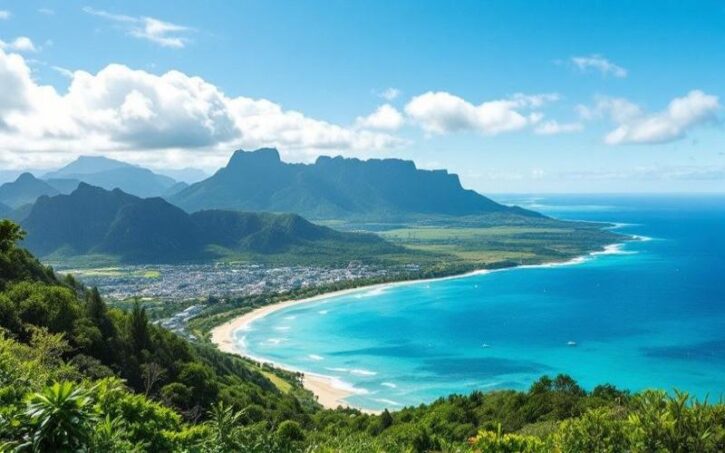
Leaving your country to live on a tiny coral atoll lost in the heart of the Pacific is not a trivial decision. Niue, sometimes presented as an “off-the-beaten-path paradise,” attracts with its absolute calm, preserved environment, and warm community of fewer than 2,000 inhabitants. But beyond the translucent lagoons and spectacular cliffs, expatriation to Niue involves a series of very real constraints: isolation, high costs, limited services, a narrow job market, and particular administrative procedures.
Based on available data – economy, cost of living, education, health, taxation, connectivity, real estate – this article provides a nuanced overview of the pros and cons of expatriation to Niue, to help separate fantasy from reality.
A Peaceful Micro-State Heavily Supported by New Zealand
Moving to Niue is first and foremost choosing a life in an extremely small community, where everyone knows each other and anonymity does not exist. The island has about 1,200 to 1,500 permanent residents, spread across 14 villages, including the capital Alofi. Society is very close-knit, marked by a strong Polynesian identity and the daily use of the Vagahau Niue language alongside English.
Niue is a self-governing state in free association with New Zealand. This relationship grants all Niueans New Zealand citizenship, while Wellington handles defense and foreign affairs. It provides Niue with institutional and financial stability, although Niue retains sovereignty over its immigration, taxation, and investment policies.
For an expatriate, this framework presents a dual reality. On the positive side, the legal environment is relatively predictable, anchored to the New Zealand model. On the restrictive side, there is little room for maneuver: no citizenship by investment, no major metropolis nearby, and a large part of the economy dependent on external aid.
A Radically Slow, Safe, and Community-Oriented Lifestyle
The first thing that strikes you in Niue is the feeling of safety and tranquility. Crime is extremely low, serious violence is rare, it is common to leave your belongings unattended without fear of theft. Traffic is limited, with no traffic jams, no advertising billboards, no shopping malls or cinemas, no nightclubs or fast-food chains.
Daily life is governed by strong social codes. Everyone waves to each other while driving, Sunday is sanctified by religious practice, and village life revolves around the church, collective events, and family ceremonies. The value placed on family, respect for elders, generosity, and giving (“fakaalofa”) deeply structures relationships. A large part of socializing happens through celebrations, very hearty meals, and rites of passage (haircuts, ear piercings, weddings, funerals).
For an expatriate, this atmosphere can be both enchanting and disorienting. By participating in village days, plantation tours, weaving or traditional fishing workshops, integration becomes more natural. Conversely, staying in an “expat bubble” is almost impossible and not very desirable: you are quickly noticed, and a certain level of participation in collective life is expected of you.
This immersion has its trade-offs. The pressure of social judgment is strong, voluntary contributions to events (time, money, food) can eventually weigh on you, and some conservative norms – often religiously inspired – may clash with more individualistic or liberal sensibilities, for example regarding lifestyle choices, parenting, sexuality, or grieving processes.
Cost of Living: A Paradise That Comes at a Price
Contrary to the image of a “cheap little island,” Niue is far from a low-cost destination. Like most micro-island states heavily dependent on imports, the island combines high logistical dependence, a small market size, and a limited range of services. As a result, many everyday products and certain services are significantly more expensive than in developed countries, including New Zealand.
Overview of Everyday Prices
Available price data shows a generally high level for imported food, beverages, and some staples, while other items like rent or transportation remain more moderate.
Here is an example of a basket of consumer goods, in New Zealand dollars (NZD):
| Expense Item | Indicative Price |
|---|---|
| Basic lunch menu with drink (business district) | 37 NZD |
| Inexpensive restaurant meal | 30 NZD |
| Combo meal like McDonald’s | 25 NZD |
| 3-course meal for 2 at a mid-range restaurant | 62 NZD |
| Domestic draft beer (1 pint) | 8 NZD |
| Cappuccino | 5 NZD |
| Mid-range bottle of wine | 25 NZD |
| Bread (one day supply for two people) | 4 NZD |
| Milk (1L) | 4 NZD |
| Tomatoes (1 kg) | 10 NZD |
| Eggs (12) – observed range | 5 to 20 NZD |
| Gasoline (1L) | 3 NZD |
| Marlboro cigarettes (pack) | 30 NZD |
It shows that imported food is particularly affected. Comparisons with New Zealand are revealing: foodstuffs would cost on average nearly 55% more in Niue, while transportation would be about 75% cheaper and rents nearly 27% lower.
Monthly Budget: From Bare Minimum to “Comfort”
Budget estimates reveal significant variations depending on the desired comfort level. For a single person, there are contrasting ranges:
| Lifestyle Profile | Monthly Expenses (USD, approx.) |
|---|---|
| Basic / very frugal (with rent) | ≈ 1,377 |
| Basic / very frugal (without rent) | ≈ 777 |
| Average level (including rent) | ≈ 2,526 |
| Comfort / “luxury” (with rent) | ≈ 5,048 |
| Comfort / “luxury” (without rent) | ≈ 3,548 |
For a couple or family, the averages rise quickly:
| Household | Average Monthly Cost (USD, with rent) |
|---|---|
| 1 adult | ≈ 2,526 |
| Couple (2 adults) | ≈ 3,665 |
| Family of 4 (2 adults + 2 children) | ≈ 5,210.5 |
These figures should be used with caution – they come from partial, potentially contradictory data, and prices fluctuate quickly depending on shipments – but they confirm a strong trend: Niue is not a cheap base for a long-term stay, especially if dependent on local income.
Housing, Utilities, and Salaries
Regarding rent, the capital Alofi remains relatively affordable compared to major New Zealand cities, with rents for three-bedroom homes around 400 to 450 NZD per month depending on location. This, however, masks a more complex reality: part of the rental stock is cheap but hard to access, often through local networks, while tourist accommodations remain expensive for long stays if you don’t negotiate monthly rates.
The monthly basic utilities for a standard 85 m² apartment in New Zealand amount to about 100 NZD.
The following table illustrates some monthly expense items (overall observed ranges, in USD):
| Monthly Item | Indicative Range |
|---|---|
| Rent for primary residence | 600 to 1,500 |
| Electricity | 48 to 180 |
| Water | 15 to 40 |
| High-speed internet | 75 to 150 |
| Mobile phone | 55 to 130 |
| Groceries | 380 to 1,100 |
| Transportation | 20 to 280 |
| Health insurance | 60 to 400 |
| Medications | 15 to 225 |
| Medical/dental consultations | 10 to 500 |
| Gym membership | 25 to 65 |
To this, a key element must be added: local salaries. The estimated average net income is around 1,700 USD per month, with significant variations between sectors. Some skilled jobs, especially in health or education, remain relatively better paid than unskilled positions, but salaries are generally much lower than in New Zealand, for a cost of living that is nothing like a “tropical low cost” destination.
Employment and Entrepreneurship: Small Opportunities, Large Targeted Needs
The job market in Niue is narrow but marked by a labor shortage in several fields. The massive emigration to New Zealand has left many positions hard to fill, especially in the key sectors for the island’s functioning.
The following profiles are particularly sought after:
Overview of the main professional fields and the occupations they comprise, providing a comprehensive view of opportunities and sought-after skills.
Nurses, doctors, laboratory technicians, and medical aides, dedicated to patient well-being and care.
Teachers and trainers, essential for transmitting knowledge and developing skills.
Carpenters, electricians, plumbers, and welders, specialists in construction and development.
Hotel staff, guides, receptionists, and servers, at the heart of customer welcome and experience.
Professionals engaged in environmentally and resource-respectful food production.
Specialists in public finance, administration, and public policy assistance.
Developers, designers, and digital marketing specialists, drivers of innovation and transformation.
Job postings are published via the government’s employment portal, regional Pacific websites, or the sites of present international organizations (e.g., for specialized missions in health, aging, financial management).
Several types of visas exist (short/long term, skilled, seasonal, investor). The process is relatively simple with a high success rate for a strong application (clear offer, verified employer, appropriate skills). Allow several weeks for processing and some administrative heaviness.
For entrepreneurs, Niue offers interesting niches around sustainable tourism, renewable energy, responsible agriculture, or services aimed at the diaspora. But the business environment is atypical: small local clientele, strong tourist seasonality, high import costs, difficulty in recruiting, regulatory framework for foreign investment, reduced market size. Success largely depends on the ability to target visitors and service exports (or high-value-added products like honey or vanilla), rather than the domestic market alone.
Taxation and Finance: Benefits for Companies, Limitations for Individuals
In terms of taxation and finance, Niue has several very specific characteristics, which can be an advantage for certain profiles, especially international entrepreneurs or offshore companies.
The official currency is the New Zealand dollar (NZD) and there is no local central bank. The monetary system therefore benefits from New Zealand’s stability, and financial activities are indirectly supervised by the Reserve Bank of New Zealand.
Retail banking services are basic and centralized by the Niue Development Bank (NDB). It operates a Kiwibank agency for transactions, provides payment terminals to businesses, handles international transfers, and offers postal services. Payments are primarily made in cash or by card (limited acceptance), with no ATMs on the island; cash withdrawals are only possible at the Kiwibank agency.
For an expatriate, this means: adapting to a new country, culture, and environment, while navigating challenges such as language, the healthcare system, and the local job market.
– a reduced personal banking offering,
– potential difficulties opening a local account without a strong physical presence,
– frequent dependence on accounts in New Zealand or other jurisdictions,
– the necessity to plan cash flow carefully and have cash reserves.
Niue offers advantageous regimes for international companies and non-residents, including tax optimization via offshore structures whose profits made outside Niue are not taxed locally. Legislation allows the issuance of bearer or registered shares and the appointment of directors or shareholders, whether individuals or legal entities. Within this framework, most companies, however, keep their main bank accounts in other countries.
For expatriate individuals, taxation is more standard: non-residents are only taxed on Niue-sourced income, according to a progressive scale. No tax is levied on foreign income. But these advantages must be weighed against a banking system that is not very practical for everyday life and the need to deal with multiple tax jurisdictions (country of origin, Niue, possibly New Zealand).
Health: One Hospital, Many Limitations, and the Obligation to Insure
The healthcare issue is probably one of the most sensitive points for any expatriation project in Niue. The country has only one hospital, Niue Foou Hospital, located in Alofi. The facility covers general medicine, maternity, minor surgery, emergencies, radiology, laboratory, pharmacy, physiotherapy, dentistry, and public health.
For Niuean residents, primary and secondary care are free. For expatriates and visitors, care is paid, based on a “reasonable fees” principle but may be required before treatment. Most importantly, as soon as it involves serious pathologies – cancers, major accidents, heavy surgery, premature births, decompression for diving accidents – the only option is medical evacuation to New Zealand, at a very high cost.
The technical capabilities of the healthcare system are limited, the medical workforce is reduced and aging, and modern equipment is rare. Some specialties are only covered briefly during missions by New Zealand doctors. At the same time, the island faces a high prevalence of chronic diseases (diabetes, hypertension, stroke, cancers) and a very high obesity rate, which puts pressure on local resources.
For an expatriate, the implications are clear: they must adapt to a new cultural environment, handle specific administrative procedures (such as a work permit or visa), and often learn a new language. This also involves understanding the local tax system and organizing for fund transfers or managing bank accounts abroad.
– obtain robust international health insurance, mandatorily including medical evacuation to New Zealand;
– budget for a potentially significant monthly cost for insurance (estimates mention 60 to 400 NZD per month depending on profile), as well as for medications and consultations;
– anticipate the constraints in accessing specialized care, especially for individuals with chronic conditions or regular needs for advanced treatments.
Before any stay longer than 60 days, a specific medical certificate must be provided, with a clinical examination, blood tests, and a chest X-ray, to protect a fragile healthcare system and limit the arrival of high-risk patients.
Education: A Free System Modeled on New Zealand, but Limited for Higher Education
For expatriate families, schooling is often a decisive factor. In Niue, public education is free and largely modeled on the New Zealand system. Basic education, delivered in English and Niuean, covers childhood and adolescence until about 16 years old, with no tuition fees.
The local education system comprises six years of primary school followed by six to seven years of secondary school. Students obtain certificates (Form 5, Form 6, sometimes Form 7) allowing access to technical streams, apprenticeships, or university preparatory studies via the University of the South Pacific (USP) center present on the island. Instruction is delivered in a mixture of languages, with a more formal introduction of English from primary school, which may require an adjustment period for English- or French-speaking children.
Challenges abound: shortage of local teachers, reliance on New Zealand teachers, declining school enrollment, lack of material resources, sometimes dilapidated classrooms. For expatriate teachers, this translates into classes sometimes poorly equipped, lower salaries compared to home countries, and very broad involvement in community life.
The on-island higher education offering is limited. It includes a USP center for technical and preparatory training, and a private institution (St Clements University Higher Education School – Niue) offering online programs in management or engineering up to the doctoral level. In practice, the majority of students pursue their studies abroad, notably in New Zealand, Fiji, Samoa, or Australia.
For expatriate parents, Niue can therefore offer a safe, bilingual, low-cost schooling environment up to high school, but almost necessarily implies planning for leaving the island for higher education, or relying on distance learning.
Connectivity: From the Legend of “Free WiFi Everywhere” to the Reality of Cables and Gigabytes
Niue was long presented as the world’s first “WiFi-free nation,” following a project by the organization managing the .nu domain in the early 2000s. On paper, all residents would thus have benefited from free internet. In reality, this promise ran into many limits: incomplete coverage, extremely low speeds (around 24 Kbps for free WiFi), frequent outages, equipment costs borne by the communities.
The government has developed its own infrastructure, with support from partners, to connect to the Manatua One Polynesia submarine cable, providing fiber optic-like capacity. This modernization, combined with reliable local servers, has transformed services for administrations, tourism, and professional uses.
Concretely, today, Telecom Niue is the main operator for fixed and mobile internet. Prepaid ADSL and 4G plans exist, with monthly or weekly data packages. The following example tariffs (in NZD) give an idea of the price hierarchy:
| Telecom Niue Plan Type | Volume / Period | Indicative Price |
|---|---|---|
| Data 2 Go (prepaid) | 7 days | ≈ 8 NZD |
| Data 10 GB | 30 days | ≈ 35 NZD |
| Data 20 GB | 30 days | ≈ 60 NZD |
| Data 40 GB | 30 days | ≈ 100 NZD |
| Data 75 GB | 30 days | ≈ 160 NZD |
| Night plan 10 GB (10pm–6am) | 7 days | ≈ 10 NZD |
| Night plan unlimited | 7 days | ≈ 30 NZD |
The 4G network covers most inhabited areas, provided you have a phone compatible with local frequencies (notably the 700 MHz band 28). Another offering, Kaniu, provides paid WiFi access via hotspots distributed in several villages, with the possibility to buy data vouchers for about two weeks. Some spots – like the Alofi shopping center or the airport – offer very limited free WiFi, often saturated during flight arrivals.
For a teleworking expatriate, the quality and cost of the internet connection must be carefully evaluated. Although the situation has improved since the era of limited satellite connections, challenges persist. The price of large-volume data plans remains high, and service quality can vary by location and weather conditions. It is crucial to adopt good practices to control consumption, such as disabling automatic updates or turning off WiFi when not in use. For intensive uses (regular video conferences, large file transfers), it is recommended to subscribe to a generous plan and have a backup solution in case of main network failure.
Real Estate: A Tiny Market, Complex Ownership, but Little Competition
Niue also attracts some expatriate investors, notably in the tourist accommodation and sea-view residence segments. The real estate market remains ultra-confidential, with no MLS-type database, few formal agents, and many transactions handled through personal connections or via a few specialized websites.
The property regime in Niue is primarily customary. The majority of land belongs to families and is not saleable to foreigners. Non-citizens can generally acquire small plots in freehold, especially near Alofi, but the most common option for an expatriate is to negotiate a long-term lease (up to 99 years) with customary landowners or the state.
Any acquisition by a foreigner must be approved by a dedicated body, the Niue Foreign Investment Review Board, tasked with ensuring that projects serve the island’s and its inhabitants’ interests. The process is described as “cautiously open”: foreign investment is welcome if it aligns with sustainable development, job creation, and environmental respect, but speculative margins are limited.
Most purchases are made in cash, as local credit for non-residents is virtually non-existent. Investors can mobilize lines of credit or mortgages in their home country or New Zealand, subject to high guarantees. Additional fees (professional fees, studies, formalities, currency conversion) can represent 4 to 8% of the acquisition price, plus exchange costs.
In return, Niue has neither high transfer duties nor significant recurring property taxes. The absence of institutional investors or international speculation creates a market environment with low volatility, with modest but regular price increases in recent years, without the frenzy of a “beach tax haven” type.
For an expatriate wishing to buy a home, the main obstacles are therefore less the price level than land complexity, administrative slowness (allow 6 to 9 months to finalize a transaction) and scarcity of supply.
Climate, Environment, and Natural Risks: Spectacular Beauty, Extreme Vulnerability
In terms of landscape, Niue is spectacular: steep limestone cliffs, sea caves, lagoons with crystal-clear waters, tropical forests, no massive urbanization, a huge marine protected area covering 40% of its exclusive economic zone. The island has committed to ambitious protection policies, with a vast marine sanctuary, organic agriculture projects, and high goals for renewable energy.
Average number of cyclones experienced by Niue per decade, due to its geographic location.
The island has no permanent rivers and depends entirely on a freshwater lens and rainwater collection. This resource is threatened by rising sea levels, saltwater intrusion, diffuse pollution (fertilizers, waste), and droughts. El Niño and La Niña episodes strongly influence rainfall, with years of marked drought already recorded.
For an expatriate, these realities demand:
– accepting a non-negligible cyclone risk, especially during the wet season from November to April;
– integrating water constraints into habits (conservation, collection, cistern maintenance);
– designing any construction project with a resilience logic (elevated location, adapted materials, renewable energy systems, waste management).
The island is also subject to occasional seismic tremors and the risk of tsunami, although its cliffs offer some relative protection. In this context, home insurance and individual preparedness (emergency plans, basic supplies) are particularly important.
Isolation and Mobility: The Airplane as a Lifeline
Niue is the archetype of the isolated island. There is no regular passenger sea service, and access is exclusively by air, via Auckland. Service is limited to one or two weekly flights depending on the season. “Airplane day” structures local life: arrivals of tourists, fresh goods, mail, visiting professionals.
This rarity of connections has several consequences for an expatriate:
Travel is costly and inflexible, especially for family visits or regional trips. It is subject to flight disruptions (weather, maintenance, restrictions). Furthermore, shipping personal belongings, equipment, or spare parts involves delays and extra costs.
Living in Niue means accepting being far from everything, not a few hours by ferry from a continent. For some, it’s an asset – that of a conscious break from the hyper-connected world. For others, it’s a source of anxiety or frustration in the medium term.
Safety, Social Norms, and Daily Life: Between Freedom and Strict Codes
In terms of safety, Niue is a haven of peace: very little violent crime, almost no street delinquency, freedom to move without fear. Some common-sense precautions are still recommended: avoid leaving valuables unattended, especially on beaches or in open vehicles, and avoid isolated night walks in deserted areas.
The legal system combines British and New Zealand heritage with local values. Drug possession is severely punished, potentially resulting in heavy fines, imprisonment, or deportation. In public, it is important to respect religious sensibilities: ostentation, excessive public displays of affection, and overly revealing clothing outside beaches may be considered offensive.
The LGBT+ community can live without explicit criminalization, but discretion is generally the norm in public spaces. Respectful dress practices, especially in villages and at church, are appreciated. On Sunday, quietness is the rule, many non-essential activities slow down or stop, and participating in or at least respecting religious time is part of the implicit customs.
For women, accounts describe a generally safe environment, without a climate of systemic harassment, although the same basic rules of caution as elsewhere apply. Families find in Niue a very protective environment for children, with great freedom of movement and a constant community watch network.
Conclusion: For Whom is Niue a Good Expatriation Idea?
Cross-referencing all these elements, Niue appears as an extremely specific expatriation destination, with a profile very distant from major capitals or even ultra-equipped tourist islands.
The main assets for an expatriate are: international experience, learning a new language, discovering a new culture and expanding one’s professional network.
Discover the main advantages of living and working on the island of Niue, a unique destination combining safety, nature, and opportunities.
Exceptional daily security and a warm community life, with a strong sense of belonging.
A preserved environment, conducive to outdoor activities: diving, snorkeling, fishing, hiking, and cave exploration.
Free and bilingual basic education, inspired by New Zealand, with political and monetary stability.
Opportunities for qualified professionals, entrepreneurs in sustainable tourism, or remote workers accepting connectivity constraints.
Lenient taxation on foreign income and, for appropriate structures, advantageous regimes on profits made outside Niue.
The drawbacks, however, are not marginal:
– extreme geographic isolation, with very few air connections;
– a high cost of living, particularly for food, health, communications;
– a limited healthcare system, requiring heavy insurance and great caution for individuals with medical risks;
– a narrow job market, modest salaries, and restricted economic absorption capacity;
– land complexity making full ownership very difficult for foreigners;
– high exposure to climatic hazards, particularly cyclones;
– social life heavily framed by religious and family norms, leaving little room for anonymity or very individualistic lifestyles.
The island of Niue is particularly suitable for certain professional and personal profiles. This includes motivated teachers or caregivers, professionals seeking meaning in a development aid project, entrepreneurs wanting to invest in ecotourism, as well as ocean-loving remote workers capable of adapting to sometimes unreliable internet.
For others, attached to cultural diversity, an abundant service offering, fluid international mobility, or advanced healthcare nearby, the island may prove too narrow and constrained in the medium or long term.
Expatriation to Niue is neither an easy dream nor a total aberration. It is a radical life choice, requiring meticulous preparation, solid financial reserves, a great capacity for adaptation, and a sincere desire to become part of a tiny island community, with all that implies in terms of solidarity… and renunciation.
Disclaimer: The information provided on this website is for informational purposes only and does not constitute financial, legal, or professional advice. We encourage you to consult qualified experts before making any investment, real estate, or expatriation decisions. Although we strive to maintain up-to-date and accurate information, we do not guarantee the completeness, accuracy, or timeliness of the proposed content. As investment and expatriation involve risks, we disclaim any liability for potential losses or damages arising from the use of this site. Your use of this site confirms your acceptance of these terms and your understanding of the associated risks.

Cyril Jarnias is an independent expert in international wealth management with over 20 years of experience. As an expatriate himself, he is dedicated to helping individuals and business leaders build, protect, and pass on their wealth with complete peace of mind.
On his website, cyriljarnias.com, he shares his expertise on international real estate, offshore company formation, and expatriation.
Thanks to his expertise, he offers sound advice to optimize his clients' wealth management. Cyril Jarnias is also recognized for his appearances in many prestigious media outlets such as BFM Business, les Français de l’étranger, Le Figaro, Les Echos, and Mieux vivre votre argent, where he shares his knowledge and know-how in wealth management.





