
 Published on and written by Cyril Jarnias
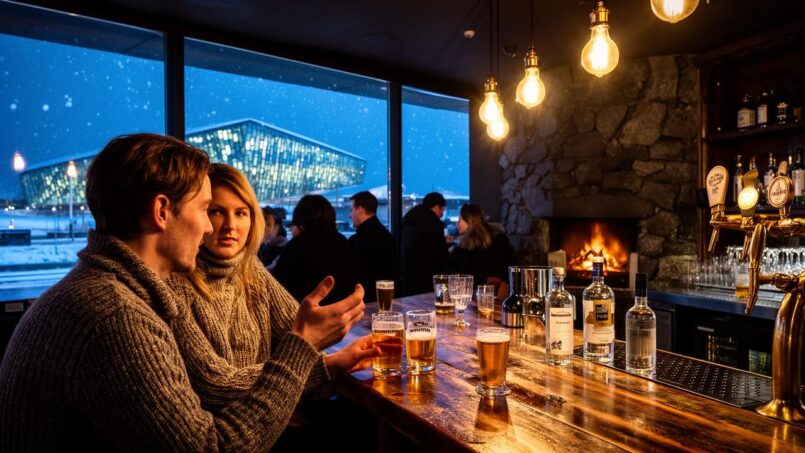
Night falls, the wind blows, and the streets gradually fill with bundled-up silhouettes… Iceland’s nightlife is like no other. Between lively bars in Reykjavík, intimate concerts, geothermal baths under the northern lights, and parties beneath the midnight sun, going out in the evening on the island is an experience all its own. You just need to know where to go, what time, and what to expect.
The Icelandic night offers more than just bars and clubs. For an authentic experience, discover lively neighborhoods, locals’ favorite spots, and alternative nighttime activities beyond the usual club outing.
Understanding the Icelandic Night
Going out in the evening in Iceland first requires understanding a key point: here, everything starts late. Icelanders typically practice fyllerí, meaning they drink with friends at home or at a quiet bar during happy hour before hitting the big night out. Alcohol is expensive, and bottles over 2.25% alcohol content are only sold in state-run Vínbúðin stores—so pre-drinking helps lighten the bill.
In Reykjavík, nightlife starts late. The first drinks downtown are rarely taken before 10 p.m., and locals head to the main artery, Laugavegur, around midnight or later. The atmosphere peaks between 1 a.m. and 3 a.m., with packed bars and lively streets. On weekends, many establishments stay open until 4 a.m. or 5 a.m., even later in summer.
The week is calmer, but not dead. Monday and Tuesday, nights focus on happy hours and a few intimate concerts. Wednesday is “locals’ night”: bars are lively but not crowded, ideal for chatting or observing Icelandic daily life. Thursday marks the start of the weekend—the music picks up, dance floors fill, and people begin hopping from one spot to another in a runtur, the typical Icelandic bar crawl.
Summer: Partying Under the Midnight Sun
From late May through August, night barely falls over much of the country. You leave a club at 4 a.m. in broad daylight, you have one last drink on a terrace as the sun skims the horizon, you dance in the street after an outdoor concert. This phenomenon of “midnight sun madness” gives summer nights an inexhaustible energy.
This is the mild temperature, in degrees Celsius, that prevails in Reykjavík in summer and attracts many visitors.
In the heart of summer, evenings also take place outdoors: rooftops, patios, beer gardens, and even the geothermal beach. At Nauthólsvík, Reykjavík’s heated beach, it’s not uncommon to see a bonfire late in the evening, with music, swims in the tempered pools, and conversations with feet in the sand.
Table – Nighttime Atmosphere by Season
| Season | Light & Rhythm | Dominant Atmosphere | Highlights for Going Out |
|---|---|---|---|
| Summer (June–Aug) | Midnight sun, nearly 24 hours of daylight | Very energetic, festive, lots of outdoor spots | Festivals, rooftops, terraces, bar-hopping until dawn |
| Winter (Nov.–March) | Very long nights, sometimes 20 hours of darkness | More intimate, cozy, indoor concerts | Northern lights, warm bars, jazz, cocktails, Iceland Airwaves |
| Shoulder seasons (April–May & Sept.) | Balanced day/night | Mix of energy and serenity | Fewer crowds, good weather chances, softer prices |
Winter: Between Cozy Bars and Northern Lights
From October to March, the atmosphere changes completely. The long nights and cold invite you to take refuge in cozy places: dimly lit bars, small concert venues, cafés that turn into bars come evening. Candles, soft lighting, smoking cocktails, and craft beers sometimes replace big bar crawls under the sun. You chat more, listen to local bands, soak in the atmosphere.
Winter is the ideal season to see the northern lights in Iceland. Many visitors combine dinner or drinks in Reykjavík with an organized tour to “hunt” the aurora, typically between 9 p.m. and 2 a.m. These excursions are often led by experts who monitor forecasts from the meteorological office. Some tours include perks like hot chocolate, blankets, and stops at iconic sites such as Þingvellir National Park or the Reykjanes Peninsula.
November is especially popular: it remains relatively quiet in terms of crowds, but offers beautiful dark nights for aurora viewing, activities like glacier hiking or ice cave visits, and a taste of December festivities.
Major Annual Highlights
Beyond a simple weekend, certain periods turn Iceland into a gigantic nocturnal playground.
Reykjavík Culture Night, in August, is a prime example. This day-into-evening event, running from noon to midnight, fills the center with street performances, concerts, dance shows, food trucks, and fireworks. Bars and cafés stay open late, many host their own programming, and the center becomes pedestrian-only for the occasion.
In winter, the Iceland Airwaves festival enlivens Reykjavík by taking over various venues (cafés, bars, bookstores, halls) to showcase emerging and international artists, offering diverse musical experiences from small intimate concerts to big shows at Harpa, and even impromptu DJ sets late at night.
New Year’s Eve is another unforgettable experience. Locals buy their fireworks from stands that fund rescue teams, and the sky literally ignites between about 10:30 p.m. and 2 a.m. People dine with friends or family, then head out around bonfires, before ending the night in downtown bars.
Reykjavík: The Beating Heart of Iceland’s Nightlife
You can’t talk about nightlife in Iceland without focusing on the capital. Reykjavík is home to more than half the country’s population and concentrates bars, clubs, concert venues, and café-bars in a compact downtown that’s perfectly walkable.
Discover the lively neighborhoods and different types of establishments that make Iceland’s capital buzz after dark.
Laugavegur Street, the epicenter of activity, is packed with pubs, cocktail bars, clubs, and late-night fast food.
Perpendicular streets like Bankastræti or Klapparstígur hide more discreet spots: basements turned into clubs or themed bars.
On Hverfisgata, the vibe is a bit more underground, with trendy electronic music spots or alternative scenes. Austurstræti, on the other hand, leans more upscale: polished cocktail bars, stylish décor, a slightly dressier crowd.
Table – Main Nightlife Areas in Reykjavík
| Area / Street | General Style | What Kind of Night Out? |
|---|---|---|
| Laugavegur | Main strip, very lively, bars right next to each other | Bar-hopping, very festive nights, watching the runtur |
| Hverfisgata | Alternative vibe, electro clubs, more discreet spots | Techno, house, indie and creative atmospheres |
| Austurstræti | Trendier bars, some clubs, well-known pubs | Cocktails, commercial music, dressier evenings |
| Around Bergstaðastræti & Klapparstígur | Intimate bars, café-bars, historic clubs | More local nights, live DJ, conversation and dancing |
| Old Harbor & Grandi area | Brewery bars, restaurants, cultural venues | Dinner + craft beer, concerts, calmer start or end of the night |
Must-Visit Bars
Reykjavík’s establishments change quickly, but certain names keep appearing in regulars’ recommendations. They also showcase the diversity of the local scene: rock, craft beer, LGBTQIA+, upscale cocktail, or old-school dive bar.
Elly Bar and Litli Barinn: The “Neighborhood” Scene
On Laugavegur, Elly Bar attracts a varied crowd with its Mexican-inspired food—tacos, burritos, vegan options—and creative cocktails. The house‑infused Gin & Tonic, with rosemary, mint, and orange, is a must-try. During the day, the place stays fairly quiet, ideal for a late lunch. In the evening, the atmosphere transforms with karaoke, piano sing-alongs, live concerts, and a solid selection of about ten local beers on tap. Open daily until 1 a.m. (2 a.m. on Friday and Saturday), it’s a great starting point for the night.
More discreet, Litli Barinn is tucked away in the Ranargata neighborhood. This bar-restaurant focusing on local products offers well-crafted small plates, a serious cocktail menu, a selection of wines and beers, and one special feature: only Icelandic music is played here. The atmosphere is relaxed, almost intimate, with a relatively early closing time (usually around 10:30 p.m.), perfect for an early evening before heading back to Laugavegur.
Litli Barinn, bar-restaurant at Ranargata
Lemmy: The Temple of Rock and Beer
On Austurstræti, Lemmy Bar & Live Music Venue occupies one of the city’s oldest buildings, and the décor sets the tone: rock universe, posters, memorabilia, a gritty but good-natured vibe. Hop lovers will rejoice: over 50 beers on tap, including many Icelandic brands, plus an unabashed “comfort food” menu—waffles, fish and chips, sausages, even unlimited breakfast cereal.
This place isn’t just about drinks: it houses the only real collection of classic arcade games in the city, reinforcing its giant adult playground feel. Rock, punk, or metal concerts and DJ nights are held regularly. As for reputation, online reviews are sky-high, averaging around 4.7/5 on major platforms.
LGBTQIA+ Bars and Inclusive Bars
Reykjavík is considered one of the most LGBTQIA+‑friendly capitals in Europe. The epicenter of this scene is on Laugavegur, in a building with a rainbow façade that houses two venues: 22 Bar and Kiki Queer Bar.
22 Bar, open day and night, offers cocktails, Icelandic beers, and light bites in a relaxed atmosphere. Upstairs, Kiki Queer Bar takes over in club mode with colorful décor, pop and Eurovision playlists, themed nights, and a high-energy dance floor on weekends. During Pride, these spots—like many other bars—extend their hours, host drag competitions, street parties, and special events.
Another pillar of the inclusive scene is Gaukurinn, on Tryggvagata, blending a rough‑around‑the‑edges dive bar, an alternative concert venue, and a queer refuge. You’ll find English‑language stand‑up, movie nights, rock or metal concerts, DJ sets, drag shows, and a 100% vegan menu. The place is known for its gender‑neutral restrooms and its decidedly open atmosphere.
Craft Beer and Taprooms
While Reykjavík is famous for its nightlife bars, it’s increasingly known for its beer scene. After the ban on beer ended in 1989, microbreweries multiplied: the country now has over twenty active breweries for a population of about 380,000. That means Iceland has a ratio close to one brewery per 19,000 people, making it one of the most densely supplied countries in the world.
Downtown, MicroBar offers a rotating selection of Icelandic and international beers with tasting “flights.” Nearby, Skúli Craft Bar champions local breweries with 14 taps and over 100 bottled options. Its long happy hour from noon to 7 p.m. makes it a favorite among enthusiasts.
The brewery Ægir, based in the Grandi harbor district, has a recently opened taproom downtown, Ægir 101. You can drink house‑made brews and attend folk music nights or traditional Vikivaki dances. Another outlet, Ægir 220, is in Hafnarfjörður, about a 15‑minute drive south of the capital.
Kaldi, a pioneer among Icelandic microbreweries, also has its bar on Klapparstígur, while other breweries like Borg Brugghús, Ölverk, or Ölvisholt can be visited on wider tours around the country, with on‑site tastings.
Table – A Few Iconic Bars in Reykjavík
| Establishment | Type of Venue | Key Features | Approximate Hours* |
|---|---|---|---|
| Elly Bar (Laugavegur) | Festive bar & restaurant | Mexican cuisine, karaoke, 10 local beers on tap | ~12 p.m.–1 a.m. (2 a.m. Fri./Sat.) |
| Litli Barinn | Neighborhood bar | Local products, 100% Icelandic music | ~3 p.m.–10:30 p.m. |
| Lemmy Bar | Rock bar & concerts | 50 beers on tap, arcade games, comfort food | ~11:45 a.m.–11 p.m. or 2 a.m. depending on day |
| MicroBar | Craft beer bar | Rotating Icelandic and international beers | Open late afternoon until late |
| Skúli Craft Bar | Craft beer bar | 14 taps, >130 bottles, long happy hour | Noon–midnight / 1 a.m. |
Hours vary and may change—it’s wise to check before heading out.
Clubs and Nightclubs: Where to Dance Until Morning
For those who really want to dance, Reykjavík offers several clubs with distinct identities, mainly around Laugavegur, Austurstræti, and Hverfisgata. They all share one common trait: the main action happens between midnight and 4 a.m., with a massive influx on Friday and Saturday.
Lux Nightclub has a sophisticated style with modern design, LED light shows, VIP tables, and DJs playing house and mainstream dance music. Its atmosphere resembles clubs in major capitals, though the crowd keeps a typically Icelandic party attitude—relaxed and unpretentious.
A few streets away, HAX, located on Hverfisgata, clearly caters to electronic music fans. The décor is minimalist, almost industrial, with everything centered on the sound system and lighting. Techno, house, more experimental variations depending on the night: the programming appeals to a crowd that comes primarily for the music.
Auto, housed in a former underground parking garage, plays the clandestine club card: you descend a staircase into a windowless space bathed in moving lights, giving the feeling of entering another dimension. Paloma, meanwhile, has won over night owls with its Viking‑ship‑hold décor in the basement, themed parties, and guest DJs, both Icelandic and international.
Pablo Discobar, on Veltusund, blends cocktail bar with Latin‑influenced club. Polished décor, a rather young and trendy crowd, sometimes a stricter age policy (entry may be limited to 25 and over): the spot appeals to those who want to dance in a more glamorous atmosphere.
Live Music: A Capital of Concerts
Icelandic nightlife isn’t limited to bars and clubs. Reykjavík is also the heart of the country’s music scene, with thousands of concerts organized each year in the region. Jazz, blues, rock, folk, electronic, classical, experimental—all varieties are found in concert halls, cafés, bar‑bookstores, and even record shops.
Harpa is the city’s main concert venue, located on the harbor. It hosts the Iceland Symphony Orchestra, the Opera, large productions, as well as jazz, electronic music concerts, and many international artists. Its famous illuminated glass facade at night has become an architectural symbol and a landmark for night owls.
More intimate, Gamla Bíó—the “old cinema”—and venues like IÐNÓ or Tjarnarbíó, on the edge of Tjörnin pond, host concerts, jazz nights, jam sessions, and varied performances. Less expected places, like the bar‑bookstore Hús Máls og Menningar on Laugavegur, program a “house band” almost every night, often in a “bookstore band” spirit where they play classic rock and pop covers with the audience.
Record shops like 12 Tónar or Lucky Records also transform into mini concert venues, with free showcases that let you discover local bands just a few feet away. Mengi, an artist‑run creative space, is dedicated to more experimental music and contemporary creation.
Table – Types of Music Venues in Reykjavík
| Type of Venue | Examples | What You’ll Find |
|---|---|---|
| Large concert hall | Harpa, Salurinn | Classical, opera, jazz, international artists |
| Theaters / halls | Gamla Bíó, IÐNÓ, Tjarnarbíó | Pop/rock concerts, jazz, folk, various shows |
| Music bars | Dillon Whiskey Bar, Lemmy, Den Danske Kro | Local bands, blues, rock, covers |
| Bookstores & record shops | Hús Máls og Menningar, 12 Tónar, Lucky Records | Intimate concerts, free showcases |
| Alternative venues | Mengi, Gaukurinn | Experimental music, metal, drag shows |
Beyond Bars: Unusual Nighttime Activities
Going out at night in Iceland isn’t just about drinking or dancing. The country offers a whole range of experiences to enjoy after sunset—or at least when the clock says it’s time to sleep.
One of the most popular is northern lights hunting from September to April. Tours leave Reykjavík in the early evening and drive through the countryside in the dark to reach places with no light pollution. Depending on conditions, you can sometimes see them as early as late afternoon in the heart of winter, but the prime window to enjoy them is roughly between 10:30 p.m. and 1 a.m. Guides closely follow the Icelandic Meteorological Office forecasts and adjust routes.
Another classic: nighttime geothermal baths. The Sky Lagoon, just outside the capital in Kópavogur, stays open in the evening, with an infinity pool overlooking the ocean, a seven‑step ritual (sauna, cold plunge, scrub, etc.), and carefully designed lighting. The iconic Blue Lagoon, between Reykjavík and the airport, becomes much quieter in the evening: you float in naturally heated milky waters, sometimes under the stars or in the glow of the aurora, drink in hand thanks to the in‑water bar.
From late May to July, you can take advantage of the midnight sun for nighttime hikes in several regions (Reykjavík, south coast, Snæfellsnes Peninsula). Nighttime water activities like kayaking or whale watching are also organized, often returning after midnight.
Even more unusual: the Beer Spa in northern Iceland, at Árskógssandur, where you soak in large barrels filled with warm water, hops, and yeast, with a beer tap within reach. Or the Lava Show, in Reykjavík or Vík, where you can see real lava heated to over 1,100°C flow before you in a safe environment—an offbeat outing, typically scheduled for early evening.
Finally, for those who want to stay close to the capital but experience a different night, nighttime hot river bathing in places like Reykjadalur (from Hveragerði) or bonfires at Nauthólsvík offer a more natural atmosphere without giving up comfort.
Safety, Laws, and Customs: What You Need to Know
Iceland’s reputation for safety is well‑earned. Reykjavík is considered one of the safest capitals in the world, with a very low crime rate. There are no “bad neighborhoods” as such, though around Laugavegur and Austurstræti, weekend nights can get a bit rowdy, with alcohol‑fueled fights or occasional pickpocketing in crowds.
In bars, it’s essential to stay vigilant with your belongings, avoid conflicts, and ask staff for help if you feel unwell. Establishments are generally responsive to inappropriate behavior, in a society that values respect and modesty.
On the legal side, several points are crucial. The minimum age to buy alcohol is 20. The blood alcohol limit for driving is extremely low (0.05 g/L of blood), and penalties can include very high fines and license suspension. The same rule applies to riding electric scooters: driving them while intoxicated is treated as a DUI offense.
Since alcohol is heavily taxed and therefore expensive, it’s wise to buy some upon arrival at the duty‑free shop at Keflavík Airport, where prices are lower than in state stores. For drinks on the go, take advantage of happy hours, typically between 3 p.m. and 7 p.m. depending on the establishment, which can significantly reduce costs—for example, offering a pint at a much more affordable price than normal.
As for etiquette, no tipping is necessary: service is included, and payment terminals usually don’t have a tip line. When toasting, make eye contact, introduce yourself by your first name, and avoid bragging or being too pushy—modesty is appreciated. Punctuality is fairly relaxed for parties—arriving half an hour late is no big deal—but still welcome for a reserved dinner.
Getting Around at Night
Downtown Reykjavík is compact enough to walk from one end to the other. Most bars and clubs are clustered, making it easy to switch atmospheres throughout the night. There are no Uber or Bolt services, but taxis are plentiful in nightlife areas. However, they are expensive, especially at night.
On weekdays, Strætó buses run until midnight. On weekends, a night service operates on certain lines, generally between 1:20 a.m. and 4:30 a.m. While more expensive than daytime fares, these night buses are still cheaper than a taxi. Tickets can be purchased via the Klappið app or with a card like the Reykjavík City Card, which includes transportation.
Rental electric scooters are also available in the capital, rented through dedicated apps. However, keep in mind that the same blood alcohol rules as for driving apply to their use—they’re not meant for getting intoxicated partygoers home.
Going Out Outside of Reykjavík
Outside the capital, nightlife becomes more subdued, but it never disappears completely. Most towns and villages have at least one pub or café‑bar that serves as a gathering point. In Akureyri, in the north, venues like Græni Hatturinn, a beloved blues cellar, regularly host concerts, while other modern bars feature local beer and DJ sets.
In small Icelandic towns like Vík, nightlife centers on cozy establishments, often attached to a hotel or local restaurant. For instance, Ströndin Pub in Vík is a typical spot where visitors can have a drink after exploring the black sand beaches or surrounding cliffs.
On the Vestmann Islands, the town of Heimaey, despite its roughly 4,500 inhabitants, offers a human‑scale nightlife scene focused on bars where conversation and friendliness take precedence over wild partying. Excess is frowned upon, and the atmosphere remains family‑oriented, especially outside major events like summer festivals.
Finally, beer and Icelandic spirits can be enjoyed directly at some producers. Distilleries like Eimverk, which produces Flóki whiskey and gins like Vor, open their doors to visitors for guided evening tours. Breweries like Bruggsmiðjan Kaldi, with its Beer Spa in the north, or regional microbreweries (Dokkan in the Westfjords, Austri in the east, Smiðjan in Vík, etc.) round out the list of excursions.
The Art of Enjoying the Icelandic Night
What stands out from all these experiences is that the Icelandic night isn’t just about drinks and decibels. It blends culture, nature, conviviality, and a certain sense of improvisation. You might go from an experimental concert in a bookstore, to a pint at an independent brewer, a quick stop at a techno club, a hot dog from Bæjarins Beztu at 3 a.m., then end the night staring at the sky hoping to see the northern lights dance.
To make the most of a night out at the bars, it’s recommended to adjust your timing, avoiding arriving too early (like 9 p.m.), especially on weekends. Also, be prepared for rapidly changing weather, even in summer, by wearing layers and a windproof jacket for moving around. Finally, keep in mind the strict laws on drinking and driving and alcohol sales, as well as the high price of drinks, which makes happy hours and moderation especially relevant.
The night in Iceland is both loud and gentle, extravagant and intimate, solar and polar. Whether you come to dance until morning on Laugavegur, listen to a string quartet at Harpa, float in a milky lagoon under a green aurora sky, or share an Icelandic gin in a small neighborhood bar, it always retains a touch of magic hard to find elsewhere. Going out at night in Iceland means accepting to be surprised, to lose track of time a little… and to discover that the night can have a thousand faces.
Disclaimer: The information provided on this website is for informational purposes only and does not constitute financial, legal, or professional advice. We encourage you to consult qualified experts before making any investment, real estate, or expatriation decisions. Although we strive to maintain up-to-date and accurate information, we do not guarantee the completeness, accuracy, or timeliness of the proposed content. As investment and expatriation involve risks, we disclaim any liability for potential losses or damages arising from the use of this site. Your use of this site confirms your acceptance of these terms and your understanding of the associated risks.

Cyril Jarnias is an independent expert in international wealth management with over 20 years of experience. As an expatriate himself, he is dedicated to helping individuals and business leaders build, protect, and pass on their wealth with complete peace of mind.
On his website, cyriljarnias.com, he shares his expertise on international real estate, offshore company formation, and expatriation.
Thanks to his expertise, he offers sound advice to optimize his clients' wealth management. Cyril Jarnias is also recognized for his appearances in many prestigious media outlets such as BFM Business, les Français de l’étranger, Le Figaro, Les Echos, and Mieux vivre votre argent, where he shares his knowledge and know-how in wealth management.





