
 Published on and written by Cyril Jarnias
Between turquoise lagoons, steep hills, and human-scale villages, Saint-Barthélemy is not just about luxury villas and spectacular yachts. The island is also a true playground for sports enthusiasts, whether they are highly trained or simply vacationers in search of physical activities. On land and on water, the offerings are surprisingly dense for such a small territory, with a sports infrastructure that rivals much larger destinations.
The island offers a wide range of sports activities thanks to quality facilities. Water sports (diving, sport fishing), hiking, tennis, soccer, and gyms are very popular. There are also more fun outdoor activities like beach volleyball and beach tennis, as well as yoga.
The Kingdom of Water Sports
In Saint-Barthélemy, sport almost always begins with the sea. The island is literally surrounded by spots suited to all levels, from calm lagoons for beginners to more exposed areas for seasoned practitioners. The Bay of Saint-Jean and the Grand Cul-de-Sac lagoon concentrate a large share of activities, while Gustavia serves as a base for boat trips, diving, and fishing.
Local operators, often established for decades, have shaped a true sea culture. They provide equipment, supervise beginners, organize outings, and many work to minimize the environmental impact of their activities. This is one of the island’s strengths: being able to enjoy multiple water sports on the same trip without complicated logistics.
Paddle, Kayak, and “Gentle” Sports in the Lagoons
For those who want to combine sport, contemplation, and safety, stand-up paddleboarding and kayaking have become must-dos. Grand Cul-de-Sac, with its shallow lagoon protected by the coral reef, is one of the top spots for these activities. The area is perfect for family discovery, leisurely paddling, and observing marine life, notably turtles and rays that frequent the shallow waters.
On St. Jean Beach, next to the Pearl Beach Hotel, CaribWaterplay, established in 1983, rents water sports equipment. With over forty years of experience, they rent paddleboards, kayaks (including glass-bottom ones), windsurf boards, Hobie Cat catamarans, and other toys. Their rates, more attractive for multi-hour rentals, encourage long sessions.
Summary table of main “calm” spots for paddle and kayak:
| Spot | Type of Water | Recommended Level | Key Activities |
|---|---|---|---|
| Grand Cul-de-Sac | Protected, shallow lagoon | Beginners / Families | SUP, kayak, swimming with turtles |
| Baie de Saint-Jean | Semi-open bay | All levels | SUP, kayak, windsurfing |
| Marigot Bay | Bay with mangrove | Beginners | Kayak, wildlife observation |
| Colombier (bay) | Calm anchorage | Intermediate | Kayak from boat, snorkeling |
This “gentle” dimension of water sports is particularly promoted by eco-conscious operators. They emphasize a few simple rules: wear a life jacket, check the weather, protect yourself from the sun, leave no trace in nature, and observe wildlife from a distance.
Kitesurfing, Wingfoil, Windsurfing: Gliding Sports Under the Trade Winds
As soon as the wind picks up, the atmosphere changes. Grand Cul-de-Sac then becomes the playground for kitesurfers and enthusiasts of wingfoil or windsurfing. The shallow, relatively safe lagoon is well-suited for supervised learning. Schools like Enguerrand Kite Surf or operators based on the beach offer beginner or advanced lessons. One hour of kitesurfing lessons can start around €145 per person, with all equipment provided.
Saint-Barthélemy hosts the Saint Barth Fun Cup, an international windsurfing competition that brings together big names in the discipline in February. The steady wind, water temperature, and local organization make it a reference event in the Caribbean, perpetuating the island’s windsurfing tradition.
Meanwhile, newer practices like wingfoil or skimboarding are gaining ground, notably through structures like H2O e-Seatoys, located at the Gypsea Beach Club on Petit Saint-Jean. Specializing in “green” electric water toys (e-foils, underwater scooters, motorized boards), this company focuses on quieter, more environmentally friendly devices.
Jet Ski, Flyboard, and Electric Devices: Controlled Adrenaline
For those who associate successful vacations with an adrenaline rush, the island offers a great palette of motorized sports: jet skis, flyboards, electric jetboards, seabobs, fliteboard eFoils, towed hoverboards, and even underwater scooters. In Gustavia, Jet Ski Racing Saint Barth organizes jet ski rentals and guided tours around the island, as well as flyboard outings, while other operators spread between Saint-Jean and Grand Cul-de-Sac develop a whole range of more or less spectacular marine “toys.”
To combine water fun with environmental preservation, opt for electric technologies and cleaner engines, like those offered by H2O e-Seatoys. This approach reduces noise and emissions, aligning with the goal of protecting marine ecosystems like coral reefs, and supports the positioning of destinations like Saint-Barthélemy as a “green island.”
Prices reflect the premium nature of the destination but remain varied. A simple jet ski rental can start around €90 per vehicle, while large private excursions on catamarans or motorboats range from €1,390 for a half-day to over €1,700 for a full day, often including crew, fuel, drinks, paddleboard, kayak, and snorkeling gear.
Indicative price range table (order of magnitude):
| Activity / Service | Indicative Starting Price | Typically Includes |
|---|---|---|
| Jet ski rental | ≈ €90 / jet ski | Life jacket, safety briefing |
| Kitesurfing lesson (1h) | ≈ €145 / person | Full equipment, instruction |
| Private boat excursion – ½ day | ≈ €1,390 | Crew, fuel, drinks, equipment |
| Private boat excursion – full day | ≈ €1,790 | Same, with more time on water |
| Sunset cruise | Variable, includes champagne | Drinks, sometimes snacks |
Diving and Snorkeling: An Exceptional Underwater Playground
For many, Saint-Barthélemy is best experienced with a mask on your face and fins on your feet. Since 1996, a marine nature reserve surrounds part of the island: in its most protected zones, fishing and anchoring are prohibited, allowing the reefs to regenerate. There are over twenty dive sites listed, accessible by boat, usually within less than twenty minutes’ navigation from Gustavia.
Sites for All Levels, from Reefs to Wrecks
The underwater landscapes are varied: reefs, canyons, drop-offs, arches, tunnels, rocky pinnacles, caves, along with several spectacular wrecks. Depths remain moderate by Caribbean standards, with most dives between 15 and 30 meters, suitable for a wide range of certified divers.
Among the most frequently mentioned zones by dive centers:
| Zone / Underwater Site | Main Characteristics | Recommended Level |
|---|---|---|
| Gros Îlets | Six sites, very clear water, varied marine life | Beginner to advanced |
| Pain de Sucre | Five sites, including a wreck, up to ~28m depth | Beginner to intermediate |
| Pointe / drop-off Colombier | Drop-offs, pinnacles, possible currents | All levels, caution advised |
| Île Fourchue | Gentle slope drifts, abundant marine life | Level 1 and above |
| Baril de Bœuf | Exposed reef between Colombier and Fourchue | Advanced recommended |
| Cayes Or / Cayes Est | Deep and isolated sites | Experienced divers |
Add to this a set of highly prized wrecks: the trawler Kayali (sunk in 1994, between 10 and 30 meters), the yacht Nonstop overturned by a cyclone at about fifteen meters depth, as well as more discreet wrecks near Gustavia, such as the Marignan or the Dakar. Some, located in navigation channels, require strict professional supervision.
The island’s waters are home to remarkable biodiversity: turtles (green and leatherback), rays (eagle and stingrays), barracudas, jacks, groupers, tarpons, moray eels, angelfish, and schools of snappers. Dolphins and whales are observable in season, sometimes audible underwater between February and May. The seabeds are also adorned with hard and soft corals, giant sponges, and colorful sea fans, making dives particularly spectacular.
A Dense and Structured Offering of Dive Centers
For a territory with fewer than 8,000 inhabitants, the density of dive centers is remarkable. Most are clustered around Gustavia—at the Collectivité quay, République quay, or Ocean Must Marina—and at Grand Cul-de-Sac. All offer introductory dives, exploration trips, training (PADI, CMAS, FFESSM, sometimes Nitrox), and snorkeling excursions.
Among the most mentioned operators:
Discover the main scuba diving operators on the island, offering a variety of activities, training, and experiences for all levels.
Based at the Collectivité quay in Gustavia and run by Isabelle and Emmanuel. Specializes in boat dives, wreck exploration, private dives, and snorkeling.
Focused on PADI training and themed outings, notably to observe sharks and turtles, as well as night dives.
Located at Grand Cul-de-Sac, this center combines diving, parasailing, fishing, and kayaking. Offers three daily dive slots (9:00 am, 11:00 am, 2:30 pm).
One of the oldest commercial operators on the island, active for nearly half a century and located at the tip of Gustavia.
Operates with a dedicated catamaran, the Blue Cat, and offers daily trips in the morning and afternoon.
Diving is possible year-round, but the calmest sea period generally runs from January to May. Water temperatures hover around 26 to 29°C (79 to 84°F), visibility between 20 and 30 meters (65-100 ft). For those wanting to avoid crowds, May and November offer a good compromise, outside peak visitation and on the edge of cyclone season.
Sport Fishing: From Lagoon to Deep Sea
Beyond diving, Saint-Barthélemy is also one of the Caribbean’s great sport fishing destinations. The island’s small size is deceptive: its surroundings, marked by drop-offs into deep water to the south and west, concentrate many large pelagic species. This explains the popularity of big game fishing and the organization of tournaments departing from Gustavia.
Offshore Fishing: Marlin, Sailfish, Tuna, and Mahi-Mahi
Offshore, or deep-sea fishing, targets pelagic species that frequent deeper waters: blue and white marlin, sailfish, yellowfin tuna, wahoo, and mahi-mahi (dolphinfish). Techniques are classic but effective: trolling with lures or baitfish, live bait fishing, and heavy gear to handle spectacular runs.
The period from December to April is ideal for the most sought-after species (marlin, sailfish, tuna). From May to September, conditions are often excellent for marlin, with calmer seas in summer. June through August are very favorable for trips, although the rainy season (June to November) can bring thunderstorms or heavy rain, sometimes disrupting plans.
Inshore Fishing: Lagoons, Reefs, and Mangroves
For a more accessible or family-friendly experience, inshore fishing in lagoons, reefs, and mangroves targets different species: snappers (including the famous Caribbean red snapper), groupers, jacks, barracudas, bonefish, permit, tarpon, snook. Here, the focus shifts to finer techniques: light tackle casting, fly fishing, bottom fishing, and drifts along rocks.
Areas like Gustavia harbor, the flats of Anse des Lézards, the shallow lagoons, and the rocks of the north coast offer great fishing grounds, provided you respect local regulations (fishing license, size limits, quotas). The marine reserve also enforces zones where fishing is simply prohibited.
Comparative table of offshore / inshore fishing:
| Fishing Type | Preferred Areas | Main Target Species | Common Techniques |
|---|---|---|---|
| Offshore | South and west offshore, near drop-offs | Marlin, sailfish, yellowfin tuna, mahi-mahi, wahoo | Trolling, live bait, heavy artificial lures |
| Inshore | Reefs, lagoons, harbors, mangroves, flats | Snappers, groupers, jacks, barracudas, bonefish… | Light tackle casting, fly fishing, bottom fishing |
Well-Structured Charter Operators and Guides
Numerous companies and independent guides operate from the port of Gustavia or nearby beaches. Among them, Jicky Marine (boat rentals, diving, big game fishing with captain), Ocean Must (fishing, sailing, diving), Bosco Fishing, Yannis Marine, and Marine Service. Guides like Patrick LaPlace or Jérôme Lefort are regularly cited for their personalized trips, whether inshore or offshore, and their educational commentary.
Maximum price for 4 hours of fishing on a high-end boat, excluding tax and service.
Typically included: rods, reels, lures, bait, fuel, water, ice, and sometimes even preparation of the catch upon return. Many trips are labeled “family friendly,” with gear suitable for children and options to alternate with swimming or snorkeling in shallow waters.
Hiking: A Natural Open-Air Trail Park
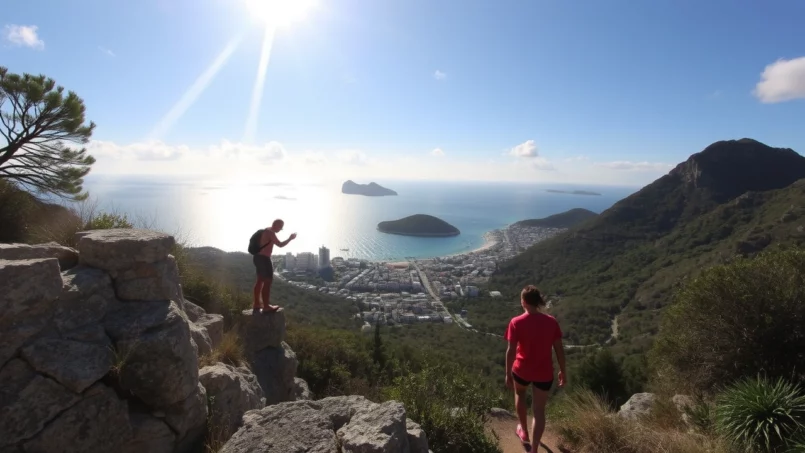
Unlike other larger volcanic islands, Saint-Barthélemy does not offer long mountain traverses. But the density of small coastal paths, short loops to secluded coves, and climbs to spectacular viewpoints makes it a true paradise for “short distance” hiking. Routes range from a simple 15-minute family walk to more challenging itineraries requiring a guide.
The Classics: Colombier, Grand Fond, Vitet
Three hikes stand out distinctly in terms of popularity.
Colombier Beach is only accessible on foot or by boat. Two main trails lead there from the island’s interior: one from Flamands Bay (30-45 min, easy, great views) and another from Petite Anse (more rugged and demanding). An “upper trail” with significant elevation gain is also possible. The beach, preserved and sheltered from the wind, is ideal for swimming and snorkeling with turtles. There are no shops or services on site.
Further east, the Grand Fond area offers what is often called the trail of the “natural pools” and the “Washing Machine.” The starting point is from the pebble beach, going up a clay embankment and then a low cliff. The trail, sometimes narrow along the cliff edge, leads to a first cove battered by waves, then to natural rock basins where water surges in. About fifteen minutes from the parking lot, you reach the first pools: a raw, lunar landscape sculpted by wind and swell, with a superb view of Saline Beach if you continue further.
The altitude in meters of Morne de Vitet, the highest point on the island of Saint-Barthélemy.
Coastal Walks and Viewpoints
Around these “hiking stars,” the island has a whole series of lesser-known but very pleasant strolls. A coastal path connects Anse des Cayes to Pointe des Carrières in about an hour round trip, offering a succession of rocky slabs overlooking the sea with views of Colombier and the islets. At Toiny, a path starting from the beach parking lot follows the coast to a promontory frequented by surfers, then loops back near the Le Toiny hotel.
Above Gustavia, the lighthouse (King Oscar II Garden) and Fort Karl offer short walks with stunning views of the harbor, Shell Beach, and the ocean. These easy walks are perfect for sunset and allow you to discover elements of the island’s Swedish heritage, such as old forts, ruins, and botanical signs.
Another example is the walk around the Guanahani peninsula at Grand Cul-de-Sac, a fifteen-minute loop overlooking the lagoon and offering a view of Îlet Tortue. More athletic types can also tackle steeper routes, like the climb from the Santa Fe restaurant down to Gouverneur Beach (roads with 20% gradient) or the Petit Cul-de-Sac loop, marked by a 25% grade.
Table of some iconic hikes:
| Hike / Area | Approximate Round Trip Time | Difficulty | Highlights |
|---|---|---|---|
| Colombier Trail (via Flamands) | 30–45 min | Easy | Secluded beach, snorkeling, ocean panorama |
| Grand Fond – Natural Pools | Approx. 30 min | Moderate | “Lunar” landscape, rock pools, Saline views |
| Morne de Vitet | 2–3 h (depending on approach) | Moderate to difficult | Island summit, 360° view, dense vegetation |
| Toiny – Point / Loop | 45–60 min | Easy | Surfers, wild viewpoint |
| Anse des Cayes – Pointe des Carrières | ≈ 1 h | Easy to moderate | Rocky coast, view of islets and Colombier |
| Lighthouse / Fort Karl (Gustavia) | 15–60 min | Easy | Heritage, view of harbor and Shell Beach |
Most of these routes remain accessible provided you follow basic rules: start early or late in the day to avoid heat, wear closed-toe shoes, bring water, hat, sunscreen, and a mini first-aid kit, and of course pack out your trash. On some technical routes, like “Les Crêtes” above Grand Fond, a guide is highly recommended. Also note: the trail to the natural pools at Petit Cul-de-Sac has been officially closed since a fatal accident in 2021, and access is now prohibited.
Soccer, Tennis, and Team Sports: Sports Life on Land
While the sea takes center stage, sports life in Saint-Barthélemy is not limited to it. On the heights and in neighborhoods, playing soccer, tennis, and other team sports is part of residents’ daily lives. Infrastructure, concentrated especially around Saint-Jean, is surprising for such a small community.
A Well-Established Soccer Championship
Soccer has its own league, the Saint-Barthélemy Championship. Several local clubs compete for a title that is now established in the island’s sporting tradition. The record shows real continuity in the sport, with clubs like ASPSB, FC Amicale (and its predecessor FC Beach-Hôtel), AS Gustavia, Ouanalao FC, FC Arawak, and Team FWI.
Summary table of titles by club (selection):
| Club | Known Number of Titles | Notable Period of Dominance |
|---|---|---|
| ASPSB | 7 | From the 2000s to 2024 |
| FC Amicale / Beach-Hôtel | 4 | Mid-2000s |
| AS Gustavia | 3 | Mid-2010s |
| Team FWI | 2 | Early 2020s |
| Ouanalao FC | 2 | Early 2010s |
| Arawak | 2 | Late 2010s and early 2020s |
Beyond the numbers, this championship illustrates how soccer remains a social glue, with matches that animate neighborhoods and events like the “Caraibes Football Star,” a gala match between professionals (or ex-pros) and a local selection.
Tennis, the Island’s “Signature” Sport
Tennis holds a special place in Saint-Barthélemy. It is one of the most structured sports, with several clubs, quality courts (clay, hard, grass, synthetic), regular tournaments, and certified instructors. The Saint Barth Tennis Club, located on the sports field in Saint-Jean, functions as a true hub: court rentals, private lessons, group lessons, mini-tennis from age 4, pro-shop with racquet and ball rental. Reception is open daily, with late afternoon hours for registrations.
Discover the main clubs, public and private facilities, and hotels offering tennis courts on the island.
Recently renovated chic club with a new synthetic surface. Offers coaching, court rentals, and a friendly “club house” atmosphere.
Hard court available at the Colombier sports association.
Facilities with different playing surfaces available.
Synthetic surface court accessible to players.
Private courts within exclusive properties, typical of the St. Barth landscape.
Prestigious establishments like Eden Rock or Le Guanahani include courts in their hotel offering.
The island also hosts several major events: the Open de Saint-Barthélemy (including an edition with Corsair), the St Barth Tennis Open, and a children’s tournament, the Kids Trophy, which brings together young players from across the Caribbean. Instructors like Amandine and Franck (both certified by the French Tennis Federation), Vincent Ikni, or Yves Lacoste offer lessons for adults and children ages 5 and up, in private, duo, or small group sessions. For a tropical climate, the recommendations are simple: hydrate regularly, choose morning or late afternoon slots, and protect yourself from the sun.
In Saint-Jean, a new sports complex is under construction. It will add four additional public courts and multi-purpose spaces, illustrating the island’s sustained investment in this sport.
Gyms, Yoga, and Indoor Activities
Fitness enthusiasts or those looking for structured classes are not forgotten. Two main gyms share the market: Form Fitness in Lurin and Zion Gym in Saint-Jean. Both have modern equipment, weight machines, and free weights, and offer day passes, very convenient for vacationers. Personal trainers are available for customized programs, sometimes supplemented by boxing or group fitness classes.
On the wellness front, the island has established itself as a small yoga haven and retreat destination. Sessions can be booked at certain centers, on the beach, in villas, or through structures associated with diving clubs or hotels. The goal is often to combine hiking, water sports, yoga sessions, and spa treatments in a holistic approach to fitness.
Beach Volleyball, Beach Tennis, and Sand Sports
It’s hard to talk about popular sports in Saint-Barthélemy without mentioning what’s played with your feet in the sand. The island has fourteen beaches, and impromptu beach volleyball or soccer matches are common, especially on the largest stretches.
Beach Volleyball Between the Beach and Sports Complex
Beach volleyball is very present on the “postcard beaches” of Saint-Barthélemy, in the form of impromptu games between locals and vacationers. However, permanent courts exist, particularly in the Saint-Jean area, where a sports complex next to tennis courts hosts sand volleyball games. This is where some tournaments linked to neighborhood festivals take place, such as the Windward Fête in Lorient or the Fête des Quartiers du Nord in Flamands, where volleyball contests join games, music, and regattas.
The friendly and spontaneous nature of beach volleyball makes it a great activity for meeting people. It’s easy to join an already formed team on the beach, often to play in the cool of late afternoon. The encounter can then naturally extend to a beach bar. Before joining a game, just check locally if certain time slots are reserved for leagues or associations, but generally, the atmosphere remains open and welcoming.
Beach Tennis and Beach Games
In the wake of “classic” tennis, beach tennis has recently arrived on the island. The sport, easy to pick up and very fun, appeals to both children and adults. Instructors already active in tennis clubs (like Amandine and Franck) offer introductory sessions, often on the widest beaches or on designated courts.
The beaches of Saint-Jean, Flamands, and Lorient are favorite spots for various sports activities such as touch rugby, soccer, as well as sunrise yoga or pilates sessions. These beaches are particularly suitable due to their length and relative flatness.
Sailing, Regattas, and Catamaran Trips
Another great sporting passion of Saint-Barthélemy: sailing. The island is one of the world’s major stages for luxury yacht regattas, but it also remains a superb setting for learning dinghy sailing, day cruises, and catamaran raids.
Major International Regattas
Each year, several major nautical events bring excitement to Gustavia Bay and surrounding waters. The Bucket Regatta, first, gathers an impressive fleet of superyachts, often among the most beautiful in the world, at the end of March. The Voiles de Saint-Barth in April line up over six days of racing, sailboats of all sizes, from classic boats to contemporary maxis. The Tour de Saint-Barth, organized by the Centre Nautique, adds a more local dimension, with windsurfers, sport catamarans, and Laser-type dinghies racing around the island.
The Saint-Barth Cata Cup in November on Saint-Jean Beach completes the island’s status as a laboratory for sport catamarans. The event, considered one of the most important in the Caribbean for this discipline, attracts an elite group of racers who come to enjoy the steady trade winds. A more relaxed regatta, the New Year’s Eve Regatta on the morning of December 31, brings together residents and visitors for a “for fun” lap around the island.
Saint-Barth Cata Cup and New Year’s Eve Regatta
Day Catamarans and Private Charters
For the general public, sailing is also enjoyed in cruise mode. Companies like Saint Barth Sailor or Saint Barth Excursions operate modern catamarans (Lagoon 45 and 46, Nautitech 47, units 45 to 46 feet) for half-day, full-day, or sunset outings. The boats, often able to carry 12 to 18 passengers, come equipped with paddleboards, kayaks, snorkel gear, and sometimes even more sophisticated water toys.
Basic packages include crew, fuel, and drinks (water, sodas, beer, wine, punch). Meals on board are available as an option for about €70 per person. Some cruises automatically include a bottle of champagne at sunset. For high-end service, partnerships like that between the Hotel Eden Rock and broker Royal Yacht International offer charters on yachts ranging from 20 to 99 meters (65-325 ft), including a wide array of water sports.
A Playground for All Profiles
What stands out, ultimately, in Saint-Barthélemy is the overall coherence of the sports offering. On a territory with just 32 kilometers (20 miles) of coastline, you find a rare combination: protected lagoons for beginners, more challenging spots for experienced surfers and kitesurfers, a consistent network of trails for hikers, high-level tennis clubs, well-equipped gyms, numerous diving structures, internationally competitive sport fishing, and some of the world’s most prestigious nautical events.
The island combines sports dynamism and environmental protection through a marine reserve, regulation of visitor pressure (restrictions on boats over 25 meters/82 ft since 2023), promotion of eco-friendly options, and user awareness. It is possible to chain together various activities like a hike, a paddle session, and a tennis match in the same day.
For visitors and residents alike, sport in Saint-Barthélemy is not just a side activity. It’s a way to immerse yourself in the landscapes, meet the locals, understand the island’s marine culture, and often leave with a desire to return — if only to improve your time on the Grand Fond trail or spot a turtle again off the coast of Colombier.
Disclaimer: The information provided on this website is for informational purposes only and does not constitute financial, legal, or professional advice. We encourage you to consult qualified experts before making any investment, real estate, or expatriation decisions. Although we strive to maintain up-to-date and accurate information, we do not guarantee the completeness, accuracy, or timeliness of the proposed content. As investment and expatriation involve risks, we disclaim any liability for potential losses or damages arising from the use of this site. Your use of this site confirms your acceptance of these terms and your understanding of the associated risks.

Cyril Jarnias is an independent expert in international wealth management with over 20 years of experience. As an expatriate himself, he is dedicated to helping individuals and business leaders build, protect, and pass on their wealth with complete peace of mind.
On his website, cyriljarnias.com, he shares his expertise on international real estate, offshore company formation, and expatriation.
Thanks to his expertise, he offers sound advice to optimize his clients' wealth management. Cyril Jarnias is also recognized for his appearances in many prestigious media outlets such as BFM Business, les Français de l’étranger, Le Figaro, Les Echos, and Mieux vivre votre argent, where he shares his knowledge and know-how in wealth management.





