
 Published on and written by Cyril Jarnias
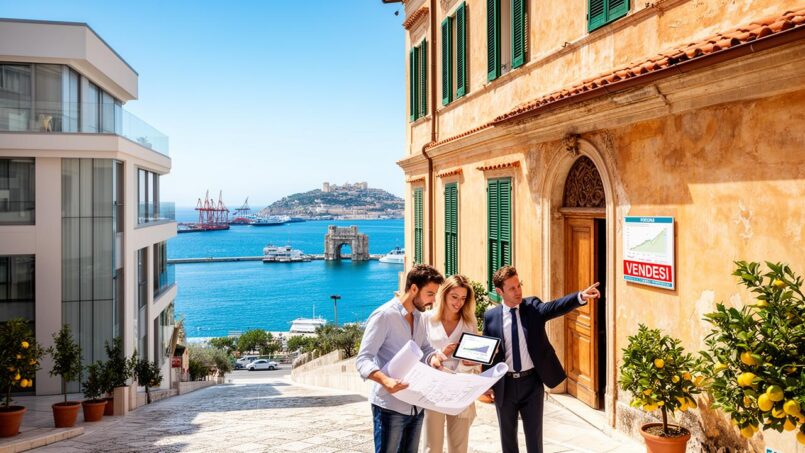
Ancona is not Milan or Rome. Prices are more reasonable, the market less publicized, but the city increasingly checks the boxes investors look for: a strategic port undergoing major transformation, an ambitious waterfront project, a firming residential market, and rental yields that remain competitive in the Italian context. The investor’s challenge is to read these signals correctly and compare them against the numbers.
Ancona, the main city of the Marche region on the Adriatic, has approximately 99,239 residents.
Ancona in the Italian Real Estate Market Context
Before zooming in on Ancona, it’s helpful to understand the climate of the Italian real estate market. After several years of a hesitant market, the latest data paints a clearer picture: demand is strengthening, supply remains limited, rates are easing, and prices are rising at a moderate but steady pace.
National indicators show a stable market progression. Prices increased by about 3.93% year-over-year in Q2 2025, with a trend of quarterly increases between 2% and over 4%. Transaction volume is also recovering, with nearly 950,000 sales in 2024 (+0.9%) and forecasts between 776,000 and over 800,000 residential transactions for 2025-2026.
In this context, the average analyst projection puts price growth at around 3% per year in 2026, with a cumulative increase of about 13% over five years and roughly 30% over ten years if macroeconomic conditions remain stable. This is not a speculative boom but a moderate growth cycle, driven by the recovery in lending, falling interest rates (mortgage rates have dropped back to around 3.0–3.5% after the 2023 peak), and pressure from limited supply, especially in attractive cities.
Italy, where nearly 70% of homes are owned by individuals, offers a stable, low-volatility market. This environment favors investment strategies targeting yield and capital gains, provided wise territorial selection, as illustrated by the emerging example of Ancona.
Ancona’s Position in the Marche Region and Province
In terms of prices, Marche clearly sits below the country’s major star regions. The regional average is around €1,610/m², slightly down from early 2025. However, the province of Ancona and its core city are holding their own.
In June 2025, the average asking price in the province of Ancona was €1,604/m², with a 1.65% year-over-year increase. The provincial range is very broad, from €311/m² in the most depressed rural municipalities up to €3,529/m² in Numana, a highly sought-after seaside resort. Average rents reach €8.86/m² per month, up 3.63% year-over-year.
The average price per m² for residential properties in Ancona, approximately 6% above the provincial average.
This hierarchy is reflected in detailed provincial data. In June 2025, the municipality of Ancona showed an average price of €1,743/m² for sales and €9.66/m² for rentals, while inland localities like Poggio San Marcello or Sassoferrato sit at levels several times lower for both purchases and rentals. In other words, Ancona concentrates the province’s residential value, yet remains far from the price excesses of major Italian metropolises.
Anatomy of the Real Estate Market in Ancona: Prices, Rents, and Dynamics
Focusing on the municipality of Ancona, the latest available data (September 2025) reveals a market in measured but continuous growth. The average asking price for properties for sale reaches €1,729/m², just 0.23% more than a year earlier. The two-year trajectory remains positive nonetheless: the recent low was in November 2023 (€1,644/m²), while the peak was reached in February 2025 (€1,749/m²).
In September 2025, the average asking rent stands at €9.50/m² per month, a 4.28% year-over-year increase. The rental market saw a peak at €9.82/m² in May 2025 and a low of €8.83/m² in December 2023. This gap between modest sales price growth and more pronounced rental growth illustrates a market where rental demand strengthens faster than purchasing power—a situation generally favorable to buy-to-let investment strategies.
Qualitative indicators point in the same direction. The Nomisma Real Estate Observatory notes a clear resurgence in dynamism for so-called “intermediate” markets like Ancona in terms of transactions. In 2024, residential sales in the city climbed to 1,340 units, a +5.5% year-over-year increase, with selling times stable at around six months and the negotiation discount shrinking to 11%. For new or renovated properties, the annual price increase is about 2%, compared to 0.9% for existing properties, a sign that the market is already better valuing quality properties.
The average stable gross rental yield in the market, despite a slowdown in rent increases.
Neighborhood Mapping: Balancing Price, Rent, and Demand Profile
One of Ancona’s strengths for an investor is the strong internal differentiation of its neighborhoods, both in terms of prices and clientele. September 2025 data allows for drawing a real map of opportunities.
For reference, here are the main price levels by area, for sales and rentals.
| Zone | Sale Price (€/m²) | Rent (€/m²/month) |
|---|---|---|
| Centro | 1,954 | 9.94 |
| Piano, Stazione | 1,366 | 9.47 |
| Le Grazie, Tavernelle | 1,490 | 8.30 |
| Pinocchio, Posatora | 1,447 | 8.75 |
| Torrette, Barcaglione | 1,649 | 9.50 |
| Aspio, Candia | 1,664 | 8.58 |
| Conero | 2,572 | 8.69 |
| Adriatico, Passetto | 2,034 | 9.12 |
| Rodi | 1,679 | 10.65 |
| Quartieri Nuovi | 1,970 | 8.83 |
This framework allows identifying several investment neighborhood profiles.
Historic Center and Urban Core: Safe Bet, Moderate Yield
The center of Ancona (Centro, Centro Storico) combines heritage, services, pedestrian and tourist flows. With an average of nearly €1,954/m² and rents close to €10/m², it’s near the city’s high average, without tipping into the extremes of Conero. This area concentrates cultural attractions (cathedral, Piazza del Plebiscito, monuments) and a varied rental stock, from small tourist apartments to family-sized units or student shared housing.
For an investor, city-center real estate offers a classic and advantageous trade-off: high resale liquidity and diversified rental demand (tourists, workers, students, professionals), reducing vacancy risk. Gross yields typically fall within a 4-5% range. Additionally, the potential for long-term property appreciation is reinforced by urban renewal projects, particularly those aiming to reconnect the center with the waterfront.
Upscale Residential Neighborhoods: Adriatico, Passetto, Rodi
The Adriatico–Passetto area is among the most sought-after. Prices at €2,034/m² and rents above €9/m² reflect the environmental quality (sea views, proximity to Passetto, monumental stairways, fishermen’s caves) and appeal to affluent households and skilled professionals. It’s a decidedly residential neighborhood, also suitable for second homes and medium-term rentals to solvent clientele.
The Rodi micro-sector stands out even more: the average rent reaches the city’s highest at €10.65/m² per month, for an average purchase price of €1,679/m², lower than Adriatico or Centro. This differential is particularly interesting: it suggests a potentially higher gross rental yield than in more expensive purchase neighborhoods, all while remaining in an attractive setting. The clientele here includes both stable residents and tenants seeking proximity to the urban coastline.
High “Utility” Rental Potential Zones: Torrette, Piano San Lazzaro
>Torrette–Barcaglione, with a price around €1,649/m² and an average rent of €9.50/m², benefits from a specific driver: proximity to the regional hospital and the medical school. This is a zone typically suited for an investment strategy targeting health students, residents, hospital staff, and medical contractors. Demand is structurally strong, turnover is quick, and small units are particularly sought after.The Piano San Lazzaro area offers the lowest sale price per m² in the city (€1,366/m²) while maintaining high rents (€9.47/m²). It’s the neighborhood with the most listings, ideal for mid-budget investors seeking good yields. Its advantages: excellent accessibility (near the train station), shops, markets, and good public transport connections.
Price/Quality-of-Life Arbitrage Neighborhoods: Posatora, Le Grazie, Palombare
The Pinocchio–Posatora, Le Grazie–Tavernelle, and Palombare areas show purchase prices contained between €1,261 and €1,490/m² depending on sources, and rents between €8.3 and €9.6/m². Posatora is described as a green area, well-connected to the center, with a family clientele looking for more generous spaces and sometimes gardens. Tavernelle and Palombare, more modern and well-served, also appear as locations suitable for young couples, students, and families.
For a long-term investor, these neighborhoods represent a good compromise. They offer an accessible entry price, stable rental demand, and appreciation prospects, supported by the city’s restructuring around its waterfront and the development of new soft mobility routes.
Conero: High-End Seaside Focus
With €2,572/m² for sales, the Conero sector is by far the most expensive in the municipality. Rents, however, average only €8.69/m², meaning a more modest gross yield. But Conero is a market apart: strong landscape dimension, second-home segment, high-purchasing-power clientele, and above all synergy with coastal tourism, especially with nearby towns like Sirolo or Numana, among the most expensive in the province.
The main interest here is not so much classic rental profitability as capital appreciation and exploiting high-quality seasonal rentals. Airbnb data shows that the Conero coastline and neighboring resorts offer annual revenues above average.
Rental Real Estate in Ancona: Between Traditional Leases and Short-Term Rentals
For an investor, the central question is yield. Various sources help position Ancona within the Italian landscape.
Overall profitability indicators show, at the national level, an average gross yield around 7.7% for residential, while the province of Ancona registers about 6.3% with an estimated annual income of around €8,400 per typical property. In the city, figures vary by neighborhood, but several benchmarks emerge.
A set of financial ratios summarizes Ancona’s situation:
| Indicator | Approximate Value |
|---|---|
| Price to Income Ratio | 7.43 |
| Price to Rent (city center) | 24.88 |
| Price to Rent (outskirts) | 20.59 |
| Gross Rental Yield – Center | 4.02% |
| Gross Rental Yield – Outside Center | 4.86% |
These ratios are consistent with an Italian mid-sized city market: the city center offers lower but safer yields, while the near periphery allows slightly higher yields around 5%, at the cost of a clientele sometimes more sensitive to local economic conditions.
“Market” rents for apartments illustrate this positioning well. Recent data for Ancona indicates:
| Property Type | Average Monthly Rent | Observed Range |
|---|---|---|
| 1 Bedroom – City Center | €525 | €500–€650 |
| 1 Bedroom – Outskirts | €418 | €400–€450 |
| 3 Bedrooms – City Center | €810 | €700–€1,200 |
| 3 Bedrooms – Outskirts | €610 | €550–€850 |
Given prices per square meter (between €1,300 and €2,000/m² in most sectors), these rents naturally lead to gross yields on the order of 4 to 6% depending on property quality, condition, precise location, and management method.
The Short-Term Rental Segment: A Solid but Regulated Market
Beyond “traditional” rentals, Ancona is part of the fast-growing Italian short-term rental market. Nationally, this segment grew by about 38% between 2021 and 2024, generating nearly €11 billion in revenue in 2023. Tourist overnight stays reached 458.4 million in 2024, boosted by the return of international visitors.
Ancona has between 250 and 500 active short-term rental listings, mostly entire apartments.
The average performance reported is significant for an investor:
| Indicator (Short-Term Rental) | Ancona – Order of Magnitude |
|---|---|
| Median Occupancy Rate | 61–64% |
| Occupied Nights per Year | 223–226 |
| Average Daily Rate (ADR) | €72–€90 |
| Average Annual Revenue per Property | €15,000–€20,700 |
| Average Monthly Revenue | €1,238–€1,553 |
Properties in the top 10% of performance even achieve monthly revenues above $3,000, with occupancy rates around 80% and nightly rates exceeding €160. The market is highly seasonal, with peaks in occupancy and prices in August (and sometimes May), and troughs in winter, particularly December and February.
For an investor, a property located near the city center, the waterfront, or well-connected to activity hubs can generate significantly higher cash flow than a traditional long-term rental. However, this strategy involves more active management, higher expenses, and greater regulatory exposure.
Because the regulatory framework is tightening. Ancona, like other Italian cities, now regulates short-term rentals: mandatory registration of accommodations, obtaining licenses, potential caps (number of licenses per host), and payment of specific taxes on this type of income. Some sources still described a rather permissive environment in 2024; others, more recent, emphasize a regime that has become “strict,” with about 55% of listings declared as licensed. An investor must therefore account for this regulatory risk and have a plan B for switching to long-term rental, which, in Ancona, is feasible thanks to the strength of residential demand.
The Port and Waterfront Lever: Why Urban Transformation Matters
One of the most structuring arguments for investing in Ancona goes far beyond the simple mechanics of price per square meter: it concerns the ongoing transformation of the port frontage and the city’s relationship with the sea.
The Port of Ancona is not just a backdrop: it’s a major economic tool, employing over 3,500 people, representing nearly 2.7% of regional GDP, welcoming over one million passengers and 8.6 million tons of goods annually. It is also the leading Adriatic port in number of regular lines and destinations, a hub for “motorways of the sea” and a European access point to the Eastern Mediterranean.
A vast plan aims to reconnect the historic city with the port, currently separated. The project includes creating a linear public structure along the quays, pathways for pedestrians, cyclists, and light transport (such as a tram), as well as a reorganization of car traffic to connect the train station, the port, and a new cruise terminal, all while preserving the port’s logistical efficiency.
In practical terms, several major operations are already underway or planned: extension of quays (26–29) by 273 m, creation of tens of thousands of square meters of storage areas and shipyards, dredging of basins to –14 m to accommodate larger vessels, overhaul of internal railway lines within the port. The new cruise terminal is subject to a detailed environmental impact study, involving the relocation of specialized parking and the construction of multi-story parking lots dedicated to cruise passengers.
The project aims to redevelop the waterfront by opening spaces to the public, relocating certain port activities, and developing mixed urban functions (hotels, tourism, culture). This reallocation is intended to improve the integration of the port into the city and optimize traffic flow.
For a real estate investor, this type of project rarely translates immediately into prices. But over a 5 to 10-year horizon, Italian data show that genuine proximity to structuring infrastructure (train stations, new metro stations, major urban projects) often leads to a 10-25% premium on property values. In Ancona, the combination of a modernized port, a redesigned waterfront, and a better-connected cruise terminal to the city center creates notable revaluation potential, particularly for neighborhoods overlooking the port or within walking distance of the waterfront.
The Fincantieri Effect: An Industrial and Employment Engine
Another major element of the local context is the long-term concession agreement signed with Fincantieri, the Italian shipbuilding giant. This concession, valid until the end of 2064, grants Fincantieri the use of over 314,000 m² of land and infrastructure within the Port of Ancona. In return, the company commits to a modernization program for its shipyard, worth approximately €40 million, aimed at strengthening the site’s capacity in the Marche region to build large naval units, particularly cruise ships.
Fincantieri aims to make the Ancona shipyard a center of excellence combining tradition and high technology. This strategy, supported by the state and the port authority, is seen as a lever for international competitiveness for the Italian naval industry. The long-term concession strengthens the stability of local industrial employment, an important factor for residential demand.
Concretely, a robust industrial base limits the risk of rental vacancy in certain segments (housing for skilled workers, engineers, contractors), supports local commerce, and secures part of the demand for offices and commercial premises. For the residential investor, this is a safety net: even in a tourism slowdown, demand linked to the productive fabric remains present.
What Type of Strategy to Favor in Ancona?
Investing in real estate in Ancona is not simply about buying “somewhere” in the city and hoping for a general market rise. The data rather invites articulating several strategic axes.
Long-Term Yield Strategy: Well-Connected Periphery and Micro-Centers
To target gross yields around 5% or slightly more in traditional rentals, neighborhoods outside the hyper-center but well-served constitute an obvious target. Areas like Piano San Lazzaro, Posatora, Palombare, or certain parts of Torrette combine a reasonable purchase price (often between €1,300 and €1,600/m²) and solid rents (€8.5–€9.5/m²). The primary clientele consists of families, young workers, students, and hospital staff.
Nomisma data shows very short rental times (a little over a month on average) and stable yields. For this type of strategy, the key is fine selection of micro-locations: genuine proximity to bus lines, schools, shops, and building quality (healthy condominium association, controlled fees).
Capital Appreciation and Potential Upside Strategy: Wider Waterfront, Center, and Adriatico
For more wealth-oriented profiles, the prospect of waterfront transformation makes attractive the sectors directly related to the port, the historic center, and the Adriatico–Passetto–Rodi belt. Prices are higher, but these neighborhoods will benefit the most from the enhancement of the urban landscape, the upscaling of the tourism offering, and the creation of higher-quality public spaces.
In sectors like Adriatico and Rodi, gross rental profitability may be more modest, but the investment offers sustained rental demand, better resilience to economic cycles, and superior resale liquidity. Property values also benefit from specific assets such as a higher quality of life, sea views, and a prestigious “address” effect.
Short-Term and Hybrid Strategy: Center, Near Train Station, and Port–Station Axis
For those looking to exploit short-term rentals, locations close to the historic center, the port, and the train station serve different clienteles well: tourists, business travelers, cruise passengers in port, medical visitors, etc. Data show clear seasonal demand, with a peak in summer, but also that the city now has a base of professional and hospital travel that fills part of the low season.
To maximize profitability of a tourist accommodation, it is recommended to dynamically adjust rates according to seasonality, modulate minimum length of stay requirements (requiring longer stays in high season and more flexibility in low season), and target specific customer segments such as remote workers, medical stays, or transit families. It is crucial to ensure strict compliance with current local regulations for tourist accommodations.
The Importance of Building Quality: New, Renovated, and Energy Performance
Nationally, renovated and energy-efficient properties register above-average price increases, around 4-6% per year, with a “green premium” of 15-20% over unrenovated older homes. Ancona is no exception: Nomisma studies report that new or recently renovated homes saw their prices increase by around 2% year-over-year, compared to less than 1% for existing stock.
For an investor, this justifies choosing already upgraded properties or buy-to-renovate operations when the acquisition price allows financing work while preserving yield. National support schemes (renovation bonus, eco-bonus, etc.) enhance the profitability of such projects, provided compliant and well-documented files are prepared.
Financing, Taxation, and Risks: What an Investor Must Factor In
Investing in Ancona means investing in Italy: you must therefore incorporate the specifics of Italian financing and taxation, which play a decisive role in net profitability.
Financing is accessible to non-residents, but with more conservative conditions: banks generally lend between 50 and 60% of the value for foreign non-resident buyers, with maturities of 15 to 25 years and rates often slightly higher than those offered to residents. For those who establish their tax residence in Italy, loan-to-value ratios can reach 70-80%, which may interest investors wishing to settle in Ancona or spend a significant part of the year there.
The flat tax rate applicable in Italy on standard residential rental income.
The buyer must also factor in transaction costs: registration taxes (2% on the cadastral value for a primary residence, 9% for an investment), possible VAT for new builds, notary fees, agency commissions, due diligence expenses. Overall, the “ancillary costs” ticket can amount from 10% to over 15% of the purchase price, depending on the property type. In Ancona as elsewhere, these costs should not be underestimated in calculating real return.
The forecasts of moderate price increases are based on a favorable macroeconomic scenario. A rapid rise in rates, an economic downturn, or the impact of environmental standards creating a divide between ‘green’ and obsolete properties could weigh on demand and household purchasing power.
In Ancona, another risk relates to the outcome of major construction projects: delays, political trade-offs, potential additional environmental constraints around the port and waterfront can delay expected price impacts. This is a classic risk for strategies based on major infrastructure, which should be tempered by selecting properties whose economic viability remains acceptable even without extraordinary appreciation.
Due Diligence: A Must, Even More So for a Foreign Investor
In a civil law system like Italy, where there is no generalized title insurance, investor protection relies on thorough due diligence. Ancona is no exception, especially since the urban fabric mixes historic districts, post-war buildings, converted industrial areas, and more recent constructions.
A complete verification process includes at a minimum: review of supporting documents, verification of information, risk assessment, confirmation of results, and final validation.
Before acquiring a property, several checks are crucial: examine the chain of title for the past 20 years to detect mortgages, easements, or irregularities; verify cadastral and urban planning compliance (building vs. permits, absence of illegal construction); analyze condominium meeting minutes to anticipate work or disputes; check for the certificate of habitability and energy performance certificate; and, for properties in protected areas, verify subjection to the cultural heritage code, which may entail a state pre-emption right.
In Ancona, where the interweaving of port zones, historic heritage, and new infrastructure is particularly dense, this caution is even more justified. Local professionals—notaries, lawyers, surveyors—are familiar with these issues and play a key role in securing transactions.
Conclusion: Ancona, a City of Reasonable Returns and Measured Bets
Investing in real estate in Ancona means accepting to step outside the usual radar of international investors to bet on a mid-sized city well-anchored in the real economy, supported by a strategic port, ambitious waterfront projects, and a residential market that is consolidating rather than overheating.
The Ancona real estate market shows contained price increases and respectable rental yields. The main risks are related to the completion of urban projects and bringing the building stock up to environmental standards. In return, the entry price is affordable, the offering is diversified compared to major metropolises, and stable residential demand combined with upscale tourism provides a solid foundation for mixed rental strategies.
For the patient investor, capable of carefully selecting well-located properties—whether it’s a high-yield apartment in Piano San Lazzaro, a medical-purpose property in Torrette, or a heritage address overlooking the future waterfront—Ancona today offers an investment opportunity worth studying in light of the data rather than through stereotypes about “small” Italian cities.
A wealth planning project or a question? Contact us now to speak with a wealth management expert.
Disclaimer: The information provided on this website is for informational purposes only and does not constitute financial, legal, or professional advice. We encourage you to consult qualified experts before making any investment, real estate, or expatriation decisions. Although we strive to maintain up-to-date and accurate information, we do not guarantee the completeness, accuracy, or timeliness of the proposed content. As investment and expatriation involve risks, we disclaim any liability for potential losses or damages arising from the use of this site. Your use of this site confirms your acceptance of these terms and your understanding of the associated risks.

Cyril Jarnias is an independent expert in international wealth management with over 20 years of experience. As an expatriate himself, he is dedicated to helping individuals and business leaders build, protect, and pass on their wealth with complete peace of mind.
On his website, cyriljarnias.com, he shares his expertise on international real estate, offshore company formation, and expatriation.
Thanks to his expertise, he offers sound advice to optimize his clients' wealth management. Cyril Jarnias is also recognized for his appearances in many prestigious media outlets such as BFM Business, les Français de l’étranger, Le Figaro, Les Echos, and Mieux vivre votre argent, where he shares his knowledge and know-how in wealth management.





