
 Published on and written by Cyril Jarnias
Lucca is hardly a secret for Tuscans, but it remains a “discovery” for many foreign investors. Enclosed within its impeccably preserved Renaissance walls, the city combines historic charm, a solid real estate market, and still-reasonable costs for Tuscany. For a buyer torn between Florence, Pisa, or a countryside spot, investing in Lucca real estate offers a rare compromise between quality of life, capital appreciation, and rental income.
This article provides a detailed analysis of the Lucca real estate market, including prices by neighborhood, potential yield, applicable taxes, administrative procedures, associated risks, and outlook. The approach is realistic and data-driven, aiming to inform objectively about the potential expectations of an investment in this city today.
A Solid Tuscan Real Estate Market, But Not Speculative
Lucca is located in Tuscany, one of Italy’s most active regions for real estate. Yet the city isn’t playing the price surge card. It moves at its own pace, driven by sustained international demand but without speculative frenzy.
Recent data shows a city with controlled growth, quite ideal for those seeking long-term capital preservation and stable rental yield.
Steady Price Growth, Still Below Historical Peaks
Over five years, prices in Lucca have risen roughly 25 to 30%, a pace higher than many small Italian towns. Luxury properties did even better, with an increase of about 27% over the same period.
Yet, despite this momentum, prices remain below historical peaks:
| Indicator | Approximate Value | Comment |
|---|---|---|
| Historical peak (Aug 2012) | ~€2,530/m² | Municipal average price |
| City average price early 2026 | €2,300–€2,400/m² | Still ~6% below peak |
| 12-month change (nominal) | ≈ +5.5% | Or +3.5–4% real (inflation-adjusted) |
| 5-year change | 25–30% | Luxury: ≈ +27% |
| 10-year change (nominal) | ≈ +15% | Real: -5 to -10% |
In other words, Lucca has caught up from the post-crisis slump, but is not in a bubble. Prices are considered “high but reasonable” for a sought-after Tuscan city, and significantly more affordable than Florence, where central neighborhoods easily exceed €5,000–€6,000/m².
A Slightly Seller-Favored Market… But Negotiation Is Possible
Professionals describe the current situation as a slight seller’s market. All indicators point the same way:
The real estate market has about 2,200 active listings, representing a theoretical stock of 4 to 6 months, with a median selling time of 90 to 120 days and a reduced gap between asking and final price of about 7%.
Properties that are well-located and correctly priced sell quickly (60 to 90 days in the Centro Storico for attractive apartments). Dated or overpriced homes, however, can stay on the market for 5 to 8 months.
Where to Buy in Lucca: Understanding Neighborhoods and Their Logic
Lucca is a compact city, structured by a historic center encircled by walls, then a ring of residential neighborhoods, then countryside and hills. For an investor, choosing the right micro-location is more decisive than haggling a few percent off the price.
Centro Storico: Historic Heart and Star Investor Destination
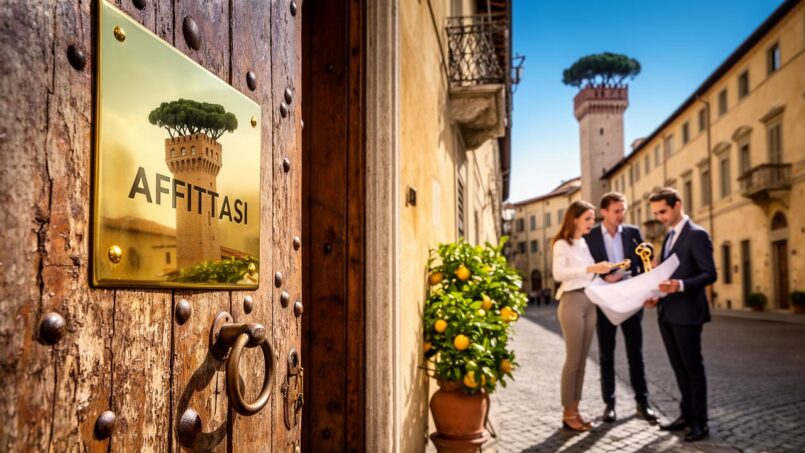
The Centro Storico, inside the walls, is the city’s showcase: nearly car-free cobbled alleys, medieval squares, churches on every corner, Via Fillungo as the shopping artery, Piazza dell’Anfiteatro, Torre Guinigi… and a UNESCO World Heritage status guaranteeing long-term protection of this heritage.
Unsurprisingly, it is the most expensive sector and the most contested:
| Zone / Indicator | Typical Value |
|---|---|
| Centro Storico average price | €3,300–€4,200/m² |
| Often cited range | €3,600–€3,800/m² |
| Recorded peak (Sept 2025) | ≈ €3,721/m² |
| Ultra-prime properties (exceptional streets) | > €10,000/m² possible |
| Typical entry ticket | €450,000–€1,200,000 for a spacious apartment |
| Example | 220 m² in a historic palace ≈ €480,000 (to renovate or dated) |
The advantages are clear: strong tourist demand, unique living environment, scarcity of supply (virtually no new construction), very liquid market for good products. On the flip side:
– little or no elevator in older buildings,
– complicated parking,
– very strict regulations on renovations (protected zone),
– gross yield generally lower than outside the walls.
This is typically a wealth-preservation sector: you buy a piece of history and a lifestyle first, and an income stream second.
Prestige real estate investment expert
The “Just Outside the Walls” Neighborhoods: Space/Price/Yield Compromise
A few hundred meters from the walls, several residential neighborhoods form a “belt” highly sought after by local families and expats who want convenience without giving up proximity to the center.
Main areas to consider:
| Neighborhood | Indicative price / m² | Profile and strengths |
|---|---|---|
| San Concordio | €2,100–€2,900/m² | South of the walls, near the train station, practical urban layout, shops, high demand, low vacancy |
| Sant’Anna / San Donato | €1,550–€2,080/m² | Family-friendly, good value for money, quick rentals |
| Arancio / San Filippo | €1,930–€2,610/m² (often €2,100–€2,200/m²) | East, near Porta Elisa and San Luca hospital, natural choice for families, medical staff, seniors |
| San Marco | €1,950–€2,650/m² | North/Northwest, quiet tree-lined streets, some villas, proximity to Serchio River |
| Borgo Giannotti | €2,600–€3,400/m² | Just north of the walls, very popular with expats, “small center” vibe |
Here, prices drop significantly compared to the center, while rents do not fall in the same proportions. Result: higher yields, often around 6% gross, or even more for smaller units. Rental vacancy remains low, with well-maintained properties finding tenants in two to six weeks.
These neighborhoods are the preferred playground for investors seeking a good balance between:
– long-term appreciation (proximity to the center),
– decent yield,
– possible use as a primary or secondary residence.
Hills, Countryside, and Outskirts: Villas, Farmhouses, and Large Spaces
As you move farther out to the hills or countryside, the market becomes more varied. It shifts from apartments to predominantly houses, farmhouses, village homes, and large villas.
Some key areas to consider for your project or analysis.
Defining long-term goals and the steps needed to achieve them, ensuring a clear vision and efficient resource allocation.
Identifying and evaluating potential threats to develop mitigation plans and ensure project resilience.
Optimizing the use of human, financial, and material resources to maximize efficiency and outcomes.
Establishing clear and effective communication channels to ensure transparency and alignment of all stakeholders.
Implementing processes to monitor and ensure deliverables meet defined standards and requirements.
Encouraging a culture of innovation and continuous improvement to adapt to changes and optimize performance.
| Rural / Suburban Area | Typical price / m² | Profile |
|---|---|---|
| Monte San Quirico | €2,000–€2,800/m² | Northwestern hills, villas with views, easy access to center |
| Sant’Alessio, Pieve Santo Stefano | Lower than center | Family-friendly, more affordable, sometimes eco-homes |
| Ponte a Moriano | €1,350–€1,650/m² | One of the cheapest sectors in the municipality, small budgets |
| Moriano / Brancoli | €1,250–€1,700/m² | Rural setting, houses with land |
| Far west/north of the province | ≈ €1,600/m² | Large spaces, very rural context |
In the wider province, towns like Barga, Castelnuovo, Bagni di Lucca, Capannori, Media Valle, or Garfagnana still offer stone farmhouses or restored village homes around €1,500/m².
These are ideal products for:
– vacation homes with large land,
– agritourism projects (agriturismo: budget €2,500–€3,500/m² for an operating estate),
– long-term purchase focused on quality of life.
For pure yield, however, these properties often suffer from:
– strong seasonality,
– high maintenance costs,
– longer vacancy,
– more complex management.
Versilia: The High-End Coastal Extension Connected to Lucca
Although Versilia is on the coast, its market is closely tied to Lucca’s. It attracts a similar international clientele, often willing to choose between historic center and beach.
Key towns:
| Versilia Locality | Price / m² (order of magnitude) | Special Features |
|---|---|---|
| Forte dei Marmi | Average ≈ €9,700/m², waterfront €10,000–€15,000/m² | Global luxury icon, designer boutiques, Villa Roma Imperiale, elite clientele |
| Viareggio | Seafront from €5,000/m² | Liberty villas, promenade (“passeggiata”), lively seaside atmosphere |
| Pietrasanta | €4,000–€5,000/m² for small villas | “Little Athens,” artistic hotspot |
| Camaiore / Lido di Camaiore | From €3,500/m² | Between sea and Apuan Alps |
| Capannori, Massarosa | Mixed markets, villas, hills | Good suburban and countryside opportunities |
Airbnb revenues are impressive in some spots: in Forte dei Marmi, average daily rate around €429 and annual revenue sometimes exceeding €85,000; Capannori reaching up to ~€81,500; Pietrasanta ~€42,400; Massarosa ~€49,300. These are more expensive, more seasonal markets, but very promising for large portfolios.
How Much Does a Property Cost in Lucca? Price Scales and Concrete Examples
To get a realistic idea of what you can buy, it helps to think in terms of both square meter and property type.
Average Prices and Ranges by Property Type
2025–2026 data allows us to draw up the following table:
| Property Type (approx.) | Typical Size | Indicative Price |
|---|---|---|
| Studio | ~45 m² | €70,000–€120,000 (often in outskirts, needs refresh) |
| Standard apartment | ~80 m² | €190,000–€230,000 |
| Townhouse | ~110 m² | €260,000–€380,000 |
| Single-family home | ~160 m² | €420,000–€750,000 |
| Villa | ~250 m² | €900,000–€2,000,000 |
| Luxury apartment Centro Storico | ~180 m² | €810,000–€1,100,000 |
| Luxury properties (historic villas, palazzi) | — | €800,000–€2,500,000, or even €10–20M for very large estates |
In practice, about 80% of residential properties for sale fall between €136,000 and €272,000, with a median price around €195,500 for a home of about 85 m².
Total Real Cost: Purchase Price, Fees, and Renovations
For a non-resident investor, you need to factor in: tax obligations and local regulations, appropriate investment strategy, currency risks, portfolio diversification, as well as market analysis of target markets.
– 10–20% in ancillary costs (notary, acquisition taxes, agency, lawyer),
– possibly renovation work, especially in older properties.
An apartment purchased for €170,000 can end up costing around €235,000 once ancillary costs are added, such as notary fees, agency fees, loan guarantees, and any renovation work.
– ≈ €17,000 in fees and taxes,
– ≈ €48,000 for light renovation (80 m²).
That’s nearly 38% more than the listing price. In Lucca, as everywhere in Italy, the “let’s see later” budget is often what derails projects.
Renting in Lucca: Yield, Tenant Profiles, and Dynamics
Lucca is neither a hyper-seasonal seaside resort nor an explosive university town. Rental demand is described as “stable rather than explosive,” but solid, driven by a mix of tourism, expats, remote workers, families, and professionals.
Rent Levels and Recent Trends
Rents have seen a good acceleration:
– around €11/m² per month for the city, with an average level recorded at €11.49/m² in September 2025,
– increase of about 10–14% year-over-year depending on sources, and +14.22% in 2025 according to one data series.
In the province, the average is higher (≈ €16.2/m²), driven by Versilia and some highly touristy towns.
Concretely, for long-term leases:
| Type of Rental | Average Monthly Rent (approx.) |
|---|---|
| 1-bedroom (55–65 m²) | €700–€900 (standard €700–€850, high-end €900–€1,100) |
| 2-bedroom | €900–€1,250 |
| 3-bedroom | €1,200–€1,700 |
| Average apartment (~65 m²) | €700–€800 |
| High-end (center / view / terrace) | from €1,300, possibly exceeding €1,800 |
Rents remain supported, especially in central neighborhoods and sought-after residential belts. Vacancies are rare if the price is consistent and the property in good condition.
Gross and Net Yields: What to Really Expect?
Yield figures should always be read with caution, distinguishing gross and net.
City-wide:
| Indicator | Typical Value |
|---|---|
| Average gross yield (city) | ≈ 5.8% (calculated on €2,320/m² and €11.17/m² rent) |
| Common gross yield range | 4.5–7.5% depending on sector and property type |
| Net operating yield (after expenses, before tax) | ≈ 3.6% (commonly 2.8–4.2%) |
| Net yield after tax (cedolare secca 21%) | ≈ 2.5% on average |
Differences are mainly linked to:
The profitability of a furnished rental investment depends on several key criteria: the property’s location (historic center, urban belt, or outskirts), the size of the unit (smaller spaces are generally more profitable), the type of operation (long-term vs. short-term rental), and the level of condominium fees (often higher in older buildings in the city center).
Yields by Property Size
Smaller units are structurally more profitable:
| Property Type | Indicative Gross Yield |
|---|---|
| Studio / 1-bedroom | 5.5–7.0% (6.2–7.0% frequently cited) |
| 2-bedroom | 4.8–5.5% |
| 3-bedroom | 4.0–5.0% |
| Villas | 3.5–4.6% |
The sweet spot in terms of yield per m² is around 35 to 60 m², ideal for singles, couples, remote workers, or small households.
Yields by Neighborhood
There are marked contrasts between the UNESCO center and more affordable areas:
| Zone | Gross Yield Profile |
|---|---|
| Centro Storico (prime streets: Piazza Anfiteatro, Via Fillungo…) | ≈ 4–4.5% (high prices, high rents but compressed ratio) |
| San Concordio, Sant’Anna, San Donato | ≈ 6–7% (some cases ≈ 6.5%) |
| Arancio, San Filippo, San Marco | ≈ 6–7.5% for well-located small units |
| Tempagnano, Picciorana, Antraccoli | ≈ 5.8% |
| Ponte a Moriano, Aquilea (more rural) | Up to ≈ 8% on very cheap small properties |
Local investors targeting yield generally prioritize the belt just outside the walls (San Concordio, Sant’Anna, San Marco, Arancio, San Filippo), where rents remain close to the center but prices per m² are much gentler.
Short-Term Rentals (Airbnb & co.): Potential and Limits
Lucca has become a “cult” cultural tourism destination for a sophisticated audience, driven notably by:
– its walls and charming pedestrian center,
– the Lucca Comics & Games festival (late October / early November),
– the Puccini festival and a dense cultural agenda,
– its role as a base for exploring Tuscany.
All of this fuels a thriving seasonal rental market.
Key Short-Term Rental Figures for Lucca
| Indicator (2025–early 2026) | Value |
|---|---|
| Active Airbnb listings | ≈ 1,645 (some counts go up to > 3,100 depending on scope) |
| Share of entire homes | ≈ 87% |
| Average capacity | 4.2 people |
| Median occupancy rate | ≈ 61% (55–60% annual average) |
| Average daily rate (ADR) | €129–€130 (frequently €125–€160) |
| Median annual revenue | ≈ €29,000 (1-year change: +14.3%) |
| Nightly price range | €70–€90 (outskirts studios) to > €200 (prime intra-muros) |
In high season (summer, September, event periods), indicators go even higher: ADR around €200–€230, monthly revenues above €3,500–€4,000, with occupancy rates exceeding 50%.
A well-managed apartment inside the walls can expect capital appreciation, increased rental appeal, and optimal preservation of its historic character, all while benefiting from the advantages and unique living environment offered by this protected sector.
– €18,000–€25,000 in annual revenue,
– a gross yield of 7–11% depending on purchase price.
But you must factor in:
– heavy operating costs (cleaning, management, higher energy consumption),
– platform fees (3–15% depending on model),
– possibly 20–30% management commission if you fully delegate.
Once everything is deducted, the advantage over long-term rental diminishes, especially for an investor paying a professional manager.
Who Rents in Lucca?
Tenant profiles are varied, which secures the market:
– long-term tenants: local families, public and private sector employees, San Luca hospital staff, Northern European remote workers, couples in transition, transient students,
– tourists: couples and families seeking historic charm, festival enthusiasts, travelers wanting to avoid Florence crowds,
– expats: retirees or affluent professionals looking for a year-round or multi-month base, appreciating the existing international community.
The long-term vacancy rate is estimated at 3–6% (or 2 to 3 weeks empty per year), equally for “standard” rentals and quality furnished ones.
Holding Costs: What a Property Earns… and What It Costs
To assess an investment, you must compare gross yield against all expense items: taxes, condominium fees, maintenance, energy, management.
Recurring Local Taxes: IMU and TARI
Two main taxes affect a non-resident owner’s life:
| Tax | Role | Order of Magnitude |
|---|---|---|
| IMU (Imposta Municipale Unica) | Property tax on non-primary residences | Rate in Lucca ≈ 1.06% of cadastral value |
| TARI | Waste tax | €200–€300/year for an apartment, €300–€450/year for a villa |
For an 80 m² apartment in the city:
– Typical IMU: €800–€1,200/year,
– TARI: €200–€300/year.
If the property is rented as a primary residence under a regulated contract (canone concordato), the IMU rate can be reduced (e.g., to 0.56%), significantly improving the net.
Condominium Fees and Maintenance
Condominium fees cover common area maintenance, elevators, cleaning, administration. Typical ranges:
| Item | Indicative Amount |
|---|---|
| Condominium fees (standard apartment) | €50–€150/month (≈ €600–€1,800/year) |
| Fees in upscale condos (pool, concierge…) | > €300–€500/month possible |
| Recommended maintenance fund (apartment) | ≈ €500/year minimum |
| Recommended maintenance fund (villa) | ≈ €2,000/year (≈ 1% of value) |
For an 80 m² second home, a realistic annual cost estimate (excluding mortgage) is €4,500–€5,000 (IMU, TARI, fees, energy, insurance, maintenance). For a 150 m² villa, the bill climbs to €6,500–€7,500.
Energy, Water, Internet, Insurance
Operating costs vary by usage (secondary residence vs. intensive rental):
– electricity: subscription + consumption, often €40–€70/month just in fixed fees for 3–6 kW; consumption at €0.13–€0.17/kWh,
– gas: €700–€1,200/year, with winter bills significantly higher,
– water: a few hundred euros per year (€30–€60/month on average),
– internet: €25–€40/month for unlimited fiber,
– home insurance: €300–€600/year typically, with concrete examples at €400/year for a 2-room in Lucca.
For short-term rentals, total monthly costs can reach €800–€1,400, especially with frequent cleaning, linen, accelerated maintenance.
Rental Management
Depending on whether you manage yourself or delegate, the impact on profitability changes:
| Management Type | Usual Cost |
|---|---|
| Long-term rental management | 6–10% of collected rents (sometimes 8–12%) |
| Seasonal rental (Airbnb etc.) | 15–25% of turnover for full management |
| Tenant placement | ≈ 1 month’s rent |
For a non-resident investor who doesn’t speak Italian, it is often better to pay a manager, even if it means a more modest net yield, but a truly passive investment.
Taxes: What a Non-Resident Buying in Lucca Needs to Know
Italy is a complex fiscal democracy, but more transparent than one might imagine if properly assisted. For a foreigner investing in Lucca, a few structuring principles apply.
Purchase: Registration Duties and VAT
Two main cases:
– 1. Purchase from a private individual
– No VAT.
– Registration duty (Imposta di Registro) calculated on cadastral value (often lower than market value).
– Standard rate of 9% for a second home or non-resident.
– Cadastral and mortgage taxes generally fixed (a few hundred euros each).
– 2. Purchase from a developer / company
– VAT (IVA) applied to the price: 4%, 10%, or 22% depending on property type and use (primary residence, secondary, luxury).
– Reduced registration duties.
An Italian tax resident can benefit from a reduced rate (2% registration duty or VAT at 4%) for the purchase of a “prima casa” (primary residence). However, a non-resident buying a property to use as a vacation home is generally not eligible for this advantageous tax regime.
Tax on Rental Income: IRPEF or Flat Tax “Cedolare Secca”
Two regimes coexist:
– Classic IRPEF Net rental income (after deduction and deductible expenses) is added to other income and taxed by brackets:
– 23% up to €28,000,
– 35% up to €50,000,
– 43% above. Advantage: possibility to deduct certain expenses (maintenance, management).
– Cedolare secca Flat tax on gross rent (21% most often, sometimes 10% on certain regulated leases). Advantages:
– simplicity,
– no registration tax on the lease,
– no contractual rent increase during the lease term.
For many non-resident investors, the 21% regime is attractive: combined with a gross yield of about 5.5–6%, it results in a net after-tax yield of about 2.5–3%.
Capital Gains: Limited Taxation if You Are Patient
The rule is simple and very favorable for long-term investments:
For a non-resident individual, capital gains from the sale of real estate are generally tax-exempt after 5 years of ownership. This exemption does not apply in cases of complex structures via companies or in certain specific cases provided by law.
– sale before 5 years:
– capital gain subject to a 26% tax,
– calculated on the difference between sale price and purchase price (increased by certain eligible costs).
This rule does not apply to “indirect” capital gains from the sale of shares in companies that primarily hold Italian real estate, where Italy may tax even beyond 5 years.
Double Taxation and Treaties
Italy has signed tax treaties with over 100 countries, including France, Switzerland, Belgium, Canada, the United States…
In practice:
– Italy retains the right to tax rental income and capital gains on properties located in Lucca,
– the investor’s country of tax residence accounts for taxes already paid in Italy through a tax credit mechanism.
It is essential to coordinate your strategy with a tax professional familiar with both systems, Italian and that of your country of residence.
Purchase Process in Lucca: From Scouting to Handover
The Italian procedure is codified and relatively secure, provided you follow a few essential steps.
Key Steps of the Transaction
1. Clarify your project Type of property (apartment, house, farmhouse), use (secondary residence, rental, mixed), total budget (including fees and renovations), financing needs, target neighborhood.
2. Targeted market study Compare prices/m², rent levels, urban projects (San Concordio for example will host 248 new homes and 33,000 m² of commercial space), and renovation constraints especially in the Centro Storico.
For a successful real estate purchase in Italy, it is essential to surround yourself with the right professionals. Here are the main contacts to include in your project.
Your first point of contact on the ground. They guide you through searching, viewings, and negotiations, overcoming language barriers.
Essential public officer. They draft the final deed of sale, verify the legality of the transaction, and register it with the land registry.
Personal legal counsel to review contracts, verify property titles, and protect your interests throughout the process.
Technical and cadastral expert. They perform legal checks, surveys, and can handle building permit applications if needed.
Key contact if you need financing. They help you obtain a mortgage suited to your situation, in Italy or from abroad.
Recommended professional to secure your budget. They allow you to lock in a favorable exchange rate between the euro and your currency, limiting fluctuation risks.
4. Viewings and preliminary due diligence Ideally outside high season to better assess nuisances. For rural homes, check access, utilities, mobile coverage, risks (landslides, etc.).
5. Purchase offer (proposta d’acquisto) Written document, often accompanied by a deposit held in escrow, which will be integrated into the preliminary contract if the seller accepts.
6. Preliminary contract (compromesso or contratto preliminare) Contract detailing price, deadlines, conditions, with a deposit of 5 to 30%. At this stage, in-depth due diligence (urban planning, cadastre, conformity of past work) must be completed.
Percentage of the property value that can be covered by a mortgage for a non-resident buying in Italy.
8. Final deed (rogito) Signed before the notary, who verifies property titles, mortgages, cadastral situation. At this point, the balance of the price, acquisition taxes, and fees are paid.
– 9. After purchase
– transfer or open contracts for electricity, gas, water, internet,
– TARI declaration within 60 days to the municipality,
– choose home insurance,
– if renting: register leases or follow specific procedures for tourist rentals.
Renovations and Constraints in Lucca’s Historic Center
Lucca’s charm has a price: extremely strict urban planning regulations, especially in the Centro Storico and protected areas.
A Classified and Highly Regulated Center
The center is both: large, modern, and accessible.
– UNESCO zone,
– “Zona A” under Italian urban planning (high historical/artistic value),
– area under supervision of the Soprintendenza (heritage authority).
Consequences:
In a protected sector, there is no freedom with facades (plasters, colors, shutters, windows, roofs…). The use of traditional materials and techniques is often required, along with the obligation to preserve original structures and decorative elements. Specific authorizations are needed for almost anything affecting the exterior.
Types of Work Permits
Three main procedures exist in Italy:
| Procedure | Usage | Timeline and Constraints |
|---|---|---|
| Permesso di Costruire | Major transformations (volume, structure, facade) | Full municipal review, 3 to 9 months, longer in protected zones |
| SCIA | Work affecting structure/stability but without changing overall volume | Declaration; work can start immediately but municipality has 30 days to object |
| CILA | Interior work without structural impact | Simple declaration, work can start immediately (but requires a qualified professional) |
Some minor interventions (interior painting, floor replacement, electrical updates within the same layout) are exempt from permits, but do not touch the facade or roof in the Centro Storico without authorization.
Before any submission, a geometra must verify:
– the consistency between the actual state and the plans filed with the municipality/cadastre,
– the regularity of any past work (sometimes requiring recourse to the amnesty law known as “Salva Casa”).
Implications for an Investor
Renovating an apartment inside the walls is nothing like freshening up a two-room in the suburbs:
Renovating an older property involves potentially higher costs (materials, skilled artisans) and longer timelines. You also need to anticipate risks of unpleasant surprises, such as undeclared past work, humidity issues, or roofs needing replacement. It is essential to properly frame the overall budget, accounting for both renovation expenses and the costs related to administrative procedures.
On the flip side, a property renovated according to regulations, with good energy performance for its time, generally sells very well and attracts high-end clientele (international buyers, affluent retirees, premium tenants).
Investment Strategies in Lucca: Which Profile for Which Project?
Lucca is not suitable for all investors. It is especially suited for those who prioritize:
– quality of life,
– long-term capital preservation,
– a decent but not explosive yield,
– an attachment to a specific place rather than pure financial arbitrage.
Nevertheless, we can distinguish several coherent strategies.
1. “Heritage-Historic Center” Strategy
Target:
– Character apartment in the Centro Storico (60–120 m²),
– Ideally renovated or to be renovated ambitiously,
– Potential for mixed use: personal stay + seasonal or long-term furnished rental.
Investor profile:
– Established portfolio,
– Seeking a prestigious pied-à-terre,
– Accepts a moderate gross yield (4–5%).
Strengths:
– Strong long-term heritage value,
– Very good resale liquidity for quality products,
– Personal enjoyment of a very pleasant daily life in the city.
Caution points:
– High price per m²,
– Potentially significant maintenance costs,
– More complex regulatory work,
– Limited net yield, especially with delegated management.
2. “Yield Residential Belt” Strategy
Target:
Discover our selection of apartments in different neighborhoods of Lucca, combining comfort, accessibility, and proximity to amenities.
Spacious apartments from 35 to 70 m², suited to different needs, located in the San Concordio, Sant’Anna, San Marco, Arancio, and San Filippo neighborhoods.
Properties from buildings constructed between the 1960s and 2000, as well as more recent constructions for a modern living environment.
Sectors well served by public transport and benefiting from local shops for daily needs.
Investor profile:
– Searching for regular cash flow,
– Middle-range budget,
– Accepts a less “postcard” environment, but practical.
Strengths:
– Gross yields reaching 6–7% on small units,
– Low vacancy,
– Strong demand from local tenants and expats,
– Renovation and condominium costs often more contained than in the hyper-center.
Caution points:
– Pay attention to the building’s energy quality (Italian EPC),
– Crucial importance of micro-location (street, orientation, nuisances),
– Avoid condominiums with a liability for heavy unfunded works.
3. “Country House / Agritourism” Strategy
Target:
– Restored farmhouses, country houses, small vineyards,
– In the province (Barga, Bagni di Lucca, Garfagnana, Lucca hills).
Investor profile:
This project suits people with a lifestyle or semi-professional project, willing to manage an activity like agritourism, guest houses, or themed stays. It also requires good tolerance for seasons and the inherent uncertainties of the agricultural and tourism sectors.
Strengths:
– Still reasonable price per m² (from €1,500/m² for renovated properties),
– Potential for significant income if the project is well positioned,
– Exceptional quality of life.
Caution points:
– Structural maintenance costs (roofs, terraces, retaining walls…),
– Natural risks (landslides, difficult access roads),
– Need for strong local presence or a very solid manager,
– Sometimes more complex financing.
4. “Versilia Luxury + Lucca Base” Strategy
For some large portfolios, the optimal equation may be to:
– hold a very high appreciation-potential asset on the coast (villa or large apartment in Forte dei Marmi, Pietrasanta, Viareggio),
– complement it with a more rational property in Lucca (belt apartment or small intra-muros pied-à-terre).
This combination allows:
– capturing the appreciation potential and very high seasonal income of Versilia,
– while having a more stable and less seasonal asset in Lucca.
Risks, Pitfalls, and Watchpoints
Even though the Lucca market is considered resilient, it is not without risks.
Among the main pitfalls observed among foreign buyers:
Buying a second home in Italy carries specific risks. You need to anticipate annual ancillary costs that can reach 1 to 3% of the property’s value (taxes, maintenance, condominium). Verify the conformity of work to avoid illegal extensions that can block a mortgage or resale. Carefully evaluate the rental potential (Airbnb), as the market can be saturated and management is time-consuming. Properly understand Italian tax rules and obligations. Finally, allow for administrative and banking delays that are longer than expected.
One final risk concerns interest rates: the current market benefits from mortgage rates stabilized around 3% APR for Italy in 2026, against a backdrop of European monetary easing (ECB deposit rate lowered to 2% in 2025). A sharp reversal of rates could weigh on prices, although Lucca should hold up better than more speculative markets.
Should You Invest in Lucca Today?
The answer depends less on price curves than on the investor’s profile.
Lucca is consistent for: integrating sustainable principles into its agricultural practices, valuing local products, and supporting independent producers.
– someone who wants to diversify their portfolio in the eurozone, in a historic city with strong international appeal,
– a couple or family considering mixed use: secondary residence + occasional rentals,
– a patient investor, aiming for 7–10 years of ownership or more, prioritizing capital preservation over speculation,
– buyers seeking a cultural and livable city, less saturated than Florence, but lively enough to avoid off-season boredom.
It is less suited for:
Those seeking maximum short-term cash flow, adopting purely opportunistic strategies betting on a strong quick resale, or launching very aggressive Airbnb projects without a safety margin on costs, expose themselves to high financial risks. These approaches, often lacking long-term planning and financial buffers, can lead to difficulties in a market downturn, rental vacancies, or rising expenses.
In summary, investing in Lucca real estate means betting on a more intimate Tuscany, more “livable” than some star-studded destinations. It is a market where careful neighborhood selection, the intrinsic quality of the property, and rigor in the numbers make the difference between a great wealth-building operation and a source of headaches.
For those willing to embrace the Italian logic – a bit of slowness, plenty of paperwork, but an incomparable living environment – Lucca can become not only a sensible investment, but also a place where you genuinely want to spend time. And it is often that detail, beyond the spreadsheets, that makes a successful real estate purchase abroad sustainable in the long run.
A wealth project or a question? Contact us now to speak with a wealth management expert.
Disclaimer: The information provided on this website is for informational purposes only and does not constitute financial, legal, or professional advice. We encourage you to consult qualified experts before making any investment, real estate, or expatriation decisions. Although we strive to maintain up-to-date and accurate information, we do not guarantee the completeness, accuracy, or timeliness of the proposed content. As investment and expatriation involve risks, we disclaim any liability for potential losses or damages arising from the use of this site. Your use of this site confirms your acceptance of these terms and your understanding of the associated risks.

Cyril Jarnias is an independent expert in international wealth management with over 20 years of experience. As an expatriate himself, he is dedicated to helping individuals and business leaders build, protect, and pass on their wealth with complete peace of mind.
On his website, cyriljarnias.com, he shares his expertise on international real estate, offshore company formation, and expatriation.
Thanks to his expertise, he offers sound advice to optimize his clients' wealth management. Cyril Jarnias is also recognized for his appearances in many prestigious media outlets such as BFM Business, les Français de l’étranger, Le Figaro, Les Echos, and Mieux vivre votre argent, where he shares his knowledge and know-how in wealth management.





