
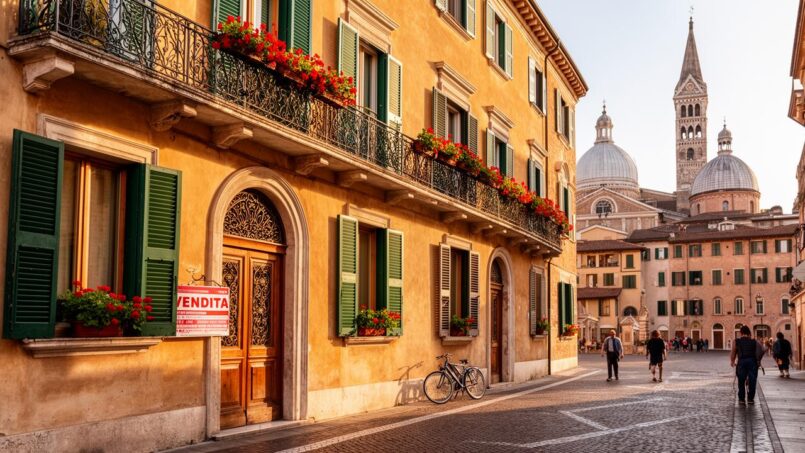
 Published on and written by Cyril Jarnias
Padua checks almost every box of the ideal city for a real estate investor: a solid market, attractive rental yields, strong demand driven by a world-class university and a major hospital hub, large infrastructure projects, proactive urban planning, and a very high quality of life. In an Italian context where prices are slightly declining nationally, Padua stands out as a dynamic exception, with rising values and unwavering demand.
This article analyzes the Padua real estate market with the latest data. It details the reasons to invest, the neighborhoods and property types to prioritize, expected returns, and administrative steps to anticipate.
A “Blue Chip” Market in the Heart of Veneto
Veneto is one of Europe’s most productive regions, with a dense industrial fabric, a diversified economy, top-tier infrastructure, and a high standard of living. Within this already highly attractive region, Padua stands out as one of the strongest markets in the country. Professionals describe it as a “blue-chip city”: a quality market that is liquid, resilient, and capable of steady growth.
Average price per square meter in the municipality of Padua, up 7.68% year-over-year.
Regional stability plays a key role: Veneto is known for its ability to absorb shocks, with real estate values maintaining a predictable upward trend over the long term rather than violent cycles. Add to that Padua’s strategic location, in the heart of Triveneto, close to Venice, served by two major regional airports and soon by a new high-speed line to Verona.
Key Figures for the Padua Market
For an investor, the first question is quantitative: how much does a property cost, how much rent can be generated, and what gross yield does that produce?
Prices, Rents, and Average Yield
For the city of Padua, the current ranges are as follows:
| Indicator (Municipality of Padua) | Average Value |
|---|---|
| Average price per m² (sale) | €2,455 |
| Average property price | €299,000 |
| Average monthly rent | €1,100 |
| Average rent per m² | €14.13/m² |
| Average gross rental yield | 5.83% |
| Payback period (price/annual rent) | 22.7 years |
| Market activity index | 43% |
These figures place Padua in a very attractive range: gross yields clearly exceed those of historic centers in cities like Milan or Florence, while remaining in a market considered highly safe and liquid. For reference, the average gross yield across major Italian neighborhoods is around 4.74%, with a median price around €376,000. Padua thus outperforms this average yield while remaining more affordable than major capitals.
In the province of Padua, the numbers are slightly different, but equally attractive:
| Indicator (Province of Padua) | Average Value |
|---|---|
| Average price per m² (sale) | €1,907 |
| Average property price | €258,000 |
| Average monthly rent | €1,000 |
| Average rent per m² | €12.79/m² |
| Average gross rental yield | 6.35% |
| Payback period (price/annual rent) | 21.5 years |
| Market activity index | 43% |
You can immediately see the possible trade-off: stay within the city to benefit from very liquid demand and stronger appreciation, or expand to the province to further optimize gross yield.
Property Types: Where Is the Best Price/Yield Ratio?
Analyzing by apartment type within the city of Padua helps target the most efficient segments.
| Property Type | Average Sale Price | Average Monthly Rent | Average Gross Yield |
|---|---|---|---|
| Studio | €180,000 | €730 | 4.83% |
| 1-bedroom (T2) | €107,000 | €700 | 7.85% |
| 2-bedroom (T3) | €160,500 | €950 | 7.10% |
| 3-bedroom (T4) | €285,000 | €1,200 | 5.05% |
| 4+ bedroom | €340,000 | €1,350 | 4.76% |
Smaller units, especially one-bedroom apartments, offer the best gross yields, well above 7%. Well-located two-bedroom units thus represent a flagship product for rental investment, particularly targeting students, young professionals, and couples without children.
Studios, while expensive per square meter, offer a slightly lower gross yield. Conversely, larger apartments, which are more expensive to purchase, see their yield diluted despite existing demand, especially for shared housing or large families.
In the province, the ranges are comparable but with a slight yield premium, especially for 2- and 3-bedroom units:
| Property Type (Province) | Average Sale Price | Average Monthly Rent | Average Gross Yield |
|---|---|---|---|
| Studio | €180,000 | €700 | 4.67% |
| 1-bedroom | €118,000 | €700 | 7.12% |
| 2-bedroom | €143,000 | €880 | 7.34% |
| 3-bedroom | €215,000 | €1,100 | 6.14% |
| 4+ bedroom | €290,000 | €1,300 | 5.38% |
For a purely “rental yield” investor, the core target is clearly the 1- to 2-bedroom segment, both in Padua and the rest of the province.
Structural and Diversified Rental Demand
What truly sets Padua apart from other Italian markets is the strength and diversity of rental demand.
The city hosts approximately 64,000 students at the University of Padua, of which about 10% are international. The university is among the oldest and most prestigious in Europe, with a strong reputation in sciences, engineering, medicine, and research. Alongside this academic base is a top-tier hospital hub at the European level, as well as a network of companies and research centers attracting researchers, doctors, engineers, and executives.
Number of inhabitants in the province feeding the residential market, of which 200,000 reside in the capital.
Demand therefore comes from:
– students, with a chronic shortage of university beds relative to needs;
– young professionals and workers, attracted by quality of life, proximity to Venice, and Veneto’s economic dynamism;
– local families, who are mostly homeowners but also drive the medium- and long-term rental market;
– expats and international executives, often linked to universities, hospitals, or large companies.
This diversity of profiles secures the market: Padua depends neither exclusively on tourism nor on a single economic sector. As a result, it resists exogenous shocks better.
Neighborhoods and Micro-Markets: Where to Invest in Padua?
The gap in prices and yields within the city can be considerable. This is where the difference between an average investment and a truly high-performing deal lies.
Historic Center and Premium Hypercenter
The Piazze – Duomo – Santo – Santa Sofia – Altinate – Savonarola – Ponte Molino area represents the top of the price pyramid. Here we see:
– an average sale price of about €3,494/m²;
– an average rent of about €15.94/m².
The center offers an exceptional architectural setting, vibrant pedestrian and commercial life, and an ideal location for high-end tenants: doctors, university professors, executives, expats. It is a wealth appreciation zone, with very stable rental demand but a gross yield somewhat compressed compared to emerging neighborhoods.
Just a few steps away, areas like Prato della Valle, Pontecorvo, Santa Croce, or Città Giardino also show high prices (over €3,300/m² on average), confirming this central gradient.
Arcella: The Laboratory of Padua’s Gentrification
Arcella is probably the neighborhood most discussed by investors. Long perceived as working-class and a bit rough, this large northern area has undergone a clear gentrification process in recent years. Prices here remain among the lowest in the city, around €1,770/m², roughly 50% less than the historic center, but gross yields are particularly attractive.
Data indicates for Arcella gross yields of 5.5% to 7%, driven by strong student demand and young workers in shared housing. The neighborhood has a direct connection to the train station and tram, and is explicitly targeted by urban renewal and mobility projects, including tram network extension, new green spaces, and a pedestrian bridge to the station.
The dynamic is such that some neighboring micro-areas, like Mortise–Brenta, recorded the highest price increase in Italy over one year, with a surge of +41.3% and an average price now around €1,844/m². For an investor with a 5–10 year horizon, Arcella and its fringes appear as areas with strong revaluation potential, provided the location and building quality are well chosen.
Portello and the “University Corridor”
The Portello area, to the east, adjacent to the large university campuses and the hospital, is the other major hub for student rentals and young researchers. This “university corridor” has seen prices rise 20–25% over the past five years, with an annual increase of around 7.6% recently.
Investing in housing located in immediate proximity to universities or hospitals is a solid strategy. Demand there is nearly inelastic: students absolutely need a walkable distance to campus and services, while hospital residents prioritize closeness for comfort and time savings on commutes. These properties offer more reasonable values than the hypercenter, while benefiting from excellent liquidity and very low vacancy risk.
Projections suggest a further 4–6% annual increase in the coming years in this university corridor, supported by the university’s continued expansion and the arrival of new infrastructure (notably the tram extension and, at the regional level, the Verona–Padua high-speed line).
Industrial and Peripheral Zones: Low Prices, Different Profile
At the other end of the spectrum, areas like Camin – Industrial Zone show floor prices around €1,623/m² and significantly lower rents (about €9–10/m²). These zones, heavily oriented toward logistics or commercial activity, may interest investors in business real estate (warehouses, offices, shops), but are not the core target for a classic residential investor, except for specific strategies (worker shared housing, last-mile logistics, etc.).
Other second-ring residential neighborhoods (Chiesanuova–Brusegana, Guizza–Crocifisso–Voltabarozzo, Mandria–Paltana, Santa Rita–Forcellini…) offer a balance between prices more accessible than the center and good quality of life, with solid yields around the city average. They are well suited for a family strategy or long-term rental.
An Urban Environment Undergoing Deep Transformation
Investing in Padua today also means betting on a highly structured city plan. The new “Piano degli Interventi” (Intervention Plan) decisively turns the page on the chaotic post-war expansion model, adopting a vision of an archipelago city and a “15-minute city.”
The goal is clear: concentrate resources on redeveloping existing urban fabric, drastically reduce land consumption, intelligently densify around neighborhood centers, and improve quality of life on foot or by bike.
Quantified objectives include:
– 63% reduction in land consumption compared to the previous plan;
– redevelopment of 550,000 m² of brownfields or underused areas;
– 23 km of new tram lines;
– 56 km of orbital cycling belt;
– 55 new pedestrian zones and 65 new squares;
– creation or strengthening of 170 hectares of green corridors;
– 100,000 m² of new public parks and gardens;
– planting of 40,000 new trees (including 10,000 as part of the PadovaO2 program);
– 350 hectares returned to agriculture;
– annual reduction of 600 tons of CO₂.
A policy of massive investment in soft mobility, neighborhood parks, soil de-sealing (with the transformation of 50 hectares of parking lots) and local services. This urban renewal approach tends to favor the appreciation of real estate located in or near these newly developed centers.
The Train Station and the Metropolitan “Gateway” Project
The Padua train station area perfectly illustrates this strategy. Currently perceived as a somewhat heterogeneous transit zone, this large site is at the heart of a master plan aimed at turning it into a true mixed-use neighborhood: housing, services, public spaces, culture, soft mobility.
The objectives are ambitious:
– creation of over 90,000 m² of new green spaces (increasing permeable surfaces from 5% to 80%);
– planting of over 6,200 trees;
– 3,200 meters of new bike lanes and pedestrian paths;
– capacity to accommodate approximately 2,000 new residents;
– construction of a pedestrian bridge with a bioclimatic greenhouse crossing the railway tracks to connect the station to Arcella and a new square for the future high-speed train station.
This is the amount, in billions of euros, invested in the Verona-Padua high-speed line, a major regional project.
Campus, Fairs, and New Attraction Poles
In parallel, the city and private players are investing in major projects that strengthen the base of rental demand. Notable examples include:
– the new engineering hub of the University of Padua at the Fair site, a cross-laminated timber building certified LEED Platinum, covering 7,200 m², capable of hosting 3,000 students;
– the strategic plan for Padova Hall (Padua Fairgrounds), with €48.5 million in investments to transform the exhibition center into a true innovation district (E-Sports Arena, hotel, coworking spaces, 17,000 m² of photovoltaics, etc.);
– redevelopment programs like Castello dei Carraresi (creation of a major cultural hub), the extension of Parco Iris (which will become the city’s largest park, increasing from 68,900 to 251,100 m²), or the completion of the “bicipolitana” (structuring bike network), partially funded by the PNRR (National Recovery and Resilience Plan).
These projects not only create jobs and foot traffic but also improve residential attractiveness of surrounding neighborhoods, further boosting the dynamic of real estate values.
A Structural Shortage of Student Accommodation: Massive Opportunity
For anyone interested in rental investment, the student housing market in Padua is a chapter unto itself. Across Italy, the number of student beds is around 83,000 to 85,000 nationwide, while the student population is booming. The provision rate (beds/students) barely exceeds 4%, compared to over 30% in the United Kingdom.
This is the growth, in percentage, of university enrollments in Padua in one year, one of the highest in the country, exacerbating the housing shortage.
This tension mechanically fuels demand on the private market, especially in and around the university corridor, Portello, the center, and Arcella. Students, both Italian and international, turn to agencies, platforms (HousingAnywhere, among others), and shared housing offers.
Large institutional investors have clearly identified this niche. Several private student residence projects or public-private partnerships are underway or already delivered, such as:
University residence projects funded or in development, aiming to significantly increase the supply of beds by 2027.
204 beds located in the heart of the city. This project is funded by the NextGenerationEU plan.
230 beds over 8,000 m², built on an industrial brownfield abandoned for more than twenty years.
New project led by a specialized British operator, on land acquired by Castello SGR.
Approximately 2,000 new student beds planned by 2027, spread across 12 new residences, 8 of which will exceed 300 beds.
Even with these new projects, the provision rate will only climb back to levels still well below Northern European standards. Analysts estimate that, for private investors, renting to students will therefore remain a viable long-term strategy, with very limited vacancy risk and a yield premium over classic residential rentals.
Yields, Scenarios, and Five-Year Outlook
Available data for Padua indicates a gross yield range from about 3.5% in the most premium or poorly calibrated segments, to over 9% in the best combinations of neighborhood/type/purchase price. In practice, a savvy investor will focus on a range around 5.5–7.5%, consistent with market quality and reasonable risk management.
Projections based on current and anticipated macroeconomic conditions for the coming years.
Scenario based on an expected decrease in interest rates, stimulating economic activity and investment.
Anticipation of a recovery in the mortgage sector, driven by rate trends and demand.
Continued market tightness due to limited new housing supply.
Impact of planned major infrastructure projects on regional dynamism and property values.
– Soft landing (central scenario, 60% probability): price growth moderates to around +1 to +2% per year starting in 2027, but transaction volumes stabilize and rental yields remain solid;
– New mini upcycle (20%): if the European Central Bank cuts rates more aggressively, an influx of solvent demand could accelerate prices by 5–7% per year, especially in transitioning neighborhoods (Arcella, Portello, train station);
– Moderate correction (20%): in case of a severe economic shock, prices could decline 5–10% over 12–18 months, particularly on “lower-end” products in the periphery. Central, university, and hospital neighborhoods would be most resilient.
Percentage of total return (capital gains and rents) realistically achievable over five years for a real estate investment in Padua with moderate leverage and rigorous selection.
Financing an Investment in Padua as a Foreigner
Italy does not prohibit foreigners from owning property, provided there is legal “reciprocity” between Italy and the investor’s country of origin (principle established in Article 16 of the “Preleggi” of the Civil Code). For citizens of the European Union and the European Economic Area, as well as long-term residents in Italy, this reciprocity constraint does not apply: they can purchase under the same conditions as Italians.
For a non-resident investor, the key steps are as follows:
To purchase real estate in Italy, several steps are mandatory: obtaining a codice fiscale (Italian tax identification number), essential for any transaction and for opening a bank account. Then, open an account with an Italian bank, which will be used to receive any loan and make payments related to the acquisition. Choosing an Italian notary is also mandatory for drafting and registering the deed of sale. Finally, a financing request (mortgage) may be necessary.
Italian banks are willing to lend to non-residents, but with more cautious conditions: the loan-to-value (LTV) ratio is generally between 50% and 70%, compared to 70–80% (or more) for residents. Interest rates, slightly easing, are around 3.5–4% for residents in 2025, with a small premium for non-residents (starting at around 3.8% with banks like Intesa Sanpaolo or UniCredit, depending on the case).
To qualify for a loan, the monthly payment generally should not exceed 30% to 35% of monthly net income, including any other outstanding credit. Furthermore, a personal down payment of 40% to 50% of the purchase price is often required to secure the best conditions, especially for buyers residing outside the Eurozone.
For investors who want exposure to Padua without tying up all their savings, local financing allows them to benefit from leverage in a currency (the euro) that will also be the currency of the rents, thus avoiding exchange rate risk. However, one should anticipate a substantial documentation file (proof of income, tax returns, bank statements, certified translation of some documents, etc.) and a timeline of 2 to 3 months between the preliminary agreement and the final deed when the sale is conditional on obtaining the mortgage.
Taxation: Acquisition Costs, Rents, and Capital Gains
A real estate purchase in Italy involves fees and taxes that must be integrated into the business plan.
Upon Acquisition
The major element is the imposta di registro (registration tax), calculated on the cadastral value (generally 30–60% lower than the market value):
– 2% for a primary residence (prima casa) if conditions are met (establish residence in the municipality within 18 months, not own another residence in the same municipality, property not classified as luxury);
– 9% for a secondary residence or investment property.
Add to this a mortgage tax and a cadastral tax, often fixed amounts (€50 each if purchasing from a private individual), and the notary’s fees, generally around 1–2.5% of the price.
When purchasing a new home from a developer subject to VAT, the buyer pays this VAT instead of the registration tax. Applicable rates are: 4% for a ‘prima casa’ (primary residence), 10% for most other homes, and 22% for properties considered luxury.
In practice, one should budget for total costs (taxes, notary, agency) representing 10–15% of the net seller’s price.
During Ownership
The owner pays each year:
– IMU, the municipal property tax, applicable mainly to secondary residences and luxury properties (the non-luxury primary residence is generally exempt);
– TARI, the waste collection tax.
The calculation of IMU is based on the enhanced cadastral income, multiplied by a coefficient (160 for homes) and then by the rate set by the municipality, generally between 0.40% and 1.06%. In Padua, as elsewhere, the owner must perform the calculation and payment themselves using the F24 form, as the administration does not send an automatic bill.
On Rents
Rental income can be taxed under the progressive IRPEF system (23%, 33%, or 43% depending on income brackets), plus regional and municipal surtaxes, or via a flat-rate regime called cedolare secca:
– standard rate of 21% for most residential leases;
– reduced rate of 10% for certain agreed-rent leases.
This substitute regime replaces IRPEF and surtaxes on rents but does not allow deduction of expenses. It also exempts from certain registration and stamp duties on the lease. For short-term rentals, the flat rate is 26%. It is possible to maintain the 21% rate on a single property, provided you do not exceed two properties in short-term rental and do not carry out the activity professionally.
On Resale
Capital gains realized by an individual are generally taxed at 26%, unless the property has been held for more than five years or used as a primary residence. In these cases, the gain is exempt. For an investor buying today in Padua with a long horizon, this exemption can be an important optimization tool, especially if anticipating a 15–25% price increase over five years in the best sectors.
Winning Investment Strategies in Padua
Based on the Padua market data, several typical strategies emerge, depending on the investor profile, risk appetite, investment horizon, and access to financing.
1. Renovated 1- or 2-Bedroom Near the University or Hospital
This is arguably the most “core” strategy for an investor, Italian or foreign: target a one- or two-bedroom apartment, renovated or to be renovated, in the university corridor (Portello, Stanga, areas near hospitals), for renting to master’s students, PhD candidates, or young doctors.
The advantages are numerous:
– gross yields often between 6.5% and 7.5%;
– virtually zero vacancy due to demand pressure;
– expected capital gains above the city average (20–25% over five years recently observed);
– relatively simple management (9–12 month leases, strong demand for shared housing).
The entry ticket remains affordable: renovated apartments of this type generally range from €150,000 to €260,000, depending on size and micro-location.
2. A4-Class Apartment in a Well-Served Neighborhood
New or fully refurbished apartments in energy class A4 have become the new gold standard for investors. They offer:
Investing in a high-energy-performance property offers several key benefits: minimal energy consumption, highly sought after in a context of rising energy costs; maximum attractiveness to the most solvent tenants (professionals, executives, researchers); excellent long-term appreciation, both for comfort reasons and future European regulations on energy performance; and reduced maintenance costs.
In Padua, these A4 units generally range between €270,000 and €350,000. The gross yield is slightly lower than that of well-located older properties, but the quality of the tenant, stability of demand, and resale potential compensate for this difference. Over a 10–15 year horizon, this is a near “real estate bond” product in a trusted market.
3. Acquisition in a Redevelopment Area (Arcella, Mortise–Brenta, Train Station)
For a more opportunistic investor, willing to accept a bit more volatility in exchange for higher capital gain prospects, neighborhoods undergoing transformation are an obvious target.
Neighborhoods like Arcella and Mortise–Brenta, characterized by low entry prices and high yields, have seen strong recent increases. The train station area, at the heart of mobility projects (high-speed rail, SMART, new tram lines), is expected to follow a similar appreciation trajectory as these developments materialize.
In these neighborhoods, careful selection is key:
– the quietest and best-served streets;
– sound buildings with well-managed condominiums;
– properties that can achieve decent energy performance, or be improved through renovation work eligible for tax bonuses.
4. Multi-Property Portfolio in the Province
For investors with more substantial capital, building a small portfolio of 3 to 5 apartments spread across the city of Padua and high-yield municipalities in the province (Legnaro, Vigonza, Abano Terme, Montegrotto, Battaglia Terme, etc.) allows for risk diversification while maximizing profitability.
Some municipalities show average gross yields above 9–10%, particularly where prices remain very low but local rental demand (students at satellite campuses, employees of local industries, thermal tourism) is solid. However, one must accept a bit more geographical dispersion and, sometimes, slightly lower resale liquidity than in the city center.
Purchase Process and Legal Security
The acquisition process in Italy is relatively standardized and considered safe, thanks to the central role of the notary. The main steps are:
– proposta d’acquisto: written purchase offer, often accompanied by a small deposit;
– contratto preliminare (Compromesso): preliminary contract detailing the final conditions, involving a deposit of 10–30% of the price. If the buyer withdraws without legitimate cause, the deposit is lost; if the seller backs out, they must return double;
– rogito notarile (deed of sale): signing at the notary’s office, payment of the balance, taxes, and fees, followed by registration in the land registry.
Before any signature, a thorough verification is crucial. This includes checking the cadastral status, absence of mortgages or disputes, compliance with building regulations, validity of building permits, detection of any violations, and the condition of the condominium. It is highly recommended to engage a lawyer specialized in real estate law and a technician (engineer or surveyor) for legal and technical due diligence.
For a foreign investor who does not master Italian or the regulatory framework, relying on specialized intermediaries experienced in assisting international buyers in Padua (local agencies used to this clientele, groups like Gruppo Immobiliare Righetto, etc.) greatly facilitates the process, from property selection to property management after purchase.
Conclusion: Why Padua Stands Out as a Stronghold for Investment in Italy
All the pieces of the puzzle align: an economically powerful and stable region, a top-tier university and medical city, structural rental demand that far exceeds supply, gross yields above the average of major metropolises, ambitious urban policies, major infrastructure projects underway, high legal security, and prices still significantly lower than those of top-tier Northern European markets.
For an investor seeking regular income, capital protection, and growth potential, Padua’s residential real estate market represents a very compelling option in Italy. It is recommended to focus on well-located 1- or 2-bedroom properties, high-energy-performance apartments, as well as properties in university corridors and neighborhoods undergoing redevelopment.
The key to success lies in a few simple principles: thoroughly understand Padua’s micro-markets, structure financing suited to your profile, integrate taxation into net yield calculations, secure the transaction through serious due diligence, and rely on local professionals for management. By following these steps, investing in real estate in Padua is not just an interesting opportunity: for many international investors, it is the gateway to one of the strongest and most transparent markets on the peninsula.
A wealth project or a question? Contact us now to speak with a wealth management expert.
Disclaimer: The information provided on this website is for informational purposes only and does not constitute financial, legal, or professional advice. We encourage you to consult qualified experts before making any investment, real estate, or expatriation decisions. Although we strive to maintain up-to-date and accurate information, we do not guarantee the completeness, accuracy, or timeliness of the proposed content. As investment and expatriation involve risks, we disclaim any liability for potential losses or damages arising from the use of this site. Your use of this site confirms your acceptance of these terms and your understanding of the associated risks.

Cyril Jarnias is an independent expert in international wealth management with over 20 years of experience. As an expatriate himself, he is dedicated to helping individuals and business leaders build, protect, and pass on their wealth with complete peace of mind.
On his website, cyriljarnias.com, he shares his expertise on international real estate, offshore company formation, and expatriation.
Thanks to his expertise, he offers sound advice to optimize his clients' wealth management. Cyril Jarnias is also recognized for his appearances in many prestigious media outlets such as BFM Business, les Français de l’étranger, Le Figaro, Les Echos, and Mieux vivre votre argent, where he shares his knowledge and know-how in wealth management.





