
 Published on and written by Cyril Jarnias
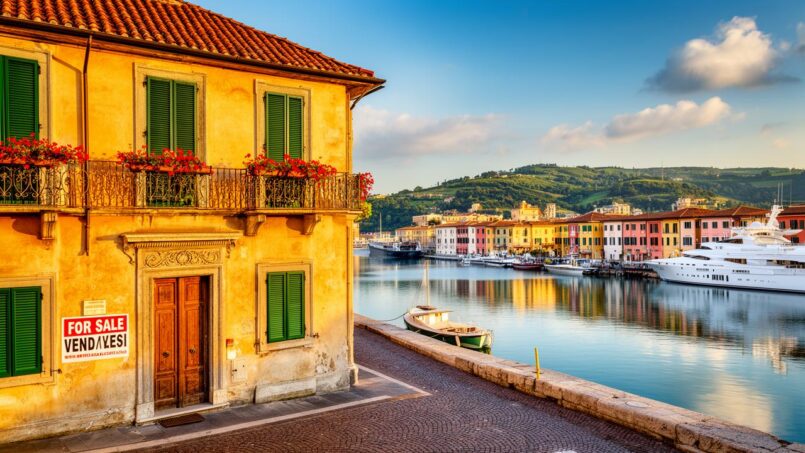
Located on the Tyrrhenian coast, in the heart of Tuscany, Livorno is attracting more and more investors looking for a cheaper alternative to Florence or Pisa, without giving up the sea, economic dynamism, or rental potential. Between urban redevelopment projects, port development, the rise of short-term rentals, and prices still reasonable on a regional scale, the city is positioning itself as a key link in the “Coastal Tuscany” to watch closely.
This article provides a comprehensive analysis of the Livorno real estate market, including prices, rental yields, and the specifics of different neighborhoods. It also details Italian taxation, compares opportunities in long-term and seasonal rentals, and presents the major development projects (such as Porta a Mare or the Marina) that could influence property values. The goal is to give you all the elements to evaluate whether this investment matches your strategy.
An accessible Tuscan market, in a favorable Italian context
The Italian real estate market is currently characterized by a phase of maturity: moderate price increases, buyer selectivity, increased attention to asset quality and energy performance, but also a fairly stable macroeconomic environment and more favorable financing with the easing of interest rates.
Real estate investment reached 12.5 billion euros in 2025, up 23% year-on-year.
In Tuscany, one of Italy’s most dynamic regions, average selling prices are around 2,500 to 2,600 €/m², with an annual increase of around 3 to 4% and rental demand sharply rising, especially in urban centers and along the coast. Florence and Lucca dominate in absolute value, but maritime cities like Livorno, Rosignano, Castiglioncello, or Versilia benefit from a dual engine: beach tourism and primary or secondary residences for workers and retirees.
In this landscape, Livorno stands out for its interesting intermediate positioning: more affordable than Florence and Pisa, but more dynamic and structured than many second-tier seaside locations.
Prices in Livorno: a rising market but still reasonable
The most recent data show that prices in Livorno are rising, without speculative excess.
In June 2025, in the municipality of Livorno, the average asking price for homes for sale reached 2,149 €/m², up nearly 4% year-on-year. The low point of the last two years was around 2,008 €/m² in summer 2023, confirming an upward but controlled trend.
In February 2026, the average real estate price for the province was around 2,540 €/m². This high average is particularly driven up by more touristy municipalities, such as Capoliveri on the island of Elba.
The situation can be summarized as follows:
| Indicator (Livorno municipality) | Recent value |
|---|---|
| Average sale price (June 2025) | 2,149 €/m² |
| Annual change (vs. June 2024) | +3.97% |
| 2-year low (August 2023) | 2,008 €/m² |
| Average rent (June 2025) | 10.87 €/m²/month |
| Annual rent change (vs. June 2024) | +8.16% |
Rents are growing faster than sale prices, which improves gross yields for rental investors.
At the same time, market data from independent analyses confirm average prices in the range of 2,000 to 2,200 €/m², slightly below the Tuscan regional average, reinforcing the idea that Livorno remains relatively “cheap” for the region.
Solid rental yields, especially outside the hyper-center
For an investor, yield is as important as entry price. In Livorno, the numbers are rather encouraging, particularly for small units.
Several sources converge to indicate gross yields between 5.5% and just over 8%, with higher peaks for certain segments.
Comparative data for the city notably shows: population differences, income levels, and available infrastructure.
| Property type (Livorno city) | Average price (€) | Average monthly rent (€) | Estimated gross yield |
|---|---|---|---|
| 1 bedroom | 107,500 | 640 | ≈ 7.1% |
| 2 bedrooms | 118,000 | 750 | ≈ 7.6% |
| 3 bedrooms | 150,000 | 890 | ≈ 7.1% |
| 4+ bedrooms | 225,000 | 1,000 | ≈ 5.3% |
At the ratio level, Livorno shows:
| Financial indicator | City center | Suburbs |
|---|---|---|
| Price-to-rent ratio | 16.49 | 15.32 |
| Average gross yield on apartments | 6.07% | 6.53% |
The immediate suburbs, where prices per sqm are lower than in the historic heart or the highly sought-after waterfront areas, therefore offer slightly more yield, while remaining well-served and livable year-round.
Maximum theoretical gross yield achieved in a few specific micro-markets in Q2 or Q3.
A dynamic rental market, supported by the sea, university, and port
The dynamism of the Livorno rental market is explained by a combination of factors: the presence of students and young professionals, a commercial and industrial port undergoing major investment, growing beach tourism, proximity to Pisa (international airport) and Florence, and the general attractiveness of Tuscany.
Long-term rental data show that rents are rising faster than sale prices. Between June 2024 and June 2025, average rents per sqm jumped by over 8% in the municipality. At the provincial level, monthly rents per sqm also recorded double-digit growth (nearly +17% between February 2025 and February 2026).
Livorno ranks 56th out of 100 best Italian cities for investment in furnished short-term rentals. Its market, described as “mature” but growing, has between 600 and 1,000 active listings and shows solid growth in revenues and occupancy rates.
Some key figures on short-term rentals:
| Indicator (Livorno short-term market) | Approximate value |
|---|---|
| Active listings | 600 – 1,000+ |
| Market score (overall attractiveness) | 87/100 (“Great”) |
| Average occupancy rate | 55% (+4% year-on-year) |
| Average daily rate (ADR) | ~$115 |
| Average annual revenue per property | ~$12,200 |
| RevPAR (revenue per available rental) | ~$63 (+6% year-on-year) |
The best performances, however, remain concentrated in the top quarter of the market: the top 25% of properties achieve occupancy rates above 63% and monthly revenues often exceeding $2,200 on average, with the top 10% beyond $3,100.
Seasonality is marked: summer (July-August) concentrates the revenue peaks (over $2,500 per month) with occupancy rates above 65% and higher nightly prices, while winter (November-January) is significantly weaker. For an investor, this means adapting pricing strategy and possibly alternating between seasonal and medium-term rentals off-season.
Livorno’s neighborhoods: where to invest based on your strategy
The city offers a range of very contrasting neighborhoods in terms of prices, atmosphere, and rental profile. Some areas clearly stand out for investment.
Antignano and the south coast: the mix of vacation and primary residence
South of the center, Antignano is one of the most sought-after areas for its quality of life. This coastal neighborhood, with its beaches, villas, and small residential streets, offers a quiet setting but well-served by buses, ideal for combining a primary residence with seasonal rentals.
Prices here are among the highest in Livorno: in the Antignano – Banditella – Montenero Basso/Alto – Quercianella group, values reach an average of 3,109 €/m², about 45% higher than the municipal average. This premium is explained by sea views, land scarcity, and strong demand for second homes.
This area is more suited to a “quality of life + capital appreciation” positioning, or a high-end product for tourist rentals, rather than a pure yield strategy.
Montenero, perched on a hill overlooking the city, combines views of the Tyrrhenian Sea, green surroundings, villas with gardens, and a peaceful residential atmosphere. The sanctuary of the Madonna delle Grazie also attracts pilgrims, maintaining regular footfall.
Real estate prices in this neighborhood are generally above average, with some villas selling for several million euros. It benefits from public transport (buses, taxis) and a reputation as a safe neighborhood, which reinforces its appeal to families and affluent clientele.
For an investor, Montenero clearly belongs to the “luxury” segment: large properties with high unit value, potential for long-term capital gains, but more modest gross rental yield if limited to a standard lease. However, operations like a villa divided into high-end units for seasonal rentals or events (weddings, wellness retreats) can prove very profitable.
Quartiere Venezia / Venezia Nuova: heritage, canals, and Airbnb potential
The Venezia Nuova neighborhood (Quartiere Venezia) is one of the most iconic in Livorno. In the heart of the city, this area of canals and bridges evokes, on a small scale, the atmosphere of Venice, with historic buildings, water views, Fortezza Vecchia, and Fortezza Nuova.
The cultural scene in Livorno is particularly lively in summer, especially during the “Effetto Venezia” event, which combines music, lights, shows, and local gastronomy. To complete the experience, cafés, trattorias specializing in fish, and picturesque little squares greatly enhance the city’s urban charm.
For investment, Venezia Nuova ticks many boxes:
– central location;
– strong tourist and photographic appeal;
– presence of bars, restaurants, nightlife;
– transport options, including a canal shuttle service.
Rents here are among the highest in the city, and apartments for short-term rentals find tenants easily, provided they comply with a regulatory environment described as “high” for Airbnb-type rentals (licensing, registration, etc.). However, vigilance is needed regarding petty crime (pickpocketing), especially in summer, though this does not undermine the overall perception of safety.
Ardenza, Stadio, La Rosa: high residential rental yield
Rental data indicate that the Ardenza – Stadio – La Rosa area records the highest average rents in the municipality, with a level around 13.13 €/m²/month. These are residential neighborhoods well-served by amenities and accessible, sought after by families and young professionals.
A favorable rental differential and prices per sqm lower than the most expensive coastal areas offer a good balance between rental yield and capital appreciation potential. These areas are suitable for a “buy-to-let” strategy in long-term rentals, particularly for well-laid-out two- or three-bedroom apartments.
More popular neighborhoods: Porto, Corea, Shangai, Picchianti
At the other end of the spectrum, the port areas (Porto – Interporto – Darsena) and neighborhoods like Corea, Shangai, Picchianti show the lowest prices: around 1,672 €/m² for sales and 8.53 €/m²/month for rents for the lowest observed values.
These areas are more industrial or working-class, with a less desirable image. For an investor seeking maximum gross yield, they can offer opportunities, particularly on small apartments needing renovation, but at the cost of higher rental risk (vacancy, defaults, more uncertain long-term appreciation).
Other urban areas to watch
Borgo Cappuccini is described as a charming and quiet neighborhood, with alleys, local markets, and small family-run inns. It’s a good compromise for those seeking a peaceful environment close to the center.
Porta a Mare, a modernized waterfront neighborhood near the marina and shopping center, plays the modernity card: new residences, shops, easy access to infrastructure and the center. This is a strategic area, directly linked to a vast urban redevelopment project.
Major projects reshaping Livorno: from the port to Porta a Mare
Investing in a city also means betting on its development trajectory. In Livorno, several structural projects are transforming the port waterfront and the edges of the historic center, with an anticipated effect on real estate attractiveness.
The Porta a Mare project: 70,000 sqm of redeveloped waterfront
Porta a Mare is one of the flagship urban redevelopment projects in Italy, led by IGD – Immobiliare Grande Distribuzione SIIQ. It involves transforming a large seaside area, immediately adjacent to the historic center, into a new mixed-use district combining housing, offices, shops, services, hotels, and leisure spaces.
The project covers more than 70,000 sqm of floor space, divided into five sub-areas: Piazza Mazzini, Officine Storiche, Arsenale, Molo Mediceo, and Lips.
Status and outlook for the various areas of the urban regeneration project.
Already operational area with supermarket, shops, restaurants, services, and an office building (Palazzo Orlando). More than 90% of the planned 73 apartments have been sold.
Heart of the project with approximately 5,000 sqm of residential (43 units) and 15,600 sqm of commercial space. Includes a fitness center with pool and spa (4,500 sqm) pre-leased. Total investment of over 50 million euros.
The sub-areas Arsenale, Molo Mediceo, and Lips are currently being studied for rationalization and future enhancement.
The entire project has been awarded a MAPIC Award in the “Best urban regeneration project” category, highlighting its importance on a European scale. Beyond the buildings, Porta a Mare introduces new pedestrian promenades, bike paths, underground parking, and public spaces overlooking the sea, with approximately 25% of the area dedicated to open spaces.
For real estate investors, this type of project creates:
– a stock of new housing, often with high energy ratings, suited to new European requirements;
– an attractive urban environment that supports long-term value;
– increased demand for offices, shops, and rental residences, through the creation of a vibrant 24-hour neighborhood.
Marina Livorno: towards a high-end marina
Another strategic project: Marina Livorno, developed by D-Marin in partnership with the Azimut|Benetti group. The goal is to transform part of the commercial port into a modern marina for yachts and superyachts, with over 800 berths for units from 15 to 80 meters.
The sustainable architecture project represents an investment of approximately 20 million euros.
Beyond the basin itself, the transformation includes:
– the creation of a public square facing the water in the Bacino Piccolo area;
– opening Molo Mediceo to the public with promenades, green spaces, pedestrian docks, and parking;
– spaces dedicated to restaurants, bars, and offices (several hundred square meters).
In the long term, this project should strengthen Livorno’s position in luxury yachting, a particularly promising segment for high-end seasonal rentals and hospitality. The ripple effect on housing demand (for crews, staff, service providers) and on the city’s image is far from negligible.
Fortezza Vecchia and “Fortress Park”: heritage reimagined
The Fortezza Vecchia, a large fortification overlooking the port entrance, is also the subject of a redevelopment project. A multi-million euro program aims to restore its original “island” appearance, separated from the urban fabric, by creating a new canal and a footbridge, gardens, a tourist information center, and catering.
The idea is twofold:
To improve accessibility and urban continuity, it is advisable to reconnect the fortress to the city via pedestrian paths accessible to people with reduced mobility. At the same time, it is beneficial to create a new transitional space that links the passenger terminal, the ferry dock, and the historic district of Venezia Nuova.
For residential and commercial real estate, this enhances the use value and tourist appeal of the areas around the Fortezza and the Venezia neighborhood, benefiting especially short-term rentals.
The commercial port, logistics, and bio-refinery: a solid economic base
Alongside urban projects, the port of Livorno benefits from massive investments in infrastructure modernization: over 800 million euros over five years, plus specific credits for channel widening, construction of cold storage warehouses, new border control posts, and photovoltaic installations.
The creation of a “Simplified Logistics Zone” aims to attract even more industrial and logistics investments, through streamlined procedures and dedicated incentives. In the same vein, Eni’s bio-refinery project, using Ecofining™ technology to produce renewable fuels, illustrates the desire to anchor Livorno in the value chains of the energy transition.
For a real estate investor, this translates into: identifying market opportunities and evaluating available properties as well as understanding industry trends to maximize return on investment.
– a sustainable employment base (port, logistics, industry);
– a stable clientele for long-term rentals (employees, managers, subcontractors);
– a diversified economic fabric that reduces the risk of exclusive dependence on tourism.
Buying in Livorno: real costs, taxation, and pitfalls to avoid
Investing in Italy, including Livorno, requires mastering a number of tax and legal specifics. The cost of acquiring a property goes well beyond the net seller price.
What does the purchase really cost: taxes and fees to budget for
In practice, you should budget between 7% and 15% of the sale price in ancillary costs, sometimes more for a second home or investment property.
The main items are as follows:
| Cost item (purchase in Italy) | Order of magnitude |
|---|---|
| Registration tax (Imposta di Registro) | 2% (primary residence) or 9% (others), on cadastral value |
| Cadastral and mortgage taxes | 50 € to 200 € each (or 1% of price for non-residents in some cases) |
| VAT (new properties sold by developer) | 4% (prima casa), 10% (second home), 22% (luxury) |
| Notary | ≈ 1% to 2.5% of declared value |
| Agency commission | ≈ 2% to 5% of price (buyer side) + VAT |
| Lawyer (recommended, but not mandatory) | ≈ 1% to 2% of price, or flat fee 2,500–9,500 € |
| Sworn translation (if necessary) | 250–350 € for the deed |
| Inspections / technical studies | 300–5,000 € depending on complexity |
In addition, if financing, there are loan processing fees (1 to 2% of borrowed capital), loan registration tax (0.25% for primary residence, 2% for investment), and mandatory property insurance linked to the mortgage.
Even for a small property, the non-negotiable costs (notary, fixed taxes, translation, administrative procedures) make it difficult to go below 12,000 € in ancillary fees.
Annual taxation: IMU, TARI, and taxes on rents
Once a property owner in Livorno, you must include recurring charges:
IMU (municipal property tax) applies to second homes and investment properties (rate from 0.4% to over 1% of cadastral value). Non-luxury primary residences may be exempt, but rarely for non-residents. TARI (waste tax) costs about 200 to 600 €/year depending on size and occupants. Condominium fees (200 to 1,000 €/year) cover common areas. Also budget 1 to 2% of the property value per year for maintenance and repairs, especially for older properties or rural houses.
Regarding rental income, two main regimes coexist:
– taxation under the progressive IRPEF scale (income tax), with brackets quickly rising above 30%;
– the “cedolare secca“, a flat tax of 21% (or 10% for certain moderate-rent or long-term leases) on gross rents, which simplifies taxation and avoids the lease registration tax.
For multiple tourist rentals, a rate of 26% may apply. In all cases, a non-resident remains taxable in Italy on rents received, with subsequent tax credits in their country of origin to avoid double taxation.
Advantages of the “prima casa” and trade-offs for the investor
The “prima casa” (primary residence) status can drastically reduce the tax bill at purchase:
Purchasing a primary residence in Italy can benefit from several significant advantages: registration tax is reduced from 9% to just 2% of the cadastral value; non-luxury primary residences are exempt from IMU (municipal property tax); and sometimes better credit conditions can be obtained.
But these advantages are conditional on actual establishment: residence in the property within 18 months, maintaining primary residence status for at least five years, and no other primary residence in Italy. Failure to meet these commitments leads to reassessment with penalties and interest.
For a purely rental investor, a trade-off must be made: try to benefit from this status by actually settling in Livorno (e.g., as a retiree or teleworker) or accept paying the full fiscal price but retain investment flexibility.
Specifics and legal risks not to be underestimated
As in the rest of Italy, real estate purchases in Livorno are governed by strict formalities, but some risks remain very real if you just sign without checking.
Among the recurrent points of vigilance:
Before acquiring an older property, several checks are crucial. Ensure urban planning and cadastral compliance by having a surveyor or architect check discrepancies between the actual state and official plans (extensions, mezzanines, etc.) to avoid costly problems. Verify the absence of usufruct rights that could restrict occupancy or rental of the property. Carry out an audit of the condominium accounts and minutes to identify any hidden debts. Finally, in protected heritage sectors (such as the city center or near the Fortezza), inquire about strict architectural constraints governing any renovation.
The Italian notary’s primary role is to guarantee the validity of the deed vis-à-vis the State, not to “defend” the buyer. It is therefore highly recommended to engage a specialized lawyer, preferably bilingual, independent of the agency and seller.
Short-term rentals in Livorno: potential and regulatory framework
With over 600 to 1,000 active listings, a market score rated “excellent“, and median monthly revenue around $1,300 (with the top 25% exceeding $2,200), Livorno ranks among the interesting Italian markets for tourist rentals, without reaching the hyper-tension of Florence or Rome.
The market structure shows a predominance:
– entire homes (about 80% of supply);
– small units: 1 bedroom (more than half of the stock) and 2 bedrooms (nearly a third);
– highly available listings: more than half of the properties are open more than 270 nights per year.
Strategies to mitigate the impact of the winter low season and maximize income from a seasonal rental.
Offer long-term leases during the winter months to ensure stable income and reduce vacancy periods.
Use multiple booking platforms and target different types of travelers (professionals, long-stay) to broaden the client base.
Adjust prices according to seasonal demand, offering attractive promotions in the low season.
Add winter equipment (fireplace, spa) or reconfigure space for teleworking, increasing appeal in all seasons.
Create special offers (relaxation stay, work pack) including partner services to justify the rate and provide a unique experience.
– peak summer season in tourist rentals by the night or week;
– medium-term (1 to 3 months) off-season, e.g., for students, teleworkers, employees on assignment.
The region has tightened its rules for tourist rentals. In Florence, new permits are frozen in the historic center. In Livorno, a “high regulation” framework requires a license for Airbnb-type rentals and a national identification code. These measures raise the barrier to entry but, in the medium term, protect compliant operators by limiting the anarchic proliferation of listings.
For an investor, it is therefore crucial to:
– check with the municipality and region the specific rules applicable to the target neighborhood (especially in the center and by the sea);
– include in the business plan the management cost (concierge, cleaning, platforms, accounting);
– adapt the minimum stay, service level, and cancellation policy to position correctly against the competition.
Who can buy in Livorno? Conditions for foreigners and non-residents
The Italian framework is relatively open to foreign buyers. Citizens of the European Union and the European Economic Area can purchase freely. For nationals of third countries, Italy applies a principle of reciprocity: citizens of countries where Italians can acquire real estate benefit in return from the same right. This is the case, for example, for the United States, the United Kingdom, Canada, Switzerland, Australia, or New Zealand.
For nationals of countries without a reciprocity agreement, purchase may still be possible if holding a valid Italian residence permit.
It is not necessary to be an Italian tax resident to buy a property. However, obtaining a “codice fiscale” (tax identification number) is mandatory to sign the deed of sale, open a local bank account, pay taxes, and subscribe to electricity, water, and gas contracts.
The purchase procedure, standardized, typically includes:
– a written purchase offer (proposta d’acquisto), sometimes accompanied by a small deposit;
– a preliminary sale agreement (compromesso) with a down payment generally of 10% (sometimes more);
– signing of the final deed (rogito) before the notary, with payment of the balance, taxes, and fees.
A remote purchase is possible by granting power of attorney to a representative, which can be useful for foreign investors who cannot travel for each step.
Livorno in a Tuscan or Italian investment strategy
Compared to markets like Florence (where prices often exceed 5,000 €/m²), Milan, or Rome, Livorno represents a more affordable alternative, with a balanced risk/return profile:
– average prices around 2,100–2,200 €/m² in the city, 2,500 €/m² in the province;
– gross yields between 6% and 8% for well-located small and medium-sized units;
– moderate but steady value growth, driven by the redevelopment of the waterfront and the dynamism of the port.
Compared to other Tuscan areas:
Highly touristy coastal villages (like Capoliveri) have very high prices per sqm (over 4,000 €) but are heavily dependent on seasonal tourism. Conversely, larger inland cities (like Florence) offer stronger capital security, but rental yields for standard apartments are often below 5–6%.
Livorno, thanks to its port-based economic base, its regional role (a city of over 150,000 inhabitants), its nearby universities (Pisa), and its growing tourism, positions itself as an interesting compromise between rental stability and tourist potential.
For an investor, several strategies emerge:
Four investment approaches adapted to different budgets and objectives to capitalize on the Livorno real estate market.
Buy a two- or three-bedroom apartment in a residential area (Ardenza, La Rosa, Borgo Cappuccini, center) for year-round long-term rental.
Target a charming one- or two-bedroom in the Venezia district or near Porta a Mare for short-term or hybrid rentals (tourists in summer, medium-stay off-season).
Invest in a new or renovated property with a high energy rating near Porta a Mare or the marina, to benefit from the waterfront’s upscaling.
For high budgets: position yourself on a villa or large apartment with sea views in Montenero or Antignano, betting on the luxury segment and long-term capital gains.
Conclusion: Livorno, a port city in transition worth studying
Investing in real estate in Livorno means betting on a city that combines several rarely united assets:
Livorno offers several advantages for investors: its strategic location on the Tuscan coast provides excellent connectivity with Pisa, Florence, and the rest of Italy. Prices are still below the regional average, despite an upward trend. Rental yields are attractive, both for long-term and seasonal rentals, thanks to diversified demand. The city benefits from major urban and port redevelopment projects (Porta a Mare, Marina Livorno, Fortezza Vecchia, ZLS, bio-refinery) that improve its image and functionality. Finally, the Italian regulatory framework, although complex, is stable and transparent for investors supported by competent professionals.
The flip side of these assets is the need for meticulous preparation: understanding Italian taxation, incorporating significant acquisition costs, scrupulously checking the urban planning compliance of properties, anticipating obligations related to short-term rentals, and above all, adapting your neighborhood strategy to your investor profile.
For an investor ready to work with a diligent notary, a specialized lawyer, a local technical professional, and an agency established in Livorno, the city today offers an interesting playground, whether to build seaside assets, generate regular rental income, or establish a Tuscan base halfway between local life and seaside pleasures.
Have a wealth project or a question? Contact us now to speak with a wealth management expert.
Disclaimer: The information provided on this website is for informational purposes only and does not constitute financial, legal, or professional advice. We encourage you to consult qualified experts before making any investment, real estate, or expatriation decisions. Although we strive to maintain up-to-date and accurate information, we do not guarantee the completeness, accuracy, or timeliness of the proposed content. As investment and expatriation involve risks, we disclaim any liability for potential losses or damages arising from the use of this site. Your use of this site confirms your acceptance of these terms and your understanding of the associated risks.

Cyril Jarnias is an independent expert in international wealth management with over 20 years of experience. As an expatriate himself, he is dedicated to helping individuals and business leaders build, protect, and pass on their wealth with complete peace of mind.
On his website, cyriljarnias.com, he shares his expertise on international real estate, offshore company formation, and expatriation.
Thanks to his expertise, he offers sound advice to optimize his clients' wealth management. Cyril Jarnias is also recognized for his appearances in many prestigious media outlets such as BFM Business, les Français de l’étranger, Le Figaro, Les Echos, and Mieux vivre votre argent, where he shares his knowledge and know-how in wealth management.





