
 Published on and written by Cyril Jarnias
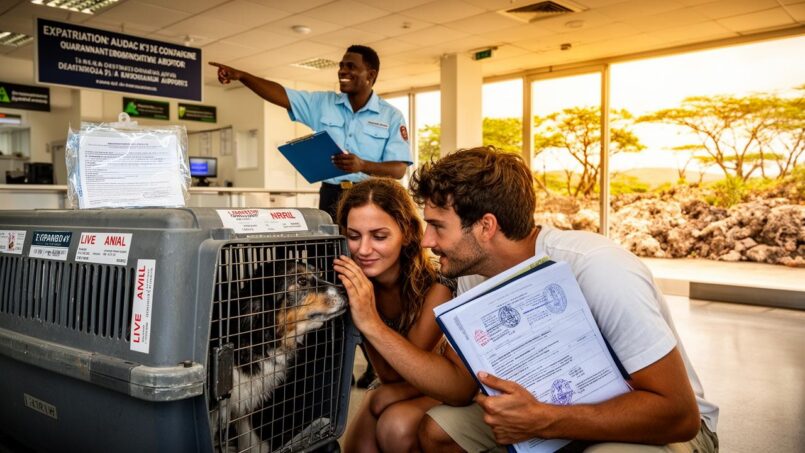
Leaving your country for an isolated island with your dog or, more rarely, your cat, is far from a simple vacation trip. In the case of an expatriation to Nauru, the “pet” dimension becomes a whole separate dossier, with very strict rules, heavy financial risks… and, in the worst case, the euthanasia of the animal upon arrival if conditions are not met.
Expatriation to Nauru with an animal requires careful anticipation of current regulations, administrative and veterinary procedures, as well as constraints related to climate, logistics, and housing. Meticulous preparation is essential to avoid irreversible mistakes and to have a realistic view of this project in this Pacific micro-state.
Understanding Nauru’s Legal Framework for Dogs
Before thinking about plane tickets and travel crates, you need to grasp a basic reality: in Nauru, dog imports are governed by a specific legal framework centered around the Dog Management and Control Act 2017 and its Dog Management and Control (Import) Regulations 2021. These texts add to the general quarantine framework (Agricultural Quarantine Act 1999, Plant and Animal Quarantine Regulations 2004, Animals Act 1982).
In practice, the Republic of Nauru has established a system designed to prevent the introduction of animal diseases and to limit the proliferation of dogs on a tiny and health-fragile territory. The tone is set from the first articles: importing a dog without a permit is illegal, and penalties are particularly deterrent.
Competent Authorities and Their Powers
Several actors are involved in the chain:
In Nauru, the Director of Quarantine issues import permits for animals and supervises veterinary conditions. The Dog Management and Control Unit, under the authority of the Department of Justice and Border Control, manages dog licenses, stray dog control, and the official registry. Quarantine Officers have broad powers, including access to ships and aircraft, seizure of animals, ordering quarantines, and in some cases, destruction of a dog.
In the background, the Cabinet (the government) may, by official notice published in the Gazette, prohibit the importation of certain categories of animals or animal products. The minister in charge may also declare a pest or disease as a quarantine matter, triggering emergency measures.
Absolute Prohibition on Importing Without a Permit
The core rule is brutally simple: no dog may be imported into Nauru without a specific dog permit issued by the Director of Quarantine.
In practice, if a dog arrives: the first actions are crucial to ensure everyone’s safety. It is important to assess the situation, avoid sudden movements, and remain calm. Using treats or toys to attract the dog may also help establish a connection.
– without a permit,
– or with an irregular permit (assigned to another person, for example),
– or on board an aircraft or vessel whose master has not received a copy of said permit,
then:
If the Director of Quarantine refuses the dog’s landing and it is nevertheless imported without authorization, a Quarantine Officer seizes it and hands it over to the Dog Management Unit or the Authority. The regulation clearly states that this dog must be destroyed immediately.
The owner also faces a fine of up to 5,000 dollars for importation without a permit, and an identical penalty for attempting to illegally transfer the permit.
Prohibited Breeds and the Logic of Protection
Like many countries, Nauru has established a list of prohibited dog breeds included in the annex (Schedule 2) of the 2021 regulations. Importing a breed listed on this schedule is prohibited, except by exceptional Cabinet decision.
The consequences are particularly severe:
– a fine of up to 10,000 dollars for importing a prohibited breed dog;
– systematic seizure of the dog by a Quarantine Officer;
– destruction of the animal.
The law allows the minister to modify the list of prohibited dog breeds by official order. A dog allowed today could be banned tomorrow. For owners of sensitive breeds (molosser types, bull types, etc.), it is essential to regularly check the most recent official list.
Licensing Regime for Dogs Already on the Island
Beyond entering the territory, a dog’s life in Nauru is subject to a local license requirement:
– anyone keeping a dog must hold a license issued by the Authority;
– the license must be obtained before the dog reaches 6 months of age;
– a keeper cannot be licensed for more than two dogs;
– licenses are renewed annually (with an expiration date set at the beginning of June).
Lack of a license is heavily penalized. According to the provisions of the Dog Management and Control Act 2017, you will find:
– a fine of 100 dollars for simply keeping an unlicensed dog;
– but also, in some cases, penalties that can rise to 5,000 dollars for a first offense and 10,000 dollars, or even 2 years imprisonment, for repeat offenses.
A legally imported dog benefits from a 14-day period after arrival during which it can be kept without a license. After this period, registration with the Dog Management and Control Unit becomes mandatory.
Steps to Import a Dog: A Long and Highly Regulated Process
Entering Nauru with a dog involves succeeding in several intertwined stages. From the country of departure to on-site quarantine, the slightest error in timing or documentation can block the project. It is therefore essential to think in terms of a chain of conditions to be met, rather than independent “checkboxes.”
A Critical Constraint: The Dog Must Come from Australia
The current texts are unambiguous: only dogs originating from Australia can be imported into Nauru.
This does not necessarily mean the dog must be born in Australia, but it must have stayed there according to the quarantine and health requirements of the exporting country, and Australian authorities must deem the export compliant.
This point radically changes the situation for an expatriate coming from Europe, Asia, or the Americas:
– the dog must first be imported into Australia, satisfying Australian biosecurity requirements (among the strictest in the world: permit, ISO-compliant microchip, rabies vaccination, titer testing, quarantine, etc.);
– once in Australia, the procedure for re-export to Nauru must then be initiated, meeting specific Nauruan criteria (disinfection, additional vaccinations, documents, etc.).
In other words: a direct move “Paris – Nauru” with a dog is legally impossible. You must go through Australia, which entails additional costs, delays, and potentially intermediate quarantine.
The Dog Import Permit: Form 1 and Form 2
The heart of the system is the Dog Import Permit. Obtaining it involves two administrative steps: the application (Form 1) and the issuance of the permit (Form 2).
Content of the Application (Form 1)
The application must be submitted to the Director of Quarantine and accompanied by numerous supporting documents. Among the required information:
To legally register a dog, a complete dossier must be provided including: the owner’s full identity (name, address), a detailed description of the animal (name, breed, color, sex, age), the date of sterilization with a veterinary certificate, the date of deworming with a certificate, vaccination dates for rabies, parvovirus, distemper, canine hepatitis, and leptospirosis with their certificates, as well as a recent photo of the dog.
The applicant must sign a declaration attesting to the accuracy of the information. Any falsification or omission may theoretically be considered an offense.
Submission Conditions and Deadlines
The timing rules are extremely strict:
– all veterinary and quarantine conditions must be met at least 14 days before submitting the permit application;
– the application must include a prior agreement from the Director of Quarantine, dated at least 14 days before the intended importation date;
– the carrier’s (airline or shipping company) agreement must also be included in the dossier;
– authorities require, in some cases, that all quarantine documents be submitted four weeks before importation to Nauru Quarantine.
Finally, a fee of 1,000 dollars is required for a dog import permit application, as stipulated in the schedule annexed to the regulations.
Issuance of the Permit (Form 2)
If the dossier is deemed complete and compliant, the Director of Quarantine issues a permit (Form 2) stating:
– the permit number;
– the identity and address of the holder;
– the expected arrival date, point of entry (airport or port), and flight or vessel references;
– any special conditions imposed (quarantine, inspections, treatments, etc.).
This permit is personal and non-transferable. Attempting to transfer it to someone else is an offense punishable by a fine of up to 5,000 dollars.
Mandatory Health Requirements for the Dog
To protect an island highly vulnerable to animal diseases, Nauru requires a complete “health package” before embarkation.
Mandatory Sterilization
The dog must be permanently rendered incapable of reproducing before importation. This must be confirmed by a certificate from an approved veterinarian.
This requirement has a dual purpose:
– to prevent uncontrolled dog proliferation on a small territory;
– to reduce risks of aggressive behaviors linked to reproduction.
Even for dogs already on the island, obtaining or renewing certain types of licenses is subject to a sterilization condition.
Required Vaccinations
Before importation, the dog must imperatively have received, with documented proof:
– a vaccine against rabies;
– a vaccine against canine parvovirus;
– a vaccine against distemper;
– a vaccine against canine hepatitis;
– a vaccine against leptospirosis.
These requirements are part of a broader logic commonly observed internationally, where rabies, in particular, remains the cornerstone of most domestic carnivore import policies. In other countries (Australia, New Zealand, Philippines, etc.), similar requirements are combined with rabies titer tests (FAVN or RFFIT), performed in approved laboratories.
For Nauru, the available texts mainly emphasize proof of vaccination rather than titer testing, but in practice, any transit through Australia will involve complying with Australian requirements, which include serology for many countries of origin.
Deworming and Other Treatments
The import form requires the date of deworming with a supporting certificate.
Internationally, it is common for countries to also require:
– treatments against internal parasites (worms, including heartworm in some regions);
– treatments against external parasites (fleas, ticks, mites, etc.), administered within specific time windows before departure.
Even if Nauruan texts do not exhaustively detail these latter points, it is prudent to anticipate comparable requirements, especially when the transit country, like Australia, imposes them.
International Health Certificate
An international veterinary health certificate is essential for importing dogs to Nauru. It must attest to the animal’s health status and detail vaccinations, treatments, and test results as applicable.
The general rules that apply elsewhere are instructive for preparing this certificate:
To travel with an animal, an official veterinary health certificate is required. It must be signed by an official veterinarian, then often validated by a government authority (ministry, USDA, etc.). The document must imperatively mention the animal’s microchip number and be issued shortly before departure, generally within 10 to 14 days prior to embarkation.
Quarantine and Arrival Controls
Even if the dog has fulfilled all pre-conditions, its arrival in Nauru does not mean “immediate release”.
Quarantine in Nauru
The quarantine regulations provide that imported animals may be:
– escorted under the control of an Inspector to approved quarantine premises;
– kept in these facilities until an Inspector judges that they meet all import conditions.
The Chief of Quarantine may also impose a pre-entry quarantine in an approved center abroad, to screen for diseases and parasites before the animal is allowed to land in Nauru.
In practice, this means your dog may have to:
– undergo quarantine in a third country (typically Australia);
– and then possibly an additional quarantine stay on the island.
Upon release from quarantine, if you do not immediately retrieve the animal, you will have to bear the costs of food and accommodation until its actual release.
Entry Points and Inspections
The authorized entry points for animals are:
– Nauru International Airport for air traffic;
– the port (Nauru Boat Harbour / Anibare Community Channel) for maritime;
– the post office for certain shipments (more for products than live animals).
At each vessel arrival, a team composed of Quarantine Officers, customs, police, and health services boards for inspection. All unloaded containers are inspected for dirt, infestation, or prohibited items.
A dog arriving by plane will be automatically directed to the Inspector and, if necessary, sent to quarantine facilities.
The Case of Cats and Other Animals: A Regulatory Gap… to Handle with Caution
Nauruan texts highlighted focus on dogs. No specific and detailed regulations for cats appear in the cited documents, which does not mean that cat importation is free.
A General Quarantine Framework Still Applicable
The Plant and Animal Quarantine Regulations 2004 establishes a general rule: no animal may be imported without a quarantine permit. This therefore potentially covers cats and other companion species.
Key points to remember:
Importing animals or animal products requires a Plant and Animal Quarantine Entry Permit, filed before arrival with transport details. The Chief of Quarantine may impose conditions, request additional information, and order quarantine. Additionally, each animal must be accompanied by a health certificate issued by the exporting country’s authorities.
For a cat, it is extremely likely that similar requirements to those in force in other regional countries (Australia, New Zealand, Fiji, etc.) will be demanded, namely:
– identification by ISO microchip;
– rabies vaccination if the country of departure is not recognized as rabies-free;
– core vaccinations (typically panleukopenia, calicivirus, viral rhinotracheitis);
– internal and external antiparasitic treatments;
– recent health certificate.
Nauru’s Status in Regional Rabies Exchanges
On the international health front, Nauru is classified among countries considered rabies-free or where the disease is controlled, which:
Minimum quarantine period imposed by New Zealand on dogs from Nauru, a country nonetheless classified as rabies-free.
This context shows that any movement of animals to or from Nauru is seen as a highly sensitive matter, even if there is not yet, to our knowledge, as detailed regulations for cats as for dogs.
Microchip and International Standards: A Must
Even if Nauruan texts do not explicitly cite ISO 11784/11785 standards for electronic chips, the experience of other regional countries and standard import/export procedures make ISO-compliant microchip identification virtually unavoidable.
Why Micro-identification is Essential
Micro-identification aims to:
– ensure that the dog or cat presented at the border is the one mentioned on vaccination and health certificates;
– enable health monitoring, especially for diseases like rabies where vaccination histories must be linked to a specific individual;
– secure international movements, preventing fraud or substitution.
In most countries:
The chip must be implanted before rabies vaccination to validate it in international exchanges. All certificates (vaccines, titer, health) must mention its number. It must be readable upon arrival, otherwise a new one may need to be implanted, potentially restarting the entire procedure, including quarantines and waiting periods.
Practices in Other Jurisdictions as a Reference
Countries like Australia, New Zealand, Malaysia, the Philippines, or the United Arab Emirates all require: the same requirements.
– ISO microchip,
– proper rabies vaccination,
– sometimes a titer test validated by an approved laboratory,
– a rigorous chronology between injection, blood draw, and travel.
Any expatriate with an animal heading to Nauru must therefore view their project as a succession of national regulations (country of departure, possible transit countries, Australia, then Nauru), all relying on electronic identification as the cornerstone.
Transport: Cargo, Travel Crates, and Specialized Providers
Physically organizing the movement of an animal to an island as isolated as Nauru can be complex, particularly due to the scarcity of flights, frequent changes in airline policies, and restrictions based on dog breeds or types.
Airline Constraints and Approved Crates
Major carriers require containers compliant with IATA standards for animal transport. These crates must be:
– of a size appropriate for the animal to stand, turn around, and lie down comfortably;
– sturdy, well-ventilated, leak-proof;
– properly labeled, with the owner’s contact information and animal details.
Some airlines flatly refuse brachycephalic dogs (e.g., English Bulldog, French Bulldog) above a certain weight or age due to respiratory risks in cargo holds. Internationally, it is common to see:
– refusal of adult English or French Bulldogs over 20 lb (about 9 kg) and over 6 months old;
– limited acceptance of puppies, with conditions.
Using Pet Relocation Companies
Faced with these challenges, several international companies have specialized in pet transport, especially to or from complex destinations like Pacific islands.
Among them:
| Company | Home Country | Useful Specifics for a Nauru Project |
|---|---|---|
| Air Animal Pet Movers | USA (Tampa, Florida) | Handles moves to over 165 countries, including Nauru; founded by an USDA-accredited veterinarian; offers specific microchips for Nauru, obtaining health certificates, permits, cargo bookings, quarantine management. |
| Happy Tails Travel | USA (Arizona) | Specializes in domestic and international transport; offers a “By Ground Safe and Sound” service in response to airline restrictions; assists with paperwork, provides personalized advice. |
| Jetpets | Australia & New Zealand | Leader in Australian pet transport; strong experience with Europe, Asia, Africa, the Americas, and Pacific islands; can be a key player for transit via Australia. |
| Aero Pets New Zealand | New Zealand | Handles departures to Australia, USA, Europe, Asia, and the Pacific; can manage IATA crates, vet checks, flights, and MPI approval. |
Some of these companies advertise packages for Oceania destinations. For relocating a dog from the USA to the region (including microchip, certificates, cargo tickets, etc.), price ranges from $5,095 to $13,395 are mentioned. This type of amount illustrates the level of investment to expect for a complete process complying with rules of multiple successive countries.
Living with a Pet in Nauru: Climate, Isolation, and Access to Care
Obtaining a permit and crossing the border is only part of the story. Living with a pet in Nauru raises other questions: how to manage heat and humidity? What is access to fresh water? What are the prospects for veterinary care?
A Difficult Climate for Heat-Sensitive Animals
Nauru enjoys a hot and very humid tropical climate:
| Climate Indicator | Typical Value |
|---|---|
| Average annual temperature | About 28 °C (alternative data: 24.4 °C) |
| Daytime temperature range | 26 to 35 °C |
| Nighttime temperatures | 22 to 28 °C |
| Relative humidity | 70 to 80% |
| Annual rainfall | About 2,000 to 2,100 mm |
| Driest season | March to October (influence of northeast trade winds) |
| Wettest periods | Depending on sources: June to November and/or November to February (west winds) |
Climate projections for the 21st century indicate a temperature increase potentially reaching between 0.9 and 3 °C depending on scenarios, with more days exceeding 33 °C, intensification of heatwaves, and more frequent heavy rainfall episodes.
For a dog, especially if it is socialized and trained properly, it will have a better quality of life and be more balanced.
– brachycephalic,
– large,
– elderly or with heart conditions,
this context represents a major risk of heat stroke, especially if air conditioning is not available or power outages are frequent.
A Critical Resource: Fresh Water
Nauru has no rivers or streams. Residents are almost entirely dependent on:
– rainwater collection tanks,
– a few limited underground resources,
– and desalination systems, vulnerable to breakdowns and climate shocks.
Ensuring permanent access to clean and abundant water for animals is crucial, especially during prolonged droughts that can last over 36 months. The strain on water resources directly impacts the daily lives of families and their animals.
Natural Risks and Dependence on Imports
Nauru is little exposed to cyclones (no cyclone recorded in its exclusive economic zone since the 1970s), but remains vulnerable:
– to droughts linked particularly to La Niña phases,
– to floods, coastal erosion, tsunamis, and storm surges;
– to sea level rise, currently estimated at about 5 mm/year, with projections reaching up to 0.55–1 m by the end of the century under the highest emissions scenario.
The island is also very isolated, with heavy dependence on imports (food, medicine, equipment). In case of supply disruption, a pet owner must be ready to:
– manage temporary shortages of specific food (e.g., therapeutic kibble);
– cope with limited access to specialized veterinary care.
Access to Veterinary Care: Plan Ahead Rather Than Improvise
The documents reviewed do not provide a detailed list of veterinary clinics in Nauru, but experience from other Pacific islands (Samoa, Vanuatu, etc.) allows us to anticipate a scenario where:
– at best, there is a small veterinary facility, sometimes focused on livestock or basic medicine;
– some specialized interventions require costly evacuations to other countries, when possible.
Several regional clinics (in Australia, New Zealand, the South Pacific) offer:
– vaccinations, surgery, imaging, 24/7 emergency care;
– animal export services, including arranging blood tests, providing IATA crates, etc.
This type of network can be useful not only for preparing the arrival in Nauru, but also in case of return or a new expatriation.
Relocation providers also recommend:
– having a complete blood workup (CBC, chemistry) done before departure;
– bringing the results and medical history to share with the future local vet;
– registering upon arrival with the nearest available veterinarian, who can then send reminders for booster shots.
Finding Housing in Nauru with a Pet: Scarcity of Options and Need to Negotiate
The housing market in Nauru is limited. Available information indicates:
– about two hotels, one government-owned, the other family-owned;
– two private “unit” type accommodations;
– apartments ranging from one-bedroom to three-bedroom and larger;
– establishments like Ewa Lodge, described as offering furnished studios with air conditioning, kitchen, laundry, 24-hour security, generator, and desalinated water;
– accommodation like GoodWorks Accommodation in Yangor, with common lounge, terrace, free Wi-Fi, and parking.
Only one rental in Nauru explicitly accepts pets according to some search platforms.
For an expatriate with a dog or cat, these factors require a very proactive approach:
– contact in advance the main structures (government, Ewa Lodge, other units) to ask if pets are allowed;
– negotiate conditions in writing (pet deposit, size or noise restrictions, restrictions in certain common areas, etc.);
– accept that the market is tight and a reluctant landlord may easily favor a tenant without a pet.
It is also possible that employer-linked housing (especially in government contracts, NGOs, or mining companies) applies its own internal rules regarding pets.
Practical Steps: How to Build a Realistic Plan
Putting all these requirements together can be overwhelming. To avoid getting lost, it is helpful to structure your project into major chronological phases.
Phase 1: Feasibility and Preliminary Checks
The very first question to ask is: do I have the right, in theory, to bring this animal to Nauru?
This involves:
– checking the breed of the dog against the list of prohibited breeds;
– confirming with Nauruan authorities (Quarantine Division, Dog Management and Control Unit) that the texts have not been modified since the latest publications;
– assessing the age and health condition of the animal (a very old, cardiac, or brachycephalic dog will not tolerate long flights and heat well);
– checking the rules of the country of departure (permits, vaccination, tests, export) and the mandatory transit country (Australia).
If the initial filters (breed, health, transit) indicate that adopting the project is compromised, it is essential to have the courage to abandon it. Other solutions should then be explored, such as long-term care in the country of origin or adoption by a trusted family on the island.
Phase 2: Veterinary and Administrative Planning
Once general feasibility is confirmed, a precise timeline of veterinary acts and procedures must be developed:
– placement or verification of the ISO microchip;
– rabies vaccination (respecting the “chip before vaccine” rule);
– other mandatory vaccines (parvovirus, distemper, hepatitis, leptospirosis);
– deworming and antiparasitic treatments;
– if necessary, rabies titer testing to meet transit country requirements (very likely in the case of Australia);
– respecting timeframes between vaccination, blood draw, results, and departure;
– obtaining the official health certificate, validated by the veterinary authority of the departure country.
In parallel, the import permit procedure must be initiated:
The procedure includes collecting original signed certificates, drafting and submitting Form 1 to the Nauruan Director of Quarantine, paying a fee of 1,000 dollars, and obtaining formal agreement from the airline for transporting the animal, to be attached to the dossier.
Phase 3: Logistical Organization of Transport
This is the moment to decide whether to manage everything yourself or entrust the file to a specialized provider. Given the complexity of the route “country of origin → Australia → Nauru,” the professional option is often safer, especially for a large dog or a project involving multiple animals.
You will notably need to:
– book flights compatible with animal transport (schedules, ground temperatures, aircraft type);
– ensure the dog travels in an IATA-compliant crate appropriate for its size;
– prepare the logistics for possible quarantine in Australia (via a local provider) and then in Nauru;
– financially plan the entire chain, including:
– veterinary fees,
– tests,
– certificates,
– permits,
– cargo tickets,
– quarantine(s),
– intermediary services,
– on-site accommodation.
Phase 4: Installation and Follow-Up on Site
Once the animal has arrived and, if applicable, been released from quarantine:
After importation, you must apply for the dog license from the Dog Management and Control Unit within 14 days. The animal must wear the official collar and tag. The owner must comply with several obligations: prevent straying, isolate a female in heat from public places, leash or secure the dog in a vehicle, and not allow it to chase cars. Any attack or bite must be reported to authorities within the prescribed time. It is also advisable to identify a local veterinarian in advance and solutions for veterinary evacuation abroad.
Finally, it is recommended to compile a complete medical dossier for the animal, including:
– vaccination history;
– antiparasitic treatments;
– reports of health checkups;
– copies of import permits and certificates.
This will facilitate any future procedure, whether a simple license renewal or a potential new expatriation to another country.
Between Attachment and Responsibility: Weighing the Decision Carefully
Bringing your pet to Nauru is not just a matter of paperwork; it is a heavy ethical and logistical choice that commits you for several years. Available research shows that globally, many dog and cat owners consider their animals as full-fledged family members. In some countries, terms like “fur baby” or even “whānau” (family, in Māori) are used to express this bond.
At the same time, animal welfare experts emphasize that the main problems often stem from a lack of owner information:
– unawareness of climate and health needs,
– underestimation of veterinary constraints,
– ignorance of legal risks (fines, euthanasia for illegal import).
In Nauru, pet owners are torn between family attachment to their dog or cat and the severe local constraints. The tropical island is extremely vulnerable, subject to a strict regulatory framework, a difficult climate, and often limited veterinary services.
It is not about systematically discouraging expatriation projects with animals to Nauru, but rather inviting clear-headed reflection. In some cases, the best proof of love for a companion may be to:
If expatriation to Nauru with a pet proves complex, several alternatives exist. It is possible to leave the animal in the secure care of a loved one in the country of origin, arrange a serious adoption with appropriate follow-up, or delay the animal’s departure while assessing real living conditions on the island.
For those who, after weighing all these factors, still choose to make the journey with their pet, the key word will remain rigor: in complying with Nauruan texts, in health preparation, in logistics, and finally in adapting to an island where every resource – water, space, services – is counted.
Disclaimer: The information provided on this website is for informational purposes only and does not constitute financial, legal, or professional advice. We encourage you to consult qualified experts before making any investment, real estate, or expatriation decisions. Although we strive to maintain up-to-date and accurate information, we do not guarantee the completeness, accuracy, or timeliness of the proposed content. As investment and expatriation involve risks, we disclaim any liability for potential losses or damages arising from the use of this site. Your use of this site confirms your acceptance of these terms and your understanding of the associated risks.

Cyril Jarnias is an independent expert in international wealth management with over 20 years of experience. As an expatriate himself, he is dedicated to helping individuals and business leaders build, protect, and pass on their wealth with complete peace of mind.
On his website, cyriljarnias.com, he shares his expertise on international real estate, offshore company formation, and expatriation.
Thanks to his expertise, he offers sound advice to optimize his clients' wealth management. Cyril Jarnias is also recognized for his appearances in many prestigious media outlets such as BFM Business, les Français de l’étranger, Le Figaro, Les Echos, and Mieux vivre votre argent, where he shares his knowledge and know-how in wealth management.





