
 Published on and written by Cyril Jarnias
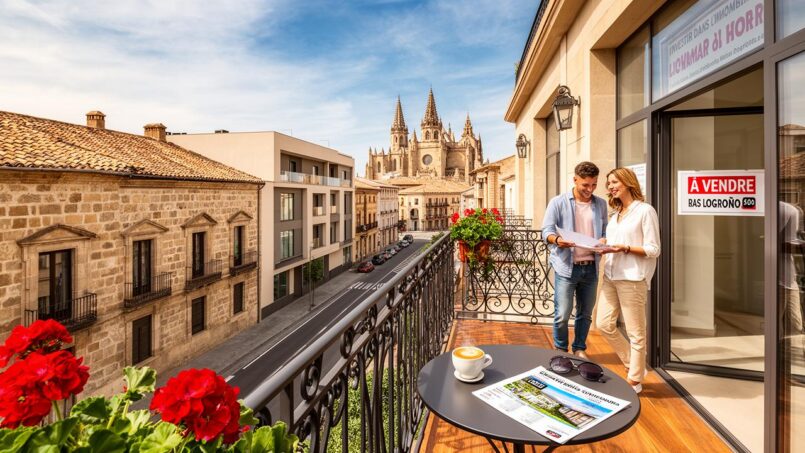
Logroño is neither Barcelona nor Madrid, and that is precisely what makes it one of the most interesting markets today for a discerning investor. The capital of La Rioja, a mid-sized city on the Ebro River, renowned for its quality of life, gastronomy, and vineyards, it offers a combination of advantages rarely found in one place: still affordable prices, respectable yields, solid rental demand (students, families, wine tourists), and a clearly upward price trend.
Good to know:
Spain is experiencing economic growth above the Eurozone average, with a tight real estate market in many cities. In this context, Logroño presents itself as a quieter but strategic alternative for diversifying a real estate portfolio.
Logroño: A “Secondary” Market… With Very Solid Fundamentals
The first key to understanding the appeal of investing in Logroño is to look beyond its image as a quiet provincial town. Beneath the surface, the figures reveal a market that is heating up without yet being overheated.
152500
The city has approximately 152,500 inhabitants, with a solid economic environment and growing tourist appeal.
Added to this are several qualitative assets: safety, good healthcare offerings, a pleasant climate, and a low-pollution environment (the city was classified among the most breathable in the country by the WHO in 2011). For a tenant or resident, these factors matter as much as the price; for an investor, they guarantee sustained rental demand.
Prices Rising, But Still Far from Major Metropolises
Recent data confirms that Logroño has fully entered the Spanish upward cycle. In February 2026, the average price per square meter reached €2,063, a record level for the city and up 13.9% year-over-year. A year earlier, in August 2025, the average price stood at €1,977/m², already a +6.52% increase over twelve months from August 2024.
Example:
The projected monthly trend from March 2025 to February 2026 indicates a nearly continuous upward trajectory, with notable accelerations such as +2.2% in June 2025 and +2.4% in October 2025. A Fotocasa artificial intelligence tool even anticipates a 6.1% increase in purchase prices for the first quarter of 2026, placing this zone among the Spanish provincial capitals experiencing the largest increases. No trend reversal is expected in the short term.
In other words, Logroño remains cheap compared to major metropolises, but the gap is gradually closing.
A Gross Rental Yield Around 5%: An Attractive Compromise
For an investor, gross yield is a key indicator. In Logroño, the average is around 5.1% for long-term rentals, with variations depending on the type of property and neighborhood.
Overview of Key Rental Indicators
Multiple sources converge:
– Average gross rental yield in Logroño: between 5.08% and 5.13%
– Average sale price: approximately €216,500
– Average monthly rent: €800
– Average annual rental income: €9,600
– Average payback period (price-to-rent ratio): 22.6 years
Attention:
Although Logroño’s average gross profitability is 4.88%, some neighborhoods achieve nearly 6% for long-term rentals, and parking spaces can offer returns close to 10%.
Yield by Property Type: Small Spaces Lead the Way
Detailed data by typology reveals a fairly classic logic: the smaller the home, the higher the gross yield.
| Property Type | Average Price (€) | Average Monthly Rent (€) | Gross Yield (%) |
|---|---|---|---|
| Studio | 149,000 | 700 | 5.64 |
| 1 Bedroom | 149,500 | 670 | 5.38 |
| 2 Bedrooms | 179,000 | 790 | 5.28 |
| 3 Bedrooms | 199,000 | 830 | 4.97 |
| 4 Bedrooms and Up | 270,000 | 1,100 | 4.89 |
Rental demand is concentrated mainly on 2-bedroom and 3-bedroom units, which together account for nearly 78% of rental listings (34% for 2-bedroom, 44% for 3-bedroom). Studios and 1-bedroom units, rarer (5% and 8% of listings), show slightly higher yields, making them interesting targets, particularly for a student or young professional positioning.
Where to Buy in Logroño? A Radiography of Key Neighborhoods
Logroño is not a homogeneous city. The differences in price and yield from one neighborhood to another are significant enough to impact an investor’s strategy. Some areas play the long-term appreciation card, while others offer better immediate profitability.
Comparison of Main Neighborhoods (Sales and Rentals)
Data from August 2025 provides a good snapshot of price-to-rent ratios by area:
| Area | Average Sale Price (€/m²) | Average Rent (€/m²/month) |
|---|---|---|
| San Adrián – La Cava | 2,407 | 9.32 |
| Cascajos – Piqueras | 2,397 | 9.74 |
| El Campillo – Norte | 2,216 | 7.49 |
| Centro | 1,946 | 8.74 |
| Casco Antiguo | 1,671 | 10.00 |
| Residencia | 1,860 | 8.62 |
| Universidad – Los Lirios | 1,825 | 9.17 |
| Portillejo – Valdegastea | 1,845 | 7.98 |
| Oeste | 1,643 | 8.63 |
| La Portalada – Varea | 1,318 | 6.52 |
We can clearly identify three profiles:
1. Premium, recently developed residential neighborhoods (San Adrián – La Cava, Cascajos – Piqueras): high prices, high rents, ongoing appreciation.
2. Centro and Casco Antiguo: a combination of charm, strong rental (and tourist) demand, but a more heterogeneous supply.
3. More peripheral or working-class areas (Oeste, La Portalada – Varea, Portillejo – Valdegastea): lower entry tickets, sometimes higher profitability for a cash-flow-oriented investor.
The Stars of Appreciation: San Adrián – La Cava and Cascajos – Piqueras
San Adrián – La Cava and Cascajos – Piqueras are the showcases of Logroño’s urban modernization. They are recent neighborhoods, well-served, with a supply of modern homes, often in residential complexes with amenities (green spaces, play areas, parking).
In February 2026, prices peaked there:
– San Adrián – La Cava: €2,731/m² (annual increase of 15.4%)
– Cascajos – Piqueras: €2,561/m² (annual increase of 3.8%, after strong growth in previous years)
Tip:
Neighborhoods like Cascajos – Piqueras have a very active real estate market, with a sales increase of over 15% year-over-year. This market liquidity attracts both families and investors.
The yield remains interesting for such sought-after areas: with rents around €9.3 to €9.7/m², gross yields are typically between 4.5% and 5.2%, but with strong medium-term capital appreciation potential.
Casco Antiguo: Historic Heart and Rental Driver
The Casco Antiguo is Logroño’s old center, strongly marked by tourism, culture, and nightlife. This is where the most famous tapas streets are, like Calle Laurel, Calle San Juan, and Calle Portales. The housing stock consists of older buildings, character apartments, sometimes needing renovation.
Prices are lower than in the newer neighborhoods: €1,934/m² in February 2026, but they have soared by over 20% in one year. On the rental side, it is one of the most expensive areas in the city at €10/m²/month. The price-to-rent ratio is therefore particularly favorable for an investor, especially if targeting well-located furnished rentals.
Logroño: Epicenter of Opportunities
Logroño’s historic center concentrates the main investment and tourist rental opportunities, especially around its liveliest areas.
Short-Term Rental (Airbnb)
High potential for short-term rentals thanks to tourist influx in the historic center.
Commercial Investment
Ideal for bars, restaurants, and small hotels, benefiting from the nightlife and culture.
Key Areas
Activity concentrated around Calle Laurel, Plaza del Mercado, and Portales.
Universidad – Los Lirios Neighborhood: The “Student-Friendly” Angle
The Universidad – Los Lirios axis combines two drivers: proximity to the university (with stable demand for shared apartments and small units) and recent residential development in Los Lirios. Prices remain reasonable (€1,875/m² in February 2026), while rents are dynamic (€9.17/m²/month).
For an oriented strategy:
– studios or 2-bedroom units for students,
– or shared apartments in well-optimized 3-bedroom units,
the neighborhood offers a good compromise between entry price, profitability, and liquidity upon resale.
Peripheral Areas: La Portalada – Varea and Surroundings
For an investor primarily targeting yield rather than prestige, areas like La Portalada – Varea or Oeste deserve close examination. La Portalada – Varea, for example, shows the lowest sale price among the main neighborhoods (€1,318/m² in August 2025), with rents around €6.5/m².
These sectors are more suited to tenant profiles with limited budgets (young families, modest workers), with the advantage of a very affordable entry ticket. Gross profitability can be interesting there, especially if investing in an undervalued or renovation property, to bring it back to market with added value.
Long-Term, Seasonal, or Tourist Rental: What to Choose in Logroño?
The investor interested in Logroño must balance three axes: long-term residential rental, medium-term rental (students, professional stays), and short-term tourist rental.
Long-Term: Stability, Favorable Taxation, Clearer Regulations
Long-term rental is the backbone of the Logroño market. It relies on demand from local families, young professionals, civil servants, but also students and some foreigners settled here.
On the regulatory front, residential rental benefits from a relatively stable framework in Spain:
– Standard lease term extended to 5 years (renewable for an additional 5 years at the tenant’s initiative).
– Annual rent increases capped by a new reference index (IRAV/IRAE), with a ceiling; for recent contracts, increases are limited to 2.2%, and a national decree imposes a cap of +2% until the end of 2027.
– Transfer of certain costs (agent fees, unpaid rent insurance) to the owner’s responsibility, which slightly increases costs but secures the tenant.
In return, the taxation on long-term rental income is very advantageous for resident individuals:
– 50% deduction on rental income under general conditions.
– 60% if the home was renovated within the 2 years preceding the lease.
– 70% in certain cases (tight zone + rental to young people aged 18–35, or to public entities/associations for social housing).
– 90% deduction for a new lease in a tight zone, if the rent is more than 5% lower than the previous lease.
Added to this will be a announced bonus of 100% deduction for owners who freeze the rent upon renewal under the 2026–2030 housing plan. Even if the application details remain to be confirmed, this line clearly pushes toward incentivizing long-term rental.
For a non-resident investor, taxation is slightly less favorable, but recent changes allow the deduction of expenses (local taxes, renovations) for non-residents outside the EU as well, which improves net profitability.
Tourist Rental: Promising Market but Heavily Regulated
Logroño has an atypical tourist fabric, focused on wine, gastronomy, and the Camino de Santiago. Airbnb figures illustrate the dynamism of the short-term segment:
– Approximately 500 to 600 active listings (estimated July 2025).
– Average annual revenue: approximately €21,000.
– Average monthly revenue: ~€1,780.
– Average daily rate: €103.
– Occupancy rate: 54%, or about 197 booked nights per year.
– Annual revenue growth: +4.6%.
The most profitable neighborhoods for this type of operation are unsurprisingly the Casco Antiguo, Laurel/San Juan/Portales streets, and the areas around the center. The clientele is primarily looking for:
– proximity to tapas bars,
– the historic atmosphere,
– easy access to nearby wineries.
Attention:
Since 2025, Spain has implemented very strict regulations concerning tourist rentals, a crucial aspect to consider despite the market’s appeal.
– Need for formal approval from the homeowners’ association to operate a tourist rental, requiring a 3/5 majority (60% of votes). Observed success rates do not exceed one third of requests in residential buildings.
– Obligation to register in the Single Rental Registry (Registro Único de Arrendamientos) and obtain a national registration number separate from the regional tourist license.
– Obligation to file an annual activity declaration (form N2); if forgotten or late, the national number can be revoked.
– Exposure to significant fines for illegal operation (€3,000 to €30,000 depending on the region) and automated checks cross-referencing online listings with the national registry.
– In some very touristy Spanish cities, municipalities have frozen the granting of new tourist licenses. Logroño is not at the level of Barcelona or Málaga, but the national trend is clear: tightening, limitation, surveillance.
Added to this is taxation:
– Tourist rentals are in principle subject to 10% VAT.
– Professional management (cleaning, check-in, platforms) often costs 10 to 15% of turnover, or even more for full service.
Attention:
Although it can generate higher gross income than long-term rental, seasonal rental in Logroño carries increased regulatory and operational risks. The project must be undertaken with caution and requires prior checks.
– the actual availability of licenses,
– the condominium bylaws,
– the position of the homeowners’ association.
Medium-Term Rental and Shared Housing: The Profitable Middle Ground
Between these two extremes, medium-term rental (university semesters, professional assignments, stays of a few months) and shared housing offer an often underestimated alternative.
A concrete case mentions a small apartment near the university, renovated on a controlled budget, rented as shared accommodation to students, with:
– rent of approximately €600,
– annual net income of €5,760,
– initial investment under €30,000 (down payment and works),
– net yield close to 10%.
This type of structure rests on three pillars:
1. Location (proximity to university or employment hub).
2. Optimization of the floor plan (creation of independent rooms, quality of common areas).
3. Structured management (individual leases or single lease, payment tracking, rotation management).
In a city like Logroño, with a significant student population and still reasonable rents, quality shared housing can become a very profitable niche, especially if additionally applying tax deductions related to renovation.
Taxation and Acquisition Costs: What to Include in the Business Plan
Investing in Spain involves mastering a scheme of costs and taxes that overlap: taxes at purchase, annual taxation, taxation of income and capital gains upon resale. Logroño is no exception, even though some rates are set at the regional level (La Rioja).
Acquisition Costs in Logroño
La Rioja applies a standard rate of 7% for the Impuesto sobre Transmisiones Patrimoniales (ITP) on the purchase of existing properties (resale). Added to this are:
– Notary fees (generally 0.5 to 1% of the price).
– Land registry fees (0.4 to 0.7%).
– Lawyer or consultancy fees (often 1 to 2%, highly recommended).
– Possibly mortgage loan processing fees.
30000
Total cost of taxes and fees for a resale apartment at €250,000 in Logroño.
– 10% VAT (IVA) on the price,
– a stamp duty (AJD) of approximately 1.5%,
– plus notary, registry, and lawyer fees.
In practice, one easily reaches 13% in additional costs on a purchase off-plan or in a new development program.
Annual Taxation: IBI, Income Tax, Wealth Tax
The IBI (Impuesto sobre Bienes Inmuebles) is the local property tax. In Logroño, for a property with a cadastral value of €250,000, the annual IBI is around €1,550 (municipal rate of approximately 0.62%). This amount is deductible from rental income for income tax calculation.
Non-resident owners are also subject to:
Good to know:
In France, a non-rented property is subject to tax on a theoretical rental income (imputation). If rented, it is taxed on actual rental income, at a rate of 19% for EU/EEA residents or 24% for residents of other countries. Since 2025, all landlord-owners can deduct expenses from their rental income.
Potentially added to this is a wealth tax for net assets exceeding €700,000, with a progressive scale of 0.2% to 3.5% in La Rioja, after an allowance of €300,000 on the primary residence.
Upon resale, the seller must: ensure the product is in good condition and conforms to the description provided.
– pay the municipal plusvalía (tax on the increase in land value),
– declare the capital gain to the Spanish tax authorities (19% for non-residents), with a withholding tax of 3% of the price paid by the buyer, imputable on the tax due.
All these elements must be included in the net profitability forecast, especially for projects with a short or medium-term horizon (flipping, resale after renovation).
Commercial Market and Opportunities in Restaurants and Services
Logroño is not limited to residential apartments. The city center and the Casco Antiguo are a privileged playground for investment in commercial walls, particularly in restaurants and small-scale hospitality.
A very active agency, ADRA360 Inmobiliaria, lists dozens of premises for rent or sale, often with traspaso (assignment of business) in the sector of bars, restaurants, cafes, gastro-bars. Properties available include:
Example:
In Logroño, commercial premises come mainly in two forms. On one hand, established businesses with a loyal clientele, often marketed as “guaranteed profitable investments.” On the other hand, raw premises or those needing a complete renovation. These properties are generally located in premium spots in the city, such as Calle Laurel, Portales, Plaza del Espolón, or Marqués de San Nicolás street.
Some premises have rare specificities, such as:
– an EI30 chimney or authorized smoke extraction (critical for restaurants),
– a large terrace (up to 120 m²),
– the presence of an old classified archaeological bodega in the basement.
15
The average commercial rent in euros per square meter, a favorable level compared to large cities.
– the overall cost of the traspaso,
– renovation work to meet standards,
– seasonality of demand (wine tourism, weekends, local festival periods).
For a purely real estate investor, a possible scheme is to buy the walls and rent to an operator, rather than managing the business oneself. In this case, it is crucial to analyze the tenant’s solidity, the potential for lease revaluation, and the long-term attractiveness of the location.
Professional Property Management: A Key Lever, Especially from a Distance
Investing in Logroño without living locally or without fluent Spanish is perfectly possible, provided you rely on solid local players or national platforms.
Several types of providers are involved:
– Specialized local agencies (Herreros servicios inmobiliarios, Agora Inmobiliaria, InmoHappy, INMOBILIARIA GLOBAL, Onda Próxima).
– Major long-term management platforms like Zazume, which charges approximately 6.5% of the rent (excluding VAT) for guaranteed management, or 12% for full service including tenant search.
– Short-term managers (Weguest, GuestReady, etc.), covering listing creation, booking management, cleaning, maintenance, with commissions often between 10% and 20% of revenue.
Typical services include:
Property Management Services
Discover all the key services offered for professional and worry-free management of your property.
Tenant Selection
Solvency checks, income (at least 3 times the rent), background and credit score for secure rentals.
Lease Drafting and Management
Preparation of rental contracts compliant with current legislation and administrative follow-up.
Rent Collection and Follow-ups
Management of rent collection and implementation of reminders in case of non-payment.
Repair and Maintenance Coordination
Organization and follow-up of technical interventions for property upkeep.
Security Deposit Management
Regulatory handling of security deposits at the start and end of the tenancy.
Administrative Management and Disputes
Updating rents according to indices, managing late payments, terminations, and conflicts.
For an investor looking to optimize profitability without becoming a day-to-day manager, delegating some of these tasks has a cost but significantly reduces operational risk. In a market like Logroño, where gross yields are around 5%, efficient management can make the difference between a poorly managed net 3% and a well-organized net 4–4.5%, or even more in highly optimized shared-housing setups.
Golden Visa: A Lever on Its Way Out
For some non-European investors, Spain has long been attractive through the investment residency program, the famous “Golden Visa.” This allowed obtaining a residence permit in exchange for a real estate investment of at least €500,000 (excluding taxes and fees), free of any mortgage.
This mechanism is based on Law 14/2013 and allowed the purchase of one or more properties (residential, commercial, land, industrial) to reach the required threshold. It granted access to:
10
Number of years of residence required to apply for nationality after initially obtaining a one-year investor visa.
However, the Spanish government has announced the elimination of the real estate pathway of this program, with an abolition scheduled for April 3, 2025. In other words, the Golden Visa lever through purchasing a property in Logroño is no longer a sustainably available option. Investment strategies must therefore rely on economic and wealth fundamentals, not on the hope of a facilitated residence permit through this channel.
Logroño in the Context of the Spanish Market: A Balanced Position
If we place Logroño in the national landscape, the city appears as a market halfway between the stability of a regional capital and the dynamism of a Spanish economy in the midst of a real estate recovery.
The major Spanish trends are as follows:
Overview of the French Real Estate Market
An overview of key economic indicators and trends in the French real estate sector, highlighting dynamism, tensions, and outlook.
Robust Economic Growth
France’s GDP shows growth above the Eurozone average, with an expected increase of over 2%.
Record Investment
The national real estate market is very active, with over €18.4 billion invested in 2025, a 31% increase year-over-year.
Structural Shortage of New Homes
Approximately 100,000 units are delivered annually, while needs are estimated between 150,000 and 200,000 to meet new household formation.
Sustained Price Increases
Prices rose by an average of +10.4% in 2025, with positive forecasts for 2026, between +5% and +6.3%.
Tensions in the Rental Market
Rental demand is rising (young people, households excluded from credit, foreign residents), while landlords are concerned about the risk of non-payment and regulatory changes.
In this context, Logroño offers:
– prices still well below those of Madrid, Barcelona, Valencia, or the major coastlines,
– rapid but still reasonable growth in values,
– a rental market supported by a solid local base, complemented by wine tourism and the university,
– less intense competition from institutional investors than in major metropolises.
For an investor looking to position themselves in a human-scale Spanish city, with a real history, diversified demand, and a clearly upward price trajectory, Logroño has arguments that are hard to ignore.
How to Build a Coherent Investment Strategy in Logroño?
In light of all the data, several major approaches emerge.
1. “City Center + Capital Appreciation” Strategy
This approach involves targeting:
– the Casco Antiguo and Centro,
– the most prestigious streets (around Plaza del Mercado, Portales, Bretón de los Herreros, etc.).
The idea is to acquire:
– either an older apartment to renovate (to capture tax deductions related to the work and significantly revalue the property),
– or a property already in good condition, with architectural charm, to rent furnished long-term or medium-term (executives, expatriates, couples).
Gross yields will be close to the average (4.8–5.2%), but the potential for capital appreciation over 10–15 years is significant, especially in a context where supply is limited by the built heritage.
2. “Modern Family” Strategy in Newer Neighborhoods
Here, the target is neighborhoods like San Adrián – La Cava, Cascajos – Piqueras, Valdegastea, Los Lirios. The investor aims for:
– 3-bedroom or 4-bedroom units with parking and amenities, attractive to solvent local families,
– stable long-term rental, with low vacancy and little turnover.
The gross yield can be around 4.5–5%, but with very high income security and good liquidity upon resale. This is a quasi ‘core’ strategy on the scale of a city like Logroño.
Real Estate Expert
3. “Students and Shared Housing” Strategy Around the University
In the Universidad – Los Lirios areas, and even in some parts of Oeste, the investor can:
– buy small, well-located units,
– or mid-sized apartments to restructure for shared housing.
Priority will be given to:
– net profitability (target > 6–7%),
– control of renovation costs,
– tight rental management (enthusiasm of students, but high turnover).
In this case, collaboration with a manager specialized in shared housing or furnished rentals can pay off, even if it means sacrificing 8–10% of gross revenue in fees to secure operations.
4. “Selective Airbnb” Strategy in the Historic Center
This strategy remains possible, but is only for investors willing to:
Attention:
To rent a property as a tourist rental, one must commit to a heavy legal and administrative process (license, registration, condominium agreement), accept the risk of future regulatory changes, and manage intensive operation or delegate it with a high commission.
The choice of property must be ultra-selective: premium location (Calle Laurel, neighboring streets, direct proximity to the cathedral or the Camino de Santiago), very high renovation quality, ability to maintain an occupancy rate above the average (54%).
5. “Commercial Walls” Strategy in the Casco Antiguo and Centro
Finally, for more wealth-oriented or specialized profiles, investing in the walls of bars, restaurants, shops, or small hotels in the historic center offers distinct potential:
– varied entry tickets,
– possibility of securing a commercial lease with an experienced operator,
– direct exposure to the tourist and gastronomic vitality of Logroño.
This strategy, however, requires excellent knowledge of the local market, a detailed analysis of operators’ business plans, and ideally, support from a specialized agency like ADRA360 or CBRE for larger assets.
Conclusion: Logroño, a City to Watch Closely in the Spain Portfolio
Investing in real estate in Logroño means betting on a city that ticks several boxes rarely aligned: quality of life, tourist appeal, university life, a solid regional economy, a real estate market on the rise but still affordable, and a median rental yield around 5% for long-term, with pockets of higher profitability.
Good to know:
Faced with soaring prices and increasing regulation in major metropolises, Logroño presents a balanced market. Its dynamic allows for value generation, while its reasonable nature makes it manageable, even for a remote investor.
The key to success, as always, lies in the rigor of the analysis:
– choosing the neighborhood wisely based on your strategy (capital appreciation, yield, mixed),
– integrating all costs (taxation, renovation, management, financing),
– anticipating regulatory changes, especially regarding tourist rentals,
– and, ideally, relying on local professionals to secure each step.
For those looking to diversify their exposure to Spanish real estate beyond the saturated markets of the coast or the major capitals, Logroño clearly deserves a place on the map of destinations to study as a priority.

Cyril Jarnias is an independent expert in international wealth management with over 20 years of experience. As an expatriate himself, he is dedicated to helping individuals and business leaders build, protect, and pass on their wealth with complete peace of mind.
On his website, cyriljarnias.com, he shares his expertise on international real estate, offshore company formation, and expatriation.
Thanks to his expertise, he offers sound advice to optimize his clients' wealth management. Cyril Jarnias is also recognized for his appearances in many prestigious media outlets such as BFM Business, les Français de l’étranger, Le Figaro, Les Echos, and Mieux vivre votre argent, where he shares his knowledge and know-how in wealth management.





