
 Published on and written by Cyril Jarnias
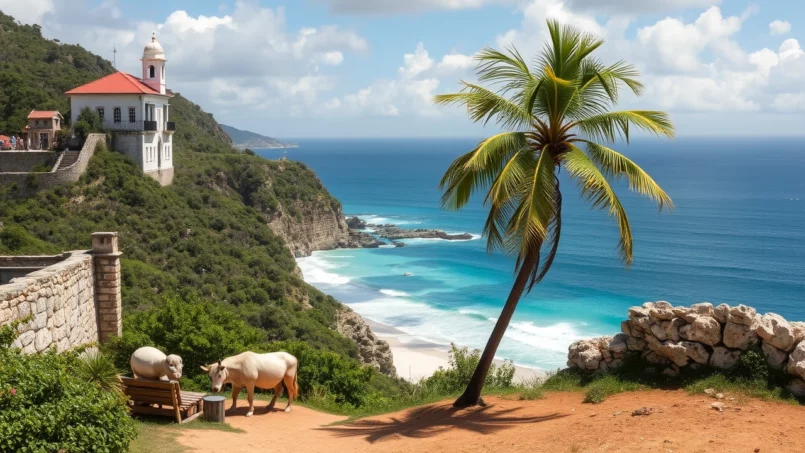
Settling in Saint-Barthélemy is a bit like landing in a postcard: turquoise beaches, volcanic hills, dream villas, little cafés in Gustavia where you hear as much French as English. Yet behind this picture-perfect image, many newcomers discover a feeling far less Instagrammable: homesickness.
Studies indicate that 70 to 80% of expats experience a phase of nostalgia, even the most seasoned ones. On an isolated island like Saint-Barthélemy, far from family and familiar landmarks, this feeling can be amplified. However, there are strategies to understand and get through this period, in order to transform your stay into a rich experience rather than a long episode of longing.
Understanding Homesickness in Saint-Barthélemy
Homesickness is not a whim, nor a sign of weakness. Researchers link it to fundamental human needs: attachment to loved ones, a sense of belonging, mastery over one’s environment. When arriving in Saint-Barthélemy, everything is disrupted at once: new climate, new language, new social codes, new pace of life, sometimes a new job.
Psychologists identify several factors behind this unease: loss of bearings, breakup with daily routine, loss of control, and uncertainty. One approach distinguishes a ‘separation reaction’ (missing home) and an ‘adaptation reaction’ (difficulty in making the new place your own). In Saint-Barthélemy, these two dimensions are heightened in the hotel, restaurant, or tourism sectors, due to irregular hours and high seasonal pressure.
The figures highlighted by research are telling: up to 80% of people who move abroad experience this unease, often described as a major symptom of culture shock. It can appear in the first few weeks or, more insidiously, after a few months when the “honeymoon” with the island fades. Many speak of a “slump” around the sixth month, right when the postcard gives way to real life.
Recognizing the Signs Before It Overwhelms You
Spotting the signs of homesickness allows you to act before you get stuck. On an expensive island with no established network, it’s easy to let things worsen. The manifestations are multiple: emotional, physical, behavioral, and professional.
Many newcomers to Réunion describe emotional symptoms characteristic of culture shock: a diffuse sadness, unexplained crying spells, floating anxiety, unusual irritability, and a drop in motivation. Their thoughts often loop around what they left behind (family, friends, familiar places). A tendency to idealize their home country and perceive the island’s reality negatively can set in, especially when facing concrete challenges like the high cost of living, housing prices, or a certain professional isolation.
Physically, the stress associated with uprooting can manifest as sleep disturbances, changes in appetite, persistent fatigue, headaches, muscle tension, or digestive issues. On a hot, humid island, where sleep is sometimes poor due to heat or mosquitoes, these symptoms are easily dismissed as “nothing serious.” Yet they often reflect a deeper unease.
Behaviorally, one often observes a tendency toward isolation: turning down invitations, staying shut in your home, spending hours on social media scrolling through loved ones’ lives, or conversely, maintaining contact only online without investing in your new environment. In Saint-Barthélemy, this withdrawal can be heightened by contextual factors such as the high cost of outings, the difficulty of getting around without a personal vehicle (car or scooter), or the feeling of not belonging to the same social circle as the wealthy clientele on the island.
At work, homesickness often eventually weighs you down: mistakes, loss of concentration, demotivation, more strained relationships with colleagues. Studies on expats show that unmanaged nostalgia directly impairs performance, productivity, and even commitment to the employer.
The Specifics of Island Isolation
Saint-Barthélemy combines incredible assets – safety, climate, quality of life, decent medical services, the beach just minutes away, a tight-knit community – but also factors that promote isolation. There is no public transportation: without a car or scooter, you rely on taxis (expensive) or walking. The narrow, winding roads can discourage some trips, especially for those coming from a well-served big city.
The permanent population of the area is about ten thousand residents, with a high proportion of seasonal tourism workers.
The island is also intimately tied to seasonality. In high season, the tourist frenzy can give you the feeling that you’re only there to serve others. In low season, the drop in visitors can conversely heighten the sense of emptiness. In both cases, it’s easy to feel out of sync, far from family, stuck between a demanding job and the impression of being “out of the world.”
Creating a “Home” on an Island That Isn’t Yours
One of the first research-validated strategies for easing homesickness is to recreate a familiar environment. Even if you live in a staff room or a small studio, the idea is to transform your space into a place that tells your story.
A few tips for creating a comforting environment and gently easing into your new life in Iceland.
Hang up photos of your loved ones and bring along a few symbolic objects (a favorite blanket, a familiar cushion). These elements reassure your brain by creating a sense of familiarity.
Set up a dedicated space to recharge, like an armchair by the window or a small table with a familiar-scented candle, a notebook, or a speaker.
The goal is not to cut yourself off from Iceland, but to have a soothing place to retreat to when nostalgia hits.
Smells and tastes also play a key role. Cooking a dish from home with products found in the supermarkets of Gustavia or Saint-Jean, searching markets or import stores for ingredients that feel like you – that’s as much a cultural ritual as a moment of comfort. On an island where gastronomy blends French and Creole influences, it’s easy to whip up hybrid recipes: a gratin from home with Caribbean ingredients, for example.
In this work of domesticating your new surroundings, rhythm matters enormously. Creating a routine, even a simple one, stabilizes you. A morning coffee on the terrace, a walk around Gustavia harbor at the end of the day, a regular workout, an evening journal to set down your thoughts: these rituals ground you and counterbalance the feeling of being adrift.
Advice for adapting to a new environment
Building a Local Network Without Getting Stuck in an Expat Bubble
Studies on expat well-being converge: a strong local social network is one of the best antidotes to homesickness. In Saint-Barthélemy, where everyone eventually crosses paths regularly – at the supermarket, on the beaches, in the same bars and restaurants – this groundwork is there. But you have to activate it.
Expat communities play a valuable role, especially at the beginning. International platforms like InterNations, Expat.com, or specialized Facebook groups about the island allow you to quickly find fellow countrymen or people going through the same adaptation phases. The Interlanguage Club, which presents itself as a meeting point for expats and offers a page dedicated to Saint-Barthélemy, illustrates this “social hub” logic where you can practice languages, exchange tips, and ask for help.
To avoid staying locked in a French or English-speaking bubble, it’s useful to combine these circles with more local interactions. The people of Saint-Barthélemy place importance on greetings: saying “bonjour” when entering a shop, “bonsoir” at a restaurant, thanking with a sincere “merci beaucoup.” These are small doors to richer exchanges. Learning a few French expressions if it’s not your native language, making an effort to understand the nuances between “tu” and “vous,” or simply asking for advice at a market can spark unexpected conversations.
Percentage of remote workers who feel less lonely by frequenting a coworking space, a logic that also applies to structured activities.
Example of Levers for Building Connections
Here is a table illustrating different concrete channels for expanding your circle in Saint-Barthélemy and how they can affect homesickness:
| Type of Lever | Concrete Examples on the Island | Main Effect on Homesickness |
|---|---|---|
| Expat circles | InterNations groups, Interlanguage Club, Expat.com | Normalization of the experience, emotional support, sharing of bearings |
| Sports activities | Diving, kitesurfing, yoga, running, tennis | Energy, informal encounters, positive routine |
| Cultural & festive life | Festivals, concerts, town events | Sense of belonging, discovering local culture |
| Civic / environmental engagement | Beach cleanups, marine preservation projects | Meaning given to the stay, intergenerational encounters |
| Spiritual / community practices | Masses, meditation groups, spiritual communities | Moral support, framework of values, listening |
The goal is not to multiply superficial contacts, but to cultivate a few trusting relationships. Research on digital nomads shows that a small number of deep friendships is far more protective than a multitude of passing acquaintances.
Connecting with the Island Through Activities, Not Just the Postcard
One of the traps of homesickness in Saint-Barthélemy is remaining a spectator of the island: you cross it to go to work, you look at it from a terrace, but you don’t really engage with it. Conversely, actively involving yourself in what it offers transforms your relationship with the place and lessens nostalgia.
The island offers a wide range of water activities like diving, snorkeling, stand-up paddleboarding, sailing, surfing at Lorient or Toiny, catamaran trips, and deep-sea fishing. For nature lovers, hiking trails lead to Colombier, Morne du Vitet, or the Grand Fond coast. All beaches are public, and each has its own vibe: Shell Beach for family calm, Flamands for open horizons, Saline or Gouverneur for raw nature.
On the cultural front, the island pulses to the rhythm of regattas (Bucket Regatta, Cata-Cup, Fun Cup), festivals like the St. Barths Music Festival, national holidays (July 14, Fête de la Musique), carnival, or the Gustavia Festivals with concerts and parades. By participating not just as a spectator but as a resident, you anchor positive memories that counterbalance thoughts turned toward “elsewhere.”
Volunteer engagement is an important social and environmental catalyst on the island. The marine nature reserve and initiatives to protect corals, coastlines, turtles, and reefs bring together residents and tourism professionals during operations like beach cleanups. This investment fosters connections and provides a sense of purpose, helping to compensate for family or professional distance.
Maintaining Ties with the Home Country Without Getting Trapped There
The temptation, when homesickness hits, is to spend entire evenings on WhatsApp, FaceTime, or social media with loved ones back home. Yet research shows that this strategy, if it becomes exclusive, slows adjustment to the new life and fuels nostalgia. The challenge isn’t to cut contact, but to find a balance between roots and new branches.
To maintain strong ties at a distance, schedule regular exchanges. Prioritize frequency over duration: a weekly video call with parents, a monthly check-in with a group of friends, or frequent short voice messages are more effective than long, spaced-out conversations. Many families use dedicated chat groups (on WhatsApp, Telegram, Signal, etc.) to easily share photos, anecdotes, and daily news. Tools like Zoom, Skype, or FaceTime also facilitate these exchanges.
The content exchanged can also be thought of as a cultural bridge, not just as an outlet for nostalgia. Sending photos of your daily life in Saint-Barthélemy – your commute, the Gustavia market, a sunset, a local dish you’re trying – helps your loved ones visualize your new life and better understand what you’re experiencing. Some expats keep a blog or a monthly newsletter of a few pages, illustrated with photos, to keep everyone updated without spending evenings repeating the same stories.
Examples of Balanced Connection Rhythms
| Type of Relationship | Suggested Useful Frequency | Preferred Content |
|---|---|---|
| Parents / siblings | 1 video call per week + short messages | Daily news, emotions, projects, pictures of the island |
| Close friends | 1 video or audio call per month | Longer stories, confidences, shared plans (trip, visit) |
| Grandparents / elders | 1 audio or video call every 2–3 weeks | Reassure, tell stories, send cards/postcards and printed photos |
| Colleagues back home | Occasional messages + rarer calls | Professional news, networking, possible return plans |
Beyond calls, small shared rituals at a distance have a strong soothing power: cooking the same recipe over video, watching a movie at the same time and then discussing it, organizing a virtual happy hour for a birthday, singing together during holiday celebrations. Research on dispersed families emphasizes: the quality of bonds matters more than quantity, but their regularity is protective.
Relying on the Expat Community and Existing Resources
Even on a small island, no one is condemned to face homesickness alone. Around Saint-Barthélemy, several networks dedicated to expats in the Caribbean or the French-speaking sphere operate. InterNations, for example, brings together communities in the Lesser Antilles, whose members share advice, events, and opportunities. Paguro lists expat associations, Expatica lists specialized service providers, and networks like Vlamingen in de Wereld specifically support certain national groups abroad.
On islands like Réunion, local Facebook groups go beyond a simple directory function. They serve as an essential digital complement to traditional word-of-mouth. Members concretely find jobs, housing, or lasting friendships there. These platforms are used to exchange practical aspects of daily life, such as finding a roommate, administrative procedures, or children’s schooling.
Digital nomads are not left out. They represent a growing share of mobile workers, and studies show that about a quarter of them regularly feel lonely. Many turn to online communities (Slack, Discord, specialized groups) or group travel programs. In Saint-Barthélemy, even without a dedicated program, it’s possible to replicate this logic by forming informal groups of remote workers who meet at the same cafés, share work slots, or organize outings.
Understanding the Role of Budget and Material Conditions in Homesickness
The cost of living in Saint-Barthélemy is significantly higher than in many home countries. Rent, food, individual transportation, outings: everything weighs more on the budget, which can fuel underlying stress and reinforce the urge to “go back.” Available data shows, for example, that the rent for a small two-room apartment often ranges between €1,500 and €3,000 per month, that fresh and imported products are more expensive than in mainland France, and that the lack of public transport forces you to invest in a vehicle or regularly use taxis.
Financial pressure during expatriation can heighten the feeling of isolation and homesickness. To limit it, it’s advisable to negotiate a package including housing and meals with the employer, temporarily prioritize a shared apartment or a staff room, and consult specialized forums to spot affordable neighborhoods and food deals.
This work of material security won’t make homesickness disappear, but it removes a layer of stress that worsens it. Feeling financially trapped reinforces the impression of having “no way out,” which is fertile ground for dark thoughts.
Adopting a Lifestyle That Protects Mental Balance
Psychological well-being abroad depends not only on social network or the frequency of calls home. Lifestyle habits weigh heavily. Several studies on expats highlight the role of sleep hygiene, diet, and physical activity in regulating mood and anxiety.
To preserve your balance on a tropical island, it’s advisable to adopt a regular daily rhythm with fixed bedtimes and wake-up times, limit alcohol consumption used as comfort, and incorporate physical activity several times a week (running, swimming, brisk walking, or the gym). This routine helps cushion periods of nostalgia.
Mindfulness or writing routines also play a role. Some expats keep a gratitude journal, noting down a few positive elements of their day in Saint-Barthélemy each evening: a pleasant conversation with a shopkeeper, a landscape, a professional satisfaction. Others use free writing to set down their worries, preventing them from looping.
When and How to Seek Professional Help
In most cases, homesickness gradually decreases over a period of one to two years, as bearings are rebuilt. But for some, it becomes chronic or worsens, sliding into a true depressive or anxiety episode. The warning signs are known: persistent sleep disturbances, significant weight loss or gain, lasting social withdrawal, frequent crying, loss of interest in almost everything, pervasive pessimistic thoughts, sometimes thoughts of escape or death.
In these situations, reaching out to a mental health professional is not an admission of failure but an act of responsibility. A consultation allows you to assess the situation, identify the mechanisms at play, and outline a plan of action.
Alexandra Legendri-Fauron, psychologist in Saint-Barthélemy
For those who wish to speak in English or another language, several complementary options exist: teleconsultations with therapists based in mainland France or abroad via platforms like BetterHelp, Talkspace, or specialized directories like “counselling in France” or BACP for English-speaking profiles. These professionals use proven approaches such as cognitive behavioral therapy (CBT), interpersonal therapy, or more integrative methods. Geographic distance is no longer an obstacle: video, phone, secure messaging allow for real support, provided you choose a qualified and supervised practitioner.
In case of a severe panic attack, suicidal risk, or feeling of loss of control in Saint-Barthélemy, immediately dial 15 (SAMU), 18 (firefighters), 17 (police), or 112 (pan-European emergency). These services can arrange on-site medical or psychiatric care or guide you to better-equipped facilities in Saint-Martin, Guadeloupe, or Martinique.
Helping Your Children Through Homesickness on the Island
When the expatriation project involves a family, homesickness doesn’t only affect adults. Children, especially those who abruptly change language, school, and friends, are particularly vulnerable. Research on “Third Culture Kids” shows that these young people, raised outside their home country, can experience strong identity tensions, a feeling of being “from nowhere.”
In Saint-Barthélemy, the public education system is in French and attached to the Academy of Guadeloupe. Non-French-speaking children must adapt to this new language, which can cause homesickness manifesting as irritability, withdrawal, a drop in academic performance, sleep disturbances, or somatic complaints.
The same strategies as for adults apply, adapted to their age: establish reassuring routines, maintain regular contact with grandparents and friends back home via video calls, display family photos in the home, encourage learning the local language without devaluing the language of origin, promote shared activities with other children (sports, music, clubs). Regular visits to the home country, or visits from loved ones to Saint-Barthélemy, also help maintain a sense of continuity.
Giving Meaning to Your Expatriation Experience
The way you tell yourself your own story as an expat directly influences the intensity of homesickness. The psychological literature emphasizes the importance of “reframing” this experience not as a painful imposed parenthesis, but as an opportunity – albeit a demanding one – for personal growth and intercultural competence.
Saint-Barthélemy is a French overseas collectivity in the Caribbean, blending European refinement with tropical gentleness. Its history is marked by colonization, massive emigration in the 19th and 20th centuries, and then a rise as a luxury destination. Understanding that many local families have experienced exile and maintained long-distance ties can give a particular depth to the feeling of uprootedness.
Some expats find additional meaning by getting involved in projects that go beyond their individual trajectory: environmental initiatives related to the marine reserve, cultural events, mentoring newcomers, participating in community life. Others develop creative projects – blog, photography, writing, music – that transform the experience of homesickness into artistic material.
Balancing Roots and New Attachments Over the Long Term
Over time, if you take care of both your original ties and your local roots, homesickness tends to lose its intensity. Longitudinal studies on expats show a gradual decrease in nostalgia over the first two years, without it ever completely disappearing. Often, at the core, a “dual loyalty” remains: one part of you continues to turn toward your home country, another feels at home in Saint-Barthélemy.
Rather than living the tension between two countries as a failure, embrace it as a new identity: that of a person capable of inhabiting multiple worlds. To do this, set up concrete anchors: a calendar of regular visits to the home country when possible, a medium-term project (training, professional development, community involvement) on the island, and an honest reflection on what you gain and lose in each place.
Homesickness, from this perspective, becomes less of an obstacle to overcome than a constant reminder of your attachments. In Saint-Barthélemy, it may push you to seek something deeper than the simple postcard, to truly meet those who live there, to take part in the life of this small French community surrounded by turquoise water. It is in this in-between, between acknowledged nostalgia and active curiosity, that the finest version of expatriation is often built.
Disclaimer: The information provided on this website is for informational purposes only and does not constitute financial, legal, or professional advice. We encourage you to consult qualified experts before making any investment, real estate, or expatriation decisions. Although we strive to maintain up-to-date and accurate information, we do not guarantee the completeness, accuracy, or timeliness of the proposed content. As investment and expatriation involve risks, we disclaim any liability for potential losses or damages arising from the use of this site. Your use of this site confirms your acceptance of these terms and your understanding of the associated risks.

Cyril Jarnias is an independent expert in international wealth management with over 20 years of experience. As an expatriate himself, he is dedicated to helping individuals and business leaders build, protect, and pass on their wealth with complete peace of mind.
On his website, cyriljarnias.com, he shares his expertise on international real estate, offshore company formation, and expatriation.
Thanks to his expertise, he offers sound advice to optimize his clients' wealth management. Cyril Jarnias is also recognized for his appearances in many prestigious media outlets such as BFM Business, les Français de l’étranger, Le Figaro, Les Echos, and Mieux vivre votre argent, where he shares his knowledge and know-how in wealth management.





