
 Published on and written by Cyril Jarnias
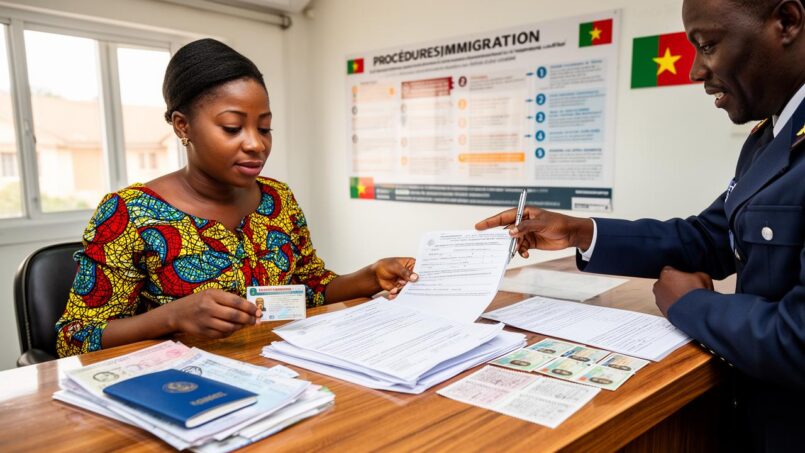
Settling in Cameroon is not just about packing your bags. Between visas, residence permits, taxes, healthcare, housing, banking, work, and even driving, the administrative path is dense. But it is far from impossible if you understand the logic of the authorities and the sequence of formalities.
This article provides a structured breakdown of all the essential steps for living in Cameroon long-term. It is based on current official regulations and commonly observed practices on the ground.
Entering Cameroon: Visas and Entry Requirements
Before any settlement, you must first be able to enter the territory. For the vast majority of foreigners, this requires obtaining a visa, often now in electronic form.
Cameroon has implemented an eVisa system with two main categories: short-stay visas and long-stay visas. They are applied for online via the official portals evisacam.cm or evisacam.com, or through embassies and consulates.
Main types of visas
Visas are categorized by duration and purpose of stay. The most common are:
| Type of visa | Indicative maximum duration | Main specificities |
|---|---|---|
| Short-stay / tourist visa | Up to 90 days (sometimes up to 6 months depending on category) | Private visits, tourism, short missions, no salaried activity |
| Business visa (short stay) | Up to 90 days (up to 180 days depending on case) | Meetings, negotiations, prospecting, but no local paid employment |
| Transit visa | 24 to 72 hours (4–5 days for some regimes) | Simple passage, no settlement |
| Long-stay / work visa | From 3 months to 12 months | Prerequisite for work and residence permits |
| e-Visa long stay | 6 to 12 months, multiple entries possible | Online procedures, electronic authorization with QR code |
| Diplomatic / service visas | Variable | Specific category for state agents and equivalents |
In the eVisa system, a short-stay visa generally has a validity of 180 days, while a long-stay visa can be up to 12 months with multiple entries. For a life project in Cameroon, the latter serves as the basis for work and residence procedures.
Requirements and documents to provide
The required documents vary slightly depending on the visa type, but the core remains stable. The authorities specifically require:
To enter the country, you must present a passport valid at least six months after the arrival date with blank pages, a recent passport photo meeting standards, and a yellow fever vaccination certificate (except for infants under one year old). Additionally, you must provide proof of financial resources, accommodation (reservation, lease, or legalized invitation), and a travel itinerary with a return ticket or proof of means to purchase one.
Depending on the purpose of stay, additional documents are required:
| Purpose of stay | Specific documents required |
|---|---|
| Long stay (3 months to 1 year) | Legalized letter of invitation clearly stating the duration of stay |
| Business | Letter of invitation from a local partner + letter from the company guaranteeing financial and legal responsibility |
| Studies | Letter of admission from a Cameroonian educational institution |
| Internship / volunteer work (≤ 3 months) | Legalized acceptance letter describing the program |
| Family reunion / visit | Proof of family relationship (birth certificate, marriage certificate, etc.) |
| Tourism | Detailed itinerary, proof of means for the duration of stay |
For minors (under 18 or 20 years old depending on the chancery), add: birth certificate, notarized parental authorization, copies of parents’ ID and residence permits, and, for children of Cameroonian origin, presentation of parents’ original Cameroonian passports.
For some long stays abroad, a medical certificate attesting to the absence of contagious diseases may be required. It is also often necessary to take out travel insurance covering medical expenses and potential repatriation costs.
Procedure: online or via embassy
Two main options exist:
– eVisa portal: create account, online form, upload documents, electronic payment (bank card, PayPal, crypto depending on intermediaries), tracking by email or SMS. After processing, the visa authorization with a QR code is sent by email. You must print it and present it upon arrival to obtain the sticker in the passport.
– Embassy / consulate: submission by mail at some posts (e.g., in Washington, D.C.), possibly with support from specialized companies like VisaHQ that assist with file preparation. Applications must be received no earlier than 90 days before departure. A prepaid, trackable return envelope must be included.
Processing times vary depending on the channel and urgency level:
| Channel / option | Average announced processing time |
|---|---|
| eVisa portal – standard processing | Approximately 3 to 7 business days |
| eVisa portal – express processing | 24 to 72 hours with surcharge |
| eVisa via provider (VisaHQ, etc.) | 1 to 3 days for the electronic part |
| Embassy (complete file) | Approximately 7 business days, longer during peak periods |
| Diplomatic / service visas | Approximately 2 weeks |
Authorities strongly recommend only booking cancellable or refundable flights until the visa is issued, to minimize unpleasant surprises.
Visa fees and payment methods
Costs depend on the visa type, nationality, number of entries, and processing time. Some references:
| Visa type / channel | Indicative fee range |
|---|---|
| Tourism, short stay, transit (embassy) | Approximately 93 USD |
| Business visa | Approximately 120 to 180 USD |
| Transit (according to supplementary source) | Approximately 40 to 90 USD |
| Multiple entry visa (6 months) | 100,000 F CFA |
| Short Stay Visa (up to 6 months, express) | 181.82 to 272.73 USD depending on processing time |
| e-Visa long stay | Variable fees depending on nationality, entry type, and processing speed |
Online, payment is made by bank card or other electronic means. At embassies, applicants often pay separate application and visa fees.
Upon arrival: border control and length of stay
With the printed eVisa authorization or consular visa, travelers proceed to border control. Immigration officers then affix a sticker in the passport, re-verifying:
– accommodation address,
– return itinerary or proof of resources,
– consistency between the stated reason and the visa type.
Authorities may reduce the granted length of stay or refuse entry for security reasons or if the documents presented are not compliant.
The rule is clear: once the visa validity expires, the holder must leave the territory, unless a formal extension is obtained from the General Delegation for National Security (DGSN), which reviews requests on a case-by-case basis.
Settling long-term: residence permits, work, and residency
Coming for a few weeks and settling for several years involve very different administrative logics. Beyond a few months, you must enter the framework of foreigner law: work permits, residence titles, possible permanent residency, and even naturalization in the very long term.
Work permit: essential condition for employment
Any foreigner wishing to hold a paid position in Cameroon must obtain a work permit. This is a legal requirement, including for persons of Cameroonian origin holding another nationality. Only Cameroonian citizens can work without specific authorization.
The system is based on a sponsorship logic: the employer is the sponsor and must:
– be regularly registered with the Ministry of Employment and Vocational Training,
– justify that no Cameroonian candidate with the required profile was found (labor market test),
– file an application for a foreign worker with all supporting documents.
A work permit is generally valid for a specific position, employer, and location. Any change in job, company, or geographic location may require obtaining new work authorization.
The most common documents include: banknotes, coins, and bank cards.
– employment contract or signed offer,
– letter from the employer explaining the need to hire a foreigner,
– certified copies of the employee’s diplomas and CV,
– recent medical certificate and criminal record,
– company documents: registration, tax and social attestations, sector licenses,
– sometimes a “Cameroonization of jobs plan” approved by the ministry.
Processing a complete file can take 2 to 5 months from the initial application to the issuance of the permit, including review of the work authorization, obtaining the long-stay visa, and then the residence permit.
Different categories of residence permits
Once entered with an appropriate visa (usually long-stay), the foreigner must apply for a residence permit from the DGSN within three months of legal entry. Several regimes exist:
| Type of permit / residence card | Typical validity duration | Target audience |
|---|---|---|
| Temporary residence permit | 1 year, renewable | Employees, students, family members, retirees |
| Long-term residence permit | 2 to 5 years, renewable | Entrepreneurs, executives, long-term workers |
| Resident card (long stay) | Up to 10 years, renewable | Stable residents, spouses of Cameroonians, clergy |
| Refugee / asylum permit | Variable | Recognized refugees |
The application generally includes: the information needed to process your request.
This is the minimum amount in CFA francs to pay to obtain a residence permit under certain immigration regimes.
It is prudent to submit the application or renewal at least one month before the current permit expires, attaching the old card. An absence exceeding 12 consecutive months may result in the loss of resident card benefits, except in cases of force majeure.
Financial guarantees, repatriation bond, and penalties
Cameroon requires foreigners staying more than three months without a guaranteed return to provide a repatriation bond. In practice, it corresponds to the price of an economy class airline ticket from Yaoundé to the country of origin.
Fine in CFA francs per day for overstaying a visa in Côte d’Ivoire.
Toward permanent residency and citizenship
Permanent residency is granted sparingly, after several years of regular stay (often at least five years) and a thorough review of:
– stability of employment or economic activities,
– social and family integration,
– criminal record,
– compliance with tax and administrative obligations.
For naturalization, requirements are even higher. You generally need to prove at least twenty years of continuous legal residence, demonstrate good knowledge of French or English, impeccable conduct, and stable means of support. Spouses of Cameroonians can apply for citizenship after at least ten years of legal marriage and shared life in the country.
Taxation: becoming a tax resident and paying taxes
Living in Cameroon also means entering a structured tax system. The administration considers a person a tax resident if they:
– spend more than 183 days per year in the country (including arrival and departure days),
– or have their home or principal residence there,
– or concentrate their economic interests there (professional activity, main source of income).
Taxation of residents and non-residents
A tax resident is taxable on all of their worldwide income: salaries, professional profits, rental income, dividends, interest, capital gains, pensions, etc. Non-residents are generally taxed only on their Cameroonian-source income (local employment, rents from property in Cameroon, capital gains on local assets, etc.), often via withholding tax.
Income tax is progressive by bracket, with a rate range around 10–35% (some texts mention 11–38.5%), plus a municipal surtax of 10% of the calculated tax.
For non-salary professional income, a flat rate of 33% may apply.
| Annual net income bracket (XAF) | Indicative rate (excluding municipal surtax) |
|---|---|
| 0 to 2,000,000 | Approximately 10–11% |
| 2,000,001 to 3,000,000 | Approximately 15–16.5% |
| 3,000,001 to 5,000,000 | Approximately 25–27.5% |
| Over 5,000,000 | Approximately 35–38.5% |
Salaries benefit from a flat-rate deduction of 30% for professional expenses, and a threshold of 62,000 F CFA per month exempts the lowest earnings from withholding.
Declarations, deadlines, and control
The tax year aligns with the calendar year. Residents have different deadlines:
Tax declaration and payment deadlines vary by taxpayer category. Professional taxpayers (merchants, artisans, liberal professions, farmers, etc.) must file their annual return by March 15 at the latest. Other taxpayers, such as employees with supplementary income or property owners, generally must declare their income by June 30. Employers have an annual salary declaration obligation by March 15 and must make monthly withholding payments before the 15th of each month.
Taxpayers whose only income is salaries already subject to withholding tax are not required to file an annual return.
Delays or irregularities attract penalties:
– interest of 1.5% per month on tax due (capped for VAT at 50% of the principal),
– surcharge of 10% per month for late monthly declarations (limit 30%),
– penalties of 30% (good faith), 100% (bad faith), or 150% (fraud) for proven inaccuracies.
Key information and procedures for taxpayers in Cameroon
Access the online tax declaration service at teledeclaration-dgi.cm
Visit impots.cm or call the toll-free number 82 00 for any information
Mandatory application, valid for 2 years, for procedures such as company creation or opening a professional account
VAT, local taxes, and income protection
The standard value-added tax (VAT) is set at 19.25%, with a zero rate on exports. It applies to the sale of goods, services, professional real estate, import of goods, and rental of bare land by professionals.
All operators with annual turnover exceeding 15 million F CFA must register for VAT. Non-residents are subject to it if they engage in taxable activities and must designate a solvent local representative.
Other levies add to the tax landscape: property tax at 0.1% of the property value, registration and stamp duties on contracts, inheritance tax, social contributions to the National Social Insurance Fund (CNPS), business tax, etc.
For expatriates, the existence of double taxation treaties with several countries can sometimes reduce the burden, through tax credits or reduced withholding rates on dividends, interest, and royalties.
Working, doing business, and starting an activity
Beyond individual status, many foreigners come to Cameroon to take up an executive position, launch a business, or invest.
Creating a company: one-stop shop and legal forms
Cameroon is part of the OHADA space, which harmonizes company law across 17 African countries. The most common legal forms are:
– Sole proprietorship (establishment / entrepreneur), suitable for small activities,
– SARL (limited liability company), with a minimum capital of approximately 1,000,000 XAF,
– SA (public limited company), more for large projects, minimum capital of at least 10,000,000 XAF for a listed company,
– Branch of a foreign company, whose status must be renewed every two years,
– Liaison office, simple antenna without legal personality, cannot sell directly.
Foreigners may hold 100% of the share capital. The Investment Promotion Act and the 2020 Investment Charter govern benefits and obligations.
To simplify procedures, Centers for Business Creation Formalities (CFCE) are available in each region. These one-stop shops bring together essential services such as the trade register, tax authorities, CNPS, and statistical services. The goal is to allow company creation within 72 hours for the simplest structures.
Common formalities include:
– choice of legal form and trade name,
– reservation of the name with the relevant register,
– drafting articles of association,
– deposit of capital with a bank,
– registration in the trade and personal property credit register,
– obtaining a tax identification number (TIN) from the DGI,
– registration with CNPS if the company employs staff,
– declaration of existence to the Ministry of Labor and statistical services,
– publication of a legal notice in the press (e.g., Cameroon Tribune).
Registration fees for a creation via the CFCE amount to 41,500 F CFA.
Most banks require a TIN and incorporation documents to open a professional account. Institutions like Société Générale Cameroun, BICEC, UBA, or international banks with local subsidiaries prioritize duly registered companies.
Upon hiring an employee, the employer must:
– register the company with CNPS,
– enroll employees and make monthly contributions (approximately 11.2% of gross salary borne by the employer, 2.8% by the employee, within a ceiling of 300,000 F CFA, plus contributions to the Housing and Employment Fund),
– comply with the Labor Code and decrees relating to the employment of foreigners.
Hiring expatriate staff requires, as seen above, obtaining a work permit. Its validity often coincides with one year, renewable, aligned with residence permits.
Housing: renting, buying, and land rights
To live in Cameroon, you also need a roof. Here again, dealing with the administration is unavoidable, if only to secure a lease, register fiscally, or obtain a land title certificate for a purchase.
Renting a home: contracts, deposits, and obligations
The vast majority of urban dwellers are renters. Housing is found through real estate agents, classified ads, online platforms, or word of mouth. Brokers must hold a license, which it is advisable to verify with the national association of brokers.
A standard rental arrangement involves a lease contract for one year, renewable, sometimes longer. The law requires registration of leases with the relevant authorities within ten days of signing. A lease longer than three years is considered a long-term contract requiring additional formalities.
Landlords generally require:
– copy of the tenant’s passport or national ID card,
– proof of income or employment,
– sometimes a reference from a previous landlord or a guarantor,
– security deposit equivalent to one or two months’ rent,
– advance payment of one to several months’ rent,
– agency commission (percentage of annual rent).
Water, electricity, and internet charges are usually the tenant’s responsibility. Access to housing sometimes requires a residence certificate or location plan, useful for other procedures (bank, taxes, residency).
Rights and duties are regulated:
– the tenant has the right to peaceful enjoyment of the premises, privacy, and use of common areas,
– the landlord must refrain from disturbing enjoyment, maintain common equipment, and comply with lease terms,
– at the end of the contract, the deposit must be returned minus damages or unpaid rent.
In case of dispute (unpaid rent, nuisance, unauthorized subletting, etc.), the owner may request eviction but must follow notification and appeal procedures defined by the Recovery of Premises Ordinance.
Buying property: specific rules for foreigners
Foreigners can purchase built properties and use rights (emphyteutic leases or others) on most land. However, buying land in border, agricultural, or areas near strategic installations is strictly regulated, sometimes prohibited.
The land title is the essential element, issued according to the regime established by Ordinance No. 74‑1 of 1974 and Decree No. 76‑165 of 1976. Obtaining or transferring it involves specific procedures.
– a verification at the land registry (no mortgage or dispute),
– a field survey by a consultative commission,
– a publication period of about 30 days for possible objections,
– drafting of a sales deed by a notary (mandatory for validity of the transaction),
– registration and transcription with the land services (MINDCAF).
Total costs (registration, notary fees, various taxes) can represent 8 to 15% of the property price. Additionally, upon resale, a capital gains tax applies (5% in urban areas, 10% in rural areas).
Foreigners must obtain approval from the Minister of State Property, Surveys, and Land Tenure to access certain types of properties, especially freehold. Moreover, high interest rates (often between 12 and 20% per annum) make real estate loans costly, prompting many buyers to prefer cash payment, subject to justifying the legal origin of funds.
Healthcare: access to the healthcare system and health requirements
Living in Cameroon requires serious consideration of health, both to meet entry obligations and to anticipate daily care management.
Public and private healthcare system
The public system, managed by the Ministry of Public Health, is based on three levels: integrated health centers, district hospitals, then regional and university hospitals. In practice, it suffers from significant deficits in staff and modern equipment, especially outside major cities.
Figures indicate fewer than two doctors per 10,000 inhabitants, infrastructure sometimes lacking running water or reliable electricity, and long waiting times. Access to quality care in rural areas remains problematic.
Major urban centers like Douala and Yaoundé concentrate most private healthcare facilities, which are more modern and better equipped. They frequently accept international insurance and offer, for some specialties, services comparable to international standards at lower prices than in Western Europe.
Health insurance for foreigners
For expatriates, international health insurance is not always formally mandatory, but it is strongly recommended. Policies should ideally cover:
– routine care and hospitalizations,
– emergency medical evacuation (abroad if necessary),
– medical repatriation.
Providers like Allianz, AXA, Generali, or GeoBlue are frequently mentioned. Premiums range from a few hundred to over a thousand dollars per year, depending on age, medical history, and coverage level.
Public facilities rarely accept foreign insurance on a third-party payment basis, hence the need to pay upfront and seek reimbursement from your insurer.
Vaccinations and medical requirements for entry
Cameroon is strict about certain vaccinations for long-stay travelers, beyond just yellow fever:
– yellow fever (mandatory),
– hepatitis A and B,
– meningitis A and G,
– polio,
– tetanus,
– typhoid.
Malaria is endemic, so prophylaxis is often advised by travel medicine centers before departure. Additionally, for long-stay visa or residence permit applications, a medical certificate attesting to the absence of serious contagious diseases may be required.
Medical emergencies and useful numbers
The most cited medical emergency number is 112 (other sources mention 119 and police numbers 17/113, fire department 18/118). In practice, the responsiveness and resources of public emergency services vary greatly, especially outside major cities. It is essential to know in advance which hospital or clinic to go to in case of a problem and often to use a taxi or private vehicle.
Some NGOs like Médecins Sans Frontières provide a 24/7 free ambulance service in certain crisis regions (Northwest, Southwest). In these areas, population displacement and insecurity severely complicate access to healthcare.
Bank account, financial flows, and repatriation
To receive a salary, pay rent, or do business, opening a local bank account is practically essential.
Opening a bank account: conditions and required documents
Cameroonian banks, under the regulation of the BEAC (Bank of Central African States), impose relatively strict conditions, especially on foreigners. Generally, you need:
To open a bank account in France, you must be of legal age (or an emancipated minor) and present a valid passport. Non-nationals must also provide a valid residence permit. You need to produce a recent proof of address (utility bill, lease, attestation), proof of income (pay slips, tax notices, etc.), and passport-sized photos (4×4 cm format). Depending on the case, a location plan of the residence or designation of client references from the bank may be required.
Foreigners generally need a tax identification number and, for professional accounts, must provide company incorporation documents, including the trade register and the taxpayer card.
Initial deposits vary depending on the institution and product:
| Type of requirement | Indicative amount (XAF) |
|---|---|
| Simple opening deposit | 10,000 to 50,000 F CFA |
| Some current accounts | 25,000 to 200,000 F CFA |
| Minimum capital for professional accounts | 100,000 to 5,000,000 F CFA depending on company size |
Specific offers exist for students or expatriates, with reduced or even zero account maintenance fees for some profiles.
Repatriation of income and exchange controls
Cameroon is part of the CEMAC zone, where transfers of funds abroad are regulated. Any transaction exceeding 5 million F CFA must go through an authorized bank and be declared. Foreign investments over 100 million F CFA require prior notification to the Ministry of Finance.
Percentage of the monthly net salary that an expatriate employee can generally repatriate.
Supplementary solutions like multi-currency accounts at some institutions or fintechs (e.g., Wise) allow receiving or holding foreign currency, but do not replace local obligations (taxation, traceability, anti-money laundering regulations).
Mobility, vehicles, and driver’s license
An important part of autonomy in Cameroon involves being able to drive, whether a personal or company vehicle. Rules are very precise for foreigners.
Driving with a foreign license and IDP
In the short term, a visitor can drive with their national license accompanied by an International Driving Permit (IDP), provided their country and Cameroon are linked by the applicable international conventions (Geneva, Paris, Vienna).
The IDP serves as a multilingual translation of the license, generally valid for one year, and must always be presented with the original license. Without it, you may frequently encounter difficulties during police checks or when renting a vehicle.
For stays longer than one year or permanent residence, it is necessary to convert or obtain a Cameroonian license.
Exchange and obtaining a Cameroonian license
Cameroon recognizes and exchanges certain foreign licenses, especially those from countries in the regional economic community. To convert your license to a local one, contact the Ministry of Transport with:
Approximate cost in F CFA of fees for certain categories of driver’s license applications in Côte d’Ivoire.
If no reciprocity agreement exists, or for long-term stays, you must pass the theoretical and practical exams at a local driving school. Licenses are classified by categories (A, B, C, D, E, F, G) depending on the type and size of vehicles. The minimum age ranges from 16 to 21 depending on the category.
A points system has been introduced to combat road insecurity: serious offenses can lead to suspension or revocation of the license.
Importing and registering your vehicle
Many expatriates consider importing a vehicle, often from Europe or the United States. The ports of Douala and Kribi are the main entry points. The total cost includes:
The customs duty rate applied to the CIF value of an imported vehicle.
Vehicles over ten years old may face restrictions or higher excise duties, especially depending on engine size.
The customs website (douanes.cm) and the offices of the Directorate General of Customs provide updated rates and procedures, including for vehicles arriving by land, now governed by specific circulars.
Cost of living and financial preparation
A often overlooked but crucial aspect of settling in concerns the balance between income and real cost of living.
Available data indicate:
The average monthly net salary after tax, much lower than the cost of living in major cities.
In Douala and Yaoundé, the “comfortable” budget range for an expatriate generally varies between 600,000 and 1,200,000 F CFA per month (about 1,000 to 2,000 USD), excluding international school fees.
Building a solid immigration file (proof of resources, income declaration, repatriation guarantees) requires anticipating these gaps, especially since school fees, private medical costs, or housing in sought-after neighborhoods (Bastos in Yaoundé, Bonapriso in Douala) can escalate quickly.
In summary: a demanding but structured settlement
Living in Cameroon long-term requires a real administrative investment:
The essential administrative steps to take to settle and live legally in the country.
Obtain a long-stay visa before arrival, then secure a work permit and appropriate residence permit (employee, entrepreneur, student, family).
Register with the tax authorities, obtain a taxpayer card if necessary, and open a local bank account while respecting exchange rules.
Properly formalize your rental contract (lease) or home purchase with the relevant authorities.
Arrange your local health coverage and ensure compliance with current vaccination requirements.
Regularize your right to drive and, if applicable, undertake procedures for importing your personal vehicle.
The whole process may seem heavy, but it follows a coherent logic: protection of the local labor market, control of people and capital flows, legal security of transactions, and health oversight. By informing yourself in advance through official channels (ministries, embassies, dedicated portals), and by surrounding yourself with local professionals (lawyers, notaries, tax advisors) if needed, it is possible to turn this labyrinth into a simple marked path and approach settling in Cameroon more serenely.
Disclaimer: The information provided on this website is for informational purposes only and does not constitute financial, legal, or professional advice. We encourage you to consult qualified experts before making any investment, real estate, or expatriation decisions. Although we strive to maintain up-to-date and accurate information, we do not guarantee the completeness, accuracy, or timeliness of the proposed content. As investment and expatriation involve risks, we disclaim any liability for potential losses or damages arising from the use of this site. Your use of this site confirms your acceptance of these terms and your understanding of the associated risks.

Cyril Jarnias is an independent expert in international wealth management with over 20 years of experience. As an expatriate himself, he is dedicated to helping individuals and business leaders build, protect, and pass on their wealth with complete peace of mind.
On his website, cyriljarnias.com, he shares his expertise on international real estate, offshore company formation, and expatriation.
Thanks to his expertise, he offers sound advice to optimize his clients' wealth management. Cyril Jarnias is also recognized for his appearances in many prestigious media outlets such as BFM Business, les Français de l’étranger, Le Figaro, Les Echos, and Mieux vivre votre argent, where he shares his knowledge and know-how in wealth management.





