
 Published on and written by Cyril Jarnias
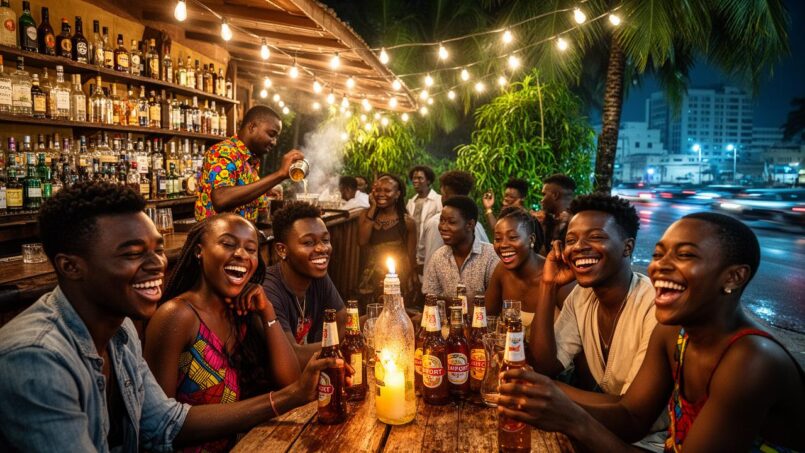
Between Makossa beats, beach bars under coconut trees, and high-energy urban clubs, Nightlife in Cameroon: Where to Go Out in the Evening is a topic that tells much more than just a desire to party. It reveals the face of a multifaceted country, split between frenetic major metropolises like Douala and Yaoundé, and more laid-back seaside resorts such as Limbe and Kribi. Here, the night is a time for encounters, music, food, and cultural rituals, whether you have your feet in the sand or on a air-conditioned dance floor.
The choice of venue (traditional cabaret, trendy lounge, or beach bar) determines the atmosphere, music, and prices. It’s essential to plan your location, timing, and expectations. For a hassle-free evening, prioritize safety and adopt the right habits to avoid unpleasant surprises.
Douala and Yaoundé: Engines of Cameroonian Nightlife
If you’re looking for the beating heart of the night in Cameroon, two cities stand out: Douala, the economic capital, and Yaoundé, the political capital. Both concentrate the greatest diversity of bars, clubs, cabarets, concert venues, and festive restaurants, attracting a mix of locals, expats, diplomats, and transient tourists.
In Douala, often described as the “heart” of Cameroonian nightlife, the offerings are abundant. The Akwa district, long synonymous with lively nights, remains a major landmark, along with Bonapriso for more upscale venues and Bonamoussadi for a more popular, community-oriented vibe. In Yaoundé, the hills host a more “polished” scene, blending elegant lounges in Bastos, historic cabarets in Mvog Ada or Elig-Effa, and large modern clubs that are packed on weekends.
Lounges, hybrid spaces between bars and clubs, are gaining ground. They allow you to dine or have a cocktail before hitting the dance floor, all in one place, meeting a new customer demand.
Atmosphere, Music, and Dress Code
Whether in Douala or Yaoundé, some common threads run through everywhere. The atmosphere is generally intense and warm, sound systems are very powerful, lighting is polished, and the crowd is mostly young or in their thirties, very particular about style and dress.
The dominant music sums up the country’s sonic DNA: Makossa and Bikutsi, two genres born in Cameroon and still omnipresent, blend with Nigerian Afrobeats, hip-hop, R&B, house, techno, or current international hits. On the best nights, the lineup alternates between DJ sets and live performances by local artists.
Smart casual is the norm in city venues: shirts and closed-toe shoes for men, dresses or elegant outfits for women. High-end clubs in Douala (VIP Room, Le Carré) and Yaoundé (Platinum Club, Le Zénith) often enforce a selective entrance policy, especially on weekends. Conversely, neighborhood bars, snack joints, and small cabarets are much more relaxed; the key is to dress so you don’t stand out too much.
Douala vs. Yaoundé: Atmosphere, Cost, and Styles
The two capitals don’t offer quite the same nighttime experience. Douala stands out with a faster pace, a higher concentration of trendy clubs, and generally higher costs for dining and going out, though figures vary. Yaoundé, while not cheap, is on average more affordable for restaurants and offers a mix of festive venues and more intimate spots.
Here’s a summary table of useful differences to keep in mind before choosing your nightlife base:
| Criteria | Douala | Yaoundé |
|---|---|---|
| Role in the country | Economic capital, largest port in Central Africa | Political capital, “city of seven hills” |
| Nighttime atmosphere | Very dense, considered the most vibrant in the country | Lively but slightly more “relaxed” |
| Cost of living (est. per person) | Approx. $1,363 USD/month | Approx. $671 USD/month |
| Restaurants | Significantly more expensive on average | Often 40–45% lower prices |
| Iconic clubs | VIP Room, Le Carré, Le Space, Club Black, Soho Bar & Lounge | Platinum Club, Le Zénith, Le Village, Le Bercy, Canal Olympia |
| Crowd | Very mixed: locals, expats, businesspeople, tourists | Mix of locals/expats, diplomats, students |
| Dominant style | Urban, trendy, energetic | Blend of elegance, tradition, and modernity |
For a party-focused trip, Douala remains a logical choice. For a more balanced stay between culture, institutions, going out, and budget, Yaoundé is often more comfortable.
Limbe: The “Deauville of Cameroon” Tropical Version
Leaving Douala for Limbe, on the southwest coast, is a complete change of pace. Here, the night unfolds more to the rhythm of waves than neon lights. Nicknamed the “Deauville of Cameroon,” the city stretches at the foot of Mount Cameroon, the highest mountain in Central Africa, and owes part of its charm to its black volcanic sand beaches.
Beach Bars, Grilled Food, and Small Clubs
Nightlife in Limbe is more modest than in the major capitals, but it perfectly matches the tropical and laid-back vibe of the city. Around Down Beach—the lively urban beach with its fish market—a series of bars, snack joints, and nightclubs welcome locals and visitors late into the evening. People mostly drink local beer, some simple cocktails, and enjoy grilled fish straight from the nearby market.
Among the popular nightlife spots in Douala are Ship OLGA, Empire Night Club, Maxim’s Club, Manjong Night Club, hostess Esther Enow, and HK Lounge. These venues are mainly concentrated near the city center and the coast, often close to each other. This proximity makes it easy to go “bar hopping” on foot early in the evening, before opting for a taxi on the way back.
In the Down Beach area, some establishments play up their sea views and Afro-Caribbean music, while others focus on more urban rhythms (Afrobeats, hip-hop, R&B) to attract a younger crowd. Lounges like Ocean Bleu Plus or Salento Lounge add a more contemporary and comfortable touch, with plush seating, refined lighting, and bottle service.
Hours, Dining, and Atmosphere
In Limbe, regular restaurants typically close between 10 PM and 11 PM. This sets a slightly earlier evening rhythm than in larger cities: dinner around 8 PM–9 PM, then extend the night at bars or clubs. On the beaches, grilled food stalls sometimes stay open later, depending on crowds and the season.
Local cuisine is essential to the nighttime experience. Iconic dishes like Ndolé, Eru, Achu, and grilled fish are served at restaurants such as Paradise Of Taste, La Côte, Karater Resto (Limbe City Restaurant), Melrose Restaurant-Bar, and Botanic Garden Restaurant. For a simpler, more authentic option, seafood grilled near the fishermen’s boats on Limbe’s main beach is a must.
Limbe: A Seaside Town, Not a “Non-Stop Party”
Despite this offering, it would be misleading to present Limbe as a “24/7 party” resort. The town retains a fairly calm character, driven by family beach tourism and attractions like the Limbe Wildlife Centre or the botanical gardens. During the day, beaches like Down Beach, Sandy Beach, or Batoke Beach invite swimming, walks, and contemplation of Mount Cameroon, sometimes visible on the horizon.
For digital nomads, the digital infrastructure is considered basic, even though the cost of living remains reasonable (about $1,640 USD per month for a digital nomad, slightly more than Kribi, but with better public transport). The city is also reportedly 1.2% cheaper than Kribi in overall cost of living, which can factor into choosing a long beachfront stay with some nighttime outings.
Kribi: “Cameroon Riviera” and Beach Nights
Several hundred kilometers further east, Kribi plays in a different league: that of a luminous seaside resort, nicknamed the “Cameroon Riviera.” The city stretches along long white sand beaches lined with coconut palms, bathed by warm, shallow water. The main attraction, the Lobé Falls, where a river plunges directly into the Atlantic over 30 meters, gives the area a cinematic backdrop.
By day, Kribi lives to the rhythm of swimming, walks on the beach, pirogue trips, visits to fishing villages like Londji or Eboundja, or excursions to Pygmy camps and the rainforest. In the evening, this setting transforms into a backdrop for a very typical beach nightlife.
Waterfront Bars and Clubs
The uniqueness of Kribi is that much of its nightlife is directly on the sand. Many bars and restaurants keep going after dark, serving grilled fish, seafood, and local dishes under thatched roofs or wooden terraces.
Among the mentioned spots, EMERGENCE COPACABANA BEACH KRIBI, Le Debarcadère, Pieds dans l’Eau, La terrasse de l’océan, Kribeach, Le Tétraodon lounge, and Café de Kribi Cuba Libre embody this “feet in the water” style where you go from meals to cocktails to African or Caribbean music. Some places like Ocean Bleu—a nightclub—or Le Bamboo Beach Bar & Grill, on the banks of the Lobé, keep the vibe going well after midnight with DJ sets, traditional dances, or live concerts.
The Ngoye district, considered the culinary soul of the city, reinforces this spirit. Its fish market is a must: you pick your sea bass, prawns, or other shellfish, then hand them over to the “braiseuses”—grilling experts—who turn them into a restaurant-quality meal for often very reasonable prices.
Nights by the Water: Season, Weather, and Crowds
Kribi isn’t just a party spot; it’s first and foremost a beach resort. The dry season, from December to February, is considered the most favorable for beach tourism: calmer ocean, bright weather, and, at the same time, very lively nightlife. The “mango rains” between March and May bring afternoon storms that can cool things down but don’t necessarily stop the momentum at bars. The long rainy season, September to November, is best for eco-tourism, especially to see the Lobé Falls swollen by water, but beach evenings may be interrupted by more frequent showers.
In Kribi, cash is essential for most daily expenses (beach bars, snacks, outings). Only large hotels accept bank cards. Reliable withdrawals are possible at banks like BICEC and Afriland. Mobile connectivity is improving with the arrival of 5G (MTN operator), making it easier to use ride-hailing apps and geolocation, even in the evening on southern beaches.
The cost of living is relatively low, with an estimated budget around $1,620 USD per month for a digital nomad, slightly lower than Limbe. However, internet is 33% faster than in Limbe, and air quality is 28% better—a nice perk for those who enjoy running or walking by the water early in the morning after a short night.
Where to Stay for Better Nightlife Access
Since Kribi is a vacation town, the choice of accommodation directly affects the nighttime experience. Waterfront hotels like ATLANTIC HOTEL KRIBI, HOTEL COPACABANA BEACH KRIBI, Hotel Ilomba, Golden Beach Apartments, Hotel Residence Coco Beach, or Les Gîtes Kribi let you reach a lively beach bar or restaurant within minutes on foot, without relying on a taxi late at night.
Hotels that combine daytime relaxation with nighttime entertainment to suit every traveler’s pace.
Offer breakfast, spaces for lounging (farniente), and organize excursions.
Often have a hotel bar and a terrace with music to kick off the night.
Sometimes host small in-house parties to extend the atmosphere without leaving the property.
Between Douala, Yaoundé, and the Coast: What Nighttime Experiences to Seek?
To navigate this mosaic of destinations and styles, it’s helpful to compare the main poles of Cameroonian nightlife on a few concrete criteria: type of atmosphere, approximate cost, dominant music style, and typical crowd profile.
Comparison of Major Nightlife Hubs
The following table puts together the key features of Douala, Yaoundé, Limbe, and Kribi for a traveler wondering where to spend their evenings.
| City | Nighttime atmosphere | Key areas | Dominant music | Typical crowd |
|---|---|---|---|---|
| Douala | Intense, urban, very diverse | Akwa, Bonapriso, Bonamoussadi | Afrobeats, Makossa, hip-hop, electronic | Locals, expats, businesspeople, tourists |
| Yaoundé | Lively but more “relaxed,” sometimes sophisticated | Bastos, City Center, Mvog Ada | Bikutsi, Makossa, African varieties, R&B | Students, civil servants, diplomats, families |
| Limbe | Beachside, modest but convivial | Down Beach, city center | Afrobeats, urban music, Caribbean sounds | Residents, beach tourists, families |
| Kribi | Festive beach vibe, focus on beach bars | Ngoye, beaches, Lobé | Afrobeats, African music, live beach music | Tourists, couples, groups of friends |
In practice, an itinerary combining Douala or Yaoundé with a getaway to Limbe or Kribi lets you sample two very different nighttime worlds: one urban, trendy, and dense; the other more informal, with your feet in the sand, and rhythms blending with the sound of the waves.
Live Music: The Backbone of Cameroonian Nights
Understanding the night in Cameroon also means grasping the central role of live music. Historically, cabarets in Douala and Yaoundé—like Mermoz, Le Caroussel, or Chacal—served as laboratories for generations of musicians. In the 1970s and 1980s, every neighborhood in Douala had its band, and Makossa reigned supreme, traveling far beyond borders thanks to figures like Manu Dibango or Richard Bona.
Makossa, Bikutsi, and Cabaret Heritage
Makossa, born on the banks of the Wouri, evolved into hybrids like makossa-soukous or makossa jazzy, carried by artists such as Petit Pays, Marcel Swanga, or Jean-Pierre Essome. Meanwhile, Bikutsi, a 6/8 rhythm from the Beti peoples, long animated the bars of Yaoundé, notably at Chacal where the band Les Têtes Brûlées played. These genres aren’t confined to the past: they’re still heard in cabarets, concerts, and sometimes in clubs on nights when DJs want to “Cameroonize” the dance floor.
Today, festivals like the Yaoundé Fair (Ya-Fe), the festi-Bikutsi, or the Douala Jazz Festival carry on this live tradition. Even though some events have disappeared due to lack of funding, the idea remains the same: offer open-air stages or large halls—stadiums, town hall esplanades, sports palaces—where the public can see the country’s artists.
Jazz, Fusions, and Themed Nights
Over time, a jazz scene has taken shape, particularly with support from institutions like the Institut français du Cameroun or the Alliance franco-camerounaise. Events like “Jazz sous les manguiers” or the “Festival Jazz 237” have brought local and international musicians, sometimes to intimate stages, sometimes to large crowds on the banks of the Wouri or in the gardens of cultural institutes.
In Cameroonian clubs, musical diversity shows up in specific themed nights. In Douala, nights dedicated to Amapiano or salsa and Congolese rumba sessions are held at places like La Rumba Club or La Maison du Rumba. Meanwhile, Yaoundé offers a different selection with bars like La Terrasse, which programs acoustic concerts or jazz sets on certain weeknights, illustrating the variety of scenes and audiences.
Eating at Night: From Street Food to Upscale Restaurants
Cameroonian nightlife isn’t just about music and drinks. It also plays out on the plate, on the sidewalks, and in restaurants. Street food is deeply rooted in daily life: meat skewers (“soya” or “50/50”), fritters (“puff-puff”), bean akara, grilled fish with cassava sticks (“miondo” or “bobolo”), often served until late at night.
In large Cameroonian cities like Yaoundé, many establishments combine restaurant and bar, offering a varied range from local cuisine to international specialties. Places like La Forêt Dense or L’Orient Rouge illustrate this openness with Cameroonian dishes (Ndolé, Poulet DG), French, Italian, Asian, or Lebanese options. Conversely, spots like Tchopetyamo or La Briqueterie immerse visitors in local street food with their rows of grills and skewer stalls.
On the coast, the fish markets of Kribi or Limbe extend this logic: you choose the catch from the fisherman or a stall, then hand it to a grilling woman who seasons and cooks it over a charcoal brazier. It’s often one of the best ways to end an evening after a concert or a few hours of dancing, surrounded by families, young people, and night workers.
Budget, Prices, and Economic Realities of a Night Out
Going out in the evening in Cameroon can cost relatively little or become expensive, depending on the type of venues and the desired standard. Neighborhood bars and snack joints, street grills, and some cabarets remain very affordable, sometimes for just a few thousand CFA francs including drinks. Conversely, high-end clubs in Douala or Yaoundé with bottle service, VIP tables, and imported cocktails can quickly drive up the bill.
Minimum entry-level budget for one drink at a club in Douala, in CFA francs.
The following breakdown, purely indicative, gives an idea of typical spending ranges for a “standard” evening:
| Type of evening | Indicative range per person (FCFA) | Summary comment |
|---|---|---|
| Street food + a few beers | 2,000 – 6,000 | Skewers, grilled fish, local beer |
| Bar or neighborhood snack | 3,000 – 8,000 | 2–3 drinks, possibly a small dish |
| Lounge or mid-range club | 5,000 – 15,000 | Cocktails, possible cover, live music or DJ |
| High-end club / bottle service table | 15,000 – 50,000 (and up) | Bottle, reserved table, possible entry fees |
For longer-term travelers, these nighttime costs add to a cost of living that contrasts between Douala and Yaoundé, prompting some digital nomads to favor the latter, deemed about 10% more financially appealing than the former, while enjoying a nightlife rated slightly better for this audience.
Safety: Enjoying the Night While Staying Vigilant
Any honest reflection on Nightlife in Cameroon: Where to Go Out in the Evening must include an essential dimension: safety. The country still faces security threats in certain regions, and major cities experience a notable level of crime, especially at night.
Urban Crime and Specific Risks
In urban centers like Douala, Yaoundé, Ngaoundéré, or Bafoussam, authorities report a real risk of armed robbery, assaults, burglaries, and car-jacking, particularly after dark. Minor offenses—pickpocketing, bag snatching, phone theft—are common at bus stations, markets (Mokolo, Briqueterie, Kennedy in Yaoundé, for example), around some hotels, and in taxis.
Roads connecting major cities can also be scenes of banditry, notably from “coupeurs de route” who set up illegal roadblocks, sometimes armed. The Douala–Yaoundé road is known for accidents, often linked to poor road conditions, faulty lighting, and drunk driving.
Although classic tourist circuits are far from risky zones in the north and borders, the discovery of improvised explosive devices even in the capital Yaoundé demands constant vigilance, especially at large gatherings.
Taxis, Ride-Hailing, and Night Travel
On a practical level, the main recommendation for nighttime outings is clear: avoid walking long distances at night, especially in poorly lit or isolated neighborhoods, and stick to trusted taxis or ride-hailing services. In both Douala and Yaoundé, the yellow taxis that operate as shared shuttles can be risky: poorly maintained vehicles, detoured routes, passenger overload, and sometimes involvement in thefts.
It is advisable to: pay attention to your health, eat a balanced diet, and exercise regularly.
– Book a taxi through a hotel, restaurant, or a reliable contact, rather than hailing one randomly on the street.
– Check the license plate and the driver’s identity before getting in.
– Insist that no other passengers be picked up along the way, especially at night.
– Avoid motorcycle-taxis (“okada,” “bend-skins”), which are very accident-prone and rarely come with helmets.
Apps like Yango, available in major cities, offer a more predictable transport alternative in terms of pricing and traceability. To use them, you need a mobile connection and a suitable payment method.
Common Sense at Night: Money, Appearance, Consumption
The same common-sense rules as elsewhere apply: limit the amount of cash you carry, keep your ID documents on you (or a certified copy of your passport and visa), avoid flashing jewelry, expensive watches, or high-end phones, especially near clubs or on the street when leaving.
In bars and clubs, never leave your drink unattended, politely decline overly insistent offers from strangers, and stay moderate on alcohol to keep control of your movements. Note down your hotel address (or card), inform a trusted person of your destination, and arrange your taxi return in advance—these are simple habits that reduce risks.
Finally, respecting the cultural context is essential: public displays of affection, especially between same-sex individuals, can be very poorly received and expose you to hostile reactions. Cameroonian laws criminalize homosexual acts, and social acceptance of LGBTQ+ people is very low, including in nightlife.
Festivals, Celebrations, and Cultural Nights
Beyond bars and clubs, Cameroon also lives at night through a dense calendar of festivals and cultural events. This dimension is particularly strong in the western regions or along the Sawa coast.
The Ngondo, a major traditional festival of the Sawa people in Douala, features evening gatherings with dances, music, and symbolic ceremonies. In the West, the Nguon among the Bamoum and Bamiléké festivals turn the night into a time for masked dances, drums, and community celebrations.
These events are not the same as commercial nightlife, but they shape the country’s overall atmosphere and offer other ways to “go out in the evening”: sitting on a mat watching a mask ballet, participating in a vigil, following a torchlit procession, or listening to griots sing stories to the sound of the mvet or balafon.
How to Choose Where to Go Out: Some Practical Tips
Faced with this diversity, visitors might feel a bit lost. A good starting point is to clarify your main desire: rather dance until dawn, listen to live music, have a drink in a quiet lounge, experience a beach evening, or discover nighttime street food.
Guide to atmospheres and must-see places for an evening out in Cameroon’s main cities.
For clubs and dancing: aim for Douala (VIP Room, Le Carré, Le Space, Club Black, Switch Night-Club) or Yaoundé (Platinum Club, Le Zénith, Le Village, Le Bercy). Arriving before midnight on weekends helps avoid the entrance rush.
For live music: check the schedules of cultural institutes, Canal Olympia in Yaoundé, jazz festivals in Douala, historic cabarets. Concerts are often announced on the venues’ social media.
For the beach vibe: favor Kribi (Ngoye bars, beaches, Lobé Falls) or Limbe (Down Beach, waterfront bars, grilled fish). Evenings here are more laid-back.
For street food and immersion: explore areas like La Briqueterie in Yaoundé, the nighttime fish markets in Kribi or Limbe, or the rows of grills in working-class neighborhoods.
In any case, one recurring piece of advice is: ask locals, hotel receptionists, or guides for recommendations on current hotspots. The nightlife scene is fluid—new places open, others fade—and locals generally know which are the safest and liveliest at the moment.
A Night Reflecting a Multifaceted Country
In the end, Nightlife in Cameroon: Where to Go Out in the Evening tells as much about bars and clubs as about the country itself. You find its cultural diversity—over 250 ethnic groups and dozens of languages—, its musical creativity, its love of community celebrations, but also its economic constraints and security challenges.
The night in Cameroon offers varied experiences, from Douala’s rooftops to Kribi’s fish grills, through Yaoundé’s cabarets and Limbe’s beach bars. To enjoy it fully, being curious and cautious is key: listen to local advice, adjust your expectations, and accept that the night here is a window into culture, where you dance, eat, sing, and share stories until dawn.
Disclaimer: The information provided on this website is for informational purposes only and does not constitute financial, legal, or professional advice. We encourage you to consult qualified experts before making any investment, real estate, or expatriation decisions. Although we strive to maintain up-to-date and accurate information, we do not guarantee the completeness, accuracy, or timeliness of the proposed content. As investment and expatriation involve risks, we disclaim any liability for potential losses or damages arising from the use of this site. Your use of this site confirms your acceptance of these terms and your understanding of the associated risks.

Cyril Jarnias is an independent expert in international wealth management with over 20 years of experience. As an expatriate himself, he is dedicated to helping individuals and business leaders build, protect, and pass on their wealth with complete peace of mind.
On his website, cyriljarnias.com, he shares his expertise on international real estate, offshore company formation, and expatriation.
Thanks to his expertise, he offers sound advice to optimize his clients' wealth management. Cyril Jarnias is also recognized for his appearances in many prestigious media outlets such as BFM Business, les Français de l’étranger, Le Figaro, Les Echos, and Mieux vivre votre argent, where he shares his knowledge and know-how in wealth management.





