
 Published on and written by Cyril Jarnias
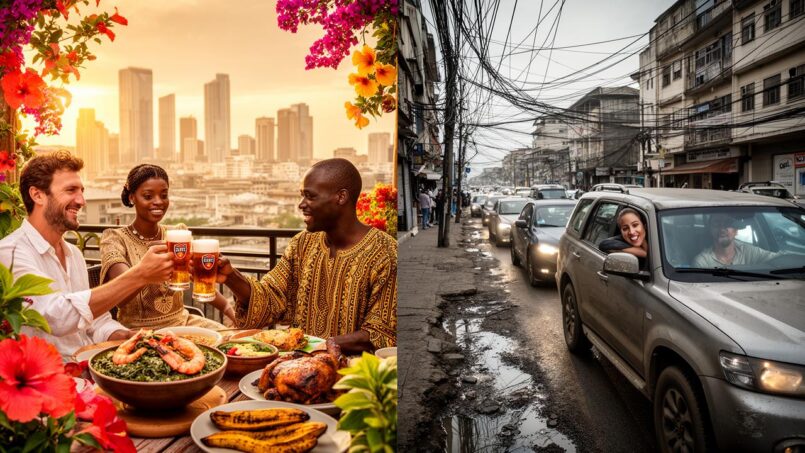
Expatriating to Cameroon, a country often called “Africa in miniature,” means accepting a real balancing act: between spectacular landscapes and fragile infrastructure, between economic opportunities and exhausting bureaucracy, between warm hospitality and a complex security environment. For an employee on an international contract, an entrepreneur, or a digital nomad, the country can be both attractive and disorienting.
Good to know:
This article provides a comprehensive, fact-based analysis of the pros and cons of expat life in Cameroon. It aims to help you assess whether this adventure is worth it and identify the conditions needed for a successful experience.
A Country with Strong Potential: Economy, Diversity, and Strategic Position
The first advantage of expatriating to Cameroon lies in its unique position in Central Africa. Its economy is more diversified and relatively more stable than some of its neighbors, with a productive base that doesn’t rely solely on a single raw material.
Agriculture employs more than half of the working population and contributes significantly to GDP through export crops such as cocoa, coffee, cotton, and bananas. Hydrocarbons, mining, forestry (with large areas of tropical forest), and energy round out this foundation. Douala concentrates industrial and port activity, while Yaoundé hosts administrative, political, and educational centers, along with some high-value-added services.
Tip:
Cameroon has a growing domestic market, affordable labor, and a young population. Its central position within CEMAC provides privileged access to the entire Francophone Central African regional market. For an investor or expatriate executive, this translates into access to a broader market and a workforce that is often bilingual (French/English)—a rare and valuable combination on the African continent.
But this potential comes with heavy constraints: pervasive bureaucracy, recurring water and electricity outages, a fragile healthcare system, and significant security risks depending on the region. Expatriation is not like living in a developed country: it requires a high tolerance for the unexpected and a keen sense of adaptation.
Where to Settle? Douala, Yaoundé, and Other Cities
The choice of host city plays a decisive role in the expat experience. The two main entry points remain Douala and Yaoundé, each with its own strengths and limitations.
Warning:
Douala is Cameroon’s main economic and port hub, hosting the international airport, corporate headquarters, and industrial activities. Neighborhoods like Bonapriso and Bonanjo form the heart of expat life, offering modern infrastructure. However, it is the most expensive city in the country for foreigners, with high rents and the cost of imported goods, regularly ranking among the priciest African cities for expats.
Yaoundé, the political capital built on seven hills, offers a different face. Greener and located on a plateau with a temperate climate, it is often considered more pleasant for long-term living, especially for families. The Bastos neighborhood is home to embassies, NGOs, international schools, diplomatic residences, and ultra-secure buildings. Other areas like Odza, Simbock, Mendong, Nkolbisson, Ngousso, or Mfandena offer more affordable housing in a developing urban environment.
Example:
Several Cameroonian cities offer alternatives to Yaoundé and Douala for expats. Limbe and Kribi attract with their beaches and peaceful atmosphere. Buea, at the foot of Mount Cameroon, draws hikers and students. Bamenda, Bafoussam, and Ngaoundéré are more regional hubs, hosting some foreigners in sectors like humanitarian aid, education, or agriculture, without being major long-term expat bases.
City Comparison for an Expat
The cost of living and level of amenities vary by city. To measure the gap, we can compare the price of a one-bedroom apartment in the city center and some common expenses.
| City | Avg. Rent 1BR Center (USD/month) | Weekly Groceries 1 pers. (USD) | Dinner + Drink (USD) | Cost of Living Assessment |
|---|---|---|---|---|
| Douala | ~300 | ~20 | ~15 | Most expensive in country |
| Yaoundé | ~350 | ~25 | ~12 | Considered “reasonable” |
| Limbe | ~250 | ~12 | ~10 | Fairly affordable |
| Buea | ~200 | ~15 | ~10 | Relatively low |
| Kumba | ~200 | ~15 | ~10 | Fairly affordable |
| Bamenda | 150–200 | ~15 | ~8 | Relatively low |
In major cities, daily life for an expat with an international salary may seem cheap compared to the West. But for locals, whose average monthly net salary is around 124,000 FCFA (about 150 USD), modern urban life is out of reach, especially in neighborhoods frequented by foreigners.
Housing: The Biggest Expense… and a Fault Line
For an expat, housing is almost always the top budget item. The urban real estate market is dual: on one hand, a huge supply of modest housing for the local middle class; on the other, a very expensive niche for foreigners, local executives, and elites.
650000
The maximum monthly rent for a high-end three-bedroom apartment in Douala’s expat neighborhoods.
For digital nomads or young single professionals, several neighborhoods in Yaoundé are popular: Bastos for its diplomatic and secure feel, but also Biyem-Assi, Essos, Kondengui, or Mballa II, which are more affordable. Average rents for a one-bedroom apartment illustrate the gap well.
| Yaoundé Neighborhood | Avg. Rent 1BR (FCFA/month) |
|---|---|
| Bastos | 150,000 – 300,000 |
| Biyem-Assi | 70,000 – 150,000 |
| Mballa II | 50,000 – 100,000 |
| Essos | 80,000 – 200,000 |
| Kondengui | 100,000 – 250,000 |
On top of these amounts, there’s a premium for security, access to a generator, a water cistern, or a reliable internet connection. A building with generators, 24/7 security guards, fencing, and video surveillance can cost 30 to 50% more than an equivalent unit without these features. Landlords also pass on their costs (security, maintenance of common areas, property taxes) to rents.
Good to know:
For an expat, housing offers excellent value for money with high comfort standards (air conditioning, fiber internet, parking, pool) often cheaper than in major European cities. However, there is a risk of isolating yourself in a residential bubble disconnected from local reality, where a single month’s rent in a sought-after neighborhood can equal the annual salary of a local employee.
Cost of Living: Affordable for Expats, Burdensome for Locals
When you have a salary in a Western currency, Cameroon can appear as an affordable destination. Daily expenses – food, transportation, some leisure activities – are significantly lower than American or European standards. But this rosy picture masks two realities: the price gap between local and imported goods, and the vast disparity between an expat budget and the means of the majority of the population.
Daily Cost of Living
An overview of prices for food and drinks, with a wide gap between local products and imported items.
Local Products & Street Food
Fruits, vegetables, basic meats, and street food are generally cheap. A simple meal at a local restaurant costs between 2,000 and 5,000 FCFA.
Local Drinks
A local beer costs between 500 and 1,200 FCFA.
Imported & Brand Products
Imported food, wines, brand-name products, or electronic gadgets can be very expensive, sometimes above European prices.
On average, for an expat seeking a certain comfort level, you should budget between $1,500 and $2,000 per month, including housing, to live comfortably in Douala or Yaoundé. This budget covers rent, utilities, food, outings, transportation, internet, and basic health insurance. Families with children in international schools need to plan for much more due to very high tuition fees.
The contrast is striking: the cost of living for an expat is over seven times the average local salary. In other words, most Cameroonians cannot afford to live in the same neighborhoods, frequent the same places, or consume the same products as a foreigner. This economic divide has implications for how expats are perceived and their level of integration.
Socio-economic observer
For the expat, the advantage is a comfortable financial margin that allows saving or investing, provided they don’t overconsume imported goods. The downside is living in an expensive “microcosm,” where prices set for expats (restaurants, bars, services) no longer have much connection to the local economy.
Work, Jobs, and Business Creation: Real Opportunities, Selective Market
Professionally, Cameroon can offer great prospects, but not for everyone. The sectors that are promising for foreign profiles are fairly clearly identified: oil and gas, mining, telecommunications, energy, industry (agribusiness, cement, textiles), large NGOs and international organizations, education (especially international schools), and sometimes healthcare.
Multinational companies based in Douala or Yaoundé – oil companies, banks, insurance firms, agro-industrial groups, branches of major firms like PricewaterhouseCoopers – occasionally recruit expats for management, technical expertise, or project management positions. English and French international schools regularly seek native-speaking teachers, especially in English. International NGOs and development agencies also hire foreign profiles in humanitarian aid, public health, or governance.
Warning:
The local market is characterized by massive unemployment, even among graduates, making it difficult to get a standard job without a prior contract. Some public sector jobs are reserved for nationals. The law requires that a future local employer submits the work permit application, tied to a specific position, before obtaining a visa. It is therefore crucial to secure a job offer before starting the process.
Another avenue for expats is entrepreneurship. The country, often presented as a land of opportunity, opens many paths: agribusiness, renewable energy, digital services, logistics, real estate, healthcare, education, tourism, fashion and cosmetics… The legal framework (OHADA law, Investment Code) provides tax and customs advantages for projects in certain sectors (agro-industry, renewable energy, industrial processing). Foreign capital and expertise are encouraged.
Good to know:
Starting a company in this context requires strong endurance in the face of complex administrative procedures (registration, licenses, taxation) that involve delays, potential informal costs, and regulatory uncertainty. Success largely depends on building reliable local partnerships, a thorough understanding of the local political and economic situation, and solid legal support.
In summary, the main advantage for an expat is access, via an expatriate contract or a well-prepared entrepreneurial project, to significant responsibilities and a high purchasing power. The major drawback is the difficulty of breaking into the local job market without solid support, combined with demanding bureaucracy for work and residence permits.
Visas, Work Permits, and Residence Cards: An Administrative Journey to Anticipate
On the administrative front, expatriation to Cameroon is not a smooth ride. For any paid work, a work permit is mandatory, and the responsibility for obtaining it legally falls on the employer. In practice, the chain is as follows: job offer, work authorization, long-stay visa, then residence card once on site.
There are several visa categories (short stay, long stay, business, transit, etc.), but to live and work long-term, you generally need a long-stay visa, obtained based on a work contract validated by the relevant ministry. The procedure is bureaucratic and can take several weeks or even months, from assembling the file to back-and-forth with the administration and actual issuance.
Warning:
After entering Cameroon, every foreigner must apply for a residence card at the General Delegation for National Security. The application requires numerous documents (copy of passport, proof of accommodation, proof of resources, medical certificate, criminal record, copy of work permit, etc.). Administrative fees are high (several hundred thousand FCFA at minimum) and processing time can extend over several weeks. During this period, a receipt serves as a provisional residence permit.
For an expat, the advantage is that most large employers are familiar with these procedures and handle a good part of the process. The downside is the lack of predictability – delays, requests for additional documents, rule changes – which can complicate relocations, family travel, or renewals.
Security: A Risk to Take Very Seriously
This is arguably the main disadvantage to consider before any decision to expatriate. Many embassies recommend great vigilance in Cameroon, or even formally advise against certain territories. The risks operate on several levels.
Warning:
The Northwest, Southwest, Far North, and North regions, as well as parts of the East and Adamawa, are classified as areas to avoid. This classification is due to armed conflicts, the presence of terrorist groups (Boko Haram, Islamic State in West Africa), attacks, kidnappings for ransom (targeting locals and foreigners), and banditry.
In major cities, the risks are of a different nature but equally real. Douala and Yaoundé are considered areas with a critical threat level for crime according to some security assessments. Theft, assaults, burglaries, carjackings, and various scams are common. Walking alone at night, displaying valuables, using unmarked taxis, or traveling in certain neighborhoods without accompaniment carries risk.
Warning:
Border regions with Nigeria, Chad, and the Central African Republic are particularly dangerous due to attacks by “road cutters,” kidnappings, and piracy (especially in the Bakassi Peninsula). Travel is also affected by violent protests, frequent and potentially corrupt police checkpoints, as well as poor road infrastructure that is very risky at night (no lighting, broken-down vehicles, stray animals, potholes).
For an expat, the relative advantage is access to superior security measures: guarded residences, vehicles with drivers, instructions and support from their employer or embassy, safety training. The heavy counterpart is the need to adopt strict routines: avoid unnecessary travel, limit nighttime outings, carefully choose your means of transport, constantly stay informed about the local situation, and give up a certain spontaneity.
Healthcare: A Fragile National System, Usable but Limited Private Medicine
Another key point in the pros/cons balance: healthcare. The underfunded Cameroonian public system suffers from a chronic shortage of staff, equipment, and medication. There are fewer than two doctors per 10,000 inhabitants. Many public hospitals are overcrowded, poorly equipped, with recurring hygiene problems, water or power outages, and very long waiting times. In rural areas, healthcare provision is sometimes virtually non-existent.
Tip:
For expats, using the public healthcare system is not recommended for serious care. It is advisable to turn to the private sector, which includes commercial clinics, faith-based facilities, and polyclinics of a good standard, especially in major cities like Douala and Yaoundé. These facilities offer shorter wait times, relatively modern equipment, and often better-trained doctors with experience abroad. Although consultations are significantly cheaper than in Europe, they are still more expensive than in the public sector.
In case of major emergency or complex pathology (major surgery, advanced oncology, demanding neonatal care), those who can afford it get evacuated to South Africa, Morocco, or Europe. The universal health coverage recently launched by the authorities is gradually improving access to care for residents, but it does not fundamentally change the situation for expats, who must absolutely take out international health insurance including evacuation and repatriation.
Tip:
Access to private healthcare facilities at an affordable cost compared to the West is an advantage for expats. However, you need to anticipate several downsides: the need to manage emergencies yourself, infectious risks (malaria, HIV, tropical diseases), gaps in certain medical specialties, uneven dental quality, often complicated insurance coverage (with reimbursement delays and exclusions), and the lack of a structured primary care system. It is strongly recommended to update your vaccinations, follow antimalarial prophylaxis if advised, and keep a primary care physician in your home country for certain treatments.
Education: A Solid International Offer in Major Cities, Costly but Structuring
For expat families, the schooling question weighs heavily. From this perspective, Douala and Yaoundé offer a major advantage: a dense network of international French, English, or bilingual schools that follow American, British, French, sometimes Canadian or international (Cambridge/IB) curricula.
Good to know:
Yaoundé offers several international schools. The American School of Yaounde (ASOY) delivers an American curriculum in English from elementary to high school. Accredited French schools, such as Fustel de Coulanges and École internationale Le Flamboyant, are also present. Finally, schools like Enko La Gaieté offer Cambridge and International Baccalaureate programs, with a strong focus on preparation for top global universities.
In Douala, the American School of Douala, the French high school Dominique Savio, and several bilingual schools (Douala International Bilingual Academy, British School of Douala, etc.) make up a varied educational landscape that allows an expat child to follow a coherent and internationally recognized path. Other cities, like Garoua or Maroua, have a few more modest French schools, but the offer remains heavily concentrated in the two metropolises.
Good to know:
International schools offer educational standards close to those of home countries, small class sizes, good facilities, educational continuity in case of overseas relocation, and preparation for international diplomas. However, they have two major drawbacks: very high costs (often several thousand euros per year per child, particularly in American or IB programs) and strong geographic dependency, as living outside Douala or Yaoundé significantly complicates access to this type of schooling.
Expats without children indirectly benefit from this school network through the cultural activity it generates (performances, sports events, parent communities, etc.), which enriches the social life of the affected neighborhoods.
Social Life, Culture, and Leisure: A Major Advantage of Expatriation
One of the greatest advantages of living in Cameroon is the quality of social life and cultural richness. The country, home to over 200 ethnic and linguistic groups, boasts an impressive diversity of traditions, music, cuisines, and beliefs. The sense of hospitality, respect for elders, the importance of family and greetings structure daily life.
In major cities, expat social life revolves around clubs, associations, sports groups, and networks like InterNations or Expat.com, which organize parties, cultural outings, hikes, or weekends at the beach. Yaoundé and Douala are full of bars, lounges, nightclubs, maquis (local eateries), and restaurants – both Cameroonian (ndolé, poulet DG, grilled fish, beignets) and international (French, Lebanese, Asian, Indian).
Good to know:
Cameroon offers a great diversity of activities and landscapes outside the cities. You can enjoy beaches and history in Kribi or Limbe, climb Mount Cameroon from Buea, observe wildlife (elephants, giraffes, lions) on a safari in Waza National Park, or visit cultural and natural sites like the palaces and museums of Yaoundé, the waterfalls of the Southwest, or the crater lake of Barombi Mbo near Kumba.
The expat gains a daily life rich in human interactions, culinary discoveries, festivities, and landscapes. But this abundance requires mastering certain codes: always greet people, avoid sensitive political or religious topics, dress relatively modestly outside very urban circles, respect the prevailing religiosity, and keep in mind that homosexuality is criminalized. LGBT+ individuals, in particular, face serious legal and social risks.
Languages and Integration: A Challenge, but Also a Tremendous Opportunity
Cameroon is officially bilingual (French and English) and over 200 local languages are spoken. In practice, French dominates in most major cities and administrations, while English is more widespread in the Northwest and Southwest regions, as well as in some internationally oriented companies.
For a French speaker, settling in Yaoundé or Douala is relatively easy linguistically. For an English speaker, however, it is strongly recommended to learn at least functional French to handle administrative procedures, medical appointments, or daily interactions. In some contexts, pidgins and local languages serve as communication vehicles; understanding them, even partially, facilitates social integration.
Good to know:
To integrate beyond the expat community, it is essential to learn the local language and its communication codes, such as using indirect language to avoid outright refusals. This immersion allows you to become truly bilingual or multilingual and to acquire valuable intercultural sensitivity that is useful in other contexts.
The flip side is the risk of isolation for expats who stay only in an English-speaking or international French-speaking environment, without making the effort to learn the dominant local language. Many report phases of culture shock, frustration with slowness, misunderstandings, or what they perceive as a lack of rigor in some services. Those who overcome this stage by creating a mixed network (locals + expats), establishing a routine, and accepting a certain degree of cultural relativism generally derive real personal benefit from their stay.
Infrastructure and Living Environment: Constant Contrasts
On paper, Cameroon has more developed infrastructure than several of its neighbors: main roads, ports, international airports, hydroelectric dams, modern telecommunications networks (4G, fiber optic expanding in some central neighborhoods), major hospitals, quality schools. Douala, for example, is supplied with electricity by dams like those in Edéa, which provide a large part of the national power.
Good to know:
Daily life is marked by recurring dysfunctions: frequent power outages and water cuts, especially in outlying areas. Traffic is chaotic with major traffic jams during peak hours and poorly maintained secondary road networks. Informal public transport, unsafe for foreigners, leads most expats to use a personal car or hire a driver.
Digital infrastructure, however, is progressing rapidly: 4G coverage, generous data plans, fiber optic deployment in some popular neighborhoods of Douala and Yaoundé. This allows digital nomads or remote workers to settle in central areas with a connection sufficient for regular video calls, provided they have backup solutions (4G dongles, co-working spaces, generators).
For an expat, the advantage is being able, with the right means, to mitigate some of these weaknesses through equipped housing, a car, premium data subscriptions, backup generators, etc. The downside is the mental energy required for these compensations, dependence on sometimes unreliable service providers, and the need to always have a “Plan B.”
Climate, Environment, and Climate Change: Between Natural Asset and Growing Risk
Cameroon boasts a rare climatic variety: hot and humid coastal zones (Douala, Limbe, Kribi, Tiko), mountainous regions with a pleasant temperate climate (Yaoundé, Bafoussam, Foumban, Bafang, Nkongsamba), and a drier north towards the Sahelian belt. This is one reason for its nickname “Africa in miniature.” For the expat, this is a real advantage: the ability to choose your weather environment, escape harsh winters, and enjoy abundant tropical nature.
Warning:
Cameroon is particularly vulnerable to climate change, with rising temperatures, increased droughts and floods depending on the region, and a coastline exposed to sea-level rise. These extreme events are already causing massive population displacement, agricultural losses, and infrastructure damage.
For an expat, this translates mainly into occasional inconveniences (roads cut off, torrential rains, humid heat, mosquitoes) but also strategic constraints – choice of neighborhood and house type, home insurance, risk assessment for certain agricultural or tourism projects. In a medium- to long-term perspective, the climate context makes some investments riskier and accentuates the general fragility of the country.
Conclusion: For Whom is Expatriation to Cameroon a Good Choice?
The advantages of expatriation to Cameroon are substantial: an intense human experience, immersion in a country of great cultural diversity, a comfortable standard of living with an international salary, economic opportunities in growing sectors, linguistic and intercultural learning, access to a solid international school offer in major cities, a rich social life, and varied natural environments.
Good to know:
Several challenges must be anticipated: a complex and variable security climate depending on the region, high urban crime, a fragile healthcare system requiring solid insurance, administrative burdens, sometimes failing infrastructure, a high cost of living for upscale housing and schooling, as well as psychological pressure linked to culture shock and the feeling of living in a privileged bubble within a predominantly poor population.
Expatriation to Cameroon therefore makes sense for certain specific profiles: executives or experts sent by an organization offering a solid package (secure housing, international health insurance, school fees covered, safety training), entrepreneurs well-supported locally, teachers or volunteers willing to accept more rustic material conditions, and self-sufficient digital nomads living in well-connected neighborhoods.
For others – recent graduates without a safety net, families without school support, people very sensitive to insecurity or disorganization – the equation will be harder to solve.
In all cases, a successful expatriation to Cameroon requires careful preparation: clarify your professional project, secure a contract before leaving, research neighborhoods, schools, insurance, prepare your personal security, learn at least one official language, anticipate visa and residence card procedures, and, above all, accept that daily life will be a permanent balance between the country’s beauty and its structural fragilities. It is precisely this mix that, for some, makes Cameroon an unforgettable expatriation – sometimes demanding, rarely lukewarm.

Cyril Jarnias is an independent expert in international wealth management with over 20 years of experience. As an expatriate himself, he is dedicated to helping individuals and business leaders build, protect, and pass on their wealth with complete peace of mind.
On his website, cyriljarnias.com, he shares his expertise on international real estate, offshore company formation, and expatriation.
Thanks to his expertise, he offers sound advice to optimize his clients' wealth management. Cyril Jarnias is also recognized for his appearances in many prestigious media outlets such as BFM Business, les Français de l’étranger, Le Figaro, Les Echos, and Mieux vivre votre argent, where he shares his knowledge and know-how in wealth management.





