
 Published on and written by Cyril Jarnias
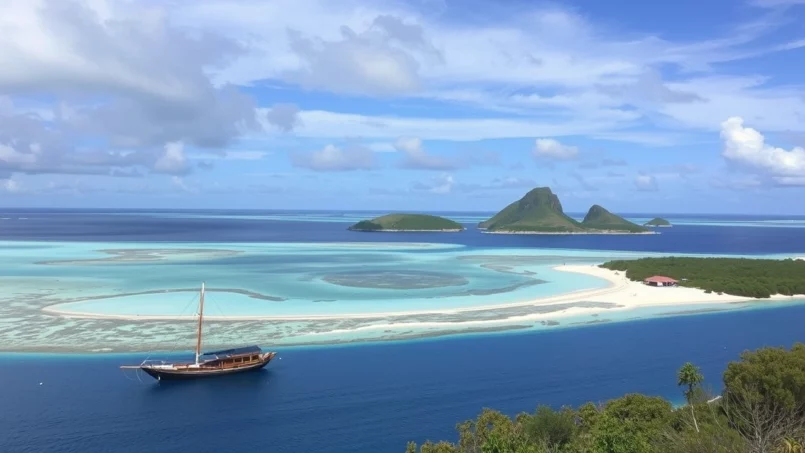
Nestled in the heart of the Pacific, the Marshall Islands are as fascinating as they are intimidating. Coral atolls lost in the vastness of the ocean, a tropical climate, a traditional matrilineal society, a close political relationship with the United States, a cost of living higher than the global average but lower than that of many major Western cities… Moving here is not something to be done on a whim.
This guide covers all essential aspects for preparing your expatriation: the monthly budget to plan for, procedures for obtaining a visa, finding housing, the healthcare system, job opportunities, and procedures for shipping your personal belongings. It is based on hard data and practical advice.
Understanding the Country Before You Go
Moving to the Marshall Islands means choosing an extremely dispersed island microstate: 29 atolls and 5 isolated islands spread over nearly 1.9 million km² of ocean, with only 181 km² of land area. The average height is only about 2 meters above sea level, placing the country on the front line facing climate change.
The total population of the Marshall Islands is estimated to be between 59,000 and 60,000 inhabitants.
The climate is tropical, hot, and humid year-round, with an average temperature close to 27°C (81°F), moderated by the trade winds. Cyclones remain rare but possible, while periods of heavy rain or drought can disrupt infrastructure and water supply. The risks of sea-level rise and inundation are a daily reality to consider in a long-term expatriation project.
Marshallese society is predominantly Micronesian and based on a matrilineal system, where lineage and land rights are passed through the mother. Social organization is structured around clans (Bwij), led by traditional chiefs (Iroij) and clan heads (Alap), assisted by workers (Rijerbal). Land is the foundation of social organization and family wealth, which explains the complexity for a foreigner to access property ownership.
The official languages are Marshallese and English. In practice, English is widely used in Majuro and in administrative and business circles, but in the outer islands, it is common to encounter residents who speak only Marshallese.
Cost of Living: What Budget Do You Need to Live in the Marshall Islands?
One of the first questions an expatriate has concerns the budget. Available data allows for a relatively accurate portrait of daily life.
Overall, the cost of living in the country is about 1.31 times higher than the global average, placing the Marshall Islands at 36th place out of 197 countries. However, compared to the United States, life here would be on average 40% cheaper for a comparable standard of living.
For a numerical overview of average monthly expenses at the national level:
| Profile | Total Monthly Cost (with rent) | Expenses excluding housing | Global Rank (cost of living) |
|---|---|---|---|
| Single person | $1,497 | $542 | 36th / 197 |
| Family of 4 | $2,911 | $1,521 | 36th / 197 |
Caution, however: these amounts are very high relative to the local average salary. The average net monthly income after tax is about $489, which barely covers 0.3 months of “standard” expenses. In practice, local residents often live with tighter budgets and different consumption standards, relying on family support and doing without many expensive imported products.
The modest GDP per capita is $7,467.
Majuro: Daily Life in the Capital
Majuro, with about 26,000 to 27,000 inhabitants, is simultaneously the capital, main port of entry, economic center, and most expensive city in the country. Its cost of living index is about 105, slightly higher than that of Prague (100), which serves as the international reference.
Monthly expenses there are significantly higher than the national average:
| Profile | Monthly Expenses in Majuro (excluding rent) | Monthly Expenses in Majuro (including rent) |
|---|---|---|
| Single person | $873 | $2,096 |
| Family of 3 | $2,268 | $4,066 |
This means an expatriate aiming for a comfortable lifestyle in Majuro will need to target an income well above the local average salary, especially if the employer does not include housing or housing allowances.
Comparison with Other Cities Around the World
To better gauge, comparisons with other cities help define the price level in Majuro:
| City Compared | Majuro is… | Estimated Difference |
|---|---|---|
| Florianópolis (Brazil) | more expensive | +11% |
| Johannesburg (South Africa) | more expensive | +8% |
| Prague (Czech Republic) | slightly more expensive | +4% |
| Lyon (France) | similar | ≈ 0% |
| Dubai (United Arab Emirates) | similar | ≈ 0% |
| Seattle (United States) | less expensive | –4% |
| Jersey City (United States) | less expensive | –7% |
In other words, Majuro is not a “cheap” city in an absolute sense, but it often remains more affordable than many major North American metropolises. However, for an expatriate coming from a middle-income country, the price shock can be significant, especially for imported goods.
Food and Everyday Products
Food represents a significant portion of the budget, mainly because many products are imported. Supermarket shopping quickly proves expensive if you prioritize meats, cheeses, and imported fruits.
The article presents several price indicators expressed in US dollars.
| Product | Approximate Price |
|---|---|
| Simple lunch in a business district | $5.00 |
| Fast-food combo meal (e.g., McDonald’s) | $9.50 – $10.50 |
| 500 g of chicken breast fillets | $4.41 |
| 1 L of whole milk | $2.00 – $2.25 |
| 12 eggs | $4.02 – $7.00 |
| 1 kg of tomatoes | $1.43 – $7.00 |
| 1 kg of apples | $3.67 – $6.90 |
| 1 kg of white rice | $1.60 – $1.81 |
| Bread for 2 people / day | ~$3.00 |
| 0.5 L of local beer (supermarket) | $1.40 – $2.82 |
| Bottle of decent red wine | $10 – $25 |
| 1.5 L bottle of water | $1.52 – $2.00 |
| 2 L of soda (e.g., Coca‑Cola) | $1.62 – $1.63 |
Local fruits and vegetables (bananas, coconuts, certain vegetables) can be more affordable, especially at markets like the Majuro Market. In contrast, imported products (apples, oranges, cheeses, beef, wine) are significantly marked up due to shipping costs.
A “groceries-only” food budget for one person, aiming for 2,200 – 2,400 kcal per day, generally ranges between $7.62 and $11.02 per day, depending on the quality and origin of the products.
Going Out, Entertainment, and Routine Care
Entertainment remains modest but present: neighborhood pubs, a few restaurants, a cinema, gyms, water sports activities. Prices reflect an island destination where almost everything must be shipped by boat or plane:
| Service / Entertainment | Approximate Price |
|---|---|
| Simple dinner for 2 at a neighborhood pub | $30 |
| Cocktail downtown | $5 |
| 0.5 L beer in a pub | $4.23 – $4.50 |
| Cappuccino in an area frequented by expats | $3.04 – $4.06 |
| Movie ticket (international film) | $5.41 – $9 |
| Monthly gym membership | $26.67 – $33.50 |
| Tennis court rental (1hr, weekend) | $10 – $20 |
| Men’s haircut (expat area) | $7.97 – $10 |
Personal hygiene products are priced at a level close to that of some major Western cities: deodorant around $5, shampoo between $3 and $3.57, four rolls of toilet paper about $1.57, a tube of toothpaste $1.27 – $1.41.
Finding Housing: Renting, Buying, and the Realities of the Property Market
Housing constitutes the largest budget item for an expatriate. Rents remain relatively high compared to the local salary level, and the supply of quality housing is limited, especially in Majuro.
Renting: Price Ranges and Utilities
To get an idea, here are different rental situations:
| Type of Housing | Location | Approximate Monthly Rent |
|---|---|---|
| Furnished 85 m² apartment (expensive area) | Majuro / expensive zone | ~$600 |
| Furnished 85 m² apartment (“normal” area) | Majuro / standard zone | ~$409 |
| 1-bedroom 40–45 m², city center | Majuro center | $656 – $1,117 |
| 1-bedroom 40–45 m², outside center | Majuro outskirts | $747 – $850 |
| 3-bedroom 80–85 m², city center | Majuro center | $1,192 – $1,717 |
| 3-bedroom 80–85 m², outside center | Majuro outskirts | $1,010 – $1,483 |
Adding utilities (electricity, water, garbage, air conditioning, etc.), the budget climbs further:
| Profile | Estimated Rent + Monthly Utilities |
|---|---|
| Single person | ~$955 |
| Family | ~$1,390 |
Basic utility bills for an 85 m² apartment run around $133 to $250 per month. Expatriates must also consider the “Cash Power Cards” system for electricity: a prepaid card to be purchased at stores, hotels, or the power company office, which must be regularly topped up.
In recommended residential areas, the choice depends largely on lifestyle:
For a temporary and practical stay, prioritize Delap, ideally located near services, beaches, and tourist accommodations. For a longer stay or if you’re looking for tranquility, opt for Rita, a quieter neighborhood favored by nomads and long-term residents.
Long-term rentals via platforms like Airbnb or local agencies sometimes allow for negotiated monthly rates, with equipped units (kitchen, WiFi, air conditioning, parking, sometimes a pool).
Examples of Properties and Housing Options
In and around Majuro, expatriates can find:
– Small one-bedroom apartments with a kitchen, a few minutes from the airport and downtown.
– Beach houses on Majuro or Arno Atoll, focused on relaxation, snorkeling, and fishing.
– Atypical accommodations, like a container converted into a house with a lagoon view.
– Downtown residences (Delap) in immediate proximity to supermarkets, the hospital, and main services.
– Shared rooms like “bunk bed rooms” in the city center, suitable for tighter budgets or short-term stays.
For Marshallese government employees, a pool of government housing exists, usually unfurnished, with reference rents of about $750 per month. Expatriates employed by public or international organizations may sometimes access these but often have to finance furniture and equipment themselves.
Property Purchase and Credit
Property purchase by foreigners runs into the fundamental issue of land tenure: land being at the heart of the social structure, full ownership by non-Marshallese is complex, and legal arrangements sometimes rely on long-term leases rather than a classic purchase. Nevertheless, price-per-square-meter data gives an idea of the theoretical residential market:
| Property Type | Location | Indicative Price per m² |
|---|---|---|
| Studio | City center | ~$1,200/m² |
| Studio | Outside center | ~$900/m² |
| 1 bedroom | City center | ~$1,500/m² |
| 1 bedroom | Outside center | ~$1,100/m² |
| 2 bedrooms | City center | ~$1,300/m² |
| 2 bedrooms | Outside center | ~$1,000/m² |
The cost of credit is high: a 20-year mortgage typically comes with an annual rate around 10.7 to 10.9%. For an expatriate, it is often more realistic to rent than to buy, unless undertaking a structured entrepreneurial project in partnership with local partners.
Transportation: Getting Around Within and Between Islands
In a dispersed country like the Marshall Islands, mobility is a major challenge. There is no railway network or structured public transportation in the classical sense.
On Majuro: Taxis, Walking, and Cars
Majuro has one main paved road (about 25 mph speed limit, with many speed bumps) but public lighting remains limited, and pedestrians as well as stray animals can make night driving tricky.
The most common mode of transport is the “shared” taxi: vehicles that circulate continuously along the main road and pick up multiple passengers, stopping frequently for pick-up/drop-off.
Typical fares are very affordable on a local scale:
| Route | Usual Fare |
|---|---|
| Trip within downtown | ~$2 |
| Rita – Rairok | ~$3 |
| Downtown – airport / Ajeltake – Laura | ~$5 |
There are no Uber-type services or bike/scooter rentals, although cycling is possible, with varying road conditions. Cars rented from local companies, such as those affiliated with certain hotels, are an option for expatriates wanting more autonomy. A liter of gasoline costs around $1.46 to $1.80.
Getting to the Outer Islands
Inter-island travel is mainly done by:
For travel between islands, the two main options are plane via Air Marshall Islands and boat via various companies. Both means of transport are characterized by low reliability: flights are irregular and subject to weather conditions, while boat schedules are unpredictable. Furthermore, maritime safety standards do not always correspond to Western norms.
For example, a one-way boat trip between Majuro and Arno Atoll can cost around $300, sometimes with a $10 surcharge for transfer from the port to accommodation.
During the roughest season, from December to April, navigation can be particularly risky. Safety constraints require thorough inquiry before any sea travel.
International Access
The Amata Kabua International Airport (MAJ) in Majuro is the main international gateway. International air connections are limited:
– United Airlines operates notably from Honolulu, with flights serving several Pacific islands.
– Nauru Airlines (from Brisbane and other points in the Pacific) offers some connections.
– Other regional carriers may, depending on the season, provide services.
Flight times from some major cities illustrate the country’s isolation: about 4 hrs 30 min from Honolulu, 8 hrs from Guam, 11 hrs from Tokyo, 9 to 10 hrs from Los Angeles (with layovers), and around 14 hrs from New York (with connections).
Healthcare: A Limited System and the Importance of Insurance
Before any expatriation to the Marshall Islands, it is crucial to fully assess healthcare issues. The Marshallese healthcare system combines public facilities and a few private services, but capacities remain limited.
Infrastructure and Quality of Care
Two main public hospitals provide inpatient services:
– Leroj Atama Medical Center in Majuro.
– Leroj Kitlang Health Center in Ebeye.
Additionally, about fifty dispensaries (between 56 and 59 depending on the source) offer basic care on the outer atolls and islands. In Majuro, there is also a private clinic, a private dental practice, and two opticians.
Care is primarily oriented towards: patients’ specific needs.
– Primary and secondary care.
– Some tertiary-level services, but very limited.
As soon as a condition becomes complex (cancer, major surgery, serious heart problems, etc.), patients must be medically evacuated to hospital centers abroad (Philippines, Hawaii, Guam, Taiwan, even Manila). The country suffers from a lack of doctors per capita, a deficit of modern equipment, and frequent medication shortages.
Non-communicable diseases (like diabetes and certain cancers) and infections (like tuberculosis) are major causes of mortality. Their prevalence is heightened by unbalanced diets (rich in imported salty, fatty, and sugary products), lack of physical activity, and smoking.
Cost and Health Coverage
The public system operates with a form of national insurance, with modest patient co-payment. An example price gives an outpatient consultation billed at about $5 for national insured individuals.
For an expatriate, it is highly recommended to obtain international health insurance covering:
– Hospitalization and routine care coverage.
– Especially, coverage for emergency medical evacuation, the cost of which frequently exceeds $100,000.
– Coverage in neighboring countries where you might be evacuated (Philippines, Hawaii, etc.).
International insurers like Cigna Global, AXA, GeoBlue, or April International offer such products, with annual ceilings ranging from $1 million to unlimited amounts. It is advisable to prioritize coverage quality rather than focusing solely on price.
Vaccinations, Prevention, and Health Risks
Marshallese authorities require for certain categories of travelers proof of measles vaccination (adolescents and adults up to about age 62, depending on year of birth). To obtain a work or residence visa, a medical certificate attesting to the absence of HIV and tuberculosis is required.
Generally, it is recommended to update basic vaccinations to ensure optimal protection against preventable diseases.
– Diphtheria, tetanus, pertussis, polio.
– Measles, mumps, rubella.
– Seasonal flu.
– Hepatitis A and B.
– Possibly typhoid and rabies depending on the profile of the stay.
Vector-borne diseases (dengue, chikungunya, Zika) are present. Anti-mosquito measures (repellents, covering clothing, mosquito nets) are therefore essential. Tap water quality is not guaranteed: it is advisable to drink bottled water. Sampling has revealed the presence of E. coli in the Majuro lagoon, which implies extra caution for swimming near certain densely populated areas.
Pharmacies in Majuro (at least three) have a fluctuating stock of medications. It is therefore wise to bring a sufficient personal supply of regular or specific treatments, with the corresponding prescription.
Visas, Immigration, and Formalities for Stay
Entry and residency procedures constitute another pillar of preparation. The regime varies by nationality and the purpose of the visit (tourism, work, study, investment).
Entering as a Visitor
As a general rule, all visitors must:
– Possess a passport valid for at least six months beyond the date of entry.
– Present a return or onward travel ticket.
– Prove sufficient financial resources.
Particular regimes notably include:
– U.S. citizens: exempt from a visa for entry, under the Compact of Free Association.
– Nationals of Palau, the Federated States of Micronesia, Taiwan, the European Union, the United Kingdom, and several other Pacific and OECD countries: visa-free entry or tourist visa on arrival, often for stays of 30 to 90 days.
– Other nationalities must apply for a visa in advance from the Director of Immigration in Majuro.
The fee for a visitor visa (V-1) is $100, a non-refundable amount.
Upon departure, an exit fee of $20 is levied for international flights and $2 for domestic flights for travelers aged 13 to 59.
Working in the Marshall Islands
To hold a job, it’s not enough to enter on a visitor visa. You must obtain:
– A work permit issued to the employer by the ministry responsible for immigration, after demonstrating that no qualified Marshallese citizen is available for the position.
– A work visa (often designated E-1), attached to this permit.
– Possibly a residence permit, depending on the duration and nature of the employment.
The process generally unfolds as follows:
A Marshallese employer must first make a formal offer, then submit a work permit application providing the candidate’s documentation (diplomas, police clearance, medical certificate). Once the permit is granted, the candidate applies for the work visa, either through a consular representation or by mail to the Director of Immigration (P.O. Box 890, Majuro, MH 96960; email: [email protected]). Processing times are 4 to 8 weeks for the permit, and 14 to 21 days for the visa, depending on the completeness of the file.
Work permit application fees generally range between $100 and $500 or more, depending on the category and validity period. The work visa can be granted for a period of up to two years, renewable.
Spouses and minor children can, in some cases, obtain dependent visas, subject to demonstrating the family relationship and sufficient financial means.
There is no automatic path to permanent residence or citizenship simply due to employment; these statuses are subject to separate, complex procedures.
Working and Entrepreneurship: Key Sectors and Market Realities
The economic fabric of the Marshall Islands remains limited, but certain opportunities exist for specialized profiles.
Employment Sectors for Expatriates
The main fields employing qualified foreigners are:
Mauritius offers professional opportunities in various sectors, notably for expatriates and international specialists.
Opportunities for lawyers, engineers, finance professionals, and consultants within public and governmental institutions.
Positions for teachers in international schools, trainers, and academics.
Opportunities for doctors, nurses, and various medical specialists.
Jobs in public health, development, climate change adaptation, and conservation.
A key sector for IT, telecommunications, and cybersecurity professionals.
Opportunities in sectors related to fishing and seafood processing.
Opportunities to a more limited extent, given a still modest flow of visitors.
The country is also developing an attractive framework for offshore businesses, notably via International Business Companies (IBCs) and limited liability companies (LLCs). There is also legislation favorable to Decentralized Autonomous Organizations (DAOs), which attracts some projects in the crypto-asset and blockchain domain.
Working Conditions and Remuneration
The standard work week is generally 40 hours, five days of 8 hours. Leave, health coverage, and benefits are negotiated in the contract. Remuneration remains modest by developed country standards, but some highly skilled positions, especially in tech or medicine, can reach annual levels of $60,000 to $80,000 or more.
Average annual salary in dollars for an experienced developer, allowing for a comfortable standard of living with the possibility of saving.
Banking, Taxation, and Financial Management
Financially, the Marshall Islands are distinguished by their status as an offshore jurisdiction and by the use of the US dollar (USD) as the official currency. There is no central bank.
Local Banking System
The domestic banking sector is very restricted: eight financial institutions are listed, but only two true commercial banks accessible to the general public:
– Bank of Marshall Islands (BOMI) – local bank, without deposit insurance.
– Bank of Guam – US bank, whose deposits are covered by FDIC insurance up to $100,000.
A third bank, First Hawaiian Bank (a BNP Paribas subsidiary), acts as a correspondent bank, essential for BOMI’s international transfers.
Opening an account is accessible to residents and non-residents, whether individuals or companies. The required documents are the usual identification and formation documents.
– Passport and proof of address.
– Proof of income and source of funds (bank statements, pay stubs, etc.).
– For companies: articles of incorporation, certificate of incorporation, share register, board resolution to open account, beneficial owner information, sometimes a business plan.
Many expatriates choose to maintain a bank account in their home country or in another stable jurisdiction, while using local banks for daily expenses. Fintech solutions (Wise, Payoneer, etc.) often complement this setup, especially for international transfers.
Tax Regime
Taxation for companies and individuals is relatively advantageous:
Offshore companies (IBCs) are generally exempt from local taxes if they do not operate in the domestic economy. For residents, income tax is territorial, with a marginal rate that can reach 34%. Corporate tax is about 30% for locally taxable entities. Income earned by foreigners outside the Marshall Islands is not subject to Marshallese tax. There is no VAT, but import and sales taxes apply on certain goods, notably imported products.
For an expatriate employee, tax treatment depends on the type of contract, residency status, and any applicable tax treaties with their home country. Specialized advice is recommended to optimize one’s situation.
Children and Schooling
Expatriate families with children will find in Majuro at least one recognized international education option: the Majuro Cooperative International School, often called “Co‑op”.
This private secular school:
Presentation of the fundamental characteristics of the educational institution
Accepts students from pre‑kindergarten (Pre‑K) to 12th grade (Grade 12).
Is fully accredited by the Western Association of Schools and Colleges (WASC).
Emphasizes a dual focus: local and global, aiming to educate citizens capable of becoming leaders in the country and internationally.
Offers instruction primarily in English, while taking into account Marshallese as the first language for the majority of students.
Tuition fees in international schools generally remain significantly higher than those of local establishments, but the Co‑op offering is particularly prized, including by many Marshallese parents, due to its academic reputation.
For younger children, the monthly cost of a private kindergarten is around $150 per child. International primary school costs annually between $2,640 and $4,500 per student, depending on the grade level and establishment.
Culture, Social Life, and Codes of Conduct
Living in the Marshall Islands is not just about administrative or budgetary considerations. The success of the expatriation largely depends on the ability to understand and respect local social norms.
Values and Customs
Foundational values of Marshallese society include: equality, solidarity, respect for the environment, and innovation.
– Respect, especially towards elders.
– Courtesy and gentleness in communication.
– Community and family solidarity.
– Hospitality and generosity.
In daily life, some attitudes are particularly appreciated:
To interact respectfully in the Marshall Islands, adopt local customs: greet with a smile, a light handshake, and an “Iakwe” (greeting also meaning “love”). Remove your shoes before entering a home. Dress modestly, especially outside tourist areas: collared shirt and long pants for men in formal settings, avoid dresses or skirts above the knee for women, and cover shoulders in places of worship. Avoid raising your voice, perceived as aggressive. Never touch someone else’s head, especially children’s, as it is considered sacred. If you must pass between two people conversing, bend over or squat down as a sign of respect. Finally, never bluntly refuse an offer of food or drink; at least taste a little, as hospitality is central to family honor.
Sensitive topics to avoid in informal conversation include local politics, religion, domestic violence, intimate matters, or gruesome details of illnesses and death.
Religion, primarily Protestant Christianity, holds a central place. Attendance at Sunday services is very common. As an expatriate, if you attend a service, it is essential to arrive on time, wear sober attire, and not take photographs without prior permission.
Social Life and Leisure
Social life in Majuro revolves around: community interaction, cultural gatherings, and traditional events.
– Family and large family gatherings, like the celebration of a kemem (a child’s first birthday), a major event.
– Community activities (singing, traditional dances, bwebwenato – oral storytelling).
– Religious gatherings.
– A few bars and restaurants, notably the Sunset Bar for a local vibe.
– Water activities: snorkeling, diving, fishing, outings in traditional canoes (wa).
Expatriates frequently meet in cafes with WiFi, Facebook groups, or at occasional events (tech meetups, climate conferences, etc.). There is no real structured coworking, but some restaurants or hotels serve as informal workspaces.
Moving, Importing Goods, and Logistics
Moving to a remote atoll involves carefully planning the shipment of your belongings, whether a few boxes or a vehicle.
Transport of Baggage and Personal Effects
Specialized companies offer shipping services to Majuro, Ebeye, Rairok, and other Marshallese localities. They handle:
– Unaccompanied baggage.
– Boxes of personal effects, small furniture, musical instruments, sports equipment, bicycles.
– Depending on volume, by air (fast but expensive) or by sea (slower but more economical for large volumes).
Typical delivery times vary:
| Mode of Transport | Indicative Timeframe |
|---|---|
| Air | 2 to 5 days |
| Road transport (pre‑carriage in country of origin) | 1 to 2 weeks |
| Sea | 2 to 10 weeks |
For standard shipments (packages, pallets, containers), providers collaborating with DHL, FedEx, UPS, etc., handle pickup, customs clearance, and calculation of duties and taxes, sometimes on a DDP (duty paid) basis, where all fees are paid in advance.
Customs Formalities
Importing personal goods comes with a certain documentary formalities:
For household effects (furniture, clothes, etc.):
– Copy of passport.
– Detailed declaration of contents.
– Packing list.
– Signed, valued inventory.
– Purchase invoices for certain recent items.
– Letter from employer or organization attesting to assignment.
– Duty exemption certificate, if applicable.
– Original Bill of Lading or Air Waybill.
Often, effects used for more than six months may benefit from partial or full exemption from customs duties, but port fees remain due. The owner’s physical presence on-site at the time of customs clearance is frequently required.
For vehicles:
– Vehicle registration document.
– Certificate of title.
– Copy of owner’s passport.
– Purchase invoice.
– Non-sale affidavit (commitment that the vehicle is not for immediate resale).
– Valid insurance policy.
– Bill of Lading.
Duties and taxes are then calculated on the CIF value (cost + insurance + freight). Vehicles are mostly shipped via Roll-on/Roll-off (RoRo) vessels or in containers, with shipping costs from the United States in the order of $1,800 to $3,500 and delivery times of 4 to 7 weeks.
The import of certain goods is prohibited or strictly regulated (weapons, narcotics, hazardous chemicals, counterfeit goods, pornography, protected animal products). Furthermore, duty-free allowances for tobacco and alcohol are limited, generally to 600 cigarettes (or equivalent) and 2 liters of alcoholic beverages for persons over 21.
Pets
Importing a dog or cat requires meticulous preparation, especially since the Marshall Islands do not have on-site quarantine facilities. Typical rules include:
– Identification by microchip ISO 11784/11785.
– Rabies vaccination between one month and one year before entry.
– Rabies antibody titer test.
– Recent veterinary health certificate (less than 48 hours before arrival).
– Additional vaccinations for dogs (against distemper, hepatitis, parvovirus).
– Internal and external parasite treatment within 3 days preceding arrival.
A quarantine of at least 120 days is imposed, usually at facilities in Guam or Hawaii. If the animal meets all conditions to enter these territories directly (and complete quarantine there), it can then travel to the Marshall Islands. As this procedure is heavy and costly, many expatriates forgo bringing their pets.
Security, Natural Hazards, and Safety Advice
Overall, the Marshall Islands present a relatively low level of crime, especially regarding serious threats. The main concerns involve:
– Petty theft (burglaries, pickpocketing, theft from hotel rooms or vehicles).
– Alcohol-related violence, notably in certain bars and nightclubs.
– Domestic violence and sexual harassment, widespread but often invisible.
It is therefore prudent to:
To ensure your safety, it is recommended to keep doors and windows locked. Avoid moving around alone at night, a precaution especially important for women, and prioritize using known, reliable taxis. Be extra vigilant when in lively neighborhoods at night.
The presence of stray dogs can also pose a non-negligible risk, with some cases of severe attacks having been recorded. Caution is advised during walks, especially at dusk.
Regarding natural hazards, the islands are exposed to:
The region is exposed to cyclones and tropical storms (mainly November to April), flooding and storm surges during high tides or storms, as well as prolonged droughts affecting water resources.
Minimal preparation includes: the necessary information, appropriate resources, a clear action plan, and specific skills to achieve set goals.
– An evacuation and rendezvous plan in case of an alert.
– Reserves of drinking water and non-perishable food.
– Keeping copies of important documents in safe places and on digital media.
Finally, a particular danger lies in unexploded ordnance (UXO) dating from World War II. They remain both on land and on the seabed. When hiking or diving, stick to known areas and avoid handling any suspicious metallic object.
Conclusion: What Profile Is Expatriation to the Marshall Islands Suitable For?
Moving to the Marshall Islands does not correspond to a “standard” expatriation in a major metropolis. The country mainly attracts:
– Professionals in health, education, development, and the environment, sent by public or international organizations.
– Entrepreneurs and investors familiar with offshore jurisdictions, interested in the corporate structures and regulatory frameworks in place.
– Some seasoned digital nomads, ready to accept limited connectivity and the absence of formal coworking, in exchange for a spectacular lagoon environment.
– Families wanting to live a strong cultural experience in an island setting, often for a few years.
The key to a successful expatriation lies in meticulous preparation, an open mind towards the new culture, and building a support network on the ground to facilitate adaptation.
– Very rigorous preparation (medical insurance with evacuation, budget, visas, moving).
– A genuine motivation to live in an isolated environment, with healthcare services and infrastructure sometimes rudimentary.
– A strong will for cultural integration, respecting customs, religion, the role of traditional chiefs, and the centrality of family.
For those who accept these constraints and this distance, life in the Marshall Islands can offer a singular daily life: intimate proximity to the ocean, a peaceful pace of life, direct relationship with nature, and immersion in a society where solidarity and hospitality remain cardinal values.
Disclaimer: The information provided on this website is for informational purposes only and does not constitute financial, legal, or professional advice. We encourage you to consult qualified experts before making any investment, real estate, or expatriation decisions. Although we strive to maintain up-to-date and accurate information, we do not guarantee the completeness, accuracy, or timeliness of the proposed content. As investment and expatriation involve risks, we disclaim any liability for potential losses or damages arising from the use of this site. Your use of this site confirms your acceptance of these terms and your understanding of the associated risks.

Cyril Jarnias is an independent expert in international wealth management with over 20 years of experience. As an expatriate himself, he is dedicated to helping individuals and business leaders build, protect, and pass on their wealth with complete peace of mind.
On his website, cyriljarnias.com, he shares his expertise on international real estate, offshore company formation, and expatriation.
Thanks to his expertise, he offers sound advice to optimize his clients' wealth management. Cyril Jarnias is also recognized for his appearances in many prestigious media outlets such as BFM Business, les Français de l’étranger, Le Figaro, Les Echos, and Mieux vivre votre argent, where he shares his knowledge and know-how in wealth management.





