
 Published on and written by Cyril Jarnias
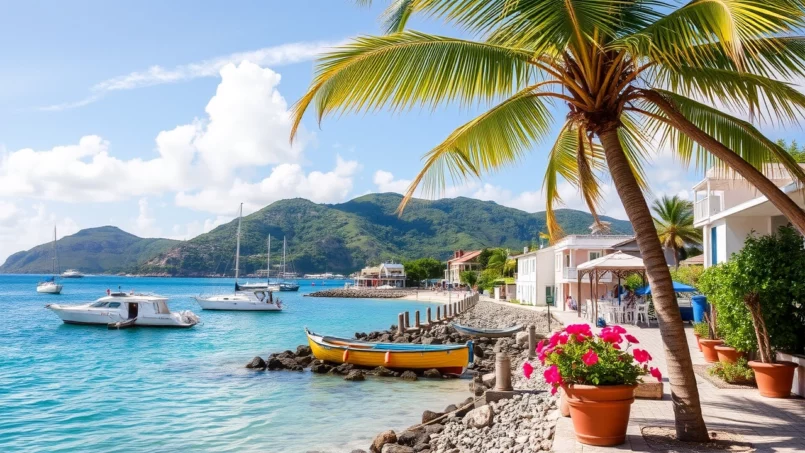
Saint Barthélemy is one of those names that immediately conjures dreams. White sand beaches, villas perched on volcanic hills, turquoise water, luxury boutiques, and glamorous yachting… But behind the postcard, living year-round in this small French Caribbean territory is a true lifestyle choice, demanding and highly structured, especially for an expat.
This guide details the essential aspects of settling on the island: living environment, neighborhoods, cost of living, housing, administrative procedures, job market, healthcare system, schooling, taxation, banking services, driver’s license, and local integration. It provides concrete, data-backed information for an informed decision.
Understanding Saint Barthélemy Before Packing Your Bags
Situated in the Lesser Antilles, in the Leeward Islands, Saint Barthélemy is a French overseas collectivity. The island is located about thirty kilometers southeast of Saint Martin, and approximately 250 kilometers from Puerto Rico and the Virgin Islands. Its area is small, around 21 to 25 km² depending on the source, which corresponds to about 8 to 9.7 square miles. In practical terms, you can cross the island by car in just over an hour, stopping to admire the viewpoints.
The island’s highest point, Morne de Vitet, reaches an altitude of 286 meters.
The island is officially French: the euro is the currency, “La Marseillaise” is the national anthem, and the inhabitants—the Saint-Barthélemois—are French citizens, holders of European Union passports. The official language is French, although English is widely understood in the hospitality, restaurant, and retail sectors of Gustavia or Saint-Jean. You can also hear a local French patois in some Leeward areas and French Creole in the Windward areas.
Saint Barthélemy, with a population growing from just under 10,000 inhabitants in 2017 to just over 11,000 today, constitutes a micro-society. Its territory is organized into 40 neighborhoods, grouped into two historic parishes: Sous le Vent (Leeward) and Au Vent (Windward). Daily life revolves mainly around a few urban centers and villages, such as Gustavia (the capital), Saint-Jean, Lorient, Flamands, and Grand Cul-de-Sac.
The economy relies almost exclusively on high-end tourism and duty-free shopping. GDP per capita already exceeded €38,000 in 2014, one of the highest in the Caribbean. This apparent wealth translates into a very high cost of living, scarcity of land, and a niche positioning: Saint Barthélemy targets very affluent visitors, including many celebrities.
Choosing Your Neighborhood: Vibe, Prices, Accessibility
In such a small territory, the choice of neighborhood greatly influences daily life. For an expat, the first criterion is often the balance between proximity to services, housing budget, and desired lifestyle (lively, family-oriented, secluded, ultra-luxury, etc.).
Gustavia: The Urban and Administrative Heart
Capital and main port, Gustavia concentrates administrative offices, a large part of the services, and the majority of shopping. Cobblestone streets lined with colorful colonial houses are organized around the marina, filled with private yachts.
You’ll find major luxury brands (Louis Vuitton, Dior, Hermès, Cartier, Bulgari…), gourmet restaurants, bars and clubs, art galleries, as well as the tourist office. Gustavia is also home to the small Bruyn hospital and a pharmacy.
Shell Beach—covered in shells—is accessible on foot from the center. The building density is the highest on the island: apartments, small residences, some highly sought-after villas. It is one of the sectors where real estate is most expensive, due to strong demand for this “walkable village” lifestyle. For an expat prioritizing liveliness, easy access to shops, medical services, and schools, Gustavia is a logical, but costly, choice.
Saint-Jean: The Dynamic Postcard
On the north coast, Saint-Jean is the island’s other nerve center. Its long beach, lined with clubs and beachfront restaurants like Nikki Beach or Pearl Beach, is one of the most frequented. The Eden Rock hotel, perched on its rocky spur, has become a symbol of Saint Barthélemy.
The Gustaf III airport, where planes skim the beach upon landing, is a famous spot for plane spotters. Just across the way are a large shopping center and the island’s biggest supermarket. The area also has a protected body of water, classified as a natural reserve and equipped with a wildlife viewing pontoon.
Housing is divided between villas clinging to the hillsides, with spectacular views, and some properties closer to the sea. Prices remain very high, but sometimes a bit lower than in central Gustavia. For an expat wanting a compromise between beach life, entertainment, shopping, and accessibility, Saint-Jean is a strategic base.
Lorient: The Up-and-Coming Local Village
Further east on the north coast, Lorient is one of the island’s oldest villages, with a more “local” and traditional vibe. The Anse du Lorient bay offers two faces: to the west, a lively surf spot; to the east, calm waters protected by the reef, ideal for family swimming and snorkeling.
The village has local shops, a bakery-pastry shop, two supermarkets, restaurants including the very popular Jojo Burger, and a historic Catholic church. The Lorient cemetery has also become a pilgrimage site for fans of Johnny Hallyday, who is buried here.
Long more affordable than Gustavia or Saint-Jean, Lorient is booming, with a construction boom. For an expat seeking a neighborhood life, a bit more mixing with permanent residents, and slightly less stratospheric rents, it is an interesting alternative.
Flamands, Colombier, Lurin, Pointe Milou: Tranquility with a View
On the northwestern part, Flamands is a residential and family-oriented neighborhood, organized around the island’s longest beach: a long crescent of white sand, sometimes rough from the north swell. The village retains a community atmosphere but also hosts ultra-high-end establishments, like the Cheval Blanc hotel. Villas nestled in the vegetation enjoy a peaceful environment.
Colombier is a peninsula known for its serenity and ultra-private villas offering panoramic views of the sea and Gustavia harbor. Its beach, one of the most spectacular on the island, is only accessible on foot or by boat. This discreet spot attracts celebrities. It’s ideal if absolute tranquility is the priority, provided you accept less direct access to services.
Lurin, above Gustavia, groups many high-end villas with plunging views of the town, the ocean, and sometimes neighboring islands (Nevis, Saba). You live in a calm environment while remaining just a few minutes by car from the center, Governor’s or Saline beaches, and Saint-Jean. The area is known to be safe and is appreciated by year-round residents.
Pointe Milou, a landspit jutting northeast, is often celebrated as one of the best sunset spots. Villas are literally perched above the water, with impressive panoramas towards Saint Martin and Anguilla. The Christopher hotel reinforces the ultra-chic image of the area. You come here for the calm and the view, accepting sometimes steep roads.
Grand Cul-de-Sac, Petit Cul de Sac, Marigot: Lagoon and Serenity
On the northeastern side, Grand Cul-de-Sac forms a shallow, protected lagoon, ideal for “gentle” water sports: paddleboarding, kayaking, windsurfing, kitesurfing. The atmosphere is family-friendly, with beach hotels like Le Sereno, Le Barthélemy, or Rosewood Le Guanahani and some restaurants with their feet in the water. Many villas belong to celebrities or wealthy families seeking tranquility while remaining close to everything.
Even further east, Petit Cul de Sac offers a more isolated environment, with a small, little-frequented beach and a sometimes choppier sea. Domaine du Levant groups ultra-high-end villas. Marigot, nearby, offers a feeling of total disconnect, conducive to a peaceful retreat or retirement life.
Saline, Gouverneur, Toiny, Grand Fond: The Wild Island
To the south, Saline and Gouverneur are postcard-perfect but retain a wild character. Saline, long used for salt production (the salt ponds are still visible), is a large, remote beach without restaurants or bars, appreciated by naturists. A natural reserve protects part of the site.
An isolated and preserved blond sand beach, surrounded by hills and renowned for its chic ambiance and its legend of pirate treasure.
A wide blond sand beach, rarely crowded, surrounded by hills. No direct tourist amenities (no snack bar, no ostentatious signs), which enhances the feeling of chic isolation.
A legend tells that a pirate buried treasure here, adding a touch of mystery to the place.
The villas located above the bay are among the most highly-rated and prestigious on the island.
To the east, Toiny and Grand Fond embody the “wild” coast. Anse de Toiny is beautiful but dangerous for swimming due to a strong current; it’s popular with surfers. The Le Toiny hotel and the Nureyev villa, which belonged to dancer Rudolf Nureyev, symbolize this discreet luxury at the end of the road. Grand Fond, surrounded by rocky peaks, opens onto a pebble beach known for its natural pools, accessible on foot. It is the area farthest from Gustavia and the airport.
Corossol, Anse des Cayes, Vitet: Local Life and High Points
Corossol, five minutes from Gustavia, is an old fishing village where you can still see artisans weaving hats and baskets from latanier leaves. Higher up, new elegant villas enjoy a splendid view of the harbor. The spot is appreciated by local families for sunset aperitifs.
Between Flamands and Saint-Jean, Anse des Cayes mixes housing for permanent residents, a narrow little beach—with a very good surf spot on its eastern end—and some rental villas. The proximity to the airport, the Saint-Jean shopping center, and Lorient makes it a convenient area for those who accept the sound of waves (and sometimes planes).
Vitet, finally, occupies the highest point on the island. Less developed, very calm, still with some buildable land, it offers plunging views over the Cul-de-Sac bays and Îlet Tortue. For an expat considering a long-term real estate project, it’s one of the few sectors where you can still find a little land.
Cost of Living: What Does Living There Really Cost?
The numbers are unambiguous: Saint Barthélemy is one of the most expensive places in the Americas and Europe. The combination of insularity + massive imports + luxury positioning inflates almost every line item in the budget.
Monthly Spending Levels
Overall estimates give the following ballpark figures, in dollars, including housing:
| Household Profile | “Average” Monthly Budget Including Housing | “Tight” Monthly Budget | “Luxury” Monthly Budget |
|---|---|---|---|
| Single Person | ~ $7,900 – $8,085 | ~ $3,862 – $4,110 | ~ $14,335 – $14,890 |
| Couple | ~ $10,313 – $10,367 | ~ $5,120 – $5,343 | ~ $18,870 – $19,127 |
| Family (2 adults + 2 children) | ~ $14,213 – $14,343 | ~ $7,137 – $7,437 | ~ $25,981 – $26,179 |
Converted annually, this places the cost of living for a single person between $95,000 and $97,000 per year, and that of a family of four around $170,000 and up, housing included.
In euros, recommendations often boil down to this: have at least €3,000/month in income for a single person and €4,000/month for a couple to cover essential needs under decent conditions. These thresholds remain cautious: for a comfort comparable to an affluent urban lifestyle in mainland France, you need to aim much higher.
Housing: Rent and Purchase Prices
Housing is by far the heaviest expense. Rents vary enormously depending on location, view, proximity to the beach, and level of luxury:
| Type of Property (Purchase) | Approximate Price Range |
|---|---|
| Studio (1 Room) | €300,000 – €400,000 |
| 2-Room Apartment (1 Bedroom) | €400,000 – €600,000 |
| 2-Bedroom House | €800,000 – €1.5 million |
| Luxury Villa | Several million (up to €30+ M) |
| Average Apartment Price (per m²) | ~ €11,000/m² |
| Average House Price (per m²) | ~ €14,500/m² |
Regarding long-term rentals:
| Type of Rental (Residential) | Approximate Monthly Rent |
|---|---|
| 2-Room Apartment | €1,500 – €3,000 |
| Average House / Villa | $2,200 – $5,000 (and more for luxury) |
Add to this the major difficulty: the year-round supply is very limited. A good part of the housing stock is dedicated to seasonal villa rentals (about 400) and small-capacity hotels (about 25 hotels, most with fewer than 15 rooms). Many owners prefer to rent by the week during high season, where some New Year’s stays are billed at over $100,000 per week for a large villa, rather than signing a standard lease.
For purchases, the market is ultra-selective. Properties range from €1.5 to over €30 million. The good news is the absence of an annual property tax and relative price stability, supported by constant international demand and strict building rules that limit supply.
Transaction costs, however, are significant: budget about 5–6% of the price for notary fees and 6–7% including registration duties and miscellaneous fees. In practice, for a purchase, the buyer should plan for an envelope of about +6% above the seller’s net price.
Utilities, Food, Leisure
Basic monthly expenses are at levels significantly higher than in mainland France or even most major North American cities.
For a standard household:
| Expense Item | Indicative Monthly Range |
|---|---|
| Electricity | $80 – $250 |
| Water | $45 – $180 |
| Internet + TV | $85 – $165 |
| Mobile Phone | $60 – $150 |
| Groceries | $600 – $1,900 |
| Household / Hygiene Products | $65 – $320 |
Some illustrative prices that give a sense of the scale:
| Product / Service | Approximate Price |
|---|---|
| Dozen eggs | ~ €12.50 |
| 1 kg of tomatoes | ~ €8.50 |
| Whole chicken (~2 kg) | ~ €38.75 |
| 1 liter of milk | ~ €8.50 |
| “Standard” baguette | ~ €9.50 |
| Fast-food / takeaway meal | ~ €25 |
| Bottle of decent red wine | ~ €48.95 |
| Pack of imported cigarettes | ~ €25 |
| Cappuccino / coffee | ~ €12.50 |
| 3-course dinner for two (local restaurant) | ~ €96.50 |
| 3-course dinner for two (chic restaurant) | ~ €150 |
Leisure follows the same logic: a boat cruise with drinks runs around €120, a 30-minute go-karting session around €120, a 3D movie ticket about €30.
This expense is explained: almost everything—food, materials, fuel, manufactured goods—is imported. The high-end positioning of the island also drives prices up.
Transport: Car Almost Mandatory… and Costly
Saint Barthélemy has no buses, metro, or tram. The only “public transport” consists of a few taxis, which are scarce and expensive. In practice, to live on the island, owning a vehicle or at least leasing one long-term is almost indispensable.
Typical costs:
| Transport Expense Type | Order of Magnitude |
|---|---|
| Total Monthly Transport Budget | $40 – $700 (depending on use) |
| Car rental (1 day) | ~ €140 |
| Taxi (5–10 km) | ~ €45 |
| Fuel (1 liter) | ~ €6.50 |
| Driver’s License (training) | ~ €2,300 |
The roads, often concrete, are narrow, very winding, sometimes steep, with hairpin turns, especially towards Colombier, Vitet, Lurin, or Pointe Milou. It’s common to recommend a small, maneuverable vehicle (Mini Cooper, small Suzuki, Smart) rather than a large SUV. A mobility plan aims to limit the number of vehicles, a sign of an already saturated network.
Residency Procedures: Visas, Residence, Work
Living in Saint Barthélemy isn’t just about landing with a one-way ticket. The collectivity follows the French legal framework, with some specifics linked to its status as an overseas country and territory.
Entering the Territory: Tourists and Initial Scouting
For a simple scouting trip, most potential expats benefit from visa exemption for stays under 90 days. This is the case for citizens of the European Union, the United States, Canada, the United Kingdom, Australia, New Zealand, Japan, South Korea, and many Caribbean and Latin American countries.
Standard conditions apply: valid passport (often required to be valid for at least 3 to 6 months beyond the entry date) and a return or onward ticket. Travelers transiting through Sint Maarten must fill out an online entry form specific to that territory. The same logic applies if arriving via Guadeloupe.
Since Saint Barthélemy is not in the Schengen Area, a “classic” Schengen visa for mainland France is not necessarily sufficient. For nationalities requiring a visa, a French visa specifically valid for the “Collectivité Territoriale de Saint-Barthélemy et Saint-Martin” or “France except CTOM/DFA” is needed.
Settling for More Than 90 Days: Long Stay, Residence, and Work
To live year-round, work, or retire there, the question is no longer one of tourism but of immigration in the French sense.
Citizens of the European Union have, in principle, the right to reside and work without being subject to quotas. However, they must comply with local rules regarding taxation and labor law.
For non-European nationals (Americans, Canadians, post-Brexit Britons, etc.), the scheme is that of French long-stay visas and residence permits:
– apply for a long-stay visa at the French consulate or embassy in your country of residence, selecting Saint Barthélemy as the destination territory if the intention is to settle there;
– once on site, apply for a residence permit (carte de séjour) via the competent French administration.
Applications generally require:
– proof of sufficient financial resources,
– health insurance covering the duration of stay,
– proof of accommodation,
– criminal record extracts,
– sometimes a professional project or work contract.
A work permit is mandatory, with different classes (temporary, long-term, permanent). The professional project must align with the local development plan (job creation, rare skills, viability). The employer must provide a contract and work certificates, while the employee must justify health coverage and accommodation.
There is no real “golden passport” or official residency or citizenship-by-investment program directly targeting Saint Barthélemy: acquiring property or investing in a business can support an application but does not automatically confer the right to reside.
From Residence to Tax Residence
The key status for many wealthy expats is that of a tax resident of Saint Barthélemy. It is not obtained overnight. Local law is based on a time criterion: generally, one must have their home, main activity, or the center of their economic interests on the island for at least five consecutive years. It is only beyond this period that one can claim the island’s specific tax regime.
From this perspective, authorities and specialized advisors emphasize the need to demonstrate “real substance”: a genuine primary residence, local bank accounts, economic or professional activity managed on site, participation in local life. Purely superficial arrangements are under scrutiny.
Working and Starting a Business: A Market Dominated by Tourism
With an economy centered on luxury tourism, most jobs are concentrated in hospitality and restaurants, yachting, high-end retail, personal services, and construction.
Official average salaries are around €2,000/month, but vary greatly depending on the position and sector. Some benchmarks:
| Job (indicative) | Approximate Monthly Remuneration |
|---|---|
| Hotel Manager | ~ €4,000 |
| Head Chef | €3,500 – €4,500 |
| Restaurant Employee | €1,800 – €2,200 |
| Professional Diving Instructor | €2,000 – €3,000 |
Job opportunities are significant during high season, but many contracts are seasonal. Local companies do not always offer airfare or housing, hence the importance of negotiating these points from the outset.
Beyond tourism, you can find positions in:
– real estate (agencies, villa management),
– management, accounting, law,
– commerce and marketing,
– public works and construction,
– medical services,
– education and childcare (tutoring, private lessons),
– agriculture and fishing, to a lesser extent.
Starting your own business is feasible: French company forms (SARL, SAS…) with registration and obtaining a SIRET number. The process generally takes between two and six weeks. Certain activities or investment projects can facilitate obtaining a work permit and residence permit, provided they demonstrate the creation of value and local jobs.
Taxation: How Does the Local “Tax Haven” Work?
The tax status of Saint Barthélemy attracts many wealthy profiles. But it is based on precise rules, far from the cliché of immediate “no tax” for everyone.
A Territorial and Autonomous System
Saint Barthélemy has its own Tax Code. The collectivity can levy its own taxes on activities conducted on its territory. Mainland French taxation does not apply automatically unless explicitly referenced. The island also operates without VAT.
The general principle is territorial: primarily taxing income generated on the island. Tax residents, in the local sense, are treated particularly favorably.
Tax Residents (After 5 Years)
Once the status of local tax resident is acquired—after at least five years of residence and economic anchoring—an individual benefits from a very advantageous regime:
– no local income tax,
– no wealth tax on assets located in Saint Barthélemy,
– no inheritance or gift tax on local assets in some cases,
– no capital gains tax on local property (subject to holding period conditions).
Income from foreign investments is generally not taxed by the collectivity, in accordance with the territoriality principle. However, French social contributions (CSG, CRDS) may apply to some of this income, notably rental income received.
For rental income, for example, the local rate is 0%, but social contributions of about 15.5% apply to the net base, and a 5% tourist tax is due on tourist rentals of less than three months.
New Arrivals, Non-Residents, and Capital Gains
During the first five years, the situation is more mixed: the taxpayer may remain subject to the classical French tax law for their worldwide income, or even to the taxation of their country of origin if they retain tax ties there.
Non-residents selling property on the island may be subject to a specific capital gains tax. The scales take into account the holding period, with rates of 35% for quick resale, then 20% after eight years, accompanied by progressive allowances depending on the number of years of ownership, up to total exemption after a long period, notably for a primary residence.
Social contributions (CSG and CRDS) may apply to real estate capital gains. Their imposition depends on the seller’s tax residence at the time of the sale.
Regarding real estate, there is no recurring property tax, which is one of the major attractions for property holders. However, a transfer duty of about 5% is levied on each transaction, borne by the buyer, to which notary fees are added, bringing the total to around 6–7%.
Companies and Asset-Holding Structures
Companies whose effective place of management is in Saint Barthélemy may, under conditions, be exempt from local corporate tax. However, they must pay an annual fixed contribution (CFAE) composed of a fixed part (€300–€350) and a variable part based on the number of employees.
Entities (companies, trusts, etc.) holding real estate on the island are subject to an annual tax of 3% of the property’s value, unless they declare this value each year or meet certain exemption conditions (for example, if the registered office is in mainland France).
Finally, all these schemes are part of an international transparency framework: Saint Barthélemy respects OECD standards, applies automatic exchange of information (CRS) via France, and complies with FATCA rules for US nationals.
Banking and Finances: Opening an Account and Managing Your Money
Living in Saint Barthélemy involves entering the French banking ecosystem. Opening a local account is almost essential to receive a salary, pay water, electricity, and phone bills, and facilitate real estate transactions.
Major French banks—BNP Paribas, Société Générale, Crédit Agricole, Banque Populaire, Caisse d’Épargne, LCL, CIC, La Banque Postale…—or their overseas representations are present, directly or via associated networks. Accounts are in euros, SEPA transfers work as in the rest of the zone.
To open an account, they generally ask for: proof of identity, proof of address, and an initial deposit.
To open a bank account in France, you will generally need to provide the following documents. Prepare them in advance to facilitate the process.
A valid passport or national identity card.
A recent utility bill (electricity, water, phone) or a lease agreement. Foreign proof of address may be accepted if necessary.
Your valid visa or residence permit, if you are not a national of the EU/EEA.
Your last three pay slips, your employment contract, or your latest tax notice.
Sometimes required: statements from your previous bank.
Non-residents may be offered specific accounts, sometimes with higher minimum deposits and transaction limits. For US nationals, FATCA constraints can complicate opening an account, with some banks being more hesitant.
In case of refusal, the right to a basic bank account provided by the French Monetary and Financial Code allows you to petition the Banque de France to designate an institution. In practice, in such a small territory, it is often useful to go through a local contact (notary, lawyer, tax advisor) who knows the ropes.
Healthcare and Schooling: Family Life in Saint Barthélemy
For an expat settling with a spouse and children, two questions weigh heavily: can you get proper healthcare on site? And how do you school the children?
Healthcare Offer: Good Basic Quality, Frequent Referral Off-Island
The Bruyn Hospital Center, located in Gustavia, provides emergency care, some hospitalization beds (about 20), surgical procedures, radiology, and various examinations. It is complemented by the Saint-Jean Health Center and several medical offices scattered in Gustavia, Saint‑Jean, or Lorient.
You can find general practitioners, pediatricians, dentists, osteopaths, gynecologists, sometimes present a few days a week. Some specialists—cardiologists, ENTs…—come regularly from Saint‑Martin for consultations.
For complex pathologies, high-risk pregnancies, major surgeries, or specialized treatments (like in oncology or cardiac surgery), patients are systematically evacuated to larger medical centers. These evacuations can be to Guadeloupe, Martinique, the United States, Puerto Rico, or mainland France.
In summary, for minor ailments, everyday accidents, and standard follow-ups, the offer is comparable to that of a small French hospital. But it is essential to have good health insurance, including medical evacuation and coverage for care off-island. For non-French nationals, neither the European Health Insurance Card (EHIC) nor the British system (GHIC) covers Saint Barthélemy as such, hence the importance of suitable private contracts.
Schools: French Curriculum, But No Local University
Education follows the French national curriculum, under the authority of the Académie de la Guadeloupe. The island has public nursery and primary schools, as well as a non-selective high school for secondary education. Teaching is mainly in French, with English as a foreign language.
The island offers an interesting Francophone immersion for young expats. However, the educational offer is limited: few institutions, sometimes crowded classes, and incomplete online information. Interested families often need to contact the town halls and the education authority directly for information.
There is no university on the island. Higher education therefore implies leaving for mainland France, Guadeloupe, Martinique, or towards English-language programs elsewhere in the Caribbean, North America, or Europe. Some specialized organizations offer “study abroad” programs or language stays centered around sailing, marine biology, and diving, but these are more temporary educational stays than a local university solution.
Driving and Getting Around Daily
Getting around Saint Barthélemy requires an adjustment period, especially for those unfamiliar with narrow mountain roads.
Rules follow the French Highway Code: drive on the right, general speed limit around 50 km/h, with many areas reduced to 30 km/h. Holding a phone is prohibited, seat belts are mandatory, and pedestrians have the right of way.
The roads feature steep inclines, sharp curves, and blind spots, sometimes with a lack of safety equipment. Traffic is shared with a wide variety of users (scooters, ATVs, delivery vehicles, tourists, school buses) and animals, requiring increased vigilance.
Advice from residents is pragmatic: drive slowly, avoid driving fast at night if you don’t know the roads, take time to learn routes during the day, prefer small vehicles over large sedans. Parking is tight in Gustavia and Saint-Jean during high season and the police are vigilant, with towing or vehicle blocking for violations.
Importing a personal vehicle is strictly regulated. For individuals, you must first submit a prior import request to the Collectivity, accompanied by a certificate of conformity, a valid technical inspection, and ID documents. Heavy or modified vehicles are generally prohibited. Once authorization is obtained, you must pay customs and excise duties at the commercial port. After arrival on the island, the final registration procedure is carried out at the competent office in Lorient, upon presentation of the supporting documents: customs clearance, foreign registration document, purchase invoice, technical inspection, and proof of insurance.
For an expat planning only a limited stay, long-term rental from a local agency is often simpler than importing.
Daily Life: Safety, Culture, Leisure, Integration
Beyond the numbers, what makes the singularity of Saint Barthélemy is the subtle balance between a Caribbean village life and an international glamorous scene.
Safety and Quality of Life
The island is reputed to be extremely safe. Crime is rare, the national gendarmerie and a few police officers ensure a discreet presence. You live in a climate of trust quite unusual for those coming from big cities. This aspect attracts many families and retirees looking for a peaceful daily life.
Life is paced by the tourist season: very lively from December to March, with a peak around Christmas and New Year, calmer in late summer, a period that coincides with the heart of the hurricane season. Many establishments close in September-October for holidays and renovations.
Culture, Festivals, Social Life
Despite its size, Saint Barthélemy has a dense cultural calendar. The St. Barths Music Festival in January, Carnival, film festivals, prestigious regattas like the St. Barth Bucket or Les Voiles de St. Barth, the Feast of Saint Barthélemy on August 24th, animate the year.
Local newspapers, like Le Journal de St. Barth or its seasonal English version St Barth Weekly, relay this news, as do the island’s FM radio stations. Artists, designers, and fashion creators settle or exhibit regularly, particularly in Gustavia and Saint‑Jean.
Beaches, Nature, and Sports
Beaches are central to local life: Saline, Gouverneur, Saint‑Jean, Flamands, Lorient, Shell Beach, Grand Cul‑de‑Sac, Colombier… Each has its personality: some ideal for family swimming, others for surfing (Lorient, Anse des Cayes, Toiny, Grand Fond), others for snorkeling (Colombier, natural reserve).
The marine reserve, created in the late 1990s, protects more than 1,000 hectares of reefs, seagrass beds, and sandy bottoms in areas like Grand Cul‑de‑Sac, Colombier, or Petite Anse. Certain activities there are regulated to preserve biodiversity.
Water sports are omnipresent: scuba diving on wrecks and drop-offs sheltering turtles, rays, or barracudas; sailing, kitesurfing, paddleboarding, big-game fishing. On land, people practice beach yoga, tennis, hiking to natural pools or viewpoints.
Integration: Language, Codes, and Networks
For lasting integration, a few realities are unavoidable. First, French. You can survive with English in tourist sectors, but to make friends, deal with administration, communicate with the school, French remains essential. Private lessons exist, but they are expensive and often target a very wealthy clientele. Daily immersion, local media, and some tolerance for mistakes more surely accelerate progress.
Saint Barthélemy is a mixed society where discretion is highly valued, despite the presence of significant wealth. It is appreciated to support local associations, participate in neighborhood life, and respect the environment.
Finally, networks. To find year-round housing, a quality job, or a business partner, word-of-mouth often counts more than classified ads. Building relationships from the first trips, via sports clubs, cultural events, or neighbors, greatly facilitates a future settlement project.
Should You Settle in Saint Barthélemy?
Settling in Saint Barthélemy as an expat is no trivial matter. The island offers a rare quality of life: safety, constant climate, omnipresent sea, high level of services, unique Franco‑Caribbean ambiance, and potentially very attractive taxation for those committed in the long term. It allows you to combine, in a small perimeter, the codes of an ultra-luxury resort and an island village where everyone ends up knowing each other.
Life in this region presents major challenges: one of the highest costs of living in the world, a limited supply of year-round housing, dependence on a car, sometimes difficult access to highly specialized healthcare and higher education, and the necessity to master the complexities of French law regarding immigration, companies, and taxation.
For a well-thought-out, realistically funded project, coupled with a real willingness to put down local roots, Saint Barthélemy can become much more than a postcard: a full-fledged place to live, demanding but exceptional. The key is to approach this adventure with solid figures, a fine understanding of the terrain, and, above all, the time—at least five years—to build a real story with the island.
Disclaimer: The information provided on this website is for informational purposes only and does not constitute financial, legal, or professional advice. We encourage you to consult qualified experts before making any investment, real estate, or expatriation decisions. Although we strive to maintain up-to-date and accurate information, we do not guarantee the completeness, accuracy, or timeliness of the proposed content. As investment and expatriation involve risks, we disclaim any liability for potential losses or damages arising from the use of this site. Your use of this site confirms your acceptance of these terms and your understanding of the associated risks.

Cyril Jarnias is an independent expert in international wealth management with over 20 years of experience. As an expatriate himself, he is dedicated to helping individuals and business leaders build, protect, and pass on their wealth with complete peace of mind.
On his website, cyriljarnias.com, he shares his expertise on international real estate, offshore company formation, and expatriation.
Thanks to his expertise, he offers sound advice to optimize his clients' wealth management. Cyril Jarnias is also recognized for his appearances in many prestigious media outlets such as BFM Business, les Français de l’étranger, Le Figaro, Les Echos, and Mieux vivre votre argent, where he shares his knowledge and know-how in wealth management.





