
 Published on and written by Cyril Jarnias
Amid a tourism boom, aggressive tax incentives, and a chronic housing shortage, Puerto Rico’s real estate market is now attracting both institutional investors and wealthy individuals. Among the mosaic of coastal towns and beach resorts, two neighborhoods clearly stand out as showcases for the high-end market and profitable seasonal rentals: Condado and Isla Verde, both located in the San Juan metropolitan area.
In Puerto Rico, the real estate market is characterized by a high concentration of value, transactions, and rental yields in specific sectors. This dynamic is explained by a structural imbalance between limited supply and sustained demand, as well as by the decisive influence of taxation and public infrastructure on investment geography.
Condado and Isla Verde in the Context of the Puerto Rican Market
The island has experienced a spectacular catch-up in its real estate prices for several years. The home price index surged by over 27% year-over-year in the last quarter of 2024, the fastest pace since the mid-90s. In the first quarter of 2025, prices increased by more than 11% compared to the previous quarter, even as the number of sales declined.
The real estate market has a structural deficit of nearly 300,000 housing units.
In this context, the most sought-after neighborhoods logically concentrate the price increases. San Juan averages around $509 per square foot, but Condado and certain historic sectors like Old San Juan far exceed this level. Isla Verde, on the other hand, remains slightly more affordable per square foot, while offering solid asset value and high rental yields.
An Environment Driven by International Demand
The drivers of this dynamic are clearly identified: strong tourism growth, the arrival of many residents and businesses benefiting from Act 60 tax incentives, the status as a U.S. territory securing the legal framework, and a transition towards a real estate portfolio more resilient to hurricanes.
Number of passengers welcomed by the Luis Muñoz Marín International Airport in 2024.
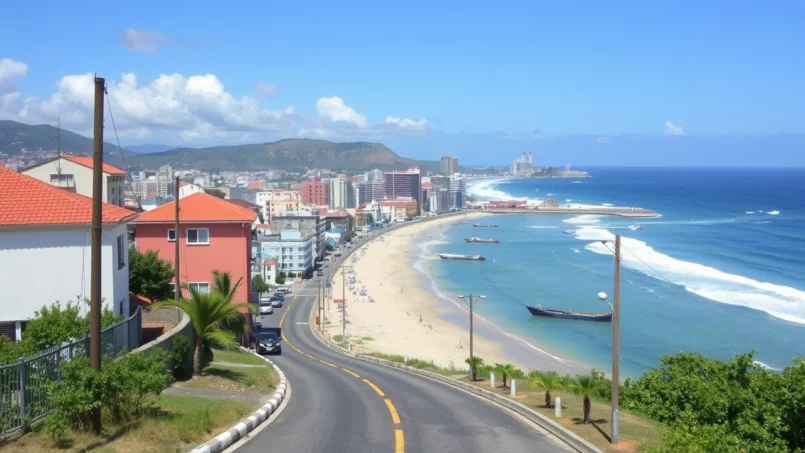
In this setting, Condado and Isla Verde play the role of “showcases” for modern Puerto Rico: urban beaches, upscale residential and hotel towers, high density of restaurants, casinos, co-working spaces, private schools, and healthcare services. Two contiguous neighborhoods, but two fairly distinct investment strategies.
Condado: San Juan’s Beachfront Manhattan
Condado is often described as the “Manhattan of the Caribbean.” It is the urban heart of luxury in San Juan: high-rise residential buildings, iconic hotels, designer boutiques, casinos, and fine dining restaurants line Ashford Avenue, the main artery that borders both the lagoon and the ocean.
The neighborhood is sandwiched between Old San Juan on one side and Isla Verde on the other, with the Condado Lagoon on one side and the Atlantic on the other. Its density, oceanfront towers, and very pedestrian-friendly ambiance make it a unique sector: here, one literally lives without a car, which is rare on the island.
A Rare and Expensive Real Estate Portfolio
One of the most telling figures for measuring Condado’s appeal is the price per square foot. In July 2025, the median reached about $790 per square foot, well above the San Juan average. The neighborhood is considered a luxury benchmark, with a median listing value around $1.8 million in 2025, and record penthouse sales exceeding $10 million.
The neighborhood primarily offers high-end condos, oceanfront penthouses, and apartments for seasonal rental. Available inventory is very limited, as the area is largely built out, with little room for new projects. This scarcity fuels a near-continuous appreciation in property values.
Here is a comparative summary of prices per square foot in several of the island’s high-end markets:
| Sector | Median Price / ft² (USD) | Main Comment |
|---|---|---|
| Condado | ≈ 790 | Urban luxury neighborhood, limited inventory |
| Old Town (Old San Juan) | ≈ 701 | Historical heritage, highly constrained supply |
| Dorado | ≈ 555 | Ultra-luxury golf and resort market |
| San Juan (city average) | ≈ 509 | Includes more affordable areas |
| Guaynabo | ≈ 329 | Upscale suburb, less touristy |
Sources: aggregated data from Realtor.com, INVESTATE Puerto Rico, and other cited sources.
Prestige properties – oceanfront condos, penthouses with panoramic terraces, residences in towers like the Vanderbilt Residences or Aqua Blu – often trade significantly above these medians. Conversely, a few older or fixer-upper properties, located further from the ocean, can sometimes represent more “accessible” entry points for investors willing to undertake renovations.
A Neighborhood Tailored for Act 60 Residents
Condado checks all the boxes sought by beneficiaries of the Act 60 tax regime (formerly Acts 20/22): proximity to offices, the Isla Grande secondary airport, top private schools (Saint John’s School, Robinson School), leading clinics and hospitals, as well as an intense social and cultural life.
Act 60 requires beneficiaries to establish residence in Puerto Rico, live there at least 183 days per year, and acquire a primary residence within two years of receiving the decree. For investors, this status allows reducing tax on certain activities to 4% and applying very advantageous taxation on local capital gains and dividends. The Condado neighborhood is often recommended as a natural landing spot for these beneficiaries.
Tax advantages (4% tax on certain business income, significant exemption on local capital gains, properties sometimes benefiting from property tax reductions) combine with comfortable rental yields, particularly in short-term rentals.
A Powerful Engine for Short-Term Rentals
Condado is one of the epicenters of luxury seasonal rentals. Platforms like Airbnb or VRBO show high occupancy rates, with gross yields on small condos potentially approaching 6 to 7% according to some analyses. In the premium tourist area short-term rental segment, yields can climb between 8 and 12% depending on service levels and exact location.
In practice, Condado benefits simultaneously from:
– A tourist clientele willing to pay a premium to stay in an urban and beachfront neighborhood,
– A demand for medium-term stays (a few months) from remote workers, executives on assignment, or new residents in the process of relocating,
– An affluent local population ready to rent or buy well-located units.
The combination of three rental segments allows for adapting the real estate strategy. For instance, some investors focus purely on tourist seasonal rentals to maximize yields. Others opt for medium-term leases (6 to 12 months), targeting specifically Act 60 program beneficiaries, who often seek furnished housing upon arrival on the island for temporary accommodation.
Urban Assets and Specific Risks
Condado is a 100% urban neighborhood. Traffic can be heavy, nighttime noise significant on certain stretches of Ashford Avenue, and parking challenging. The beach, while magnificent, is sometimes subject to stronger surf than Isla Verde’s, making it less suitable for young children or inexperienced swimmers, except in certain protected areas like the small beach near the Condado Plaza Hilton.
Regarding risks, the main constraint remains obviously vulnerability to hurricanes. However, since Maria in 2017, developers and condominium associations have significantly strengthened standards: massive reinforced concrete, hurricane-resistant glazing, generator systems, water cisterns, sometimes solar panels and batteries. Properties displaying this type of resilience are now perceived as safer assets, better able to retain their value.
Finally, the issue of liquidity deserves mention: even in a highly demanded market, a high-end property can remain on the market for several months before finding a buyer, especially in the higher price ranges. Overall San Juan data often mentions average times of 2 to 4 months for residential assets, but some prestige properties can exceed this timeframe.
Isla Verde: The Strategic Beach Resort
Just east of Condado, Isla Verde offers a different atmosphere. Located in the municipality of Carolina, this urban but more spacious district is literally at the doorstep of Luis Muñoz Marín International Airport, accessible in less than five minutes. Its waterfront stretches for about three miles of continuous beach, recognized by USA Today as one of the best urban beaches in the world.
The atmosphere here is more family-oriented and resort-like than in Condado: large hotel towers, complexes with pools and gardens, vacation residences, gated communities, but also everyday shops and a 24/7 supermarket.
Real Estate Market: A Balance Between Primary Residence and Rental
Isla Verde is a mixed market: it features primary residences for local or expatriate families, second homes, and a significant stock of properties dedicated to tourist rentals.
Recent market data gives a sense of Isla Verde’s positioning:
| Key Indicator (Isla Verde) | Recent Approximate Value |
|---|---|
| Median Sale Price | ≈ $1,065,000 USD |
| Annual Change in Median Price | -7.70% (recent decline) |
| 3-Year Change in Median Price | -5.63% |
| Median Price / ft² | ≈ $518 USD |
| Annual Change in Price / ft² | +2.70% |
| 3-Year Change in Price / ft² | +8.30% |
| Active Listings | 28 |
| Annual Change in Number of Listings | -5% |
| Average Time on Market | 110 days |
| Rental Listings | 4 |
| Annual Change in Rental Listings | -60% |
Source: market data compiled for Isla Verde / Carolina.
The market shows a slight decline in median price, while the price per square foot continues to rise, indicating increased demand for smaller units or compact oceanfront properties. However, the average time on market of 110 days reveals potentially lower liquidity than in other sectors like Condado, particularly in certain price ranges.
Regarding property types, the price ranges observed in the sector are as follows:
| Property Type in Isla Verde | Approximate Price Range |
|---|---|
| Oceanfront Condo | $400,000 – $2,000,000+ USD |
| Luxury Penthouse | $1,000,000 – $5,000,000+ USD |
| Resort Residence | $600,000 – $3,000,000 USD |
| New Construction | $500,000 – $4,000,000 USD |
Properties with modern amenities, hurricane-resistant construction, and located immediately close to the beach and services generally do not remain available for long.
A Young Demographic Profile and High Density
Isla Verde is home to approximately 6,700 residents, with a median age of 31. The average household size is 2 people and the density exceeds 27,000 inhabitants per square mile, reflecting a dense urban fabric. The average individual income (about $17,700) remains significantly lower than what the real estate price level suggests, confirming the decisive role of outside buyers and tourists in land valuation.
The rise of short-term rentals contributes to the scarcity of housing supply for permanent residents and pushes rents upward, creating tension between local purchasing power and tourism dynamism.
A Champion of Seasonal Rentals
In terms of rental yields, Isla Verde stands out clearly. While average yields on apartments in San Juan hover around 5.3%, Isla Verde shows average yields around 6.3%, with a range from 5.9% to over 7% depending on unit size and location.
The advantages for short-term rentals are multiple:
An exceptional urban beach in Puerto Rico, offering an ideal setting for vacationers and water sports enthusiasts.
Ranked among the best urban beaches in the world, recognized for its excellence.
Ideal for families and water sports practice in a safe environment.
Ultra-fast access to San Juan International Airport (SJU).
A very walkable urban promontory with restaurants, bars, clubs, and a 24/7 supermarket.
Presence of major hotels like the Ritz-Carlton, El San Juan Resort & Casino, the InterContinental, and the San Juan Water & Beach Club.
The average monthly rental income at the scale of the municipality of Carolina, which includes Isla Verde, is around $3,050 for short-term rentals, with an occupancy rate above 50% and an average daily rate close to $200.
A More Residential and Family-Friendly Environment
Unlike Condado, which is very dense and urban, Isla Verde retains a more suburban ambiance in some areas, with more green spaces around large condominium complexes, and a more frequent reliance on cars for travel beyond the beachfront.
Security is a recurring argument: regular police patrols linked to the area’s tourist importance, strong presence of security systems in buildings, gated communities for the most upscale residences. For families seeking a compromise between proximity to San Juan, quick access to schools and business centers, and daily beach life, Isla Verde constitutes an attractive alternative to Condado.
Condado vs. Isla Verde: Two Investment Strategies
Even though the two neighborhoods are adjacent and share a number of characteristics – beach, strong hotel presence, status as areas eligible for Act 60 incentives – their investment profiles differ significantly.
Condado: Betting on Scarcity and Ultra-Urban Living
Condado is a pure scarcity strategy. Space is saturated, opportunities for new development are very limited, and international demand is supported by tax residents, remote-working executives, as well as high-end tourist clientele. In a market fueled by a structural housing shortage and rapidly rising construction costs, existing oceanfront properties play the role of safe-haven assets.
Over the decade 2015-2025, the median listing value in the neighborhood’s luxury segment more than doubled.
For an investor, Condado therefore represents primarily:
– A long-term capital appreciation strategy,
– A positioning in a very liquid segment within the local luxury market,
– An ability to capture a clientele willing to pay a premium for the location.
The trade-offs: a higher entry price, strong sensitivity to short-term rental regulations, and sometimes gross yields slightly lower – in percentage terms – than those offered by Isla Verde, even though the nominal income remains high.
Isla Verde: Leveraging Tourism and Rentals
Isla Verde, on the other hand, positions itself more as a “resort hub” with a strong rental component. Direct proximity to the international airport makes it a logical entry point for most visitors. The more expansive beach and presence of many hotels reinforce the image of a complete beach resort, blending nightlife, casinos, restaurants, beach clubs, and water sports.
From an investment perspective, Isla Verde offers:
– Prices per square foot on average lower than Condado,
– Often higher gross rental yields,
– A very broad tourist clientele, including families, groups, business travelers, and remote workers.
This positioning, however, makes the investor more exposed to regulatory changes concerning short-term rentals, notably the possible reclassification of this activity as a commercial activity requiring specific permits. Recent parliamentary debates mention the possibility of a 30 to 50% reduction in the seasonal rental stock in the event of a sudden crackdown, which would have a direct impact on rental and price dynamics.
Summary Comparative Table
| Criterion | Condado | Isla Verde |
|---|---|---|
| General Profile | Urban luxury neighborhood | Airport beach resort |
| Type of Clientele | HNWI, Act 60, high-end tourism | Families, tourists, expats, Act 60 |
| Median Price / ft² | ≈ $790 USD | ≈ $518 USD |
| Atmosphere | Very urban, very walkable | Resort, more residential |
| Airport Proximity | Close to Isla Grande, farther from SJU | Immediately next to SJU airport |
| Average Rental Yields | 6–7% (1 bedroom, short-term) | 6–7% on average, sometimes more |
| Dominant Strategy | Long-term capital gain + premium rental | Rental cash flow + progressive appreciation |
| Main Risks | Entry price, STR regulation, hurricanes | STR regulation, tourism cyclicality |
STR = Short-Term Rentals.
Tax, Property Taxes, and Real Profitability
One of the major advantages of Puerto Rico compared to other Caribbean markets lies in its combination of specific taxation and U.S. legal framework. For an investor, certain key elements must be considered in calculating real profitability.
Act 60: A Powerful Magnet for Capital
The Act 60 program alone concentrates a significant part of the San Juan market’s appeal, particularly in Condado and Isla Verde. In summary, for individuals who become “bona fide” residents of the island, this regime can offer:
– An almost total exemption from Puerto Rican tax on certain passive income (dividends, interest, local capital gains),
– A reduced rate (4% in many cases) for exported service businesses,
– Massive property tax relief for properties used in connection with a decree-beneficiary activity.
Tax benefits for residents in Puerto Rico are not unlimited. They are subject to strict rules: sourcing of income, holding periods, deadlines (some generous exemptions are temporary) and recent reforms, requiring precise structuring of arrangements. However, the fundamental principle remains: for eligible profiles, residing there allows for radically reducing tax pressure, thereby significantly increasing the net yield on real estate investments.
Property Tax: A Low Level by U.S. Standards
Another rarely highlighted but crucial point for an investor accustomed to the United States: property tax in Puerto Rico is generally lower than the U.S. average. The average effective rate is about 0.52% of a property’s value, compared to about 1.02% on the mainland.
The mechanism is a bit particular:
– The taxable value corresponds to approximately 11.83% of the market value, calculated using an old method,
– Rates in “mills” (per $1,000 of taxable value) are applied by the municipality and the state, generally between 8.03 and 11.83 mills (i.e., 0.803% to 1.183% of the taxable base),
– The CRIM agency centralizes assessment and collection.
In San Juan, the overall property tax rate is about 10.83 mills, placing it in the high range on the island.
Transaction Costs and Rental Income Taxation
On the transaction side, the total purchase-sale cost generally ranges between 5.5 and 9% of the price, including agent commissions, notary and attorney fees. There is no formal transfer tax, but agent commissions can reach 6% of the price borne by the seller, while the buyer assumes 1.5 to 3% in various fees.
Foreign investors or non-residents must also consider:
– A 25% withholding on capital gains upon resale (15% for U.S. citizens) if the property was held for more than one year,
– A 29% withholding on gross rental income for non-residents not engaged in an activity considered a “business,” unless a tax return is filed allowing for the deduction of expenses.
For residents benefiting from an Act 60 decree, the game changes radically, particularly regarding capital gains and dividend distributions from eligible activities, reinforcing the appeal of an integrated strategy: tax domicile + local investment.
Infrastructure, Resilience, and Long-Term Value
The other major variable influencing the value of Condado and Isla Verde is less visible from the beach but crucial: the massive effort to modernize Puerto Rican infrastructure, funded by tens of billions in federal and local dollars.
A Titanic Post-Maria Reconstruction Effort
Since Hurricane Maria in 2017, the island has benefited from an unprecedented reconstruction plan: over $40 billion in public investments and aid have been deployed or committed, including:
Main infrastructure projects undertaken to strengthen the island’s resilience to natural disasters.
Complete overhaul including deployment of smart meters, battery storage capacity, and construction of more resilient power plants.
Renovation of water and sewer networks, bridges, roads, and levees to improve their durability.
Creation of solar microgrids on the neighboring islands of Vieques and Culebra for energy autonomy.
A series of flood protection reinforcement projects, particularly in the San Juan region.
These investments directly improve the attractiveness of coastal neighborhoods, by reducing the risk of prolonged power or water interruptions, and providing greater protection against flooding. In San Juan, flood risk management projects around the Puerto Nuevo River or Caño Martín Peña, each estimated between $100 and $500 million, specifically aim to secure densely populated urban areas.
Rise of Resilient Construction
On the developer side, the response is noticeable: new projects incorporating reinforced concrete, extreme wind-resistant glazing, reinforced roofs, solar panels, storage systems, and backup generators are multiplying, particularly in premium neighborhoods like Condado and Isla Verde.
Properties designed to withstand cyclones with limited damage, rapid restoration of services, and rental continuity offer tangible value. They attract long-term investors and justify price premiums and higher rents, as they reduce the perception of risk for tenants and occupants.
Short-Term Rental Regulation: A Key Challenge
The meteoric success of short-term rentals in Puerto Rico has, logically, sparked an intense political and social debate. The capital San Juan and its beachfront ring – Condado, Isla Verde, Ocean Park, Old Town – are on the front line of this clash between investor interest and pressure on housing for residents.
Towards Stricter Regulation
Several regulations come into play:
In the British Virgin Islands, a permit from the Tourist Board is mandatory for rentals under 90 days, accompanied by an 11.5% occupancy tax. In San Juan, an annual municipal license ($100-500) has been required since 2023. Furthermore, parliamentary bills could impose a unified registry and a more restrictive commercial permit.
Estimates from a sector professionals’ alliance, the Viva Puerto Rico Short-Term Rental Alliance, suggest that a sudden regulatory crackdown could eliminate 30 to 50% of the seasonal rental supply, approximately 7,500 units across the entire island, with significant impacts on rental income, tourist spending, and employment.
For an investor positioned in Condado or Isla Verde, over-reliance on the pure “Airbnb” model exposes them to concrete regulatory risk. It is therefore increasingly important to target a diversified rental clientele.
– Properties that can lend themselves to both short-term and medium/long-term rental,
– Condominiums whose bylaws clearly authorize and regulate the activity,
– A diversified clientele (tourism, Act 60 residents, businesses, remote workers) allowing a pivot towards longer leases if necessary.
Outlook: Why Condado and Isla Verde Should Remain Safe Bets
Despite the risks – climatic, regulatory, macroeconomic – a cold analysis of the fundamentals argues for the resilience of Condado and Isla Verde.
A Structural Shortage Difficult to Resolve
The deficit of nearly 300,000 housing units, very high construction costs, labor and material difficulties, combined with still cumbersome administrative procedures, mechanically limit the supply’s ability to meet demand. Issued building permits remain low, with the majority of new units in the high-end segment, often above $800,000.
In already urbanized, well-equipped, and internationally renowned areas like Condado and Isla Verde, available land is becoming mechanically scarce.
Demand Pulled by Sustainable Drivers
Simultaneously, demand drivers seem far from slowing down:
– Growing tourism, with high satisfaction rates and an overwhelming proportion of visitors coming from the continental United States (about 93%),
– Appeal of the tax regime for high-income individuals and businesses,
– Rise of remote work, making the idea of living and working from a tropical island while keeping a foothold in the U.S. economy viable,
– Status as a U.S. territory, which reassures investors about legal and monetary security.
Condado, with its high density of restaurants, boutiques, co-working spaces, private schools, and clinics, is the ideal neighborhood for new residents. Isla Verde, known for its large beaches, hotels, and proximity to the airport, primarily attracts mass tourism and families.
An Accessible Arbitrage Compared to Other Coastal Markets
Finally, the comparison with other benchmark coastal markets favors Puerto Rico. Several analyses estimate that the island’s real estate remains undervalued by 40 to 60% compared to other U.S. coastal markets like Miami, Dallas, or Orlando, despite the recent price surge. All this with lower property taxes, and still attractive gross rental yields, particularly in short-term rentals.
For an investor accustomed to major U.S. metros, paying $500 to $800 per square foot for an oceanfront condo in a neighborhood like Condado or Isla Verde remains competitive as long as one considers the yield / taxation couple.
Conclusion: How to Approach These Markets in Practice
Investing in Condado or Isla Verde is not something to be improvised. The market is tight, very well-informed, and the best deals are not always listed on major listing platforms. Nevertheless, a few principles emerge from the available data.
In Condado, the key is to acquire a property in the rarest possible location (oceanfront, unobstructed view, immediate proximity to amenities) and adopt a long holding horizon. This strategy bets on the continued scarcity of land and the enduring appeal of the neighborhood for a high-end residential clientele. Rental yields, although comfortable, constitute only part of the expected return, the other being the potential capital gain upon resale.
In Isla Verde, the logic can be more oriented towards immediate yield, provided one masters the regulatory environment well and properly sizes the offering (quality of management, service level, pricing positioning). Properties benefiting directly from the beach and equipped with modern amenities offer a good combination of profitability and vacancy resistance.
Complete due diligence is required, including analysis of condominium bylaws, tax situation, cash flow (taxes, fees, specific insurance), and adverse regulatory scenarios for seasonal rentals.
But for those ready to play the game, Condado and Isla Verde today concentrate a large part of what makes Puerto Rican real estate attractive: scarcity, yields, U.S. status, powerful tax incentives, and a tropical lifestyle. Two very different but complementary neighborhoods, at the heart of what is shaping up to be one of the most watched coastal markets in the dollar sphere in the coming years.
Disclaimer: The information provided on this website is for informational purposes only and does not constitute financial, legal, or professional advice. We encourage you to consult qualified experts before making any investment, real estate, or expatriation decisions. Although we strive to maintain up-to-date and accurate information, we do not guarantee the completeness, accuracy, or timeliness of the proposed content. As investment and expatriation involve risks, we disclaim any liability for potential losses or damages arising from the use of this site. Your use of this site confirms your acceptance of these terms and your understanding of the associated risks.

Cyril Jarnias is an independent expert in international wealth management with over 20 years of experience. As an expatriate himself, he is dedicated to helping individuals and business leaders build, protect, and pass on their wealth with complete peace of mind.
On his website, cyriljarnias.com, he shares his expertise on international real estate, offshore company formation, and expatriation.
Thanks to his expertise, he offers sound advice to optimize his clients' wealth management. Cyril Jarnias is also recognized for his appearances in many prestigious media outlets such as BFM Business, les Français de l’étranger, Le Figaro, Les Echos, and Mieux vivre votre argent, where he shares his knowledge and know-how in wealth management.





