
 Published on and written by Cyril Jarnias
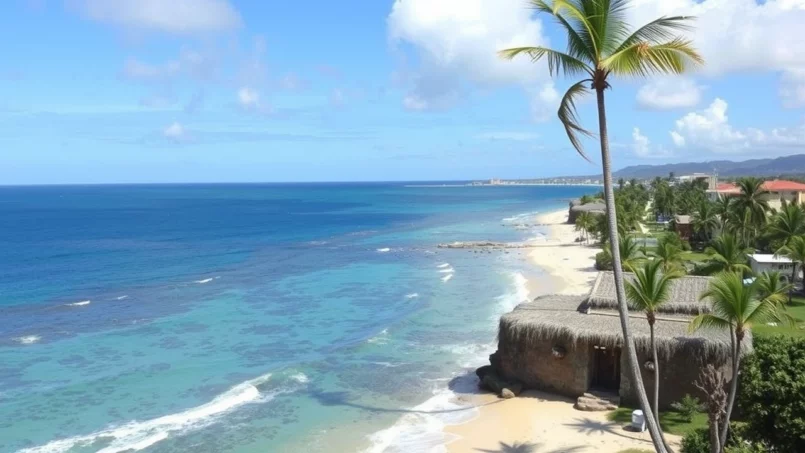
Light-colored sand, turquoise water, favorable tax laws, and a tropical lifestyle… Buying a house or apartment by the sea in Puerto Rico is a dream for many investors and future residents. But beyond the postcard images, the local market has its own rules, climate risks, and unique legal and tax characteristics. Without proper preparation, this El Dorado can quickly turn into a headache.
This guide provides a structured method for understanding the real estate market, choosing a suitable coastal area, organizing financing, and securing the transaction. It is crucial to anticipate specific risks, including exposure to hurricanes and the consequences of sea-level rise.
Understanding the Coastal Real Estate Market in Puerto Rico
Puerto Rico is a territory of the United States, with the USD as its currency, a legal system inspired by Spanish civil law and framed by federal law. This American anchor greatly simplifies procedures for U.S. citizens, but the market nevertheless operates in a less standardized manner than on the mainland.
The real estate sector is a heavyweight in the local economy, with a residential market valued at over $260 billion in 2025 and projected growth of around 3% per year until 2029. Prices have soared in recent years: the price index jumped by over 27% year-over-year at the end of 2024, and the median sales price increased by over 70% year-over-year in early 2025 according to some sources.
Martinique suffers from an estimated deficit of nearly 300,000 housing units.
– the arrival of wealthy new residents attracted by the tax incentives of Act 60;
– the rise of remote work;
– the growth of tourism (nearly $9 billion in recent tourism revenues, and over 6.6 million passengers at the main airport in 2024);
– the growing interest in short-term rentals in beach areas.
Result: the most sought-after coastal areas have become veritable luxury micro-markets, comparable to New York or Miami for certain segments, with record sales reaching several tens of millions of dollars in enclaves like Dorado Beach.
A “Paradise” Market That Is Demanding
However, many professionals describe an environment that is “buyer-beware”, almost a regulatory Wild West for the uninitiated. The absence of a unified MLS, uneven listing quality, difficult-to-gather comparable data, sometimes poorly managed condominiums, and strict coastal regulations are all potential pitfalls.
All-cash real estate transactions have increased by more than 700% over a decade.
In this tense context, both the primary residence buyer and the investor must adopt a more structured approach than in the continental United States: very thorough due diligence, systematic use of local professionals, detailed study of coastal regulations and climate risks.
Where to Buy on the Coast: Overview of the Main Coastal Areas
With approximately 300 miles (nearly 480 km) of coastline, Puerto Rico offers a spectrum of very different markets, from urban oceanfront penthouses to the more affordable surf villages of the west coast. The choice of location determines lifestyle, necessary budget, resale liquidity, and rental potential.
Established Luxury Markets: Dorado, Condado, Isla Verde and Major Resorts
Around San Juan and on the north coast, certain areas have established themselves as international references for high-end seaside residences.
Dorado and Dorado Beach
Dorado is often called the crown jewel. This coastal town, about thirty minutes from San Juan and private terminals, concentrates some of the most exclusive residential complexes in the Caribbean: Ritz-Carlton Reserve, Dorado Beach East, La Cala, Livingston Lakefront Estates…
The numbers give a sense of the market: resales above $10 million, records of $20 million then $37 million for oceanfront villas, and new developments exceeding $30 million for some beachfront residences. Outside these extremes, houses are more typically between $2 and $10 million, with a median price around $1.3 million.
The positioning is clearly lifestyle + investment: golf course designed by Robert Trent Jones, private beach clubs, high-end rental management, 24/7 security, concierge services, and proximity to international schools (like TASIS in Dorado). For a primary or secondary residence buyer by the sea, Dorado offers an almost “closed resort” environment, very secure, with a liquid market for the wealthy segment.
Condado, Ocean Park and the San Juan Waterfront
In the capital, several neighborhoods combine beaches and upscale condominiums, with real urban life just steps away:
Discover the main coastal neighborhoods of San Juan, Puerto Rico, known for their high-end real estate, distinct vibes, and price ranges.
The quintessential chic neighborhood, blending ocean-view towers, luxury boutiques, gourmet restaurants, and a coastal promenade. Luxury condos frequently reach seven figures, with standard prices around $400,000. New projects (The Icon, CW Tower) feature ranges from $800,000 to $4 million.
Wedged between Condado and Isla Verde, this neighborhood offers a more bohemian, surfer vibe, still waterfront, but with a relaxed, village-like atmosphere.
Part of Carolina, it offers wide sandy beaches, immediate access to the international airport, and numerous oceanfront towers. Apartments generally range from $300,000 to $1.5 million, with a median price around $460,000.
These neighborhoods combine very strong rental appeal (vacations, business travel, long stays) and a complete urban setting: schools, hospitals, shops, nightlife. Gross yields for furnished rentals can reach 6 to 7% in Isla Verde and 8 to 12% for some optimized short-term properties in Condado.
Prestige Resorts: Bahía Beach, Palmas del Mar and Other Gated Enclaves
Farther on the outskirts, other complexes offer a highly structured resort environment by the sea:
The Bahía Beach Resort & Golf Club, located in Río Grande between the El Yunque forest and the Atlantic Ocean, is a complex managed under the St. Regis brand (scheduled to transition to Four Seasons). It has a 3 km private beach, a golf course designed by Robert Trent Jones Jr., and the Audubon Gold Signature Sanctuary label. Residences there typically sell for between $3 and $12 million. Palmas del Mar, in Humacao on the east coast, is a vast gated community of over 1,000 hectares with a marina, equestrian centers, a racquetball complex, schools, and secure neighborhoods. Properties on the water or on the golf course are mostly offered between $800,000 and $5 million, with a median price around $750,000.
These enclaves attract both buyers seeking an ultra-equipped secondary villa and investors betting on high-end seasonal rentals, with professional management integrated into the resort.
Emerging and More Accessible Markets: Rincón, Isabela, Cabo Rojo…
Moving away from San Juan, the western coast and some areas in the south and east offer more affordable alternatives, with long-term appreciation potential.
Rincón and the West Coast
Rincón, the quintessential surf town on the west coast, is known for its sunsets and laid-back vibe. The market has become more sophisticated, with the emergence of luxury rental villas sometimes achieving yields close to double digits. Prices for waterfront properties range from about $300,000 for simpler properties to over $2 million for exceptional villas, with a median price around $300,000.
The Isabela region, farther north, offers a significantly more affordable market with a median price of about $170,000, despite attractive beaches and growing tourism. The Aguadilla and Aguada areas, with their surf vibe and still very residential markets, have prices 30% to 60% lower than those in Dorado or Condado, while enjoying similar proximity to the ocean.
South and Southwest: Cabo Rojo, Ponce, Patillas, Guánica…
The southwestern tip, around Cabo Rojo, is known for its spectacular beaches (Playa Buyé, Playa Sucia), cliffs, and salt flats. You can find often more intimate and affordable waterfront properties there, between $250,000 and $1.2 million for the best-located ones.
Farther east, municipalities like Patillas (“The Emerald of the South”), Guánica, and even Ponce offer moderate prices, lower tourist density, and large parcels sometimes directly on the coast. These areas particularly interest buyers looking for peace, privacy, or eco-tourism projects.
Satellite Islands: Vieques and Culebra
Vieques and Culebra, islands off the east coast, are markets apart. Culebra, with its pristine beaches like Flamenco Beach, is subject to strict development rules that limit available land and create a scarcity effect. The median price there exceeds $560,000. Vieques, larger, is known for its raw beauty and bioluminescent bays, but the housing supply is very limited against strong demand, driving prices upward (median around $324,000).
These islands are perfect for those seeking a chic “off-grid” life or an intimate seaside retreat, but the buyer must accept logistical constraints (ferry, flights, services) and longer timelines for construction and supplies.
Indicative Comparison of Some Coastal Markets
The figures below give a general idea of the budgets required for the main coastal areas.
| Coastal Area | Market Type | Typical Price Range (USD) | Median Price (USD) |
|---|---|---|---|
| Dorado / Dorado Beach | Ultra-Luxury | 2M – 10M+ (up to 30M+) | ~1.3M |
| Condado (San Juan) | High-End Urban | 400k – 8M+ (penthouse 13.4M) | ~1.3M (luxury listings) |
| Isla Verde (Carolina) | Airport/Touristic | 300k – 1.5M+ | ~460k |
| Palmas del Mar (Humacao) | Coastal Resort | 800k – 5M | ~750k |
| Bahía Beach (Río Grande) | Ultra-Luxury Resort | 3M – 12M | N/A |
| Rincón | Surf & Ocean View Villas | 300k – 2M+ | ~300k |
| Culebra | Exclusive Island | 500k – 7M+ | ~565k |
| Vieques | Natural Island | 250k – 2.5M+ | ~324k |
| Isabela | Emerging Market | 150k – 700k+ | ~170k |
| Cabo Rojo | More Intimate Southwest | 250k – 1.2M | N/A |
These amounts vary based on immediate beach proximity, the view, the property’s condition, and whether it is part of a gated community.
Investment, Rental, and Taxation: The Winning (or Tricky) Trio
Buying oceanfront in Puerto Rico is often a trade-off between personal enjoyment and rental yield. The specific tax-legal framework can turn a beautiful beach house into an extremely high-performing asset… provided the operation is well structured.
Rental Potential of Oceanfront Properties
Oceanfront properties tick all the boxes for short-term rentals: scarcity, view, beach access, proximity to restaurants and activities. In the most sought-after locations, luxury villas and condos achieve occupancy rates of 70 to 80%, with nightly rates from $500 to $2,000 for exceptional properties.
Recent data shows average gross yields around 5.3% island-wide, but the urban beaches of San Juan (Condado, Isla Verde) can reach 6–7%, and some very well-managed short-term operations exceed 8–10%. Weekly or monthly rentals are particularly in demand near major routes and airports, explaining the success of Isla Verde or Condado with investors.
A crucial point: short-term rental regulations vary from one municipality and condominium to another. San Juan, for example, regulates STRs through specific licenses. Before buying oceanfront, it is therefore imperative to:
Before embarking on vacation rentals, it is imperative to check the HOA or condominium rules, consult the municipality on required permits, and include all management costs in the business plan.
Act 60, Tax Residence, and Optimization
One of Puerto Rico’s major specificities is Act 60, a tax incentive code that merges previous programs (Act 20, Act 22). For a beachfront villa buyer, two aspects are particularly relevant:
– the Individual Resident Investor status (ex-Act 22): for individuals who become tax residents of Puerto Rico, tax on interest, dividends, and capital gains from Puerto Rican sources can be reduced to 0% under an individual decree. Many existing provisions still allow for a full exemption on capital gains realized after relocation, subject to a precise timeline, although a reform plans a flat 4% rate on certain passive income for new entrants starting in 2026;
– the Export Services (ex-Act 20): for service provider companies serving clients abroad from the island, the corporate tax rate can drop to 4%, with exemptions on dividends and significant reductions on professional property tax (up to 75%).
To fully benefit from these regimes, several conditions are essential:
– become an effective resident (presence of at least 183 days per year on the island, local economic center of interests, demonstrable personal and professional ties);
– file an application for a tax decree (with entry fees, then an annual fee of several thousand dollars);
– purchase a primary residence in Puerto Rico within two years of obtaining the decree, which, in practice, pushes many beneficiaries to invest in a beachfront house or condo;
– comply with an annual donation obligation to local associations (around $10,000).
For U.S. citizens, another major advantage: the income from Puerto Rican sources of an effective resident is generally exempt from U.S. federal income tax, under Section 933 of the Internal Revenue Code. However, income from U.S. sources (salaries, US dividends, real estate located in the US) remains taxable in the United States, and gains on U.S. real estate remain subject to the FIRPTA regime for non-residents.
Real Estate Taxes, Transaction Costs, and Recurring Charges
In terms of property taxes, Puerto Rico stands out with moderate local taxes. The property tax (Impuesto sobre la Propiedad Inmueble), managed by the CRIM agency, is calculated on an assessed value significantly below market value, based on a methodology dating from 1957.
The average effective property tax rate in France represents about 0.50% of the property’s actual value.
To give a general idea:
| Coastal Property Scenario | Estimated Market Value | Approximate Annual Tax |
|---|---|---|
| Ocean-view Condo in Condado | 300,000 USD | ≈ 380 USD |
| Suburban House near North Coast | 450,000 USD | ≈ 500 USD |
| Luxury Oceanfront Villa (1.8 M USD) | 1,800,000 USD | ≈ 2,300 USD |
| Coastal Estate in Dorado (~2.5 M USD) | 2,500,000 USD | ≈ 3,100 USD |
Exemptions exist for primary residences (homestead), seniors, certain disabled persons or veterans, and especially for properties used in activities eligible under Act 60 (up to 75% exemption on professional property tax for some businesses).
At purchase, one should budget for:
– Notary fees generally between 0.5% and 1% of the price (regulated fee, often paid by the seller but negotiable);
– Stamp and registration taxes generally totaling between 2% and 5% of the price for a standard purchase (some more detailed calculations mention 4–6% including all notary, stamp, and registry fees);
– real estate agent commissions, often between 4% and 6% of the price, typically paid by the seller, but which indirectly affect the final price.
Overall, the “round-trip” cost (purchase + resale) frequently falls between 5.5% and 9% of the price, excluding capital gains and personal fees (inspections, translations, etc.).
Financing: What Options for an Oceanfront Purchase?
Unlike other Caribbean islands, Puerto Rico benefits from direct access to American credit products: conventional loans, FHA, VA, USDA, non-QM, local bank loans, credit unions, etc. But conditions vary by profile (resident or not, US citizen or foreigner, investor or occupant), and a large number of luxury transactions are all-cash.
Overview of Main Loan Options
For an oceanfront property purchase, the most common options are:
Presentation of the different types of loans available for acquiring a waterfront residence or investment, with their criteria and specifics.
Offered by banks or credit unions. Usually require 5–20% down payment, a good credit score (620+), and a controlled debt-to-income ratio. Suitable for experienced buyers and rental investments.
Accessible for moderate-income first-time buyers, with a minimum down payment of 3.5% and relaxed credit criteria. Reserved for primary residences, not suitable for a pure oceanfront investment.
Exclusively for eligible veterans and military personnel. Allow 100% financing for a primary residence, can be used to buy a condo or house near the beach.
DSCR, bank statement, P&L. Used to finance rental properties. Qualification based on property cash flow or financial statements. Down payments of 10–30% and higher rates.
Essential for purchasing a raw oceanfront lot. Demanding: 20–50% down payments, short terms (5–15 years), higher rates, and need for realistic construction plans.
Very present in Puerto Rico. Sometimes more flexible for wooden houses, mixed constructions, or atypical oceanfront projects.
Interest rates in recent years were, for standard 30-year loans, slightly above those seen in the continental United States, with a differential that could reach 0.5–1 point for some non-resident profiles or for purely rental properties.
Particularities of the Credit Process on the Island
The typical process includes:
Before making an offer on a highly sought-after waterfront property, it is highly recommended to obtain a prequalification then a bank pre‑approval. The file to prepare is substantial: tax returns for 2 years, pay stubs, bank statements, list of assets and debts, sometimes with additional documents for self-employed individuals. The property appraisal by a licensed expert can be tricky for very rare or atypical oceanfront properties due to a lack of comparables. Finally, banks generally require specific insurance policies (hurricane, flood) for properties located in risk zones.
The timeframe between offer acceptance and closing can vary from 30 to 75 days, with an average duration of 15 to 45 days for the closing itself once financing is finalized. Notaries play a central role in drafting the loan deed, calculating stamp duties, and recording the mortgage.
Purchase Process, Law, and Due Diligence: What’s Different from the Mainland
Buying a beach house or oceanfront condo in Puerto Rico is not just about transferring habits acquired in the US or Europe. The system is based on a mix of civil law and federal law, with a centralized property registry (Registro de la Propiedad) and a very particular role for notaries.
Basic Legal Framework
Some structuring principles:
Property law is mainly governed by the local Civil Code and specific laws. Transactions are formalized by a public deed drafted by a notary, who is a specially authorized lawyer responsible for legality control. Ownership becomes enforceable against third parties by registering the deed in the property registry. Without registration, the transfer remains valid between the parties but offers limited protection. The priority of rights is determined by the order of registration in the registry.
For oceanfront properties, one must add the specific layer of coastal zone regulation: minimum distances from the shoreline, dune and mangrove protection zones, environmental constraints, restrictions in flood zones (FEMA), etc.
The Typical Acquisition Sequence
In practice, many buyers first sign a purchase option or a preliminary agreement that sets the price, due diligence timelines, and contingencies (obtaining financing, inspection results, etc.). The buyer then pays a deposit (often 5–10% of the price) held in an escrow account (ideally under the control of a lawyer or the notary).
A due diligence phase then opens, which should systematically include:
Acquiring a property in Puerto Rico requires meticulous verification of several key documents. It is imperative to order a title search to verify registration, mortgages, and easements. One must obtain tax certificates attesting to the absence of arrears in taxes and condominium fees. A cadastral survey and a property survey (crucial for oceanfront) are needed to demarcate the land. The OGPe zoning certification details permitted uses and constraints. Verifying existing building permits is essential to avoid non-conforming structures. An environmental assessment may be necessary if risks are identified. For condominiums, reviewing the governing documents (master deed, bylaws, budgets) is critical to assess the association’s health and management.
This preliminary verification work is all the more crucial because in Puerto Rico, buying a property encumbered with debts (taxes, condominium fees) transfers these obligations to the buyer.
Once the due diligence is deemed satisfactory, the parties sign the escritura pública de compraventa (public deed of sale) before a notary. The notary then carries out the legal formalities, notably registering the deed in the property registry and paying the corresponding stamp duties and administrative fees.
Coastal Properties and Climate: Anticipating Oceanfront Risks
Owning a beach house or oceanfront condo in Puerto Rico means enjoying the permanent spectacle of the ocean, but also direct exposure to climate hazards. The island has borne the full brunt of major hurricanes like Maria in 2017, which damaged over 350,000 homes, caused nearly 3,000 deaths, and damages estimated at $90 billion.
Hurricanes, Floods, Erosion: What Issues for the Buyer?
Climate studies conducted for Puerto Rico show:
Minimum annual sea-level rise measured, in millimeters.
These trends translate into:
– increased flood risks, both from coastal storm surge and flash floods following heavy rains;
– rising costs and scarcity of hurricane/flood insurance for oceanfront properties;
– growing constraints on building permits in coastal zones, as authorities seek to protect mangroves, dunes, and beaches that play a role as natural wave absorbers.
For a buyer, these elements must be integrated not as a distant abstraction, but as an immediate budgetary and regulatory line item:
– higher insurance premiums, with potential post-disaster increases;
– requirement for mitigation equipment (hurricane shutters, reinforced glazing, resistant roofs, generators, drainage systems);
– anticipation of adaptation works (elevation, retaining wall reinforcement, dune restoration);
– potential long-term depreciation of the most exposed segments.
Building or Renovating Oceanfront: Materials, Techniques, and Permits
If buying land or a property requiring major renovation on the waterfront, one should expect construction costs above the U.S. average, with typical ranges of $300 to $500 per square foot for a luxury house, or even more for ultra-high-end finishes or very technical structures.
Specific constraints include:
– foundations on piles or caissons to stabilize the structure in sandy or unstable zones;
– elevating the structure above projected flood levels;
– use of reinforced concrete, adapted coatings, marine paints, stainless steel, and treated wood;
– effective ventilation and materials resistant to mold in a hot, humid environment;
– design of roofs and facades resistant to extreme winds.
Building permits are issued under the control of the OGPe. For projects in coastal zones, environmental aspects fall under specialized agencies, which may require detailed studies and public consultations. Approval times vary from several months to over a year, depending on the site’s environmental sensitivity.
Insurance: A Pillar of Oceanfront Ownership Strategy
A coastal property cannot be conceived without an adapted insurance package, generally composed of:
– a homeowners multi-peril policy covering fire, theft, liability;
– specific windstorm/hurricane coverage for damage related to high winds, sometimes as a supplement to the main policy;
– separate flood insurance (often via the federal NFIP program or private insurers), generally required by banks for properties in risk zones;
– extensions for rental properties (loss of rents, specific liability).
Premiums depend on the precise location (elevation, distance to the sea, FEMA classification), construction quality (presence of shutters, roof reinforcement, elevation), insured value, and claims history. After major events like Maria, many owners reported significant delays in indemnifications, highlighting the importance of working with an experienced broker and carefully reading exclusions.
Strategic Tips for a Successful Oceanfront Purchase
Given the market complexity and climate challenges, buying a beachfront property in Puerto Rico must be approached as a structured investment project, even if the primary motivation is residential.
Some guiding principles emerge from studies and feedback:
1. Start with Strategy, Not the Visit Before falling in love with an ocean view, clarify your objectives: primary or secondary residence? Mixed-use with seasonal rentals? Long-term family project or 5–7 year investment? Wish to benefit from Act 60 or not? These answers guide the choice of area, type of property, budget level, and legal/tax structure (personal ownership, LLC, trust…).
The choice depends on the investor profile and objectives. The ultra-high-end segment (private clubs, international infrastructure) focuses on Dorado Beach, Bahía Beach, or Condado. For a lifestyle/yield balance with an intermediate budget, prioritize Palmas del Mar, Isla Verde, Ocean Park, or Rincón. For speculative bets on appreciation, study emerging markets like Isabela, Cabo Rojo, some areas on the south coast, or the islands of Vieques and Culebra.
3. Build a Strong Local Team A successful purchase almost always requires a core team of professionals: real estate agent specialized in coastal properties, bilingual lawyer/notary well-versed in Puerto Rican civil law, technical inspectors accustomed to coastal pathologies (corrosion, infiltration, mold), insurance broker, tax advisor familiar with US and Puerto Rican rules, and possibly a financial planner for estate planning issues.
4. Never Neglect Environmental and Structural Due Diligence For an oceanfront property, inspections must go beyond the standard: condition of the retaining wall and shoreline, signs of flooding, corrosion of fixtures and HVAC systems, presence of mold, conformity of original permits, coherence with zoning and risk maps. Having soil tests and a complete survey done by a reputable surveyor can avoid very bad surprises.
The budget for an oceanfront property must integrate additional and permanent costs beyond the purchase price: intensive maintenance (painting, rust prevention), post-storm repairs, more expensive insurance, refurbishment of protections, rental management, and provisions for future climate-related upgrades (elevation, reinforcement).
6. Prepare a Realistic Exit Plan Even if the intention is to keep the property for a long time, it is useful to ask: what type of buyer could I resell to in 10 or 15 years? What are the long-term trends for this particular stretch of coastline (erosion, overcrowding, tourist rental saturation, infrastructure projects, etc.)? Historical appreciation data shows, for example, spectacular increases over a decade in Condado (+160%) or Dorado (+166%), but future performance will also depend on each area’s ability to adapt to climate change.
By taking the time to understand these dynamics and surrounding oneself with the right specialists, buying an oceanfront property in Puerto Rico can become much more than a postcard dream: a powerful legacy asset, backed by a rare living environment, in a territory where American law, a Caribbean setting, and unique tax policy coexist.
Disclaimer: The information provided on this website is for informational purposes only and does not constitute financial, legal, or professional advice. We encourage you to consult qualified experts before making any investment, real estate, or expatriation decisions. Although we strive to maintain up-to-date and accurate information, we do not guarantee the completeness, accuracy, or timeliness of the proposed content. As investment and expatriation involve risks, we disclaim any liability for potential losses or damages arising from the use of this site. Your use of this site confirms your acceptance of these terms and your understanding of the associated risks.

Cyril Jarnias is an independent expert in international wealth management with over 20 years of experience. As an expatriate himself, he is dedicated to helping individuals and business leaders build, protect, and pass on their wealth with complete peace of mind.
On his website, cyriljarnias.com, he shares his expertise on international real estate, offshore company formation, and expatriation.
Thanks to his expertise, he offers sound advice to optimize his clients' wealth management. Cyril Jarnias is also recognized for his appearances in many prestigious media outlets such as BFM Business, les Français de l’étranger, Le Figaro, Les Echos, and Mieux vivre votre argent, where he shares his knowledge and know-how in wealth management.





