
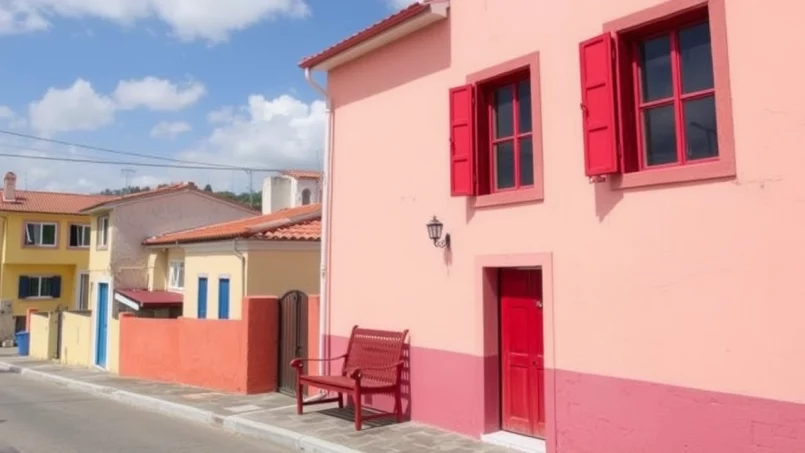
 Published on and written by Cyril Jarnias
Moving to Puerto Rico, whether for a few months or several years, is a dream for many people. Between the beaches, the music, the favorable tax environment, and an overall lower cost of living than on the U.S. mainland, the island attracts expats, retirees, families, and digital nomads. But the housing market there has its specificities, and arriving without preparation can quickly turn the tropical dream into a real estate headache.
This article provides a detailed overview for finding housing in Puerto Rico. It helps you understand market prices, choose your neighborhood, avoid common pitfalls, and negotiate your lease under favorable conditions, based on the most recent data and trends.
Understanding the Housing Context in Puerto Rico
Before launching into property viewings, it’s useful to place the local market in a broader framework. Puerto Rico is a U.S. territory, but its operation is neither completely “United States” nor totally “Latin America.” It’s a hybrid, including for real estate.
The island has endured a long economic crisis, massive debt, and several natural disasters, notably Hurricane Maria which damaged over 350,000 homes. At the same time, tourism has exploded, remote workers have settled in, and the government has implemented very aggressive tax incentives (especially Act 60) to attract investors and entrepreneurs.
This is the island-wide housing vacancy rate, revealing a paradoxical market despite strong demand in sought-after areas.
For someone looking to move, this means two very concrete things: opportunities exist, but the best properties go quickly, and competition is real in the “star” neighborhoods.
Cost of Living and the Weight of Housing
Overall, living in Puerto Rico costs less than in most major U.S. cities. Several comparisons show that:
The cost of living in Puerto Rico is 20% to 30% lower than on the U.S. mainland, depending on whether rent is included or not.
But this flattering picture hides strong disparities between downtown San Juan, highly touristic beach areas, and the more rural interior of the island.
To give a rough idea, some estimates indicate that a single person can live on the island (including housing) on about $1,600 to $1,800 per month under local conditions, whereas an expat or nomad used to a higher standard of living will more likely budget between $3,000 and $4,500 monthly, especially if they’re aiming for a high-end coastal neighborhood.
Where to Live in Puerto Rico? Overview of Main Areas
Puerto Rico has 78 municipalities and a great variety of environments: vibrant capital, residential suburbs, mountain villages, college towns, beach resorts, or satellite islands like Vieques and Culebra. But for the majority of newcomers, several areas consistently come up.
Greater San Juan: Urban Heart and Rental Market Epicenter
San Juan and its metropolitan area concentrate a good portion of the housing sought by new residents. You’ll find very different neighborhoods, each with its own vibe, price level, and resident profile.
Old San Juan
Old San Juan is the fortified historic center with its cobblestone streets, colorful houses, and iconic forts like El Morro. It’s also an administrative, tourist, and cultural hub. You’ll find character-filled apartments, often in old buildings.
Rents there are among the highest in the country for small units: well-located studios and 1-bedrooms often rent above the island average, with a typical range of about $1,500 to $3,000 per month for long-term rentals, depending on the property’s condition, view, and level of renovation. Charming properties or those with sea-view terraces can climb higher.
A major advantage is that everything is within walking distance, reducing dependency on a car, which is in any case rare on the island. The drawbacks include noise, heavy tourist traffic, and scarce parking.
Condado & Isla Verde
Condado and Isla Verde, on the San Juan and Carolina sides, form a long, dense tourist strip full of hotels, residential towers, casinos, restaurants, and shops. It’s the go-to address for those wanting a “Miami-lite” lifestyle: sea views, beach steps away, bars and restaurants at the bottom of the building.
Rents are mechanically higher there. In Condado, for example, 1-bedroom apartments in modern buildings can easily rent for between $2,000 and $3,000 monthly, with a median around $4,000 for high-end properties, while large waterfront condos or penthouses can reach $7,000 to $8,000 per month. On Isla Verde, the ranges are a bit lower but remain in the “high-end” category for the island.
Santurce, Miramar, Ocean Park
Santurce is San Juan’s creative neighborhood, with street art, trendy bars, galleries, and a mix of old buildings and renovations. Rents there have wide ranges, from more affordable small apartments to expensive lofts near the sea. Average prices are often between $1,500 and $4,000, depending on size, street, and proximity to the beach.
In San Juan, Miramar, a residential and upscale area, offers a calm and central environment. Ocean Park, a beachfront and inclusive area, offers housing with direct beach access. In both cases, a comfortable rent near the sea typically exceeds $2,000 per month.
Suburbs and Nearby Towns: Dorado, Guaynabo, Carolina, Caguas
One step outside downtown San Juan, several municipalities appeal to families and expats seeking space, security, and private schools, often in gated communities.
Overview of main residential areas in the San Juan metropolitan region and their rental markets.
Symbol of residential luxury, with Dorado Beach Resort, golf courses, and spectacular villas. Rents: from $2,100 for modest homes to $30,000/month in exclusive communities.
Well-organized residential suburb, with many secure subdivisions. Median rent: about $2,100 for an apartment.
Very large area including Isla Verde. Offers affordable sectors with studios or small apartments between $600 and $1,200, away from the beach.
A bit further out, it offers more space for softer rents. 2 or 3-bedroom houses sometimes under $1,100–$1,200.
West, South, and Interior: For Lower Rents and a Different Quality of Life
Moving away from San Juan, the vibe changes completely. The west, around Rincón, Aguadilla, Isabela, or Mayagüez, mixes surfer towns, college towns, and wild beaches. The south, with Ponce, offers a large city with historic architecture. The mountainous interior is home to small towns like Utuado, famous for coffee.
In these regions, rents are significantly lower:
– Studios or small apartments can be found for around $600 to $900 per month.
– 2 or 3-bedroom houses are often listed between $700 and $1,500, sometimes less than $600 in rural areas.
The trade-off is on other factors: an almost imperative need for a car, more limited access to certain infrastructure and salaried employment, but a calmer quality of life and stronger cultural immersion.
Comparative Rental Levels by Area
To get a concrete idea, here is an indicative table, based on data gathered for long-term rentals (monthly ballpark figures).
| Property Type / Area | High-Demand Areas (Condado, Isla Verde, Dorado, Old San Juan) | “Moderate” Areas (Bayamón, Carolina, Ponce, Caguas, Mayagüez) | Less Competitive / Rural Areas |
|---|---|---|---|
| Studio / 1-bedroom | $1,700 – $2,500 | $1,000 – $1,500 | $600 – $1,000 |
| 1-bedroom apartment | $2,000 – $3,000 | $1,200 – $1,800 | $800 – $1,200 |
| House / 3-bedroom apt. | $3,500 – $6,000 | $2,500 – $4,000 | $1,500 – $2,500 |
These ranges are indicative: an older apartment, without a view or renovation, will cost less than a recent, furnished condo with services and a sea view. But they reflect well the price hierarchy between regions.
Rental Levels, Purchase, and Yield: What the Numbers Say
Beyond impressions, the Puerto Rican market is well-documented, for both renters and investors.
Average Rent, Median Rent, and Ground Realities
Several sources report an average rent around $2,250 to $2,400 per month island-wide, with a median of about $2,300 to $2,500. In San Juan proper, the median rent often exceeds $3,000, largely due to the weight of Condado and the upscale furnished rental industry.
On the other hand, cost of living databases still indicate:
– Around $812 for an “average” 1-bedroom in the city center.
– Around $614 for a 1-bedroom outside the center.
– Between $1,100 and $1,600 for a 3-bedroom home, depending on whether it’s in the city center or on the outskirts.
The real estate market is structured into three distinct segments: an affordable local market often outside tourist zones, a market for expats and remote workers centered on attractive neighborhoods, and a very high-end segment, whether for rent or purchase.
Purchase: Price per Square Foot and Opportunities
For those considering buying after a rental phase, the numbers are equally contrasted. Some statistics indicate:
– An average price in urban centers around $295 per square foot (or a bit more than $3,000 per square meter).
– A price outside urban centers around $172 per square foot (about $1,850 per square meter).
Nationally, the median sales price is estimated at about $417,550, with homes staying on the market an average of 70 days and a sales-to-list price ratio around 95%. Prices have increased strongly in recent years (over 20% in real terms over some periods), partly thanks to the influx of buyers from the U.S. mainland.
The current sale price for waterfront condos in some sectors, a level lower than much of coastal Florida.
Rental Yield: An Attractive Market for Owners
The island shows interesting gross rental yields, particularly in tourist or university areas. Aggregated data mentions:
– An average gross yield around 5 to 7% across the island.
– Ranges in San Juan from about 2.6% to 7.7% depending on property type and neighborhood, for an average around 5.3%.
– In Isla Verde, average yields around 6.3%.
– In student neighborhoods like Río Piedras, yields can climb between 9 and 10%.
This context explains the proliferation of short-term rentals (Airbnb, etc.) and the interest from investors, both local and foreign. For a tenant, this translates into a strong presence of furnished apartments targeting tourism and temporary stays, with higher rents and fluctuating availability.
Platforms and Methods for Finding Housing
Finding housing in Puerto Rico isn’t just about scrolling through listings on American websites. Being on the ground and word of mouth remain essential, especially if you’re looking for good deals.
Essential Platforms
Several websites cover the Puerto Rican rental market, with different approaches.
Clasificados Online
This is the local classic, often considered Puerto Rico’s “Craigslist”. You can find everything: long-term rentals, sales, roomshares, furnished housing, even listings just featuring a phone number. The site is almost entirely in Spanish and its design is dated, but its volume of listings is unmatched.
You have to be willing to sort through poorly detailed listings, sometimes incomplete or outdated. But many “neighborhood” landlords or small agencies only use this platform, making it a must-check for those seeking good value for money outside purely tourist circuits.
Zillow, Realtor.com and Similar
Major American portals like Zillow or Realtor.com list hundreds of listings in Puerto Rico. They are more pleasant to use, in English, with better photos and structured information (square footage, number of bedrooms, etc.). However, they have two main limitations:
Real estate databases do not cover the entire market. Furthermore, some properties are listed there at prices specifically optimized for new arrivals from the mainland, which can be higher than local prices for equivalent properties.
For an initial exploration or to target high-end properties (for example via Christie’s International Real Estate Puerto Rico), these sites remain useful. But they shouldn’t be the only source if you want to optimize your budget.
Facebook, WhatsApp, and Word of Mouth
In Puerto Rico, a large part of daily life happens on Facebook and WhatsApp. Groups like “housing and sublets,” marketplaces, or community chats post listings for roomshares, sublets, even apartments “off-market.”
Some WhatsApp groups are known for artificially inflating prices, specifically targeting new arrivals. It’s advised to cross-check these offers with other platforms, visit the properties, and negotiate prices.
In many neighborhoods, the cheapest solution remains simply walking around, spotting “Se alquila” or “For rent” signs, asking shopkeepers, the hairdresser, the bartender, or even your Uber driver. Many local tenants find their housing this way, never using an online portal.
Why Searching On-Site is Often More Cost-Effective
Several accounts converge: the best value-for-money properties are rarely online and even less reservable remotely. They are obtained by being physically on the island, visiting, and talking with locals.
It’s often not recommended to schedule viewings too far in advance: a window of one to three days is more realistic, as many landlords don’t commit long in advance. An effective strategy is to book temporary housing (Airbnb, hotel, aparthotel) for two or three weeks, and dedicate that time to active prospecting.
Local Legalities: How Leases Work in Puerto Rico
The legal framework for rentals in Puerto Rico is based primarily on the local Civil Code. There isn’t a single, detailed rental law like in some European countries, which increases the importance of the contract itself.
Written Contract, Duration, Rent
In practice, landlords and tenants can freely negotiate most terms: rent amount, duration, adjustment clauses, security deposit. Key points to know:
– Any rental longer than one year must be formalized in writing.
– There is no rent control: prices are entirely negotiated between the parties.
– Rent is generally due on the 1st of the month, with possible late fees (to be specified in the contract).
– Contracts can be for a fixed term (one year, two years…) or month-to-month, renewing automatically.
A fixed-term lease cannot be broken unilaterally without a reason stipulated in the contract or mutual agreement. Hence the importance of clarifying in advance the conditions for early termination (notice period, possible penalties, force majeure).
Security Deposit and Other Move-in Costs
The most common practice is to require the equivalent of one month’s rent as a security deposit, sometimes more for high-end properties, to which may be added:
When signing a lease, you need to anticipate several initial costs. The first month’s rent is generally payable in advance. In some cases, the last month’s rent may also be required upfront. For tenants with a pet, a deposit or non-refundable fees are often charged. Finally, for the most expensive properties, additional security via insurance or a rental guarantee may be required.
The contract must specify in black and white: the deposit amount, what it may cover (damages, unpaid rent, cleaning), and the timeframe for its return at lease end, with supporting documentation for any deductions if necessary. In case of a dispute over the return, the tenant can take the matter to court and, in some situations, recover attorney’s fees.
Registering Your Lease: An Added Security
Important particularity: if the owner sells the property during the lease term, the new buyer can, in some cases, terminate the ongoing contract, unless this lease has been officially registered with the property registry (CRIM) for long-term leases (in practice six years or more).
For a rental of a few months or a year, most people don’t go through this trouble, especially since it involves procedures and fees. But for a commitment of several years, registering the lease can provide legally useful security.
Mutual Obligations and Inspection
As elsewhere, the landlord must provide a “habitable” dwelling: running water, functional electricity, secure doors and windows, absence of major nuisances (leaks, infestations, etc.). The tenant, for their part, must pay rent, maintain the property, and respect neighbors’ quiet enjoyment.
A crucial point to avoid bad surprises: conduct a detailed inspection, with photos, upon move-in. This documents the initial condition (walls, appliances, plumbing, furniture, etc.) and prevents you from being charged later for pre-existing damage.
Access to the Property, Visits, and Evictions
The landlord cannot show up at your place anytime. As a general rule, they must give notice (e.g., 24 hours in advance) except in an emergency. Similarly, “self-help” evictions, like changing locks or cutting electricity to make a tenant leave, are illegal.
In case of non-payment or serious breach of the contract, the process must go through the courts. Notice periods vary by cause but are counted in days or weeks, to which is added court processing time, which can be drawn out. This explains why some landlords are very demanding upfront in selecting tenants (income, background, references).
Housing Budget: Don’t Forget Utilities and Services
Rent is only one element of the housing budget. In Puerto Rico, utilities can weigh heavily, particularly electricity.
Electricity, Water, Internet: Significant Costs
Average figures show that “basic” utilities (electricity, water, trash, possible air conditioning) for an apartment around 915 sq ft (85 m²) can exceed $300 per month. For a 1-bedroom, the usual range is between $160 and $310, with high variability depending on your A/C usage.
Electricity is significantly more expensive than in most U.S. states, with a residential rate often between $0.28 and $0.30 per kWh. Intensive 24/7 A/C use in a poorly insulated waterfront condo will be immediately reflected in the bills.
Water is generally affordable, often costing less than $50 per month for an average apartment. Access to sanitation is either through the public network (billed with water) or via septic tank in rural areas.
For Internet, offers are comparable to the mainland, between $50 and $100 per month for high-speed service. Providers like Liberty, Claro, AeroNet, or Optico Fiber offer fiber up to 1 Gbps in the best-served areas. In the island’s interior, you may have to rely on wireless or satellite solutions, with more modest speeds.
Example of Monthly Housing + Utilities Budget
For a mid-sized 2-bedroom (about 915 sq ft / 85 m²) in a “moderate” area like Carolina or Bayamón, rented for around $1,300 per month, you can roughly estimate:
| Item | Approximate Monthly Amount |
|---|---|
| Rent | $1,300 |
| Electricity (with A/C) | $180 – $220 |
| Water and Trash | $30 – $50 |
| High-Speed Internet | $60 – $80 |
| Total Estimate | $1,570 – $1,650 |
This table shows that in Puerto Rico, electricity is not a minor detail: it can represent a significant added cost compared to similar tropical destinations.
Homes with Generators and Solar Panels: A Real Plus
Puerto Rico’s electrical grid remains fragile, and power outages (short or long) are not uncommon. During a viewing, it’s strongly recommended to ask about:
Overview of equipment and procedures ensuring power continuity in case of a main grid outage.
Presence of a generator, whether it’s a building-wide unit or dedicated specifically to the apartment.
Presence of solar panels and/or a battery system for self-consumption or backup.
Explanation of the automatic or manual switching process to the backup power source during an outage.
Properties equipped with solar and battery storage offer not only better resilience but can also reduce the long-term bill. For owners, these investments can also provide access to tax credits.
How to Avoid Pitfalls When Looking for Housing
The Puerto Rican rental market mixes very modern practices (online platforms, international agencies) and informal customs (word-of-mouth, simple leases, cash transactions). This mix creates opportunities, but also risks.
Scams and Red Flags
Some behaviors should immediately raise a red flag:
Be wary if a landlord demands a deposit for a simple viewing, if a property remains vacant at an abnormally high price for no clear reason, or if photos and descriptions are inconsistent and no physical visit is possible.
As everywhere, it is strongly advised not to send a deposit without having visited the property (or at minimum having a trusted person on-site do so), verified the landlord’s identity, and obtained a detailed written contract.
Verifying the Owner and the Property
Before signing, take the time to: check all details of the contract, understand the commitments, and assess possible consequences.
– Ask for references: previous tenants, neighbors, caretaker, local shopkeepers.
– Verify that water and electricity bills are up to date (an old debt can delay service activation).
– Ask about the potential sale of the property in the short term.
If you plan a long-term commitment, having the contract reviewed by a local attorney can prevent bad surprises, especially regarding rent adjustment clauses, eviction, or liability in case of a climate-related disaster.
Negotiating Your Rent in Puerto Rico
Contrary to the misconception that “everything is listed and non-negotiable,” there is room for discussion on many properties, especially if you are a solid tenant (stable income, good history, long-term plan).
Preparing Your Negotiation Well
The key is to arrive armed with data:
– Know the rents in the neighborhood for comparable properties (same size, same condition, same building type).
– Find out if the property has been vacant for a long time.
– Be aware of seasonality: outside the high tourist season, some landlords are more inclined to concede a discount or benefits (free parking, pets accepted without fees, etc.).
An unreasonably low offer is rarely well received. The most effective approach is to propose a credible adjustment (for example, a 5% to 10% rent reduction, or benefits in kind) in exchange for a concrete benefit for the landlord, such as signing a longer lease commitment or taking care of certain minor maintenance tasks.
– Signing a longer lease (2 years instead of 1).
– Paying several months’ rent in advance.
– Taking care of small repairs or routine garden maintenance.
What You Can Get Beyond Price
If the landlord is inflexible on rent, other levers exist:
– Ask for certain utilities to be included (Internet, parking spot, water share).
– Negotiate a structured adjustment clause (no increase the first year, or a cap over several years).
– Get improvements to the property before move-in (painting, replacing an old appliance).
In all cases, any agreement must be reflected in the contract. In Puerto Rico, it’s common to agree orally on a point and then forget to formalize it: this is a source of later disputes.
Short-Term Rentals: A Springboard to Explore Before Choosing
For many newcomers, short-term rental via platforms like Airbnb or Vrbo is a practical first step: you book a month or two in a targeted neighborhood, get a feel for local life, and then look for more permanent housing.
Number of active listings on Puerto Rico’s seasonal rental market.
The advantage of this approach is twofold:
– It allows you to test several areas (Condado, Isla Verde, Rincón, Ponce…) without commitment.
– It gives you time to meet locals, agents, or identify “off-market” listings in the neighborhood where you really want to settle.
For those considering eventually investing in a property to operate as a short-term rental, keep in mind that these rentals are subject to specific rules (registration with the tourism company, 11% occupancy tax, possible municipal regulations). But for a simple temporary tenant, it doesn’t change much day-to-day, apart from the price and availability.
Lifestyles, Safety, and Daily Life: Choosing a Suitable Neighborhood
Beyond rent and square footage, a home should match your lifestyle.
For a digital nomad or remote worker, it’s advisable to prioritize neighborhoods like San Juan, Dorado, or Rincón for their good internet connection quality, and to take advantage of coworking spaces like Piloto151 in Old San Juan. For a family, essential criteria are access to schools (often private, with annual fees around $10,000 for international schools), safety, proximity to amenities (parks, clubs), and consideration of recurring traffic around San Juan. For a retiree, evaluation should focus on proximity to major hospitals (in San Juan and Ponce), neighborhood tranquility, and ease of walking.
Regarding safety, Puerto Rico is generally considered safe for residents and visitors, especially in tourist and middle-to-upper-class residential areas (Condado, Dorado, Ocean Park, Guaynabo, Isla Verde, etc.). Crime exists, but it’s mainly concentrated in certain disadvantaged neighborhoods, often far from the residential circuits favored by foreigners. As anywhere, basic precautions are recommended: avoid poorly lit areas at night, don’t leave anything visible in a car, and ask locally about streets to avoid.
Conclusion: How to Serenely Approach the Housing Search in Puerto Rico
Finding housing in Puerto Rico is neither more nor less complicated than elsewhere, but it follows a particular code, halfway between American customs and Caribbean practices. To stack the odds in your favor:
For a successful housing search in Puerto Rico, establish a comprehensive budget including rent, utilities, transportation (car often necessary) and possible school fees. Explore via local platforms (Clasificados Online, Facebook groups, agencies), but don’t limit yourself to them. Plan for temporary accommodation on-site to visit, compare, negotiate, and leverage your network. Read your contract meticulously, ideally with a review if you don’t master Spanish, to avoid any ambiguity. Finally, check technical aspects: presence of a generator or solar panels, quality of the internet connection, and state of water and electrical installations.
By combining these precautions with a realistic approach to the market (neighborhood, property type, time of year), settling in Puerto Rico becomes much smoother. Housing is no longer an obstacle but a lever to fully enjoy the island’s diversity, from San Juan’s urban life to Rincón’s sunsets, and the green suburbs of Guaynabo or the villages of the interior.
With a little preparation and a good dose of flexibility, finding housing in Puerto Rico can then become the first successful step of a real life change in the tropics.
Disclaimer: The information provided on this website is for informational purposes only and does not constitute financial, legal, or professional advice. We encourage you to consult qualified experts before making any investment, real estate, or expatriation decisions. Although we strive to maintain up-to-date and accurate information, we do not guarantee the completeness, accuracy, or timeliness of the proposed content. As investment and expatriation involve risks, we disclaim any liability for potential losses or damages arising from the use of this site. Your use of this site confirms your acceptance of these terms and your understanding of the associated risks.

Cyril Jarnias is an independent expert in international wealth management with over 20 years of experience. As an expatriate himself, he is dedicated to helping individuals and business leaders build, protect, and pass on their wealth with complete peace of mind.
On his website, cyriljarnias.com, he shares his expertise on international real estate, offshore company formation, and expatriation.
Thanks to his expertise, he offers sound advice to optimize his clients' wealth management. Cyril Jarnias is also recognized for his appearances in many prestigious media outlets such as BFM Business, les Français de l’étranger, Le Figaro, Les Echos, and Mieux vivre votre argent, where he shares his knowledge and know-how in wealth management.





