
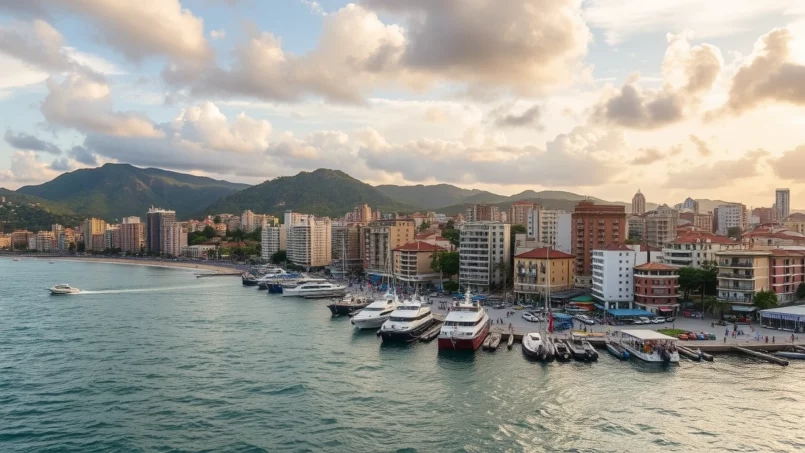
 Published on and written by Cyril Jarnias
Year-round sunshine, turquoise water, promises of tax breaks, and a “cheaper” life than on the American mainland: on paper, moving to Puerto Rico sounds like a dream. But behind the promotional campaigns, the reality is more nuanced. Cost of living, sky-high electricity prices, hurricanes, bureaucracy, social tensions around gentrification… The decision to move to Puerto Rico is not one to be taken lightly.
This analysis, based on economic, tax, social, and practical data, provides a detailed overview of the main advantages and challenges of settling in Puerto Rico, including concrete figures and contextual perspectives.
A U.S. Territory with Caribbean Flair
Puerto Rico is a Caribbean island, an unincorporated territory of the United States. Residents are U.S. citizens by birth, the currency is the US dollar, the U.S. Constitution applies… but the island is neither a state nor an independent country. Residents do not vote in presidential elections and have no voting representatives in Congress. This political ambiguity weighs on the economy, governance, and, more subtly, on the collective psychology.
Puerto Rico’s population is approximately 3.2 million, of which about 95% are Spanish-speaking.
In terms of living environment, the island offers a tropical climate with an average temperature around 80°F (26°C) year-round. The north is more humid than the south, the rainy and hurricane season lasts from June to November, and there are many microclimates between the coast, mountains, and rainforests.
The culture is a rich blend of Spanish, African, and Taíno influences, enriched by waves of migration (Irish, Corsicans, French, Arabs, Chinese, etc.). The result: a very Latin daily life (family-centered, conviviality, slower pace of life), but within an American institutional and economic framework.
Cost of Living: Cheaper Than Some US States, More Expensive Than Marketing Promises
Many campaigns tout Puerto Rico as a “haven” against inflation and the cost of living on the mainland. The reality is more nuanced.
On average, the overall cost is estimated to be around 9 to 20% lower than in some regions of the United States (Texas, Florida, etc.). San Juan would thus be 10% cheaper than Orlando, 32% cheaper than Honolulu… but 26% more expensive than Tucson, and roughly on par with Frankfurt.
Monthly Budget: Some Benchmarks
Estimates for living in Puerto Rico give a fairly wide range:
| Profile | Estimated Monthly Budget (excluding rent) |
|---|---|
| Single person | Approx. $1,000 – $2,866 |
| Single person living “comfortably” | Recommended minimum: ~$2,000 |
| Family of 4 | Approx. $3,200 – $5,378 |
These amounts vary significantly depending on lifestyle, location (San Juan vs. small town), and especially housing and electricity, which are atypically high expenses on the island.
Housing: Rentals, Purchases, and Soaring Prices
Housing is one of the main selling points for Puerto Rico: rents remain generally lower than in many major U.S. cities, especially outside the capital. But this is changing quickly in popular neighborhoods and due to the rise of short-term rentals.
Some examples of monthly rents (excluding utilities):
| City / Neighborhood | Type of Housing | Location | Approximate Monthly Rent |
|---|---|---|---|
| San Juan | 1 bedroom | City Center | $788 – $1,578 |
| San Juan | 1 bedroom | Outside Center | $598 – $859 |
| San Juan | 3 bedrooms | City Center | $1,562 – $2,400 |
| San Juan | 3 bedrooms | Outside Center | $1,161 – $1,406 |
| Arecibo | 1 bedroom | City Center | ~$500 |
| Arecibo | 3 bedrooms | City Center | ~$1,050 |
| Bayamón | 1 bedroom | City Center | ~$500 |
| Bayamón | 3 bedrooms | City Center | ~$900 |
| Old San Juan (roommate situation) | Room | – | From ~$400 |
| Rincón | Private apartment | – | ~$700 |
| Luquillo | Private villa | – | ~$1,800 |
| Coliving San Juan | Room / studio | – | $1,450 – $2,600 |
For an expat, renting a 1-bedroom in San Juan often costs between $900 and $1,200 in the city center and $700 to $850 in non-touristy areas. In small towns, rents drop, but so do services and job opportunities.
On the purchasing side, the market is under full pressure. The median sale price reached $290,000 in the first quarter of 2025, up 32% year-over-year, with some areas even jumping 71%. Average prices per square foot give another indicator of this sharp increase.
| Purchase Type | Location | Average Price per Square Foot |
|---|---|---|
| Apartment | City Center | ~$256 / sq ft |
| Apartment | Outside Center | ~$146 / sq ft |
This surge is not insignificant: it is fueled by the arrival of wealthy residents attracted by tax incentives (Act 60), but also by the explosion of short-term tourist rentals, which went from about 1,000 units in 2014 to over 25,000 in 2024. One study shows that a 10% increase in short-term rentals translates to a 7% increase in median rent. For high-income expats, it’s bearable; for locals, it’s a shock.
For construction, the bill stings: a “mid-range” residential project runs between $300 and $500 per square foot, in a context of environmental constraints, slow permits, and a severe housing shortage (nearly 300,000 units missing).
Food: More Expensive Supermarkets, Variable Restaurants
Another surprise for many newcomers: grocery prices. About 85% of food is imported, with additional transportation costs and effects from the Jones Act on maritime shipping. Result: basic products are significantly more expensive than on the mainland.
Food prices in Alaska are significantly higher than in the rest of the United States, with estimates ranging from 20 to 30% above the national average. Here are some concrete benchmarks:
Common grocery items (fruits, vegetables, dairy) can cost up to one-third more than elsewhere in the United States due to transportation costs.
Distance and logistical challenges for shipping goods are the main factors explaining these higher prices.
| Product | Approximate Price |
|---|---|
| White bread (1 lb) | $2.81 – $3.18 |
| Milk (1 gallon) | $6.50 – $9.29 |
| Dozen eggs | $3.83 – $7.00 |
| Chicken breast (1 lb) | $3.00 – $4.92 |
| Local cheese (1 lb) | $4.42 – $9.00 |
| Mid-range bottle of wine | $15 – $20 |
Food inflation increased another 3.4% in June 2025 year-over-year.
Eating out remains more affordable, especially in small establishments:
| Type of Meal | Approximate Price |
|---|---|
| Inexpensive restaurant | $12 – $19 |
| Mid-range restaurant (2 people) | $50 – $81 |
| Fast-food combo (McDonald’s type) | ~$10 |
By combining bulk shopping (Costco, Walmart), local products, and markets, you can somewhat contain the bill. But for those coming from a low-cost U.S. state, the difference can be surprising.
Utilities: Electricity, the Budget’s Achilles’ Heel
This is probably the most counter-intuitive aspect for many expats: in Puerto Rico, electricity is not only unreliable but also very expensive.
Puerto Ricans spend about 8% of their income on electricity, compared to an average of 2.4% on the U.S. mainland.
For an 85 m² (approx. 915 sq ft) apartment, the total basic utilities (electricity, water, garbage, heating/cooling) fall in a range of $177 – $487 per month. High-speed internet (60 Mb/s and above) costs $37 to $73.75; a mobile plan with calls and 10 GB+ of data, $71.95 to $79.17.
In practice, many expats budget between $150 and $300 monthly for electricity + water + internet combined. But this figure climbs as soon as you need a generator or solar panels to compensate for outages.
Transportation: Limited Public Transit, A Car Is Almost Essential
The AMA (buses) and the Tren Urbano (light rail connecting San Juan, Guaynabo, and Bayamón) exist, but remain limited in coverage and frequency. Outside the metropolitan area, public transportation is scarce. Consequently, most residents find owning a car indispensable.
Typical costs:
| Item | Price / Range |
|---|---|
| Local bus ticket | $1.50 – $2.00 ($0.75 on AMA) |
| Tren Urbano ticket | $1.50 |
| Monthly transportation pass | $12 – $100 depending on use |
| Gasoline (1 liter) | $0.74 – $0.97 (~$3.50 – $3.65/gal) |
| New VW Golf | $33,377 – $37,510 |
| New Toyota Corolla | ~$28,416 |
| Car rental | $15 – $150/day depending on season & vehicle |
| Mandatory liability insurance | ~$100/year |
| Comprehensive insurance | $500 – $1,500/year |
| Registration (excluding emissions test) | ~$300 (+ $20–$50 for emissions test) |
Services like Uber work well in the San Juan area, with an 8 km (5 mile) trip costing between $8 and $15. But for an expat living outside the metropolis, dependence on a car is almost total, compounded by roads notoriously riddled with potholes, leading to higher maintenance costs.
Taxation: The Promises of Act 60 and the Reality of Relocation
This is one of the major drivers of recent relocation to Puerto Rico: the system of tax incentives, now consolidated under the Act 60-2019 (Puerto Rico Incentives Code), which merged around thirty prior regimes, including the highly publicized Acts 20 and 22.
The central idea: attract highly taxed entrepreneurs and investors from the mainland, offering them an ultra-advantageous tax environment, provided they become bona fide residents of the island.
For Individuals: Passive Income and Capital Gains Heavily Reduced
The expats most affected are “Resident Individual Investors,” former beneficiaries of Act 22.
In summary, a U.S. citizen who becomes a bona fide resident of Puerto Rico can:
– Exclude their Puerto Rico-source income from U.S. federal tax (thanks to Section 933 of the U.S. Internal Revenue Code).
– Benefit from a total exemption from Puerto Rican tax on:
– Dividends from Puerto Rico sources.
– Interest from Puerto Rico sources.
– Capital gains realized on securities whose appreciation occurs after establishing residency on the island.
For securities held before moving to Puerto Rico, only the capital gain generated after the start of residency is tax-exempt. The capital gain related to the prior holding period remains subject to standard Puerto Rican tax if the sale occurs within 10 years of the move. After this 10-year period and before 2036, this portion of the pre-move gain benefits from a reduced tax rate of 5%.
To qualify for the regime, one must:
– Not have been a resident of Puerto Rico in the 10 (or even 15 according to some sources) years prior to January 1, 2020.
– Obtain an individual decree of exemption (a real contract with the government).
– Pay a one-time $5,000 fee upon approval.
– Contribute $10,000 annually to a Puerto Rico-registered charity.
– Purchase a primary residence on the island within two years.
– Maintain the status until December 31, 2035 (current decree deadline).
Since 2012, more than 1,500 people from the mainland are estimated to have established residency in Puerto Rico for these reasons.
For Businesses: 4% Corporate Tax for Export Services
For entrepreneurs, the former Act 20 (now integrated into Act 60) offers a very aggressive tax structure for export-oriented service activities (clients outside Puerto Rico).
Main features:
– Corporate tax rate fixed at 4% on qualified earnings.
– 100% exemption from tax on dividends distributed from these earnings.
– 75% exemption on municipal and state property taxes for assets related to the activity.
– 50% exemption on municipal license taxes (similar to a gross receipts tax).
Key conditions:
A software development company, within an eligible sector, could establish its operational headquarters in Puerto Rico. To benefit from tax exemptions, it must maintain a physical office on the island, serve a clientele located exclusively outside Puerto Rico, and obtain an exemption decree valid for 15 to 20 years, renewable under certain conditions.
On paper, this allows an entrepreneur to transform an overall tax burden of 40–50% into an effective rate around 4–15%, depending on the structure, while remaining within the U.S. legal framework.
Becoming a Bona Fide Resident: A Binding Reality
For the IRS, renting an apartment in Condado and posting beach photos on Instagram isn’t enough. The “bona fide resident” status relies on three tests (Section 937 IRC):
1. Physical presence: Spend at least 183 days per year in Puerto Rico (or meet complex variants mixing 549 days over 3 years, fewer than 90 days in the United States, etc.). 2. Tax home: Not have one’s principal place of work or business outside the island. 3. Closer connection: Demonstrate that the center of one’s personal, social, and economic life is in Puerto Rico (primary home, family, bank accounts, associations, etc.).
A specific form (Form 8898) must be filed with the IRS the year of the residency change. Any ambiguity is risky: in 2021, the IRS launched an audit campaign targeting taxpayers claiming Act 60 benefits without truly meeting these criteria or manipulating the source of their income.
For expats leaving high-tax states (California, New York, New Jersey…), it is crucial to formally sever tax residency with the former state. These jurisdictions may seek to maintain their right to tax you. To prove your permanent departure, administrative steps are essential: obtain a new local driver’s license, officially change your domicile, and register to vote in your new residence.
Finally, these advantages have a structural cost: decree fees, mandatory donations, strict adherence to days on the island, complex filing requirements, need for specialized advice. Relocating to Puerto Rico for tax reasons is neither a “light” move nor a risk-free strategy.
Controversies and Political Risks
Act 60 and its predecessors (Acts 20 / 22) are at the heart of local and federal controversies. These programs are notably criticized for:
– Favoring a very wealthy minority of foreign residents.
– Contributing to the surge in real estate prices (some rents are said to have increased by 600% in certain areas since 2022).
– Widening the gap between a “parallel economy” of new wealthy arrivals and a local population with average incomes of about $22,000 per year and a median household income around $20,166.
In Washington, lawmakers proposed a bill in 2024 (UPROAR Act) aimed at challenging certain aspects of the regime. There is no guarantee that the tax environment will remain unchanged in the long term, even though current decrees are theoretically contractually valid until 2035.
For an expat attracted by the tax benefits, the challenge is twofold: assess the political risk and, above all, ask oneself if one is ready to commit, for the long haul, to the social, cultural, and material reality of life on the island.
Work, Income, and Employment: A Paradise for Remote Workers, A More Fragile Local Market
Puerto Rico is often presented as a “hotspot” for tech start-ups and digital nomads. That’s true… provided you arrive with your job, your client base, or your investment income.
The average net salary on the island is around $2,228 to $2,566 per month, while the average annual income of a Puerto Rican is around $22,000. Expats and mainlanders who work for American companies, for example, or run their own businesses, can on the other hand have average incomes around $73,000 per year.
The local job market remains challenging:
The job market is characterized by a high unemployment rate (though down from recession peaks), lower salaries than on the mainland for equivalent positions (even for bilingual professionals), and limited opportunities for non-Spanish speakers outside the tourism, English teaching, or a few multinational sectors.
Promising sectors for foreigners: tourism, customer service, IT, healthcare, finance, infrastructure projects, but always with strong local competition.
For remote workers, the island is more attractive: good time zone (aligned with New York), generally adequate telecommunications (with recourse to fiber or Starlink in underserved areas), pleasant quality of life. However, it’s wise to plan backup solutions for power outages (batteries, generator, coworking spaces with generators).
Healthcare: A Decent System, Lower Costs Than Mainland, But Real Limitations
Puerto Rico’s healthcare system follows the American model, combining public and private sectors. It is not free; per capita health expenditures are about $3,200, one-third of the mainland average.
The public sector, structured around the “Mi Salud” program and local Medicaid (“Vital”), covers a large portion of the low-income population (nearly 1.4 million Medicaid beneficiaries in 2024, over 45% of the population according to prior data). But it suffers from:
The average emergency room wait time before admission is nearly 14 hours and 30 minutes, three times the U.S. average.
The private sector, on the other hand, is generally of good quality, especially in the metropolitan area of San Juan:
– Many practitioners trained in the United States.
– Modern equipment, more efficient services.
– Costs 30 to 50% lower than mainland rates for comparable services.
– Dental care up to 50–70% cheaper than on the mainland.
Cost benchmarks:
| Healthcare Service | Approximate Cost |
|---|---|
| General practitioner visit | $50 – $100 |
| Specialist visit | $75 – $150 |
| Basic lab tests | From $30 |
| Hospitalization (per day) | From $1,000 |
| Common surgery | $15,000 – $30,000 |
| Acetaminophen (20 tablets) | ~$5 |
For expats, the question of health insurance is crucial. U.S. citizens generally must rely on U.S. plans (employer, Medicare, ACA marketplaces); international insurers rarely cover them on the island as it is a U.S. territory. Non-Americans, however, can subscribe to classic international health insurance, or to local insurers (Triple-S, MCS, Humana…).
Important: Many local insurance policies in Puerto Rico provide little to no coverage for routine healthcare on the U.S. mainland, which can complicate managing frequent travel. Furthermore, unlike residents of mainland states, enrollment in Medicare Part B is not automatic for residents of Puerto Rico; they must apply for it themselves, or face financial penalties for late enrollment.
Infrastructure, Electricity, and Water: A Fragile Modernity
Since Hurricane Maria in 2017, the state of the electrical grid has been one of the most sensitive topics on the island. Despite repair work, reality remains marked by:
– A vulnerable power grid, prone to frequent outages and rolling blackouts.
– Outages that can last for hours, even days, and sometimes weeks in extreme cases.
– An emblematic episode: on New Year’s 2024, nearly 99% of the island lost power.
Expats quickly come to consider a generator (or solar panels with batteries) as “basic equipment,” on par with a fridge or washing machine. But this investment adds to the budget and involves managing fuel, maintenance, noise…
An expat
Running water can also experience interruptions, and tap water quality is a concern. Some studies have shown contamination in more than half of households; it remains prudent to drink filtered or purified water.
Internet and telecommunications vary greatly from one neighborhood to another: modern fiber in some urban sectors, unreliable DSL elsewhere, dead zones in the countryside. The use of Starlink is becoming common in underserved regions.
Roads are another weak point: damaged pavement, deep potholes, sidewalks rarely suited for pedestrians, congested traffic in the San Juan metro area. Driving requires vigilance, patience… and a budget for vehicle maintenance.
Safety: Between Alarmist Perception and Nuanced Reality
Puerto Rico suffers from a sometimes caricatured image regarding crime. Yes, homicide rates (approximately 16.5 per 100,000 inhabitants) are higher than the U.S. average (6.5), but remain lower than in many Latin American countries. Most serious violence is linked to drug trafficking and gang conflicts, concentrated in certain disadvantaged neighborhoods.
For an expat who does not frequent high-risk areas or engage in trafficking, the main risk remains opportunistic petty crime: pickpocketing, vehicle break-ins, credit card scams, or tourist overcharging.
Conversely, federal statistics show that:
– Puerto Rico’s violent crime rate is among the lowest of about fifty U.S. jurisdictions considered.
– The property crime rate is even the lowest in this panel.
Safety in Puerto Rico varies considerably by area. It is recommended to favor highly secure sectors like Dorado, Palmas del Mar, tourist areas of San Juan, Rincón, Luquillo, Rio Mar, certain parts of Ponce or Vieques. On the other hand, it is advised to avoid, especially at night, certain “caseríos” (public housing) and specific sectors like La Perla or certain neighborhoods in Santurce.
A reasonable approach:
– Adopt the usual precautions (don’t flaunt valuables, avoid walking alone at night in isolated areas, use official taxis/Uber).
– Ask locally about recommended or unsafe neighborhoods.
– Take advantage of available resources: tourist police, emergency number 911, home and health insurance with appropriate coverage.
Overall, many residents and expats report a strong sense of community and a feeling of safety in their daily lives, once they have identified risky areas and behaviors.
Climate, Hurricanes, and Natural Risks: A Paradise Under Watch
The tropical climate is one of Puerto Rico’s major assets: constant warmth, pleasant sea, lush vegetation. But this idyllic setting has a counterpart: a direct exposure to hurricanes, tropical storms, and, to a lesser extent, earthquakes.
The official hurricane season runs from June to November, with a peak risk between mid-August and late October, September being statistically the most dangerous month. The island is hit on average four times a year by storms or cyclones, and by a major hurricane every 10 to 15 years.
Percentage of crops devastated by Hurricane Maria in 2017 in Puerto Rico.
Living in Puerto Rico therefore implies:
– Accepting a structural level of natural risk.
– Preparing seriously each hurricane season (water, food, medicine, gas, generators, evacuation plan).
– Scrupulously checking your home insurance (wind, flood, earthquake coverage, deductible level) and your living location (flood zone or not, construction quality, presence of hurricane shutters, cistern, generator, etc.).
On this point, local culture is an asset: Puerto Ricans generally take hurricane preparation very seriously, stocking up in advance and closely following official weather bulletins. For an expat, adopting these practices is essential.
Culture, Language, and Integration: A Real Change of World
Puerto Rico is not a “tropical Florida” nor a simple extension of the United States. It is a Spanish-speaking society, deeply Caribbean, with an approach to time, family, hierarchy, and public services quite different from North American or Northern European standards.
The pace of life is slower, priority is given to human relationships more than an obsession with efficiency. Many things take longer than you expect – whether opening a bank account, getting a driver’s license, moving an administrative file forward, or receiving an international transfer (which can take a week or more).
Language is another crucial factor:
Spanish is the official language, used in all aspects of daily life, administration, justice, and public schools. English is very widespread in the San Juan metro area and tourist zones, where some residents enjoy practicing it. However, outside these areas, it is unrealistic to rely solely on English to manage all aspects of life, such as healthcare, administrative procedures, neighbor relations, or schooling.
For an expat, learning Spanish is more than a plus: it is often the line between living “in an expat bubble” and true integration. The good news is that Puerto Ricans are generally patient with learners’ mistakes, and language immersion is strong.
Socially, Puerto Rico stands out for its genuine human warmth, with spontaneous greetings on the street, a strong sense of celebration, and omnipresent music (salsa, bomba, reggaeton, international artists). The population shows a visceral attachment to the flag and ‘boricua’ identity. Festivals like Noche de San Juan or the long Christmas celebrations under the sun are gateways into local culture.
But this cultural density can also cause culture shock for some expats: feeling isolated if they don’t master the language, frustration with some administrative slowness, difficulty accessing certain professional networks, perception of a “love/hate” relationship towards mainlanders or foreigners in general (especially in debates around gentrification).
Education and Family Life: Attractive Private Options, Uneven Public System
For expat families, the school question is decisive. The public system, overwhelmingly in Spanish, free but uneven, may be suitable if the goal is deep, long-term integration, and if parents accept variable quality, especially in rural areas.
Nevertheless, many foreign families turn to private and international schools, mainly clustered around San Juan, Dorado, or a few major cities. You can find:
– Bilingual schools (Spanish/English).
– Schools with an American curriculum and Advanced Placement.
– A few International Baccalaureate (IB) institutions offering PYP, MYP, and DP.
Tuition fees represent a significant cost and should not be considered incidental.
| Type of Institution | Typical Fees |
|---|---|
| Private daycare / preschool (full-time) | ~$427 – $470/month |
| International primary school | ~$4,000 – $15,000/year |
| “Classic” private schools | Approx. $6,000 – $15,000/year, some > $20,000 |
Demand is strong and waiting lists are frequent, especially for the most reputed schools and for mid-year entry. Anticipating the school search before moving is almost essential.
The advantage for children is rapid bilingual immersion: many become perfectly comfortable in Spanish in less than a year, especially in mixed schools and through socialization.
Conclusion: For Whom Is Puerto Rico a Good Relocation Choice?
In light of these elements, the major advantages of relocating to Puerto Rico can be summarized as follows:
– Climate and living environment: sunshine and warmth year-round, stunning beaches, mountains, rainforests, rich culture, strong conviviality.
– U.S. home base: same currency, same banking and legal system, no passport or visa for U.S. citizens, easier integration for American remote workers (same time zone as New York).
– Housing often cheaper than in major U.S. metros, particularly outside the ultra-trendy neighborhoods.
– Potentially extremely advantageous taxation for certain profiles (investors, export service entrepreneurs, income from capital), provided residency rules are strictly followed.
– Private healthcare costs lower than in the United States, with a good quality of care in San Juan.
– Private and international education of good standard, often at a cost lower than comparable schools on the mainland.
But the disadvantages and obstacles are just as significant:
Life in Puerto Rico presents several major challenges: high electricity costs with an unstable grid requiring backup solutions, food prices higher than the mainland, and fragile infrastructure. The territory is highly exposed to natural risks (hurricanes, earthquakes). The local job market is limited with low wages, and social tensions exist, related to gentrification and resentment towards some Act 60 expats. Finally, tax management is complex, involving simultaneous compliance with U.S. and Puerto Rican rules.
In practice, Puerto Rico proves particularly suitable for certain profiles:
Discover the main profiles that can benefit from relocating to Mexico, depending on their personal and professional situation.
Established professionals able to retain their international income while enjoying the time zone, quality of life, and potential tax benefits.
Seek a warm, culturally rich environment, with good connections to the United States and affordable private healthcare.
Want a bilingual experience for their children, are willing to invest in private school and to learn Spanish.
Conversely, the island is riskier for:
– People moving without a job or significant savings, hoping to “start over” on-site.
– Families reluctant to learn Spanish or dependent on a highly performing public education and healthcare system.
– Expats seeking primarily a quick “tax break” without a real desire to settle, learn the language, and put down local roots.
Ultimately, relocating to Puerto Rico is neither an obvious choice nor a nonsensical one: it’s a coherent bet for those with the right reasons (quality of life, bilingualism, long-term tax planning, remote work) and who accept the trade-offs (climatic risks, imperfect infrastructure, cost of certain expenses, integration effort). The whole challenge, before packing your bags, is to confront your expectations with these data-driven realities, to visit the island several times, to test different neighborhoods, and to honestly project yourself into this Caribbean life under the American flag.
Disclaimer: The information provided on this website is for informational purposes only and does not constitute financial, legal, or professional advice. We encourage you to consult qualified experts before making any investment, real estate, or expatriation decisions. Although we strive to maintain up-to-date and accurate information, we do not guarantee the completeness, accuracy, or timeliness of the proposed content. As investment and expatriation involve risks, we disclaim any liability for potential losses or damages arising from the use of this site. Your use of this site confirms your acceptance of these terms and your understanding of the associated risks.

Cyril Jarnias is an independent expert in international wealth management with over 20 years of experience. As an expatriate himself, he is dedicated to helping individuals and business leaders build, protect, and pass on their wealth with complete peace of mind.
On his website, cyriljarnias.com, he shares his expertise on international real estate, offshore company formation, and expatriation.
Thanks to his expertise, he offers sound advice to optimize his clients' wealth management. Cyril Jarnias is also recognized for his appearances in many prestigious media outlets such as BFM Business, les Français de l’étranger, Le Figaro, Les Echos, and Mieux vivre votre argent, where he shares his knowledge and know-how in wealth management.





