
 Published on and written by Cyril Jarnias
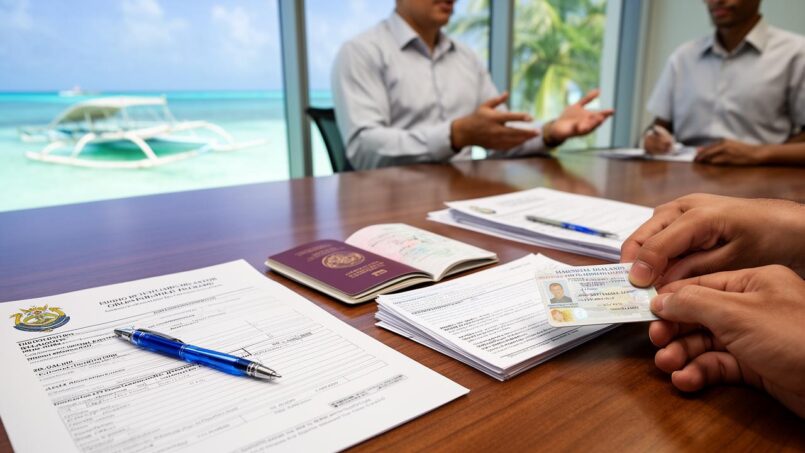
Moving to and living in the Marshall Islands goes beyond booking a flight to Majuro and finding a house along the lagoon. Between visas, work permits, health insurance, opening a bank account, customs formalities, and tax obligations, the administrative path is dense, especially for a long-term stay. This guide gathers, in clear English, the essentials needed to turn a life dream in the middle of the Pacific into a legally solid project.
Understanding the general framework before you go
Living in the Marshall Islands means living in a micro‑island state where everything goes through a few central institutions: the Immigration Division, the Ministry of Finance (Revenue & Taxation), the Ministry of Health, the Police for vehicle registration, and customs services. The country uses the U.S. dollar, which simplifies payments for many expats, but banking presence is limited to Majuro.
Average monthly cost for one person, including housing, in the Marshall Islands.
Cost of living and budget to plan for
The Marshall Islands are more expensive than the global average: the cost of living index is estimated at 105, about 1.3 times the global average. Majuro, the capital atoll and main entry point, concentrates services, jobs… and expenses.
Summary of major expense categories for one person and a family of four, including housing, for the entire country.
Includes rent or loan repayment, utilities (electricity, gas, water), and home insurance.
Groceries for home meals, pantry items, and basic staples.
Travel-related costs: fuel, vehicle maintenance, public transit passes, or car loans.
Health insurance, unreimbursed medical expenses, personal and supplemental insurance.
Subscriptions (phone, internet, streaming), outings, hobbies, and cultural activities.
Tuition, supplies, extracurricular activities, and childcare options for children.
| Expense Category | 1 person (USD/month) | Family of 4 (USD/month) |
|---|---|---|
| Total cost of living (with rent) | 1,508 | 2,950 |
| Cost excluding rent | 547 | 1,532 |
| Rent + utilities | 961 | 1,418 |
| Food | 435 | 1,121 |
| Transport | 43.60 | 122 |
| Average net salary (country) | 420 | — |
In Majuro, some estimates for a more “digital nomad” or comfortable expat lifestyle are higher: around 2,128 dollars per month for one person (including about 1,119 dollars excluding rent) and up to 4,068 dollars for a family of three. Quality of life is rated average (index 37), but the air is excellent, with a fine particulate matter (PM2.5) concentration of about 2.5 µg/m³.
These figures are not formalities in themselves, but they directly influence the choice of visa, insurance, type of housing, and even the income level needed to qualify for a residence permit or work visa.
Entering and staying legally: visas, residency, and work permits
Administrative procedures for living in the Marshall Islands begin before you even board. Everything goes through the visa and residence permit systems, managed by the Immigration Division and governed by several laws (Immigration Act, Labor (Non‑Resident Workers) Act, etc.).
Main types of visas
The country has a range of visas for different profiles: tourists, workers, investors, students, families. The most relevant categories for a long-term stay include:
| Type of visa / status | Primary use | Typical duration |
|---|---|---|
| Visitor’s Visa (V‑1) | Tourism, short visit | Up to 90 days |
| Business Visa (B‑1) | Business, prospecting, negotiations | Up to 2 years |
| Employment / Work Visa (E‑1) | Salaried non‑resident employment | Up to 2 years |
| General Visa (G‑1) | Spouse or dependent child of a legal worker | Up to 2 years |
| Residence Visa (R‑1) | Long‑term residence (certain specific statuses) | Up to 5 years |
| Student Visa (S‑1) | Studies | Varies |
| Diplomatic Visa (D‑1) | Diplomats | Up to 2 years |
| Permanent Residency Visa | Long‑term stay via investment or other grounds | 5 years, renewable |
Citizens of certain countries (United States, European Union, United Kingdom, neighboring Pacific states, etc.) benefit from visa‑free regimes or visa‑on‑arrival for tourism (30 to 90 days). For professional or residential stays, an appropriate visa is almost always required and must be obtained before departure.
General visa requirements
Regardless of visa type, the administration requires a fairly standard set of documents:
To submit a complete application, you will need: a passport valid for at least six months after the entry date with one free page; the completed application form accompanied by two recent passport‑sized photos; a letter detailing the purpose of your stay (work, investment, family reunification, retirement…); financial documents (bank statements, employment contract, pension); proof of accommodation (hotel reservation, lease, or invitation letter); a police clearance certificate or certificate of good conduct; and a medical certificate confirming the absence of certain infections (such as tuberculosis or HIV, especially for work or residence permits).
For work or residence visas, the medical component is mandatory: a certificate proving absence of HIV and tuberculosis is required.
Focus: work visa and work permit
Working legally in the Marshall Islands involves two separate but linked documents: the work permit, managed by the Labor Division, and the Employment Visa (E‑1) issued by Immigration.
The process is always the same: the employer starts, the foreigner follows.
1. The employer recruits and justifies hiring a foreign worker They must prove that no qualified Marshallese citizen is available. In practice, this involves local job postings and a file explaining the need for external skills.
2. Work permit application The company submits a complete file to the Labor Division: form, employment contract, proof of the candidate’s qualifications, evidence of local search, company documents. The Director of Labor and the relevant Secretary review the application. Legally, a written response should be given within about 21 days after receiving a complete file, but in practice, the entire process can take 4 to 8 weeks.
Once the work permit is granted, the employer receives an authorization letter. The foreign worker must then apply for a work visa, either at an embassy or consulate, or directly at the Immigration Division. The visa’s duration matches that of the permit (often 2 years, sometimes 1 year), with a maximum extension of about 21 days after the permit expires.
4. Arrival and maintaining legal status Upon arrival, the holder must present passport, visa, authorization letter, and a return or onward ticket. Throughout the stay, the worker may only work for the employer and in the position listed on the permit. Any changes (duties, employer, contract termination) must be reported and may require a new permit.
Fees vary, but typical ranges include:
| Procedure | Indicative fee range (USD) |
|---|---|
| Work permit (employer filing) | 100 – 500 (depending on duration/type) |
| Work visa (E‑1) | About 100 – 300 |
| Visitor visa (V‑1) | 100 (non‑refundable processing fee) |
| Business visa (B‑1) | 300 (processing fee) |
Lack of a valid visa or permit exposes the individual to the risk of penalties, deportation, and future restrictions for the employer.
Coming with family: spouses and children
A foreign worker can generally bring their spouse and minor dependent children through the General Visa (G‑1). The authorities then require:
– marriage certificate (for the spouse);
– children’s birth certificates;
– proof of sufficient means to support the household;
– medical and police clearance certificates for adults.
Visas for family members (dependents) are directly tied to the status of the primary worker. If the worker loses their work permit or leaves the country, the family’s right to stay must be reassessed and may end.
For a spouse of a Marshallese citizen, there is also a Family Work Permit, which is more favorable, avoiding the need for a deposit and making it easier to access employment.
Long‑term residency and permanent residence
Living sustainably in the Marshall Islands, beyond a few years under contract, means considering a more stable resident status.
Several options exist:
– Residence Visa (R‑1), up to 5 years, targeting certain profiles (individuals with a “Certificate of Actual Residence”, naturalized citizens without a Marshallese passport, etc.);
– Residence permits of various types:
– long‑term residence permit (employment, investment, family reunification);
– temporary permit (missions, studies, research projects);
– retirement residence permit (stable income, often linked to local property and health insurance);
– Permanent Residency Visa, valid for five years and renewable, typically tied to an investment or significant contribution to the local economy.
Access to Marshallese citizenship, on the other hand, is highly regulated: naturalization requires at least ten years of ordinary residence, knowledge of the language and customs, good character, a civics exam, and an annual quota of only ten naturalizations. Dual citizenship is generally prohibited, except for a few very specific exemptions.
Health, insurance, and medical requirements
The public health system in the Marshall Islands is based on two main hospitals — Majuro (Leroj Atama Medical Center) and Ebeye (Leroj Kitlang Health Center) — supplemented by about fifty dispensaries on the outer atolls. The offering covers primary care and some secondary care well, but for serious or complex conditions, patients must be evacuated to hospitals in Hawaii, Guam, Taiwan, Manila, or elsewhere.
National system and local health insurance
The country has a national insurance scheme divided into two parts:
– Basic Insurance: All Marshallese citizens are automatically enrolled. Expatriates can access it if they have contributed to the social security system (MISSA) for at least one year and have proper immigration documents.
– Supplemental Health Fund: a supplementary coverage, focused on off‑island care and medical evacuations. Many expatriates join this to secure coverage for treatment abroad.
In public hospitals, the co‑payment or daily flat fee is generally modest for the user. However, this co‑payment is not uniform and may vary depending on the patient’s status. For instance, individuals with 100% coverage (e.g., for a long‑term condition) or specific supplemental insurance may be exempt, while other patients will pay an amount that depends on their stay and the procedures performed.
| Type of service (public hospital) | With Basic insurance | Without insurance |
|---|---|---|
| Outpatient consultation (with tests, lab) | 5 USD | 20 USD |
| Emergency room visit | 17 USD | 35 USD |
| Hospitalization | 10 USD | 110 USD |
Access to medical evacuations abroad often depends on enrollment in the basic scheme and, for expatriates, on supplemental insurance.
International health insurance: virtually mandatory for expats
For a foreign resident, especially someone coming to work or retire, a solid international health insurance is not a luxury but a necessity. The reasons are simple:
– limited technical platform for complex conditions;
– extremely costly medical evacuations (medevac), often exceeding 100,000 dollars;
– delays and logistical contingencies related to international flights.
Coverage to look for:
– inpatient and outpatient care;
– full or high coverage for emergency medical evacuation;
– coverage in countries where patients are typically evacuated (Philippines, United States, Taiwan, etc.);
– dental, optical, maternity options depending on profile.
Several major international insurers (such as AXA Global, Cigna Global, GeoBlue, or April International) offer health plans adapted for expats in the Pacific. These plans are often customizable and manageable online. To easily compare and find the best offer that balances budget, deductible level, and specific visa requirements, it is recommended to go through a specialized expat insurance broker.
Vaccinations and medical certificates
Before entering the Marshall Islands, especially for a long stay, it is highly recommended to update basic vaccinations: flu, COVID‑19, tetanus‑diphtheria‑pertussis (TDAP), measles‑mumps‑rubella (MMR), chickenpox, polio, shingles, and if possible add hepatitis A and B, typhoid, even rabies for certain at‑risk profiles.
The authorities also require:
– proof of measles vaccination for travelers between six months and about 62 years old; otherwise, boarding or entry may be refused;
– medical certificate stating absence of HIV and tuberculosis for work or residence visas.
Vigilance remains necessary regarding the risk of dengue, tuberculosis, or hepatitis B, which are quite present in the region. Preventive measures (repellents, mosquito nets, regular medical check‑ups) are part of best practices for any resident.
Customs, baggage, imports: what you need to declare
Another aspect of administrative procedures for living in the Marshall Islands concerns what you bring with you: personal effects, furniture, vehicle, professional equipment. And, conversely, what is strictly prohibited from being transported.
Registration as an importer and basic formalities
For an individual bringing a simple household move, the procedure remains relatively straightforward. But as soon as shipping a significant volume or importing for a business activity is involved, you need to become familiar with customs service requirements.
Key points:
– new importers must register with customs authorities, providing:
– Tax Account Number (TAN);
– proof of business creation (Business Registration Number, certificate of incorporation) if a company;
– copy of passport or ID.
To clear goods, a complete set of documents is mandatory. These include a detailed commercial invoice, packing list, transport documents (bill of lading or air waybill), proof of freight and insurance costs, and any permits required from other ministries (health, agriculture, environment, etc.).
– upon arrival of the goods, a formal declaration must be filed with the Chief of Revenue and Taxation, with attached invoices and a signed, sworn entry certificate.
Commercial vessels and aircraft must declare their cargo and obtain customs clearance at their first port of call in the Republic, before any other operations.
Prohibited and restricted items
As in many island countries, environmental and public health protection leads to a fairly strict list of prohibitions. Among the goods whose import is prohibited:
The Marshall Islands strictly prohibits the import of narcotics, firearms, ammunition, explosives, pornographic publications, counterfeit goods, cigarettes without U.S. health warnings, used tires, banned pesticides, cut sugarcane, plants, and spearguns. The export of certain cultural goods or protected wildlife elements (such as coral or turtle shells) is also regulated.
Other items remain allowed but subject to permit (animals, plants, pesticides, firearms for sport use, medicines, certain food products). You must then obtain prior approval from the relevant ministry (health, agriculture, environment, police).
Allowances and personal effects
Travelers aged 18 and over benefit from a basic allowance, within reasonable limits, for example:
| Duty‑free items (on arrival) | Approximate allowed quantities |
|---|---|
| Cigarettes | 2 half‑cartons |
| Liquor and spirits | 2 liters |
| Chewing tobacco | 8 ounces |
| Used clothing and personal effects | Typically accepted as used |
These allowances apply to travelers passing through or returning from a short stay, not to imports of complete furniture for relocation. For a new resident shipping a full household move, household goods and personal effects may be exempt from certain duties if several conditions are met: prior residence abroad, purchase of goods outside, no intention to resell in the short term, limited import timeline (often six months around the date of relocation). Failure to comply with these rules results in import taxation and possible penalties.
Driving, buying a vehicle, and following traffic rules
In the Marshall Islands, especially in Majuro, public transportation is limited. For daily living and working, many residents turn to bicycles, taxis… or personal cars. This choice involves a series of administrative steps.
Driver’s license: international or local
For foreign drivers, the basic rule is as follows:
– an International Driver’s Permit (IDP), along with a valid national driver’s license, is recommended for driving upon arrival;
– a non‑resident visitor over 18 with a valid foreign license may drive for up to 30 days without an exam in some cases;
– beyond that, it may be necessary to obtain a Marshallese license, based on a vision test, a driving exam, and presentation of documents (passport, work permit, proof of local residence).
Information on the obligation to convert may be conflicting. For a long‑term relocation, it is safer to clarify the requirements directly with the local police or licensing office upon arrival.
Vehicle registration and insurance
Every vehicle must be registered with the Chief of Police before using public roads. Initial registration and renewals (annual) are done via a form stating:
– owner’s identity and residential address;
– detailed vehicle description (make, serial number, engine characteristics, new or used condition);
– title of ownership or purchase invoice (for imported vehicles, proof of ownership deemed sufficient by police);
– valid insurance certificate covering the vehicle.
Vehicles over five years old must pass a technical inspection each year. This requirement involves booking an appointment and may lead to repairs if the vehicle is not compliant.
Essential driving rules
The local traffic code includes several things to know from day one:
– drive on the right;
– speed limit around 40 km/h in urban areas, 60 km/h on sections outside built‑up areas;
– mandatory seat belt for all occupants;
– helmet for motorcyclists;
– phone use limited to hands‑free devices;
– strong recommendation to avoid driving at night (sometimes insufficient lighting, pedestrians, animals, degraded roads);
– increased vigilance due to the presence of bicycles, pedestrians, and sometimes animals on the road.
There is no clearly established legal blood alcohol concentration limit in available texts, but authorities consider driving under the influence a serious offense.
Opening a bank account and managing your finances
Living in the Marshall Islands also means organizing suitable payment methods. The country uses the U.S. dollar, but contactless payment solutions and bank cards are less common than elsewhere. In Majuro, establishments accepting cards are increasing, but the economy is still largely cash‑based.
Available banks and their profile
The domestic banking sector is very small: eight financial institutions according to the IMF, of which only two commercial banks are accessible to the general public:
| Bank | Main location in Majuro | Key features |
|---|---|---|
| Bank of Marshall Islands | Uliga | Local bank without FDIC federal deposit insurance |
| Bank of Guam (branch) | Delap | Subsidiary of a U.S. bank, FDIC‑insured deposits |
Both offer basic services: checking accounts, savings accounts, time deposits, individual and business services, and e‑banking.
Accounts opened at Bank of Guam benefit from FDIC insurance up to 100,000 dollars, something to consider if depositing significant sums. The Bank of Marshall Islands, on the other hand, is not covered by this scheme.
Who can open an account?
Banking regulations in the Marshall Islands are relatively open:
Any natural person, resident or non‑resident, can open an account by meeting identity checks (KYC). Local companies, foreign companies, and offshore entities registered elsewhere can access corporate accounts. Trusts, foundations, and fiduciary structures, represented by their trustees or agents, are also eligible, subject to enhanced due diligence.
There is no strict residence requirement for a personal account, but in practice, banks prefer clients who can demonstrate a real connection to the jurisdiction (work, residence, economic activities).
Documents required
Banks must comply with international anti‑money laundering (AML) and know‑your‑customer (KYC) standards. For an individual, the bank will request, at minimum:
– valid passport (sometimes a second form of ID);
– proof of residence less than three months old (electricity bill, bank statement, etc.);
– proof of source of funds: pay stubs, employer attestations, tax returns, property sale deeds, etc.;
– sometimes a bank or professional reference letter, especially for foreign clients.
For a company (local or foreign), the list is longer:
– Certificate of Incorporation, Articles / Memorandum of Association;
– register of directors and shareholders, or beneficial ownership declarations;
– Good Standing certificates for older entities;
– IDs and proof of residence for directors and beneficial owners;
– board resolution authorizing the account opening;
– description of activity, type of clientele, flow projections, business questionnaire.
Most documents must be in English or accompanied by a certified translation, sometimes apostilled.
Practical procedure
Even if the law does not require a physical presence, some banks insist on an in‑person meeting, or at least a video call. Many expats go through specialized advisors (fiduciaries, law firms, consulting companies) who handle the file and communicate with the bank via power of attorney.
The process generally follows these steps:
1. choose the bank (local vs. foreign, FDIC or not, available online services); 2. collect and legalize documents; 3. submit the complete file and possible interview; 4. compliance review (AML/KYC) by the bank; 5. account opening and initial deposit (variable minimum amount).
Personal accounts remain useful for managing everyday expenses (rent, electricity, internet, school fees, etc.), even though many expats prefer to keep their main bank abroad for savings and investments.
Starting a business and obtaining an investment license
Some foreigners choose to live in the Marshall Islands as entrepreneurs or investors. Here too, the administrative path is precise and governed by several laws (Business Corporations Act, Foreign Investment Business License Act, etc.).
Legal structures and licenses
The country is a major hub for registering offshore entities, notably International Business Companies (IBC) and so‑called “non‑resident domestic” companies, which pay no local tax as long as they conduct no business within Marshallese territory. However, to live on‑island, these purely offshore vehicles are not enough: you need a real presence, and therefore a recognized foreign investor status.
Main components of the legal framework:
Company formation in the Marshall Islands is governed by the Business Corporations Act (1990). Foreign investments are regulated by the Foreign Investment Business License (Amendment) Act (2000), which governs the issuance of the FIBL. Since 2019, registered companies must meet economic substance requirements (having real activities locally: management, personnel, documents, etc.), unless they can prove tax residence in another country.
To invest and conduct local business (retail, services, hospitality, etc.), a non‑citizen must:
1. obtain an FIBL from the Registrar of Foreign Investment (typical decision time 7 to 10 business days); 2. register their company (domestic or registered foreign entity) with the Registrar of Companies; 3. apply for a business license from the municipality where the activity will be carried out (e.g., Majuro).
License fees depend on the sector; for illustration, a retail business may be charged around 150 dollars in license fees, while a bank might pay around 5,000 dollars annually.
Simplified creation process
In simplified form, creating a local operating company proceeds as follows:
1. Name choice and reservation A unique name, with standard suffix (Ltd., Inc., LLC, etc.), easily translatable into English or French, without regulated terms (Bank, Insurance…) without special authorization. Reservation possible for up to six months.
Typical registration fees, in dollars, for filing articles of incorporation for an offshore company.
3. Employer / tax number Apply for an employer identification number from the Marshall Islands Social Security Administration, which also serves as a tax number.
4. Foreign Investment Business License File a dossier with the Registrar of Foreign Investment: detailed description of the business, projections for employment and training of Marshallese citizens, ownership structure, financial projections.
5. Municipal license Apply for a business license from the relevant municipality, presenting the incorporation, FIBL, and paying local fees.
Once the structure is in place and operational (offices, staff, bank accounts, up‑to‑date licenses), the director may, if applicable, apply for a residence permit as an entrepreneur or investor, depending on available programs.
Taxes: what a foreign resident needs to know
The Marshall Islands are often presented as a tax haven for offshore companies, but for an individual living and working on‑island, there are indeed tax obligations.
Personal income tax
Income tax primarily applies to employment income from Marshallese sources. The system is progressive, with a recent tier adjustment. The transitional scheme mentioned in the reform notably provides:
– exemption for the first 8,320 dollars annually;
– 8% between about 8,321 and 15,600 dollars;
– 12% between 15,601 and 25,999 dollars;
– 16% above 26,000 dollars annually.
Previously, the scale was 8% up to 10,400 dollars then 12% above. In all cases, the employer withholds tax at source via a payroll tax paid every four weeks to the administration.
Deadline for filing the annual tax return for tax residents.
Business profits tax
Local companies are not subject to a classic profit tax but to a Business Profits Tax (BPT), calculated on gross revenue:
– standard rate of 3% on receipts;
– previously, flat 80 dollars on the first 10,000 dollars + 3% on the excess.
An upcoming reform plans to gradually replace these turnover taxes with a 20% profit tax for firms exceeding 100,000 dollars in annual revenue, and to introduce a national VAT of 10% around 2026.
In parallel, some municipal councils (Majuro, Kwajalein) impose local sales taxes ranging from 2 to 4%, or even 10% on certain wholesalers.
Social security and health contributions
Employer and employee both contribute to Marshallese social security:
– 8% of gross salary paid by the employer;
– 8% paid by the employee;
– contributions capped on a quarterly income of 5,000 dollars.
Specific contribution rate paid by companies to a health fund, also capped.
Other taxes and duties
A resident investing in real estate, importing a vehicle, or consuming specific products must also consider: tax regulations, safety standards, and local market conditions.
– customs duties (generally between 5 and 15%, with exemptions on certain essential goods);
– excise taxes on alcohol, tobacco, fuels;
– property taxes and duties on real estate leases (rate around 3% on certain contracts);
– no capital gains tax currently, although a 10% tax on investment income (excluding dividends) is considered in the reform.
The good news: no withholding tax on dividends, interest, or royalties paid to non‑residents, and no VAT yet in force at the national level, even though local sales taxes play a similar role in certain segments.
In conclusion: anticipate, document, secure
Administrative procedures for living in the Marshall Islands form a true multi‑layer journey: immigration, work, health, customs, taxes, banking, driving, sometimes starting a business. The country remains administratively lighter than large continental states, but the small size of services, distances, and dependence on imports require methodical preparation.
Key takeaways for a viable project:
For a successful expatriation, it is crucial to: verify from the start the most suitable visa category (work, investment, retirement, family) and the feasibility of obtaining it based on your income and profile; include in your budget a high cost of living and the near‑essential need for international health insurance covering evacuation; formalize a clear legal framework for any economic activity (work permit, FIBL, licenses and tax obligations); secure your financial flows via an appropriate bank account, understanding the limits of the local system and complementarities with foreign banks; strictly follow customs, traffic, and residence rules to avoid fines, seizures, or removal measures.
With these elements in hand, living in the Marshall Islands becomes a serious, clear‑eyed, and administratively more serene project. The ocean, lagoons, and island life will only be more enjoyable.
Disclaimer: The information provided on this website is for informational purposes only and does not constitute financial, legal, or professional advice. We encourage you to consult qualified experts before making any investment, real estate, or expatriation decisions. Although we strive to maintain up-to-date and accurate information, we do not guarantee the completeness, accuracy, or timeliness of the proposed content. As investment and expatriation involve risks, we disclaim any liability for potential losses or damages arising from the use of this site. Your use of this site confirms your acceptance of these terms and your understanding of the associated risks.

Cyril Jarnias is an independent expert in international wealth management with over 20 years of experience. As an expatriate himself, he is dedicated to helping individuals and business leaders build, protect, and pass on their wealth with complete peace of mind.
On his website, cyriljarnias.com, he shares his expertise on international real estate, offshore company formation, and expatriation.
Thanks to his expertise, he offers sound advice to optimize his clients' wealth management. Cyril Jarnias is also recognized for his appearances in many prestigious media outlets such as BFM Business, les Français de l’étranger, Le Figaro, Les Echos, and Mieux vivre votre argent, where he shares his knowledge and know-how in wealth management.





