
 Published on and written by Cyril Jarnias
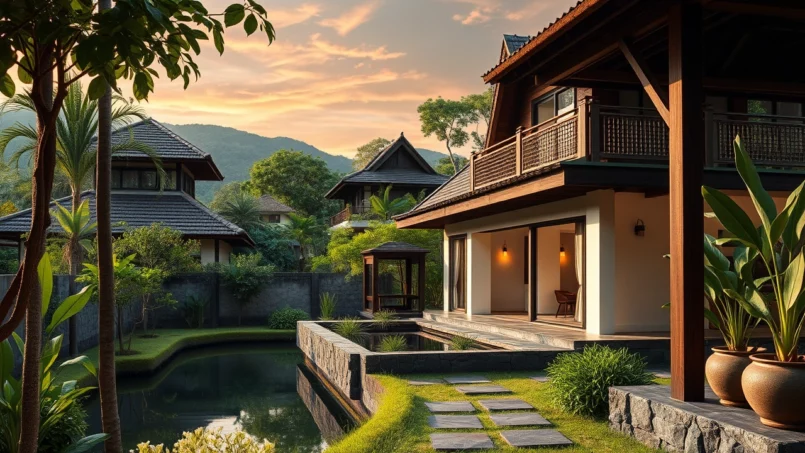
Ubud is one of those names that immediately sparks dreams: rice terraces, lush jungle, temples, yoga, meditation retreats. But behind the postcard image lies one of Bali’s most strategic real estate markets for an investor seeking to balance returns, stability, and quality of life.
This guide details the key aspects of the Ubud property market: price levels, rental yields, important neighborhoods, taxation, and legal frameworks for foreigners. It also highlights risks to anticipate and current trends like wellness, ecotourism, and the influx of digital nomads, which are driving demand.
Why Ubud Became a Hotspot for Real Estate Investment
Ubud is often described as Bali’s “cultural heart.” Unlike the beach areas geared toward parties and surfing, the town attracts a crowd seeking wellness, spirituality, art, and nature. This positioning gives it a different investment profile from Canggu or Seminyak, which are heavily exposed to party tourism and strong seasonality.
The rise of real estate in Ubud rests on several overlapping dynamics:
Tourism in Ubud is expanding, marked by a repositioning toward wellness and yoga retreats, as well as the arrival of digital nomads and remote workers seeking long stays. Demand is strong for accommodations like private villas, ecolodges, and retreat complexes focused on nature and sustainability. This dynamic is supported by a national policy that classified Ubud as a “National Strategic Tourism Zone” (KSPN), boosting investments and infrastructure improvements.
Across Bali, the real estate market is growing rapidly. Prices have risen by an average of 7% per year over the past five years, with increases of 10 to 20% in some highly sought-after areas. Ubud is among the zones where annual price growth is measured between 10 and 15%, driven by both local and international demand.
For an investor, this means two things: strong capital appreciation potential, and continuous upward pressure on rents that supports yields.
Understanding Rental Demand in Ubud: Who Rents What, and Why
Ubud stands out for a mix of clientele that is particularly favorable for a stable and less risky rental market compared to purely beach areas. Four main tenant profiles are found here.
Digital nomads now account for about 20% of the long-term rental market in Bali, and Ubud is one of their favorite landing spots along with Canggu. High-speed internet, coworking spaces (Hubud, Outpost), work-friendly cafés (KAFE, Kismet), furnished units with a desk—everything is in place to welcome this population willing to rent for several months, often with a comfortable budget.
Wellness travelers and retreat participants (yoga, meditation, detox) represent an important target market. They specifically seek quiet accommodations surrounded by rice paddies or jungle, equipped with suitable amenities like a yoga shala, spa, meditation spaces, and offering healthy cuisine. This segment supports both short-term rentals (for a few days of retreat) and extended stays (for workshops or training).
Families and long-term expats round out the picture. Many are drawn to a lifestyle close to nature, away from the coastal hustle, with the possibility of enrolling their children in quality schools like Green School or Pelangi School. For them, Ubud and its surroundings (especially Nyuh Kuning) offer a residential living environment with villas, gardens, and services.
Cultural travelers, attracted by temples, performances, art, and crafts, generate a constant flow of bookings year-round. This tourism is particularly concentrated around central Ubud and its iconic sites like the Ubud Palace, art market, Saraswati Temple, and the Monkey Forest.
The combination of these four profiles creates a market less dependent on strict “seasonal peaks,” with annual occupancy rates often between 75 and 80%, and low exposure to the vagaries of mass tourism.
Rental Performance: ADR, Occupancy, and Average Revenue
The available figures for Ubud confirm this impression of solidity.
The Average Daily Rate (ADR) has increased by about 25% in three years. In September 2021, it stood around $119.41; by July 2024, it reached $149.80, a record at that level. Even in the low season, prices remain supported: $125.61 in February 2024, $134.41 in May 2024, $143.66 in December 2023.
This trend can be summarized in a simplified tracking table:
| Period | ADR (USD) | Comment |
|---|---|---|
| September 2021 | 119.41 | Start of the series |
| December 2023 | 143.66 | Strong post-COVID rebound |
| February 2024 | 125.61 | Low season but solid level |
| May 2024 | 134.41 | Shoulder season |
| July 2024 | 149.80 | Record, high season |
On the occupancy side, peaks naturally concentrate during July-August and the year-end period, but the fill capacity outside school holidays remains high. The number of booked nights in July went from 85,460 in 2023 to 98,280 in 2024. In August, it went from 95,379 to 111,023 nights booked over the same period. We are therefore on a trajectory of net growth in bookings.
Monthly income generated by a five-bedroom villa in the first quarter of 2024.
| Villa Type | Q4 2021 Revenue (USD) | Q3 2024 Revenue (USD) | Approximate Growth |
|---|---|---|---|
| 1 Bedroom | 439.57 | 1,383.07 | +214% |
| 2 Bedrooms | 1,028.25 | 3,122.28 | +203% |
| 4 Bedrooms | 2,166.12 | 7,535.49 | +247% |
| 5 Bedrooms | — | 11,011.23 | Record level |
| 6 Bedrooms | 3,581.61 | 10,700.59 | +198% |
For an investor, these figures show two important things: Ubud has not only rebounded after the pandemic, but the market has entered an expansion phase driven by higher-value clients, especially on larger villas and premium products (retreats, wellness centers, eco-friendly properties).
Discover the exceptional rental returns that real estate investments in Bali can offer, well above global averages.
In Bali, rental yields can reach 12 to 15% per year on certain operations, while the global average hovers around 5%.
In Ubud, gross yields are generally between 8 and 12% for well-positioned villas, with ROI projections of 8 to 12% annually.
For particularly well-designed projects (sustainable villas, sought-after retreat complexes), yields can sometimes reach up to 15%.
An investment of $250,000 in a high-performing villa can generate between $25,000 and $35,000 in net income per year, if management is well optimized.
Price Levels in Ubud: From Compact Apartment to Luxury Villa
Prices in Ubud remain, on average, more affordable than in the ultra-popular southern sectors like Canggu or Seminyak, while being significantly above emerging or remote areas.
For villas, the ranges are quite broad, but data converges around certain benchmarks:
– Small villas or houses: from $150,000;
– Nature villas or standard segment: between $200,000 and $600,000;
– Typical three-bedroom villa: about $250,000 for a decent product;
– Luxury villas or exceptional properties: above $1 million, even $2 million for the most prestigious assets.
Examples from listings show the range:
| Property Type | Approx. Area | Price (USD) |
|---|---|---|
| 1-Bedroom Apartment | 355–635 sq ft | 89,500–160,000 |
| 1-Bedroom House | 559 sq ft | 160,000 |
| 2-Bedroom House | 775–915 sq ft | 225,000–230,000 |
| 2-Bedroom Villa with Rice Field View | — | 247,000–299,000 |
| 3-Bedroom House | 1,162 sq ft | 350,000 |
| 2-Bedroom / 3-Bathroom House | 1,313 sq ft | 399,000 |
| 5-Bedroom Villa (Leasehold) | — | 463,824–615,000 |
| 6-Villa Boutique Hotel (Freehold) | — | 1,801,260 |
The price per square meter for finished upscale properties is often between $1,500 and $2,500, with some deals starting at €1,200–2,000/m² in certain cases. As for land, it is generally quoted at $300 to $800 per square meter in developing areas around Ubud, with significant variations depending on access, view (rice fields, jungle, valley), and proximity to the center.
On the long-term rental side, the gaps are very pronounced. Simple villas can rent for between $200 and $600 per month for a local or very frugal lifestyle, while high-end villas easily exceed $5,000 monthly for demanding international clientele. For long-term housing targeting remote workers, rents often fall between $800 and $1,500 per month for a well-equipped two-bedroom house.
Neighborhoods to Invest in Ubud: Overview of Micro-Markets
Ubud is not a homogeneous block; each neighborhood or peripheral village has its identity, its clientele, its price levels. Choosing the right location is as important as choosing the property itself.
Central Ubud: Culture, Tourist Flows, and Shops
The heart of Ubud, around Jl. Raya Ubud, the Palace, the art market, and the main temples, concentrates most of the cultural attractions, cafés, restaurants, shops, and tour agencies. It is the area with the heaviest foot traffic, ideal for:
– Small villas or guesthouses with a “city break” vibe;
– Boutique hotels;
– Commercial spaces on the ground floor (cafés, concept stores, spas).
The advantages are obvious: maximum visibility, high occupancy rates for short stays, interesting profitability for daily rentals. On the flip side, land prices are among the highest in Ubud, noise and congestion can deter part of the wellness clientele, and regulatory pressure is stronger on the commercial use of buildings.
Penestanan: The Bohemian Village of Artists and Expats
Just a few minutes’ walk or scooter ride from the center, Penestanan is one of the most popular areas among expats, artists, and yogis. There is a dense network of art studios, health cafés, yoga studios, all in a very lush and relatively calm atmosphere compared to the center.
Demand is strong for medium and long-term house and villa rentals, driven by an established international community. Land plots, smaller and scarce, have seen their prices rise. Valued assets include views over valleys and rice paddies, as well as walkability to the town center.
For an investor, Penestanan is relevant if targeting:
– Upscale villas for digital nomads, artists, couples, or small families;
– Monthly or annual rentals rather than pure short stays;
– A predominantly expat clientele with good purchasing power.
Tegallalang: UNESCO Rice Terraces and Ecolodges
About 8 kilometers north of Ubud, Tegallalang is world-famous for its UNESCO-listed rice terraces. The landscape is spectacular, the climate slightly cooler, and tourist traffic is very high during the day.
Land is more affordable here than in central Ubud, with a still very present local community. Ecolodges, wellness retreats, and villas nestled in nature are blossoming, often with breathtaking views over the valleys and terraces.
The location allows for premium rental rates thanks to its iconic views and benefits from sustained tourist demand year-round, with a nature- and eco-conscious clientele aligned with the eco-villa concept. Constraints include sometimes narrow roads, less convenient access, and massive tourist influxes at certain hours.
Sayan and Kedewatan: The Luxury Corridor with Views of the Ayung
Sayan, built along the Sayan Ridge, and Kedewatan, with its five-star resorts overlooking the Ayung River, form the most upscale sector of Ubud. Large luxury hotels have established themselves here, creating a strong brand image: high-end spas, gastronomy, exceptional villas with dramatic views over the jungle and river gorge.
Land is expensive here, quality plots are becoming scarce, and projects require significant budgets, both for acquisition and construction. In return, the clientele is very affluent, daily rental rates can be spectacular, and the capital appreciation potential is among the highest in the region.
For an investor, these areas are suited to “high-end” strategies:
– Large luxury villas with infinity pools, full hotel services;
– Small retreat complexes or upscale boutique resorts;
– Products targeting private retreats, wealthy families, and luxury travel couples.
Nyuh Kuning and South Ubud: Residential, Family-Friendly, and Zen
Right next to the Sacred Monkey Forest Sanctuary, Nyuh Kuning is a residential area very popular with families and long-term expats. You’ll find tree-lined streets, parks, yoga complexes, international schools, and a traditional Balinese village atmosphere.
The area attracts:
– Families looking for a house with a garden and a safe environment;
– Remote workers seeking a balance between town and nature;
– Retirees wishing to settle permanently.
The long-term rental demand here is stable, rents are less volatile than in purely tourist areas, and resale value benefits from the residential character and the lack of large available plots as the neighborhood densifies.
North Ubud and Periphery: The “Next Ubud” to Be Built
Areas further north and east (Keliki, Pejeng, heading toward Tegallalang) are often cited as “emerging” neighborhoods. Land prices remain lower than in historical areas, with more large plots available.
Projects of contemporary villas, small apartment residences, or integrated retreats combining housing, coworking spaces, yoga studios, and shared gardens are already appearing. For an investor willing to take a longer horizon, these pockets offer a good compromise between entry price and growth potential, provided access, networks (water, electricity, internet), and zoning are carefully checked.
Legal Framework for Foreigners: Leasehold, Hak Pakai, PT PMA
Investing in Ubud is not just about choosing a nice piece of land. The real challenge for a foreigner lies in the Indonesian legal framework, which prohibits direct freehold ownership (Hak Milik) by non-Indonesians.
Three main paths are used by international investors.
Leasehold (Hak Sewa) is the most common. It is a long-term lease, often 25 to 30 years, sometimes longer, with extension options negotiated upfront. Legally, the lease is not a land title, but it confers the right to use and build for the duration of the contract.
This investment method offers simplicity (an ID or visa is sufficient), flexibility (no limit on the number of properties), and a lower entry price than via a company. However, it carries risks: the right is finite (extension is never guaranteed) and requires very secure renewal clauses. Tax-wise, the lessor pays a 10% tax on the lease value, while the buyer is generally exempt.
Hak Pakai (right of use) is another option, reserved for foreigners with a residence permit: KITAS, KITAP, “Second Home” visa, or retirement visa (from age 55). This title allows holding a usage right over a built property (not vacant land) for 30 years, extendable by 20 years, then again by 30 years, for a potential total of 80 years. Only one can be held per person. When the property is sold to an Indonesian citizen, the right can revert to Hak Milik. Under this scheme, the buyer generally pays a 5% acquisition tax, and the seller pays 2.5% income tax on the declared sale proceeds.
Setting up a foreign-owned company (PT PMA) allows obtaining a building right (Hak Guna Bangunan – HGB) for a total duration of 80 years (30 + 20 + 30 years). This structure is the most secure for a commercial activity such as tourist rentals, a hotel, or a resort. It also offers the possibility of accessing financing and managing multiple properties in a portfolio. However, it requires a significant declared capital, regular accounting and tax filings, and incurs high setup costs (several thousand dollars).
Regardless of the chosen scheme, arrangements via Indonesian “nominee” are unanimously considered risky: not legally recognized to secure a foreigner’s property ownership, they expose to a near-total risk of loss of the property.
Zoning and Permits: A Key Point, Especially in Ubud
One classic pitfall is buying land or a villa without thoroughly checking zoning and permits. Bali operates with a system of colored zones (agricultural, residential, tourist, etc.) decided at the regency level. Ubud, located in Gianyar Regency, is particularly affected by the coexistence of protected agricultural zones and tourist zones.
In areas classified as agricultural, villa construction is heavily regulated or even prohibited. It is therefore essential to check this point before any acquisition.
– The nature of the zoning (residential, tourist, agricultural, mixed);
– The existence of an official road access;
– The property certificates (title, areas, boundaries);
– The obtention or possibility of obtaining building permits (former IMB, new PBG) and the certificate of compliance (SLF);
– The possibility of applying for a tourist accommodation license (Pondok Wisata or equivalent) if the goal is short-term rental.
A purchase in an unsuitable zone or without full permits exposes to risks: inability to operate as a rental, refusal of regularization, or even administrative sanctions.
Taxation and Ancillary Costs: What Gross Yields Don’t Tell You
The announced gross yields (8–12%, sometimes more) are dreamy. But between taxes, notary fees, management, maintenance, and platform commissions, the net yield can be 3 to 5 percentage points lower.
On acquisition, a buyer should plan for: associated costs, budget planning, financing options, and an evaluation of suppliers.
An overview of the main additional costs to anticipate when acquiring a property in Indonesia, beyond the purchase price.
5% of the value, calculated on the higher of the actual price or the official value (NJOP).
Between 1 and 2.5% of the property’s sale price.
Applies (11-12%) for the purchase of new properties directly from a developer.
Include costs for land verification, land measurement, building permits, document translation, etc.
The seller, for their part, pays a final income tax on the transfer (PPh) of 2.5% of the gross value, which can influence negotiations.
Once you are the owner or holder of the usage right/lease, additional costs arise:
Indicative value of a rental villa in Indonesia, for which annual maintenance costs can range from $5,000 to $10,000.
Ultimately, the empirical rule is to keep in mind that a gross yield of 10–12% can translate into a net yield of 6–9% after all fees and taxes, which remains very competitive internationally, but requires a realistic budget from the start.
Relevant Investment Strategies in Ubud
The specific profile of Ubud opens up several strategies, each with its constraints and advantages.
Buying a villa for short-term rental remains a classic. Small one- or two-bedroom villas, ideally with a pool and view, can position themselves at a nightly rate of $100–$300 depending on the season, allowing for high gross yields if occupancy reaches 60–70% of the year. This model requires very professional management: marketing, photos, dynamic pricing, impeccable service, responsive maintenance. In a market saturated with Airbnb listings, simply posting the ad is no longer enough.
Another approach is to target long-term demand, particularly from digital nomads, expat families, and retirees. Renting out a well-equipped villa or house for a year or more at $800–$1,500 per month for a mid-range product offers generally lower yields than short-term, but greater stability, reduced management costs, and more predictable cash flow. For Ubud, where long-term demand is growing, this approach is particularly interesting.
Wellness retreats and ecolodge projects fully leverage Ubud’s image. By combining accommodation, yoga spaces, spa, healthy dining, and activities, they respond to the rise of “wellness real estate.” This strategy requires operational skills in hospitality, but allows justifying premium rates and high occupancy levels, especially if the concept is differentiating and well positioned (Sayan, Tegallalang, northern periphery).
Off-plan purchases in Bali can allow capturing significant capital gains between reservation and delivery, with observed value increases of 30 to 40%, or even more in tight markets. This more speculative approach requires rigorous selection of developers, as only a minority of projects pass a strict due diligence check. It can generate substantial capital gains without requiring rental operation.
Ubud vs. the Rest of Bali: Sustainable Growth Rather Than a Tourist Bubble?
Island-wide, the majority of tourist flows and projects are concentrated in the south (Badung Regency) with areas like Canggu, Seminyak, Uluwatu, Berawa, Pererenan. These sectors benefit from maximum exposure to beaches and nightlife, but are beginning to show signs of saturation: intense traffic, very strong increases in land prices, and a higher risk of oversupply in short-term rental villas.
Ubud, on the other hand, positions itself as a complementary market. Growth is real, prices are rising quickly, but the DNA of the place – culture, spirituality, nature, ecology – pushes development toward:
– Wellness retreats;
– Eco-friendly and sustainable villas;
– Residential products for long stays;
– Community and holistic projects.
Analysts consider Ubud a less seasonal market, with more regular occupancy rates and a less volatile clientele. Although gross yields may be slightly lower than in very high-demand coastal areas, its growth curve appears more sustainable and less speculative.
In parallel, infrastructure projects in Bali – expansion of the existing airport, preparation of a new airport in the north, improvement of the north-south axis and future urban transport links – should facilitate connections between Ubud and the rest of the island, without transforming the town into a beach resort. This better accessibility could continue to boost real estate demand while reinforcing the value of existing properties.
Risks and Common Mistakes: What You Absolutely Must Anticipate
As everywhere promised returns seem very high, Bali in general and Ubud in particular attract investors who are sometimes overconfident, only to discover less flattering realities: unrealistic projections, hidden costs, poor management, unsuitable zoning.
Several specific risks deserve mention.
Buying a property in a zone not compliant with its intended use (e.g., agricultural zone for a dwelling, residential land for a tourist complex) exposes to severe sanctions, potentially including cessation of activity or demolition. The Indonesian state is strengthening regulations, particularly to control the proliferation of seasonal rental villas.
The risk of overestimating income is also recurrent. Many developers sell villas with projected ROI of 15–20% based on high-season rates applied to 80–90% annual occupancy. In reality, studies show that when owners align with the “real market,” occupancy rates drop if prices are not adjusted, and the return to average tends to be around 4–6% in mediocre cases, 8–10% in good configurations.
In a humid tropical climate, shoddy construction leads to frequent problems (mold, roofing, plumbing, electricity), increasing management costs. A poor manager, deficient customer service, or lack of communication on platforms can cause guest ratings and occupancy to plummet.
Finally, liquidity is a rarely discussed topic: reselling a property in Bali – especially in a niche segment or at very high prices – can take time, particularly during a tourist downturn or regulatory change. The investment in Ubud should be seen as a medium/long-term project, not a short-term trading operation.
How to Structure an Investment Approach in Ubud
To reduce these risks, the key is a structured, patient, and well-supported approach.
The first step is to clarify your objectives: immediate rental income, personal use with partial rental, medium-term capital gain, or a combination of these. The type of property, neighborhood, and even legal structure depend on these choices.
Next comes the market research phase: comparing Ubud’s neighborhoods, analyzing price levels by property type, looking at occupancy and rate statistics in the target area, identifying trends (e.g., the rise of eco-villas or holistic retreats).
Choosing a serious local team is decisive in Ubud. It is essential to carefully vet all parties (specialized real estate agencies, legal consultants, notaries, management and construction companies) by checking their references, experience, professional affiliations (such as AREBI for agencies), and client feedback.
Due diligence on the property itself should never be rushed: verification of titles, permits, zoning, any mortgages or disputes, detailed technical inspection of the building (structure, waterproofing, mechanical and electrical systems), analysis of accessibility and potential nuisances (noise, traffic, neighbors).
A realistic annual net yield for a rental investment in a good sector.
Finally, it may be wise to plan your exit strategy from the outset: resale to another foreigner on leasehold, potential conversion to Hak Pakai if you obtain a residence permit, transfer to heirs via an appropriate structure, or reclassification of the property toward long-term rental as the market evolves.
Toward a Sustainable Future for Real Estate in Ubud?
Everything indicates that Ubud’s trajectory will continue to be driven by three engines: wellness, culture, and sustainability. Projects using solar power, natural materials (bamboo, wood), self-sufficient ecolodges, and nature-oriented residential communities are multiplying, encouraged by a clientele willing to pay a premium for eco-responsible housing.
Demand for properties that incorporate spas, yoga shalas, vegetable gardens, water harvesting systems, or ecological treatment is rising sharply. Investors who position their projects in this direction give themselves a sustainable competitive advantage, both in rates and occupancy levels.
At the same time, the upgrading of the offering, the arrival of big names in hospitality, and public initiatives to better regulate tourism create a more structured environment. Ubud will likely never be a “cheap” market in the strict sense, but remains, on an international scale, significantly less expensive than many other Asian hotspots, which still leaves significant room for growth.
For an investor willing to take the time to understand its specifics, respect its constraints (legal, cultural, environmental), and work with reliable professionals, investing in real estate in Ubud can offer a rare balance: serious financial returns, solid asset appreciation, and the added satisfaction of owning a foothold in one of the most unique and inspiring places on the planet.
Disclaimer: The information provided on this website is for informational purposes only and does not constitute financial, legal, or professional advice. We encourage you to consult qualified experts before making any investment, real estate, or expatriation decisions. Although we strive to maintain up-to-date and accurate information, we do not guarantee the completeness, accuracy, or timeliness of the proposed content. As investment and expatriation involve risks, we disclaim any liability for potential losses or damages arising from the use of this site. Your use of this site confirms your acceptance of these terms and your understanding of the associated risks.

Cyril Jarnias is an independent expert in international wealth management with over 20 years of experience. As an expatriate himself, he is dedicated to helping individuals and business leaders build, protect, and pass on their wealth with complete peace of mind.
On his website, cyriljarnias.com, he shares his expertise on international real estate, offshore company formation, and expatriation.
Thanks to his expertise, he offers sound advice to optimize his clients' wealth management. Cyril Jarnias is also recognized for his appearances in many prestigious media outlets such as BFM Business, les Français de l’étranger, Le Figaro, Les Echos, and Mieux vivre votre argent, where he shares his knowledge and know-how in wealth management.





