
 Published on and written by Cyril Jarnias
Kuta is a name that any investor interested in Bali has come across. The historical heart of Balinese tourism, right next to the airport and a showcase of the island’s nightlife, the area remains one of the most active real estate markets in the region. But the context has changed: competition has intensified, other areas like Canggu or Uluwatu are now stealing the spotlight, and the short-term rental market is far more sophisticated than it was a decade ago.
Investing in Kuta can be a good move, but it requires a solid understanding of the Balinese real estate market, the specific rules for foreigners, and the realities of rental yields. A clear-eyed analysis is essential before taking a position.
Kuta Today: A Still-Strategic Tourism Hub
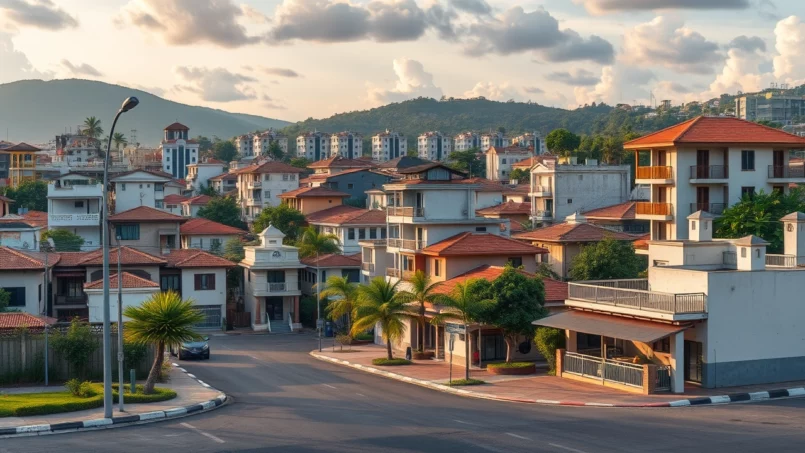
Kuta is often described as the heart of Bali’s tourism scene. Historically, it’s where the first hippies and surfers landed in the 1970s, transforming a fishing village into an international beach resort. The scenery has changed, but Kuta’s role remains clear: it is one of the main gateways for foreign and local travelers.
Kuta Beach in Bali is famous for its waves suitable for learning to surf and its iconic sunsets. The area is buzzing with activity, offering a multitude of bars, nightclubs, restaurants for every budget, as well as shopping malls (like Beachwalk Mall), a water park (Waterbom Bali), a night market, and tourist theaters. Its immediate proximity to Ngurah Rai International Airport makes it a popular and easily accessible destination for international tourists, especially Australians and Europeans, perfectly embodying mass tourism.
This density of activities translates into a constant flow of tourists. Bali’s very high visitation (over 6.3 million international visitors in 2024, plus over 9.6 million domestic tourists according to recent data) directly feeds Kuta, which year after year ranks among the most in-demand areas on the island. For an investor, this means structurally high rental demand, particularly in the short-stay segment.
General Context of the Balinese Real Estate Market
Before zooming in on Kuta, it’s essential to place the town within Bali’s overall dynamics. The island is considered one of the most promising real estate markets in Southeast Asia. Several major trends are at play.
Number of foreign visitors welcomed by Bali in the year following 2023, far exceeding pre-pandemic levels.
Next, the sociological shift in demand. The island has become a haven for digital nomads and remote workers. These profiles are estimated to now account for about 20% of the long-term rental market, with a strong preference for furnished villas and comfortable apartments. Even though hubs like Canggu, Ubud, or Sanur concentrate most of this clientele, Kuta also benefits from this trend, particularly through city apartments and residences near the beach.
Indonesia offers a conducive economic and regulatory environment for foreign investors, with solid growth, political stability, and streamlined procedures. In Bali, gross rental yields, estimated between 7% and 15% in tourist areas, clearly outperform those of neighboring markets like Thailand, Malaysia, or Singapore.
Kuta on the Bali Real Estate Map
Within Bali, the most dynamic real estate area remains the south of the island. Kuta sits right in the heart of this South Bali region, in the regency of Badung, alongside Legian, Seminyak, Canggu, Jimbaran, Uluwatu, and Nusa Dua. This sector concentrates the majority of infrastructure: airport, hospitals, shopping malls, international schools, restaurants, bars, famous beaches. It’s also the densest, most congested, and most developed area.
Within this landscape, Kuta plays a specific role. Here you’ll find:
Kuta stands out for its very high density of shops and hotels, along with a housing stock made up mostly of apartments, hotels, and tourist residences. There are relatively few standalone villas compared to areas like Seminyak or Canggu, due to already heavily built-up land. The destination has a clear positioning on mass tourism, attracting mainly beginner surfers, budget travelers, and nightlife enthusiasts.
For an investor, this means two things. First, Kuta remains one of the best locations in Bali for purely tourist-driven short-term rentals. Second, the market is highly competitive: the term “built-up area,” used to describe Kuta, reflects a high level of saturation. Price appreciation margins are more limited than in the past, but the entry point is also safer for a first investment than a bet on a still-emerging area.
Property Types in Kuta
Kuta doesn’t have quite the same real estate profile as Seminyak or Canggu, where private villas dominate. Here, the supply is more focused on hotels, apartments, and residential units in complexes.
Nevertheless, there is a fairly wide range of products:
Discover the diversity of real estate offerings, from luxury villas to commercial investments, to suit all projects.
Large properties, often set back from the beach, with private pools, gardens, and generous living spaces.
With hotel-style services, targeting discerning international clientele.
Small independent houses, often offering a more affordable option.
Various sizes, with common amenities like pool, gym, and concierge.
Shops, restaurants, or mini-hotels, located roadside or near main tourist arteries.
Most Balinese villas, including in Kuta, are designed for tropical living: large open spaces, terraces, pools, natural materials. The most sought-after segments for investment are villas with a daily rental permit (Pondok Wisata) and well-managed complex apartments, located near the beach or main thoroughfares.
Price Levels: How Much Does a Property Cost in Kuta?
Available data shows that Kuta remains a relatively affordable entry point, compared to other Balinese hotspots. Prices per square meter in the town generally range between US$2,500 and $3,500, placing Kuta below some parts of Seminyak or Canggu, while still within the “developed South Bali” segment.
Several concrete examples of observed prices illustrate this range:
| Property Type | Approx. Built Area | Approx. Land Area | Indicative Price |
|---|---|---|---|
| Villa in premium complex (6 units total) | 1 bed / villa | – | $1.15M for 6 villas |
| 3-bed villa with generous land | 400 m² | 800 m² | $842,000 |
| Premium villa under construction (off-plan) | 146 m² | 207 m² | $440,000 |
| Large 6-bed villa (3 stories) | 385 m² | – | $1.5M |
| More compact 6-bed villa | 280 m² | – | $875,000 |
| Simpler 3-bed villa | 192 m² | – | $223,000 |
| 2-bed apartment in residence | 72 m² | – | $72,600 |
Recent listings in the Kuta and South Kuta area also show houses between $125,000 and $300,000 for built areas around 115 to 160 m². The entry level for a small house or apartment is therefore significantly lower than for a villa with land.
For foreigners purchasing in Indonesia through certain titles (such as Hak Pakai), minimum price thresholds may apply. For example, in the Kuta area, a minimum threshold of around US$328,000 is mentioned for certain types of villas. It is crucial to check the local regulations in force at the time of purchase, by consulting a local notary or lawyer.
Rental Market in Kuta: Seasonality, Airbnb, and Potential Income
On the rental front, Kuta is one of the most active markets on the island, particularly for short-term rentals via Airbnb and similar platforms. Consolidated data for the “broader Kuta market” indicates around 875 active Airbnb listings at the time of analysis. The town mainly attracts short stays, often with a one-night minimum, drawing a very international clientele and a constant flow of backpackers, beginner surfers, and package tourists.
Seasonality is pronounced. Occupancy and revenue figures give a good idea of the reality:
| Indicator (Kuta, STR Market) | High Season (July) | Low Season (e.g., November) |
|---|---|---|
| Average monthly revenue per listing | ~$2,093 | ~$746 |
| Average occupancy rate | 46.3% | 22.6% |
| Average nightly price (ADR) | $115 | $98 |
You can immediately see the double effect of the massive July–August season and the slower months of the low season. In high season, average rates rise, occupancy climbs, and monthly revenues can almost triple compared to the low season. However, the average annual occupancy remains lower than in hotspots like Canggu, where rates often exceed 65–80% year-round thanks to a more stable digital nomad clientele.
You also need to consider the oversupply context in the Balinese vacation rental market. It is estimated that there are over 30,000 short-term rental properties on the island, leading to intense competition, especially in already saturated areas like Kuta. A study focused on Canggu, for example, showed that in 2024, villas offering discounts of 15–20% off “theoretical” prices achieved about 68% occupancy, while those maintaining developer-recommended rates remained stuck around 45%.
Market study on Canggu, 2024
Even though these figures are for Canggu, the logic applies to Kuta: owners are often caught in a race to offer promotions to maintain decent occupancy rates. It’s therefore prudent to base your projections on conservative assumptions.
Yields: Between Commercial Promises and On-the-Ground Reality
The gross yields advertised for villas and apartments in Bali’s tourist areas generally range from 7% to 15%. Some developers don’t hesitate to highlight figures of 10–20% annual return to attract foreign buyers. In practice, independent analyses show that for recent constructions bought at peak prices in 2022–2023, actual annual yields tend to hover between 4% and 6% once seasonality and expenses are factored in.
Potential annual net rental yield in Kuta, Bali, for an optimized short-term rental property.
Two elements should be kept in mind.
Operating costs can eat up 45 to 50% of gross revenue from a seasonal rental.
Then, the tax structure. For a foreign owner, rental income is subject to tax. If the rental is managed through a registered entity, withholding tax may be 10% on rental income for a non-resident, with 11% VAT on declared tourism activities. If a foreigner rents directly without a registered entity, a rate of 20% may apply. You also need to add the annual property tax (generally around 0.5% of the taxable value) and initial transaction costs (notary, acquisition taxes, legal fees), which can represent 8–12% of the purchase price.
Kuta: Advantages and Limitations for the Investor
Investing in Kuta has clear strengths, but also constraints that should not be underestimated.
Major Strengths of Kuta
Kuta’s first strength is rental demand. The town remains one of the hotspots of Balinese tourism, with a constant influx of travelers, supported by its immediate proximity to the airport and the international reputation of its beach. This demand translates into strong occupancy resilience, especially for the affordable short-stay segment.
Entry price in dollars for investing in an apartment in Kuta, Bali, making the market accessible to mid-sized investors.
Finally, Kuta benefits from complete infrastructure: shops, hospitals, banks, schools, transport. For rental operations, this environment is valuable. It makes life easier for both travelers and management teams.
Specific Limitations and Risks
The main downside of Kuta, from a residential perspective, is obvious to anyone who has been there in high season: the noise, the crowds, and the density. The nightlife is an asset for attracting tourists, but a drawback for guests seeking peace, wellness retreat, or an “authentic Bali” experience. This is one of the reasons why a portion of the more upscale clientele now turns to areas like Canggu, Uluwatu, or Ubud.
The real estate and tourism market in Kuta is highly competitive and saturated. Most infrastructures are already built, available land is scarce, and hotel supply is abundant. The short-term rental market is also saturated, leading to price wars in the low season. In this context, standing out is harder than it was 10 or 15 years ago, and opportunities for significant capital gains solely from market appreciation are reduced compared to areas still in development.
Finally, as anywhere in Bali, the investor must contend with a complex regulatory framework for foreigners, heavy dependence on global tourism, and environmental and urban planning risks (pollution, infrastructure pressure, land-use conflicts).
Legal Framework: How Can a Foreigner Invest in Kuta?
A crucial point for any non-Indonesian investor: it is prohibited to directly hold freehold title (Hak Milik) to land in Indonesia. To invest legally, you must use the mechanisms provided by Indonesian land law.
Three main tools are used in Bali, including Kuta.
Leasehold (Hak Sewa)
Leasehold, or Hak Sewa, is the simplest and most common tool for a foreigner. It is a long-term lease agreement with an Indonesian owner. Initial terms are typically between 25 and 30 years, but longer contracts are possible, sometimes with extension options that can bring the total duration to 80 or 99 years.
The leasehold holder can build, reside, rent out, or resell the remaining term of the lease. The contract is private and not necessarily registered with the National Land Agency (BPN), which makes thorough legal work and the selection of a competent notary all the more important.
Acquiring a leasehold property as a foreigner in Thailand does not require a specific residency permit or residence visa, and there is no legal limit on the number of properties owned under this regime. The main risk identified concerns renegotiating the lease at the end of the initial contractual period. Therefore, it is highly recommended, at the time of purchase, to ensure that at least 20 years of the lease remain to preserve the property’s resale value.
Right to Use (Hak Pakai)
Hak Pakai theoretically allows a foreigner to directly hold a residential use right over a property. However, this option is regulated: the investor must have a long-term stay permit (KITAS or KITAP), the property must be for residential use (not commercial use like a hotel or short-term rental), and several criteria (maximum area, minimum value, presence of a building on the land) must be met.
In practice, the Hak Pakai title is mainly recommended for primary or secondary residence projects. For a rental investment, for example in Kuta, it is considered less flexible than leasehold arrangements or legal structures through a company.
Right to Build via a Company (Hak Guna Bangunan and PT PMA)
For larger investment projects – such as a small hotel, an apartment complex, or multiple villas – many foreigners choose to set up an Indonesian limited liability company with foreign capital, called a PT PMA (Perseroan Terbatas Penanaman Modal Asing). Once established, this entity can obtain a Hak Guna Bangunan (HGB) title on land, giving it the right to build and operate real estate for commercial purposes.
This setup allows for clear commercial operation, the collection of rental income through the company, and offers greater legal stability. However, it is more demanding: minimum investment (often around 10 billion rupiah), formalities with BKPM (Investment Coordinating Board), and annual accounting and tax obligations.
In all cases, it is strongly discouraged to use an Indonesian “nominee” to hold Hak Milik on behalf of the foreigner, a practice sometimes informally proposed. This structure is legally precarious: the nominee remains the legal owner of the property, with full power to sell, mortgage, or contest the agreement.
Additional Costs: What the Brochures Don’t Always Mention
When creating an investment plan for Kuta, limiting yourself to the purchase price would be a serious mistake. Several layers of costs come into play.
First, there are transaction costs. Notary (generally 1% of the property value), acquisition tax (BPHTB, around 5%), seller’s income tax (PPH, about 2.5%, often borne by the seller), fees for setting up legal structures (between $3,000 and $5,000 for a foreign ownership structure, more for a PT PMA), and registration fees.
Purchasing an unfurnished villa or one needing work in Kuta can incur additional costs of tens of thousands of dollars to meet international market standards, especially in this highly competitive sector.
Finally, recurring expenses. A seasonal rental property involves:
– Management and marketing fees (often 10–20% of revenue, sometimes 15–30% for very comprehensive services),
– Staff costs (cleaning, gardening, security) ranging from $150 to $500 per month for a small villa,
– Pool maintenance, equipment upkeep, regular repainting and textile replacement, especially in a tropical climate,
– Utility bills for electricity, water, internet,
– Annual property tax (PBB),
– And taxes on rental income.
A prudent investor will include in their projections a 10–20% buffer in the budget for contingencies (repairs, regulatory changes, occupancy drops, etc.).
Rental Management: A Key Challenge in Kuta
Kuta is a market where management truly makes the difference. With hundreds of competing properties on the platforms, an absentee owner managing remotely without local expertise risks seeing their occupancy rate dwindle and their online reputation deteriorate quickly.
Discover the key services offered by specialized companies for renting out villas and apartments on the island.
Handling listing on platforms, responding to travelers, dynamic pricing management, and monthly financial reports.
Guest check-in, thorough cleaning, property maintenance, and managing local teams for a seamless stay.
Companies based in Kuta or nearby areas, ensuring a fine-grained understanding of the market and optimal responsiveness.
Compensation models vary, but two main schemes stand out.
| Type of Service | Main Content | Typical Commission |
|---|---|---|
| Full Management | Marketing, reservations, check-in/out, cleaning, maintenance, staff | 15–20% (sometimes more) |
| Marketing-Only Management | Listing, ad optimization, online message management | 9–15% |
For an investor focused on profitability in Kuta, entrusting management to a reputable operator is often the best solution, provided you understand the terms: commitment duration, reporting level, pricing policies, and handling of operating costs. An experienced manager can increase occupancy rates by 10–20% compared to amateur management, and optimize rates during high and low seasons.
Competition, Saturation, and Market Realities
One aspect often underestimated by foreign buyers is the scale of supply. The Balinese vacation rental market is oversupplied: over 30,000 short-term rental properties on the island, with a large portion concentrated in the South. Kuta, with its tourism history, is one of the most saturated areas.
This oversupply has several consequences.
Nightly prices tend to soften, especially in the segment of standardized 2–3 bedroom villas. Recent analyses show that actual rates for a two-bedroom villa can be 22% lower than the projections used by some developers during off-plan sales.
Competition pushes owners to offer discounts of up to 20% below the theoretical market price to maintain occupancy. This strategy triggers a “race to the bottom” that significantly erodes profit margins.
Overly optimistic forecasts are common. Many projects are marketed with tables promising 12–16% net yield and a return on investment in 6–7 years. In reality, on the ground, many recent owners see actual yields closer to 4–8% depending on precise location, property quality, management diligence, and tourism conditions.
This is not to say that investing in Kuta is a bad idea. Simply, you need to approach this market as a mature market: highly profitable if positioned intelligently, but unforgiving for poorly conceived, overpriced, or mismanaged projects.
Investment Strategies Suited to Kuta
Given all the above, several approaches can make sense for an investor in Kuta.
One first strategy is to target an existing property, already operational and with a rental history. This allows you to verify the actual numbers (occupancy rate, revenue, expenses) and buy with full knowledge. Admittedly, the price is often higher than an off-plan purchase, but the risk of a gap between promises and reality is lower.
Choosing to buy an apartment or a small house, rather than a large villa, can be an advantageous strategy. To target medium-budget travelers or remote workers, the property must be well-located, meaning close to a beach or city center and easily accessible. This approach reduces both the entry cost and maintenance expenses, while staying in a promising segment.
A third avenue is to play the differentiation card. In Kuta, standing out through design, customer experience, sustainability (solar panels, water harvesting, local materials), or theming (surf, family, urban wellness) can help avoid head-on price wars. The Balinese market is indeed seeing a rise in eco-friendly projects, particularly sustainable villas incorporating solar energy, water management, and materials like bamboo or recycled wood.
In any case, it’s wise to think dual-use: a property that works for short-term rentals but can also be rented monthly to expats or digital nomads to smooth out seasonal troughs. This flexibility makes the investment more resilient to external shocks (temporary drop in international tourism, travel restrictions, etc.).
Due Diligence: Essential Steps Before Buying in Kuta
Regardless of property type, several checks are indispensable to secure an investment in Kuta.
First, verify the land status. Existing title (freehold in an Indonesian name, HGB, Hak Pakai, etc.), absence of disputes, consistency between the announced area and official surveys, and the parcel’s location relative to cadastral boundaries. An experienced notary (PPAT) in Bali is an essential ally.
In Kuta, most land is in tourist or residential zones allowing construction, but constraints (height, setbacks, zoning) exist. Buying a property without a valid building permit (former IMB or new PBG) or without a certificate of conformity can lead to fines or even the risk of demolition if inspected.
For short-term rental projects, check the possibility of obtaining (or the presence of) a Pondok Wisata license or equivalent authorization. Renting without a license in a tourism-demanding area can lead to penalties, administrative closures, or even evictions of tenants.
Finally, it is essential to examine the immediate environment. In Kuta, a street can be very attractive for one type of clientele (bars, music, beach clubs) but a deal-breaker for families or retirees. The analysis of the neighborhood, traffic, nighttime noise, and access to beaches and services must be conducted in detail, ideally by visiting at different times of the day.
Kuta in a Global Portfolio Strategy
For an investor looking to buy only one property in Bali, Kuta can play the role of the “mass tourism pillar” of the portfolio: strong demand, quick revenue, primarily short-term operation, and a reasonable financial entry point.
To balance risks, it’s advisable to combine an investment in Kuta with properties in other areas of the island. For example, an apartment or villa in Kuta captures international tourism, while a property in Ubud targets the wellness and retreat segment, Sanur attracts families and retirees, and Canggu draws digital nomads. This strategy helps smooth seasonality and reduces dependence on specific micro-markets.
Conclusion: Kuta, a Mature Market That Rewards Thoroughness
Investing in real estate in the town of Kuta means entering a market that is both historic and undergoing change. Historic, because Kuta remains the symbol of Balinese tourism, with its iconic beach, airport proximity, bars, and shopping centers. Changing, because competition in South Bali is now fierce, other areas attract the most premium segments, and the seasonal rental market has shifted from an apparent gold rush to a highly competitive environment.
Despite market evolution, the fundamentals of real estate in Bali remain robust: the island attracts a growing number of tourists, its infrastructure is continuously improving, and rental demand is strong, generating rental yields higher than many competing markets in the region. However, investing in Kuta is no longer an automatic opportunity; success requires a more strategic and informed approach.
– precisely understand the legal framework and choose the right structure (leasehold, PT PMA, etc.),
– incorporate all layers of costs – taxes, management, maintenance – into your calculations,
– target well-located and differentiated properties rather than standardized copies,
– rely on professional management,
– and above all, base your projections on realistic data rather than marketing promises.
With this rigorous approach, Kuta can still offer attractive yields and privileged access to one of the most dynamic tourism markets in the world. Without it, the investor instead risks discovering that, in such a saturated resort, the line between a good deal and a mirage is sometimes thinner than it appears.
Disclaimer: The information provided on this website is for informational purposes only and does not constitute financial, legal, or professional advice. We encourage you to consult qualified experts before making any investment, real estate, or expatriation decisions. Although we strive to maintain up-to-date and accurate information, we do not guarantee the completeness, accuracy, or timeliness of the proposed content. As investment and expatriation involve risks, we disclaim any liability for potential losses or damages arising from the use of this site. Your use of this site confirms your acceptance of these terms and your understanding of the associated risks.

Cyril Jarnias is an independent expert in international wealth management with over 20 years of experience. As an expatriate himself, he is dedicated to helping individuals and business leaders build, protect, and pass on their wealth with complete peace of mind.
On his website, cyriljarnias.com, he shares his expertise on international real estate, offshore company formation, and expatriation.
Thanks to his expertise, he offers sound advice to optimize his clients' wealth management. Cyril Jarnias is also recognized for his appearances in many prestigious media outlets such as BFM Business, les Français de l’étranger, Le Figaro, Les Echos, and Mieux vivre votre argent, where he shares his knowledge and know-how in wealth management.





