
 Published on and written by Cyril Jarnias
Indonesia, a Popular Destination for Buying Beachfront Properties
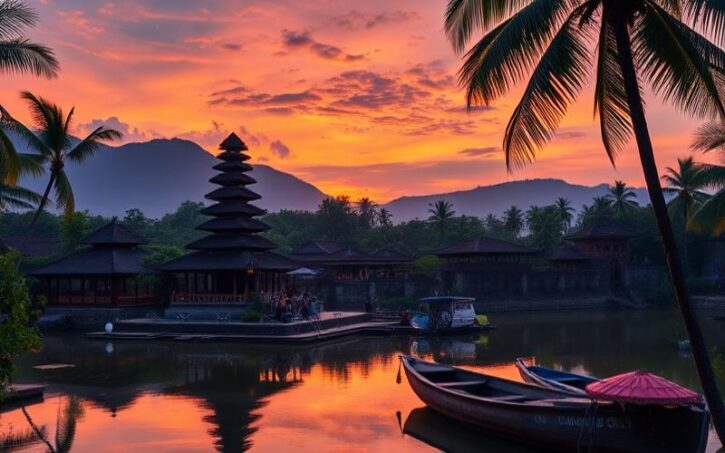
Indonesia, with its idyllic beaches and picturesque landscapes, is highly sought after for purchasing beachfront properties. Offering an enchanting combination of natural beauty and access to modern amenities, investing in an Indonesian coastal property can be a unique opportunity for those looking to combine leisure with a profitable investment.
Navigating the Buying Process in Indonesia
This guide aims to explore the essential steps, from evaluating the ideal location to understanding local legislation, to navigate the buying process stress-free and ensure a successful transaction in this booming market.
Good to know:
Indonesia offers unique investment opportunities, but it is crucial to thoroughly understand local regulations before committing to a real estate purchase.
Indonesia’s Hidden Gems for Beachfront Investment
Lombok, Sumbawa, Flores, and the Riau Archipelago represent Indonesian coastal regions often underestimated by foreign investors despite their strong real estate potential.
These areas offer preserved natural landscapes: white sand beaches lined with coconut palms in Lombok and Sumbawa, green hills overlooking the sea in Flores, or a multitude of authentic islands in the Riau Archipelago. Their natural beauty attracts clientele seeking authenticity and untouched spaces—a stark contrast to Bali or Jakarta where mass tourism has already transformed the local landscape.
Infrastructure and Development
Real Estate Market Comparison
| Region | Average Land Price (USD/m²) | Tourism Development Level |
|---|---|---|
| Bali | 100–200+ | Saturated/High |
| Jakarta | 200–400+ | Urban/Commercial |
| Lombok | 15–20 | Booming |
| Sumbawa | ~20 | Emerging |
| Flores | 14–15 | Early Stage |
Note: Prices vary depending on proximity to beach/sea view. These attractive rates are coupled with lower local construction costs compared to Balinese standards.
Economic & Cultural Advantages
Tourism Opportunities
Practical Tips for Evaluating an Investment:
These destinations are still affordable, but their value is set to increase significantly with the upcoming arrival of major hotel/tourism projects. For any investor seeking portfolio diversification, now is the time to seriously consider these hidden gems before their appeal is fully discovered by the international market.
Good to know:
Indonesia is full of hidden gems for beachfront investment, notably Lombok, Sumbawa, Flores, and the Riau Archipelago, which offer high potential often overlooked by investors. These regions stand out for their pristine beaches, growing access to modern infrastructure, and upcoming development projects. Compared to Bali or Jakarta, real estate prices remain attractive, offering interesting appreciation margins. Investors will benefit from economic advantages such as tax incentives and rich cultural diversity, fostering tourism development. To evaluate investment potential, it is crucial to check local regulations and restrictions for foreigners. Thus, with the acceleration of tourism and economic development, these hidden gems represent a valuable opportunity to consider before massive value appreciation.
Strategies for a Successful Beachfront Property Acquisition in Indonesia
Key steps for a successful beachfront property acquisition in Indonesia:
1. Researching Popular Coastal Areas
- List attractive regions (Bali, Lombok, Gili Islands…) based on your goals (private residence, rental or commercial investment).
- Analyze tourism potential, infrastructure, and accessibility.
- Check local zoning: residential, commercial/tourism, or conservation. Some areas are strictly protected and non-buildable.
2. Understanding and Complying with Local Real Estate Laws
- Familiarize yourself with:
- The Basic Agrarian Law of 1960 (types of land rights)
- Restrictions related to the Foreign Investment Law
- The latest regulations concerning purchases by non-residents
Be aware that direct land acquisition is generally not possible for a foreigner; however, you can obtain certain usage rights (“Hak Pakai”), enter into a long-term lease (“Hak Sewa”), or invest through a local company.
3. Thorough Verification of Property Title
- Request all official documents: land certificate, title history.
- Verify compliance with mandatory setback rules (beaches: 100 m from the high tide line; temples: 50 m; rivers: 15 m).
- Systematically consult a certified PPAT notary as well as a specialized local lawyer speaking English/French to analyze all legal risks and avoid any fraud.
| Essential Documents to Check | Role |
|---|---|
| Land Certificate | Attests to the legitimacy of the current owner |
| PKKPR/ITR | Official authorization attesting to usage rights/zoning |
| Cadastral History | Detects past disputes or litigation |
4. Financing Advice – Options for Foreign Buyers
- Prioritize equity or secure international transfers: few local institutions grant mortgages to non-residents.
- Consider a partnership with an Indonesian company if necessary.
- Equity transferred from your home country
- International loans from an offshore bank
- Establishment of a PMA (foreign-owned company) allowing certain indirect acquisitions
5. Comprehensive Pre-Purchase Inspection
- Have an independent technical expert assessment to evaluate:
- Exposure to extreme climate risk (seasonal flooding)
- Potential coastal erosion
- Structural stability in the tropical/saline humidity climate
6. Cultural Integration and Relationship with Local Communities
- Learn about Balinese/Javanese/Muslim customs depending on the region
- Get involved in community activities during ceremonies or village discussions (“Banjar”, “Desa Adat”…)
Checklist – Essential Precautions
- Always verify precise zoning with municipal/local authorities
- Systematically use a bilingual certified lawyer/notary
- Anticipate ancillary fees related to official registration
- Physically inspect the land/house multiple times under different weather conditions
- Actively inquire with immediate neighbors
⛔️ Never sign or pay any deposit without a complete legal review and notarial guarantee
Good to know:
When acquiring a beachfront property in Indonesia, start with thorough research on popular coastal areas, taking into account local real estate laws that may limit property rights for foreigners. Ensure you verify property titles with the help of specialized local lawyers to avoid disputes or misunderstandings. Regarding financing, explore options such as loans offered by Indonesian banks that welcome international clients. A comprehensive property inspection is crucial to assess risks related to climate conditions and coastal erosion, which can affect the safety and long-term value of the investment. Finally, understanding the cultural context and maintaining good relationships with local communities are essential for smooth integration and to fully benefit from your investment.
Key Points to Consider Before Buying a Coastal Property
Before any purchase of a beachfront property in Indonesia, it is essential to verify compliance with local regulations. Indonesian authorities impose strict standards regarding construction in coastal areas to limit erosion, preserve marine ecosystems, and anticipate risks related to rising sea levels. The absence or incompleteness of specific national regulations can lead to a diversity of local interpretations; it is therefore recommended to consult both regional and national administrations to obtain all necessary permits.
Climate change is increasing the risk of sea-level rise, directly impacting the safety and long-term value of coastal properties. In Jakarta, for example, one-third of the city could be submerged by 2050 according to some projections. The government has launched several major projects (giant seawalls, coastal barriers) to protect its infrastructure but emphasizes that these solutions remain temporary given the rapid pace of the phenomenon.
| Identified Risks | Concrete Examples / Measures |
| Submersion | Urgent construction of seawalls around Jakarta |
| Erosion | Restrictions on the type and location of buildings |
It is also necessary to assess the environmental impact and learn about local biodiversity before any coastal real estate project. Some areas are protected or host unique biodiversity (mangroves, coral reefs), implying additional obligations for prior environmental studies and sometimes even outright bans on urbanization.
- Check if the land is in a protected area.
- Request an environmental study.
- Inquire about local endemic species.
Accessibility and the state of local infrastructure are decisive factors in valuing an Indonesian coastal property:
| Infrastructure to Check | Importance |
| Roads/Access | Facilitates evacuations in case of emergency |
| Medical & Emergency Services | Crucial during natural disasters |
| Electricity/Drinking Water Networks | Impacts daily comfort |
On the economic side, consider:
- Property taxes specific to foreigners or non-residents.
- High notary fees during land transfer.
- The potential need to use a local nominee if you do not have direct access to certain land types (Hak Milik).
- Additional costs related to insurance against floods or increasing climate damage.
Concrete economic points:
- Annual property tax varying by region & tax status.
- Fixed administrative fees during transfer: between 5% and 10% of the total price according to recent local real estate market studies.
- Home insurance often mandatory in certain provinces exposed to cyclone/high tide risk.
To remember:
Always check with a specialized Indonesian notary as well as with the competent provincial authorities before any maritime real estate transaction; systematically have a technical study carried out regarding the future climate forecast for your target area; finally, anticipate your recurring tax charges as well as those related to climate contingencies so that your investment remains sustainable despite a rapidly evolving environmental context recognized by all as critical in this Asia-Pacific region.
Good to know:
Before buying a coastal property in Indonesia, it is essential to research local construction regulations, as some areas may have strict restrictions to preserve the coast. The impact of climate change, particularly sea-level rise, could affect the long-term sustainability of your investment; it is therefore prudent to assess the potential risks associated with your specific location. Examining local biodiversity and environmental protection efforts is also crucial, especially in ecologically sensitive areas. Ensure accessibility is adequate by checking the quality of infrastructure, roads, and emergency services available in the region. On the economic front, be aware of taxes, notary fees, and additional costs related to purchasing such a property, which can vary significantly from one island to another. Consulting recent market studies or examples of similar sales could provide valuable insights for a well-considered investment.

Cyril Jarnias is an independent expert in international wealth management with over 20 years of experience. As an expatriate himself, he is dedicated to helping individuals and business leaders build, protect, and pass on their wealth with complete peace of mind.
On his website, cyriljarnias.com, he shares his expertise on international real estate, offshore company formation, and expatriation.
Thanks to his expertise, he offers sound advice to optimize his clients' wealth management. Cyril Jarnias is also recognized for his appearances in many prestigious media outlets such as BFM Business, les Français de l’étranger, Le Figaro, Les Echos, and Mieux vivre votre argent, where he shares his knowledge and know-how in wealth management.





