
 Published on and written by Cyril Jarnias
Setting up in the tropics and launching a business in a postcard-perfect setting is a dream for many entrepreneurs. Among the destinations that attract the most ambitious project leaders, Saint-Barthélemy holds a special place. A micro‑Caribbean territory, dependent on France but with its own tax system, the island combines a high standard of living, a wealthy international clientele, and a solid legal framework.
Contrary to popular belief, setting up a business in Saint-Barthélemy is not a tax-free paradise without rules. It requires thorough preparation, taking into account a very high cost of living, a small but solvent local market, procedures inspired by French law, and local specifics. A good understanding of the terrain is essential for success.
This guide offers a practical overview, backed by concrete data and real-world benchmarks, to help you structure a viable entrepreneurial project in Saint-Barthélemy.
Understanding the Playing Field: A Micro‑Market Ultra High‑End
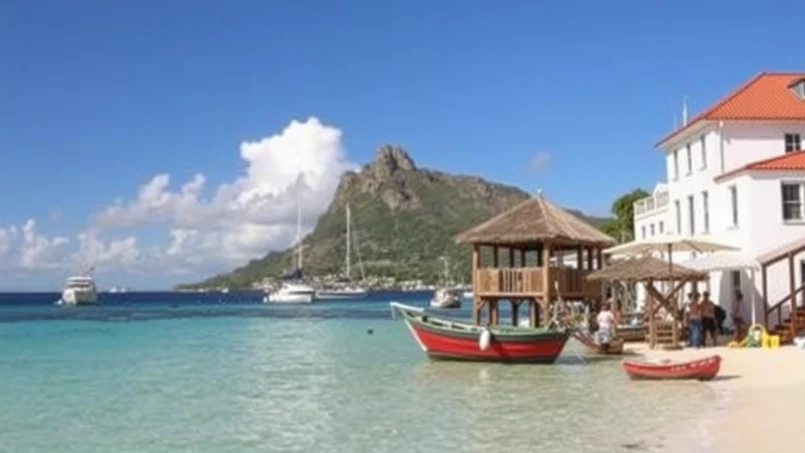
Saint-Barthélemy, often called Saint-Barth or St. Barts, is an island barely twenty square miles, nestled in the Caribbean. It is a French overseas collectivity, with Gustavia as its capital, French as its official language, and the euro as its currency. On this fragment of territory, there are about 10,000 to 11,000 permanent residents, a figure that has almost doubled in the last twenty years.
The average household income on the island is about $50,000 per year.
Although the territory is tiny, the local economy rests on five major pillars that concentrate more than half of the jobs: tourism, construction and public works, real estate, trade, and business services. The tertiary sector is ultra‑dominant, and the level of infrastructure (roads, electricity, telecoms) is high for an island this size.
In short: in Saint-Barthélemy, the market is limited in volume but extremely dense in value. For an expatriate entrepreneur, the challenge is not to target the masses, but to position yourself in a profitable niche, adapted to an environment where almost everything is high‑end.
A French Legal Framework… with Local Specificities
Even in the heart of the Caribbean, Saint-Barthélemy remains legally French. Civil and commercial law is largely inspired by mainland French law, with an important particularity: the principle of “legislative specialty.” In practice, French laws only apply in the collectivity if they explicitly provide for it. The result: the underlying framework is French, but several areas—particularly taxation—have been adapted locally.
Entrepreneurs can choose from common business forms (SARL, SAS, SASU, EURL, SA, SCI, sole proprietorship). The Trade and Companies Register (RCS) is managed locally, typically by the Multiprofessional Economic Chamber (CEM), which combines the functions of a chamber of commerce, trade, and agriculture.
For commercial disputes, the island does not have an autonomous commercial court: the mixed jurisdiction of Basse‑Terre, in Guadeloupe, has jurisdiction. Insolvency proceedings or specific mechanisms applied in mainland France (certain specialized courts) are not automatically transposed, since the island is not integrated into the European Union as such but is classified as an “overseas country and territory” (OCT).
For a foreign entrepreneur, this framework has two major advantages: the legal certainty offered by French law, and the ability to benefit from a tax environment distinct from the mainland system.
A Separate Tax System: Highly Attractive, but No “Blank Check”
By becoming an overseas collectivity in 2007, Saint-Barthélemy gained broad tax autonomy. The territory has set up a largely territorial system: in principle, only income generated on the island can be taxed locally, and long-term residents benefit from spectacular advantages.
For individuals considered tax residents of the island for at least five years (principal residence or center of economic interests on the territory), the regime is particularly favorable: no income tax, no wealth tax, no capital gains tax, no inheritance or gift tax on locally located assets, no annual property tax. For these “stable” residents, foreign-source income is generally not taxed locally either.
New arrivals in France who have not yet accumulated five years of residency are generally taxable on their worldwide income according to mainland French scales (personal income tax from 0 to 45%, capital gains at 30%, inheritance/gift tax up to 45%). For non‑residents, the applicable tax regime (local or French) depends on their specific status vis‑à‑vis France.
On the corporate side, there are also differences depending on the profile. For companies genuinely established on the island—with their effective place of management present for at least five years, or controlled by long‑term local tax residents—taxation is mostly local, with a corporate income tax ranging between 20% and 25% depending on available sources, sometimes accompanied by an annual flat‑rate contribution per company and per employee. For structures that do not meet these criteria (e.g., companies managed from mainland France), the French administration may consider them still subject to corporate income tax in France and they may even be included in a consolidated French tax group.
Despite its attractive tax regime, Saint-Barthélemy, as a French territory, applies international transparency standards (OECD CRS, FATCA) and complies with EU anti‑abuse measures. The island does not appear on any blacklists of tax havens, ensuring full compliance without banking or tax opacity.
For an expatriate entrepreneur, the challenge is twofold: structuring your establishment to eventually benefit from the advantages of local tax residency, while managing the transitional phase during which French taxation may still apply. The support of a tax specialist familiar with both French law and the specifics of the collectivity is essential.
A Glance at Key Tax Parameters
Even though the rules are more nuanced than a simple table, it is useful to visualize some benchmarks, especially for non‑residents or new arrivals who remain within the French tax sphere.
| Type of Tax | Resident ≥ 5 years in St. Barths | New resident / non‑resident subject to French law (indications) |
|---|---|---|
| Local income tax | 0% (local and foreign income) | 0–45% according to French scale |
| Wealth tax (IFI/ISF) | 0% | Under French law |
| Personal capital gains | 0% | Around 30% |
| Inheritance / gift tax | 0% on local assets (often) | 5–45% depending on relationship |
| Corporate income tax (local) | ≈ 20–25% | Standard French CIT (if tax domicile in France) |
| Local VAT | No classic local VAT | French VAT if liable in mainland France |
| Annual property tax | Rate set at 0% | Not applicable locally (registration fees on purchase ≈ 6%) |
This table mainly shows one thing: Saint-Barthélemy can become extremely attractive for an entrepreneur who settles there long‑term, but the transition phase needs to be carefully planned.
Choosing Your Status: Which Business Form for an Expatriate?
The range of legal forms available in Saint-Barthélemy closely mirrors that of France, but their local use follows a few logics specific to a highly service‑oriented and upscale market. Available statistics on active businesses reveal a telling breakdown: roughly 53% sole proprietorships (EI), 30% SAS, 17% SASU, and 15% SARL.
In practice, the following forms cover most expatriates’ needs.
While the sole proprietorship (EI) offers advantages in terms of simplicity, reduced formalities, and lighter accounting, it carries a major risk: the entrepreneur is personally liable with all their assets in case of financial difficulties. This lack of separation between personal and business assets can be particularly risky in a context with high commitments (commercial leases, investments, salaries). For an expatriate, especially on an island with a high cost of living, exposing personal assets in two different countries is rarely an ideal solution.
The SARL and its single‑member equivalent EURL offer limited liability of shareholders to their contributions, within a structured legal framework that banks and partners know well. This format is particularly suitable for stable small businesses: restaurants, crafts, small hotels, retail, etc. The downside is heavier formalities than a sole proprietorship and less contractual flexibility than the SAS.
The SAS (and its single‑member version SASU) is a popular legal form in La Réunion for projects with high growth potential or those intended to attract investors. Its main advantages are tailor‑made bylaws, flexible governance, limited liability for shareholders, and a modern image with partners. It is particularly suitable for high‑end service activities, consulting, tech, real estate agencies, or internationally oriented structures. The main drawbacks are the cost of creation (drafting bylaws often requires professional assistance) and more demanding accounting.
The SCI is often used to hold real estate—a major issue in Saint-Barthélemy, where residential or tourist properties are worth millions. It allows for organizing the holding and transfer of real estate assets, but is not suitable for a day‑to‑day service business.
For larger structures, the SA is still possible, but it is rarely relevant for an expatriate entrepreneurial project at the start. It requires a high minimum capital and is more suited to established groups.
For a foreign entrepreneur starting out, the most common combination is: SASU to start alone while keeping the possibility of bringing in investors or partners later; or SARL/EURL for a more patrimonial or family‑oriented project of modest size. The sole proprietorship is only truly recommended for very small‑scale activities, with little risk and often no employees.
Setting Up Your Structure: Procedures and Administrative Channels
Creating a company in Saint-Barthélemy generally follows the same steps as in France, with a central player: the Business Formalities Center (CFE) within the Multiprofessional Economic Chamber (CEM). This institution acts as a one‑stop shop for all creation, modification, or cessation of activity procedures.
The CFE serves as both an information point, an interface with various administrations (tax, trade register, URSSAF for liberal professions, etc.), and a compliance filter. It can provide personalized assistance for choosing the structure, filling out forms, compiling the file, and even finding financing. It is also competent for specific procedures such as issuing professional real estate cards (Hoguet law), essential for legally practicing in real estate transactions or property management.
Since 2023, business creation formalities must be carried out via the national electronic portal “formalites.entreprises.gouv.fr.” However, the CEM remains active as a formalities agent. This service is particularly useful for an expatriate who is not familiar with the French administrative system.
In practice, company creation generally proceeds in several phases.
First, defining the project and the status: business plan, choice of business sector, selection of the legal form (e.g., SASU or SARL), determination of share capital (the minimum for an SARL can be around €7,500 in some configurations, but many structures can be created with symbolic capital, provided it is credible vis‑à‑vis partners). At this stage, the entrepreneur must also provide a registered office address, which must be located in Saint-Barthélemy. A domiciliation service or a local “virtual office” can be used, but the trend toward economic substance requirements increasingly encourages having actual premises.
Preparing the business creation file requires several documents: the company’s bylaws, a form of identification such as a passport, proof of personal address, and a certificate of company domiciliation. For certain regulated activities, a business plan or financial forecasts may be required. Note that for liberal professions, administrative procedures are frequently handled via URSSAF.
The registration and incorporation phase is done via the single window, often with the support of the CFE. The file is then transmitted to the Trade and Companies Register (RCS) for commercial companies, or to the trade register for craftsmen. Incorporation times vary depending on the complexity of the file, but generally range between 1 and 6 weeks, with most sources citing 2 to 4 weeks for a well‑prepared standard project.
Once incorporation is finalized, the company receives its K‑bis extract, the true “identity card” of the company, with its 9‑digit SIREN number. This document then allows you to open a professional bank account and contract with suppliers.
At the same time, certain activities require specific authorizations: operating licenses, health permits for restaurants, professional cards for real estate, declarations for tourism activities, etc. Here again, the CEM plays a key guiding role.
Opening a Professional Bank Account: A Must, Often Underestimated
As in mainland France, any company registered in France or in a collectivity like Saint-Barthélemy must have a professional bank account. This account is essential for separating personal and business flows, collecting customer payments, paying expenses, and, earlier on, blocking share capital during formation in the case of a capital company.
In Saint-Barthélemy, the banking system is integrated into the French network. Major mainland banks are present through their Antilles‑Guyane entities or regional subsidiaries: BNP Paribas, BRED Banque Populaire, Caisse d’Épargne CEPAC, Crédit Agricole, LCL among others. The currency is the euro, and payment systems (SEPA, Visa and Mastercard, international wire transfers) are those of the European system.
Opening a bank account for a company follows a two‑step process. First, for a company being formed, the bank opens a temporary account to block the share capital contributed by the shareholders. After the funds are deposited, it issues a certificate of share capital blocking, essential for incorporation with the RCS. Second, once the company is created and the K‑bis is obtained, the bank converts this temporary account into a permanent operating account.
Everything is governed by strict KYC (Know Your Customer) procedures. Institutions typically require the physical presence of the director or beneficial owner during an interview (in branch or via videoconference depending on the case), as well as various documents: passport, tax identification number, signed bylaws, K‑bis extract, proof of address of the registered office in France (lease, domiciliation certificate, water, electricity, or gas bill—mobile phone bills are often refused), business plan, and possibly previous financial accounts or statements.
Timeframes for obtaining an operational bank account range from a few days to several weeks, depending on the complexity of the file and the necessary compliance checks. Non‑residents or non‑local property owners may face increased difficulties, especially following the tightening of international rules.
For an expatriate entrepreneur, it is therefore crucial to plan this step very early, in parallel with incorporation procedures. Preparing a complete file, crafting a clear argument about the planned activity, and possibly using a specialized intermediary for opening accounts in the SEPA zone can save valuable time.
What Banks Expect from a Young Company in Saint-Barthélemy
The main banking requirements can be summarized around a few criteria:
| Aspect Reviewed by the Bank | What Is Generally Required |
|---|---|
| Identity of director & shareholders | Passport, tax ID, sometimes CV or proof of experience |
| Legal standing of the structure | Signed bylaws, draft or final K‑bis, proof of registered office |
| Substance of the project | Business plan, forecasts, description of activity and clientele |
| KYC / AML‑CFT compliance | Source of funds, ownership structures, absence of sanctioned persons |
| Local roots | Address on the island, sometimes proof of regular physical presence |
The more international the profile, structured through foreign holding companies or involving flows outside Europe, the more banks will scrutinize these elements. A clear, transparent project aligned with the local economy (tourism, services, real estate, etc.) will have a much better chance of success.
Cost of Living and Operating Costs: The Price of Paradise
Even before talking about profitability, an expatriate must gauge the cost of their own relocation and the level of operating expenses for their business. In Saint-Barthélemy, the key word is “expensive.”
Overall estimates place the cost of living—including housing—around $7,900 to $8,000 per month for a single person, nearly $10,000 for a couple, and over $14,000 for a family of four. Without housing, average monthly budgets range from $3,000 to $3,400 for a single person. And these are just averages: a comfortable or luxurious lifestyle can push these amounts much higher.
The average monthly rent for a primary residence in Singapore is between $4,500 and $5,000.
Other expenses follow the same logic: electricity for an average home can cost $80 to $250 per month, water between $45 and $180, high‑speed internet around $115 to $120, a mobile plan between $60 and $150. Food expenses run around $900 to $1,150 per month for one person, depending on sources, as food products are heavily marked up due to importation.
A summary of the main observed ranges to get a more concrete idea of the rates.
The most accessible offers, ideal for first equipment or a limited budget.
The best value for money, for regular and demanding use.
Premium products, for the most demanding professionals or enthusiasts.
| Monthly Expense Item (single person) | Low Range (USD) | High Range (USD) | Indicative Average (USD) |
|---|---|---|---|
| Primary residence rent | 2,200 | 8,500 | 4,500–5,000 |
| Electricity | 80 | 250 | 140–150 |
| Water | 45 | 180 | 80–125 |
| Internet + TV | 85 | 165 | 115–120 |
| Mobile plan | 60 | 150 | 90–110 |
| Food / groceries | 600 | 1,900 | 950–1,150 |
| Health (insurance + care outside social security) | 220 | 1,000 | 580–600 |
| Leisure, outings, restaurants | 80 | 880 | 280 |
For a business, these price levels directly translate into operating costs: high salaries to attract and retain teams, significant commercial rents, sensitive energy bills, cleaning, maintenance, and external services all billed in the same high‑end logic.
Added to this is a heavy particularity: commercial and residential real estate is among the most expensive in the world. The price per square meter has risen by about 70% in ten years, and some villas sell for between €15,000 and €30,000 per square meter, or even much more for ultra‑prestige properties. Purchasing commercial premises or holding property therefore requires very substantial capital.
Immigration, Right of Residence, and Work: Don’t Overlook the “Residence Permit” Aspect
Creating a business in Saint-Barthélemy is not enough, in itself, to obtain the right to live and work there freely if you are not an EU citizen. The island is not part of the Schengen Area, and visa or residence rules are specific.
European Union citizens benefit from freedom of movement and can settle and work in Saint-Barthélemy without any time limit. No specific visa is required to create a business or carry out a local economic activity, although certain professions remain subject to specific regulations.
U.S. citizens or Canadians can stay up to 90 days without a visa for tourism. Beyond that, they must enter the French long‑stay visa process: application at the consulate, proof of resources, health insurance, sometimes justification of an economic project or employment. Obtaining a work permit does not automatically follow from a residence visa: for non‑European foreigners, the right to work must be explicitly authorized.
The collectivity has a dedicated service for foreign access to work. For paid employment, the employer must obtain an authorization, and permits are often specific to a position, requiring renewal in case of change. For an entrepreneur wishing to manage their own company, the structure must be consistent with the territory’s action plans: the project must be compatible with the local economy, provide for job creation, or bring specific skills.
Owning real estate does not constitute a residence permit, although it can weigh favorably in the assessment of a residence application by attesting to strong economic ties with the island.
Sector Overview: Where Are the Real Opportunities?
Beyond the cliché of the billionaire’s island, the economic structure of Saint-Barthélemy offers real opportunities for expatriate entrepreneurs, provided they fit into the local logic.
Tourism is obviously the central engine. The island welcomes nearly 300,000 visitors some years, about 80% of them from the United States. The clientele is willing to pay top dollar for personalized experiences, impeccable service, and flawless quality. Luxury hotels, villa rentals (about 1,000 villas, of which 650 are managed by specialized agencies), high‑end dining, beach clubs, private concierge services, yachts and water sports, event planning, wellness and spa… The niches are plentiful, but competition is already fierce and the level of expectation is extremely high.
Real estate (transactions, management, services) is a dynamic sector despite high entry prices. Professionals (agents, managers) must hold a professional card, issued locally under the Hoguet law.
High value‑added services form another field: wealth management consulting for an international clientele, legal or tax services specialized in non‑resident issues, digital services focused on hospitality and seasonal rentals (booking platforms, revenue management solutions), digital marketing for luxury brands or tourism operators, high‑end photography and video, especially using drones.
Traditional sectors like retail, crafts, or everyday services present opportunities, driven by the growth of the permanent and seasonal population. This increased local demand concerns everything that makes life easier on the island: quality food, complementary private health services, childcare, or home maintenance. However, given the high cost of rent, labor, and supplies, it is essential to position your offering almost systematically in the high‑end range to succeed.
Finally, the emergence of environmental concerns and strict urban planning constraints opens space for sustainability‑oriented projects: waste management solutions, renewable energy (especially solar), eco‑friendly design, energy optimization for hotels and villas, agri‑tourism initiatives or local quality food production.
For a foreign investor or entrepreneur, a project’s viability often hinges on its ability to combine:
– A truly differentiating value proposition in the luxury or premium service universe.
– Financially sustainable establishment in such a costly environment.
– A real understanding of the local culture, its social balances, and its regulatory constraints.
Key Steps and Watchpoints for an Expatriate Entrepreneur
Starting out in Saint-Barthélemy is more of a marathon than a sprint. A few main axes help structure the approach.
First, the market study, indispensable despite the territory’s small size. It’s not about counting millions of consumers, but precisely identifying the solvent segments—wealthy residents, villa owners, high‑end tourists, local businesses—who might need your services. Data on visitor profiles (mostly American, very high purchasing power, stays concentrated around Christmas and New Year’s, strong appetite for bespoke experiences) provides a starting point.
In a high cost‑of‑living context, avoid low‑cost. Favor a quality offering consistent with the island’s standing, targeting a small but highly profitable volume of clients. This approach is relevant for restaurants, concierge services, wellness services, and B2B services for hotels and villa agencies.
On the legal and tax side, the next step is to structure the company wisely: choice of form (SASU, SARL, etc.), thinking about ownership (holding company structure, creating an SCI for real estate tied to the activity, etc.), anticipating personal tax residency and the transition between mainland and local regimes, structuring compensation (salary vs. dividends, benefits in kind).
After creating the company, proceed with incorporation via the CFE/CEM and the electronic portal. Then ensure regulatory compliance (licenses, permits, professional cards if necessary), open a professional bank account, and set up accounting as well as payroll and social declaration tools.
On the immigration side, especially for non‑Europeans, build a solid case: detailed business project, proof of financial means, consistency with the island’s economic needs, demonstration of potential job creation. Carrying a project that is clearly beneficial to the collectivity can make a significant difference in obtaining or renewing residence permits and work authorizations.
Finally, do not underestimate the human dimension: Saint-Barthélemy is an island community, with a small critical mass and strong interconnectedness of economic players. The quality of your local network—with the CEM, banks, notaries, tax advisors, even elected officials—will weigh heavily on your ability to integrate, anticipate regulatory changes, and avoid pitfalls.
In Summary: A Destination for Solid Projects, Not for Improvisation
Creating a business abroad in Saint-Barthélemy means entering a paradoxical universe: a very small market, but with disproportionate economic power relative to its size; a French territory with strong legal oversight, but with a separate tax system; a postcard island where you can seemingly easily open a restaurant or a villa agency, but where every square meter, every employee, every energy bill costs a lot.
For an expatriate with a serious project, clear expertise, and a long‑term vision, Mauritius offers an exceptional framework: an international high‑income clientele, legal security, political stability, very advantageous taxation for long‑term residents, and an incomparable living environment. However, the island severely penalizes approximate approaches, such as under‑sized business plans, under‑capitalization, lack of knowledge of real costs, or projects disconnected from the reality of a very high‑end niche market.
In other words, in Saint-Barthélemy, the entrepreneurial dream remains within reach, provided you arrive prepared, well‑supported, and lucid about the demands of this “paradise” for those who do business there.
Disclaimer: The information provided on this website is for informational purposes only and does not constitute financial, legal, or professional advice. We encourage you to consult qualified experts before making any investment, real estate, or expatriation decisions. Although we strive to maintain up-to-date and accurate information, we do not guarantee the completeness, accuracy, or timeliness of the proposed content. As investment and expatriation involve risks, we disclaim any liability for potential losses or damages arising from the use of this site. Your use of this site confirms your acceptance of these terms and your understanding of the associated risks.

Cyril Jarnias is an independent expert in international wealth management with over 20 years of experience. As an expatriate himself, he is dedicated to helping individuals and business leaders build, protect, and pass on their wealth with complete peace of mind.
On his website, cyriljarnias.com, he shares his expertise on international real estate, offshore company formation, and expatriation.
Thanks to his expertise, he offers sound advice to optimize his clients' wealth management. Cyril Jarnias is also recognized for his appearances in many prestigious media outlets such as BFM Business, les Français de l’étranger, Le Figaro, Les Echos, and Mieux vivre votre argent, where he shares his knowledge and know-how in wealth management.





