
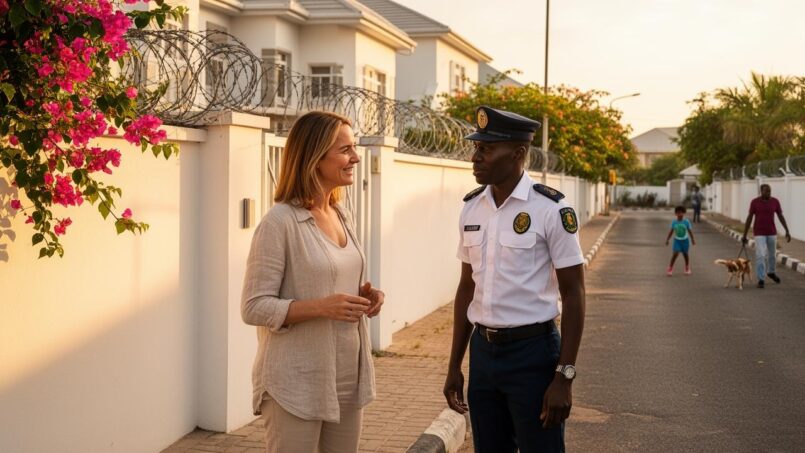
 Published on and written by Cyril Jarnias
Settling in The Gambia is increasingly attracting retirees, digital nomads, and families seeking sun, a reasonable cost of living, and a warm culture. The country isn’t nicknamed the “Smiling Coast of Africa” for nothing: hospitality, mutual aid, and religious tolerance largely shape social life. But a successful expatriation doesn’t rely solely on the kindness of the locals. It also means facing reality: rising petty crime, limited healthcare infrastructure, strict legislation on certain topics, and an administrative environment that can sometimes be confusing.
This article provides a comprehensive overview of safety for expats, covering transportation, neighborhood choice, administrative procedures, real estate, healthcare, and preparation for the unexpected. It is based on government data, security reports, and on-the-ground analysis for a worry-free expatriation.
Understanding the Real Risk Level
The first step to living safely is to correctly understand the risk level, without dramatizing or downplaying it.
The main Western partners (United States, Canada, New Zealand) urge caution without globally discouraging travel to the country. Reasons include high crime rates (“critical” level in Banjul according to the US), an inadequate healthcare system, theft, and risks of civil unrest. The terrorist risk is, however, considered low.
Aggregated indices confirm this mixed picture: significant criminal threat, but serious violence relatively rare, and a state capable of ensuring a minimum of resilience.
Crime and Resilience Indicators
The country sits in a middle zone regarding organized crime. Specialized assessments give The Gambia an overall crime score of 4.58 (out of 10), placing it 126th out of 193 countries, but it ranks relatively high in West Africa in terms of institutional resilience (5.13/10, 10th out of 54 African countries).
We can summarize a few useful indicators for a future expat:
| Indicator | Score / Assessment |
|---|---|
| Overall threat (security) | 3.9 / 10 (moderate) |
| Crime risk | 6.0 / 10 (high) |
| Terrorism risk | 0.0 / 10 (very low) |
| Crime index (perception) | 59.44 (rather high) |
| Safety index (perception) | 35.56 (rather low) |
| Freedom (Freedom House) | 50 / 100 – “Partly Free” |
| Corruption/bribery problem (perception) | 81.82 – very high |
At a daily level, surveys of foreign volunteers nonetheless show that a majority feel “safe” where they live and work. In 2023, 96% of volunteers surveyed said they felt very safe or safe at home, 100% at their workplace, even as theft and burglary statistics were rising.
Although The Gambia remains generally livable, the security environment has been deteriorating in recent years, especially in urban and tourist areas. For an expat, it is essential to take these signals seriously and adapt your lifestyle accordingly.
Everyday Crime: Where Are the Real Risks?
The crime that most directly affects foreigners is primarily opportunistic: pickpocketing, bag or phone snatching, burglaries of unoccupied homes, romance or financial scams. Serious violence exists but is described as infrequent.
US authorities, for example, have noted a significant increase in petty crime in certain residential areas of Banjul, to the point of raising the threat level from “high” to “critical” for those zones. Similar increases in residential burglaries have been reported in Greater Banjul in recent years.
Theft, Pickpocketing, and Burglaries
In practice, risky situations follow a fairly classic pattern for a tourist country:
– crowded markets and commercial areas
– beaches, especially the more isolated ones
– ferries, buses, taxis, and lines
– hotel rooms and vehicles left unattended
Recurring cases of passport and valuables theft are reported in hotel rooms, including in decent establishments. These thefts, though not violent, can be traumatic, especially when identity documents disappear.
Crime perception data corroborate this feeling of vulnerability of personal property:
| Type of concern (out of 100) | Perceived level |
|---|---|
| Home burglary/theft | 74.32 (high) |
| Being attacked or robbed | 61.50 (high) |
| Car theft | 61.62 (moderate/high) |
| Drug-related crime | 65.50 (high) |
| Corruption and bribery | 81.82 (very high) |
Basic advice for an expat therefore aligns with common sense rules in any major city: don’t flash valuables, limit cash, secure your home, and avoid isolated areas at night.
The “Bumster” Phenomenon
A very specific element on the Gambian coast, particularly in tourist areas like Kololi, Kotu, or Cape Point, is the presence of young men commonly called “bumsters.” They approach foreigners, especially on the beach or around hotels, with an often extremely friendly attitude. They offer guide services, outings, shopping, sometimes a romantic relationship or a “disinterested” friendship.
Behind these solicitations often hide requests for money, gifts, or covering expenses. Some offers include excursions to Senegal without visa formalities. For an expat, engaging in this type of tour carries a real risk of detention by Senegalese authorities for irregular border crossing.
The main risk is not physical assault, but scams and, in some cases, administrative endangerment. Recommendations converge: adopt a polite but firm refusal and avoid engaging in transactions or financial relationships whose contours you don’t control. Women, especially alone, are a prime target for interested romance scenarios.
Romance and Financial Scams
The Gambia is regularly cited in warnings about relationship scams: contacts on the internet, social networks, messaging, sometimes under the identity of “Western citizens in distress” or “young isolated Gambian women.” Scenarios are similar: requests for help with medical expenses, studies, plane tickets, exit taxes, or imaginary fines.
Score assigned by authorities to financial crime in The Gambia, on a scale of 10.
When Petty Crime Is Compounded by Corruption
The corruption environment also weighs on the sense of security. Requests for “tea money” from police officers, pressure to pay a “fine” in cash during traffic stops, temptations to buy services through more or less official intermediaries: these practices are common.
International assessments rank corruption at a very high level, which complicates trust relationships with certain institutions. The challenge for an expat is to avoid getting drawn into this system. Refusing calmly but firmly, asking for a receipt, offering to pay at the police station rather than on the roadside are all useful reflexes – while knowing that the balance remains delicate, and that an aggressive or contemptuous attitude can quickly worsen the situation.
Political Security, Demonstrations, and Terrorist Risk
On the political front, The Gambia has experienced coups d’état and attempted putsches in the past, but the 2016 transition and the reelection of President Adama Barrow were judged broadly free and relatively peaceful. Governance indicators remain average, but the country today enjoys a more open climate, with an increase in demonstrations and public debates.
Demonstrations: A Risk Mainly Logistical
Rallies are held frequently for political or economic reasons, sometimes on symbolic dates. They most often occur without major disruptions, as was the case for a large opposition demonstration in 2023 in front of the National Assembly. But even a peaceful gathering can degenerate and, above all, paralyze traffic.
For an expat, the essentials are: adapt to the local culture, handle administrative procedures, secure your financial situation, and maintain personal balance. These steps are crucial for successful integration and avoiding common expatriation difficulties.
– monitor local news (radio, online press, social media)
– avoid announced gathering places
– account for roadblocks and transport disruptions
It is strongly discouraged to participate in demonstrations, even out of curiosity, and prudent to follow any instructions from local authorities or your embassy.
Terrorism: Regional Threat, Low Local Risk
On paper, The Gambia does not present a significant internal terrorist threat: no identified local jihadist group, a population generally unreceptive to this type of discourse, and no recorded attacks on the territory in recent years. The United States classifies the country as low risk for terrorism and does not attach a “T” indicator to its alert.
The West African region is experiencing a rise in organizations affiliated with al-Qaeda and the Islamic State, taking advantage of porous borders. Although the risk of an attack targeting places frequented by foreigners is currently considered low, it cannot be completely ruled out, as evidenced by the arrests of extremist preachers by Gambian and Senegalese authorities in 2015.
Getting Around Safely: Roads, Taxis, Ferries, and Borders
The dangers we think of first (theft, assault) are not always the ones that kill the most. In The Gambia as elsewhere, roads remain one of the main serious risk factors, especially for foreigners unaccustomed to local conditions.
A Fragile Road Network and Erratic Driving
Security reports describe main roads that are often narrow, potholed, poorly lit, and secondary unpaved roads that become muddy and sometimes impassable during the rainy season (June to October). Outside the capital, a 4×4 is highly recommended.
Add to that several specific features:
– rare street lighting; many vehicles drive without lights or with high beams
– constant presence of pedestrians and animals (goats, cows, donkeys) on the roadway
– aggressive or unpredictable driving, especially from official convoys at high speed
Statistics show an average of over 800 accidents per year and more than 120 deaths, with a very high number of serious injuries. Main causes: speeding, phone use while driving, vehicles in poor condition (tires, brakes), and overloading.
For an expat, the safest strategy is to avoid driving at night as much as possible, pay close attention to the vehicle’s condition (brakes, tires, lights), and adopt defensive driving.
Taxis, Bush Taxis, and Rickshaws
The country does not have a structured urban bus network; taxis provide most transportation.
We distinguish notably:
– green “tourist” taxis, approved by the tourism authority, more expensive but supposedly better maintained, with seat belts and insurance
– yellow taxis, used by the local population, much more economical but often in poor condition, sometimes without seat belts or proper lighting
There are also shared minibuses (“gelli-gellis”) and shared vehicles of the “seven-seater” type on intercity routes. They only depart when full, run on fixed routes, and stop on demand. Their safety level is highly variable.
Foreign authorities clearly recommend caution, especially at night. Before getting into a taxi, it is reasonable to ensure the vehicle is at least in working condition, that communication with the driver is possible, and that the passenger seat belt works.
In tourist areas, motorized tricycles (rickshaws) and quad bikes are available for short distances. They allow travel on sandy tracks, but require precautions: mandatory helmet wearing, checking insurance, and above all, avoid using them on major roads with fast traffic.
The Banjul–Barra crossing is iconic and heavily used, but it presents serious flaws: overloaded ferries, poorly maintained, insufficient life jackets, unpredictable delays, and occasional episodes where boats have run aground on sandbanks.
Wooden pirogues, very common, are often overloaded and lack any safety measures. They are not recommended for long trips. US authorities go so far as to judge Gambian maritime traffic as non-compliant with anti-terrorism standards and impose specific conditions on ships arriving from Gambian ports.
The most basic caution therefore is to avoid ferries and pirogues at night as much as possible, locate emergency exits, and prefer, when available, crossing by bridge (like the Senegambia Bridge near Farafenni).
Police, Road Checks, and Checkpoints
In The Gambia, police checkpoints and impromptu checks are common, especially on major roads and around Banjul. Officially, they serve to check licenses, insurance, and vehicle papers, but can also be an opportunity for requests for small cash payments.
At a checkpoint, it is imperative not to try to avoid it by making a U-turn or detour. Stop normally, present your papers, and remain calm and respectful. The sanction system being poorly formalized, with rare written tickets, negotiating an “on-the-spot fine” can become ambiguous. Some expats advise offering to pay the fine at the police station to avoid any attempted corruption, even if it prolongs the procedure.
Crossing the Border: The Sensitive Case of Casamance
To the south, the border with the Senegalese region of Casamance represents another security blind spot. This area has long experienced a separatist rebellion, with sporadic clashes and residual landmines. US authorities strongly advise against the road route between The Gambia and Casamance, citing incidents, banditry, and armed clashes.
For an expat wishing to travel, the caution rule is clear: do not take roads south toward Ziguinchor without very up-to-date information and without compelling reason, and in any case completely avoid “wild” circuits organized by bumsters, who sometimes cross the border without any control.
Legal and Cultural Safety: What an Expat Cannot Ignore
Beyond physical risks, expatriating to The Gambia also involves dealing with a legal system and social norms very different from those of European or North American countries. Ignoring these rules means exposing yourself to serious trouble, sometimes without realizing the extent.
Drugs: Zero Tolerance and Trap Risks
The Gambia enforces a zero-tolerance policy on narcotics, including cannabis. Importation, sale, possession, even in small quantities, can lead to heavy fines and prison sentences. Reports also mention cases of entrapment, where foreigners are offered marijuana, then reported to the police, who demand a bribe to “settle” the matter.
For an expat, the line is simple: refuse all narcotic products, do not accept packages whose contents you do not know, and refrain from associating with people clearly involved in this kind of trafficking.
Legality and Taboo of Homosexuality
This is arguably one of the most sensitive points for LGBT+ expats. Same-sex sexual relations are illegal in The Gambia, punishable by up to life imprisonment. The law also criminalizes a man dressing as a woman, with possible five years’ imprisonment, and there is no specific anti-discrimination legislation to protect these individuals.
In The Gambia, an expatriate homosexual couple cannot live their relationship openly without risk, due to reported arrests and harassment, as well as hostile political discourse. Expatriating to this country requires in-depth reflection and serious legal support for LGBT+ individuals.
Photography and Sensitive Buildings
Strict rules govern taking photos: it is forbidden to photograph military installations, police, airports, certain bridges, and official buildings. Violating this prohibition can result in arrest, confiscation of equipment, and lengthy interrogations.
Expatriates who are keen on street photography must therefore systematically avoid any site that could be interpreted as sensitive and, when in doubt, ask for permission.
Children, Sex Tourism, and Protection of Minors
The country, like other tourist destinations in West Africa, faces the scourge of sex tourism involving minors. Legislation provides for very severe penalties for any sexual offense involving a child, and authorities actively encourage reporting such acts.
For an expat working or regularly interacting with children (teacher, educator, volunteer), it is crucial to know and strictly respect the local legal framework. Also be aware that behaviors considered harmless in a European context, such as certain physical contacts or individual invitations, may be interpreted very differently in this new cultural context.
Other Lesser-Known Prohibitions
Certain common products elsewhere, like skin-lightening creams containing specific substances, or some medications, may be subject to restrictions. It is also illegal to exchange currency outside of banks, hotels, and authorized exchange offices, even if a black market exists.
Furthermore, working without the proper permit is prohibited, as is overstaying the authorized visa duration, which results in fines payable in cash upon leaving the country.
Health, Insurance, and Medical Preparation
For many expats, the main source of concern is not so much crime as access to healthcare. International health reports describe an under-equipped public system, despite theoretical coverage of over 80% of the population. Hospitals lack equipment, hygiene standards are irregular, and the quality of medications available in pharmacies is not always guaranteed.
A Healthcare System Not to Overestimate
Even in Banjul and the coastal area, emergency services are considered “moderate to minimal,” and in the rest of the country they are often “limited to non-existent.” Ambulances suffer from a lack of fuel, and teams sometimes struggle to reach remote areas. There is no real trauma center for serious accidents, which then require evacuation to Dakar or Europe.
Resident expats therefore almost all turn to the private sector, with a few relatively well-equipped clinics in Greater Banjul. But even there, certain specialties or complex treatments remain unavailable.
For a worry-free expatriation, health insurance including medical evacuation is almost mandatory.
Vaccinations and Prevention
Before departure, a visit to an international vaccination center is essential. The Gambia is in a transmission zone for many tropical diseases, and several vaccines are recommended, even mandatory.
Entry into the country is conditional on presenting a yellow fever vaccination certificate for anyone aged at least 9 months who has stayed or transited for more than 12 hours in a risk country. This certificate is now valid for life.
Among the immunizations to consider:
– up-to-date basic vaccines: diphtheria-tetanus-polio, measles-mumps-rubella
– hepatitis A (almost systematically recommended)
– typhoid, cholera depending on stay conditions
– hepatitis B, meningitis, rabies, especially for long stays or at-risk individuals
– polio booster and meningococcal meningitis vaccination (meningitis belt zone)
Malaria is present year-round, with a peak during the rainy season. To significantly reduce the risk, it is essential to adopt appropriate chemoprophylaxis, use mosquito nets, repellents (containing 30 to 50% DEET), and wear covering clothing at dusk. The same vigilance is required against dengue, chikungunya, and Zika, also transmitted by mosquitoes.
Food Hygiene and Infectious Risks
The famous “Banjul belly,” traveler’s diarrhea, remains very common. Drinking bottled water with a sealed cap, avoiding ice cubes in dubious places, preferring well-cooked food, and washing hands regularly are reflexes to adopt. Pregnant women, particularly vulnerable to certain infections (Listeria, hepatitis E, toxoplasmosis), should consult a doctor before departure to best adapt their precautionary regime.
At the same time, HIV prevalence is significantly higher than in Western Europe, which justifies a strong reminder about the systematic use of condoms during sexual relations, and caution regarding invasive medical procedures performed outside the trusted sector.
Choosing Your Neighborhood and Home with a “Safety” Lens
A large part of the feeling of safety felt by an expat depends on the neighborhood they live in and the quality of their housing. On the Atlantic coast, different sectors stand out, each with its advantages, weaknesses, and risk profile.
Overview of Main Neighborhoods Frequented by Expats
We can schematically outline three main profiles: very touristy areas, mixed residential neighborhoods (expats / local middle class), and more rural villages or localities.
| Area / Neighborhood | General Profile | Typical Risk Level for an Expact* |
|---|---|---|
| Kololi / Senegambia | Very touristy, bars, hotels, clubs | High bumster pressure, opportunistic theft |
| Kotu | Quieter, wide beach, nature | Less harassment, but same nighttime risks |
| Fajara | Affluent residential, beaches, schools, clinics | Good comfort level, possible burglaries |
| Bijilo | Quiet, close to a nature park | Family-friendly, watch out for opportunity theft |
| Bakau / Cape Point | Mix of local/tourist | Good immersion, be vigilant at night |
| Brufut / Brufut Heights | Residential, close to beach, developing | Fair safety, frequent theft on construction sites |
| Serekunda | Large city, markets, dense life | More petty crime, pickpocketing |
Qualitative assessment from reports and testimonials, to be relativized according to precise location, type of housing, and lifestyle.
In all these neighborhoods, the key is to visit at different times of day, talk to residents (locals and expats), and not settle for nice photos in listings.
Securing Your Home on a Daily Basis
Standard recommendations apply here too: grilles, strong locks, possibly security guards. In The Gambia, authorities go further by requiring the construction of a perimeter fence (compound fence) around any acquired land, with a specific building permit. This obligation, sometimes perceived as restrictive, actually strengthens property security.
For expats building or renovating, several practical measures reduce risks. It is advisable to store materials in a closed room or container, keep a daily log of materials (especially steel), and hire a recommended guard after verifying their identity and residence. Additionally, signing a detailed construction contract and avoiding massively upfront payments (which may tempt a contractor to abandon work) are essential for safety and successful completion.
Buying or Building in The Gambia: Securing Your Assets Too
Many foreigners, seduced by the climate and attractive prices, consider buying land, a house, or an apartment. Gambian law allows property ownership by non-nationals, in the form of freehold or leasehold (long-term lease, often 99 years renewable). But the context of growing land disputes demands extreme vigilance.
An Acquisition Process to Supervise
Real estate purchase involves several fairly standard steps, but loaded with local specificities:
For a safe real estate purchase, follow these essential steps: start by selecting a trusted real estate agent, accustomed to foreign clients. Conduct several visits and a technical inspection at different times of day. Negotiate the price, a very common practice. Sign a preliminary agreement with a deposit, often non-refundable. Have the title deeds thoroughly verified (via the Land Registry) by a lawyer. Opt for staggered payment, ideally via an escrow account or your lawyer’s escrow account. Finally, ensure the transaction is registered with the land registry for an effective transfer of the title deed.
Timelines generally vary between one and three months depending on the complexity of the file.
Documents required for a foreign buyer include valid passport, proof of identity and residency, proof of funds (bank statements), and sometimes a tax certificate. All must be up-to-date and authenticated.
Additional Costs Not to Underestimate
Beyond the sale price, the buyer must bear a set of mandatory fees and professional services:
| Type of cost | Range or indicative principle |
|---|---|
| Property acquisition tax | Approximately 5% of purchase price |
| Registration fees | Fixed percentage of value |
| Lawyer’s fees | 1 to 3% of property value |
| Real estate agent commission | 5 to 10%, often borne by the buyer |
| Stamp duties | Mandatory before registration |
| Miscellaneous (surveyor, notary, etc.) | Variable (due diligence, water/electricity transfers) |
Clarifying all these items upfront helps avoid nasty surprises and assess the true cost of the project.
Main Real Estate Risks and Countermeasures
The major risk, in this context, is subsequent contestation of ownership: dubious title deeds, land sold multiple times, unconsulted co-heirs, disagreement between customary law and state law. The increase in land disputes has indeed pushed authorities to strengthen the role of the Land Commission and further integrate local chiefs into title management.
For an expat, a few principles limit dangers: remain discreet about your financial resources, avoid predictable behaviors, inquire about high-risk areas, respect local customs, and keep a copy of your important documents in a safe place.
– never pay in full without complete legal verification
– demand formal due diligence at the land registry to detect mortgages, encumbrances, disputes
– check the developer’s track record (history of delivered projects)
– be wary of cash transactions directly with a developer, without an escrow account
– physically visit the land or property before any decision
The Gambian constitution theoretically protects against arbitrary deprivation of property, but in practice, administrative delays and overlaps between traditional rules and modern laws make recourse lengthy and costly. Better to prevent than to cure.
Finally, note: owning property does not automatically grant the right to residency. After purchase, you must apply for a residence permit with proof of ownership, a valid passport, and sufficient financial resources.
Administrative Framework and Legal Stay: Stay on the Right Side of the Law
A serene expatriation also involves scrupulous compliance with stay rules. Many European nationals upon arrival receive a stamp allowing a stay of 28 or 90 days. Extensions can then be requested from the immigration service, but beyond a certain threshold (usually around 56 to 84 days depending on nationality), a proper residence permit must be obtained.
The Gambia offers various residence permits (investors, retirees, students, patients, etc.). Companies are subject to quotas for hiring expats. Under certain conditions, families can obtain dependent visas for spouses and children.
Legal work almost always requires an individual permit or a professional residence permit (type B or C), usually handled by the employer. Working “under the table” exposes you to penalties that can go as far as deportation.
Again, the support of a specialized immigration lawyer or a firm accustomed to these procedures greatly facilitates the transition.
Cultural Integration and Social Safety: Codes to Know
The best “safety insurance” in The Gambia also relies on the ability to integrate into the local community, build a network of trusted relationships, and respect cultural codes. The country is known for its religious tolerance and harmonious ethnic mix, with frequent mixed marriages between Mandinkas, Fulas, Wolofs, Jolas, or Serahulis. The concept of teranga or tegin, referring to hospitality and mutual aid, is central.
Greeting, Listening, Respecting
Greetings are an unavoidable ritual. Not greeting someone you meet, especially in a village or neighborhood where you live, is considered an offense. A simple “Salaam Alaikum” (reply: “Alaikum Salaam”) followed by questions about family, health, the day, opens many doors. Using the right hand for shaking, receiving, and giving is the norm. Young people address elders with terms of respect (“uncle,” “auntie,” religious titles) and sometimes slightly bow their heads.
On the beach, short or swimwear is tolerated. As soon as you move away from the coast, it is expected that shoulders and knees be covered, for both men and women. A male bare torso off the beach or a very tight or low-cut female outfit in a residential area can provoke clear disapproval.
Sensitive Topics and Privacy
Certain themes must be approached with tact, or even avoided: frontal criticism of the government, aggressive discussions about religion, heated debates about polygamy, homosexuality, or female genital mutilation. The latter is theoretically banned but still widely practiced; those aware of cases are legally required to report them, which creates an extremely sensitive climate around the subject.
Public displays of affection, even for heterosexual couples, are generally poorly perceived outside tourist areas. It is also important to avoid spontaneous use of first names, keep a calm tone, and be patient with the “Gambia Maybe Time,” a flexible approach to time, under penalty of quickly harming interpersonal relationships.
Building Your Support Network
For an expat, relying on existing structures is an asset: online expat groups, local associations, religious or sports communities, international platforms like InterNations. This facilitates the exchange of practical advice (which doctor, which schools, which neighborhoods to avoid), and helps put certain incidents into perspective by hearing other experiences.
The role of the village chief (Alikaaloo) in rural areas, for example, remains very important. A courtesy visit, proper introduction, can ensure valuable support in case of trouble.
Organizing Your Own Safety: Expat Checklist
Throughout the reports, a few guidelines consistently come back for living more peacefully in The Gambia:
For a safe stay, it is crucial to: lock doors and windows even during the day, avoid flashing money or valuables, do not walk alone at night in isolated areas, secure identity documents with copies, be wary of offers that seem too good, take out international health insurance with evacuation and home insurance, and finally, prepare an emergency plan with local emergency numbers, the Red Cross, the embassy, and private clinics.
Implementing these precautions should not turn daily life into constant paranoia. They rather provide a reassuring framework that then allows you to fully enjoy what The Gambia offers best: the sea, the light, a rich culture, and strong human connections.
Conclusion: A Serene Expatriation, But Never Naive
The Gambia combines real assets for those dreaming of a change of life: the smallest country on mainland Africa, stretched along the river that bears its name, enjoys a reputation for hospitality and a sweetness of life that is not undeserved. Ethnic communities coexist remarkably harmoniously, religious tolerance is palpable, and expats often report an immediate sense of human closeness.
The country faces common regional challenges: increase in petty crime linked to unemployment and precariousness, underfunded healthcare and justice systems, persistent corruption, land pressures, and an occasionally aggressive commodification of tourism. These realities do not make expatriation impossible, but they condition its success.
By carefully preparing your move, informing yourself about risks and legislation, judiciously choosing your neighborhood and home, cultivating a respectful and open attitude towards Gambian society, it is entirely possible to live a serene expatriation in The Gambia. Safety, here as elsewhere, is never guaranteed, but it is built day by day, at the crossroads of prudence, integration, and mutual respect.
Disclaimer: The information provided on this website is for informational purposes only and does not constitute financial, legal, or professional advice. We encourage you to consult qualified experts before making any investment, real estate, or expatriation decisions. Although we strive to maintain up-to-date and accurate information, we do not guarantee the completeness, accuracy, or timeliness of the proposed content. As investment and expatriation involve risks, we disclaim any liability for potential losses or damages arising from the use of this site. Your use of this site confirms your acceptance of these terms and your understanding of the associated risks.

Cyril Jarnias is an independent expert in international wealth management with over 20 years of experience. As an expatriate himself, he is dedicated to helping individuals and business leaders build, protect, and pass on their wealth with complete peace of mind.
On his website, cyriljarnias.com, he shares his expertise on international real estate, offshore company formation, and expatriation.
Thanks to his expertise, he offers sound advice to optimize his clients' wealth management. Cyril Jarnias is also recognized for his appearances in many prestigious media outlets such as BFM Business, les Français de l’étranger, Le Figaro, Les Echos, and Mieux vivre votre argent, where he shares his knowledge and know-how in wealth management.





