
 Published on and written by Cyril Jarnias
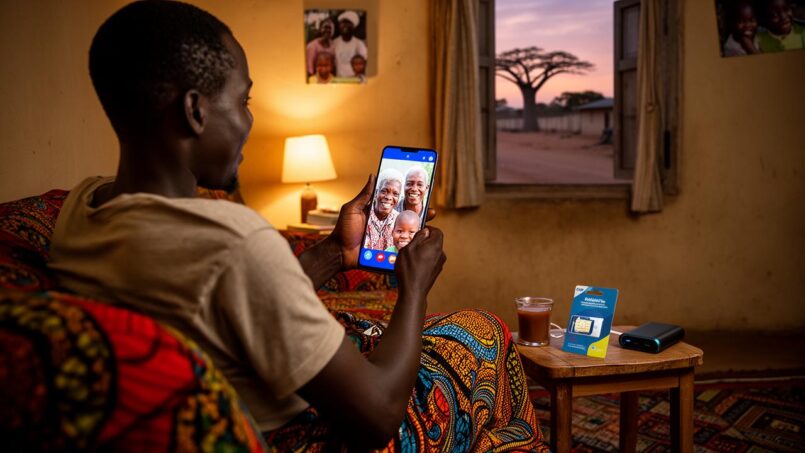
Traveling to or settling in Gambia means discovering a warm country focused on culture and nature, between Banjul, the historic capital and bustling Serrekunda. But as soon as you arrive, a question quickly comes up: how to keep talking regularly with your family, partner, or friends back home without blowing your budget or relying on spotty Wi‑Fi?
To stay in touch from Gambia, several practical solutions exist. The country has decent mobile infrastructure in urban areas. It’s advisable to understand the local networks and choose between a physical SIM card or an eSIM. The population is very connected via WhatsApp, so prioritize this app for messaging and video calls. Also think about optimizing your connection quality. For more traditional exchanges, the national postal service is well established and remains a reliable way to send letters, parcels, and handle money transfers.
This guide offers a practical and detailed overview, entirely based on recent factual data, to help you stay close to your loved ones… even several time zones away.
Understanding Internet and Mobile Networks in Gambia
Before choosing a communication solution, you need to know what connections in the country are based on. Gambia relies mainly on mobile for internet access and communications.
The number of mobile network technologies (2G, 3G, 4G/LTE) currently deployed in urban areas of Gambia.
The further you get from tourist areas, the more complicated the situation becomes. Many rural areas only have 2G, sometimes no coverage at all. Power outages can also affect network stability. Even on 4G, speeds remain modest: under good conditions, we’re talking about 10 to 20 Mbps, easily enough for WhatsApp or a simple HD video call, but far from the standards of major European cities.
Nearly half of the population is expected to be connected by 2026, with growth driven by smartphones in cities and a relative drop in data prices, despite still-high cost per gigabyte.
For a traveler or expat, this means two things: it’s possible to stay effectively connected with loved ones, especially in urban areas, but you need to choose your internet access method carefully… and know how to optimize it.
Local SIM, eSIM, Roaming: Which Choice for Communicating from Gambia?
Three main options exist for getting a connection in Gambia: buy a local SIM card, use an international eSIM, or activate roaming from your home operator. A fourth, more marginal solution is to rent or buy a local pocket Wi‑Fi router.
Gambian Operators and Physical SIMs
The mobile market is dominated by four players: Africell Gambia, QCell Gambia, Comium, and Gamcel (the historic operator, via Gamtel). For a visitor, two names come up consistently: Africell and QCell. They are considered the most interesting in terms of coverage and speed, especially in tourist-heavy areas.
Africell is often cited as the most extensive network, with fast speeds in the city, though it can get congested during peak hours. QCell, on the other hand, has a reputation for being a bit less congested, with competitive rates and attractive offers, such as unlimited night browsing.
Comium and Gamcel still exist, but with a much more limited network (mostly around Banjul) and lower speeds. Gamcel, for example, only offers 2G/3G, which quickly becomes insufficient for regular video calls.
Africell and QCell SIM cards are usually distributed for free, either in their stores or at kiosks at Banjul International Airport (Yundum). They sometimes include a small credit or SMS pack. In practice, it’s common to pay between 50 and 100 Gambian dalasis (GMD) for a SIM, around 1 to 2 US dollars, with the real costs coming later with data plans.
Once you get the SIM, you need to buy a plan: operators offer small bundles (a few dozen MB) up to large data volumes. A few examples are enough to give an idea of the scale.
| Operator | Example Offer | Price (GMD) | Validity | Content |
|---|---|---|---|---|
| Africell | Buzz Bundle 80 MB + 100 SMS | 10 | 7 days | Data + SMS |
| Africell | Data 1 GB | 250 | 45 days | Data only |
| QCell | Mix 40 MB + 100 SMS | 10 | 30 days | Data + SMS |
| QCell | Mix 1.5 GB + 3000 SMS | 150 | 30 days | Data + SMS |
These amounts may seem modest, but on an international scale, Gambia remains expensive: analyses place the average price per gigabyte around $3.5 to $5.8 USD, making it one of the most costly markets in Africa for data.
To activate, check, or renew a mobile plan, use the specific USSD codes for your operator. For example, on Africell, dial *777* or *120#. On QCell, use *120*6# for Mix Bundles and *303# for Snu data offers. These menus also let you check your balance and current promotions. A good habit: ask the seller to do the first activation in front of you so you can get familiar with the process.
Advantages and Limitations of a Local SIM for Staying in Touch
The main advantage of a Gambian SIM is the price per gigabyte. For anyone staying several weeks or months in one place, it’s the most cost-effective solution. It also gives access to low-cost local calls and SMS, useful for contacting accommodation, a driver, or a contact on the ground.
On the traditional international call side, operators have standard rates: for example, QCell charges around 2.70 GMD per minute for domestic calls on its own network, but it’s mostly internet-based apps that will be used for international calls.
However, a local SIM means removing (or deactivating) your original SIM card if your phone isn’t dual SIM. Result: you can no longer receive SMS from your home operator, including bank verification codes or access codes for certain services. For those who rely heavily on this authentication, that’s a serious drawback.
Another constraint: every time you change countries, you have to go through the process of buying and registering a SIM again, sometimes with a bit of paperwork (passport presentation, forms). For a multi-country road trip, this quickly becomes tedious.
Finally, to use a Gambian SIM, your phone must be unlocked and compatible with local frequencies. You can check compatibility on specialized sites like Kimovil.
eSIM: The Practical Solution for Busy Travelers
The eSIM, an integrated SIM in the phone that can be activated with a simple QR code, has become a key tool for travelers. For Gambia, several international platforms offer prepaid eSIMs: Airalo, Monty eSIM, GlobaleSIM, GoMoWorld, Firsty, Truely, Yesim, Roamify, and SimOptions, which acts as a marketplace and aggregates offers from different operators.
To use an eSIM in Gambia, buy the plan online, receive a QR code by email, then scan it in your smartphone settings. The line activates automatically upon arrival in the country, once roaming is enabled on that line. Recent phones (iOS and Android) support this system well, sometimes allowing two eSIMs to be active simultaneously.
Offers vary, with durations from one day to two months, data volumes from 1 to several gigabytes, sometimes regional plans covering all of West Africa. Prices are higher than a local SIM, but in return, you avoid any on-site steps, no queues in stores or haggling at the airport.
The table below gives some order of magnitude from eSIM offers compatible with Gambia.
| Duration | Data Volume | Coverage Type | Indicative Price (USD) |
|---|---|---|---|
| 1 day | Unlimited | World | 21.24 |
| 7 days | 1 GB | Gambia or Africa | 4.94 to 9.50 |
| 15 days | 2 to 3 GB | Gambia | 18.00 to 20.54 |
| 30 days | 1 to 5 GB | World or Africa | 19.00 to 33.52 |
| 60 days | 1 GB | World | 36.99 |
Some platforms offer discounts with promo codes. On average, for the same amount of data, eSIM can cost 2 to 3 times more than a local Gambian SIM. But the flexibility is unmatched, especially for short stays or multi-country trips.
Another decisive advantage: by keeping your original SIM in the phone and combining it with the eSIM (dual SIM), you can continue to receive SMS on your usual number while using the local data from the eSIM. This is ideal for bank codes, emergency notifications, or loved ones who keep calling your “usual” number.
International Roaming: The (Very) Costly Backup Solution
Roaming offered by your French, Belgian, Canadian, or other operator also works in Gambia, subject to agreements signed with local operators. It has one huge merit: it activates almost automatically, without changing anything on your phone. Your loved ones call you on the same number, you receive SMS and calls as usual.
Roaming bills outside Europe can exceed $300 in a single day of careless usage.
For Gambia, roaming should be considered a safety net for emergencies, or even for the first few hours on the ground, while you activate an eSIM or buy a local SIM.
How to Choose Based on Your Stay and Your Loved Ones
In practice, the right choice depends on duration, budget, and the importance you place on keeping your number.
For a short stay (one to two weeks) focused on Banjul and the coast, an eSIM is often the best compromise: you land and are connected instantly, ready to send a reassuring message to your family or share photos, without wasting time looking for a store.
For a long stay (several weeks to several months) in one region, the local SIM remains unbeatable financially. You’ll have more data for less money, at the cost of some administrative steps and likely regular visits to a reseller to top up.
For a multi-country trip in West Africa, regional eSIMs (e.g., covering several countries in the area) are very relevant: one plan to manage, one QR code, and the same connection following you from one country to another.
For profiles very dependent on validation SMS and calls on their original number, a combination of eSIM (for data) + original SIM (for digital identity) is the solution to prioritize. Dual SIM allows these two worlds to coexist.
Making the Best Use of Africell, QCell, and Others for Your Communications
Once you’ve chosen your internet access, you need to make the most of it to stay in touch.
Africell, with its broad coverage and ” Mega ” 4G plans, will be ideal if you plan to share a lot of photos or videos, or if you work remotely. Its large plans may, however, cap connection speeds (e.g., at 10 Mbps), which remains acceptable for video calls.
QCell, on the other hand, focuses on combined SMS + data offers (“Mix Bundles”) and practical options like “Free Night Browsing”, which allows unlimited surfing between midnight and 6 a.m. for 30 days after a top-up of at least 500 GMD. For sending large videos or backing up photos to the cloud without using your daytime plan, that’s an interesting option.
Gamcel, although limited to 2G/3G, can be useful in rural areas where other operators are less present, as it has the most extensive coverage. To find out available plans (online info is limited), it’s advisable to dial *302# or call customer service.
On a daily basis, the trick is to turn your phone into a Wi‑Fi hotspot: with a local SIM that has enough data, you can share the connection with a laptop, tablet, or even other family members traveling with you. This is often more economical than renting a pocket Wi‑Fi router, whose rates and quality remain very variable in Gambia.
Messaging, Video Calls, and VoIP: Which Apps to Prioritize in Gambia?
Having a good connection isn’t enough: you also need to use the right tools to communicate with loved ones, without unpleasant surprises on the bill or compatibility issues.
WhatsApp, the King of Communications in Gambia
WhatsApp is by far the most used app in the country. It’s estimated that around 0.9 million people in Gambia use it, over a third of the population. It’s the number one reflex for sending messages, sharing photos, videos, and especially for making voice or video calls.
The app, owned by Meta, works even with relatively slow connections. It offers end-to-end encrypted group chats, free audio and video calls for up to eight participants, and easy location sharing. For a family spread across several continents, it’s the ideal tool, as long as everyone installs the app.
Its limitations are mainly due to network quality: for a smooth video call, both sides need a fairly stable connection. Also, WhatsApp cannot directly call a landline or mobile number that doesn’t have the app installed.
Other Messaging and Calling Apps
Depending on your loved ones’ habits, other platforms can be useful.
Facebook Messenger is a very widespread app, especially in Africa. It lets you send messages, photos, videos, and organize group video calls. It’s a good alternative for staying in touch with loved ones who use Facebook more than WhatsApp.
Telegram, with its advanced privacy features (ability to hide your number, encrypted secret chats) and large file sharing, can appeal to those who want more control over their data. The app works on many systems and syncs conversations between phone and computer.
Viber offers free calls and messages between users, as well as a “Viber Out” option to call regular numbers at reduced rates. As with WhatsApp, Viber-to-Viber calls go over the internet, while Viber Out works as an international telephony solution.
Platforms like Skype, Discord, or Google Meet are cited as suitable solutions for professional communications or extended family calls. Skype, for instance, supports video conferences of up to 100 participants and works on a freemium model: calls between Skype users are free, while calls to landlines or mobiles are paid but at affordable rates.
When the Internet Isn’t Enough: Talk360, Rebtel, Yolla & Co.
There’s another type of service, halfway between a standard internet call and an international call via your operator: apps like Talk360, Rebtel, BOSS Revolution, or Yolla. Their promise is simple: let you call a landline or mobile abroad, even if the other person doesn’t have internet or a smartphone, at rates much lower than a traditional operator.
Talk360, for example, lets you reach a mobile or landline without the other person needing to be connected. Rates are fixed, payments are in local currency, and no subscription is required: you top up prepaid credit and use it as you call.
Rebtel stands out with an “offline” calling feature via local access numbers, which is especially useful in areas where internet is unstable. The app may also offer monthly subscriptions to certain regions with unlimited calls.
Discover the main benefits of the Yolla offer, designed for international calls and mobile top-ups abroad.
Benefit from transparent rates and excellent call quality to communicate with peace of mind.
Keep your original phone number when subscribing, without any hassle.
Send SMS and make mobile top-ups in more than 100 countries around the world.
Other players like BOSS Revolution or OneSuite offer similar models, with prepaid credits, local access numbers, sometimes even PIN-less calling or favorite number directories.
An important point: not all these services are competitive for Gambia itself. Rates can vary enormously from one country to another. Some, like VaiPhone, remain expensive for calls to Gambia (around $1.65 per minute to both mobiles and landlines), even though their prices are unbeatable elsewhere. So it’s essential to check the per-minute rate to your loved ones’ destination before choosing a platform.
The following table gives an idea of the rate ranges observed for calls from abroad to Gambia.
| Service | Destination | Rate per min. (USD, indicative) | Special Features |
|---|---|---|---|
| BOSS Revolution | Gambia landlines | ≈ 0.395 | Pay‑as‑you‑go, welcome bonus |
| BOSS Revolution | Gambia mobiles | ≈ 0.415 | iOS/Android apps |
| OneSuite | Gambia landlines & mobiles | ≈ 0.386 | Use via local access or VoIP |
| Yolla | Gambia landlines & mobiles | from ≈ 0.445 | Shared credits, international SMS |
| VaiPhone | Gambia landlines & mobiles | ≈ 1.65 | 100% browser, WebRTC |
Even though these figures can change, one constant emerges: these solutions are almost always much cheaper than roaming from your home operator, while offering greater flexibility (on-demand calling, no long-term subscription).
Optimizing the Quality of Your Video and Audio Calls from Gambia
The quality of a video call depends not only on the Gambian network. It also depends on how you use your connection, the times you choose, and your device configuration. Several studies converge on some useful thresholds to keep in mind.
For a basic video call, a speed of about 0.3 to 0.5 Mbps can be enough, but for a comfortable HD conversation between two people, it’s recommended to aim for at least 5 Mbps download and 3 Mbps upload. For more intensive use, with several participants, 5 to 10 Mbps provides real comfort. Once the connection drops below 10–15 Mbps, calls may become choppy, especially if several people are consuming bandwidth in the same household.
Some services also specify their minimum requirements: Zoom, for example, indicates it can work from 0.6 to 1.5 Mbps. But these are minimums, not desirable values.
In Gambia, internet speeds can vary considerably depending on the time of day and the neighborhood. To ensure a better connection, adopt a few simple habits: favor off-peak hours (early morning or late evening), check your location in the neighborhood for the best signal, and if possible compare the performance of different operators based on your location.
First, whenever possible, connect your computer or even your phone to your router via an Ethernet cable. This eliminates Wi‑Fi issues (walls, interference, distance). If you can’t, position yourself close to the router, on the 5 GHz band rather than 2.4 GHz, and avoid having a microwave or other interfering devices running during the call.
Next, limit data-hungry uses during the video call: pause ongoing downloads, ask other household members to pause video streaming, not start online games, etc. Close browser tabs you don’t need during the call to lighten the load on the processor and connection.
Video conferencing apps allow you to adjust video quality to improve stability when bandwidth is limited. To do this, you can: lower the resolution (e.g., from 1080p to 720p or 480p), reduce the frame rate, disable HD video, or turn off the virtual background. In the most critical situations, turning off your own camera and keeping only audio significantly reduces—or even halves—data consumption.
Audio should always be prioritized. A standalone audio stream can work with a speed as low as 0.06 to 0.08 Mbps. If your connection is really limited, don’t hesitate to switch to audio-only mode, making sure your loved ones understand the situation. Many apps also offer a “join by phone” option, allowing you to participate in an audio meeting via a local number while viewing presentations on screen.
Finally, regularly monitor your actual speed at different times of day using tools like fast.com or other speed tests. This will help you identify the time slots when the connection is most stable, and thus schedule your family calls during those times.
Managing Time Differences with Your Loved Ones
Staying in touch when you’re on another continent isn’t just about finding bandwidth: it’s also about juggling time differences. Research on dispersed families shows that this “temporal distance” can be harder to manage than geographical distance.
When one person’s day corresponds to the night of the other, common windows of availability shrink. Spontaneous calls become rarer, and communication becomes more like a scheduled activity. Studies conducted with families living under time differences of three to twelve hours have highlighted several strategies.
Rather than using shared calendars, many families establish implicit time slots when everyone is reachable, such as Saturday morning or early evening. Knowing the other person’s typical work, meal, and leisure times often helps estimate the right moment to make a call.
Next, digital tools make anticipation easier. Apps like World Time Buddy or simply the “world clock” function on smartphones help visualize each other’s local times. Shared calendars, on Google Calendar or Cozi, allow setting a recurring appointment (“family video call every Sunday”) with reminders automatically adjusted to each person’s time zone.
For asynchronous communication (WhatsApp, emails, photos), it’s recommended to set expectations together: response time (within the day, week, at your own pace), frequency of exchanges, and preferred channels. This clarification helps reduce frustration and feelings of mutual neglect.
Some apps also offer “Do Not Disturb” modes or silent hours, to avoid waking someone up with a notification at 3 a.m. Setting these options on WhatsApp, Messenger, or Slack is a good way to balance connectivity with respect for sleep.
Finally, don’t underestimate the power of delayed messages: a long voice note sent when you have time, which the other person will listen to when they wake up; a small batch of daily photos grouped and sent at a fixed time; a weekly recap email. These longer contents can help nourish the relationship even if live synchronization is rare.
The Role of Letters, Parcels, and the Gambian Postal Service
In the age of apps, writing a letter or sending a parcel seems almost anachronistic. Yet for many families, a paper letter from far away has an incomparable emotional value. In Gambia, the official postal service, Gambia Postal Services Corporation (GAMPOST), remains a central player in this “physical” communication.
Created in colonial times, GAMPOST has its headquarters in Banjul and a network of offices throughout the country: Banjul, Serrekunda, Bakau, Brikama, Soma, Farafenni, Kerewan, Kaur, Janjanbureh, Basse Santa Su, Wassu, Brusubi, Bwiam, and an office at the international airport. This reach allows sending and receiving mail in most major locations.
The company holds a legal monopoly on transporting letters under 2 kg, both domestic and international. Parcels exceeding this weight fall into the “packages” category. Despite financial difficulties, the quality of service for correspondence is considered good, with domestic delivery times generally between 48 and 72 hours.
Average delivery time in business days announced by GAMPOST for shipments to other African countries.
The following table summarizes these indicative delivery times.
| Destination | Type of Shipment | Average Time Announced |
|---|---|---|
| Gambia (domestic) | Letter / small parcel | 48–72 hours |
| Africa | Letter / parcel < 20 kg | 9–10 business days |
| Europe (e.g., UK) | Letter / parcel < 20 kg | 10–12 business days |
| Other continents | Letter / parcel < 20 kg | 9–15 business days |
| International > 20 kg | Large parcel | 40–50 days |
In addition to mail delivery, GAMPOST offers domestic money transfer services, money orders, stamp sales, savings accounts, and an express mail service in partnership with other postal services.
Private players like UPS, FedEx, DHL, or Parcelforce also serve Gambia, often through a single agent in the country. They mainly handle international parcels, with shorter delivery times but significantly higher costs. Parcelforce, for example, classifies Gambia in its delivery zone 12 and offers several globalexpress or globalpriority options, with different weight limits and precise rules on delivery days.
GAMPOST’s (Gambia Postal Services) online tracking system is not always reliable for precisely locating a parcel. For an important or valuable shipment, it is recommended to use the services of an international private carrier, which offers detailed, secure tracking throughout the journey, despite a higher cost.
International regulations also impose restrictions on certain contents. For instance, from the United States to Gambia, postal services prohibit sending coins, certain banknotes, weapons, and weapon parts. Other goods (precious metals, stones, jewelry, payment instruments) are strictly regulated and can only travel via specific registered services.
Despite these constraints, handwritten letters, postcards, small parcels of souvenirs or local products remain powerful vectors of affection. Receiving a package from Serrekunda or Banjul at home on the other side of the world, with chosen objects, smells, and textures, makes the distance much more tangible… and more bearable.
Sending Money from Abroad to Gambia to Help Your Loved Ones
Staying connected also sometimes means financially supporting your family back home, or receiving funds yourself during a long stay. Many services specialize in money transfers to Gambia: Wise, Remitly, Western Union, Ria, BOSS Money, Xoom (a PayPal service), WorldRemit, MoneyGram, to name the main ones.
These platforms allow you to send US dollars, British pounds, or other currencies to accounts in Gambian dalasis, or to cash pickup points. Payment methods on the recipient side vary: deposit into a local bank account, cash withdrawal at a partner agency, credit to a mobile wallet (“mobile money”), or even home delivery in some countries (though this last service is not specifically documented for Gambia).
The characteristics of these services boil down to a few aspects: fees, exchange rate, speed, and convenience.
95% of money transfers via Wise are executed in less than a day.
Remitly offers two speeds: “Economy,” cheaper but slower, and “Express,” faster but charged a bit more. It often offers free fees on the first transaction for new customers.
These services have extensive networks in Gambia through partner banks. The recipient withdraws the funds in cash quickly, upon presentation of an ID and a code. It’s advisable to compare their fees and exchange rates, which may be less favorable than those offered by some fintechs.
WorldRemit, for its part, states that 90% of transfers to Gambia reach their local partners within minutes. Enough to quickly send money for medical expenses, school fees, or any other urgent need.
The table below summarizes the main lines of these options (excluding ultra-precise figures, which vary greatly over time).
| Service | Typical Speed | Receiving Methods in Gambia | Stated Strengths |
|---|---|---|---|
| Wise | From a few seconds to < 24 h | Bank account | Mid-market exchange rate, transparent fees |
| Remitly | Economy or Express | Bank account, cash pickup (depending on partners) | First transaction often fee-free |
| Western Union | Minutes to a few hours | Many pickup points | Global presence, cash withdrawal |
| MoneyGram | Minutes to a few hours | Extensive agent network | Wide coverage, possible promotions |
| WorldRemit | A few minutes for 90% of transfers | Bank, mobile wallet, cash pickup | 100% online process |
| BOSS Money | A few minutes to 24 h (depending on method) | Bank, mobile money, pickup, card | Loyal customers, promo offers |
To send money from your loved ones to you in Gambia, or vice versa, you’ll always need to provide a minimum of information: full name, bank details (if depositing to an account), sometimes address and phone number. Identity verification (KYC) obligations also apply in the receiving country to limit fraud and money laundering.
By combining these transfer services with communication apps, it’s common to discuss an urgent need via WhatsApp, trigger a MoneyGram or Wise transfer, then confirm by voice message that the money has been received.
Complementing Digital Connection with Daily Practices
Despite all this technology, maintaining strong long-distance relationships also requires attention to the form of exchanges. Research on transnational families emphasizes that the quality of conversations matters as much as frequency.
Current tools make this easy. Voice messages, for example, are very popular on WhatsApp or Instagram: they let you hear the other person’s voice without having to synchronize for a live call. A parent in Gambia can record a summary of their day, a description of a market in Banjul, a song learned on a beach in Kololi; the child or spouse abroad listens later, when their schedule allows.
To avoid saturating social networks, some families create shared albums (like on Google Photos) or private groups (on Facebook or Telegram) reserved for close ones. They share selected moments from the trip, such as a sunset, a local ceremony, a typical dish, or a walk.
Regular video calls, even short (15 to 20 minutes weekly), can be designed as rituals. One study showed that planned meetings, with a set of topics sometimes prepared in advance, foster deeper exchanges than very frequent but superficial communications.
To maintain a connection and share experiences despite the distance, it’s possible to organize synchronized shared activities. For example, watching a movie at the same time using tools like Netflix Party/Teleparty, or simply via a voice call. Other activities such as cooking the same recipe each on your own side, or reading a book and discussing it together, help recreate a shared routine and strengthen bonds.
In any case, transparency about constraints (schedules, connection, fatigue) is essential. Explaining to your loved ones that the 4G is spotty in such a neighborhood of Serrekunda, or that power outages occur regularly, avoids misunderstandings and shows that the lack of a call is not a lack of interest.
In Summary: Building Your Own Toolkit to Stay Close from Gambia
Staying in touch with loved ones from Gambia relies on a combination of technological building blocks and best practices.
On the connectivity side, first choose between local SIM (economical and suited to long stays), international eSIM (practical for short stays and multi-country trips), and roaming (keep for emergencies). Africell and QCell currently offer the most balanced solutions for travelers, with easy-to-activate prepaid data and voice plans.
WhatsApp is the dominant and primary app for messages and video calls. Apps like Messenger, Telegram, Viber, Skype, or Google Meet can serve specific needs, such as group meetings or calls to people without smartphones.
To reach loved ones who don’t have internet or a smartphone, international telephony services like Talk360, Rebtel, Yolla, or BOSS Revolution offer a far cheaper alternative than traditional operator roaming.
Since the network can be unstable, especially outside major cities, a few technical reflexes can save a call: prefer Ethernet when possible, reduce video quality, rely on audio only when bandwidth is limited, and schedule calls during the most favorable hours.
In addition to digital tools, sending letters, cards, or parcels (via GAMPOST or private carriers) and using fast money transfer services (like Wise, Remitly, WorldRemit, or MoneyGram) are tangible gestures that remind distant loved ones that the bond remains alive.
By intelligently combining these solutions, accepting the local realities (data cost, lack of 5G, power outages), and establishing communication routines adapted to time differences, it’s entirely possible to make Gambia not a barrier, but a new backdrop for family and friendship relationships that are just as rich, perhaps even more conscious and deliberate, than if you were just a few streets apart.
Disclaimer: The information provided on this website is for informational purposes only and does not constitute financial, legal, or professional advice. We encourage you to consult qualified experts before making any investment, real estate, or expatriation decisions. Although we strive to maintain up-to-date and accurate information, we do not guarantee the completeness, accuracy, or timeliness of the proposed content. As investment and expatriation involve risks, we disclaim any liability for potential losses or damages arising from the use of this site. Your use of this site confirms your acceptance of these terms and your understanding of the associated risks.

Cyril Jarnias is an independent expert in international wealth management with over 20 years of experience. As an expatriate himself, he is dedicated to helping individuals and business leaders build, protect, and pass on their wealth with complete peace of mind.
On his website, cyriljarnias.com, he shares his expertise on international real estate, offshore company formation, and expatriation.
Thanks to his expertise, he offers sound advice to optimize his clients' wealth management. Cyril Jarnias is also recognized for his appearances in many prestigious media outlets such as BFM Business, les Français de l’étranger, Le Figaro, Les Echos, and Mieux vivre votre argent, where he shares his knowledge and know-how in wealth management.





