
 Published on and written by Cyril Jarnias
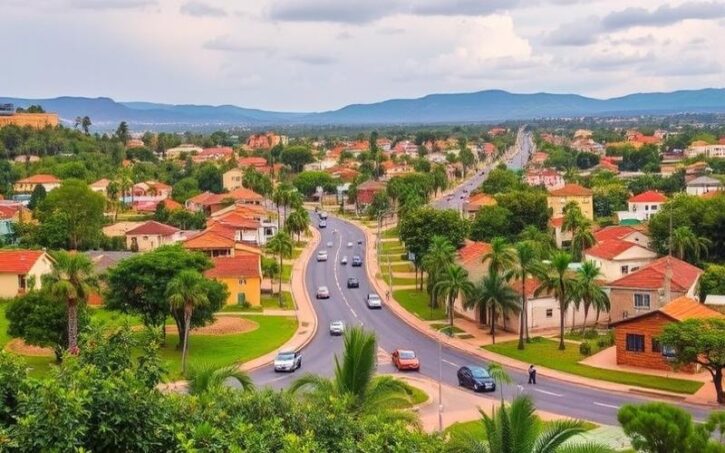
Nestled along the Gambia River and bordered by the Atlantic, The Gambia is both the smallest country on the African continent and one that intrigues expatriates the most. A former British colony, nicknamed the “Smiling Coast of Africa,” it attracts with its sunny climate, beaches, moderate cost of living, and the warm welcome of its population. However, settling there for good requires a solid understanding of the country’s administrative, economic, cultural, and practical framework.
This guide covers the essential aspects for living, working, or staying several months in The Gambia, including administrative procedures (visas, work, banks), living conditions (cost of living, housing, health, education, safety), as well as social codes, religion, and local customs.
Understanding The Gambia Before You Go
Before booking a ticket, it’s useful to place The Gambia in its geographical, demographic, and cultural context. This helps to better anticipate culture shock and adjust expectations.
A Tiny Country… But Densely Populated
The Gambia is a long ribbon of land organized around the Gambia River, almost entirely surrounded by Senegal, with only a short Atlantic coastline. Its area is approximately 10,700 km², with an estimated population between 2.2 and 2.7 million, making it one of the most densely populated countries in Africa.
The main urban centers are Banjul (the capital, located on an island at the river’s mouth), Serekunda (the largest city), Brikama, and Bakau. The population is mostly urban, but a significant portion still lives in rural areas, often very attached to traditional structures (village chiefs, clans, age hierarchy).
The official language is English, used in administration, courts, and education. However, the country is multilingual in daily life, with Wolof and Mandinka as the main lingua francas (Wolof in cities, Mandinka in rural areas), along with Fula (Pulaar), Jola, Serer, and Soninke. Most Gambians are at least bilingual, but proficiency in English can be limited outside of educated circles and tourist areas.
A Plural and Largely Muslim Society
The Gambia is 90% Muslim (mostly Sunni), about 9% Christian (mostly Catholic), and only 1% explicitly adhere to so-called traditional beliefs. In practice, local Islam often remains mixed with animist practices (spirit worship, sacred sites, offerings, marabouts).
The population is almost entirely African (99%), but very diverse ethnically: Mandinka (about 42%), Fula (18%), Wolof (16%), Jola (10%), Serahuli (9%), Serer, Aku, Manjago, and a few smaller groups. Despite this diversity, the country is known for its religious tolerance and interethnic harmony. Mixed marriages are common, religious holidays are often celebrated collectively, and the concept of “teranga” or “tegin” (hospitality, mutual aid, community solidarity) structures many social relationships.
For an expatriate, the country offers a generally welcoming environment, but it’s essential to understand and respect a very strong system of implicit norms. This includes respect for elders, discretion, modesty, and the practice of extended greetings. You must also be attentive to certain specific rules of conduct, such as the preferential use of the right hand, appropriate attire, and reserve on sensitive topics during conversations.
Climate, Nature, and Living Environment
The country enjoys a tropical Sudano-Sahelian climate, with two main seasons:
– an intense rainy season from June to October, hot and humid ;
– a dry season from November to May, marked by the harmattan, a dry wind from the northeast.
Precipitation decreases from the coast inland, but the entire territory is organized around a landscape of savannah, mangroves, wetlands, and natural parks (Abuko, Kiang West, River Gambia/Baboon Island, Bijilo Forest Park). It is home to diverse wildlife (monkeys, warthogs, crocodiles, pygmy hippopotamuses, over 500 bird species), making it a destination appreciated by birdwatchers and nature lovers.
This natural wealth contrasts, however, with still limited infrastructure: secondary roads often in poor condition, unstable electricity grid, uneven access to drinking water and high-speed internet. Life in Banjul and along the coastal strip (Senegambia, Kololi, Bijilo, Fajara, Brufut) is therefore far from being a hyper-connected metropolis, even if tourist areas are modernizing rapidly.
Entering and Staying in The Gambia: Visas, Residence and Work Permits
For an expatriate, the first barrier is obviously administrative. Depending on nationality and project (long-term tourism, retirement, salaried employment, humanitarian mission, investment…), the procedures are not the same.
Entry Visas: Who Needs What?
The Gambia’s visa policy distinguishes several categories of countries. Some nationals are exempt from a visa, others obtain a visa on arrival, and others must apply at an embassy before departure.
In practice:
– approximately 104 nationalities can enter without a visa for a short stay;
– for certain European and North American nationalities, a visa on arrival is possible (e.g., for citizens of France, Portugal, Spain, the United States, with a stay around 28 days);
– other nationalities must absolutely request a visa from a Gambian embassy or consulate before traveling.
Some indicative figures (check before departure, as amounts change regularly):
| Type of visa / fees (examples) | Approximate Amount | Main Remarks |
|---|---|---|
| Tourist visa on arrival | ≈ 108 USD | Short stay, generally around 30 days |
| Tourist visa via embassy (e.g., USA) | ≈ 200 USD | Issued before departure |
| Short-stay tourist/business visa | Valid for 3 months | Max stay 90 days (tourism) or 30 days (business) |
| Transit visa | Variable | Onward ticket and assured entry into the next country |
| Airport security tax (arrival + departure) | 20 USD each time | Payable in cash (USD or Dalasi) at the airport |
The passport must have at least one blank page and be valid for at least six months after the intended date of return. Overstaying is penalized: a fine of about 15 USD per month overstayed is collected in cash at the time of departure.
Residence Permit: Staying More Than 90 Days
Beyond a short tourist stay, it’s necessary to switch to a resident status. Management falls under the Gambia Immigration Department (GID), overseen by the Ministry of the Interior. Several types of permits are distinguished, issued in connection with the intended stay.
The system can vary according to sources, but generally there are categories covering:
– persons of independent means and retirees ;
– skilled workers and investors ;
– students ;
– dependents of permit holders ;
– humanitarian workers ;
– small traders and self-employed workers ;
– persons on medical stays.
A recent official source details a series of permits (Type A to G) covering these profiles. In practice, many expatriates first go through a stay stamp (28 or 90 days on arrival) then extend at the Banjul immigration office or at tourist police posts. For example, a British citizen gets a 28-day stamp, extends twice (up to 84 days), then must apply for an alien ID card and a residence permit to continue staying legally.
Fees were revised upward in 2023. Some order of magnitude:
| Document / Permit (examples) | Approx. Amount in Dalasi | Approx. in USD | Target Audience |
|---|---|---|---|
| Residence Permit Type B (ECOWAS) | 2,500 GMD | ~40 USD | ECOWAS citizens, regional residents |
| Residence Permit Type C | 5,000 GMD | ~80 USD | Other categories (e.g., non-ECOWAS) |
| Alien ID Card | 2,500 GMD | ~40 USD | Non-national residents |
| Entry Visa (e.g., long stay) | 7,000 GMD | ~112 USD | Entry with intent to settle |
Nationals of certain neighboring countries (Mauritania, Guinea, Mali, Senegal) are exempt from residence permit fees. In all cases, any resident must be able to present a valid identity card at any time.
Working in The Gambia: Work Permit and Status
To engage in salaried activity, simply having a stay visa or a residence permit is not enough. You need a work permit, generally linked to a Gambian employer.
The content emphasizes the importance of remembering two key essential principles, without specifying their nature in the provided text. These principles serve as a base or general framework for understanding the subject discussed.
– it is illegal to work in The Gambia without a work permit, except for exceptional status;
– the permit application is almost always handled by the employer (sponsor).
The authorities distinguish:
– type B or C residence permits/cards used as work permits for skilled employees and small traders;
– specific work visas (temporary, expatriate, investor, specialized skills).
The documents required for a work permit are substantial:
Obtaining a Gambian work permit requires a complete file including: a valid passport (minimum 6 months, 2 blank pages), an application form, a photo, a letter of responsibility and an employment contract from the Gambian employer, proof of qualifications, a medical report, a police clearance certificate, a CV, proof of an attempt at local recruitment, vaccination proof, the sponsor company’s legal documents, and proof of fee payment.
Processing the file generally takes 3 to 6 weeks, sometimes longer. Permits are issued for one year, renewable, with the obligation to submit the renewal application at least 60 days before expiration.
Finally, note a tax specificy: the existence of an “expatriate quota tax”, an annual tax on expatriates of about 10,000 GMD for ECOWAS citizens and 50,000 GMD for other foreigners. A point to include in any salary negotiation.
Permanent Residence and Family Reunification
Permanent residence is not an automatic right. It is generally accessible after several years of continuous legal residence (often between 5 and 10 years depending on the case), with criteria such as:
– good conduct and clean criminal record ;
– integration into Gambian society;
– stable and sufficient income.
ECOWAS citizens have privileged avenues to long-term residence. Work permit holders can concurrently bring a spouse and minor children via dependent visas, linked to the duration of the main permit. Again, a complete file is required: proof of family relationship, passports, photos, medical certificates, police clearance (for adults), proof of financial means.
Working and Entrepreneurship: Job Market and Economic Framework
The Gambia does not rank among the major international job markets. However, certain niches exist for expatriates, in the context of a developing economy where the local workforce is inexpensive but often low-skilled.
Economic Portrait
The country shows a GDP per capita around 870–900 USD, with an average net income after tax of about 4,500 GMD (≈ 63 USD) per month. The economy relies largely on:
– agriculture (groundnuts, rice, cassava): 23% of GDP, 75% of the workforce ;
– tourism, very concentrated on the Atlantic coast;
– fishing and construction;
– a growing but still limited service sector (≈ 19% of GDP).
The workforce is young, with a participation rate around 60% for ages 15-65 and an official unemployment rate around 9–10% (with projections of 6–8% in the medium term). Authorities are betting on development and infrastructure plans that open needs for advanced skills (engineering, IT, project management, finance, health).
Salaries remain on average very low, with references like:
| Position (approximate monthly salary) | Salary in GMD | Salary in USD (approx.) |
|---|---|---|
| Financial Manager | 30,500 GMD | ~491 USD |
| General Manager | 27,100 GMD | ~436 USD |
| Business Development Manager | 24,700 GMD | ~398 USD |
| Financial Analyst / Business Analyst | 19,100 GMD | ~308 USD |
| Project Manager | 17,300 GMD | ~279 USD |
| Average net salary (all sectors) | ≈ 4,500 GMD | ~63 USD |
In reality, qualified expatriates negotiate salaries significantly higher than the local market, sometimes aligned with international scales (NGOs, UN agencies, foreign companies).
Promising Sectors for Expatriates
The main opportunities are in:
Discover the main professional sectors where management and leadership skills are sought.
Management of establishments, project management, and marketing in the hospitality and leisure sector.
Health, education, governance, and environment within international agencies and projects.
Banks, fintech, and information systems in the technology and finance fields.
Road infrastructure, energy, and construction in the building and public works sector.
Teaching in international schools and training missions for various audiences.
The presence of expatriates in professional positions remains, however, modest. Many foreign residents are retirees, individual entrepreneurs, “digital nomads,” or mixed families (marriages with Gambians).
Working Conditions and Labor Law
Gambian labor law provides for:
The standard weekly working hours in The Gambia are generally 40, from Monday to Friday.
There is no very structured national minimum wage, but some sources mention a floor of 50 GMD per day, barely a few euros. Most salaries are therefore negotiated case by case or based on sector practices. The 13th month is not provided by law. In case of dismissal, in practice, severance pay equivalent to one month’s salary per year of service is observed.
Paid leave, sick leave, or maternity leave (12 to 14 weeks according to sources) are regulated but often managed differently from one employer to another, especially in the informal sector.
Taxation and Social Charges
For a salaried expatriate, the main deductions are:
The maximum income tax rate in The Gambia, applicable to annual incomes exceeding 64,000 GMD.
Benefits in kind (housing, car, etc.) are heavily taxed (about 27%). Employer contributions to an approved pension fund can be tax deductible up to 25% of annual income.
For the self-employed and entrepreneurs, tax and social regimes require local support (accountant, lawyer), especially for relations with the Gambia Revenue Authority.
Setting Up a Business or Using an “Employer of Record”
Creating a local company requires registering with the Ministry of Trade and tax authorities, which can be costly and time-consuming for a small structure. Many foreign actors use “Employer of Record” (EOR) providers who legally hire employees on behalf of foreign companies and manage:
– payroll and tax withholdings ;
– social contributions ;
– local contracts ;
– compliance with Gambian labor law ;
– sometimes benefits (health insurance, supplementary pension).
International platforms already operate in The Gambia and can set up a contract in a few days. For an expatriate who wants to hire locally without immediately setting up a company, or for a foreign company wanting to test the market, this is an interesting option.
Cost of Living: What Is Your Budget Worth in Dalasi?
The Gambia ranks among the least expensive countries in the world. According to several international comparisons, its cost of living is about twice as low as the global average, and around 60 to 70% lower than that of the UK or the United States, housing included.
Monthly Budget: Order of Magnitude
Average estimates give:
– about 136,000 GMD per month for a family of four, or around 1,600 EUR;
– about 43,000 GMD for a single person, or approximately 500–550 EUR.
Another source, converted to dollars, mentions:
– 1,356 USD for a family of four, all-inclusive (rent included) ;
– 568 USD for a single person (rent included).
In other words, with a budget of 1,000 to 1,500 EUR per month, a single expatriate or a couple can lead a comfortable, even fairly affluent life, provided they do not adopt a very Western level of consumption (mass imports, high-end restaurants daily).
Housing: From Beach House to Inland Villa
The housing item varies enormously depending on location (seafront or interior), standard (expat villa, local house, furnished or not), and duration.
Some benchmarks from various sources:
| Type of housing / location | Approx. monthly rent | Comment |
|---|---|---|
| 1-bed apartment city center (average) | ~7,500 GMD | Small surfaces, local standard |
| 1-bed apartment outside center | ~5,800 GMD | More popular neighborhoods |
| 3-bedroom in urban center | ~18,000 GMD | Family apartment |
| 3-bedroom outside center | ~7,500 GMD | More affordable |
| 85 m² furnished, “expensive” area | 25,000 GMD | Expat standard |
| 85 m² furnished, “normal” area | 15,000 GMD | Good value for money |
| 45 m² furnished, expensive area | 11,000 GMD | Studio/1-bed |
| 45 m² furnished, normal area | 7,000 GMD | Basic studio |
| 3-bed villa seafront (Kotu, Fajara, Kololi) | 800–1,600 GBP | High-end segment |
| Equivalent seafront property for purchase | 200,000–400,000 GBP | Prestige real estate |
| Spacious villa inland (Serekunda, Brikama, Bakau) | 400–650 GBP | Comfortable houses, less touristic |
In practice, the “expatriate” rental market frequently offers rents in dollars, euros, or pounds for furnished villas with a pool, security, and generator. A one-bedroom apartment for expats can thus be offered between 400 and 1,000 USD per month, and a two-bedroom house between 800 and 1,500 USD, depending on location and amenities.
Among expatriates, two main pieces of advice frequently come back for facilitating adaptation and success in the experience abroad.
– rent short-term first (Airbnb, guesthouse) for a month or two to take time to visit on-site and avoid scams;
– prioritize recognized agencies or agents, check property titles before any purchase, and avoid paying large amounts long in advance.
Food and Restaurants: Inexpensive Local, Expensive Imported
Daily life is very affordable if you consume local (rice, fish, chicken, seasonal vegetables) and frequent “canteens” and small Gambian restaurants.
You can plan on:
– 1.60 to 4 GBP for a copious local plate (rice, fish, chicken);
– about 500 GMD for a simple lunch in a business area;
– about 400–450 GMD for a meal in an inexpensive restaurant;
– around 5,500 GMD for a dinner for two in a mid-range restaurant.
Basic fresh produce is cheap:
| Product (supermarket or market) | Approx. Price in GMD | Comment |
|---|---|---|
| 1 kg white rice | ~86 GMD | Staple food |
| 1 kg tomatoes | ~100 GMD | |
| 1 kg apples | ~200 GMD | Imported product |
| 1 kg potatoes | ~120 GMD | |
| 500 g chicken breast | ~161 GMD | |
| 1 kg beef | ~410 GMD | |
| 12 eggs | ~200 GMD | |
| 0.5 kg local cheese | ~600 GMD | Cheese often imported/expensive |
| Daily bread for 2 people | ~28 GMD | 0.5 kg |
Drinks follow the same logic:
The maximum price for a bottle of mid-range quality red wine in The Gambia, in Gambian Dalasi.
The more you go for imported products (European cheeses, cold cuts, branded cereals, wines, organic products), the higher the bill climbs. For an expatriate, a balance to find consists of gradually adopting the local diet (domoda, benachin, yassa…) while reserving a few imported “luxuries.”
Transport, Services, and Leisure
Public transportation is very cheap: a trip on a local bus or minibus costs around 20 GMD, a monthly pass around 480 GMD. Urban taxis have a starting fare around 50 GMD, then about 80 GMD per kilometer. Between tourist areas, official prices can be counted in pounds sterling (2.50 to 4 GBP per trip).
The price of fuel in The Gambia is about 64 GMD per liter, equivalent to 0.75 EUR.
For services:
– electricity and water for a large house can reach 120 to 240 GBP per month, especially if using air conditioning at night;
– water remains cheap (a few dollars per month), but electricity is the major expense (prepaid “cash power” system);
– high-speed internet is still expensive and sometimes unreliable: about 3,800 GMD for a performant fixed plan, and some expats combine several providers to secure the connection (plan up to 100 USD per month).
Leisure activities cost little: a gym membership around 1,750 GMD, an hour of tennis ~1,000 GMD, a cinema ticket 250 GMD. The biggest “pleasure” budget often remains dining in tourist areas and getaways (nature excursions, weekend lodge stays, regional travel).
Finally, many expatriates employ household staff (maid, gardener, guard, cook, pool boy) at rates incomparable to those in Europe or North America: from 80 to 150 USD per person per month, or even 200 to 400 GBP for a qualified full-time staff member. This is part of the expatriate lifestyle but also raises questions about disparities in living standards with the local population.
Finding a Place to Live: Where and How
The Atlantic coast grouping most hotels and expatriate residences, several areas come up in testimonies:
– Kololi, Bijilo, Senegambia Strip: tourist epicenter, with bars, restaurants, nightclubs, beaches, and vacation rentals;
– Fajara, Kotu, Kerr Sering, Brufut Heights, Brusubi: residential areas appreciated by expats for their relative tranquility and proximity to the sea;
– Serekunda, Bakau, Brikama: more densely populated towns, mixing local housing and some residential enclaves.
The housing options cover the complete spectrum:
Discover the different categories of housing for your stay in The Gambia, suited to all needs and durations.
Studios, 1-bed or 2-bed, available furnished or unfurnished.
Classic houses or spacious villas from 3 to 6 bedrooms, some with a pool.
Traditional accommodations shared with Gambian families for cultural immersion.
Guesthouses, Bed & Breakfasts, and eco-lodges, ideal for extended stays.
Platforms like Airbnb, Booking.com, or Holidu list a multitude of properties, often first intended for seasonal rentals but negotiable for long-term. Specialized agencies like The Gambia Property Shop, Songhai Properties, or other local agencies along the coastal strip also manage portfolios of housing for expatriates (and sometimes offices).
Two warnings are recurrent:
Scams are frequent, especially via online ads or social media. Beware of requests for full remote payment, fake landlords, and non-existent land titles. It’s also essential to check prices in Dalasi or foreign currency from the ad to avoid abusive mark-ups when the owner doesn’t mention a rate and asks for direct contact.
To limit risks, many advise:
– using Facebook groups for expatriates and Gambian residents (high responsiveness, feedback);
– prioritizing ads with a clearly stated price;
– refusing to pay large sums in advance before visiting and signing a contract;
– going through a registered agency for high-end housing, especially for expatriates on assignment (NGOs, embassies, companies).
Health: System, Risks, and Insurance
Living in The Gambia implies accepting a health environment very different from Western standards. The public system theoretically covers over 80% of the population, but resources are limited (doctors, beds, medications). Expatriates therefore almost always turn to the private sector and take out international insurance.
Organization of Care
The system is based on three levels:
– primary: health posts and community health centers (nurses, health agents);
– secondary: regional hospitals;
– tertiary: major hospitals and specialized centers (e.g., Edward Francis Small Teaching Hospital in Banjul).
Among public structures, one can cite:
– Edward Francis Small Teaching Hospital (Banjul);
– Kanifing General Hospital;
– Serekunda General Hospital;
– Bansang, Farafenni, Brikama, Bundung Maternal & Child Hospital, etc.
On the private side, the offer is strengthening with clinics like Africmed International Hospital, Bafrow Medical Center, Banjul Private Hospital, Bijilo Medical Center, Kololi Clinic, Lamtoro Medical Center, Swedent for dental care, or laboratories like MediLab.
The reality, however:
The healthcare system faces a lack of qualified personnel (a few hundred doctors and less than 1.1 beds per 1,000 inhabitants), limited technical capabilities for intensive care, resuscitation, or certain surgeries, and uneven availability of medications (many pharmacies, but frequent shortages).
For serious emergencies or certain treatments, the solution often remains evacuation to another country (Senegal, Europe, etc.), hence the importance of insurance including medical repatriation.
Diseases and Vaccination
Malaria is endemic, especially during the rainy season. Prevention relies on:
– appropriate chemoprophylaxis prescribed before departure ;
– use of repellents, impregnated mosquito nets, covering clothes in the evening ;
– clinical vigilance: fever = quick consultation.
Other frequent pathologies include:
– yellow fever (vaccine recommended and sometimes required for entry from a risk zone);
– typhoid, hepatitis A and B, bacterial and parasitic diarrheas;
– meningitis (The Gambia is in the African “meningitis belt”);
– schistosomiasis (contaminated fresh water), rabies, dengue, chikungunya, tuberculosis;
– more recently, circulation of vaccine-derived poliovirus, reported by the CDC.
Health authorities advise updating several vaccines before departure, including: DTaP/Tdap, MMR, polio, hepatitis, typhoid, varicella, and depending on the destination, BCG, those against meningitis, rabies, or yellow fever.
Tap water is not drinkable for a foreigner: it is essential to drink filtered or bottled water, to monitor food hygiene, and to be wary of ice cubes of unknown origin.
Insurance and Access to Care for Expatriates
The Gambia has set up a national health insurance system (NHIS), but it is primarily intended for local residents. For expatriates, the norm remains:
– an international health insurance covering private care in The Gambia;
– medical evacuation coverage to a better-equipped country;
– civil liability coverage, sometimes required for certain jobs.
Local insurers (Star Health Insurance, Atlantic Health Insurance, Trust Health Insurance) and international insurers (April International, AXA Global, GeoBlue, etc.) are present on the market. It is recommended to check the list of partner facilities, reimbursement ceilings, and exclusions (pregnancy, pre-existing conditions, psychiatry, etc.).
Education: Schooling Options for Expatriate Families
For families settling in The Gambia, one of the determining factors is access to quality education. The national system, inspired by the British model, consists of six years of primary, three of junior secondary (upper basic) then three of senior secondary, with a final exam of the WASSCE type.
But for expatriate children, international schools are often preferred, for several reasons:
– instruction in English or French ;
– recognized programs (US, UK, Cambridge, sometimes IB);
– possible continuity with other international schools in case of a new posting.
Overview of International Schools
Several institutions stand out:
Founded in 1984, the BAIS is a very small accredited American school (Middle States Association). It offers an American program from kindergarten to high school, aligned with AERO, Common Core, and Next Generation Science standards. Annual tuition fees vary considerably, from 6,000 to over 25,000 USD, depending on grade level and sponsorship status (family or employer). Registration fees and a development contribution are added to these amounts.
– Marina International School: long-established school (1950s), large structure with over 1,000 students, following the British curriculum and offering Cambridge IGCSE, AS, and A-Level exams. It educates from kindergarten through post-secondary. Fees (for non-residents) are around several hundred dollars per term, plus uniform, books, cafeteria, etc. The school also offers many extracurricular activities (robotics, sports, languages…).
– SBEC International School (Shiloh Bilingual Education Centre): first English-French bilingual school in the country, located in Bijilo. It combines British program and French system requirements, from nursery to high school (Form 1 to 6) with arts, sciences, and commerce streams. Accredited by Cambridge and a member of AISA, it also targets francophone families wanting to maintain a level in French.
The École Française de Banjul is part of the AEFE network. It is entirely French-speaking and follows the French national curriculum. It welcomes students from age 2 up to middle school (age 16). For some classes, the institution uses the CNED (distance learning).
These are joined by several private English-speaking or bilingual schools (Rainbow Early Development Centre, Zenith Preparatory School, Young Explorers Montessori, Fojanga Primary, West African International School, etc.) that offer less expensive alternatives than the large international schools, but with varying standards.
Cost and School Logistics
Tuition fees in international schools often represent the heaviest expense in expatriate family budgets. For top-tier American or British schools, one must easily plan between 4,000 and 12,000 GBP per year per child, or even more in some cases. Gambian private schools are, in contrast, much more affordable (a few hundred pounds per year).
Most institutions offer:
– paid school transportation ;
– cafeteria meals ;
– a wide range of extracurricular activities (sports, music, arts, academic clubs).
For families teleworking or on medium-term stays, some choose homeschooling with online platforms (Time4Learning, private tutoring), supplemented by some subjects taken locally (languages, sports, artistic activities).
Banks, Money, and Daily Practice
The Gambia is an economy largely based on cash. The local currency is the Dalasi (GMD). US dollars, euros, and CFA francs are accepted in some hotels, exchange bureaus, and shops, but daily life is conducted in Dalasi.
Opening a Bank Account
Over a dozen banks operate in the country, regulated by the Central Bank of The Gambia. Among the most well-known:
– GTBank ;
– Trust Bank ;
– Ecobank ;
– ACCESS Bank ;
– FirstBank ;
– and various regional or Islamic banks.
Most offer:
– savings and current accounts ;
– term deposits;
– online and mobile banking services ;
– debit cards (sometimes on the Mastercard network);
– automatic teller machines (ATMs), concentrated along the coastal strip.
To open an account as an expatriate, the classic documents are required:
To open a bank account in The Gambia, you need to present an official ID (passport), a Tax Identification Number (TIN) issued by the Gambia Revenue Authority (obtainable in 1-2 days for less than 200 GMD), passport photos, and proof of address (water or electricity bill, rental contract, or employer letter). Foreigners must also provide a residence or work permit. For some current accounts, a reference letter from a person holding a current account in The Gambia may be required.
Once the file is validated, opening an account can take from a few hours to two days. Some banks require a minimum initial deposit. Savings accounts are often free for deposits and withdrawals, but fees apply for transfers, especially international ones.
For a company or NGO, opening a business account requires several documents, such as statutes, registration certificates, a board resolution, and IDs for directors. Solutions exist for foreign investors, with some consulting companies offering to handle this process remotely.
Managing Your Money Day-to-Day
ATMs exist but remain concentrated in tourist areas and city centers. They are sometimes out of service, and incidents (fraud, errors) are not unheard of. Credit cards are accepted by a few hotels, restaurants, and supermarkets, but this remains the exception.
Expatriates generally combine: a rewarding professional life and cultural discoveries. They learn to adapt to new environments, develop language skills, and meet people from diverse backgrounds. This allows them to enrich themselves personally and professionally while discovering the specifics of their host country.
– a local bank account in Dalasi (for daily expenses);
– a multi-currency account and an international card (via services like Wise) to limit exchange fees;
– transfers via Western Union or other services when necessary.
It is illegal to exchange currency outside of exchange bureaus and banks, even though the black market exists. As a precaution, it is advised to avoid unofficial platforms.
Social Codes, Religion, and Daily Life: Adapting to Gambian Culture
Beyond administrative and material aspects, the success of a settlement depends largely on the ability to integrate into the local social fabric. The Gambia is known for its human warmth, but also for social codes sometimes disconcerting for a Westerner.
Greetings, Respect, and Communication
The greeting (“Salaam Alaikum” – “Alaikum Salaam”) is an unavoidable ritual. One does not get straight to the point without inquiring about the person, their family, their health. Not greeting is perceived as a lack of respect, even an affront.
People shake hands (always with the right hand) frequently, but:
– women, especially in rural areas, do not always shake hands with men ;
– some very devout people avoid physical contact with the opposite sex (you can then place your hand on your heart as a sign of greeting);
– the young greet elders first, often with the head slightly bowed, avoiding prolonged eye contact.
In society, strongly structured by age and status, it is essential to show respect. For this, kinship terms such as “uncle,” “auntie,” “father,” “mother,” “brother,” “sister” or honorific titles like Alhaji/Alhaja are commonly used. It is important to adopt measured communication: overly loud conversations, an aggressive tone, or the use of crude language are very poorly perceived and should be avoided.
Clothing, Modesty, and Public Space
The Gambia is mostly Muslim and conservative on the question of modesty. The implicit rules:
– cover shoulders and knees in villages and outside beach areas ;
– avoid tight or low-cut clothing outside tourist beaches ;
– for men, go shirtless only at the beach or pool.
Swimsuits and bikinis are accepted on hotel beaches and resorts like Kotu or Cape Point, but not in villages or in town. Gambian women often wear colorful outfits (boubous, “warambas,” “haftaans,” matching scarves), men wear tunics or Western attire. Hairstyling (elaborate braids, extensions) holds an important place in feminine aesthetics.
Public displays of affection (kissing, embracing) are very frowned upon. On the other hand, seeing two men or two women holding hands is common and has no romantic connotation.
Meals, Hospitality, and Taboos
Hospitality is a cardinal value: if you arrive at someone’s house at mealtime, it is almost certain you will be invited to share the meal. People often eat from a large shared dish placed in the center, sitting on a mat, after washing hands in a basin. The right hand is the only one used to bring food to the mouth.
Some implicit rules:
– wait for the host to say “Bismillah” before starting ;
– do not “dig into” another diner’s portion; eat “in front of yourself”;
– accept at least a “taste” even if not hungry, out of politeness;
– do not watch someone eat if you refuse to share the meal, to avoid arousing fear of the “evil eye.”
Alcohol is widely available in hotels and supermarkets for tourists, and there is even a local brewery, but it is bad form to bring alcohol into a Muslim compound or to offer it openly to practicing Muslims.
More broadly, certain topics remain very sensitive in conversation:
– politics, especially tribal divisions or frontal criticism of power ;
– Islam, polygamy, homosexuality (illegal and heavily stigmatized);
– female genital mutilation (practice still widespread despite being banned, a highly controversial subject).
Safety, Behavior, and Things to Avoid
Foreign authorities describe The Gambia as a generally safe country, but with a non-negligible crime level: pickpocketing, burglaries, assaults, especially in Greater Banjul. Some good practices for an expatriate:
For a safe stay, it is advised to avoid walking alone at night, especially on isolated beaches or in poorly lit areas. It is also important not to display signs of wealth (jewelry, expensive cameras, large sums of money). Remember to lock doors and windows, even during the day, and secure your belongings in your accommodation. Finally, be wary of “bumsters,” young men who approach tourists under the guise of help or friendship but then expect payment.
Transport also poses safety questions: roads sometimes in poor condition, overloaded vehicles, lack of seatbelts in taxis, overcrowded Banjul-Barra ferries. Driving at night outside main roads is strongly discouraged (pedestrians, animals, lack of lighting, vehicles without lights).
Within the legal framework, keep in mind: compliance with laws and regulations in force.
– zero tolerance towards drugs, including cannabis;
– the strict prohibition of homosexual relations, with very heavy prison sentences;
– the prohibition of photos of sensitive infrastructure (airports, barracks, bridges, official buildings);
– restrictions on certain products (skin-lightening creams containing certain substances, specific medications).
Respecting these red lines and adopting a humble, patient posture (people willingly speak of “Gambia Maybe Time” to mock the flexibility of schedules) and curious greatly facilitates integration.
Conclusion: The Gambia, For Whom and Under What Conditions?
Settling in The Gambia as an expatriate means choosing a life in a human-scale country, where you learn to deal with administrative slowness, power cuts, bumpy roads, and limited infrastructure. But it’s also benefiting from a low cost of living, a warm population, a sunny climate, and a rich cultural environment.
The country is particularly suitable for: the landscapes, culture, and cuisine make it a unique destination.
The content identifies four main profiles likely to settle in the region: retirees with regular external income seeking a peaceful life by the ocean; professionals in the NGO, cooperation, and international organization sector; entrepreneurs wanting to invest in areas like tourism, agribusiness, or services; and finally, teleworkers capable of dealing with sometimes erratic internet connection and a certain rusticity of living conditions.
The success of a settlement project relies on a few keys: properly preparing visa and permit procedures, planning for good international health insurance, researching neighborhoods and the rental market in depth, opening a local bank account, and above all, taking the time to understand Gambian culture—its sense of hospitality, its tranquil religiosity, its family hierarchies, its unspoken rules, and its taboos.
The Gambia lives up to its nickname of “Smiling Coast”: a country where people smile easily, but where long-term settlement requires arriving informed, clear-eyed, and respectful.
Disclaimer: The information provided on this website is for informational purposes only and does not constitute financial, legal, or professional advice. We encourage you to consult qualified experts before making any investment, real estate, or expatriation decisions. Although we strive to maintain up-to-date and accurate information, we do not guarantee the completeness, accuracy, or timeliness of the proposed content. As investment and expatriation involve risks, we disclaim any liability for potential losses or damages arising from the use of this site. Your use of this site confirms your acceptance of these terms and your understanding of the associated risks.

Cyril Jarnias is an independent expert in international wealth management with over 20 years of experience. As an expatriate himself, he is dedicated to helping individuals and business leaders build, protect, and pass on their wealth with complete peace of mind.
On his website, cyriljarnias.com, he shares his expertise on international real estate, offshore company formation, and expatriation.
Thanks to his expertise, he offers sound advice to optimize his clients' wealth management. Cyril Jarnias is also recognized for his appearances in many prestigious media outlets such as BFM Business, les Français de l’étranger, Le Figaro, Les Echos, and Mieux vivre votre argent, where he shares his knowledge and know-how in wealth management.





