
 Published on and written by Cyril Jarnias
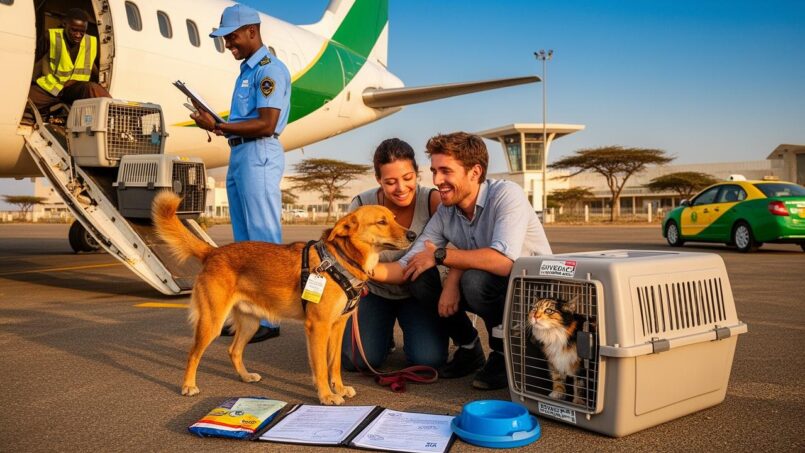
Moving to the Gambia with your dog or cat is not something to improvise. Between veterinary requirements, administrative formalities, choosing an airline, and adapting to a sometimes extreme tropical climate, an expatriation project with an animal must be methodically prepared. However, once the rules are well understood and deadlines are met, entering the Gambia with a pet remains entirely feasible.
Good to know:
This article summarizes essential information for importing animals into the Gambia, covering import conditions, animal health requirements, air transport arrangements, and the local context, in order to provide a comprehensive practical guide for future expatriates.
Understanding the General Framework for Animals in the Gambia
Before even discussing forms and vaccines, it is helpful to understand the cultural, administrative, and health context into which you will be arriving.
The management of domestic animals falls under the Gambian veterinary authorities, particularly the Department of Livestock Services (DLS) based in Abuko, as well as the Gambian Veterinary Department, reachable at (+220) 4397 472. These are the administrations that oversee animal imports, issue or validate permits, and control the health status of dogs, cats, and other companions upon arrival.
Tip:
Culturally speaking, dogs and cats are not, on average, as valued as “family members” as they are in Europe. Dogs are rarely kept as pets by the local population, and many of those seen on the streets or beaches are in precarious health, sometimes mistreated or simply ignored. Cats generally fare somewhat better, often tolerated around homes and fed scraps for religious reasons of not wasting food. This reality has two consequences for the expatriate: the need to strictly protect one’s own animal (vaccines, parasite control, hygiene) and the benefit of having reliable veterinary contacts upon arrival.
The environment is typically tropical: significant heat, high humidity, seasons marked by periods of intense rain and others of dry heat. This climate, already demanding under normal conditions, is made more unstable by climate change, with more frequent heat waves, extreme weather events, and high parasite pressure (ticks, fleas, mosquitoes). An animal unprepared for these conditions can suffer very quickly: heatstroke, vector-borne diseases, digestive issues from contaminated water, respiratory problems worsened by dust or smoke.
Caution:
The process requires strict adherence to import rules and early planning for the animal’s long-term health, given the hot, humid climate and sometimes unsanitary conditions.
Entry Conditions: Certificates, Vaccines, and Permits
The importation of dogs and cats into the Gambia is based on a fairly clear set of requirements, but one that demands rigor in timing and document management.
The Veterinary Health Certificate: The Centerpiece of the File
Every animal entering the Gambia must be accompanied by a health certificate issued by a veterinarian at the point of departure. This document attests that the animal is in good health, fit for travel, properly vaccinated, and free from contagious diseases.
The Gambian authorities specifically require that this certificate state that the dog or cat:
– Is in good general condition and fit for transport,
– Is free of external parasites,
– Shows no signs of contagious diseases,
– Has been recently vaccinated against a number of diseases.
For dogs, the document must mention up-to-date vaccinations against Canine distemper, hepatitis, leptospirosis, parvovirus, and rabies. These vaccinations constitute the “core” requirements for entry. For cats, the regulatory priority remains rabies vaccination, although in practice a full FVRCP protocol (panleukopenia, rhinotracheitis, calicivirus) is highly recommended to protect the animal.
A very specific point appears in the official instructions: this certificate must be faxed before arrival to the Director of Livestock Services in Abuko, at number 00220 4397575. This requirement may be surprising in the age of email, but it is indeed part of the current procedures: the fax allows authorities to pre-verify the documents before the animal’s arrival.
Example:
After the veterinarian issues the certificate, it is imperative to check that it is correctly filled out: full identification of the animal, passport or vaccination card number, detailed list of administered vaccines, precise dates of interventions, as well as the practitioner’s stamp and signature. For travel from certain countries, this document must also be countersigned by an official veterinarian, such as a state veterinarian or a practitioner accredited by the national health authority of the country concerned.
Rabies Vaccination: Requirements and Timeline
Rabies vaccination is mandatory for any animal traveling internationally, and the Gambia applies a fairly standard temporal framework: the vaccine must be administered at least 30 days before arrival, but not more than 12 months before entry into the territory.
This double threshold follows a simple logic: allow time for the animal’s immune system to produce antibodies, while ensuring that the protection is not too outdated. The minimum schedule therefore looks like this: the animal is vaccinated against rabies, you wait a full month, then the trip can take place as long as it remains within the year of validity.
Note: the first rabies vaccination cannot be given before the age of 12 weeks. This means the practical minimum age for a puppy or kitten to travel abroad, respecting the 30-day waiting period after the primary vaccination, is around 15 weeks at the very least. In reality, when combining other vaccines, formalities, and airline constraints, it is prudent not to consider international flights with an animal younger than 4 to 5 months.
In practice, the timeline for the rabies vaccine is not managed in isolation. You must also:
– check if the country of departure or return requires a rabies titer test (antibody titration) for exit or re-entry,
– ensure the microchip number (if any) appears on the vaccination certificates,
– avoid any “coverage gap”: if a booster is given too late, it may be considered a primary vaccination, again entailing a waiting period.
Microchip, Passport, and “Pet Passport”
Unlike some very strict countries, the Gambia does not mandate the implantation of an ISO microchip to accept a dog or cat into the territory. However, micro-identification is explicitly recommended in technical files, for two major reasons: international traceability of the animal and ease of matching the animal physically present at the border with the documents (certificates, health records, lab results).
Good to know:
To be valid in the European Union, your animal’s primary rabies vaccination must be performed after or on the same day as the microchip implantation. If the microchip is implanted after the vaccine, it may be considered invalid for a return to the EU, a crucial point for expatriates making round trips.
The term “pet passport” can be confusing, so it is important to distinguish:
– the European pet passport, issued by veterinarians in the EU and recognized as a full travel document within member states,
– the “pet passport” in a broader sense, i.e., a file gathering all the documents required by the destination country: health certificate, proof of rabies vaccination, possible titer results, import forms, antiparasitic treatment certificates, etc.
In the case of the Gambia, there is no dedicated national passport, but a set of documents that, when compiled, serve as a “passport” for entry: veterinary certificate, vaccination record or equivalent, certificate of treatment against parasites, specific Gambian veterinary forms.
Import Permit: Before or After Arrival?
The available indications show two levels of reality:
Caution:
Before departure, check the need for a permit with the Gambian embassy. After arrival, the animal must be registered with the Gambian Veterinary Department to obtain the final import permit.
In practice, the safest approach is to anticipate in both directions: contact the Gambian embassy or consulate before departure to ask if a prior permit is necessary depending on the country of origin, and plan in your post-arrival schedule a quick visit to the veterinary service in Banjul/Abuko for the official registration of the animal and the issuance of the permit on site.
You should also keep in mind that depending on the health situation of the country of origin, Gambian authorities may require a laboratory report proving the absence of certain diseases before issuing a permit, even if these requirements are more detailed for other states in the region. It is therefore best to ask in writing what analyses are required, especially if traveling from a country classified as high-risk for rabies.
Presenting the Animal at Abuko Within 72 Hours
A particularly important requirement, often overlooked, is the obligation to present the animal at the Abuko veterinary clinic within 72 hours of arrival on Gambian soil. This physical check serves to verify the animal’s actual health status, the absence of symptoms of contagious diseases, and general compliance with the documents previously transmitted.
This examination thus becomes a mandatory step in the post-flight schedule. It involves planning for:
– a reliable means of transport to get to Abuko with the animal,
– the entire paper file (original certificates, copy of the fax sent before arrival, vaccination record, etc.),
– possibly an interpreter or local contact if the language barrier or understanding of procedures poses a problem.
In case of a problem (sick animal, signs of parasites or contagious disease), the authorities have the power to decide what happens next: quarantine, denial of entry, mandatory treatments at the owner’s expense.
Dogs, Cats, and Other Pets: Which Categories of Animals Are Allowed?
Classic expatriation mainly involves dogs and cats, which are explicitly allowed in the Gambia, provided that health and documentation requirements are met. But other types of animals may also be involved, and not all are necessarily permitted.
Good to know:
The importation of exotic animals, protected species (wildlife, CITES listed), or certain dog breeds considered aggressive may be prohibited or subject to strict permits. In the absence of a public list, it is essential to check on a case-by-case basis with Gambian authorities whether the animal is allowed.
To better visualize the main points, the table below summarizes the broad categories of animals and the type of general requirements that may apply.
| Animal Category | General Situation for Entry into Gambia |
|---|---|
| Pet dog not listed as “aggressive” | Allowed, with health certificate, full vaccinations (including rabies), Abuko check within 72h |
| Pet cat | Allowed, with health certificate, rabies vaccination, Abuko check within 72h |
| Dog breed potentially regulated | Possible restrictions, special permits to be checked with authorities |
| Exotic small pets (reptiles, rare rodents…) | Admission uncertain, often subject to permit, check CITES and Gambian law |
| Pet birds (parakeets, parrots) | Highly dependent on CITES rules, specific permits likely required |
Furthermore, keep in mind that, whatever the animal, the basic documents (health certificate, proof of vaccination, identification) remain essential, and that a denial of entry or temporary quarantine may be imposed if there is any doubt about the health status.
Air Travel: Cabin, Cargo, and Choosing the Airline
Virtually all expatriates reach the Gambia by plane, via Banjul International Airport. The question of air transport for the animal therefore becomes central.
Cabin or Cargo: What Airlines Provide
Each airline sets its own rules for animals, with significant variations. Some do not accept animals in the cabin and only transport them in the hold (as checked baggage or cargo), others allow small dogs or cats in the cabin under strict weight and crate size conditions.
Nevertheless, typical rules emerge from the analysis of many policies:
Good to know:
To travel in the cabin, the animal must be in a cage or soft carrier not exceeding approximately 55x40x25 cm, with a total weight (animal + container) of about 8 kg maximum. Beyond these dimensions or weight, the animal must travel in the hold in a rigid IATA-compliant crate. Advance reservation is generally mandatory (limited quota per flight) and additional fees apply.
Some airlines, like Ethiopian Airlines, have specific rates for animals in the cabin or hold, with current tariffs on international routes. Biman Bangladesh Airlines, which serves Banjul on some schedules, does not allow animals in the cabin and limits to one animal per flight as checked baggage or cargo, with a substantial surcharge.
Regardless of the airline chosen, two principles apply: call early to confirm the possibilities of bringing the animal on the desired flights, and request in writing the exact rules (crate size, weight, required documents, seasonal weather conditions, etc.).
Preparing the Transport Crate
The container in which the animal will travel must meet several requirements:
– allow the animal to stand up, turn around, and lie down comfortably,
– be sturdy, well-ventilated, adapted to the animal’s morphology (integrated muzzle for some airlines, water bowl fixed inside, secure closure),
– for the hold, comply with IATA regulations for the transport of live animals.
Acclimation to Transport
Prepare your animal for travel by gradually getting it used to its transport crate to reduce stress.
Anticipate Acclimation
Place the transport crate in the house several weeks before departure to make it familiar.
Associate the Crate with Positives
Serve the animal’s meals inside the crate to create a pleasant experience.
Gradual Habituation
Start with rest periods in the crate with the door open, then gradually increase the duration of closure.
Sedatives are prohibited. Many veterinary sources and airlines highlight the danger of calming agents at altitude, which can disrupt the animal’s thermoregulation and cardiovascular function. Some airlines even refuse to transport an animal if they suspect sedative use.
Documentation to Present at Boarding
In addition to Gambian requirements, airlines may ask for: additional requirements specific to their industry.
– a health certificate issued a few days before the flight (often 7 to 10 days, sometimes 72 hours),
– the vaccination record or passport, proving the validity of the rabies vaccine and other vaccines,
– any import permits, if the airline requires them to validate the transport.
Experience shows that the most frequent errors concern the timing of vaccines, forgetting a signed or legalized document, or a non-compliant crate. All of this should ideally be prepared one to two months before the flight, to have time to correct if needed.
Upon Arrival in the Gambia: Customs, Abuko, and Registration
Arriving in Banjul with a dog or cat is a crucial step: this is when the actual inspection by immigration and animal health services takes place.
Upon landing, documents must be ready to present:
– original health certificate,
– vaccination record with proof of rabies vaccination within the required timeframe,
– proof of antiparasitic treatments if required,
– any fax sent in advance to Abuko and acknowledgment of receipt, if available.
Good to know:
Upon arrival, officers check that the animal matches its description, shows no obvious signs of illness, and that vaccination deadlines are met (especially for rabies, between 30 days and 12 months before travel). If everything is in order, the animal is accepted with the obligation to present it at the Abuko veterinary clinic within 72 hours.
It is this second step that truly officializes the animal’s entry into the Gambian health surveillance system. The visit must be planned very quickly, taking into account opening days and the possible distance from your initial accommodation. The Abuko veterinarian conducts a clinical examination, may check for external parasites, and confirms the animal’s fitness to remain in the country. It is also during this window that the animal must be registered with the Gambian Veterinary Department to obtain the import permit.
Finally, it is recommended to immediately contact a private veterinary clinic for animal registration, updating the file, possible renewal of certain antiparasitic treatments, and planning future vaccine boosters.
Living with a Pet in the Gambia: Climate, Risks, and Prevention
Once the entry formalities are completed, the real challenge begins: maintaining the animal’s health and well-being in a tropical environment affected by climate change.
A Hot and Humid Climate with High Parasite Pressure
The Gambia experiences high temperatures and significant humidity. In this type of climate, animals are exposed to a major risk of heat stress. Numerous studies in hot climates show that ambient temperatures above 27–30 °C can become dangerous for pets, especially during exertion or prolonged exposure, and even more so for pregnant females, puppies, kittens, elderly or sick animals, and brachycephalic breeds (bulldogs, pugs, Persians, etc.).
Signs of heatstroke include very intense panting, excessive salivation, severe fatigue, sometimes vomiting, difficulty walking, or even convulsions or bluish mucous membranes. Without rapid intervention (shade, gradual cooling, hydration, emergency veterinary care), these episodes can be fatal: hospital studies have shown mortality rates close to 50% in dogs treated for severe heatstroke in some hot countries.
Good to know:
The heat and humidity of tropical climates prolong the survival of parasites like ticks and fleas, promoting chronic infestations. The proliferation of mosquitoes in stagnant water also increases the risk of disease transmission, especially heartworm (dirofilariasis), which affects dogs and, increasingly, cats.
Vector-borne infections such as ehrlichiosis, anaplasmosis, and other tick-borne diseases are expanding in many hot regions, and the Gambia is no exception to this general African context. Skin conditions related to fleas (allergic dermatitis, secondary bacterial infections) and digestive diseases from contaminated water (intestinal parasites like Giardia, leptospirosis) are also to be anticipated.
Air Quality, Rain, and Respiratory Risks
Climate change is not limited to heat. In urban areas, the combination of pollution, dust, smoke from burning, sometimes bushfires or waste fires, can weaken animals’ respiratory tracts. Conditions like kennel cough, chronic bronchitis, and even pneumonia can be promoted.
Humidity and intense rains create an environment conducive to the growth of molds, fungi, and bacteria, both outdoors and in poorly ventilated homes. Dogs can develop “hot spots” (acute moist dermatitis) and skin infections from constantly moist skin; cats may show more allergic or asthmatic respiratory symptoms, exacerbated by pollens, molds, and dust mites.
Concrete Daily Prevention Measures
Living with an animal in the Gambia requires rethinking certain daily habits. Several guidelines apply:
Tip:
To ensure your animal’s well-being during hot periods, make sure to provide constant hydration with fresh, clean water, changed frequently. Schedule walks during cooler hours (morning and evening) and avoid physical activities in direct sunlight. Set up shaded areas and cool spaces (ventilated rooms, cool tiles, cooling mats). Protect their paw pads from hot surfaces like asphalt. Implement rigorous parasite protection (collars, spot-on treatments, etc.) on your veterinarian’s advice. Regularly inspect the animal for parasites or abnormal symptoms (itching, spots, coughing, digestive issues) and consult without delay if in doubt.
You should also plan for specific adaptation strategies depending on the breed and lifestyle. Studies in hot regions show, for example, that Siberian Huskies in tropical climates adapt their behavior by naturally avoiding the hottest hours. Conversely, brachycephalic breeds face major overheating risks even at moderate temperatures. Being overweight further aggravates these risks. Very athletic dogs may temporarily tolerate a high internal temperature, but at the cost of increased owner vigilance.
30
Nearly 30% of hours recorded by sensors worn by dogs in Alabama corresponded to high thermal risk, undetected by weather stations.
Managing Stress and Mental Health of the Animal
Climatic events (heavy rain, storms, prolonged heat, local flooding) can also affect animal behavior and psyche. It is not uncommon to observe, particularly in dogs, an increase in anxiety, aggressiveness, excessive barking, or withdrawal behaviors when outdoor conditions become less predictable.
Expatriates must therefore integrate the psychological dimension: maintain stable routines despite climate variations, provide calm retreat areas, avoid exposing the animal to traumatizing events (rough handling, prolonged exposure to aggressive dogs or malicious humans), and consult a veterinarian or behaviorist if behavior changes persist.
Veterinary Infrastructure and Local Resources
To live peacefully with an animal in the Gambia, it is essential to know the available veterinary structures.
A reference facility is the Touray & Meyer Veterinary Clinic, located in Bijilo, on the Kombo Coastal Road / Senegambia Highway, reachable at +220 7704949 and by email at [email protected] or [email protected]. This clinic treats both pets (dogs, cats, rabbits, parrots, turtles, etc.) and livestock. It has modern diagnostic capabilities (radiography, ultrasound, RefloVet lab for blood analysis, heartworm testing, and kidney and liver function evaluation) and a stock of medicines imported from Europe.
Good to know:
For expatriates in the Greater Banjul area and the west coast, a clinic is listed as the nearest veterinary hospital. Meanwhile, the NGO Gambia Horse and Donkey Trust runs weekly mobile clinics in villages, primarily dedicated to working equines but also offering care to any animal in distress, including dogs and cats, for owners with limited means.
The presence of these structures does not replace good preparation, but they offer valuable resources for emergencies, regular check-ups, spaying/neutering, parasite treatments, and management of tropical diseases sometimes unfamiliar to Western veterinarians.
Pet-Friendly Housing and Accommodation in the Gambia
Beyond health, the question of pet-appropriate housing is another concrete issue of expatriation. Available data show that the market for seasonal and medium-term rentals in the Gambia through platforms like Airbnb or other sites includes a significant share of accommodations that accept pets.
Out of approximately 2,379 vacation rentals surveyed, nearly 358 declare themselves “pet-friendly,” a notable proportion. The areas most equipped with pet-accepting accommodations are around Serrekunda, Brufut, Bijilo, Bakau, Kololi, and other coastal towns, very popular with expatriates.
The following table provides a summary overview of the supply of pet-friendly accommodations in two particularly common expatriate cities.
| Location | Number of “Pet-Friendly” Rentals | Mentioned Price Range | Other Useful Features |
|---|---|---|---|
| Serrekunda | Approximately 110 | From about £14 / night | Good level of amenities (WiFi, AC, pools, etc.) |
| Brufut | Approximately 20 | From about €9 / night | Quiet neighborhoods, proximity to the sea, frequent WiFi |
Accommodations such as villas, apartments, or guesthouses often feature enclosed gardens, shaded terraces, sometimes pools, as well as good internet connection and air conditioning, valuable assets for an animal living in a hot climate. Many guest comments also mention the presence of domestic animals on site (the host’s guard dog, neighborhood cats, goats in the vicinity), which may require an adjustment period for a dog or cat not used to local wildlife.
Tip:
For an expatriate, it is advisable to look for an initial pet-friendly accommodation, located near a road facilitating quick access to a veterinarian in areas such as Abuko, Bijilo, Bakau, or Kololi. The accommodation should also have a secure, enclosed outdoor space, allowing the animal to get fresh air without risk of direct contact with stray dogs.
Practical Tips for a Successful Expatriation with a Pet in the Gambia
Bringing together all available information, a common thread emerges: the success of an expatriation with a pet in the Gambia relies on meticulous planning, a thorough understanding of the climate and health risks, and adaptation to local cultural realities.
Several best practices can serve as a roadmap:
Tip:
For a successful trip with your pet to the Gambia, start veterinary and administrative procedures several months in advance, especially if a rabies titer test or other analyses are required. Check entry and exit requirements country by country, particularly for a possible return to the EU. Strictly follow the timeline: microchip → rabies vaccination → waiting period → travel. Choose an air itinerary that minimizes airline changes, long layovers, and complex transits. Prepare the transport crate and the animal, avoiding sedation and anticipating hydration. Copy and digitize all documents, with paper copies in different bags. Plan the mandatory visit to the Abuko clinic within 72 hours of arrival. Locate private veterinary clinics and local NGOs (Touray & Meyer in Bijilo, Gambia Horse and Donkey Trust) for care if needed. Finally, adapt the animal’s lifestyle to the tropical environment: reduce activities in the sun, ensure constant access to water, intensify parasite control, and be vigilant about heatstroke, vector-borne diseases, and digestive issues.
Finally, do not underestimate the emotional dimension of expatriation for the animal. Moving, climate, new noises, new animals in the neighborhood, change of routine: all stress factors that can manifest as behavioral issues or immune system weakening. Regular veterinary follow-up, attentive listening to the animal’s signals, and, if needed, help from a behavior professional can contribute to a smoother transition.
Good to know:
Expatriation to the Gambia with a pet is possible, but it requires a significant investment in time, organization, and health vigilance. This meticulous preparation, although costly initially, is essential to ensure a peaceful life in the tropics, in compliance with local regulations and the health of both the animal and its owners.

Cyril Jarnias is an independent expert in international wealth management with over 20 years of experience. As an expatriate himself, he is dedicated to helping individuals and business leaders build, protect, and pass on their wealth with complete peace of mind.
On his website, cyriljarnias.com, he shares his expertise on international real estate, offshore company formation, and expatriation.
Thanks to his expertise, he offers sound advice to optimize his clients' wealth management. Cyril Jarnias is also recognized for his appearances in many prestigious media outlets such as BFM Business, les Français de l’étranger, Le Figaro, Les Echos, and Mieux vivre votre argent, where he shares his knowledge and know-how in wealth management.





