
 Published on and written by Cyril Jarnias
Settling in Mongolia is not just about buying a ticket to Ulaanbaatar and renting an apartment near Sukhbaatar Square. The country has implemented a dense legal and administrative framework that covers entry into the territory, long-term stays, taxation, health, housing, bank accounts, and civil status registration. Mastering these rules avoids nasty surprises at the border, fines for overstaying, or blocks during a tax audit.
This article summarizes in English the essential steps for settling in Mongolia, incorporating factual information on the cost and living conditions on the ground.
Understanding the General Framework: Visas, Residence, and Registration
Before any other formalities, the key question is the type of visa and residence status you are aiming for. Mongolia clearly distinguishes between short-term tourist stays, professional or study stays, and long-term settlement with a residence permit.
Living in Mongolia almost always involves three successive steps: obtaining an appropriate visa, registering with the authorities upon arrival, and then applying – if you stay more than a few months – for a residence permit corresponding to your situation (work, investment, family, studies, etc.).
Entering the Country: Visa, Passport, and E-Visa
It all starts with the passport: it must be valid for at least six months beyond the planned date of arrival. Many nationals can enter temporarily without a visa for tourist purposes, but this does not exempt them from meeting registration obligations upon arrival.
Mongolia has significantly relaxed its visa regime over the years. Certain nationalities benefit from temporary or permanent exemptions for short tourist stays, with durations varying by country (14, 21, 30, or 90 days). Specific agreements offer, for example, up to 90 days visa-free for some visitors, including U.S. citizens, while a special “Visit Mongolia Year” program allows South Koreans to stay 90 days visa-free until a set date.
For any stay other than tourist or long-term, a visa is required and must be obtained from a Mongolian diplomatic mission. Since 2021, an e-visa system also allows you to submit your application online for several visa categories.
– a tourist e-visa (code K2) valid for 30 days,
– an e-visa for cultural or sports events (K4), also 30 days,
– a transit e-visa (K6) for 10 days.
The standard processing time is announced as about three business days, and the visa is generally valid for 90 days to enter the country from its date of issuance, with the stay duration starting on the actual entry date.
The visa fee schedule remains standard: a single-entry visa is more economical than a multiple-entry visa for six or twelve months, which can cost significantly more. In all cases, any long-stay visa (work, studies, family reunification, investment) requires upfront a “letter of approval” issued by the Mongolian Immigration Agency or, for certain official visas, by the Ministry of Foreign Affairs. This letter, forwarded to the competent consulate, conditions the processing of your application.
Mandatory Registration Upon Arrival: An Essential Step
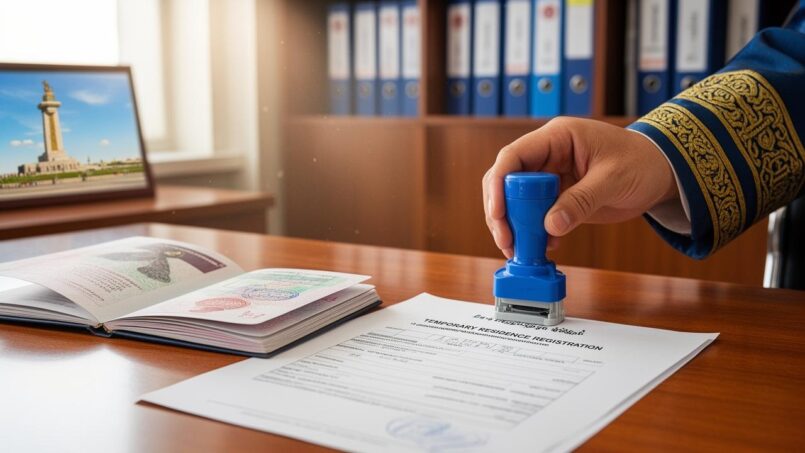
Mongolia imposes a registration requirement on all foreigners, regardless of their visa type or planned length of stay. This step, often overlooked by newcomers, is nevertheless crucial.
Registration of foreigners in Mongolia must be carried out at the Immigration Agency or one of its regional offices. The legal deadline varies from 48 hours to 7 days after arrival, but it is recommended to do it as soon as possible. Some accommodations (hotels, residences) can make this declaration for you via an online portal.
Failure to comply with this formality exposes you to fines upon leaving the country, or even to complications for any other administrative procedure (residence permit, work permit, tax registration). Registration will also allow you to be assigned – or have linked to your file – the 13-digit individual identification number, a key to many procedures (taxation, social security, etc.).
From Visa to Residence Permit: Structure and Main Categories
The visa is only a right to enter and stay for a short period. Beyond 90 days, the Mongolian authorities shift to a residence permit regime. This allows an extended stay for a specific purpose: salaried work, investment, studies, family reasons, long-term immigration, etc.
There are several main types of residence permits:
Overview of the different residence permits available, with their main durations and conditions.
Valid for up to 12 months, for short-term stays.
Granted after several years of continuous legal stay.
Issued for periods of up to three years.
Include family reunification, spouse permit, and permits for dependent children.
A foreigner wishing to settle permanently must most often go through a progressive cycle: entry visa, temporary residence permit, then after about five years of uninterrupted legal residence, the possibility of applying for a permanent title. Note that the Immigration Agency can cancel a permit if the holder spends more than 180 days abroad in a single year, which requires careful planning of absences.
The table below summarizes the main forms of long-term stay.
| Type of Title | Typical Maximum Duration | Main Conditions |
|---|---|---|
| Temporary permit | Up to 12 months | Residence > 90 days, private or professional reason |
| Investor permit | Up to 3 years | Confirmed investment, file validated by the Agency |
| Permanent permit | Indefinite | 5 years of continuous temporary residence, special cases |
| Family permit (spouse/child) | Aligned with the parent | Family relationship, civil status and residence documents |
The application is generally done in two steps. First online, via the eimmigration.mn portal, which allows you to submit the forms and scanned documents. Then physically, because handing over originals, fingerprinting, and biometric photo require the applicant’s presence. An interview may be scheduled depending on the permit category.
For a first title, it is advisable to start several weeks in advance. The theoretical processing times mentioned vary from about ten business days to around two months, depending on the complexity of the file and the workload of the services.
Work, Invest, or Study: Coordinating Work Permits, Specific Visas, and Residence
Living in Mongolia to work, teach, invest, or conduct research often involves a domino effect of administrative steps: a work permit, an appropriate visa, registration, a residence permit, and sometimes a specific sector authorization.
Work Permit and Partnership with a Local Employer
The work permit falls under the General Authority for Labor and Social Protection. The logic is clear: a foreigner can obtain a work visa only if a local employer has previously obtained a “pre-authorization” for the position. In practice, the company must:
– prove that the position cannot be filled locally,
– comply with any foreign labor quotas,
– pay a monthly fee per foreign worker, generally based on a multiple of the minimum wage.
Once pre-authorization is obtained, the foreigner must: 1) apply for their visa at the embassy, 2) request their work permit upon arrival in the country (generally renewable for one-year periods). The duration of the temporary residence permit is then aligned with the employment contract.
For education, research, or certain cooperation programs (e.g., Fulbright), the Ministry of Education, Culture, and Science issues a supplementary letter of approval, required for the multi-entry S visa.
Investing in Mongolia: Visa and Residence for Investors
Foreigners who invest in Mongolia can apply for a dedicated visa and residence permit. The scheme involves creating or participating in a local entity, registering it with the authorities (including the tax office), and obtaining an electronic certificate via the “Invest in Mongolia” portal.
The required file includes:
– a letter of request from the inviting Mongolian company,
– the registration certificate and, if applicable, the company’s licenses,
– proof of investment,
– an attestation from the district tax office.
In return, the investor may be granted a residence permit for a period of up to three years, renewable.
Studying or Conducting Research: Academic Visas and Health Obligations
Foreign students and researchers must provide:
– a letter of admission from a Mongolian institution,
– a research contract or agreement, as applicable,
– a medical certificate, including in particular an HIV test and a tuberculosis examination, mandatory for any stay longer than three months.
Again, obtaining the academic visa precedes arrival, registration, and then the application for a residence permit.
Living in Mongolia: Housing, Cost of Living, and Practical Setup
Administrative procedures intersect with very concrete choices: where to live, on what budget, in what type of housing. Mongolia offers a very wide spectrum, from a modern studio near the State Department Store to a traditional ger in the steppes.
Cost of Living: A Country Significantly Cheaper than the Global Average
Mongolia ranks among the countries where the cost of living is below the global average, with a cost index around 33.9 (compared to 100 for the global average). It is ranked 117th out of 197 countries for cost of living and 99th for overall quality of life. Overall, living in Mongolia costs about 1.31 times less than the global average.
Compared to the United States, the contrast is stark: life there is, on average, 57% cheaper, and daily expenses (excluding housing) about 53% lower, while rents are over 65% lower.
The following table gives some orders of magnitude.
| Indicator | Level in Mongolia | Comparison / Comment |
|---|---|---|
| Cost of living index (Mongolia) | ~33.9 | 1.31 times cheaper than global average |
| Cost difference vs USA (with rent) | –57% | Total expenses much lower |
| Rent difference vs USA | –65.4% | Housing significantly more affordable |
| Average monthly net salary | 1,280,000–1,643,750 ₮ | Approx. USD 420–516 |
For an expatriate, all-inclusive monthly budget estimates range around $1,500 to $2,000, with wide variations depending on lifestyle. In Ulaanbaatar, some estimate a “tight” budget between $600 and $900 per month, and a “comfortable” budget between $1,000 and $1,400.
Finding Housing in Ulaanbaatar: Neighborhoods, Property Types, and Agencies
Ulaanbaatar concentrates most of the infrastructure, services, hospitals, and modern rental market. Central neighborhoods like Sükhbaatar, areas near Chinggis Khan Square, the Parliament Building, or the CBD are very popular with expats, as are some more upscale residential areas like Zaisan or the vicinity of the Shangri-La complex.
The housing supply in Mongolia is very diverse, ranging from studios and apartments (with one or more bedrooms) to recent condos and high-end apartments in the city. In rural areas, you can also find houses, as well as gers (traditional yurts) and cabins, especially near Terelj National Park or in the Orkhon and Kharkhorin valleys.
International platforms like Airbnb list monthly rentals in Ulaanbaatar and elsewhere, while specialized companies such as M.A.D. Urban offer furnished short-term and long-term rentals with ancillary services (airport pickup, 24/7 English-speaking hotline, maintenance). A French travel agency, Randocheval Mongolie LLC, also rents an apartment in Ulaanbaatar and supports its tenants through its local office.
The article illustrates the variety of properties available, ranging from studios (like ‘Gandirs Studio’ or ‘TDB Studio’) and 1- or 2-bedroom apartments near the State Department Store, to modern three-bedroom apartments a few minutes from Sukhbaatar Square. It also mentions gers in the Orkhon Valley for a nomadic-type experience.
Market statistics mention about fifty active rental listings in Ulaanbaatar, with a minimum observed monthly rent around 1.07 million tugriks. Some listings show rents around 4.2 million tugriks per month for high-end properties.
Rent Levels and Options in the Provinces
For an expatriate, the housing budget depends heavily on location, standard, and lease duration.
In the city, the following ranges are frequently cited:
| Type of Property | Location | Typical Monthly Rent (₮) | Approx. in USD |
|---|---|---|---|
| 1 bedroom city center | Central Ulaanbaatar | 1,000,000 – 2,700,000 | ~400–520 |
| 1 bedroom outside center | Outskirts of Ulaanbaatar | 600,000 – 2,000,000 | ~220–395 |
| 3 bedrooms city center | Central Ulaanbaatar | 2,000,000 – 7,000,000 | ~730–1,285 |
| 3 bedrooms outside center | Outskirts | 1,500,000 – 3,000,000 | variable |
Modern furnished apartments, built between the 2000s and 2020s, commonly rent for between $400 and $800 per month. High-end homes in the most sought-after neighborhoods can go up to $800–$1,500 per month.
In the provinces, in regional capitals like Erdenet or Darkhan, rents are significantly lower: a furnished apartment can cost as little as $100 to $200 per month. In the countryside, it is even possible to buy a ger (yurt) for $500 to $2,000, installing it on a plot rented or granted by a nomadic family.
Daily Cost of Living: Food, Transportation, Utilities
The moderate cost of living in Mongolia is reflected in everyday prices. A meal at an inexpensive restaurant ranges from about 10,000 to 30,000 tugriks, which is just a few dollars. A three-course meal for two at a mid-range restaurant is rather around 50,000 to 250,000 tugriks.
The maximum price for a dozen eggs in Mongolia, illustrating the affordable cost of basic groceries.
Public transportation is particularly affordable: a city bus ticket in Ulaanbaatar costs 500 to 1,000 tugriks, and a monthly pass ranges from 6,000 to 50,000 tugriks depending on the case. A liter of gasoline, for those who drive, is around 2,600 to 3,710 tugriks.
Basic utilities (electricity, heating, water, garbage collection) for a medium-sized apartment average approximately 160,000 to 380,000 tugriks per month, while unlimited high-speed internet access costs between 36,000 and 80,000 tugriks.
The table below summarizes some indicative prices.
| Expense Item | Range (MNT) | Comment |
|---|---|---|
| Simple restaurant meal | 10,000 – 30,000 | Equivalent of a standard lunch |
| 3-course meal for two | 50,000 – 250,000 | Mid-range restaurant |
| City bus ticket | 500 – 1,000 | Very cheap |
| Monthly transport pass | 6,000 – 50,000 | Depending on type and usage |
| Rent 1 bed. center UB | 1,000,000 – 2,700,000 | Large variation by standard |
| Rent 3 bed. center UB | 2,000,000 – 7,000,000 | For families or shared housing |
| Basic utilities (85–90 m²) | 161,905 – 377,778 | Heating, electricity, water, etc. |
These price levels make Mongolia an attractively affordable destination for expatriates with foreign income or salaries paid in strong currencies, provided however that the relative weakness of infrastructure outside the capital and the harsh continental climate are taken into account.
Health, Insurance, and Obligations for Foreign Residents
Settling in Mongolia means enrolling in a health system in transition, which has moved away from the Soviet model to a modernized centralized system, but remains unequal across regions.
Structure of the Mongolian Health System
The health sector rests on two pillars: a large public network, managed by the state through the Ministry of Health, and a rapidly growing private sector, especially in Ulaanbaatar. Public services are organized into three levels:
– primary care, with family health centers,
– district hospitals (secondary level),
– tertiary-level hospitals, more specialized.
There are more than 4,000 health facilities, including 91 public hospitals, over 240 private hospitals with beds, and over 1,200 outpatient clinics. However, modern equipment and specialized doctors remain concentrated in the capital. Rural areas suffer from staff shortages, limited diagnostics, and difficulties in medicine supply.
Mandatory Public Health Insurance and Coverage Limits
Since the 1990s, Mongolia has established a Health Insurance Fund, financed by contributions shared between employees, employers, and state subsidies. This insurance is mandatory and aims for near-universal coverage: over 90% of the population benefits from it.
Foreigners legally residing for more than six months must subscribe to public insurance. For employees, enrollment is generally handled by the employer. Self-employed individuals, entrepreneurs, or retirees must do the procedures themselves at a local social security office.
Public coverage pays for most secondary care and a significant portion of hospital care. But it does not reimburse everything: many specialized exams, certain surgeries, prescription medications, or advanced treatments remain largely the patient’s responsibility. Out-of-pocket payments represent a significant share of health spending and can lead to “catastrophic” expenses for a fraction of households.
For an expatriate in Mongolia, it is strongly recommended to take out private health insurance, ideally international, as a supplement to public insurance. This dual coverage facilitates access to local private health facilities as well as to referral hospitals in neighboring countries, such as South Korea or China, where many residents go for major or specialized care.
Using the Private Sector and Importance of International Insurance
In Ulaanbaatar, several private hospitals stand out for standards close to those of Western countries, shorter waiting times, and frequently English-speaking staff. Among them are Intermed Hospital, SOS Medica Mongolia, Grandmed, and Songdo Hospital. In total, over 450 private facilities are listed in the country.
The downside is the cost: a general consultation in the private sector typically costs between 50,000 and 100,000 tugriks, a private hospital night between 200,000 and 500,000, and a standard surgical procedure like an appendectomy can reach 2 to 5 million tugriks, excluding any potential medical evacuation abroad. Without insurance, these amounts remain affordable for some expats, but become much riskier if a serious event occurs.
Hence the value of international health insurance, offered by companies like Cigna Global, Allianz, AXA, Now Health, GeoBlue, World Nomads, or SafetyWing. They generally allow:
The main benefits covered by international health insurance for expatriates in Mongolia.
Covering costs of consultations, treatments, and hospitalizations in private health facilities in Mongolia.
Organizing and financing a medically assisted transfer to an appropriate care center, such as Seoul or Beijing, if necessary.
Getting reimbursed for routine care, chronic illnesses, maternity, dental, and optical care, depending on the chosen plan.
Average annual premiums for an expatriate generally range between $1,000 and $3,000, with wide variations depending on age, health status, scope of coverage, and deductibles.
To subscribe, you usually need to provide a complete file: copy of passport, visa or residence permit, proof of address, medical records, and even proof of income. Contracts may include waiting periods for certain care (maternity, pre-existing conditions, etc.), which argues for subscribing before departure or within the first few weeks of arrival.
Preparing Your Health Before Departure
Authorities and specialized organizations recommend updating certain vaccines before settling in Mongolia, particularly against diphtheria, tetanus, hepatitis A, and typhoid. Since the availability of some Western medications on site is uncertain, it is advisable to come with a personal supply of regular treatments, in their original packaging and accompanied by a doctor’s letter detailing the treatment and conditions.
Opening a Bank Account and Integrating into the Economic System
To receive a local salary, pay rent, or settle certain bills, having a bank account in Mongolia is very useful, even essential. The local banking sector has about fifteen institutions, but not all are suited to foreigners’ needs.
Choosing Your Bank and Understanding the Local Context
Among the sixteen active banks in the country, only a few are generally recommended for expatriates, particularly those linked to large international shareholders or development funds. Commonly cited are:
– Trade and Development Bank of Mongolia (TDB),
– Golomt Bank,
– Khan Bank (the largest retail bank),
– XacBank.
Some of these banks have services specifically geared toward foreign clients, with English-speaking counters in Ulaanbaatar. However, even in these institutions, you should anticipate language barriers or misunderstandings about the type of account you are looking for.
The country has a chronic currency shortage, leading to strict caps on dollar withdrawals (about USD 300 per day), unlike withdrawals in tugriks. Annual inflation is high, but the dollar-to-tugrik exchange rate has shown relative stability over long periods, an important point for savings management.
Conditions and Documents for Opening an Account
In principle, any individual, including a non-resident, can open a bank account by presenting their passport. In practice, especially for multi-currency accounts or for foreigners wishing to use the account as a salary base, banks require a broader set of documents:
– valid passport with appropriate visa (work, student, investor…),
– proof of address in Mongolia (lease contract, utility bill, local bank statement),
– proof of income or employment contract,
– for students, enrollment certificate,
– application form provided by the bank,
– recent passport photos,
– initial deposit (amount varies by account type),
– sometimes a copy of the residence permit.
Some institutions require official translations into Mongolian or English. Processing can take from a few business days to a week or two, especially for issuing the debit card and online banking credentials. In one reported case, a client opened an account at Khan Bank with their passport, resident card, and a form, with the card available a week later.
Basic bank accounts can be opened with a minimal or even zero deposit and offer a national card. More advantageous accounts, such as multi-currency or interest-bearing ones, generally require a larger initial deposit and maintaining high minimum balances.
Fee structures vary, but are generally moderate: reasonable card fees, monthly fees between 5,000 and 20,000 tugriks, sometimes waived if a minimum balance is maintained, domestic electronic transfers charged at a few dozen or hundred tugriks.
Foreign Currency Accounts and Additional Services
Most major banks offer multi-currency accounts, allowing you to hold tugriks, dollars, euros, and even renminbi or yen simultaneously. These accounts provide access to:
– international transfers via SWIFT,
– foreign exchange operations,
– interest-bearing term deposits with sometimes high rates (up to 10–14% for tugrik deposits, and about 1–2% for dollars according to cited examples).
A bank like Golomt requires, for its online banking service, signing up for a password generator device, billed at about $30. TDB is reportedly one of the few banks to provide an IBAN suitable for certain cross-border transfers.
For a long-term foreign resident, opening an account also allows you to benefit from partial VAT refund programs on certain expenses, provided you declare your purchases and use a Mongolian bank card.
Registering in the Mongolian Legal System: Civil Status, Family, and Residence
Living in Mongolia sooner or later involves dealing with the civil status system, whether for a birth, a marriage, a divorce, an adoption, or an official change of address.
Laws and Competent Authorities
The framework is set by several major texts: the Constitution, the Civil Code, the Family Law, the General Law on State Registration, the Law on the Legal Status of Foreigners, and the Law on Citizenship. In case of conflict with an international treaty ratified by Mongolia, the latter prevails.
The General Authority for State Registration and its local branches manage birth, marriage, divorce, adoption, name change, internal migration registers, etc. In Ulaanbaatar, a Center for Civil Registration and Information centralizes some of these procedures. Abroad, Mongolian diplomatic missions perform these functions for Mongolian citizens.
Births and Documents for Children of Mixed Couples
A child’s birth must be registered within 30 days of delivery. For a child born in Mongolia to two Mongolian parents, the procedure is relatively simple: just go to the registration office of the nearest aimag, district, soum, or khoroo, with the necessary documents (medical certificates, ID cards, possibly marriage certificate).
If one parent is foreign or stateless, the Mongolian General Authority decides on the child’s status. Since Mongolia does not recognize dual nationality, it will not issue a birth certificate conferring Mongolian nationality if the child acquires another citizenship. For children of mixed couples born abroad, a certificate from a foreign authority stating that the child has not acquired that country’s nationality is required if registration is not done within 30 days.
Children born to foreign or stateless parents in Mongolia can obtain a birth certificate, but without a Mongolian registration number, since they do not thereby acquire citizenship.
Getting Married in Mongolia: Conditions, Procedures, and Impact for Foreigners
For a marriage to be legally recognized, it must be registered with the state. A religious ceremony, if any, does not constitute a civil marriage.
To marry, both future spouses must be at least 18 years old. Parental consent may be required until age 20. They must be single, have full legal capacity, and not be related by degrees prohibited by law.
For two Mongolian citizens, the declaration is made at the nearest registration office, in the city or countryside. Mixed couples (Mongolian/foreigner) must file their application with the General Authority or one of its branches, with additional requirements for the foreign partner: certificate of celibacy or “certificate of no impediment” issued by the authority of their country or their diplomatic representation, copy of passport, sometimes criminal record extract, medical tests (HIV, tuberculosis, psychiatric examination).
During registration, at least one adult witness must accompany the couple. Pre-filing deadlines are recommended, e.g., 14 days in advance for a mixed marriage. Administrative processing takes about five business days, and a stamp duty of about 2,500 tugriks is due, payable to a dedicated account at banks such as Golomt or Ulaanbaatar Bank.
For foreigners married to a Mongolian citizen, this marriage can form the basis of an application for a residence permit for family reunification. This procedure is subject to several conditions: the foreigner must prove no criminal record, sufficient financial resources, and regular stay in the territory.
Divorces, Adoptions, Name Changes, and Internal Migration
The Mongolian system also provides procedures for:
– registration of a divorce pronounced by local authorities (administrative procedure if no minor children, or judicial if otherwise),
– transcription of a foreign divorce, as long as it does not contradict fundamental Mongolian rules,
– adoptions, including by foreigners, after a decision by the local governor and validation by the General Authority,
– name or gender changes, subject to appropriate medical records,
– registration of internal address changes, which must be declared within ten days of moving, with presentation of ID card and minor children’s documents if applicable.
For expatriates, these procedures mainly arise in the context of mixed marriages, births, or divorces, since they often condition the recognition of family status by immigration or tax authorities.
Taxation and Social Obligations of Foreign Residents
Any long-term settlement in Mongolia comes with a change in tax status. Understanding when you become a Mongolian tax resident, and on which income you are taxed, is crucial to avoid nasty surprises.
When Do You Become a Mongolian Tax Resident?
Mongolia applies two main criteria to determine an individual’s tax residency:
– physical presence duration: being present at least 183 days in a 12-month consecutive period,
– or receiving at least 50% of your taxable income from Mongolian sources.
Mongolian civil servants sent on mission abroad are automatically considered residents. Conversely, personnel working for foreign diplomatic missions, consulates, or certain international organizations, as well as their families, are generally classified as non-residents.
The first year of arrival can create a “split residency” situation: you are considered a non-resident for the first 183 days, then a resident from the 184th day onward. However, you can opt for immediate residency by voluntarily registering upon entry, provided you hold a work permit and intend to stay at least 183 days.
The 13-digit identification number, issued by the Immigration Agency and also used by the tax administration, then serves as a unique identifier for all declarations.
Tax Rates and Taxable Base
Tax residents are taxed on their worldwide income, i.e., income from Mongolian and foreign sources. Non-residents are only taxed on their Mongolian-source income.
For residents, employment income (salaries, bonuses, benefits in kind, etc.) is subject to a progressive scale:
– 10% up to 120 million tugriks per year,
– 15% between 120 and 180 million,
– 20% above that.
Non-residents, on the other hand, generally see their Mongolian income taxed at a flat rate of 20%. Certain specific incomes are subject to specific withholding rates, for example:
– 2% on proceeds from the sale of real estate,
– 5% on winnings from shows or sports competitions,
– 40% on gambling, lottery, quiz winnings.
Tax rate applicable to investment income and capital gains (excluding real estate) for residents.
Declarations and Withholding at Source
Mongolia mainly operates through withholding at source: the employer calculates and withholds income tax on wages, as well as social security contributions, before remitting them. As long as all income is fully taxed through this mechanism, the resident is not necessarily required to file an annual return, even though the authorities now encourage most taxpayers to do so.
As soon as a resident receives income not subject to withholding in Mongolia (direct rents, foreign dividends, capital gains, etc.), they must file an annual return, due by February 15 for the previous calendar year. Any outstanding tax balance is due on the same date. Unlike some countries, no extension is provided.
For non-residents whose income is fully taxed at source in Mongolia, no return is generally required, except in special cases.
In case of late payment, a penalty of 0.1% of the unpaid balance is applied each day. For repeated defaults or debts exceeding 20 million tugriks, the tax authorities may, in extreme cases, request a temporary exit ban from the country until the debt is paid in full.
Social Contributions and VAT
All workers under contract in Mongolia, including foreigners, are subject to social security contributions. The employee’s share is capped (around 632,500 tugriks per month), while the employer’s share, uncapped, generally ranges between 12.5% and 14.5% of gross salary. Contribution declarations must be filed before the 5th of the month following payment and settled within the month.
VAT, set at 10% on most goods and services supplied or consumed in Mongolia, also applies to imported products. Exports, on the other hand, are subject to a zero rate. Residents with a Mongolian bank account can recover a fraction (often 20%) of the VAT paid on certain purchases, which is an incentive to use a local bank card and request invoices.
Customs, Personal Effects, and Vehicles: Preparing Your Material Arrival
Many expatriates bring personal effects, sometimes a vehicle, or even pets. Mongolia has detailed rules on these subjects, with an objective: to allow a reasonable setup without disproportionate duties, while strictly controlling certain goods.
Importing Household Goods
Used household goods can be imported duty- and tax-free under certain conditions: they must have been used by the owner for at least six months, and the owner must have lived abroad for at least one year (or six months for returning Mongolian citizens). New items, however, are taxed based on their value.
Effects must be imported within six months of the owner’s arrival in Mongolia. They cannot be sold, lent, or transferred during the stay, under penalty of customs adjustments. Air shipments are systematically inspected, with average clearance times of one to two business days; sea shipments take three to seven days, depending on the complexity of the lot.
Standard required documents include:
– copy of passport and visa,
– notarized copy of residence permit valid for at least 183 days,
– bill of lading or airway bill,
– detailed and valued inventory,
– declaration attesting to the non-commercial nature of the goods,
– power of attorney in favor of the destination agent.
Foreign employees must add a copy of the local employer’s registration certificate and a signed letter of request from the company.
Diplomats and certain officials of international organizations benefit from near-total exemptions from duties and taxes for their personal effects, subject to a file validated in advance by the Ministry of Foreign Affairs.
Specific Goods, Pets, and Vehicles
Alcohol and tobacco are subject to specific quantitative allowances (for example, one liter of vodka, two liters of wine, three liters of beer, 200 cigarettes or equivalent) beyond which excise duties apply. Weapons, ammunition, dangerous chemicals, drugs, or items considered pornographic or subversive are strictly prohibited, unless a very specific authorization for certain hunting weapons is obtained.
Importation requires an official passport or veterinary certificate, including a recent rabies vaccination (less than six months old). The owner’s identity documents must also be presented. Depending on the species and country of origin, a quarantine may be imposed.
Permanently imported vehicles are subject to customs duties (generally 5% of the customs value), an excise tax (based on engine size and vehicle age), and 10% VAT calculated on the vehicle’s value plus duties and taxes. A fixed flat fee of 7,000 tugriks is added for formalities. Required documents include the purchase invoice, registration certificate, bill of lading, and a sheet detailing technical characteristics (make, model, year, chassis number, engine, fuel type).
It is possible to bring a vehicle for a temporary stay, provided you obtain a “temporary admission slip” at the border to keep, and leave the country with the same vehicle. Financial guarantees or storage in a bonded warehouse (up to two years) are provided for extended stays, but abandonment or undisclosed transfer exposes you to full payment of duties and penalties.
Language, Integration, and Final Practical Recommendations
Although not strictly administrative procedures, language significantly conditions the ease with which you can navigate immigration offices, bank counters, hospitals, and local administrations.
Mongolian, in Cyrillic alphabet, is the official language, and the Khalkha dialect accounts for over 90% of usage in the country. Russian is still known among some older generations, while English is growing mainly among urban youth, but does not guarantee proficiency in administrations or banks.
This is the estimated number of months, with regular practice, to reach a basic conversational level in Mongolian.
Preparing in advance, by listing the steps to follow in order of priority – visa, registration, housing, bank, health insurance, tax number – and systematically gathering copies and official translations of your documents (passport, civil status records, diplomas, bank statements) is the best way to turn a project of expatriation to Mongolia into a successful settlement, both administratively and in daily life.
Disclaimer: The information provided on this website is for informational purposes only and does not constitute financial, legal, or professional advice. We encourage you to consult qualified experts before making any investment, real estate, or expatriation decisions. Although we strive to maintain up-to-date and accurate information, we do not guarantee the completeness, accuracy, or timeliness of the proposed content. As investment and expatriation involve risks, we disclaim any liability for potential losses or damages arising from the use of this site. Your use of this site confirms your acceptance of these terms and your understanding of the associated risks.

Cyril Jarnias is an independent expert in international wealth management with over 20 years of experience. As an expatriate himself, he is dedicated to helping individuals and business leaders build, protect, and pass on their wealth with complete peace of mind.
On his website, cyriljarnias.com, he shares his expertise on international real estate, offshore company formation, and expatriation.
Thanks to his expertise, he offers sound advice to optimize his clients' wealth management. Cyril Jarnias is also recognized for his appearances in many prestigious media outlets such as BFM Business, les Français de l’étranger, Le Figaro, Les Echos, and Mieux vivre votre argent, where he shares his knowledge and know-how in wealth management.





