
 Published on and written by Cyril Jarnias
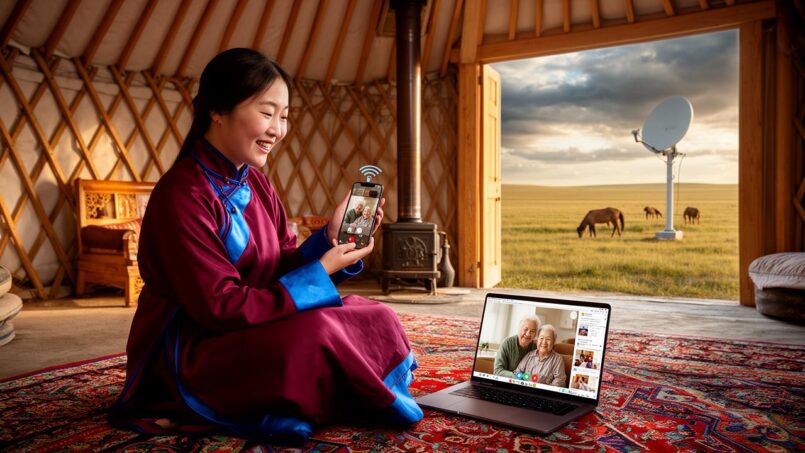
Going to Mongolia means accepting one simple thing: you are (often) leaving the comfort of a permanent 5G network for vast steppes where the signal disappears without warning. But that doesn’t mean you have to cut ties with your family or friends. With minimal preparation, a few well-chosen apps, and a good understanding of the Mongolian network, it’s entirely possible to stay reachable, send photos of your horseback rides across the steppe, or make a video call from Ulaanbaatar.
This guide provides the latest information on connectivity in Mongolia, including local operators, eSIMs, international calling apps, and backup solutions for when there is no network. Its goal is to help you stay in touch with your loved ones without exceeding your budget.
Understanding the Digital Landscape in Mongolia
Mongolia is one of the most connected countries in Central Asia… and at the same time, one of the most challenging as soon as you leave the cities. It all comes down to geography.
In urban centers, the situation is fairly comfortable. Ulaanbaatar concentrates the majority of infrastructure, and cities like Darkhan or Erdenet have good mobile networks, widespread 3G/4G, and many Wi-Fi hotspots. In contrast, in the Gobi Desert, the Altai, or eastern steppes, coverage can drop to zero for hours at a time.
They give a good idea of the gap between usage and infrastructure.
A Well-Equipped Country… But Vast
– Mongolia had approximately 4.97 million active mobile connections at the end of 2025, or 141% of the population. Many people therefore have multiple SIM cards or lines.
– 2.93 million inhabitants used the internet, representing a penetration rate of about 83%.
– Approximately 2.70 million user identities were active on social networks, nearly 76.5% of the population.
Only 68% of Mongolian territory has 3G/4G network coverage, according to the regulator’s data.
Connection Speed and Quality
Speeds remain modest on a global scale, but sufficient for most everyday uses (messages, audio calls, photos, even video if coverage is good).
| Indicator | Indicative Value |
|---|---|
| Median mobile download speed | 14.54 Mbps |
| Median mobile upload speed | 7.10 Mbps |
| Median mobile latency | 23 ms |
| Overall average download speed | ~10 Mbps |
Performance varies mainly by operator and area. In practice:
| Mobile Operator | Average Down Speed | Main Comment |
|---|---|---|
| MobiCom | 25–30 Mbps | Fastest on average |
| Unitel | 20–25 Mbps | Very good speed/coverage compromise |
| Skytel | 15–20 Mbps | Slower, but affordable data plans |
In practice, these speeds are more than enough for a WhatsApp video call when you are on 4G in Ulaanbaatar, or to send photos from a tourist camp. However, any drop to 3G or 2G results in interruptions, especially with video.
Don’t Break the Bank: Avoid Roaming and Choose the Right Solution
The first classic mistake is arriving in Mongolia with roaming enabled… and discovering the bill upon return. Roaming rates are generally very high, especially if you use data.
Some indicative price grids for roaming on Mongolian networks give an idea of the scale:
| Local Network (roaming) | Outgoing Call (per min) | SMS | Data (per MB) |
|---|---|---|---|
| MobiCom | ~$0.50 USD | ~$0.10 USD | ~$0.20 USD |
| Unitel | ~$0.55 USD | ~$0.12 USD | ~$0.18 USD |
| Skytel | ~$0.48 USD | ~$0.11 USD | ~$0.22 USD |
Yet some foreign carriers charge up to $10–15 USD per megabyte in some international roaming scenarios. A few minutes of social media or uploading photos can therefore add up very quickly.
To stay in touch with your loved ones, it is recommended to quickly switch to a more convenient and efficient communication method.
– local SIM card,
– dedicated eSIM for Mongolia,
– public or private Wi-Fi,
– calling apps over the internet,
– or even satellite if you go outside covered areas.
Mongolian Mobile Operators: Which One to Choose to Stay Reachable?
Mongolia has several mobile operators. The four main ones for the general public are:
– MobiCom
– Unitel
– Skytel
– G-Mobile
A fifth player, ONDO LTE/5G, is positioning itself on new technologies, but remains more niche for typical tourist use.
Coverage and Operator Profiles
To stay in touch with your loved ones, the priority is not to gain a few megabits, but to have a signal as often as possible. This is where Unitel and MobiCom stand out.
| Operator | Strengths for a Traveler |
|---|---|
| Unitel | Best overall coverage, especially in rural areas and along roads |
| MobiCom | Long-established, very good coverage, best average speeds |
| Skytel | Data plans often cheap, but network more limited |
| G-Mobile | Focused on certain areas, less relevant for a short stay |
In practice, if you plan to stay mostly in Ulaanbaatar and a few cities, MobiCom or Unitel will work just fine. If you are going on a road trip or trek across several provinces, Unitel is often cited as the most reliable in terms of coverage.
Where to Buy a SIM Card in Mongolia?
Getting a local SIM card is relatively straightforward. You can:
To get a Mongolian SIM card, you have several options: buy it upon arrival at Chinggis Khaan International Airport (UBN) in the arrivals hall, visit an official store in Ulaanbaatar, or, once settled, find one at convenience stores, gas stations, and small shops.
The base price of a SIM remains modest:
| Purchase Location | Approximate SIM Price | Remarks |
|---|---|---|
| Ulaanbaatar Airport | 5,000–15,000 MNT | 10–20% more expensive than in the city |
| City Stores | From 3,000 MNT | Better choice of plans |
| Kiosks, grocery stores, gas stations | 3,000–20,000 MNT | Depends on operator and included pack |
Important regulatory point: Mongolian law requires SIM registration. To buy a card, you must be at least 14 years old and present your passport. You are also limited to two active SIM cards per person.
Once the card is purchased, activation is usually done on the spot by the seller. Most operators use a simple procedure (default PIN code, USSD, or automatic activation upon first connection).
How Much Does a Real Plan Cost on the Ground?
To stay in touch with your loved ones, mobile data is what matters most: calls, messages, photos — everything now goes through the internet and messaging apps.
Prices in Mongolia are generally much lower than those in Europe or North America, making the cost of living and tourist expenses very advantageous.
| Type of Plan | Volume / Duration | Typical Price (MNT) | Approximate Price (USD) |
|---|---|---|---|
| Small daily data pack | 1 GB / 1 day | 1,500–2,000 | $0.50–$0.70 |
| Weekly data pack | 5 GB / 7 days | ~7,000 | ~$2.30 |
| Tourist plan 7–10 days | 1–5 GB | $5–$10 USD | – |
| Monthly plan 5–10 GB | $10–$20 USD | – | – |
Examples mentioned in recent offers:
– MobiCom: 60,000 MNT for 5 GB valid 30 days, or smaller packs (600 MB for 20,000 MNT, 1.1 GB for 35,000 MNT).
– Unitel: 3 GB for 15,000 MNT (5 days), 5 GB for 25,000 MNT (10 days), 20 GB for 40,000 MNT (30 days).
– Skytel: 5 GB for 30,000 MNT (10 days), 10 GB for 50,000 MNT (15 days).
One traveler reported paying 15,000 MNT for 20 GB with Unitel in a small town — barely a few euros for a month’s worth of internet, more than enough for intensive calling and messaging.
Prepaid tourist-specific cards (from MobiCom or Unitel) often combine data, local minutes, and SMS for $10 to $20 USD for a fortnight. They are well-suited for a stay of 1 to 3 weeks.
eSIM: Stay Connected Without Changing Your Card
If your phone is eSIM compatible, this option can be the most convenient. An eSIM is a virtual SIM card that you activate by scanning a simple QR code, without touching the SIM tray.
Advantages and Limitations for Mongolia
Mongolian operators are beginning to offer eSIMs, but their availability for tourists remains limited and subject to the same registration constraints (passport, in-store procedure, possible language barrier).
On the other hand, several international providers cover Mongolia with data eSIMs:
– Airalo
– Nomad
– Holafly
– GigSky
– Esimatic
– eSIM Prime and other similar platforms
To get connected in Mongolia, you buy a data plan online, receive a QR code, install it before departure, and the connection activates automatically upon arrival on a local network.
Prices vary, but give an idea of the savings compared to standard roaming.
| Type of International eSIM Plan for Mongolia | Volume / Duration | Typical Price Range |
|---|---|---|
| Short stay | 1–5 GB / 7 days | $6.50–$15 USD |
| Medium stay | 5–10 GB / 15 days | $15–$30 USD |
| Long stay | 10–20 GB / 30 days | $25–$47 USD |
Some providers, like Gigago, advertise prices around $2–$5 USD per gigabyte and instant activation, with no hidden fees, while some roaming plans charge the equivalent of $10–$15 USD per day or per megabyte.
Esimatic offers flexible data packs (1, 3, 5, 10 GB or daily plans) at higher prices. Coverage is provided on MobiCom and Unitel networks, with 24/7 customer support. The eSIM does not provide a local number, but allows calls via VoIP (WhatsApp, Telegram, etc.) and tethering.
When to Prefer eSIM Over a Local SIM?
To stay in touch with your loved ones, eSIM is particularly convenient in three cases:
– you arrive late in the evening and don’t want to search for a shop in town;
– you frequently change countries in Asia and prefer a single multi-country provider;
– you don’t want to deal with changing cards, risk of loss, etc.
The downside: most data eSIMs do not provide a local number. To call a hotel or a Mongolian guide, you’ll rely on apps (WhatsApp, Viber, etc.) or use your regular SIM for occasional calls.
Take Advantage of Wi-Fi in the City and Tourist Areas
In Ulaanbaatar, staying connected without spending a dime is relatively easy. The city is full of free networks or those open to customers.
The most common places with free Wi-Fi are:
– most 3- to 5-star hotels,
– a large number of cafés and chains (Coffee Bean, Gloria Jeans, Gobi Coffee, etc.),
– major shopping centers and modern towers (Shangri-La Center, Blue Sky Tower…),
– some cultural institutions like the National Library or the National Gallery of Modern Art,
– the airport and various coworking spaces.
Apps like WiFi Map or Wiman list several hundred public hotspots in the capital. It is advisable to download an offline map of networks in advance to easily locate an access point.
In the provinces, things are more hit or miss: hotels in aimag capitals often offer decent Wi-Fi, but at tourist ger camps, the connection often relies on a small satellite link, limited in speed and hours of operation.
Nevertheless, it is sufficient to send messages, upload a few photos, or make a short audio call during operating hours.
Calling and Messaging Apps: Keeping a Constant Connection
Once you have internet access — via SIM, eSIM, or Wi-Fi — the best way to reach your loved ones is through messaging and calling apps.
Major Messaging Platforms in Mongolia
Late 2025 statistics show that Mongolia is extremely active on social media:
– Facebook has about 2.7 million users, or over 76% of the population.
– Messenger reaches about 2.3 million users, or nearly 65%.
– Instagram exceeds 1.2 million users (34% of the population).
– Other platforms (Threads, Reddit, X) remain more modest but are growing.
In practice, to talk to a Mongolian contact (guide, host, friend met on the ground), Messenger and Facebook are often the most natural channels, given their local popularity.
But to stay in touch with your loved ones back in France, Canada, or French-speaking Africa, you have plenty of free tools to choose from.
Comparing International Calling Apps
There are two main types of services:
– free user-to-user apps (WhatsApp, FaceTime, Viber, Telegram, WeChat…) ;
– internet telephony services to regular numbers (Rebtel, Yolla, Talk360, Google Voice, etc.).
App-to-app calls are ideal for contacting loved ones willing to install the same app. Calls to regular landlines or mobiles are useful for reaching someone without needing them to be connected to the internet.
Personal Apps (Free Between Users)
| Application | Main Benefit for a Traveler in Mongolia |
|---|---|
| Massively used worldwide, free audio/video calls between users | |
| FaceTime | Ideal between Apple devices, very good quality, completely free |
| Viber | Messages and calls between users, possibility to call regular numbers |
| Essential for Chinese contacts, free calls and messages between accounts | |
| Telegram | Widely used globally, subtly present in Mongolia, encrypted audio calls |
WhatsApp is generally recommended for personal use. With nearly 3 billion users worldwide and a very high daily open rate, it remains the simplest option if you don’t want to explain ten times to your parents how to install an unknown app.
FaceTime is another perfect solution if the whole family is equipped with iPhones or Macs: international audio and video calls are free as long as you have Wi-Fi or data.
Telegram, Viber, and other modern messengers work very well in Mongolia as long as you have sufficient bandwidth. They are useful if your close circle already uses them.
Services for Calling Regular Numbers
If your loved ones are not comfortable with apps, or if you absolutely need to reach a regular number (e.g., a family landline), some specialized services can be very economical.
The Renaissance saw the emergence of many notable figures and works. For instance, Leonardo da Vinci, with the Mona Lisa and his inventions, embodies the ideal of the universal man. In literature, the writings of Rabelais or Petrarch’s sonnets illustrate the humanist renewal. In architecture, the dome of Florence’s Santa Maria del Fiore cathedral, designed by Brunelleschi, represents a technical and aesthetic feat.
– Rebtel: Uses the regular telephone infrastructure rather than pure VoIP, which improves stability where internet is weak or unstable. Calls don’t necessarily require data. Rates vary by country, with per-minute prices down to the cent.
– Yolla: Presented as “the future of calling cards to Mongolia,” it allows you to call over 190 countries at low cost, top up credit from abroad, and send international SMS.
– Talk360, KeepCalling, Dingtone, TextNow: Each offers prepaid credits, with no mandatory subscription, for calling international numbers at reduced rates.
– Google Voice: Very interesting if you already have a Google Workspace account or a Google Voice number. It allows calls to landlines and mobiles, with advanced features (voicemail transcription, call screening) and competitive rates.
For frequent calls to Mongolia (to expat family, a spouse on assignment, etc.), apps like Otubio, BOSS Revolution, or Yolla offer very favorable rates, sometimes just a few cents per minute.
How to Choose the Right App for Your Situation?
The right strategy for staying in touch from Mongolia mainly depends on your loved ones:
– if they are comfortable with smartphones: prioritize WhatsApp, FaceTime, or Telegram, completely free between users;
– if they never install anything: a service like Yolla, Rebtel, or Talk360 will let you call their landline or mobile at very low cost;
– if you need a more “pro” tool: Google Voice, Vonage, or Ooma offer comprehensive solutions (single number, call forwarding, recordings), useful if you are working remotely during your trip.
For purely family use, a very simple combination works almost everywhere: a local data SIM or eSIM + WhatsApp or FaceTime for calls and videos + Messenger to talk to Mongolian contacts.
Managing Time Zones and Good Calling Practices
Once the technical side is set up, there remains a more subtle issue: time. Mongolia is not in the same time zone as France, Quebec, or West Africa, and forgetting this can result in calls received in the middle of the night.
Basic rules for organizing long-distance calls:
To maximize the chances of reaching your loved ones abroad, schedule your calls during their daytime hours, ideally between 9 AM and 5 PM. Use a time zone converter (like timeanddate.com, World Time Buddy, or Every Time Zone) to easily identify slots that work for both parties. To avoid confusion, prefer the 24-hour format (e.g., 14:00 rather than 2 PM) when agreeing on a time.
It is helpful to pre-arrange “golden windows” with your loved ones — those times when everyone is generally available. A simple Google search for “time in [city name]”, or a bookmark on your phone for a time zone converter, avoids a lot of confusion.
Finally, always specify the time zone when scheduling calls (“Let’s talk tomorrow at 9 PM Paris time”). Calendar invitations (Google Calendar, Outlook, etc.) automatically handle conversions.
And When There Is No Network? Plan B’s
In some areas of the Gobi or in remote valleys, even the best SIM card will give you… nothing. It’s precisely for these moments that preparation makes the difference between family anxiety and relative peace of mind.
Offline Maps and Scheduled Messages
Before leaving Ulaanbaatar or a big city, take the time to:
– download offline maps (Google Maps, Maps.me) covering the regions you’re going to,
– save the addresses of your camps, hotels, or meeting points,
– download useful content in advance (translations, guides, playlists, podcasts).
Offline maps, like Google’s, must be updated at least every 15 days to remain valid. They provide GPS guidance without a data connection and allow you to give your loved ones precise descriptions of your route, avoiding overly vague explanations.
You can also plan in advance times when you expect to have network again (return to an aimag center, passing through a covered area). Inform your loved ones that outside these windows, they should not worry if they don’t hear from you immediately.
Satellite and Emergency Solutions
For some very remote expeditions (multi-day horseback trek, expedition into the deep Altai), the guide or agency sometimes provides:
– a satellite phone,
– or a satellite messaging device like a Garmin inReach or Iridium GO!.
This equipment allows you to send SMS or predefined messages and alert emergency services if needed. Although the subscription is expensive, it is an essential safety investment for truly committed itineraries and an additional way to reassure your loved ones.
Another more recent connectivity option is using Starlink Roam: a portable satellite antenna providing high-speed internet almost anywhere. Its cost (equipment purchase + subscription) is mainly for professionals or film crews, but some high-end tours are starting to offer access.
Using Mail to Keep a “Slow” but Symbolic Connection
Staying in touch from Mongolia is not just about digital means. Sending a postcard from the steppes or Erdene Zuu Monastery still has a special charm, and the Mongolian postal service handles this kind of correspondence without issue.
Mongol Post: Sending Cards and Letters
Mongol Post (Монгол Шуудан) is the national postal service. It offers:
– standard international mail,
– sending postcards, letters, parcels,
– registered mail, express (EMS), insurance, PO box rental.
Indicative rates for international mail:
| Type of International Shipment | Indicative Rate |
|---|---|
| Postcard | From about 3,000–6,000 MNT |
| Letter up to 20 g | About 3,200 MNT |
| Parcel 1 kg (standard service) | $18–$32 USD depending on destination |
| Parcel 1 kg express (EMS) | $29–$48 USD depending on destination |
Some practical details:
There are generally no outdoor mailboxes; mail is dropped off directly inside post offices. Two separate boxes are often present: one for domestic mail and one for international. Cards and stamps can also be purchased in some shops, museums, or at the souvenir counter of the State Department Store in Ulaanbaatar.
Cards can take several weeks to reach Europe or North America, but the effect on your loved ones — receiving real mail from the steppes — is incomparable.
Reminder: Restrictions on Parcel Contents
If you are considering sending a parcel (gifts, souvenirs), keep in mind that certain items are prohibited: banknotes, coins, valuables, dangerous substances, radioactive items, etc. Customs forms require a complete address with the correct Mongolian postal code (5 or 9 digits), and it is recommended to add a phone number and email of the recipient.
Security, Battery Life, and Good Digital Habits
Staying in touch also means making your devices last and connecting reasonably securely.
Some useful reflexes in Mongolia:
To ensure your phone’s battery life during your travels, especially in accommodations without continuous electricity, bring at least one good-capacity power bank. Reduce screen brightness, turn off Bluetooth, and activate power-saving mode on days without access to a power outlet. In winter or at altitude, keep the device warm, for example in an inside pocket, to avoid a sudden battery drain. To secure your data, use a VPN on public Wi-Fi networks (cafés, hotels, airports). Also disable data roaming on your primary plan to avoid unexpected charges. Finally, prepare by downloading essential apps in advance: messaging, translation, offline maps, and, if needed, your online banking tools.
Finally, don’t forget to notify your bank of your trip to minimize the risk of card blocks, and write down useful numbers (tour operator, accommodations, insurance, embassy) somewhere.
In Practice: Smartly Combining Tools
To summarize a simple and effective strategy for staying in touch with your loved ones from Mongolia, regardless of the length of your stay:
1. Upon arrival Activate an eSIM purchased in advance or buy a local SIM (Unitel or MobiCom) at the airport or in Ulaanbaatar, with at least a few gigabytes of data.
2. In the city (Ulaanbaatar, major cities) Systematically take advantage of hotel, café, and coworking Wi-Fi for long video calls, large file transfers, or backups. Use WhatsApp, FaceTime, or Messenger to talk to your loved ones.
When traveling on the road, in small towns, or at camps, let your data plan (SIM/eSIM) take over for your communications. Prioritize audio calls over video calls when the network signal is weak. To reach local acquaintances, use the Messenger app, as a large part of the Mongolian population is active on Facebook.
4. In very remote areas Rely on your offline maps, a power bank, and the pre-established communication plan with your loved ones (frequency of updates, connected meeting points). If the trip is challenging, ensure the agency provides an emergency satellite means.
Alongside your preparations, send a few postcards via Mongol Post. This action is not a help in an emergency, but it creates a strong and lasting emotional bond with the people waiting for you.
By combining these different layers — local SIM or eSIM, free Wi-Fi, modern messengers, and possibly some IP telephony — you can explore Mongolia deeply while keeping a regular thread with your loved ones. The key is to anticipate: prepare your tools before leaving Ulaanbaatar, clarify with your family how and when you will communicate, and accept that in the land of the great steppes, the network, too, sometimes needs freedom.
Disclaimer: The information provided on this website is for informational purposes only and does not constitute financial, legal, or professional advice. We encourage you to consult qualified experts before making any investment, real estate, or expatriation decisions. Although we strive to maintain up-to-date and accurate information, we do not guarantee the completeness, accuracy, or timeliness of the proposed content. As investment and expatriation involve risks, we disclaim any liability for potential losses or damages arising from the use of this site. Your use of this site confirms your acceptance of these terms and your understanding of the associated risks.

Cyril Jarnias is an independent expert in international wealth management with over 20 years of experience. As an expatriate himself, he is dedicated to helping individuals and business leaders build, protect, and pass on their wealth with complete peace of mind.
On his website, cyriljarnias.com, he shares his expertise on international real estate, offshore company formation, and expatriation.
Thanks to his expertise, he offers sound advice to optimize his clients' wealth management. Cyril Jarnias is also recognized for his appearances in many prestigious media outlets such as BFM Business, les Français de l’étranger, Le Figaro, Les Echos, and Mieux vivre votre argent, where he shares his knowledge and know-how in wealth management.





