
 Published on and written by Cyril Jarnias
The Moroccan real estate market has been experiencing significant dynamism for several years, with notable disparities between the country’s different regions and cities. This article offers a comparative analysis of real estate prices in Morocco’s main cities, as well as an overview of upcoming trends for potential investors.
The Wide Price Gap Between Moroccan Metropolises
The Moroccan real estate market is characterized by a strong heterogeneity in prices between the kingdom’s various cities. This disparity is explained in particular by factors such as the economic, tourist, and cultural appeal of each city, as well as land availability and infrastructure quality.
Casablanca, the country’s economic capital, ranks as the most expensive city for real estate. Average prices per square meter in upscale residential neighborhoods like Anfa or California can reach 30,000 to 40,000 dirhams ($2,800 to $3,700). In more popular areas, prices range between 10,000 and 15,000 dirhams ($930 to $1,400) per square meter.
Rabat, the administrative capital, comes in second place with average prices between 15,000 and 25,000 dirhams ($1,400 to $2,300) per square meter in sought-after residential neighborhoods like Agdal or Hay Riad. Peripheral areas offer more affordable rates, around 8,000 to 12,000 dirhams ($740 to $1,100) per square meter.
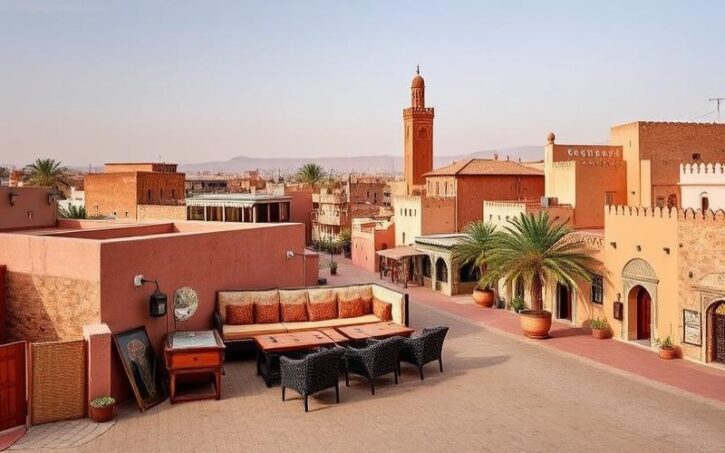
Marrakech, a flagship tourist destination, also shows high prices, especially in the medina and popular neighborhoods like Guéliz or Hivernage. Prices can reach 20,000 to 30,000 dirhams ($1,850 to $2,800) per square meter for high-end properties. In developing peripheral areas, rates are more accessible, around 7,000 to 12,000 dirhams ($650 to $1,100) per square meter.
Tangier, a city experiencing economic boom thanks to its port and free zone, is seeing a steady rise in real estate prices. In the city center and sought-after residential areas, prices range between 12,000 and 20,000 dirhams ($1,100 to $1,850) per square meter. Peripheral neighborhoods offer more affordable opportunities, with prices between 6,000 and 10,000 dirhams ($560 to $930) per square meter.
Agadir, a renowned seaside resort, shows relatively more moderate prices. In residential and tourist neighborhoods, rates vary between 10,000 and 15,000 dirhams ($930 to $1,400) per square meter. Peripheral areas offer properties starting from 5,000 dirhams ($465) per square meter.
Fez and Meknes, imperial cities rich in heritage, present more affordable prices. In modern residential neighborhoods, prices range between 8,000 and 12,000 dirhams ($740 to $1,100) per square meter. The medinas offer purchase opportunities starting from 3,000 to 5,000 dirhams ($280 to $465) per square meter for properties needing renovation.
- Casablanca: 10,000 to 40,000 dirhams/m² ($930 to $3,700)
- Rabat: 8,000 to 25,000 dirhams/m² ($740 to $2,300)
- Marrakech: 7,000 to 30,000 dirhams/m² ($650 to $2,800)
- Tangier: 6,000 to 20,000 dirhams/m² ($560 to $1,850)
- Agadir: 5,000 to 15,000 dirhams/m² ($465 to $1,400)
- Fez and Meknes: 3,000 to 12,000 dirhams/m² ($280 to $1,100)
Good to know:
Real estate prices in Morocco vary considerably from one city to another, with Casablanca leading as the most expensive city, followed by Rabat and Marrakech. Mid-sized cities like Agadir, Fez, and Meknes offer more affordable opportunities for investors.
Outlook for Change: Between Stability and Moderate Growth
The future evolution of real estate prices in Morocco will depend on several factors, including the country’s economic growth, government housing policies, and Morocco’s appeal to foreign investors.
In the short term, experts agree on relative price stability in most major cities. The health crisis related to Covid-19 had a moderate impact on the Moroccan real estate market, with a slight slowdown in transactions in 2020, but a gradual recovery since 2021.
For Casablanca, the trend is toward a slight increase in prices, especially in the most sought-after neighborhoods. Demand remains strong, driven by steady population growth and the city’s economic appeal. Analysts predict an average annual increase of 2 to 3% in the coming years.
Rabat is expected to see a similar trend, with a moderate rise in prices, particularly in new developing residential neighborhoods. The administrative capital benefits from stable demand, supported by the presence of government institutions and public companies.
Marrakech could experience a more mixed trend. While the luxury market and riads in the medina remain dynamic, driven by an international clientele, peripheral areas could see price stabilization, or even a slight decline in some sectors due to abundant supply.
Tangier should continue to benefit from its economic appeal, with prospects for moderate price increases, especially in neighborhoods near the port and free zone. Analysts expect an average annual increase of 3 to 4% in the coming years.
Agadir, which is betting on tourism and infrastructure development, could see its real estate prices rise slightly, particularly in areas near the coast and in new upscale residential projects.
For Fez and Meknes, the outlook is for stability, or even a slight increase in prices in modern neighborhoods. The renovation of medinas and the development of cultural tourism could stimulate demand and lead to a gradual appreciation of properties in historic centers.
In the longer term, several factors could influence the evolution of real estate prices in Morocco:
- The development of infrastructure and transportation, which could make certain peripheral areas more attractive
- Government policies on social housing and real estate market regulation
- Morocco’s appeal to foreign investors, particularly through residency programs
- The country’s economic growth and changes in Moroccan household purchasing power
- The development of the rental market, which could influence rental yields and thus the attractiveness of real estate investment
Good to know:
The outlook for real estate price trends in Morocco is generally positive, with a tendency toward stability or moderate increases in most major cities. Casablanca, Rabat, and Tangier are expected to see the most significant growth, while mid-sized cities offer interesting opportunities for investors seeking attractive returns.
Conclusion: A Dynamic Real Estate Market Offering Varied Opportunities
The Moroccan real estate market is characterized by great diversity, both in terms of prices and types of available properties. This heterogeneity offers opportunities for different investor profiles, whether they are looking for luxury properties in major metropolises or more affordable properties in mid-sized cities.
Major cities like Casablanca, Rabat, and Marrakech remain the market’s driving forces, with high prices but also interesting long-term capital appreciation prospects. Developing cities like Tangier offer attractive growth potential, while mid-sized cities like Agadir, Fez, and Meknes present opportunities for investors seeking higher rental yields.
It is important to note that the Moroccan real estate market is also influenced by external factors, such as changes in the global economy and tourist flows. The recent health crisis has shown the sector’s resilience but has also highlighted the importance of investment diversification.
For foreign investors, Morocco offers a relatively favorable legal framework, with simplified acquisition procedures and tax advantages for certain types of investments. However, it is crucial to thoroughly research local specifics and surround yourself with competent professionals to successfully carry out a real estate investment project in the country.
In conclusion, the Moroccan real estate market presents interesting potential for investors, with varied opportunities depending on cities and market segments. An in-depth analysis of local trends and a tailored investment strategy are essential to make the most of this dynamic and constantly evolving market.
Disclaimer: The information provided on this website is for informational purposes only and does not constitute financial, legal, or professional advice. We encourage you to consult qualified experts before making any investment, real estate, or expatriation decisions. Although we strive to maintain up-to-date and accurate information, we do not guarantee the completeness, accuracy, or timeliness of the proposed content. As investment and expatriation involve risks, we disclaim any liability for potential losses or damages arising from the use of this site. Your use of this site confirms your acceptance of these terms and your understanding of the associated risks.

Cyril Jarnias is an independent expert in international wealth management with over 20 years of experience. As an expatriate himself, he is dedicated to helping individuals and business leaders build, protect, and pass on their wealth with complete peace of mind.
On his website, cyriljarnias.com, he shares his expertise on international real estate, offshore company formation, and expatriation.
Thanks to his expertise, he offers sound advice to optimize his clients' wealth management. Cyril Jarnias is also recognized for his appearances in many prestigious media outlets such as BFM Business, les Français de l’étranger, Le Figaro, Les Echos, and Mieux vivre votre argent, where he shares his knowledge and know-how in wealth management.





