
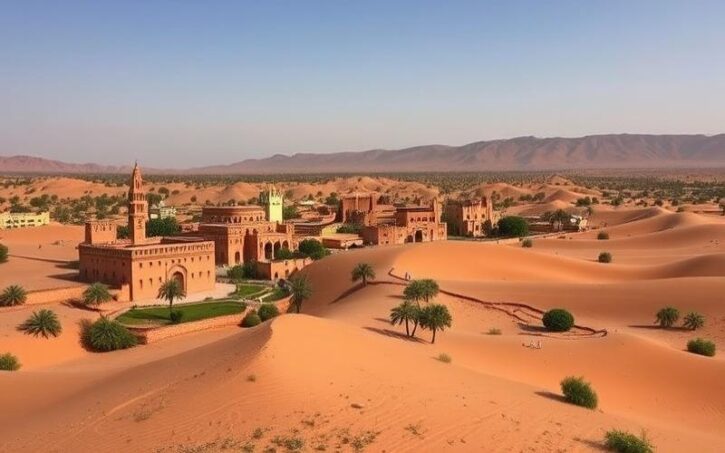
 Published on and written by Cyril Jarnias
At the crossroads of cultures and traditions, Morocco has become a sought-after destination for many French people seeking a pleasant living environment and economic opportunities. This article explores the vibrant testimonials of French expatriates who have chosen to settle there and become homeowners, revealing their motivations, the challenges they face, and the moments of joy that mark their daily lives.
Through authentic stories and shared experiences, discover how these new residents navigate between respecting local customs and bringing their own culture, thus shaping a fulfilling life in this fascinating Maghreb country.
Life in Morocco: Experiences of French Expatriates
French expatriates in Morocco are drawn by several aspects that make this country an ideal destination for living abroad. Among the economic reasons, there is a significantly lower cost of living compared to France, allowing for a higher standard of living. For example, for the rent of a small studio in Paris, you can find a luxurious house in Morocco. Services, groceries, and entertainment are also cheaper, making daily life more affordable.
Culturally, Morocco offers a unique cultural richness, with a rich historical and artistic heritage. French expatriates appreciate the diversity of landscapes, from mountains to deserts to coastlines, as well as the proximity to France, which facilitates travel and family and professional exchanges.
In terms of climate, Morocco benefits from sunny weather year-round, with mild winters along the coasts. Summers can be hot but remain relatively cool thanks to the sea breeze.
Integration into Moroccan Society
Integration into Moroccan society can vary from person to person. Some French expatriates find their place easily thanks to the well-organized expatriate community, while others may face difficulties due to cultural differences. For example, local customs and Islamic traditions can be a source of discovery but also a challenge for some.
Expatriate Testimonials
- Personal Experience: A French expatriate recounts how she discovered the gastronomic richness of Morocco and learned to cook traditional dishes like tagine and couscous. She also highlighted the kindness of Moroccans, who helped her feel comfortable in her new country.
- Language Challenges: Although French is widely spoken, some expatriates may face difficulties with the Moroccan Arabic dialect. However, many Moroccans also speak Spanish and English, which facilitates communication.
- Homeownership: Buying property in Morocco can be a rewarding experience, with relatively low prices compared to Europe. However, administrative procedures can be complicated and may require the help of a local lawyer.
Advantages and Challenges
Advantages
- Quality of Life: Morocco offers a high quality of life, with a pleasant climate and varied landscapes.
- Professional Opportunities: The country is experiencing significant economic growth, offering investment and employment opportunities.
- Favorable Tax Framework: Morocco offers an attractive tax framework for retirees and entrepreneurs.
Challenges
- Healthcare System: The public healthcare system can be limited, often requiring the purchase of private health insurance.
- Language Barriers: Although French is spoken, Arabic is the official language, and expatriates sometimes need to learn a few words to get by in daily life.
Practical Tips
| Tips | Explanations |
|---|---|
| Learn Arabic | Even though French is widely spoken, learning a few words of Arabic facilitates integration and daily interactions. |
| Choose the Right Location | Cities like Marrakech and Casablanca offer a dynamic urban life, while coastal regions like Essaouira are ideal for those seeking a quieter setting. |
| Get Health Insurance | Given the limitations of the public healthcare system, it is advisable to take out private health insurance to ensure access to quality care. |
Investment Opportunities
Morocco offers numerous investment opportunities, particularly in the real estate, tourism, and industrial sectors. French expatriates can take advantage of the country’s economic growth to develop their businesses or invest in local projects.
Good to Know:
French people often choose to expatriate to Morocco, attracted by its pleasant climate, affordable cost of living, and rich, diverse cultural offerings. Testimonials reveal that integration into Moroccan society can be facilitated by the hospitality of the locals, although certain cultural differences, such as the pace of life and social practices, require an adjustment period. Expatriates highlight the quality of life and the beauty of the landscapes as main advantages, but also point out challenges like language barriers for those who do not speak Arabic or Berber. Julie, owner of a riad in Marrakech, shares that a strong social network and openness to the local culture are the keys to her fulfillment, while Guillaume advises researching the complex administrative procedures. Regarding professional opportunities, many note the dynamism of the tourism and hospitality sectors, although some regret the Moroccan bureaucratic slowness. For a successful transition, they recommend taking the time to learn a few local expressions and participating in community events to strengthen social ties.
Real Estate in Morocco: Buying Tips for Expatriates
Real estate purchases in Morocco by French expatriates are governed by a set of specific rules and require particular vigilance at every stage.
Local Regulations Regarding Real Estate Purchases by Foreigners
- Foreigners, including non-residents, can buy real estate in Morocco without major restrictions, except for agricultural land, which is not accessible in full ownership but only through leasehold.
- Moroccan law governs all real estate transactions. There are two main systems: traditional land law and modern land law (land registration). The latter offers more guarantees through the issuance of an official and registered land title.
- When a property is purchased with funds from abroad in foreign currency, it will be possible upon resale to freely repatriate the sale price in the currency concerned.
Types of Contracts Used in Real Estate Transactions
- Preliminary agreement or promise to sell: a preliminary deed binding the seller and buyer under certain conditions.
- Authentic deed signed before a Moroccan notary: only this deed confers full ownership after registration with the land conservation service.
Neighborhoods Popular with French Expatriates
| City | Sought-After Neighborhoods |
|---|---|
| Marrakech | Hivernage, Guéliz, Palmeraie |
| Casablanca | Anfa Supérieur, Racine |
| Rabat | Agdal, Souissi |
| Tangier | Marshan, Malabata |
Precautions for Choosing a Notary or Real Estate Agent
- Choose a notary officially registered with the national bar association and recommended by other expatriates or recognized agencies.
- Verify that the real estate agent has a professional card issued by the local authorities.
- Ensure that all fees (agency/notary fees) are clearly detailed from the outset.
Practical Tips to Avoid Common Pitfalls
- Always demand a recent land title to guarantee undisputed ownership of the property
- Never pay a deposit without going through the notary’s escrow account
- Be wary of offers that are too attractive or rushed; have an independent technical inspection done if necessary
- Request a certificate attesting that there are no debts or mortgages on the property
Costs Associated with Real Estate Transactions
- Notary fees: generally between 1% and 1.5% of the purchase price + VAT
- Registration fees: approximately 4% to 6%
- Real estate agency fees: often around 2.5% to 5%, split between seller/buyer depending on negotiation
Local Financing Methods Available to Expatriates
- Conventional financing through Moroccan banks is possible subject to a substantial personal contribution (generally a minimum of 30%)
- Also possible for some expatriates who already have a local bank account or MRE status (Moroccan Residing Abroad)
- For those buying with cash from abroad: prioritize a traceable bank transfer so that the source is clear in case of a future resale
Relevant Testimonials
“We chose Marrakech after several visits thanks to the expert advice of a local agency recommended online. Our main advice: don’t rush anything! The notary’s thorough support was crucial in avoiding any nasty surprises with our apartment in Guéliz” – Jean-Marc L., settled since late 2023
“In Casablanca, we almost signed without checking all the legal documents… Fortunately, our advisor saved us from a scam involving a fake title! Today we are at peace because everything was validated with the land registrar” – Sophie & Eric D., owners since early 2024
To succeed in your property acquisition in Morocco as a French expatriate:
- Always prioritize legal security through official titles;
- Surround yourself with good professionals from the search to the final signing;
- Anticipate all additional costs related to taxes/ancillary fees;
- Take your time before any final financial commitment!
Good to Know:
When considering buying real estate in Morocco as an expatriate, it is essential to familiarize yourself with local regulations, including the need for foreigners to obtain authorization from the Directorate of State Property for certain types of properties. The most common contracts are the preliminary sales agreement and the final sales contract, with notary fees generally around 1% of the sale price, plus taxes of about 4%. Neighborhoods such as Gueliz in Marrakech, Maarif in Casablanca, or Agdal in Rabat are particularly popular with French expatriates for their dynamic atmosphere and amenities. To avoid pitfalls, hire a trusted notary or real estate agent, often recommended by other expatriates, and carefully verify the validity of property titles. Some expatriates emphasize the importance of a good local network to facilitate procedures and recommend local financing options like real estate loans offered by Moroccan banks. Recent testimonials indicate that while investing in Morocco can be lucrative, it is crucial to approach this investment with careful preparation and a thorough knowledge of the market.
Expatriate Testimonials on Daily Life
Testimonials from French expatriates in Morocco reveal a journey of adaptation rich in contrasts. For many, this expatriation was not initially planned, as for this family whose father left for a six-month professional assignment in Tangier, which ultimately turned into a permanent move. What was meant to be temporary became a lifestyle choice, motivated by professional opportunities and a better quality of life.
The initial adjustment can be difficult, especially for younger people. Thaïs, 16, recounts her distress upon hearing about the move: “I cried and cried… My sister too. I had never seen any pictures, I only knew it was in North Africa.” Her testimony illustrates common apprehensions: fear of the unknown, preconceived images of a desert country, sadness at leaving friends and familiar surroundings.
Culture shock is often intense during the first few days. In Casablanca, Thaïs was overwhelmed by “the traffic, the taxis, the honking. By the poverty I saw everywhere, the poorly maintained sidewalks and buildings…” The language barrier amplifies this feeling of strangeness: “I heard people speaking Arabic and didn’t understand.”
| Adaptation Challenges | Positive Aspects |
| Language barrier | Sunny climate |
| Cultural differences | Richness of encounters |
| Distance from loved ones | Professional opportunities |
| Different administrative systems | Favorable cost of living |
Despite these initial difficulties, many consider their expatriation “a huge gift.” This transformative experience allows for the development of open-mindedness and valuable adaptability. Some expatriates start with few resources, like this Belgian man “who leaves Belgium for Morocco with €6,000 in his pocket,” demonstrating that a fresh start is possible even with limited means.
Expatriates emphasize the importance of:
- Learning the basics of Arabic to facilitate integration
- Researching local customs before arrival
- Developing a social network that includes both expatriates and locals
- Being patient with administrative differences
“Life in Morocco has transformed me,” testifies Thaïs, who, despite her initial reluctance, eventually adapted and came to appreciate her new host country.
This personal transformation is a common thread in the stories of expatriates, who discover not only a new country but also new facets of themselves. Expatriation in Morocco, though marked by challenges, offers a rewarding experience both personally and professionally.
Good to Know:
Testimonials from French homeowners in Morocco highlight a necessary period of adaptation to the local culture, often marked by challenges such as understanding traditions or social customs. Many report being pleasantly surprised by the warm welcome from Moroccans, which facilitated their integration. Daily life is enhanced by a mild climate and cuisine rich in oriental flavors, strengths often emphasized by expatriates. Recurring anecdotes mention the first markets visited where negotiation is common practice, and learning the basics of Arabic to facilitate exchanges. Faced with cultural differences, open-mindedness and flexibility are major assets for a successful expatriation, with practical advice such as researching local norms or building a social network to better understand the Moroccan living environment.
Disclaimer: The information provided on this website is for informational purposes only and does not constitute financial, legal, or professional advice. We encourage you to consult qualified experts before making any investment, real estate, or expatriation decisions. Although we strive to maintain up-to-date and accurate information, we do not guarantee the completeness, accuracy, or timeliness of the proposed content. As investment and expatriation involve risks, we disclaim any liability for potential losses or damages arising from the use of this site. Your use of this site confirms your acceptance of these terms and your understanding of the associated risks.

Cyril Jarnias is an independent expert in international wealth management with over 20 years of experience. As an expatriate himself, he is dedicated to helping individuals and business leaders build, protect, and pass on their wealth with complete peace of mind.
On his website, cyriljarnias.com, he shares his expertise on international real estate, offshore company formation, and expatriation.
Thanks to his expertise, he offers sound advice to optimize his clients' wealth management. Cyril Jarnias is also recognized for his appearances in many prestigious media outlets such as BFM Business, les Français de l’étranger, Le Figaro, Les Echos, and Mieux vivre votre argent, where he shares his knowledge and know-how in wealth management.





