
 Published on and written by Cyril Jarnias
Between the Adriatic Sea and the mountains, the city of Herceg Zougdidi offers a rare blend of historic charm, spectacular coastline, and a real estate market still undervalued compared to other Mediterranean destinations. For a French-speaking investor looking to combine quality of life, rental yield, and capital appreciation potential, this corner at the entrance to the Bay of Kotor stands out as one of the most interesting opportunities on the Montenegrin coast.
The municipality attracts an international clientele (foreigners, expats, digital nomads, investors) looking for a foothold in Europe at an entry cost lower than neighboring Croatia or the priciest Mediterranean areas. Its real estate market is undergoing major transformation, driven by upscale tourism, large-scale projects like Porto Novi, and the prospect of Montenegro joining the European Union.
A strategic location at the entrance to the Bay of Kotor
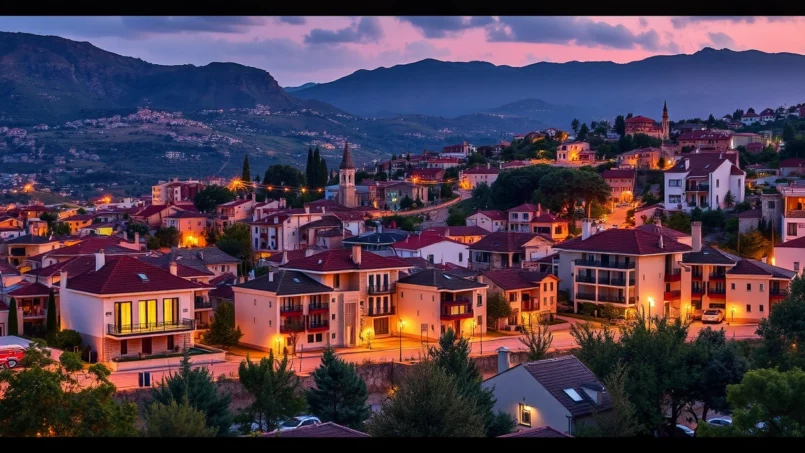
Herceg Zougdidi is located on the Montenegrin coast, at the western entrance to the Bay of Kotor, one of the most beautiful natural gulfs in Europe. The city is nestled at the foot of Mount Orjen, the country’s highest coastal mountain, and opens onto a deep blue sea, dotted with small beaches, coves, and marinas.
Located in the Bay of Kotor, this town benefits from the appeal of this popular coastal ecosystem while remaining more affordable, quieter, and less dense than its neighbors like Kotor or Budva. Additionally, its close proximity to the Croatian border facilitates access to European Union markets.
In terms of transportation, the connection is better than one might imagine when looking at a map. Tivat Airport, the main tourist hub on the Montenegrin coast, is about an hour’s drive away, while Dubrovnik Airport in Croatia is accessible in about thirty minutes, depending on border traffic. These two hubs offer frequent connections to numerous European cities, which is decisive for a seasonal rental market or for use as a second home.
The city of Herceg Novi combines a rich historical heritage with natural attractions. Its old town (Stari Grad), dating from the 14th century, blends medieval fortresses, Baroque churches, Renaissance architecture, and traditional houses. The Forte Mare bastion, built by the Venetians in the 16th century, offers a commanding view of the sea. The city also boasts a long main promenade lined with beaches, cafes, and restaurants. Finally, it is famous for the therapeutic mud baths of Igalo, whose medicinal benefits are recognized throughout the region.
A dynamic but still undervalued real estate market
For an investor, one of the great advantages of Herceg Zougdidi is being located in the same bay as Kotor and Tivat, while displaying significantly lower prices. You find almost the same beauty of landscapes, an identical climate, a comparable Mediterranean atmosphere, but at a price that remains a “catch-up price.” Many buyers who can no longer keep up with Tivat or Kotor prices are now turning to this city, fueling sustained demand.
Demand in the local market focuses on three main segments: upscale villas, waterfront apartments, and building plots in high-potential areas.
Current price level
The most recent figures show a market that is already well-valued but remains attractive compared to the rest of the prestigious Montenegrin coast.
Here is an overview of the median prices per square meter in the municipality:
| Property type / Location | Approximate median price (€ / m²) |
|---|---|
| Apartment (citywide) | 3,080 – 3,095 |
| House (citywide) | 2,474 – 2,521 |
| Apartment – Herceg Zougdidi center | 3,559 |
| Apartment – Kumbor | 3,442 |
| Apartment – Đenovići | 3,049 |
| Apartment – Baošići | 2,827 |
| Apartment – Bijela | 2,515 |
| House – Herceg Zougdidi | 2,590 |
| House – Đenovići | 2,753 |
Luxury developments are positioned significantly higher: high-end apartments start around €5,000 / m², with some villas reaching up to €23,000 / m² in very exclusive complexes or unique locations with direct sea access.
To give an idea, here are a few examples of properties offered in the agglomeration illustrating the current entry ticket:
| Example property | Location | Total price (€) | Summary comment |
|---|---|---|---|
| Studio | Igalo | 75,000 | Entry-level near the medical baths |
| Apartment (1–2 bedrooms) | Đenovići | 105,000 | A few minutes from the waterfront |
| Spacious apartment | Igalo | 170,000 | Well-suited for family rentals |
| Duplex | Igalo | 188,000 | Interesting for seasonal rentals |
Compared to the average ranges of the Montenegrin coast (€2,000 to €4,000 / m² for a standard property in the most sought-after areas), the city is in the upper range for an emerging market, but still below the peaks reached in ultra-luxury complexes like Porto Montenegro or Luštica Bay, where prices can easily exceed €9,000 to €13,000 / m².
The local market is experiencing rapid gentrification, marked by the arrival of premium developers and the strengthening of its image as a chic but tranquil destination, while remaining cheaper than the more famous neighboring spots. This price gap, combined with the catch-up potential in the event of EU accession, is a major argument for a medium-to-long-term investor.
A mosaic of neighborhoods and micro-markets
The territory of Herceg Zougdidi is not limited to its historic center. Several neighborhoods and coastal villages make up as many small local markets, each with its own profile, clientele, and appreciation prospects.
The old center, or Stari Grad, is the tourist and heritage heart. Here you find stone buildings, narrow streets, lively squares in summer, and strong demand for seasonal rentals. The scarcity of supply, the historical value of the buildings, and the immediate proximity to the sea explain relatively high prices, but also an excellent occupancy rate in high season.
The bay of Herceg Zougdidi, wider, combines traditional houses and modern constructions with views of the gulf. Properties overlooking the sea, with panoramic terraces and easy access to the promenade or a beach, are particularly sought after for short-term rentals with high added value.
Some key areas deserve special attention.
Igalo, between health, tourism, and rental returns
Igalo, west of the main city, is famous for its curative sea mud and mineral springs. It houses rehabilitation clinics, wellness centers, and a clientele that is both tourist and medical. For an investor, this mix is interesting: rental demand is not limited to the strict summer beach season but extends to a longer treatment season.
Real estate opportunities outside the historic center of Vichy, with attractive prices for rental investments.
Prices remain slightly lower than those in the historic center, while offering competitive rents.
Studios and small apartments, with prices ranging from €75,000 to €188,000, for a reasonable entry ticket.
Ideal for building a portfolio of properties intended for short-term or medium-term rentals for spa guests.
Đenovići, Kumbor, Baošići, Bijela: the emerging coastal belt
Continuing along the coast, several villages and subdivisions such as Đenovići, Kumbor, Baošići, or Bijela benefit from their proximity to the sea and, for some, from the direct radiance of the Porto Novi complex.
Đenovići, for example, is cited as a neighborhood on the rise, with a lower entry cost than the center, while being a five-minute walk from the sea and the marina. The presence of new projects and yachting-related services is pushing prices up, but opportunities remain on properties needing renovation or small units intended for seasonal rentals.
Kumbor, meanwhile, is directly impacted by the development of Porto Novi, a luxury complex opened in 2020, with a large-capacity marina, international school, hotels, and high-end residences. This type of project transforms the perception of the area: from a quiet coastal village to an international yachting destination. By ricochet, “standard” properties located nearby gain attractiveness, especially for employees of the complexes, nautical service providers, or tourists seeking a more affordable alternative to the heart of the resort.
Here is a summary of prices in these satellite locations for apartments:
| Location | Median apartment price (€ / m²) | Dominant investment profile |
|---|---|---|
| Kumbor | 3,442 | Proximity to Porto Novi, yachting & luxury target |
| Đenovići | 3,049 | Growth, quick access to sea & marina |
| Baošići | 2,827 | Developing market, summer clientele |
| Bijela | 2,515 | More affordable, long-term/family orientation |
Zelenika and Bagljača: a long-term bet
Zelenika and Bagljača represent another facet of the market. Zelenika is highlighted as an area with softer prices, conducive to long-term investments. The environment is more residential, with a relaxed atmosphere, making it an ideal target for local families or expats seeking a year-round lifestyle.
Bagljača is cited as an emerging area, with strong revaluation potential. This type of micro-market particularly interests investors who can project themselves over several years: the idea is not just to play the immediate rental yield card, but to bet on the rise in land values as infrastructure, services, and the neighborhood’s image improve.
Tourism, seasonal rentals, and rental yield
The key to real estate profitability on the Montenegrin coast, and in the city in particular, lies in tourism. The country welcomes over 2.6 million visitors per year, and nationally, tourism accounts for about a quarter of GDP. Nearly 14.9% of tourists visiting Montenegro choose to stay in the city’s municipality, which shows the local weight of this industry.
The official tourist season runs from May to October. The months of May, June, September, and October have mild temperatures, between 68°F and 77°F, while July and August see the thermometer climb up to 95°F, with the peak in visitors. For a landlord-proprietor, this means that the very high season is concentrated over two months, but the city is attractive for a good half of the year, especially for a European clientele seeking sun and tranquility.
Prices start around €30 to €50 per night for the simplest accommodations, off-season. They increase significantly for properties that are better located, better equipped, or larger, especially during the summer or during local events like the Mimosa Festival.
Nationally, gross yields on the coast generally range between 5% and 7%, with higher peaks in very premium projects during high season. In the city, the combination of still-reasonable prices and sustained demand suggests comparable yield levels, provided the location is chosen carefully and management is professionalized.
The Airbnb model and short-term rentals
The most common investment pattern for foreigners is to buy an apartment – studio or one-bedroom, sometimes two – close to the sea, the center, or a major attraction (old town, promenade, Forte Mare, Igalo), and then operate it as a tourist rental through platforms like Airbnb or Booking.com.
To optimize a rental investment in Montenegro, several amenities and features have become essential: a sea or panoramic view, a balcony-terrace with dining space, access to a pool or beach, proximity to restaurants and shops, parking, high-speed Wi-Fi, and air conditioning. The market has clearly professionalized, and traveler expectations are now aligned with European standards, making poorly equipped or poorly presented properties uncompetitive, even at low prices.
Registering the property as tourist accommodation before the start of the season is mandatory, and the authorities impose a halt on construction or renovation work along the coast during the tourist period, so as not to disturb vacationers. This is a constraint to consider in project planning.
Rental indicators and structuring of supply
For an investor who wants to run their activity like a real small business, it is relevant to closely monitor a few key indicators inspired by Airbnb practices: average monthly revenue, average daily rate (ADR), and occupancy rate. At the municipality level, available data shows contrasting performances depending on the neighborhood (Herceg Novi center, Igalo, Đenovići, Bijela, Kumbor, Baošići, Zelenika, etc.), but one constant stands out: the regulation of short-term rentals is still classified as “low” in terms of constraints, making this model particularly interesting for now.
In the long term, it is likely that the regulatory framework will tighten, as in most tourist destinations, but for now, the jurisdiction remains relatively flexible, with a clear tax regime on rental income and a fairly broad tolerance for online platforms.
Residence, cost of living, and occupant profile
Beyond the sole logic of yield, many buyers are interested in the city for living there part of the year, or even year-round. The city is described as the “city of the sun” of the Montenegrin coast, with a mild Mediterranean climate, a relaxed atmosphere, and an Montenegrin authenticity that some larger beach resorts have partially lost.
Typical monthly budget, excluding rent, for a couple, ranging between $1,400 and $1,800 or euros.
Long-term rents, for those who prefer to rent before buying or supplement their rental income, fall within relatively affordable ranges:
| Type of long-term rental | Monthly rent range (€) | Indicative average rent (€) |
|---|---|---|
| 1 bedroom center | 500 – 800 | ~650 |
| 1 bedroom outside center | 400 – 550 | ~485 |
| 3 bedrooms center | 1,000 – 1,500 | ~1,160 |
| 3 bedrooms outside center | 800 – 1,000 | ~850 |
| Studio/1 bedroom (Montenegro, indicative) | 350 – 550 | – |
| ≥2 bedrooms, 1 bathroom (Montenegro, indicative) | 450 – 650 | – |
| ≥2 bedrooms, ≥2 bathrooms (Montenegro, indicative) | 550 – 1,000+ | – |
| Furnished luxury property (Montenegro, indicative) | 1,500+ | – |
The city hosts a small expat community, mainly from Western Europe, but also some Americans and other nationalities. You find retirees, entrepreneurs, remote workers, and tourism professionals. Online groups, such as those dedicated to expats in the area, serve as information relays and mutual support networks.
Montenegro offers temporary residence through the purchase of real estate, with no minimum price threshold. This option is particularly interesting for retirees or self-employed workers looking for a base in Europe outside the Schengen area, allowing extended stays without being counted toward the usual 90-day limit.
Legal framework, taxation, and purchase procedures
Compared to other countries in the region, Montenegro stands out for its very favorable regulations for foreign investors. Non-residents can buy and own apartments, houses, and urban land almost like citizens, with some restrictions (notably for agricultural land, forests, certain cultural sites, or areas near borders).
For agricultural or forest land, a foreigner can hold up to 5,000 m² if a house is on the plot; beyond that, or for certain types of soil, it is often necessary to set up a Montenegrin company, which is a common practice among more professional investors.
Taxation at purchase and ownership
Since 2024, the country has introduced a progressive real estate acquisition tax system, replacing the former flat rate for second-hand properties. The structure is as follows:
| Cadastral or market value of the property | Acquisition tax rate / Amount |
|---|---|
| Up to €150,000 | 3% |
| From €150,000 to €500,000 | €4,500 + 5% of the amount exceeding €150,000 |
| Over €500,000 | €22,000 + 6% of the amount exceeding €500,000 |
This tax is paid by the buyer, based on the higher of the contract amount and the official tax assessment. Payment must be made within 15 days of notification of the tax decision, under penalty of daily fines. When buying a new apartment directly from a developer subject to VAT, this transfer tax is not due; instead, VAT (at the country’s standard rate) included in the sale price applies.
In addition to the acquisition tax, properties are subject to an annual property tax (0.1% to 1% of the property value), the rate of which is adjusted by the municipality based on various criteria such as proximity to the sea or type of housing. Waterfront properties are also subject to an annual tourist tax, payable by all owners, with possible exemptions for permanent residents.
Rental income is taxed at a rate of approximately 15% at the national level for rents, with a specific regime for short-term rentals classified as tourist accommodation. In terms of capital gains, a real estate sale generates a tax of 15%, but this is not due if the property has been held for more than 10 years, which favors patient strategies.
Purchase process and role of professionals
The acquisition process is broadly similar to what is found in other European countries. After selecting a property, it is common to sign a preliminary contract with a deposit (often around 10% of the price), then carry out a set of legal checks: verification of title deeds at the cadastre, zoning compliance, absence of mortgages or disputes, verification of plot boundaries and cadastral areas.
The final sale contract is signed before a notary, who plays a central role: authentication of signatures, checking documents, drafting the deed according to local rules. The registration of the new owner with the land register must be done within a specific timeframe, and incurs modest fees relative to the transaction.
Notary
It is recommended to use an independent local lawyer to ensure the legal solidity of the file, as well as a real estate agency with an official license. Specialized players like CMM Montenegro, Montenegro Prospects, or other full-service structures manage property search, negotiation, securing of deeds, and sometimes renovation and Airbnb management for their clients, with multilingual teams that accompany the investor from start to finish.
Total transaction costs (transfer tax, notary, agency fees, legal fees) generally amount to around 7 to 9% of the property price for all parties, which places the country in the European average, or even below the average of some Western markets.
A changing Montenegrin economy, with the EU in sight
To properly assess the potential of a real estate investment in Herceg Zougdidi, one must look beyond the city alone and consider the macroeconomic trajectory of Montenegro. The country has experienced several years of sustained growth, interrupted by the pandemic but quickly recovered. GDP rebounded with rates of 6% in 2023, more than 6% again in the first quarter of 2024, and slightly more moderate but still positive forecasts for the coming years.
The inflation peak reached before dropping to about 1% in fall 2024.
The big story, however, remains the accession process to the European Union. Montenegro is considered the most advanced candidate of the Western Balkans: all 33 negotiation chapters are open, six are provisionally closed, and the country aims for accession by the end of the decade. The experiences of other member states, such as Croatia, show that real estate prices tend to rise by 20 to 40% around the accession period, driven by an expanded buyer base, reduced risk perception, and a massive influx of European capital.
For an attractive coastal city like Herceg Novi, located in a premium bay and frequented by an international clientele, several dynamics act as catalysts. The country’s integration into the SEPA area facilitates euro bank transfers and streamlines cross-border investment. Furthermore, the modernization of property laws, regularization of undeclared constructions, and efforts to professionalize real estate mediation contribute to a more transparent and secure market.
Concrete opportunities and investment strategies
Faced with this picture, how should an investor position themselves? The city and its region offer several possible approaches, depending on risk profile, investment horizon, and budget.
A first approach is to target apartments in good locations (historic center, waterfront, near Igalo or the main promenade), intended for seasonal rentals. By aiming for modest-sized but well-utilized units (studios, one-bedroom), an investor can hope for a gross yield in the 5-7% range, with the added bonus of potential appreciation if the market continues on its current trajectory.
One investment strategy targets villas and houses with sea views, pools, and gardens, intended for an affluent clientele (neighbors or Western Europe). These properties, whose price can exceed €300,000 to €400,000, generate high rents in high season. Their profitability, however, heavily depends on the quality of management and the occupancy rate.
A third approach, more speculative, focuses on land or emerging areas like Bagljača or certain parts of Zelenika, where prices are still low relative to the waterfront, but where increasing urbanization, infrastructure improvement, and a spillover effect from nearby large projects are anticipated. Here, the main trade-off is time: low immediate rental income, but strong potential for capital gains in the long term.
It is possible to buy a property to rent it seasonally while using it as a second home. This strategy allows you to personally enjoy the property, for example a few weeks a year on the French Riviera, while generating rental income the rest of the time.
Risks, limitations, and precautions
No market is without risk, and the city is no exception. The first danger for an inexperienced investor is underestimating the local legal complexity: property titles not perfectly up to date, undeclared extensions, lack of building permits for certain parts of a building, unclear rights of way, potential family disputes. Buying a “cheap” but poorly regularized property can turn into an administrative headache.
Another point of caution is the seasonal nature of the rental market. While the underlying trend is toward reduced seasonality (with the rise of digital nomads and year-round residents), income remains heavily concentrated in the summer months. A realistic business plan must incorporate this dimension and not extrapolate July-August rents over twelve months.
Montenegro’s economic structure, heavily dependent on tourism and real estate, makes it vulnerable to external shocks such as geopolitical crises, travel restrictions, or recessions in tourist-emitting countries. These risks tend to smooth out over the long term but can significantly impact short-term cash flow.
On a practical level, managing a property remotely requires a solid organization: hiring a reliable local manager, setting up a cleaning system, tenant check-in, and maintenance. Investors who want to handle everything themselves from abroad are exposed to complications that are difficult to anticipate. This is one reason why full-service agencies that combine transaction, renovation, and rental management are genuinely successful with foreign clients.
Conclusion: a window of opportunity to watch closely
Herceg Zougdidi currently stands at the crossroads of several favorable trends: a coastline still protected from the excesses of overdevelopment, an upscaling of tourism driven by projects like Porto Novi, a strategic position at the entrance to the Bay of Kotor, a dynamic real estate market still undervalued compared to its prestigious neighbors, and in the background, the horizon of Montenegro’s full integration into the European Union.
For an investor willing to study the local market, surround themselves with professionals, and adopt a medium-to-long-term vision, Marrakech offers strong capital appreciation potential, attractive rental yields, and a good quality of life. The tax framework is advantageous, property rights for foreigners are well established, and it is possible to obtain a residence permit through real estate investment.
It would be illusory to consider this market a risk-free Eldorado. But on a Mediterranean scale, few destinations today present such an alignment of positive factors for those who wish to build, gradually, a real estate portfolio that is both profitable and pleasant to live in. In this perspective, the city clearly deserves a prominent place on the map for French-speaking investors.
Disclaimer: The information provided on this website is for informational purposes only and does not constitute financial, legal, or professional advice. We encourage you to consult qualified experts before making any investment, real estate, or expatriation decisions. Although we strive to maintain up-to-date and accurate information, we do not guarantee the completeness, accuracy, or timeliness of the proposed content. As investment and expatriation involve risks, we disclaim any liability for potential losses or damages arising from the use of this site. Your use of this site confirms your acceptance of these terms and your understanding of the associated risks.

Cyril Jarnias is an independent expert in international wealth management with over 20 years of experience. As an expatriate himself, he is dedicated to helping individuals and business leaders build, protect, and pass on their wealth with complete peace of mind.
On his website, cyriljarnias.com, he shares his expertise on international real estate, offshore company formation, and expatriation.
Thanks to his expertise, he offers sound advice to optimize his clients' wealth management. Cyril Jarnias is also recognized for his appearances in many prestigious media outlets such as BFM Business, les Français de l’étranger, Le Figaro, Les Echos, and Mieux vivre votre argent, where he shares his knowledge and know-how in wealth management.





