
 Published on and written by Cyril Jarnias
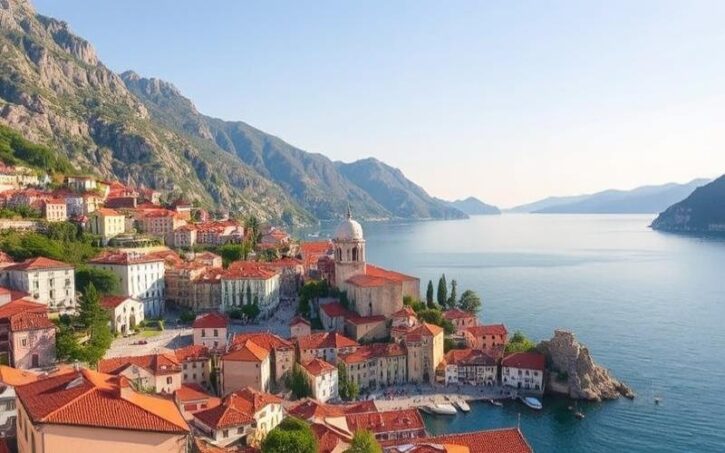
Tucked away at the end of a Mediterranean fjord, surrounded by steep mountains and protected by UNESCO, the city of Kotor has been attracting both tourists and real estate investors in recent years. The market is described as “hot“: demand clearly exceeds supply, prices are rising quickly, and quality properties sometimes sell within just a few weeks.
Investing in Kotor offers potential driven by growing tourism and the prospect of EU accession. However, one must contend with land scarcity, strict regulations in the historic center, specific tax rules, and a highly competitive seasonal rental market.
This guide provides a comprehensive, data-driven, and concrete overview to understand how and why to invest in real estate in the city of Kotor, which areas to target, what types of properties to choose, what returns to expect, and what precautions to take to avoid pitfalls.
A dynamic market, fueled by tourism and foreign investors
The real estate market in Kotor has experienced continuous growth for several years. Prices rose particularly dramatically between 2023 and 2024, with increases of up to 50% in some sectors. Across all Montenegrin coastal cities, the average price per square meter in the second quarter of 2024 was around €2,107, up 49.1% year-over-year. In Kotor, values often exceed this average, especially in the Old Town and waterfront areas.
Available data shows that the average price in Kotor was around €2,230/m² in 2023, then approximately €2,500/m² in 2024, representing a progression of over 12% in one year against an already tight market. Over the last five years, the price range for apartments has moved from €1,500–1,800/m² to €2,250–3,900/m², depending on location and quality.
Projected annual appreciation rate for the premium segments of the real estate market.
Several factors explain this dynamic. First, tourism: Montenegro welcomed over 2.6 million visitors in 2023 and over 15 million overnight stays in 2024, the majority being international tourists. Kotor is one of the epicenters of this influx, also driven by cruise ships: on some days, more than 5,000 cruise passengers pour into the alleys of the Old Town, filling cafes, restaurants, and short-term rentals.
International buyers, notably from Germany, the United Kingdom, Russia, the Middle East, Turkey, Serbia, the United States, and the United Arab Emirates, dominate real estate transactions on the Montenegrin coast. Their motivations include seasonal rental, second homes, and anticipation of appreciation linked to the country’s potential accession to the European Union.
Montenegro uses the euro as its official currency, which eliminates exchange rate risk for European investors and simplifies profitability calculations. The country has a relatively transparent legal framework, converging towards European standards, and real estate taxation that is lighter than in many competing Mediterranean destinations.
How much does a property cost in Kotor?
The Kotor market is highly segmented: between a small apartment inland, a traditional stone house needing renovation in the bay, and a contemporary villa with a pool on the waterfront, the price ranges are incomparable. It is essential to understand price ranges by property type and location.
Price ranges by property type
The most recent data reveals fairly clear ranges.
| Property Type | Indicative Price per m² | Typical Positioning |
|---|---|---|
| Standard Apartment | €2,000 – €3,500/m² | Primary residence / rental investment |
| Apartment in the Old Town | €2,500 – €3,500/m² | Tourism, seasonal rental |
| Luxury Apartment | up to €8,000/m² | Waterfront, high-end residences |
| Old Stone House | €2,500 – €3,000/m² | Heritage, renovation projects |
| Villa (Sea View / Waterfront) | €4,000 – €7,000/m² | Luxury segment |
| Premium Villas (Dobrota/Perast) | €3,500 – €10,000+/m² | Ultra-high-end, land scarcity |
In terms of overall budget, it can be summarized as follows:
| Approximate Total Budget | Accessible Property Type |
|---|---|
| ~€100,000 | Small apartment outside the center, or land in Grbalj / Radanovići |
| ~€200,000 | 1–2 bedroom apartment or small stone house needing renovation in Kotor or Dobrota |
| ~€500,000 | Modern 2–3 bedroom apartment with sea view, or renovated stone house in Dobrota / Muo / Prčanj |
| €1,000,000 and above | Luxury villa with pool, or premium waterfront property in Perast, Dobrota, or the Old Town |
Available listings confirm this range: simple properties start around €100,000, while exceptional villas regularly exceed one million. A concrete example: an apartment of about 51 m² in the historic heart can sell for around €150,000–170,000, taxes and renovation included.
Average price per square meter across the entire Montenegrin coast in the second quarter of 2024.
Where to invest in Kotor? Overview of key neighborhoods and villages
The choice of neighborhood determines both the purchase price, the type of tenants, the seasonality of income, and even legal constraints, particularly in a UNESCO-listed site. The city of Kotor and its bay offer a fairly wide range of micro-markets.
Old Town (Stari Grad): UNESCO heritage and tourist cash flow
The fortified center of Kotor, protected by UNESCO, concentrates the main tourist flows: medieval streets, churches, city walls, and crowded terraces in summer. Properties there are rare, highly sought-after, and prices follow suit.
Apartments in the Old Town typically sell for between €2,500 and €3,500/m², with character properties that can climb higher if the location and condition are exceptional. This sector is ideal for short-term rental: occupancy rates frequently exceed 60%, with over 230 booked nights per year on average on platforms like Airbnb, and occupancy peaks beyond 80–90% in high season.
Acquiring a property in a UNESCO World Heritage site involves significant constraints. Renovations are subject to strict rules regarding facades, window frames, and materials to preserve historical character. This leads to higher renovation costs, longer timelines, and may limit the scope of permitted modifications. Furthermore, daily life can be affected by high density and noise during the summer season, while the environment becomes much quieter and deserted in winter.
Dobrota: the rising value for expatriates
Dobrota stretches along the bay, right next to the city, with a succession of recent buildings, renovated stone houses, and waterfront villas. This is an area particularly favored by expatriates and long-term tenants, as it combines sea views, relatively easy access to the Old Town, and a less congested atmosphere.
Prices there have risen sharply in recent years, to the point that Dobrota is now one of the areas with the most significant increases. You can find standard apartments starting at around €2,000–3,500/m², but high-end villas can easily exceed €4,000/m², up to €7,000/m², or even more for front-line properties.
For an investor, Dobrota is interesting if targeting expatriate clientele, families, or digital nomads willing to rent for several months, or even year-round. Rental income there is solid, demand is stable, and quality properties maintain good liquidity upon resale.
Muo and Prčanj: tranquility, panoramas, and growth potential
On the other side of the bay, the villages of Muo and Prčanj offer a more serene alternative to the tourist heart. They are accessible in a few minutes by car from Kotor, but the atmosphere is different: a more intimate waterfront, old houses, small marinas, and spectacular views of the Old Town across the water.
Prices in this area generally remain a bit lower than those in Dobrota or the historic center, although they follow the same upward trend. It is possible to find a reasonably sized apartment or house at a more affordable cost here, with interesting potential for medium-term value appreciation.
These villages are well-suited for “quiet getaway” seasonal rentals, or for a second home combining personal use and occasional rental. However, one must contend with more limited services than in the center: shops, schools, healthcare…
Risan, Grbalj, Radanovići: the “budget” options and building plots
For investors looking for a lower entry point or building plots, the areas of Risan, Grbalj, and Radanovići are options worth considering closely. Risan, further north in the bay, is the oldest settlement in the region, known for its Roman mosaics, and remains relatively affordable despite its development potential.
The localities of Grbalj and Radanovići, located inland, mainly offer land and constructions at moderate prices. For example, with a budget of around €100,000, a buyer can acquire a small apartment outside the center or a plot for future construction. It is important to note that these areas require a car for transportation and do not offer the characteristic waterfront panoramas.
Luštica and Perast: ultra-luxury and exclusivity
For the ultra-high-end, two names constantly come up: the Luštica peninsula, focused on eco-friendly luxury developments, and the Baroque village of Perast, a perfect postcard setting facing the islets of Our Lady of the Rocks.
The Luštica peninsula attracts private resorts, integrated complexes, and ultra-high-end villas. Prices there are accordingly high, with standards and services designed for a wealthy international clientele. Perast, on the other hand, sees its historic villas and waterfront properties reach some of the highest price levels in the bay, often beyond €4,000–7,000/m², and sometimes much more for unique properties.
These markets target buyers seeking prestige more than purely numbers-driven investors. Seasonal rents there can be very high, but market liquidity depends on a very specific clientele.
What types of properties for which investment project?
The diversity of the real estate stock in Kotor allows investors to adapt their strategy to their profile: rental yield, long-term appreciation, second home, or a combination of the three.
Apartments: the market’s foundation, from tourist studios to family 3-bedrooms
Apartments constitute the majority of transactions. They are found both in recent buildings on the outskirts and in older buildings in the heart of the Old Town.
A standard apartment between €2,000 and €3,500/m² will often be the preferred choice for a first rental investment. Well-located properties (near the Old Town or with sea views) rent easily, both for long-term leases (€600–700/month for a one-bedroom in the center, and €1,200 or more for a 3-bedroom) and for short-term rentals via platforms.
Luxury apartments, with large terraces, high-end finishes, and a stunning view, can reach €8,000/m². They target both personal use and high-end seasonal rental clientele, with high daily rates in summer.
Old stone houses: charm, renovation, and UNESCO constraints
The region is known for its traditional stone houses, often centuries old, which are a sought-after product for those wanting to combine investment and a renovation project. These properties generally range from €2,500 to €3,000/m², before renovation.
In protected old towns and villages, houses are subject to strict rules (facade, openings, materials), requiring a careful renovation budget. Once renovated in compliance, they can appreciate significantly and constitute a very profitable rental investment.
Villas: the luxury segment’s ultimate asset
Villas, often perched on hillsides with a pool and garden, or positioned on the bay’s front line, represent the top of the market. Expect, on average, between €4,000 and €7,000/m², or even more for exceptional properties in Dobrota or Perast.
Annual property appreciation increases can reach 10% in premium locations around Kotor Bay.
For an investor, these properties require significant capital and a clear strategy: either a long-term wealth-building logic with personal use and occasional rental, or a luxury rental approach (villa with services, events, bespoke stays), which is very lucrative but more complex to manage.
Land: a long-term bet and legal constraints
Available land in attractive locations is becoming scarce, and its price varies enormously depending on the view, accessibility, and zoning. Inland (Grbalj, Radanovići), plots remain accessible around €100,000 for modest sizes. The closer you get to the sea, the higher the price.
Non-European investors should, however, keep in mind that purchasing certain types of land, particularly agricultural land, may require setting up a local company. Furthermore, checking permits and cadastral status is absolutely crucial in a country where, in the past, many constructions were built without complete permits.
Rental market and returns: what the numbers show
One of the main arguments in favor of investing in Kotor lies in the tourism / short-term rental combination. Data from platforms confirms a very dynamic market.
From fall 2024 to summer 2025, Kotor had about 280–290 active listings on Airbnb, the vast majority of which are entire apartments or houses (nearly 95%). The average annual revenue per property from short-term rental was around $22,900 (approximately €21,000 depending on exchange rates), with a median occupancy rate of about 61% and an average daily rate around $100–101.
This is the minimum number of nights booked per year for a standard listing, with revenue peaks in summer and dips in winter.
The announced gross annual yields for well-positioned properties range from 6 to 10%, with more realistic net yields (after taxes, fees, management costs, and vacancy) of 4 to 7%. Kotor is at the higher end of the scale for the Montenegrin coast, with performance often better than in other cities, as tourist demand there is particularly strong.
An apartment of about 51 m² in the Old Town, purchased for around €170,000 including fees, can be rented for about €800/month on a long-term lease. This represents a net rental yield estimated at over 4%, to which potential resale capital gains can be added.
In summary, for an investor:
– the Old Town and waterfront areas offer the best yield / occupancy ratio for short-term rentals, but with a high entry price and more management;
– Dobrota and surrounding areas appeal to long-term tenants (expatriates, remote workers, couples), with solid rents and less pronounced seasonality.
Legal framework, taxation, and purchase procedure for a foreigner
Montenegro stands out for having a framework rather favorable to foreign investors. A non-resident can buy and own an apartment, house, or villa in their own name, without major restrictions, except for certain agricultural land or forests which sometimes require setting up a local company.
Typical steps of a purchase in Kotor
The acquisition procedure follows a relatively standard pattern, but it is highly recommended to be assisted by a Montenegrin lawyer specializing in real estate, given the potential complexity of property titles and the history of constructions.
In broad terms, the process unfolds as follows:
Property acquisition in Montenegro generally follows a sequence of key steps. It starts with selection via a specialized agency (e.g., Montenegro Prospects, Savills Montenegro) or an international platform (Rightmove, Realitica). Then, a negotiation of 5 to 10% off the listed price is common. The reservation is formalized with a contract and a deposit of about 10%. Thorough legal checks (due diligence) are then conducted by a lawyer, including examination of the cadastre (LIST NEPOKRETNOSTI), mortgages, building permits, and zoning rules, especially in UNESCO zones. The final deed is signed before a notary, in person or through a legalized power of attorney. After payment of the balance and tax declaration, registration of the property title with the cadastre must be done within a theoretical deadline of 60 days.
The use of a certified interpreter is mandatory if the buyer does not speak the language, and most foreign documents must be translated and sometimes apostilled.
Taxation upon purchase and during ownership
Montenegrin real estate taxation is based on three main components: the property transfer tax upon purchase, the annual property tax, and taxation on rental income and capital gains.
Since 2024, the country has introduced a progressive scale for the transfer tax on the secondary market:
| Property Value (Market) | Rate / Formula Applied |
|---|---|
| Up to €150,000 | 3% |
| €150,000 to €500,000 | €4,500 + 5% of value exceeding €150,000 |
| Over €500,000 | €22,000 + 6% of value exceeding €500,000 |
A new purchase directly from a developer subject to VAT (21%) is normally exempt from this transfer tax, as VAT is already included in the price.
Additionally, there are notary fees, indexed on the property price (e.g., about €350 + 21% VAT for a €100,000 property), lawyer’s fees (often starting at €1,000–1,200), interpreter fees (written and oral translation, from a few dozen to a hundred euros), and small administrative fees (registration, cadastral extracts…).
During ownership, the owner pays an annual property tax calculated on the estimated value of the property, with a rate that can range from 0.1% to 1% depending on the municipality, location, size, and use. In specific tourist areas (e.g., for certain seaside hotels), the rate can be higher, but classic residences remain in the low to middle range.
For owners who rent out their property, rental income is subject to a flat-rate tax whose rate varies between 9% and 15%, following recent changes to the tax system. The possible application of a 15% VAT on this income is also mentioned. It is therefore essential to consult a local tax advisor when structuring your rental activity.
In case of resale with a capital gain, a 15% tax on the gain may apply, with exemptions in some cases (intra-family transfers, primary residence, etc.).
Residency and local bank
The purchase of a property allows one to apply for a temporary residence permit in Montenegro, which greatly facilitates life on the ground and access to the banking system. The country has historically offered residency and citizenship by investment programs, the terms of which have evolved in recent years.
Opening a Montenegrin bank account is highly recommended for paying taxes, bills, and receiving rents. The country operates entirely in euros, which simplifies transfers from the eurozone, but international transfers can remain costly.
Financing: a market still very much “cash,” but solutions exist
Traditionally, the majority of real estate transactions in Montenegro were done with equity. However, the credit market has developed, even if the conditions offered to non-residents remain stricter than for locals.
The main banks active in the mortgage segment are Erste Bank, CKB (Crnogorska Komercijalna Banka), Lovćen Banka, Hipotekarna Banka, among others. Not all accept financing for foreigners, and some occasionally suspend their offers to non-residents depending on market conditions.
For foreign investors, the typical parameters are as follows:
| Loan Parameter for Foreigners | Indicative Range |
|---|---|
| Loan-to-Value (LTV) | 30–60% (often 50–60% max) |
| Personal Contribution | 30–50% of price (40–50% frequent) |
| Loan Term | 10–15 years (locally up to 25–30 years) |
| Interest Rate | 5.5–8% per year (higher than for locals) |
| Currency | Euro only |
Obtaining a loan remains possible for non-residents, especially for EU/EEA nationals with stable and easily verifiable income. In practice, compiling the application is burdensome: proof of income, 6 to 12 months of bank statements, tax certificates, credit reports from the country of origin, notarized property valuation, certified translations, and sometimes apostilles.
The time between submitting the application and the disbursement of funds for foreigners is often between 30 and 45 days.
Faced with these constraints, some investors prefer alternative solutions:
– staged payment plans offered by developers (30% upon reservation, 40% during construction, 30% upon delivery, sometimes with post-delayment payment facilities over 2–3 years);
– financing in the country of residence by mortgaging another property;
– investment partnerships or creation of a local structure.
Advantages and limitations of investing in Kotor
The advantages of Kotor for an investor are numerous and often quantifiable. But the risks and constraints should not be underestimated.
Strengths
First, the price dynamic: over five years, the progression is notable, with an approximate doubling of the price per square meter in some segments, and still forecasts of 3 to 8% annual increases for the coming years, depending on the segment. The market remains cheaper than competitors like Dubrovnik, where prices exceed €3,300/m² on average, nearly 50% more than Kotor for comparable properties.
Second, rental profitability: gross yields of 6 to 10%, very high occupancy rates in summer, and massive international demand, with nearly 99% of Airbnb clients coming from abroad. The combination of tourist appeal and a growing community of expatriates and remote workers secures demand, both in the short and medium term.
Taxation is relatively light, with moderate transfer taxes compared to other European countries, a contained property tax, flat-rate taxation on rents, no wealth tax, and no ownership restrictions for foreigners concerning apartments and houses.
Finally, the prospect of EU accession, combined with significant investments already made or underway in the bay (Porto Montenegro marina in Tivat, development of Porto Novi in Herceg Novi, major international hotel chain projects, work on Tivat and Podgorica airports, improvement of road networks) strengthens the bet on long-term appreciation.
Risks and points to watch
In return, several risks must be clearly identified.
The first is dependence on mass tourism, vulnerable to external shocks (pandemics, geopolitical crises, environmental constraints). Montenegro derives about a quarter of its GDP from tourism, and Kotor is one of its showcases. A drop in visitor numbers can quickly translate into lower rental income.
A significant portion of constructions in the bay do not strictly comply with permits, requiring rigorous due diligence. The regularization processes complicate the reading of property titles. Furthermore, in UNESCO zones, drastic renovation rules can slow down work and significantly increase costs.
Third are the geographical characteristics: some parts of the bay receive very little sun for part of the year due to the height of the mountains. Buyers must therefore thoroughly research the property’s orientation, to avoid discovering afterward an apartment that is cold for a good half of the year, in a country where many homes lack central heating.
Add to this the usual regional risks: seismic activity, environmental pressures on a fragile marine ecosystem, rising sustainability requirements that could lead to new standards or restrictions tomorrow (limits on cruise ships, regulation of short-term rentals, etc.).
Finally, the new more progressive taxation on transactions and luxury properties could erode part of the margin on the ultra-high-end, even if it remains competitive compared to Western European standards.
Investing in Kotor in practice: which profile for which strategy?
The entire challenge for an investor is to align their risk profile, investment horizon, and budget with the type of property and neighborhood chosen.
An investor focused on “cash flow” with a strong appetite for operational management might favor an apartment in the Old Town or on the waterfront, targeting primarily short-term rental via Airbnb and Booking. They must accept strong seasonality, a need for daily management (or hiring a specialized manager), and greater exposure to the international tourist climate.
A prudent long-term investor might opt for a modern apartment in areas like Dobrota, Muo, or Prčanj, offering a sea view. This type of property is primarily intended for long-term rental to a clientele of expatriates, families, or remote workers. While the gross yield is a bit more modest than in seasonal rental, this strategy offers greater stability and lower risk related to regulatory changes affecting short-term rentals.
A wealthy buyer, seeking prestige, will turn to a luxury villa in Dobrota or Perast, or to an integrated project on the Luštica peninsula or in a resort in the bay. Their logic will be more about long-term appreciation, personal use in high season, and very selective rental the rest of the year.
Finally, a “developer” profile will look for land in Grbalj, Radanovići, or emerging areas like Risan, with a strategy of building and reselling over a few years, betting on the continuation of overall appreciation and the increasing scarcity of supply in the bay.
Conclusion: Kotor, a niche still interesting but becoming professionalized
Investing in real estate in the city of Kotor means positioning oneself in a market that has already risen a lot, but which has probably not yet reached its ceiling, especially if the scenarios of EU accession and an upgrade in tourism materialize. The combination of robust rental demand, a still attractive tax environment, and supply constrained by UNESCO listing and topography creates a rare cocktail on the Mediterranean coast.
The real estate market has professionalized and no longer offers automatic capital gains. The best locations are now very expensive, competition is intense, and heritage protection rules as well as new tax laws require rigorous selection and serious project structuring.
For those prepared to make this effort – surrounding themselves with a specialized lawyer, working with experienced agencies, analyzing rental numbers precisely neighborhood by neighborhood, integrating tax and regulatory scenarios – Kotor remains today one of the most interesting destinations in the Balkans for combining the pleasure of ownership and real estate returns.
In this context, the key to success will not simply be “owning something in Kotor,” but owning the right property, in the right place, for the right use, with a deep understanding of the local market and possible developments. It is under this condition that the investment in the city of Kotor can, beyond the postcard image, fulfill its long-term financial promises.
Real Estate Investment Advice in Kotor
Disclaimer: The information provided on this website is for informational purposes only and does not constitute financial, legal, or professional advice. We encourage you to consult qualified experts before making any investment, real estate, or expatriation decisions. Although we strive to maintain up-to-date and accurate information, we do not guarantee the completeness, accuracy, or timeliness of the proposed content. As investment and expatriation involve risks, we disclaim any liability for potential losses or damages arising from the use of this site. Your use of this site confirms your acceptance of these terms and your understanding of the associated risks.

Cyril Jarnias is an independent expert in international wealth management with over 20 years of experience. As an expatriate himself, he is dedicated to helping individuals and business leaders build, protect, and pass on their wealth with complete peace of mind.
On his website, cyriljarnias.com, he shares his expertise on international real estate, offshore company formation, and expatriation.
Thanks to his expertise, he offers sound advice to optimize his clients' wealth management. Cyril Jarnias is also recognized for his appearances in many prestigious media outlets such as BFM Business, les Français de l’étranger, Le Figaro, Les Echos, and Mieux vivre votre argent, where he shares his knowledge and know-how in wealth management.





