
 Published on and written by Cyril Jarnias
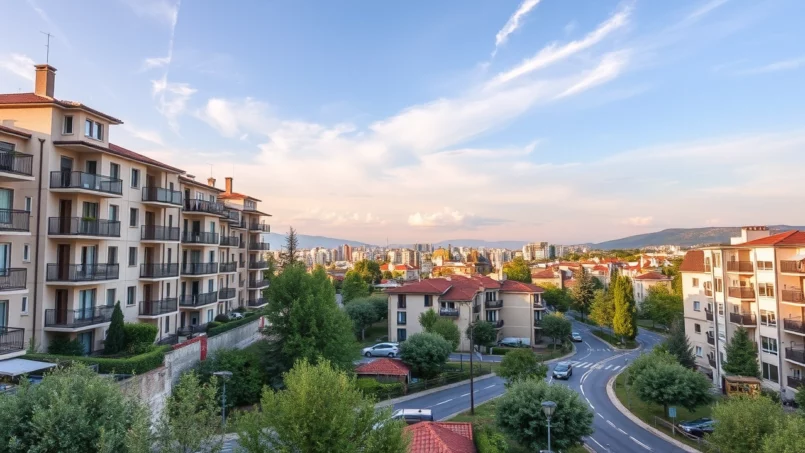
On the shores of the calm waters of the UNESCO-listed Bay of Kotor, the town of Tivat has transformed in twenty years from a small naval base to one of the most expensive real estate markets in the entire Adriatic, just behind Dubrovnik. Driven by the development of Porto Montenegro and new luxury resorts, this metamorphosis has made it one of the most closely watched markets in Southern Europe by investors today.
Good to know:
Real estate investment in Tivat offers strong profitability potential, driven by rising prices, solid rental yields, and advantageous taxation. Major infrastructure projects are further enhancing this appeal. However, to succeed, it is essential to master the local market dynamics, the specifics of different neighborhoods, precise economic data, as well as the applicable tax and legal framework.
For a long time, properties in Tivat were among the cheapest on the Adriatic coast. The opening of the first international projects in the early 2000s changed the game. Twenty years later, the town has become one of the most expensive markets on the coast, with foreign demand far exceeding supply, especially for high-end properties.
5677
Median price per square meter for apartments in Montenegro, according to recent data.
For houses and villas, the median is around €4,814/m², but waterfront villas far exceed this level, with properties valued at several tens of millions of euros in Porto Montenegro and Synchro Yards.
A steady price increase, supported by several drivers
The rise in values is not a temporary spike: it is part of a long-term trend. Residential prices in Tivat have been rising steadily for years, with annual increases of up to 12% in the luxury segment. At the city level, forecasts indicate a further increase of 3 to 7% over the coming year, while some highly sought-after micro-markets could climb by up to 15%.
6.2
The Montenegrin residential real estate market is expected to grow by approximately 6.2% annually until 2029.
Among the main drivers of this increase are:
– sustained international demand (Western Europe, Middle East, wealthy diaspora);
– a very limited supply in premium seaside locations;
– an overall attractive tax environment for investors;
– a massive agenda of infrastructure works (airport, roads, water, sanitation);
– Montenegro’s potential accession to the European Union, which strengthens long-term appeal.
In 2024, the British newspaper The Times even presented [Tivat] as “The Med’s Next Thing” – a phrase that perfectly sums up foreign investors’ appetite for the town.
How much does a property cost in Tivat depending on your budget?
To navigate a market where prices vary significantly based on neighborhood, view, amenities, and proximity to the sea, it is useful to translate these per-square-meter values into concrete budgets.
Price levels by property type
The table below summarizes the order of magnitude mentioned across various sources.
| Property type / sector | Indicative price (€/m²) | Main remarks |
|---|---|---|
| Apartment, median [Tivat] | ≈ €5,677/m² | Market baseline for the town |
| Downtown studio | from €4,484/m² | Small square footage, strong rental demand |
| Porto Montenegro / Luštica Bay apartments | €5,000 – €7,200/m² (and up) | Serviced residences, marina, 5* amenities |
| Boka Place (urban neighborhood of Porto Montenegro) | ≈ €7,500/m² | Mixed-use developments, includes SIRO hotel |
| Synchro Yards (ultra-luxury) | €12,000 – €25,000/m² | One of the most expensive in the Adriatic |
| Donja Lastva | €3,500 – €5,000/m² | Up-and-coming neighborhood with sea views |
| Mažina | €3,500 – €3,700/m² | Close to the center, residential, family-oriented |
| Houses / villas (median [Tivat]) | ≈ €4,814/m² | Significant disparities based on view and sea access |
| Ultra-privileged marina / waterfront villas | up to €12,000/m² and more | Top segment of the market |
| Entry-level downtown 1-bedroom | from ≈ €100,000 | Often small units or older buildings |
| Porto Montenegro / Synchro – prestige properties | ≈ €1M to €25M | Penthouses, large villas, serviced residences |
As a concrete example, a recent apartment of about 70 m² with a pool in Donja Lastva is positioned around €220,000, while a small 2-bedroom with a sea view in this area can be listed around €150,000. In Porto Montenegro, a simple studio in a new residence like Vero/Versa starts around €390,000.
What can you buy with 100,000, 250,000, or 1 million euros?
The possibilities can be summarized as follows.
| Investment budget | Type of properties accessible in [Tivat] |
|---|---|
| ≈ €100,000 | Studio or small 1-bedroom, often outside the hyper-center or in older buildings |
| ≈ €250,000 | Modern 1–2 bedrooms (50–70 m²) in Donja Lastva, Mažina, Lepetane, or the outskirts |
| ≈ €500,000 | Nice 3-bedrooms, townhouses, sometimes row houses with partial sea views |
| > €1,000,000 | Penthouses, large villas, marina-front properties in Porto Montenegro / Luštica Bay |
For investors targeting the very high-end international clientele, Porto Montenegro, Boka Place, Synchro Yards, or Luštica Bay are the benchmarks. For those seeking a balance between yield, appreciation potential, and a more reasonable budget, Donja Lastva, Seljanovo, Krašići, Mažina, or Tivat Center offer more accessible entry points.
Rental yields and income: what can you expect?
Unlike some speculative markets where everything relies on resale, real estate in [Tivat] allows for a combination of rental yield and capital appreciation. But the figures vary significantly depending on the type of rental (long-term or seasonal) and the quality of the property.
Gross and net yields: the big picture
Compiled data indicates gross rental yields for apartments in Tivat averaging around 4.6%, slightly below the Montenegrin national average (approximately 5.6%). Other major cities offer higher yields for comparable square footage, but at lower prices and with less premium appeal.
| City / area (apartments) | Average gross rental yield |
|---|---|
| Podgorica | ≈ 6.39% |
| Kotor | 6 – 7% |
| Budva | ≈ 5.85% |
| [Tivat] | ≈ 4.6% |
| Montenegro Average (Q2 2025) | ≈ 5.62% |
Even within Tivat, yields vary depending on the property type.
| Apartment type in [Tivat] | Approximate average gross yield |
|---|---|
| 1 bedroom | ≈ 4.66% |
| 2 bedrooms | ≈ 4.44% |
| 3 bedrooms | ≈ 4.81% |
Net yields, after subtracting expenses, taxes, management, and maintenance fees, are generally 1.5 to 2 percentage points below the gross yield. In practice, a well-structured investor can aim for 3 to 4.5% net in traditional rentals, and more with well-optimized seasonal rentals.
Monthly rental income for long-term rentals
For annual rentals, rents increase with the size and location of the property. However, there is a natural ceiling, even on the coast.
| Housing type (long-term rental) | Typical monthly rent in [Tivat] and Montenegrin coast |
|---|---|
| Studio | €600 – €1,000 |
| 1-bedroom | €400 – €900 (€400 – €600 in “standard coast” areas) |
| 2-bedroom | €600 – €1,200 |
| 3-bedroom | €800 – €1,200 |
| House / villa (coast) | €1,200 – €2,000 |
In the most prestigious residences of Porto Montenegro, these ranges are exceeded, especially if the property benefits from hotel services, marina views, and direct access to the docks.
Airbnb-type seasonal rental: pronounced seasonality
The short-term rental market in Tivat is dynamic but very seasonal. There are approximately 392 active listings, with nearly 94% being entire homes, mostly apartments/condos. On average, each property can accommodate 3 to 4 people, with a capacity for 4 guests in 37% of listings.
Attention:
Monthly income, outside the very high-end segment, depends heavily on the property’s performance level.
| Airbnb performance segment in [Tivat] | Typical monthly income (USD) |
|---|---|
| Top 10% of properties | ≥ $2,455 |
| Top 25% | ≥ $1,500 |
| Median | ≈ $829 |
| Bottom 25% | ≈ $415 |
In euros, according to sources, the annual median is around $7,100, and some well-positioned properties can exceed €1,670/month during peak season.
Average nightly rates follow a similar hierarchy:
| Airbnb segment in [Tivat] | Average nightly rate (USD) |
|---|---|
| Top 10% | ≥ $185 |
| Top 25% | ≥ $124 |
| Median | ≈ $84 |
| Bottom 25% | ≈ $61 |
Converted to euros and across the entire market, the “Average Daily Rate” generally fluctuates between €78 and €197 per night, depending on the property type and the month of the year.
Occupancy rates and income by season
The main nuance of seasonal rentals in Tivat lies in its seasonality. Average annual occupancy rates remain relatively modest (around 28%) but rise much higher in summer. The year can be divided into three main periods.
| Season | Average monthly income (USD) | Average occupancy rate | Average nightly rate (USD) |
|---|---|---|---|
| High season (June–August) | ≈ $2,037 | ≈ 49.2% | ≈ $133 |
| Shoulder season (spring/autumn) | ≈ $1,180 | ≈ 33.9% | ≈ $103 |
| Low season (Jan., Nov., Dec.) | ≈ $546 | ≈ 20.3% | ≈ $98 |
July is generally the most profitable month, while January is at the bottom of the scale. The best properties, especially those near the sea or in marina complexes, can achieve annual gross yields in the range of 6 to 12%, even 10–12% for first/second row waterfront properties.
Tip:
It is essential to note that short-term rental is not a passive activity. It requires active management including organizing check-in/check-out, cleaning, customer relations, and pricing optimization. To simplify this management, many owners use specialized local companies. These companies typically offer full management services in exchange for a commission, usually representing between 20% and 30% of the rental income generated.
Combining rental yield and capital appreciation
Beyond rental income, a key strength of the Tivat market is the combination of yield and capital appreciation. If you add a rental yield of 5–8% (possible in well-managed deals, especially by mixing seasonal/annual rentals) and price increases of 3–7% per year, you get theoretical overall performances of 8 to 15% per year over the medium term.
Under these conditions, purchase becomes very attractive compared to simply renting, provided the holding period exceeds 3 to 4 years. Conversely, for those who do not want to tie up too much capital or seek maximum flexibility, renting remains relevant, even in a town with a cost of living nearly 4% above the Montenegrin average.
Where to invest in Tivat: overview of neighborhoods
The town of Tivat is compact, but its micro-markets are highly differentiated, both in price and in the type of clientele and growth potential.
Porto Montenegro and Boka Place: the ultra-luxury heart
Porto Montenegro has become the symbol of the upscaling of the Bay of Kotor. Built on the former military arsenal, this superyacht marina & residential village spans nearly 25–28 hectares, with over 450 berths currently and a planned capacity for 850 yachts. Around the docks are luxurious residences (over 400 units already delivered, more than 300 already sold), high-end brand boutiques (Rolex, Philipp Plein, Dolce & Gabbana, etc.), fine dining restaurants, a beach club, yacht club, open-air cinema, and trendy nightlife.
Several residential complexes structure the offer:
Residences in Porto Montenegro
Discover a selection of prestigious residences within the Porto Montenegro marina, offering various lifestyles, from private club to new urban neighborhood.
1 to 3 bedroom apartments, with pool access and hotel services. Starting from approximately €418,000.
About fifty 1 to 3 bedroom units, with architecture inspired by the Italian Riviera. Starting from approximately €450,000.
New mixed-use urban neighborhood comprising several buildings (SIRO, Ostro, Sirocco, etc.). Residences from 45 to 170 m². Starting from approximately €263,000.
Prices per square meter here are among the highest in the country, often between €7,000 and €10,000/m², even more in Synchro Yards and the new Vero and Versa buildings, where studios start around €390,000.
This segment attracts a very high-end international clientele, drawn by the level of service, security, brand image, and the possibility of delegating rental through hotel programs, such as the Regent Rental Pool (with a typical 60/40 revenue share in favor of the owner).
Donja Lastva, Seljanovo, Mažina: the rising stars
For more reasonable budgets, some immediate peripheral areas around Porto Montenegro offer an excellent compromise.
Example:
The village of Donja Lastva, with its traditional architecture, is directly connected to the promenade and within walking distance of the marina. Property prices here are lower than in the center of Porto Montenegro, typically ranging from €3,500 to €5,000/m². This accessibility makes it a favored option for investors anticipating future appreciation. Rental demand is strong, driven by visiting families and expatriates seeking proximity to downtown at a lower cost.
Mažina is a residential area on the hills above the center, with prices around €3,500–€3,700/m². It has many apartments suitable for year-round living, with a clientele of families, local professionals, and long-term expatriates. For an investor targeting long-term rentals, it is a key area.
Seljanovo, more central, benefits from immediate proximity to Porto Montenegro and downtown. There is an observable process of gentrification and renovation, with appreciation potential considered “medium to high” in market studies.
Krašići, Gornja Lastva, Plavi Horizonti and the outskirts
On the Luštica peninsula, Krašići stands out as a sector with a lower entry price but high potential. Its development is supported by the growing prominence of Luštica Bay (golf, marina, resorts) and improved road access. For investors willing to look beyond the center of [Tivat], this is a market to watch closely.
Good to know:
The traditional village of Gornja Lastva, located on higher ground, is identified in some reports as an area with strong potential for value increase, particularly due to urban and heritage regeneration projects.
Plavi Horizonti, with its large beach and proximity to Luštica Bay, performs very well in short-term rentals. Properties near the sea, even modest ones, can generate good summer income.
Tivat Center and developing areas
The center of Tivat, around Pine promenade and commercial streets, concentrates services, restaurants, schools, and direct access to the waterfront. Apartments here are sought after for year-round living, ensuring stable rental demand, especially from professionals, local families, and expatriates.
Neighborhoods like Mrčevac (between town and airport) or Kava/Cava are seen as expansion zones, with the construction of new schools, roads, and networks. Prices are still lower than in the center, and the potential for appreciation is real as urbanization progresses.
Infrastructure, amenities, and quality of life: fueling demand
The real estate appeal of Tivat is not just about its marinas. The town combines accessibility, public infrastructure, educational services, and a privileged natural environment.
An expanding airport
The presence of the international airport, just minutes from Porto Montenegro, is a decisive advantage. Airlines connect [Tivat] directly to London, Paris, Zurich, Istanbul, Dubai, and several Serbian or European destinations, sometimes for an extended season of seven months.
A major modernization program is underway:
– airport concession with participation of major international operators;
– plan to increase terminal capacity (≈ 13,000 m² for the new building);
– runway and taxiway renovations;
– new control tower (already completed for €4M);
– projected traffic of about 1.37 million passengers by 2025 in the base scenario.
55
These works, estimated at around €55M excluding VAT, directly improve the town’s accessibility.
Roads, soft mobility, and public services
The municipality of Tivat has embarked on a massive program of public investments. The 2025 local budget reaches a record level of approximately €33M, with over €22M dedicated to public infrastructure and facilities. Key areas include:
– reconstruction of the Tivat–Jaz boulevard (≈ 16 km), co-financed by the EBRD for over €54M, to improve traffic flow and secure pedestrians and cyclists;
– improvement of water and sanitation networks (Radovići, Donja Lastva, connections between reservoirs, etc.), with an overall plan of €28M (including €7M via a KfW loan);
– strengthening of the electrical distribution grid with a new route between Gradiošnica and the center;
– electric transport projects (boat connecting Pine to the airport, electric mini-bus between airport and center).
Good to know:
The municipality of Tivat is undertaking significant public space development and renovation works. These investments include the Belani promenade, installation of new LED lighting, restoration of monuments like the Buća-Luković tower, and creation of a new market. Sports facilities are also being developed, with a multi-sports hall in Donja Lastva, a sports dome, and covered fields. Finally, the “Big City Park” is undergoing major maintenance, including massive replanting and a new irrigation system.
This type of investment enhances the quality of life for permanent residents, which fuels long-term rental demand and appreciation.
International schools and expatriate population
Tivat hosts several international schools, including Knightsbridge School (IB system) and Arcadia School (British curriculum), the latter having grown from around twenty to several hundred students in a few years. Other institutions are planned in expanding neighborhoods.
This educational landscape attracts an affluent expatriate population (families, executives, entrepreneurs, digital nomads) seeking international standard housing, well-equipped, often furnished, with medium to long-term leases. For the investor, this means a structural base of demand outside the tourist season.
Tax and legal environment: an attractive but complex framework
Investing in Tivat also means benefiting from a Montenegrin tax environment that is rather favorable, provided you understand precisely the rules applicable to purchase, ownership, rental, and resale.
Taxation on purchase: transfer tax and VAT
Acquisitions on the resale market are subject to a real estate transfer tax (RETT). The regime is progressive:
| Property value | Transfer tax rate and calculation |
|---|---|
| Up to €150,000 | 3% on the price / market value |
| From €150,001 to €500,000 | €4,500 + 5% on the portion > €150,000 |
| Over €500,000 | €22,000 + 6% on the portion > €500,000 |
For new builds, the first sale is subject to 21% VAT, usually included in the developer’s price, and the transfer tax does not apply. To this are added notary and attorney fees (about 1–2% of the price), cadastral fees, and possibly certified translation fees at signing.
In practice, you should plan for overall transaction costs between 4 and 8% of the acquisition price, including taxes and fees.
Annual property tax and specific taxes
Owning a property triggers an annual property tax, set by each municipality within a national framework. In Tivat, as on the coast, rates are generally between 0.25% and 1% of the market value, with the possibility for the municipality to increase rates for certain types of properties (hotels, undeveloped building plots, etc.) up to a maximum of 5% for some specific categories.
Good to know:
Primary residences may qualify for a reduction of up to 50% depending on the number of household members. Furthermore, an annual tourist tax of approximately €300 is due for properties located in the coastal zone and used for tourist rental.
Taxes on rental income and resale
Rental income</strong is taxed under income tax, often at a rate of 15% for non-residents. For declared short-term rentals, only a portion (e.g., 70%) of the gross income is taken as the taxable base, resulting in an effective rate close to 10.5% of turnover. Flat-rate deductions are available in some cases, as an alternative to deducting actual expenses.
Seasonal landlords exceeding a certain annual revenue threshold (€30,000) must also register for VAT and charge it, at the reduced rate of 15% for tourist accommodation.
Good to know:
For individuals, capital gains on resale are taxed at 15%, calculated on the difference between the selling price and justified acquisition and improvement costs. An exemption is possible for a primary residence if it has been occupied for more than three years. For sales made by companies, gains are subject to corporate income tax at the reduced rate of 9%.
Property ownership for foreigners and acquisition structures
The Montenegrin legal framework is open: foreigners can freely acquire apartments, houses, villas, commercial premises, and mini-hotels. However, restrictions exist on certain land (agricultural land over 5,000 m², forests, islands, border areas, protected spaces, etc.). In these cases, the classic route is to set up a Montenegrin company (SPV) to hold the asset.
Two main investment methods are common:
– asset deal: direct acquisition of the property, payment of transfer tax, no assumption of liabilities;
– share deal: purchase of a company that owns the property, with no transfer tax on the property itself, but assumption of its history and any debts.
This second route requires a thorough audit (legal, tax, accounting) but can be tax-advantageous for large-scale operations.
Attention:
Any real estate transaction in Montenegro must be conducted before a notary with a contract in Montenegrin. The transfer of ownership is only legally effective after its registration with the cadastre (Real Estate Administration), a crucial step. The land registry, accessible online, is public and displays the names of owners.
Residency, “golden visa”, and citizenship by investment
Montenegro offers several residency pathways linked to real estate investment:
– temporary residency based on property ownership: valid for one year, renewable, conditional on owning at least 50% of the property;
– investment-based residency programs with specific thresholds (e.g., €450,000 on the coast for some recent schemes);
– a path to permanent residency after five years of regular stay, then towards naturalization in the longer term.
The country also previously offered a citizenship by investment program, now closed, which involved a non-refundable contribution to the state fund and/or an investment in approved real estate projects, for a minimum amount of €200,000.
For an investor considering settling or spending a significant part of the year in Tivat, real estate can thus be a lever to secure resident status, with certain tax benefits (property tax reductions, tourist tax exemptions for primary residences, etc.).
Short-term rental: real opportunity, but demanding management
With its Mediterranean climate (over 270 sunny days per year), UNESCO-listed bay, luxury marinas, and airport just minutes away, Tivat is naturally suited for seasonal rentals. But turning this potential into net yield requires a professional approach.
The main keys to success identified by local players are quite clear: high-quality furnishings and equipment, professional photos, strong presence on platforms (Airbnb, Booking, etc.), quick response to inquiries, dynamic pricing based on season, and ideally, management delegated to a specialized agency.
Good to know:
Local companies offer complete management of your seasonal rental: listings, reservations, guest welcome, cleaning, and maintenance. Their commission, generally 20% to 30% of the income, allows for quasi-passive income generation. Some partnerships with luxury hotels can leave up to 60% of net revenue to the owner.
The performance figures provided by these operators speak for themselves: for a well-located studio or 1-bedroom, net annual income (after concierge fees) can range from €5,000 to €8,000; for a 2-bedroom, from €8,000 to €12,000; for a large apartment, from €12,000 to €15,000, and for a villa, from €15,000 to €30,000, depending on location and service level.
However, the strong seasonality often requires a mixed strategy: rent expensively short-term in summer, then switch to a few-month lease off-season to digital nomads or expatriates, to smooth out cash flow.
Risks, limitations, and best practices
Despite its appeal, investing in Tivat is not without risks. Like any economy highly dependent on tourism and real estate, Montenegro is exposed to external shocks (global economic crises, travel restrictions, geopolitics). Rising construction costs can also affect margins for new projects, or even cause delays.
The regulatory framework remains relatively favorable to foreign investors to date, but changes – for example, on capital gains taxation or urban planning rules – are never out of the question, especially if environmental and social pressures related to development intensify.
Attention:
Several concrete risks must be considered: poorly clarified property titles, poorly managed condominiums, underestimation of maintenance costs, unrealistic advertised rental yields, and purchase of restricted land without an appropriate legal structure.
Professional recommendations are therefore quite consistent:
– conduct a full legal audit of the property (cadastre, easements, possible debts, urban planning compliance);
– work with a local lawyer specialized in real estate;
– independently verify the rental and occupancy figures presented;
– budget total costs of 6–8% above the purchase price for taxes and professional fees;
– never delay registering the property with the cadastre, the step that officially confirms ownership.
Finally, from a strategic point of view, it is prudent to target a holding period of at least five years, in order to absorb cyclical variations and maximize the combined effect of rental yield + value appreciation.
Tivat is today one of the most sophisticated and expensive real estate markets on the Adriatic coast, but also one of the most promising. Its rare combination of:
– world-class marinas,
– nearby international airport,
– rapidly improving public infrastructure,
– Mediterranean lifestyle and international schools,
– moderate taxation and investment framework open to foreigners,
creates an environment where real estate is no longer just a vacation home purchase, but a true investment asset.
Tip:
For investors ready to commit long-term, targeting quality properties in the right neighborhoods and surrounding themselves with solid local advice, the town offers an excellent yield/appreciation compromise, difficult to match in other comparable European destinations. Conversely, this strategy is not suitable for those seeking a short-term bet, an ultra-cheap opportunity, or high profitability without active management.
In this now high-end market, the key is not to find “the lowest price”, but to identify the locations and products capable of continuing to attract, even ten years from now, the demanding international clientele that has made Tivat what it has become: one of the Mediterranean’s new real estate epicenters.
Disclaimer: The information provided on this website is for informational purposes only and does not constitute financial, legal, or professional advice. We encourage you to consult qualified experts before making any investment, real estate, or expatriation decisions. Although we strive to maintain up-to-date and accurate information, we do not guarantee the completeness, accuracy, or timeliness of the proposed content. As investment and expatriation involve risks, we disclaim any liability for potential losses or damages arising from the use of this site. Your use of this site confirms your acceptance of these terms and your understanding of the associated risks.

Cyril Jarnias is an independent expert in international wealth management with over 20 years of experience. As an expatriate himself, he is dedicated to helping individuals and business leaders build, protect, and pass on their wealth with complete peace of mind.
On his website, cyriljarnias.com, he shares his expertise on international real estate, offshore company formation, and expatriation.
Thanks to his expertise, he offers sound advice to optimize his clients' wealth management. Cyril Jarnias is also recognized for his appearances in many prestigious media outlets such as BFM Business, les Français de l’étranger, Le Figaro, Les Echos, and Mieux vivre votre argent, where he shares his knowledge and know-how in wealth management.





