
 Published on and written by Cyril Jarnias
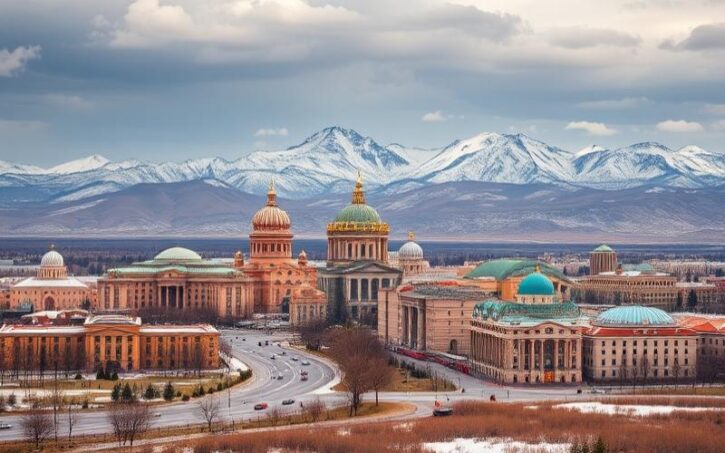
Long overshadowed by Asian giants like China, India, or Japan, Kazakhstan is gradually establishing itself as a serious playground for real estate investors. As the world’s largest landlocked country, Central Asia’s leading economy, and positioned at the heart of the New Silk Roads, this market combines growth, high rental yields, and still affordable square meter prices.
Good to know:
Investing in real estate in Kazakhstan can be very profitable, but the legal environment has specificities: strong restrictions on land ownership for foreigners, volatile currency, and rapidly evolving regulations. A good grasp of these rules is essential.
A market supported by solid growth and urbanization
The starting point is the country’s economic dynamism. Kazakhstan has a GDP of approximately $224 billion in 2024, with projected annual growth between 3.5% and 4.7% until 2028. By 2028, GDP could reach $355 billion, and the government aims for $450 billion in 2029, with a long-term target of around $900 billion by 2050.
Important:
The Kazakh economy, still heavily dependent on hydrocarbons and minerals, is actively diversifying into transportation, logistics, finance, manufacturing, agriculture, and technology. This transformation is supported by massive investments in infrastructure, notably via the Chinese Belt and Road Initiative, which positions the country as a strategic crossroads for land flows between China and Europe.
Demographically, the country has about 19.2 million inhabitants, of which 58% live in cities. The population is growing and could reach 24 million inhabitants by 2050. This rapid urbanization is fueling demand for housing, offices, warehouses, and retail spaces, particularly in major cities like Almaty, Astana (Nur-Sultan), and Shymkent.
6.7
This is the projected average annual growth rate for the global real estate market between 2023 and 2028.
A history of marked cycles but a long-term upward trend
Kazakh real estate has already experienced several very distinct phases:
| Period | Annual Price Change | Main Context |
|---|---|---|
| 2010 – 2014 | +10% to +15% | Commodities boom |
| 2015 – 2017 | –5% to –10% | Oil shock, tenge devaluations |
| 2018 – 2020 | +3% to +6% | Recovery phase |
| 2021 – present | +5% to +8% | Post-Covid, public support, strong demand |
This cyclicality is linked to the weight of energy in the economy: when oil falls, the tenge depreciates and financing becomes scarcer. Conversely, phases of rising commodity prices stimulate real estate prices and investment.
For a foreign investor, this means two things: the market can offer high capital gains during upswings, but one must accept higher volatility compared to more mature markets.
Legal framework: Buying property without owning the land
Kazakhstan is a civil law jurisdiction, inspired by the Romano-Germanic tradition. The Constitution and Civil Code guarantee the right to property, but the legislature has set very clear red lines regarding land, especially for foreigners.
Who can buy what?
The general principle is as follows:
Good to know:
A foreign individual who is not a permanent resident cannot directly buy standard real estate (apartment, house) in their own name, unless they have a permanent residency permit, which is difficult to obtain. However, foreign legal entities and Kazakh companies with foreign capital can acquire residential or commercial buildings without particular limits. It is important to note that land ownership is highly regulated: foreigners are not allowed to own land, especially agricultural land or land located in border areas.
In practice, a foreign investor most often goes through a local structure (e.g., an LLP, the equivalent of an LLC) to buy property, or through investment vehicles based in the Astana International Financial Centre (AIFC).
Structures and land: A foundational separation
A key element to understand: in Kazakhstan, ownership of the structure is separate from that of the land. A foreigner can validly own an apartment or a building, but the plot generally remains state property or is subject to a right of use.
The available options are as follows:
| Type of right / structure | Accessible to foreigners? | Main particularities |
|---|---|---|
| Ownership of an apartment / building | Yes (via permanent residency or company) | Ownership of the structure only, not the land |
| Direct land ownership | No, except via a Kazakh company for commercial use | Prohibited for foreign individuals, highly regulated for companies |
| Long-term leases (up to 49 years) | Yes | Right to use land for commercial or industrial purposes |
| Kazakh LLP with foreign capital | Yes (100% foreign possible) | Can own property, and in some cases, commercial land |
| Entity registered in the AIFC | Yes | English common law regime, tax advantages, and enhanced protection |
The Land Code was amended in 2021 to clarify these restrictions, and since 2023, authorities have implemented enhanced controls on land acquisitions by entities controlled by foreigners (verification of the ultimate beneficial owner, source of funds, etc.).
The AIFC exception: A “mini-London” at the heart of Astana
The Astana International Financial Centre (AIFC) operates as a special legal zone within the capital. Based on the principles of English common law, it has its own court, specific arbitration rules, and very aggressive tax advantages: 0% corporate and personal income tax for its participants until 2066, exemptions from land taxes, and, in some cases, from VAT.
Levers for real estate investors
The AIFC brings two major advantages for securing and boosting investments in the real estate sector.
Establishment of a clear and secure regulatory framework for real estate transactions and projects, protecting investors’ rights.
Facilitated access to suitable financing instruments and markets for real estate project development.
– the possibility to invest in Kazakh REITs (Real Estate Investment Trusts), already numbering at least four registered at the AIFC;
– a secure framework for structuring real estate holdings or funds, with property rights protection and dispute resolution in a more predictable judicial environment.
How can a foreigner practically invest?
Investing in real estate in Kazakhstan requires a slightly more structured approach than in markets where buying in one’s own name is possible without constraint. Several pathways coexist.
1. Direct purchase of an apartment (resident or quasi-resident profile)
For a foreigner already established in the country (holder of a residency permit) or married to a Kazakh citizen, purchasing an apartment in one’s own name is feasible. The procedure is standard: property selection, preliminary contract, verification of ownership, notarized deed, registration in the State Real Estate Registry (Zhergar).
The average timeframe is between 3 and 6 weeks, a bit longer for non-residents. It is necessary to first obtain a tax identification number (IIN for individuals) and have documents translated and legalized.
2. Going through a local company (LLP)
The most common route for foreign investors remains the creation of a Kazakh limited liability partnership (LLP). Advantages:
Tip:
For foreign investors, land ownership in France offers several key advantages: the ability to freely acquire residential or commercial buildings, the possibility (subject to certain regulatory conditions) to own land for commercial use, and better perception by banks and local partners, which facilitates financing and integration into the economic ecosystem.
The incorporation cost is relatively modest (on the order of $1,000 to $2,000) and the procedure typically takes one to four weeks. In return, one must manage accounting, tax obligations, and potentially, audits.
3. Using the AIFC and REITs
The other route, more “financial” than direct ownership, involves subscribing to shares of REITs registered at the AIFC. For example, the REIT TSPG holds iconic assets like the Dostyk Plaza shopping mall in Almaty and Shymkent Plaza, generating nearly $43.8 million in rents in 2023.
Good to know:
REITs (Real Estate Investment Trusts) in Kazakhstan require that at least 80% of assets be invested in income-generating real estate and that at least 80% of annual profits be distributed. They offer investors access to the real estate market without the constraints of direct management, with a potentially lower entry ticket and higher liquidity than a physical property. Note: these funds are currently mostly offered privately to a limited circle of investors.
4. Investor visas and long-term residence
Unlike some countries, buying property grants no automatic right to residence or citizenship in Kazakhstan. However, investor visa programs exist:
– Investor Visa (3 years renewable): requires at least $150,000 of investment in priority sectors; can lead to permanent residency.
– Golden Visa (10 years): launched in 2025, it requires a minimum investment of $300,000 in the capital of a Kazakh company or in certain local securities.
– Visa for AIFC participant (up to 5 years): accessible to individuals involved in companies registered at the AIFC.
These tools are not specifically tied to real estate, but can be combined with investments in property, notably through a local company or fund.
Major cities to invest in: Almaty, Astana, Shymkent… and others
Kazakhstan is not limited to a single real estate market. Each city has its own risk, yield, and liquidity profile. For a foreign investor, three major markets stand out, complemented by a string of interesting secondary cities.
Almaty: Economic capital and yield champion
Former capital and largest city in the country, Almaty concentrates finance, corporate headquarters, and a good portion of the upper middle class. It is also the most expensive city, but prices per square meter remain competitive on an international scale.
In central or sought-after neighborhoods (Esentai, Samal, Medeu, Almaly, Bostandyk), values are typically between 700,000 and 1,200,000 tenge per square meter, or approximately €1,400 to €2,400. Premium segments can reach $2,800 to $3,500/m² in the best locations.
Regarding yield, the data is particularly telling: according to gross rental yield calculations, Almaty averages around 9.5% to 10% across all neighborhoods, with the following indicative range:
| Segment / property type | Estimated average gross rental yield |
|---|---|
| Premium residential | 5% – 7% |
| Business class | 7% – 9% |
| Comfort / middle class | 8% – 10% |
| Renovated Soviet apartments | 10% – 12% |
Short-term rentals (like Airbnb), still relatively unregulated, often allow reaching the top of these ranges, especially in tourist or business districts, with returns of 7% to 9% per year on well-managed properties. Investors must nevertheless factor in the seismic risk specific to the Almaty region, which requires careful verification of construction quality and seismic standards of the building.
Astana (Nur-Sultan): Political capital and modern showcase
Astana, which became the capital in 1998, is the political and administrative heart of the country. It is also an urban planning laboratory, with a futuristic skyline, brand-new business districts, and development heavily guided by the state.
650,000-1,100,000
Real estate prices in Astana average between 650,000 and 1,100,000 tenge per square meter.
The rental market is driven by the presence of civil servants, state-owned companies, international organizations, and foreign corporations. The gross yields observed by property type are high, often higher than Almaty, especially for small units:
| Astana – apartment type (average across all districts) | Average gross yield |
|---|---|
| Studio | ≈ 12.2% |
| 1-bedroom | ≈ 12.1% |
| 2-bedroom | ≈ 12.0% |
| 3-bedroom | ≈ 12.2% |
Long-term, capital appreciation is estimated at around 5% to 7% per year in growth areas, driven by public capital development programs and the concentration of skilled jobs.
Shymkent, Atyrau, Aktau: The constellation of high-yield markets
In the south, Shymkent is the country’s third city and a rapidly rising market. The population is young, growth is strong, and prices remain low: 400,000 to 650,000 tenge/m² (approximately €800 to €1,300). Yields flirt with 7% to 9% on certain properties, making it interesting territory for aggressive strategies targeting the middle class.
Example:
On the Caspian Sea, the cities of Atyrau and Aktau, centers of the oil industry, attract a steady flow of expatriates and energy sector engineers, generating specific rental demand. In Atyrau, for example, real estate prices typically range from 600,000 to 950,000 tenge per square meter (approximately €1,200 to €1,900), with estimated rental yields between 8% and 11% for well-located apartments. This market is cyclical and strongly correlated with oil prices, but the yield/risk ratio can prove attractive for seasoned investors.
Secondary cities: Low entry tickets, catch-up potential
Cities like Karaganda, Pavlodar, Aktobe, Kostanay, or Turkestan, often industrial or logistics hubs, offer land prices still 30% to 50% lower than major cities. In Karaganda, for example, the city center trades between $600 and $1,200/m².
For an investor seeking a reduced entry cost and accepting lower liquidity, these markets can offer comfortable net yields, especially on modestly sized apartments for the local middle class.
Residential, offices, logistics, retail: Four pillars to compare
Investing in real estate in Kazakhstan is not limited to apartments. The depth of the commercial market – offices, warehouses, shopping malls – is growing rapidly, driven by economic modernization and the country’s repositioning as a Eurasian logistics hub.
Housing: A massive sector, boosted by public programs
The residential stock comprises nearly 5.9 million housing units, for a total area exceeding 419 million m². Since 2018, the stock has grown by about 2.3% per year.
New construction is reaching record levels: 18.96 million m² delivered in 2024 (approximately 172,000 housing units), with a target of an additional 19 million m² in 2025, i.e., nearly 175,000 new housing units. More than half of this construction is concentrated in Astana, Almaty, and their surrounding regions.
Good to know:
Public authorities actively support the real estate market through several programs (Affordable Housing 2020, Nurly Zher, 7-20-25, Otau, Nauryz) and by allowing, since 2020, part of pension savings to be used for purchase. This support maintains structural demand but can also cause fluctuations, with occasional price surges followed by cooling phases when new rules are announced.
At this stage, prospects remain robust: internal studies estimate appreciation of 6% to 8% per year in Almaty’s high-end districts, 5% to 7% in Astana’s growth areas, 6% to 9% in Shymkent, and 3% to 5% in secondary cities, with capital gains of 7% to 10% over the construction period for well-positioned new developments.
Offices: Scarcity of quality supply and sharply rising rents
The office market in Astana and Almaty is experiencing an extreme shortage of quality supply. In 2023, nearly 596,000 m² of office space was delivered in the country, but this remains insufficient relative to demand.
Occupancy rates exceed 95% in Class A and B+ categories in both major cities, with, in some segments, less than 2% vacancy for finished premises. The figures are impressive:
| Indicator (offices) | Almaty (~2024) | Astana (~2024) |
|---|---|---|
| Total office area | ≈ 2.37 M m² | ≈ 1.67 M m² |
| Area Class A/A+ | ≈ 220,000 m² (9.3%) | ≈ 159,000 m² (9.5%) |
| Occupancy rate A/A+ | ≈ 95.6% | ≈ 95.4% |
| Occupancy rate B/B+ | ≈ 95.8% | ≈ 96.0% |
Rents follow: in 2023, a Class A+ office rented for an average of $73.5/m² in Astana and $46.1/m² in Almaty. Increases recorded since 2019 have been spectacular, especially in Almaty (~+57% over four years), and projections indicate an additional +10 to +15% in 2024 for this city.
Good to know:
This investment segment requires a significant entry ticket. It offers stable yields, typically between 9% and 13% for good assets, provided one accepts near-zero vacancy and a sometimes less liquid market upon resale.
Logistics and warehouses: A structural deficit of space
The e-commerce boom and Kazakhstan’s growing role as a logistics hub on the China–Europe axis are creating strong pressure on the warehouse market. There are about 1.49 million m² of quality space (Class A and B), of which over 60% is around Almaty and 25% around Astana.
The problem is simple: there are not enough modern square meters to meet demand. Vacancy rates in the best warehouses are around 1% to 2%, rents have soared (up to +78% in one year for some Class B categories), and authorities estimate the country needs about 2 million m² more logistics stock meeting international standards by 2030.
12.8
The average rent for Class A warehouses in Kazakhstan, in dollars per square meter.
Shopping malls and retail: Strong foot traffic, but e-commerce looming
Shopping malls are also undergoing modernization. In 2023, 28 malls were delivered, adding 174,000 m², with a large majority in Almaty. The revenue generated by these assets has nearly doubled since 2019, and occupancy rates exceed 95% in major cities.
In parallel, the share of e-commerce in retail trade has risen from 0.7% in 2013 to over 12% in 2023, pushing developers to create more “experiential” malls, combining entertainment, dining, services, and integration of online order pickups.
For investors, these assets are mainly accessible via REITs or professional vehicles, but they constitute a clearly growing asset class, with steady rent increases and potential for repositioning-driven revaluation.
What does it really cost: Prices, fees, taxation
Beyond yield promises, investing in real estate in Kazakhstan involves dissecting transaction, operating, and taxation costs.
Transaction fees: 3% to 7% of the purchase price
Acquisition costs remain reasonable on an international scale:
| Cost item | Indicative range |
|---|---|
| Registration fees | 0.1% – 0.5% of price |
| Notary fees | 0.2% – 1% of price |
| Lawyer fees (foreign investor) | $1,000 – $3,000 |
| Real estate agency commission | 2% – 5% (often seller’s responsibility) |
| Valuation report | $150 – $300 |
| Technical passport (inspections) | $100 – $200 |
| Certified translations | $200 – $500 |
| Currency exchange cost (spread) | 1% – 3% |
In total, the “round-trip” bill (purchase + resale) ranges between 2.2% and 7% of the price, depending on the structure and who pays commissions.
Taxation: A rather mild regime, especially on holding
Tax-wise, Kazakhstan is on the lower end of comparable countries:
12
Current VAT rate in Kazakhstan, which is set to increase to 16% under the new Tax Code.
For investors who go through a local company, corporate income tax rules apply (standard rate 20%), with the possibility, in certain special economic zones or the AIFC, to benefit from massive reductions or even exemptions.
Recurring costs and management
Ongoing expenses should not be underestimated, especially for a non-resident investor who delegates everything:
500 to 2000
Homeowners association and maintenance fees for a rental investment can range from $500 to $2,000 per year, depending on the size and standard of the property.
In many cases, a gross yield of 7% to 10% will translate, once all costs are included, into a 4.5% to 6% net yield, which remains competitive internationally, especially if capital appreciation is added on top.
Financing: A market still very cash-based for foreigners
Most foreign real estate investments in Kazakhstan are made in cash. Local banks are reluctant to lend to non-residents: when they do, the required down payment often exceeds 50% to 70% of the price, with tenge interest rates between 15% and 20%.
Important:
The effective annual rates for 20-year mortgages (12% to 23%) are much higher than European standards. Borrowing locally significantly reduces real estate yield, except in cases of runaway inflation coupled with a significant increase in rents.
Realistic strategies for a foreign investor are therefore:
– mobilizing capital from their home country (refinancing, mortgage on primary residence, etc.) at a lower cost;
– using payment plans offered by some developers (installments over 1 to 3 years with a 30% to 50% down payment);
– targeting cash transactions on modest-sized properties in secondary cities where the ticket remains low.
Risks and pitfalls to anticipate
Investing in real estate in Kazakhstan is not a smooth ride. Several major risks must be integrated into any serious strategy.
Tenge volatility and dependence on commodities
The tenge has experienced several significant devaluations (2009, 2014, 2015) and remains heavily correlated to oil prices and the Russian ruble. For an investor thinking in euros or dollars, this means the real performance will depend as much on the exchange rate as on the local yield.
Two classic safeguards are necessary:
– prioritize properties in segments and cities with the most robust yields, capable of absorbing some of the currency shocks;
– diversify currency exposure (don’t put everything into Kazakhstan, calibrate the portfolio share allocated to emerging markets).
Evolving regulatory framework and administrative complexity
The country displays a clearly pro-investment policy, ranked 28th in the world by the World Bank for ease of doing business. But regulations change quickly, especially regarding taxation, access to housing programs, and rules for land acquisition by foreigners.
Important:
Opening a bank account or finalizing a purchase requires physical presence in the country. The working languages are Russian and Kazakh, and legal security varies considerably between the standard judicial circuit and the AIFC jurisdiction.
Construction quality and physical risks
Quality gaps between buildings are significant: old Soviet blocks more or less renovated, constructions by local developers of highly variable quality, seismic standards sometimes poorly applied outside of major developers. Almaty is in a seismic zone, some regions experienced significant floods in 2024.
Important:
Before any purchase off-plan or in a recent building, it is essential to conduct a serious technical audit and thoroughly check the developer (references, completed projects, potential disputes).
Illiquid market and difficult remote management
Finally, the Kazakh market does not have the liquidity of a major Western metropolis. Selling a property can take several months, or longer in secondary cities. The quality of property managers is very heterogeneous, and managing a property from abroad can quickly become a headache if one does not surround themselves with reliable partners.
Hence the importance of:
– selecting one or two solid service providers (property management agency, lawyer, accountant);
– testing service quality on a first property before scaling up;
– remaining realistic about investment exit timelines.
Which strategies to favor according to investor profile?
By combining available market data and ground realities, several typical strategies emerge for various profiles.
“Secure yield” investor: Premium residential in Almaty or Astana
For an investor seeking a compromise between relative security and yield, targeting premium or business class apartments in the best districts of Almaty (Medeu, Almaly, Bostandyk) or Astana (Left Bank, business center) is a coherent option.
5 to 9
The expected gross annual yield, in percentage, for a real estate investment in Miami, varying by rental type.
“High yield” investor: Middle class and secondary cities
Those willing to accept a bit more risk can target:
– comfort-class apartments in intermediate neighborhoods of Almaty or Astana;
– housing for the middle class in Shymkent, Karaganda, Pavlodar, or Kostanay;
– well-placed properties in oil cities (Atyrau, Aktau).
Gross yields can rise to 8-12%, especially for renovated Soviet-era buildings in attractive locations. The challenge then becomes precise asset selection and mastery of management.
Institutional investor or family office: Offices, logistics, AIFC REITs
For larger amounts, access to the office, shopping mall, and warehouse markets via:
Investment options
Discover the different strategies for investing in logistics real estate via the AIFC, designed to diversify your portfolio and access structured projects.
Investment in partnership with a local developer to acquire logistics assets directly.
Taking an equity stake in structured and targeted logistics projects.
Investment via AIFC REITs, managed by specialized teams like Provident Fiduciary Ltd.
This type of strategy allows capitalizing on the shortage of Class A offices, the structural deficit of modern warehouses, and the upscaling of shopping malls, with target yields of 9% to 13% and appreciation driven by rising rents.
In conclusion: A market of opportunities, but not for passive investors
Investing in real estate in Kazakhstan means betting on a country in transition, both resource-rich and increasingly connected to major Eurasian flows, where the middle class is growing and aspiring to better housing, better offices, modern retail, and a more qualitative urban environment.
The numbers speak for themselves: square meter prices still low in many cities, rental yields of 7% to 12% in well-chosen segments, prospects for appreciation of 5% to 9% per year in the main urban centers, moderate property taxation, increasing openness to foreign capital via the AIFC and REITs.
Good to know:
Investment potential comes with significant constraints: foreign individuals cannot own land directly and must structure investments through companies. One must also contend with tenge volatility, rapidly evolving regulations, uneven construction quality, and sometimes cumbersome administrative procedures.
In other words, Kazakhstan is not a market for passive rentiers looking for a turnkey investment. It is a playing field for investors willing to work with local partners, take the time for thorough due diligence, and accept higher macroeconomic risk – in exchange for a yield/prospect duo that is hard to find today in mature markets.
For those who can handle these parameters, investing in real estate in Kazakhstan can become a strategic axis for international diversification, with a long-term horizon aligned with the expected rise of this pivotal economy between Europe and Asia.
Disclaimer: The information provided on this website is for informational purposes only and does not constitute financial, legal, or professional advice. We encourage you to consult qualified experts before making any investment, real estate, or expatriation decisions. Although we strive to maintain up-to-date and accurate information, we do not guarantee the completeness, accuracy, or timeliness of the proposed content. As investment and expatriation involve risks, we disclaim any liability for potential losses or damages arising from the use of this site. Your use of this site confirms your acceptance of these terms and your understanding of the associated risks.

Cyril Jarnias is an independent expert in international wealth management with over 20 years of experience. As an expatriate himself, he is dedicated to helping individuals and business leaders build, protect, and pass on their wealth with complete peace of mind.
On his website, cyriljarnias.com, he shares his expertise on international real estate, offshore company formation, and expatriation.
Thanks to his expertise, he offers sound advice to optimize his clients' wealth management. Cyril Jarnias is also recognized for his appearances in many prestigious media outlets such as BFM Business, les Français de l’étranger, Le Figaro, Les Echos, and Mieux vivre votre argent, where he shares his knowledge and know-how in wealth management.





