
 Published on and written by Cyril Jarnias
Moving to Mongolia means accepting to live in one of the most extreme climates on the planet. Between winters that flirt with -40 °C, dry and scorching summers in the Gobi Desert, spring dust storms, and devastating dzud events, the country sets the rules. For an expatriate, adapting to the local climate isn’t just about comfort: it’s a matter of safety, health… and social integration.
Good to know:
For a successful stay, it’s essential to understand the local climate, equip yourself properly, and adjust your accommodation accordingly. You also need to adapt your diet, protect your physical and mental health, learn to travel safely, and know a few Mongolian weather-related words—a central element of daily life.
Understanding Mongolia’s Climate to Better Adapt
Living in Mongolia without factoring in the climate is wishful thinking. The country is often described as having an “extreme continental climate.” This means significant temperature variations, little precipitation, very dry air, and exceptional sunshine.
Mongolia is sometimes called the “Land of the Blue Sky”: it averages between 220 and 260 sunny days a year, with about 257 well-sunny days. This clear sky is deceptive: behind the light, the temperature swings are formidable. The difference between the January average and July average can reach 44 °C, and it’s not uncommon to experience swings of 30 °C within the same day, especially during transitional seasons.
Tip:
In Mongolia, low humidity and altitude (plateaus between 1,000 and 1,500 m) alter the perception of cold and heat. The distance from the sea, which removes any oceanic regulation, accentuates these contrasts. For an expatriate, it is crucial never to rely solely on the blue sky and to always anticipate sudden temperature changes, even within a single day.
Four Seasons… Sometimes in a Single Day
The country experiences four distinct seasons, but their progression differs from European or North American markers.
In winter, from November to February (and often into March), the thermometer frequently drops below -20 °C in Ulaanbaatar, and can reach -30 °C or even -40 °C in the coldest northern regions or on the plateaus. In some Hövsgöl valleys, lows of -47 °C have been recorded. The cold is dry, snow sometimes less abundant than imagined, except in mountainous areas. The risk is not so much a constant blizzard as it is extreme cold snaps, wind that increases wind chill, and dzud episodes.
Example:
In spring, from March to May, temperatures rise above freezing but nights remain cold with frequent frosts, even in May. The season is marked by strong winds. In the south and center of the country, these winds stir up dust, causing sand or dust storms more than 30 days a year in the south. This instability creates conditions where you can experience “four seasons in one day”: morning frost, midday mildness, wind and afternoon thundershowers, and freezing cold by evening.
Summer, from June to late August, is the mildest period. Temperatures range around 20 to 25 °C across much of the country, but can climb up to 40 °C in the Gobi Desert, with very aggressive sun. Nights remain cool, sometimes cold at altitude. It is also the wettest time of year: the majority of precipitation, though low on an annual scale (200 to 350 mm on average), falls between May and September, often as showers or localized thunderstorms in the late afternoon.
Attention:
Autumn, from September to October, is short and quickly gives way to winter. Temperatures drop rapidly, with first snows as early as October and a cold sensation amplified by the wind. Although the landscapes are splendid, this season is tricky for expatriates who may underestimate the speed of the transition.
Highly Contrasting Regional Climates
Beyond this general framework, Mongolia juxtaposes several climate types depending on latitude, altitude, and soil type. The north experiences subarctic conditions with very harsh winters and more precipitation, especially in taiga areas. The center and west oscillate between humid continental and semi-arid climates. The south and southwest, notably the Gobi, fall under a cold desert climate: little rain, intense dry cold in winter, and summers that can reach 41 °C.
For an expatriate based in Mongolia, this means that professional or personal trips require constant readjustment of gear. A summer stay at Lake Hövsgöl requires warm and waterproof clothing, despite the sun; a mission in Ömnögovĭ in July demands maximum protection against heat and dehydration, without neglecting cold nights.
A summary table helps you get your bearings:
| Region / Zone | Main Climate Type | Typical Winter | Typical Summer | Notable Features |
|---|---|---|---|---|
| North (Hövsgöl, Bulgan…) | Subarctic, monsoon-influenced (Dwc/Dfc) | Averages down to -32 °C, peaks at -47 °C | Short, cool summers | More abundant snow, glaciers above 3,500 m |
| Center (Selenge, Arkhangai, Ulaanbaatar) | Humid continental (Dwb/Dfb) | Dry cold, -20 °C to -30 °C common | 20–25 °C average | High temperature range, urban pollution in winter |
| Western mountains (Altai) | Subarctic / tundra (Dfc/ET) | Very long and harsh | Cool even in summer | Possible snow in summer above 2,000 m |
| South (Gobi, Ömnögovĭ) | Cold desert (BWk) | Dry cold (-15 °C average in January) | Peaks at 40–41 °C in summer | Sandstorms, very low precipitation |
The Dzud Phenomenon: Why It Also Matters for Expatriates
The word dzud refers to a type of winter disaster unique to Mongolia: a combination of extreme cold, deep snow or ice, strong winds, and frozen ground that prevents livestock from accessing pastures. Notably distinguished are the white dzud, marked by deep snow, and the iron dzud, where a thaw followed by sudden freezing traps the grass under an ice crust.
40
The average increase in winter snowfall in Mongolia since 1961, illustrating the impact of climate change.
During a recent dzud, more than 2.1 million animals – over 3% of the national herd – died in a few weeks, and roughly 90% of the territory was under threat. Roads were blocked, villages isolated, families deprived of fodder, food, and access to medical care. Nine human deaths related to snowstorms were recorded in one episode, but these figures underestimate the real impact, as travel becomes perilous.
For an expatriate, the dzud is not just a rural abstraction. Even based in a city, you may face:
Potential Consequences of Disruptions
Extreme weather events or systemic crises can lead to several major impacts on essential services and the environment.
Supply Chain Disruptions
Risk of interruptions or slowdowns in food supplies, affecting product availability.
Energy Service Delays
Delivery delays for heating or fuel in some areas, potentially impacting thermal comfort.
Air Transport Interruptions
Cancellation of domestic flights and difficulty reaching or leaving a province, isolating certain regions.
Healthcare System Strain
Overload of hospitals, health centers, and emergency services, reducing their response capacity.
Worsening Pollution
Intensification of pollution problems, linked to overconsumption of coal as a substitute energy source.
Authorities set up emergency measures: activation of an Emergency Operations Center, snow clearing of 4,000 to 9,000 miles of roads per week, delivery of fodder, food, gas, and medicine. Organizations like the WHO, UNICEF, or the Red Cross intervene to support the health system and herder families.
How an Expatriate Can Prepare for Dzud Risk
The first key is anticipation. From autumn onward, herder families stock flour, rice, wood, candles, and fodder. A sedentary expatriate can take inspiration from this approach, keeping in mind that some transport disruptions can last several days.
A simple table can help organize winter preparation:
| Aspect to Anticipate | Risks During Dzud | Practical Measures for Expatriates |
|---|---|---|
| Food | Empty shelves, road closures | Keep a non-perishable reserve (pasta, rice, canned goods, bottled water) |
| Heating and Energy | Overconsumption, local outages, delays | Prepare blankets, extreme-cold sleeping bags, power banks |
| Health | Difficult access to care, overcrowded hospitals | Have a personal pharmacy and emergency kit, insurance with evacuation |
| Travel | Impassable roads, canceled flights | Avoid long trips in extreme winter, build buffers into your plans |
| Communication | Locally disrupted networks | Keep emergency numbers, neighbor contacts, charged phone |
Even if you live in a modern downtown apartment, these habits help you absorb surprises with greater peace of mind.
Living Daily with Extreme Cold
For many expatriates, the first shock is winter. The air may be crisp, the sun bright, but the wind chill, driven by the wind, plummets. At -20 °C with a 70 km/h wind, the wind chill can reach -35 °C, with a risk of frostbite in minutes.
The classic mistake is to dress “as for a harsh European winter” and discover it’s completely inadequate. In Mongolia, winter clothing is a technical system, just like mountain gear.
Building a Suitable Clothing System
The basic rule is the three-layer system:
– a base layer to keep skin dry;
– an insulating layer to retain heat;
– an outer layer (protection) to block wind and extreme cold.
Good to know:
Cotton should be avoided for base and insulating layers because it retains moisture, cools the skin, and loses its insulating properties. Instead, choose merino wool, silk, or synthetic technical fibers. This advice applies to outdoor activities as well as nights in basic accommodations.
The principles to remember are simple: all layers should fit well without being too tight, to retain a fine layer of warm air; it is better to add or remove a layer than to suffer from heavy sweating, which will eventually turn into intense cold.
Feet, Hands, Head: The Critical Areas
Feet are particularly exposed. Simple hiking boots, even high-top, are insufficient if it’s freezing hard. You need insulated winter boots, roomy enough for thick socks without compressing toes, lest you cut circulation and increase cold sensation. Socks should be wool or insulating synthetic materials, never cotton.
Good to know:
To protect yourself effectively from the cold, wear quality gloves or mittens, possibly with a thin pair underneath. The head should be covered with a beanie that protects ears well, complemented by a neck gaiter, scarf, or balaclava. In the most extreme conditions, only your eyes should remain exposed.
For extended stays on the steppe or in winter, a four-season sleeping bag with a comfort rating of at least -25 °C, supplemented by an insulating ground mat and a liner, is often essential. Even in a ger or tourist camp, provided bedding is not always sufficient, especially on the coldest nights.
Examples of Expenses to Anticipate
Winter gear represents an investment, but it greatly determines quality of life. It is possible to buy equipment locally – including cashmere or camel hair gloves, or a winter deel (traditional coat) – but large shoe sizes are hard to find, and some niche technical products are rarer.
Housing, Heating, and Air Quality: Adapting to Local Realities
Settling in Mongolia also requires understanding how homes are heated and insulated, as this affects comfort and also health through air pollution.
Between Heated Apartments and Ger Districts
In central Ulaanbaatar, many expatriates live in apartments connected to district heating, powered by coal-fired plants. The system generally kicks in around the second week of October and shuts off around mid-May. When working well, indoor temperature is comfortable, sometimes very warm.
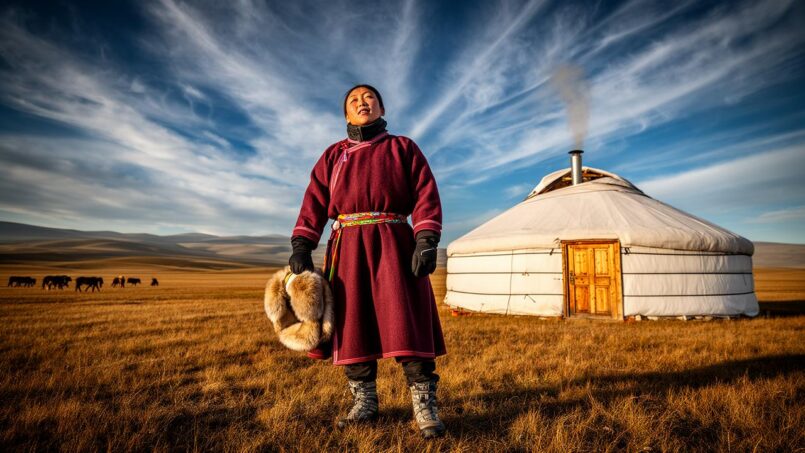
On the outskirts, vast “ger districts” have developed. Here you still find many traditional dwellings – felt circular tents – but also wooden or brick houses built without strict thermal standards. These neighborhoods are not connected to the district heating network or, often, to water or sanitation. Water is carried from communal kiosks, toilets are frequently outdoor latrines, and heating relies on individual stoves.
Good to know:
Traditional stoves, central to comfort, are also a major source of pollution. An average household burns 3.8 to 5 tons of coal per season. Inefficient, they retain heat for only 3 hours and emit many fine particles. Improved models can reduce consumption by 30% and emissions by 80–90%, but their adoption is not yet widespread.
Winter Pollution: A Major Health Issue
Ger districts are responsible for a large part of the toxic haze that covers Ulaanbaatar in winter. According to estimates, these household heaters contribute 45–70% of annual PM2.5 concentrations, with peaks over 70% in ger districts and up to 60% in the center during cold season.
The capital’s air has reached levels up to 133 times higher than WHO recommendations. During January to March, PM2.5 concentrations can reach 500 µg/m³, well above the threshold considered dangerous. The combined effect of coal combustion and thermal inversions (cold air trapped in the valley surrounded by mountains) worsens the situation.
Health consequences are severe: worsening of asthma, chronic bronchitis, increased pneumonia in children, impaired lung development, increased cardiovascular risks. Indoor pollution is not spared either, as some pollutants enter homes, including those that don’t burn coal.
How an Expatriate Can Limit Exposure
For an expatriate, several simple strategies can reduce risks:
– monitor the air quality index daily (e.g., via the real-time index) and adjust outdoor activities;
– limit outings, especially physical exertion, during pollution peaks;
– use an air purifier with HEPA filters suitable for PM2.5 at home;
– ventilate strategically at times when pollution is lowest (usually early afternoon), avoiding morning and evening combustion peaks;
– if possible, choose neighborhoods and homes better insulated from traffic and smoke;
– for people already with respiratory or cardiac conditions, discuss with a doctor in advance, and ensure maintenance treatments are available.
The Mongolian government is experimenting with various policies: distribution of cleaner stoves, promotion of free nighttime electricity in some districts to encourage electric heating, pilot projects for more energy-efficient housing. But these changes are slow to roll out. On an individual level, anticipation and equipment remain decisive.
Eating According to the Climate: The Logic of “Red Foods” and “White Foods”
Adapting to the climate also happens on the plate. In Mongolia, tradition distinguishes “red foods” (meats) and “white foods” (dairy), according to a logic closely tied to seasons and thermal constraints.
Winter, considered the “red season”, is marked by massive consumption of meat and animal fats. With temperatures that can drop to -40 °C, the body needs high caloric intake. Mutton, beef, horse, sometimes goat, are prepared in stews, soups, boiled, roasted, dried, or even naturally frozen outside. Urban families often buy a whole animal before winter, storing it frozen on the balcony or in the entryway.
Summer is dominated by dairy products. Herds are in full lactation, and people eat yogurts, fresh cheeses, thick creams, fermented milks, dried cheeses (aaruul), or dried creams. Caloric needs are slightly lower, days are more active but less demanding than under -30 °C.
The white season, from late April to September
For an expatriate, this diet may come as a surprise. Intake of vegetables, legumes, and fruits remains on average far below international recommendations, especially in winter and rural areas. Legumes, poultry, or fish are minor in the everyday diet. Conversely, consumption of red meat, dairy, sugar, and fatty products is very high.
This imbalance doesn’t necessarily pose the same problems for the local population, which has partly developed cultural and physiological adaptation to this eating pattern. But a foreigner may suffer from digestive issues, vitamin deficiencies (if their own diet remains unbalanced), or conversely, difficulty tolerating very fatty animal meals.
Some Practical Benchmarks for Balancing Climate and Health
It is possible to enjoy the adaptive qualities of Mongolian cuisine while maintaining nutritional balance:
Tip:
In winter, accept a richer diet but make sure to include sources of fiber and vitamins: dried fruits, frozen or jarred vegetables, and vitamin D supplements if needed. Discover local drinks with high nutritional density like sea buckthorn juice, very rich in vitamins and antioxidants, or salty milk teas that rehydrate and provide salt in dry cold. Be cautious with raw milk and highly fermented products if you have a sensitive gut, increasing quantities gradually. In rural areas, note that strong spices typical of other Asian cuisines are rare; consider bringing your own condiments if you want more intense flavors.
The climate explains many things: when you live under -30 °C with trips on horseback or on foot in the wind, a bowl of very fatty mutton soup is not a whim, but an energy survival strategy.
Dust, Sand, and Dry Air: Managing Invisible Risks
Beyond cold and urban pollution, Mongolia is regularly swept by dust or sand storms, especially in spring and in the semi-arid and desert regions of the south. These events are fueled by strong winds that lift mineral particles, sometimes across thousands of kilometers.
Attention:
Larger particles, typical of sandstorms, primarily irritate the upper respiratory tract (nose, throat, eyes). Finer ones (PM2.5) can penetrate deep into the lungs, reach the bloodstream, and carry harmful agents like bacteria, viruses, fungal spores, allergens, and chemical pollutants.
After a storm, pollution levels often rise significantly: +84% for carbon monoxide, +76% for fine particles, +40% for ozone, +12% for nitrogen dioxide in some studies. Symptoms are multiple: cough, shortness of breath, chest tightness, eye irritation, asthma attacks, worsening of cardiovascular conditions. The most vulnerable groups are children, the elderly, pregnant women, and those already with respiratory or heart disease.
Tip:
For an expatriate living in Mongolia, it is essential to adopt simple reflexes in the face of extreme weather phenomena. This includes checking local weather conditions, having appropriate gear (warm clothing, wind and dust protection), securing your home against the elements, and planning your travel according to seasons and weather alerts.
– during a storm alert, stay indoors if possible, with doors and windows closed;
– if you must go out, wear a properly fitted N95/KN95 filter mask rather than a simple scarf;
– avoid outdoor physical exertion during and immediately after the event;
– at home, use the “recirculation” function on your air conditioner or air purifiers to limit outdoor air intake;
– consult a doctor if you suffer from asthma, COPD, or heart conditions, to establish an action plan.
Traveling in a Country with Fragile Roads
Geography and climate have a direct impact on transportation. Distances are vast, roads are often in poor condition outside major routes, and weather hazards – snow, ice, heavy rain, dust – worsen risks.
In winter, icy roads increase accident frequency by about 30%. In spring, sandstorms suddenly reduce visibility. In summer, heavy rains from July to September can cause flooding and landslides. Added to this are sometimes aggressive driving behaviors, a heterogeneous vehicle fleet (many right-hand-drive vehicles on right-hand traffic roads), and occasionally lax rule compliance.
For an expatriate, some safety principles are essential:
Tip:
To drive safely on winter roads, avoid driving yourself over long distances, especially at night. Prefer using experienced local drivers for trips outside the capital, with well-maintained 4×4 vehicles equipped with winter tires. Always build buffer time into your travel schedule and avoid planning important obligations the day after a road return during risky season. Finally, keep a safety kit in the vehicle at all times, including a water reserve, food, warm clothes, a flashlight, and a means of communication.
Domestic air travel is often the most reliable way to connect Ulaanbaatar with major provincial cities, but it too is subject to weather conditions: snow, fog, or strong winds can ground planes. Again, safety margins in your schedule are the best defense against stress.
Health and Healthcare System: Climate as an Aggravating Factor
The climatic context makes access to healthcare more complex, especially in rural areas. Mongolia has a universal health system structured in three levels – primary care, secondary hospitals, tertiary specialized centers mostly in Ulaanbaatar – but the density of doctors and nurses is significantly lower in the countryside than in the city. For example, there are 1.5 times more doctors per capita in the capital than in rural areas.
1
One study identifies complications from acute respiratory infections as the leading cause of infant mortality during dzud episodes.
For an expatriate, this means you must: adapt to a new culture, understand local laws and regulations, build a social network, and often learn a new language.
Tip:
For a stay in Mongolia, it is advisable to quickly connect with a doctor or a reference clinic, especially in Ulaanbaatar. It is essential to have international health insurance covering private medical care, medical evacuation (to Seoul or Beijing for serious cases), and possibly repatriation. Prepare a personal medical kit with basic medications that are hard to find or rare locally. Avoid tap water, which is not potable, and opt for bottled or purified water. Make sure your vaccinations are up to date for hepatitis A and B, typhoid, tetanus, diphtheria, and seasonal flu, and consult a doctor to assess the need for a tick-borne encephalitis vaccination depending on your area of residence.
Mentally, the combination of extreme cold, pollution, isolation (in a very sparsely populated country), and distance from loved ones can weigh heavily. The mental health system is still under-resourced, with few psychiatrists per capita, only one major specialized facility historically located in Ulaanbaatar, and few local services. Expatriates must therefore be particularly attentive to their psychological well-being, maintain a social network, a regular routine, and not hesitate to use online or remote resources if needed.
Climate and Culture: Integrating Local Codes
The way Mongolians live and talk about the weather is an excellent guide for the expatriate. Among nomadic herders, the weather conditions every decision: moving herds, choosing pastures, organizing seasonal migrations. Elders observe animals, wind direction, cloud shapes, bird behavior to anticipate changes.
Good to know:
Major Mongolian festivals are tied to marked climatic periods. Tsagaan Sar (Lunar New Year) occurs in the depths of winter, a time of harsh conditions, and is marked by family gatherings, hearty meals, and rituals honoring elders, although the thaw no longer systematically follows the celebration as it once did. In contrast, the summer Naadam takes place in July, taking advantage of the peak of mildness and daylight.
To integrate well, it is useful to understand these markers, as well as a few basic rules adapted to the climate: don’t arrive at rural hosts’ homes empty-handed, accept at least a sip of hot drinks offered when you arrive chilled, avoid criticizing the harshness of winter in front of those who experience it much more directly every day, and heed local advice on routes, departure times, and sky conditions.
Weather Vocabulary: A Few Words to Understand and Be Understood
Learning a few Mongolian weather-related terms is a appreciated gesture and a genuine survival tool. The language reflects the importance of climate in local culture.
Key words:
– weather: Цаг агаар (tsag agaar);
– sun: Нар (nar);
– wind: Салхи (salkhi);
– snow: Цас (tsas);
– cold: Хүйтэн (khüiten);
– hot: Халуун (khaluun);
– winter: Өвөл (övöl);
– summer: Зун (zun);
– rain: Бороо (boroo).
Good to know:
Asking “Өнөөдөр цаг агаар ямар байна?” (What’s the weather like today?) is useful for starting a conversation. Noting “Гадаа маш хүйтэн байна” (It’s very cold outside) also helps with discussion and practical decisions.
The weather is a universal conversation topic, but in Mongolia, it is also a coded language about risks: a herder mentioning a particularly bad wind or a sky that is abnormally clear in the middle of winter may be warning you, indirectly, of coming danger.
Adapt Rather Than Endure
Living in Mongolia as an expatriate requires a certain humility before the elements. The climate is non-negotiable: it imposes clothing, habits, a different relationship to time and space. But this constraint also has a positive side: it structures a society where mutual aid, hospitality, and foresight are central.
Good to know:
To live well in a harsh climate, you need to understand the seasons, anticipate extreme events, and gear up properly. Respecting the advice of locals and adjusting your lifestyle (diet, travel, work organization) is essential. Good preparation lets you not only endure these conditions but also appreciate unique experiences like the winter blue sky, snowy landscapes, the warmth of a stove in a ger, or cool summer nights.
Adapting to the local climate in Mongolia is, ultimately, learning to think like a resident: check the sky before going out, plan ahead, never underestimate the cold, and consider nature not as a backdrop but as a demanding partner you must contend with every day.

Cyril Jarnias is an independent expert in international wealth management with over 20 years of experience. As an expatriate himself, he is dedicated to helping individuals and business leaders build, protect, and pass on their wealth with complete peace of mind.
On his website, cyriljarnias.com, he shares his expertise on international real estate, offshore company formation, and expatriation.
Thanks to his expertise, he offers sound advice to optimize his clients' wealth management. Cyril Jarnias is also recognized for his appearances in many prestigious media outlets such as BFM Business, les Français de l’étranger, Le Figaro, Les Echos, and Mieux vivre votre argent, where he shares his knowledge and know-how in wealth management.





